Carpenter's Gothic
by William Gaddis 
On This Page
Description
This story of raging comedy and despair centers on the tempestuous marriage of an heiress and a Vietnam veteran. From their "carpenter gothic" rented house, Paul sets himself up as a media consultant for Reverend Ude, an evangelist mounting a grand crusade that conveniently suits a mining combine bidding to take over an ore strike on the site of Ude's African mission. At the still center of the breakneck action is Paul's wife, Liz, and over it all looms the shadowy figure of McCandless, a show more geologist from whom Paul and Liz rent their house. As Paul mishandles the situation, his wife takes the geologist to her bed and a fire and aborted assassination occur; Ude issues a call to arms as harrowing as any Jeremiad-and Armageddon comes rapidly closer. Displaying Gaddis's inimitable virtuoso dialogue, and his startling treatments of violence and sexuality, Carpenter's Gothic "shows again that Gaddis is among the first rank of contemporary American writers" (Malcolm Bradbury, The Washington Post Book World). show lessTags
Recommendations

























Member Reviews
Il lato oscuro e demenziale del sogno americano, qui non c'è una storia di gente che ce la fa, ma la storia di cialtroni, bugiardi, immorali, decadenti, che non ce la fanno. Se non che il peggiore di tutti, il cialtrone supremo, si salva dalla tragedia che corona la farsa, e cerca di ricominciare con le sue arti seduttive trite e ritrite.
Un capolavoro dalla scrittura nevrotica e folle.
Un capolavoro dalla scrittura nevrotica e folle.
The whole novel takes place inside the house, which ends up being as much a character as any of the others. Does the house represent existence? Having it intricately Gothic on the outside, a shoddily constructed, falling apart piece of crap on the inside, does that show reality itself to be only a facade, an illusion? The falling apart on the inside representing the 2nd law of thermodynamics? Or has reading this book made me just as crazy as some of the characters?
The only actions outside of the house are related by the characters (the book is almost all confusing, chaotic dialogue—and even when it isn't, it's difficult to decipher where the dialogue ends, and the narration begins). You can't count on the characters to tell the truth. show more So you don't know what to believe. As for the characters, I found I didn't really like any of them. But that's okay, because I get the feeling neither did Gaddis.
I don't recall a book that has left me more ambivalent about how I felt about it. Obviously, from the rating I gave it, you can tell that I finally decided that I enjoyed it. But that wasn't my initial response. Right after finishing it, I was glad it was over, and didn't have any desire to read Gaddis' other four books. It took me the better part of a day to climb out of that mess of disjointed dialogue, and get to a place of understanding. Now that I've had time to reflect and absorb everything, I have a profound appreciation for what Gaddis was doing. Now I am excited about reading his other novels. I just wish there were more of them! show less
The only actions outside of the house are related by the characters (the book is almost all confusing, chaotic dialogue—and even when it isn't, it's difficult to decipher where the dialogue ends, and the narration begins). You can't count on the characters to tell the truth. show more So you don't know what to believe. As for the characters, I found I didn't really like any of them. But that's okay, because I get the feeling neither did Gaddis.
I don't recall a book that has left me more ambivalent about how I felt about it. Obviously, from the rating I gave it, you can tell that I finally decided that I enjoyed it. But that wasn't my initial response. Right after finishing it, I was glad it was over, and didn't have any desire to read Gaddis' other four books. It took me the better part of a day to climb out of that mess of disjointed dialogue, and get to a place of understanding. Now that I've had time to reflect and absorb everything, I have a profound appreciation for what Gaddis was doing. Now I am excited about reading his other novels. I just wish there were more of them! show less
Gaddis' writing is virtuosic, the format of dialogue and prose both a unique and fitting style to compliment thematic elements. This is undeniably an important novel but...
Spending time with an abusive alcoholic as he drinks and rants in his kitchen was trying. The character of Paul is like an unlikable Walter Sobchak from The Big Lebowski. A Walter Sobchak in real life.
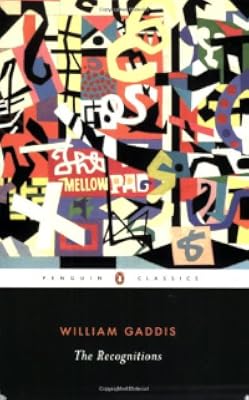
This is a dark and pessimistic vision that was all the more difficult to read situated in the politics of 2019. I'm probably going to put off The Recognitions a little while longer.
Spending time with an abusive alcoholic as he drinks and rants in his kitchen was trying. The character of Paul is like an unlikable Walter Sobchak from The Big Lebowski. A Walter Sobchak in real life.
This is a dark and pessimistic vision that was all the more difficult to read situated in the politics of 2019. I'm probably going to put off The Recognitions a little while longer.
I must warn you, I have no qualms calling Gaddis the greatest novelist of the later twentieth century, and perhaps ever. I am an unrepentant fanboy. So my star rating is completely untrustworthy. Anyway, on to my thoughts.
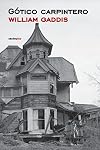
This is the shortest and best titled of Gaddis' real books (I don't count Agape Agape). Carpenter's Gothic, one of the characters tells us, is a style of American architecture. The builders tried to imitate European neo-gothic, but did so from the outside in: the houses have turrets and towers, they're pointlessly tall but rarely spread out into all that land that American houses have to spread out into. The inside is a hodgepodge, because what the architects cared about was how it looked from the outside. So the show more rooms are divided in irrational, silly and unhelpful ways; there are false walls and weird shapes. Examples of neo-gothic include Westminster in London and the Cologne Cathedral. It's often considered to be an adjunct of political or theological conservatism, vs the liberalism of neo-classical architecture. You can't actually squash such buildings down into a house shape, and nor should you.
Gothic is a literary mode that Austen mocked wonderfully well in Northanger Abbey, and that lives on in various forms today (i.e., all that vampire and werewolf fiction). The original gothic novels often take place in a neo-gothic country manor, and involve (doomed) romance and fantastic or inexplicable events, with improbable, convoluted plots and twists.
You see where this is headed: CG takes place in a 'carptenter's gothic' (modern American analogue of the) country manor. It involves romance, an improbable, convoluted plot, and a mysterious concluding twist. But whereas gothic authors will either leave the actual cause of the mysteries unclear (think: James' 'Turn of the Screw'), or explained them as simple natural phenomena, Gaddis explains the mysteries by way of American overseas neo-colonialism and general masculine stupidity. Using old literary forms in new ways to criticize real world things gets me very hot under the collar (compare also: McCarthy's use of epic tropes in 'Blood Meridian' and Robinson's use of spiritual autobiography in 'Gilead').
But I get positively *steamy* when a novel includes very little descriptive prose, a lot of dialogue, rants about the state (i.e., bad) of the world, and a high degree of irony about its own heart-felt rants. Check, check, check.
Liz sits in the middle of an awkward love quadrangle, between her husband Paul, drunken self-righteous mansplainer and general symbol for American litigiousness, fiscal religiosity, rapaciousness, and (borderline) rape; her landlord McCandless, a hopeless self-righteous liberal who owns the carptenter's gothic and knows everything but does nothing because everything's f*cked anyway, and whose rants about other people's guilt make very clear that he's as guilty as the rest of us if not more so; and her brother Billy, a grasping self-righteous post-hippy who is *totally* not to blame for his own failures. They all insist on being very, very different from each other but the differences are minimal to non-existent: they hector Liz at every opportunity, about different things, sure, but that makes no difference to her as she lies around more or less incapable of leaving her house except to see a doctor.
Ladies and Gentlemen, I give you the United States of America, designed to look like a grand, albeit conservative Olde Europe, but from the inside nothing but a mess, inhabited by the sick/dying, and three kinds of self-righteous horror.
McCandless screams with rage that "the greatest source of anger is fear, the greatest source of hatred is anger and the greatest source of all of it is this mindless revealed religion anywhere you look", and, from within his locked room in the carpenter's gothic mansion, mocks "their deep religious convictions and that's what they are, they're convicts locked up in some shabby fiction doing life without parole". He's right that religious violence is revolting, right that the endemic conflicts of Africa are down to "money from the West and guns from the East," but won't do anything about it. As Liz finally tells him, "you're the one who wants Apocalypse... you're the one who can't wait! The brimstone and fire and your Rift like the day it really happened because they, because you despise their, not their stupidity, no, their hopes because you haven't any, because you haven't any left." Liberal America.
Paul is more or less incoherent and concerned only with greed and the conspiratorial liberal god-damned media who have all the power... with the powerless, useless McCandless as their representative. American Conservatives.
Billy hates his father, tries to solve the problems in African and (spoiler) dies in a plane crash. American Radicals.
So in short, Gaddis is smarter than us, writes better than almost anyone alive (if you even kind of like DFW, read Gaddis, who got in earlier, did it better, and knows much more about the world), and is funnier than almost everyone. Of his three first books, this is the worst. Just imagine that: this is just okay by Gaddis's standards. show less
This is the shortest and best titled of Gaddis' real books (I don't count Agape Agape). Carpenter's Gothic, one of the characters tells us, is a style of American architecture. The builders tried to imitate European neo-gothic, but did so from the outside in: the houses have turrets and towers, they're pointlessly tall but rarely spread out into all that land that American houses have to spread out into. The inside is a hodgepodge, because what the architects cared about was how it looked from the outside. So the show more rooms are divided in irrational, silly and unhelpful ways; there are false walls and weird shapes. Examples of neo-gothic include Westminster in London and the Cologne Cathedral. It's often considered to be an adjunct of political or theological conservatism, vs the liberalism of neo-classical architecture. You can't actually squash such buildings down into a house shape, and nor should you.
Gothic is a literary mode that Austen mocked wonderfully well in Northanger Abbey, and that lives on in various forms today (i.e., all that vampire and werewolf fiction). The original gothic novels often take place in a neo-gothic country manor, and involve (doomed) romance and fantastic or inexplicable events, with improbable, convoluted plots and twists.
You see where this is headed: CG takes place in a 'carptenter's gothic' (modern American analogue of the) country manor. It involves romance, an improbable, convoluted plot, and a mysterious concluding twist. But whereas gothic authors will either leave the actual cause of the mysteries unclear (think: James' 'Turn of the Screw'), or explained them as simple natural phenomena, Gaddis explains the mysteries by way of American overseas neo-colonialism and general masculine stupidity. Using old literary forms in new ways to criticize real world things gets me very hot under the collar (compare also: McCarthy's use of epic tropes in 'Blood Meridian' and Robinson's use of spiritual autobiography in 'Gilead').
But I get positively *steamy* when a novel includes very little descriptive prose, a lot of dialogue, rants about the state (i.e., bad) of the world, and a high degree of irony about its own heart-felt rants. Check, check, check.
Liz sits in the middle of an awkward love quadrangle, between her husband Paul, drunken self-righteous mansplainer and general symbol for American litigiousness, fiscal religiosity, rapaciousness, and (borderline) rape; her landlord McCandless, a hopeless self-righteous liberal who owns the carptenter's gothic and knows everything but does nothing because everything's f*cked anyway, and whose rants about other people's guilt make very clear that he's as guilty as the rest of us if not more so; and her brother Billy, a grasping self-righteous post-hippy who is *totally* not to blame for his own failures. They all insist on being very, very different from each other but the differences are minimal to non-existent: they hector Liz at every opportunity, about different things, sure, but that makes no difference to her as she lies around more or less incapable of leaving her house except to see a doctor.
Ladies and Gentlemen, I give you the United States of America, designed to look like a grand, albeit conservative Olde Europe, but from the inside nothing but a mess, inhabited by the sick/dying, and three kinds of self-righteous horror.
McCandless screams with rage that "the greatest source of anger is fear, the greatest source of hatred is anger and the greatest source of all of it is this mindless revealed religion anywhere you look", and, from within his locked room in the carpenter's gothic mansion, mocks "their deep religious convictions and that's what they are, they're convicts locked up in some shabby fiction doing life without parole". He's right that religious violence is revolting, right that the endemic conflicts of Africa are down to "money from the West and guns from the East," but won't do anything about it. As Liz finally tells him, "you're the one who wants Apocalypse... you're the one who can't wait! The brimstone and fire and your Rift like the day it really happened because they, because you despise their, not their stupidity, no, their hopes because you haven't any, because you haven't any left." Liberal America.
Paul is more or less incoherent and concerned only with greed and the conspiratorial liberal god-damned media who have all the power... with the powerless, useless McCandless as their representative. American Conservatives.
Billy hates his father, tries to solve the problems in African and (spoiler) dies in a plane crash. American Radicals.
So in short, Gaddis is smarter than us, writes better than almost anyone alive (if you even kind of like DFW, read Gaddis, who got in earlier, did it better, and knows much more about the world), and is funnier than almost everyone. Of his three first books, this is the worst. Just imagine that: this is just okay by Gaddis's standards. show less
From this hilariously vicious satire you get the overwhelming impression that there is simply nobody that William Gaddis didn't hate. I try not to assume that an author uses their characters as nothing but mouthpieces for their own views, but this sort of fevered and incredibly tense bile-spitting half-conversation had to come from somewhere, didn't it? Or is it simply that good a satire? A truly, savagely seething novel and one of the best things I've yet read. If this is Gaddis' weakest work - as the general consensus seems to be - how great are his other novels? Call me excited.
Gaddis' writing is virtuosic, the format of dialogue and prose both a unique and fitting style to compliment thematic elements. This is undeniably an important novel but...
Spending time with an abusive alcoholic as he drinks and rants in his kitchen was trying. The character of Paul is like an unlikable Walter Sobchak from The Big Lebowski. A Walter Sobchak in real life.
This is a dark and pessimistic vision that was all the more difficult to read situated in the politics of 2019. I'm probably going to put off The Recognitions a little while longer.
Spending time with an abusive alcoholic as he drinks and rants in his kitchen was trying. The character of Paul is like an unlikable Walter Sobchak from The Big Lebowski. A Walter Sobchak in real life.
This is a dark and pessimistic vision that was all the more difficult to read situated in the politics of 2019. I'm probably going to put off The Recognitions a little while longer.
dialogue constantly surges forward, relentless. i see now why they mention gaddis when reviewing books by david foster wallace.
the novel as a whole is almost startlingly well-crafted. images and phrases return sometimes like musical phrases echoing. made me think of symphonies, or sewing, just the way it was so beautifully woven together. often, the story felt devastating and desperate while the storytelling felt transcendent, brilliant.
i want to read this again, and more slowly.
the novel as a whole is almost startlingly well-crafted. images and phrases return sometimes like musical phrases echoing. made me think of symphonies, or sewing, just the way it was so beautifully woven together. often, the story felt devastating and desperate while the storytelling felt transcendent, brilliant.
i want to read this again, and more slowly.
Members
- Recently Added By
Lists

Pen/Faulkner Winners and Finalists
178 works; 9 members

Cooper
79 works; 1 member
Author Information

9+ Works 7,349 Members
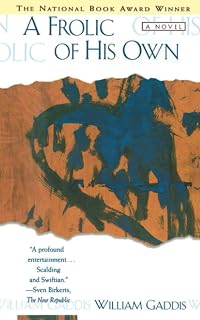
William Gaddis was born on December 29, 1922, in Manhattan, New York City. He was an American novelist. In Recognition of William Gaddis (1984) is a collection of essays supporting the view that Gaddis is the Herman Melville of the twentieth century. The comparison may prove justified, not only because of artistic similarities, but also because show more both writers suffered from years of neglect before achieving fame. Gaddis' novel The Recognitions (1955) baffled and angered most of its initial reviewers, but it has slowly, steadily attracted a growing number of appreciative readers willing to work through its more than 900 demanding pages. Its length and encyclopedic complexity caused some critics mistakenly to hail it as the American Ulysses, but Gaddis disclaimed much knowledge of James Joyce. It was named one of TIME magazine's 100 best novels from 1923 to 2005. As if to make amends for the neglect of The Recognitions, most reviewers greeted Gaddis' second novel, JR (1975), with respectful attention. Although not a popular success, it won the National Book Award. Gaddis won a second National Book Award in 1994 for his book, A Frolic of His Own. Gaddis died at home in East Hampton, New York, of prostate cancer on December 16, 1998. show less
William Gaddis has a Legacy Library. Legacy libraries are the personal libraries of famous readers, entered by LibraryThing members from the Legacy Libraries group.
Awards and Honors
Common Knowledge
- Canonical title*
- Gótico carpintero
- Original publication date
- 1985
- People/Characters
- Paul; Reverend Ude; Liz; McCandless
- Important places
- New York, USA; The House
*Some information comes from Common Knowledge in other languages. Click "Edit" for more information.
Classifications
Statistics
- Members
- 921
- Popularity
- 29,049
- Reviews
- 15
- Rating
- (3.79)
- Languages
- 10 — Dutch, English, French, German, Italian, Polish, Portuguese, Spanish, Swedish, Turkish
- Media
- Paper, Audiobook
- ISBNs
- 25
- ASINs
- 4