Codex Seraphinianus
by Luigi Serafini
On This Page
Description
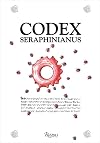
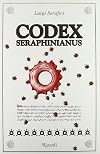
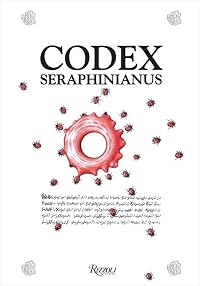
An extraordinary and surreal art book, this edition has been redesigned by the author and includes new illustrations. Ever since the Codex Seraphinianus was first published in 1981, the book has been recognized as one of the strangest and most beautiful art books ever made. This visual encyclopedia of an unknown world written in an unknown language has fueled much debate over its meaning. Written for the information age and addressing the import of coding and decoding in genetics, literary show more criticism, and computer science, the Codex confused, fascinated, and enchanted a generation. While its message may be unclear, its appeal is obvious: it is a most exquisite artifact. Blurring the distinction between art book and art object, this anniversary edition-redesigned by the author and featuring new illustrations-presents this unique work in a new, unparalleled light. With the advent of new media and forms of communication and continuous streams of information, the Codex is now more relevant and timely than ever. A special limited and numbered deluxe edition that includes a signed print is also available. show lessTags
Recommendations











Member Recommendations
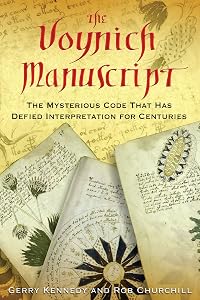
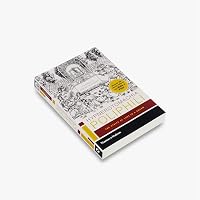
The Voynich Manuscript: The Mysterious Code That Has Defied Interpretation for Centuries by Gerry Kennedy
lorax Kennedy's book describes a mysterious manuscript with an undeciphered script and strange illustrations, that may be centuries old or only date to the early twentieth century, with an unknown purpose. Serafini's is a book with an undeciphered script and bizarre illustrations.
73
acenturyofsleep Cryptic, inventive works involving a fantastic world with its own language glyphs.
Member Reviews
When I got this book in on hold, I just left it in my workroom and flipped through it whenever I was on break. I think it's the best way to read it, just open to random pages and see what you find. I love the gibberish text and how it was laid out. I love that the illustrations are done in pencil crayon.
When I was looking through it as an art book, I had a great time savouring all the little details. How much work must have gone into putting it together, and Serafini's weird imagination. But then I started thinking about it as a travel guide and it freaked me right out. I tried to imagine that I was planning a trip to this world, and I grabbed an encyclopedia to prepare. Everything got real uncanny valley for me pretty quick. I imagine show more I'd be delighted for a few days, taking in all the weird sights (and I'm sure, sounds and smells that aren't available in book form) and meeting the people who live there. But pretty soon, I'll hunger for something familiar, and everything I see will start to haunt me with its just-not-rightness. I kept thinking about that episode of Futurama where Fry's girlfriend ends up in the future and just can't handle all the new weird stuff that's happening. After a (probably pretty short) while, I'd want to just see or feel or eat or experience something comforting, and it would slowly destroy my psyche that I couldn't. It would be even worse than a place that is totally different from what I'm used to, because this world would tease me with familiarity. I would feel gaslighted by this vacation. I wouldn't be able to trust anything. Oh, ok, that animal looks like a hippo, that's pretty comforting but oh god its two halves are actually connected by wires ok ok I'll just look at this dog, it looks fluffy and normal and NOPE it doesn't have a head it's just a clear orb well that's fine, that's fine, we have clear orbs on Earth too, maybe I'll just have a bite of this juicy looking pear to calm me down AND IT'S BLEEDING THE PEAR IS BLEEDING INTO MY MOUTH OKAY I'm going to sit down here by this lake, lakes are nice and tranquil, though this lake is staring back at me with multiple pairs of eyes, which is unsettling, I think I'll go back to my room and lie down. I won't even be able to take comfort in making love for fear that my partner and I would turn into a crocodile. I mean I can't say I'm not intrigued by the idea of being one half of a crocodile for a short while, but I'd have to know that I could become human again and eat some food without it bleeding on me afterwards. Flipping through the pages of this book got slightly anxiety-inducing after thinking about going to visit. I'd have to get a room in the Earth Town neighborhood where people hold pens to write with instead of grafting nibs to the tips of their fingers and I can eat a banana that is banana all the way through and not partially made of tiny beads. Call me closed-minded but my tolerance for change is low. show less
When I was looking through it as an art book, I had a great time savouring all the little details. How much work must have gone into putting it together, and Serafini's weird imagination. But then I started thinking about it as a travel guide and it freaked me right out. I tried to imagine that I was planning a trip to this world, and I grabbed an encyclopedia to prepare. Everything got real uncanny valley for me pretty quick. I imagine show more I'd be delighted for a few days, taking in all the weird sights (and I'm sure, sounds and smells that aren't available in book form) and meeting the people who live there. But pretty soon, I'll hunger for something familiar, and everything I see will start to haunt me with its just-not-rightness. I kept thinking about that episode of Futurama where Fry's girlfriend ends up in the future and just can't handle all the new weird stuff that's happening. After a (probably pretty short) while, I'd want to just see or feel or eat or experience something comforting, and it would slowly destroy my psyche that I couldn't. It would be even worse than a place that is totally different from what I'm used to, because this world would tease me with familiarity. I would feel gaslighted by this vacation. I wouldn't be able to trust anything. Oh, ok, that animal looks like a hippo, that's pretty comforting but oh god its two halves are actually connected by wires ok ok I'll just look at this dog, it looks fluffy and normal and NOPE it doesn't have a head it's just a clear orb well that's fine, that's fine, we have clear orbs on Earth too, maybe I'll just have a bite of this juicy looking pear to calm me down AND IT'S BLEEDING THE PEAR IS BLEEDING INTO MY MOUTH OKAY I'm going to sit down here by this lake, lakes are nice and tranquil, though this lake is staring back at me with multiple pairs of eyes, which is unsettling, I think I'll go back to my room and lie down. I won't even be able to take comfort in making love for fear that my partner and I would turn into a crocodile. I mean I can't say I'm not intrigued by the idea of being one half of a crocodile for a short while, but I'd have to know that I could become human again and eat some food without it bleeding on me afterwards. Flipping through the pages of this book got slightly anxiety-inducing after thinking about going to visit. I'd have to get a room in the Earth Town neighborhood where people hold pens to write with instead of grafting nibs to the tips of their fingers and I can eat a banana that is banana all the way through and not partially made of tiny beads. Call me closed-minded but my tolerance for change is low. show less
Though this isn't a book I can say I "read" in the traditional sense, the art is otherworldly and psychedelic and so full of life and color. I have to wonder if Serafini was heavily under the influence when he created some of these pieces, since they range from goofy to strange to almost grotesque despite the bright color schemes, but I'm so glad to have experienced it nonetheless - my favorite was the last chapter where he drew a bunch of different cityscapes that were as alien as they were beautiful, making me wish I could actually visit them. I also wish I had more of a background in cryptography so I could try cracking the code of the language he used; even though he claimed it's an imaginary language, it would still be fun to show more attempt and the script just looks so systematic and orderly.
In other words - I remember hearing somewhere that his goal with this work was to allow readers to feel the same sort of fascination they did as children when first coming across books. I'd say he definitely achieved that bit, because I found myself drawn into this strange fictional universe in a way I haven't encountered in a very long time. The atmosphere reminds me of the spell book owned by Coriakin in the Narnia chronicles, which goes over a number of incantations with beautiful illustrations and doesn't allow you to go back once you've turned the page. And the text itself makes me think of the unknown language of the Voynich Manuscript, which is next on my reading list. Definitely an unforgettable experience of a book and one I'll revisit whenever I'm looking for creative inspiration. show less
In other words - I remember hearing somewhere that his goal with this work was to allow readers to feel the same sort of fascination they did as children when first coming across books. I'd say he definitely achieved that bit, because I found myself drawn into this strange fictional universe in a way I haven't encountered in a very long time. The atmosphere reminds me of the spell book owned by Coriakin in the Narnia chronicles, which goes over a number of incantations with beautiful illustrations and doesn't allow you to go back once you've turned the page. And the text itself makes me think of the unknown language of the Voynich Manuscript, which is next on my reading list. Definitely an unforgettable experience of a book and one I'll revisit whenever I'm looking for creative inspiration. show less
Italian artist Luigi Serafini's Codex Seraphinianus is a gorgeous illuminated manuscript describing a world of the artist's imagining. One that's alien, yet familiar at the same time. The invented language he uses also recalls several all at the same time: Arabic, ancient Greek, and the Burmese alphabet. It demands that the reader take the time to carefully pour over each illustration and line of script in order to glean some insight into this unfamiliar world. Serafini's description of the creative process recalls a cloistered monk carefully transcribing the mysteries of the universe by candlelight.
Italian artist Luigi Serafini's Codex Seraphinianus is a gorgeous illuminated manuscript describing a world of the artist's imagining. One that's alien, yet familiar at the same time. The invented language he uses also recalls several all at the same time: Arabic, ancient Greek, and the Burmese alphabet. It demands that the reader take the time to carefully pour over each illustration and line of script in order to glean some insight into this unfamiliar world. Serafini's description of the creative process recalls a cloistered monk carefully transcribing the mysteries of the universe by candlelight. This is a must-have for fans of the unusual or those who want to add wonder to their lives.
This book is a dream come true... literally. Ever since I saw it once on "world's weirdest books" list, I have wanted to possess it: however, the fact that it was very difficult to get hold of a copy and even if one was found, the price would very well drive it out of my reach forced me keep it on a very remote wishlist. Until Liz provided me with a pdf copy. Thanks, Liz!
It would be wrong to say that I have read Codex Seraphinianus - I haven't. In fact, nobody other than the author has. It is written in a totally incomprehensible and so far undeciphered language which the author, Luigi Serafini, has steadfastly refused to translate. The doubt remains that there is nothing to decipher - that it is all a giant hoax, meaningless scrolls show more and whorls meant to look like profound wisdom. This, we may never know.
The "Codex" is an illustrated encyclopaedia of sorts, with sections devoted to botany, zoology, anatomy, geography etc. - at least, so much we can infer from the layout and the pictures. But the country it describes is something imagined by Hieronymus Bosch and M.C.Escher on acid, with some liberal help from Salvador Dali and Luis Bunuel. In some aspects, it is very much like our world: but as one looks closer, the weirdness begins to be apparent. Trees which uproot themselves and jump into the water like lemmings; chairs which are grown and harvested; human beings composed partly of firearms; a copulating couple who merge into a crocodile; human beings composed of balls of wool and umbrellas from the waist up... the eerie images can be enumerated ad inifinitum. The funny thing is that, we get a feeling that we just need to understand the language to make sense of this strange and wonderful world: being unable to do so frustrates us. I found myself constantly pondering... what meaning is hidden in those strange squiggles?
The author may have meant it as a joke, but I think this book illustrates one profound characteristic of language. Unless we infuse meaning into those lines and curves, and link them with sounds and meanings, isn't all language nonsense? For example, my son and wife can read Arabic, so they stop and read the signboards on the the roadside, but for me those beautiful snakelike markings are just decoration.
The highest recommendation for any connoisseur of the weird (like me!). show less
It would be wrong to say that I have read Codex Seraphinianus - I haven't. In fact, nobody other than the author has. It is written in a totally incomprehensible and so far undeciphered language which the author, Luigi Serafini, has steadfastly refused to translate. The doubt remains that there is nothing to decipher - that it is all a giant hoax, meaningless scrolls show more and whorls meant to look like profound wisdom. This, we may never know.
The "Codex" is an illustrated encyclopaedia of sorts, with sections devoted to botany, zoology, anatomy, geography etc. - at least, so much we can infer from the layout and the pictures. But the country it describes is something imagined by Hieronymus Bosch and M.C.Escher on acid, with some liberal help from Salvador Dali and Luis Bunuel. In some aspects, it is very much like our world: but as one looks closer, the weirdness begins to be apparent. Trees which uproot themselves and jump into the water like lemmings; chairs which are grown and harvested; human beings composed partly of firearms; a copulating couple who merge into a crocodile; human beings composed of balls of wool and umbrellas from the waist up... the eerie images can be enumerated ad inifinitum. The funny thing is that, we get a feeling that we just need to understand the language to make sense of this strange and wonderful world: being unable to do so frustrates us. I found myself constantly pondering... what meaning is hidden in those strange squiggles?
The author may have meant it as a joke, but I think this book illustrates one profound characteristic of language. Unless we infuse meaning into those lines and curves, and link them with sounds and meanings, isn't all language nonsense? For example, my son and wife can read Arabic, so they stop and read the signboards on the the roadside, but for me those beautiful snakelike markings are just decoration.
The highest recommendation for any connoisseur of the weird (like me!). show less
A truly bizarre work which has often been described as the strangest book ever created, and which has to be experienced to be believed. The physical book is in itself a work of art, presented as a large format hardcover volume with countless colour illustrations printed on a high quality, thick, ridged paper, which make the coloured pencil and ink illustrations look as though they've been drawn directly on the page. The overall work has the aspect and organization of an encyclopedia, with clearly formatted pages of explanatory text and diagrams in a wholly invented language, presenting exquisite though illegible calligraphy throughout; the language of the book has defied linguists for decades, but one cannot help but try to make sense show more of it. Many "specimens" are shown in detailed drawings, from fantastical plant forms to local costumes, mechanical devices, architecture and landscapes, which could only exist in an alternate universe, the brain of someone on LSD, or as Serafini himself explained for this recent 2013 edition, from the mind of the cat who kept him company in the late 70s as Serafini worked feverishly on this project during 30 months, with the feline perched on his shoulders and transmitting his ideas to him telepathically. He in fact credits the cat as the true creator and himself merely as the scribe. Not surprisingly, Serafini himself is an Italian artist, architect and designer, who has, among other things worked with the famous surreal film director Federico Fellini, and his book has been compared to works by M.C. Escher and Hieronymus Bosch.
I find I cannot rate this book, for the simple reason that I was completely enchanted in the beginning, as well as astounded at the level of detail, sheer work and vivid imagination put into this huge volume, but perhaps my own mood coloured my perception as I kept turning the pages because I was at times delighted and enchanted, and on some days I felt as though I was seeing nightmarish visions. I'm glad I was able to borrow this book from our national library system and didn't go ahead and spend the $80 listed price on it, as I may want to pore over it again once or twice, but ultimately found it too disturbing to have in my permanent collection. But that's just me. Others I'm sure will be delighted to own this fantastic volume, and for good reason. show less
I find I cannot rate this book, for the simple reason that I was completely enchanted in the beginning, as well as astounded at the level of detail, sheer work and vivid imagination put into this huge volume, but perhaps my own mood coloured my perception as I kept turning the pages because I was at times delighted and enchanted, and on some days I felt as though I was seeing nightmarish visions. I'm glad I was able to borrow this book from our national library system and didn't go ahead and spend the $80 listed price on it, as I may want to pore over it again once or twice, but ultimately found it too disturbing to have in my permanent collection. But that's just me. Others I'm sure will be delighted to own this fantastic volume, and for good reason. show less
Since the text which accompanies and (I guess) ‘explains’ this book’s wonderful illustrations is written entirely in a script that remains undeciphered, this is purely an art-book. The pictures themselves—beautifully done in ink and coloured pencil, then magnificently reproduced by the publishers Rizzoli—are so strange, the overall effect is like working your way through an encyclopaedia from a different universe altogether: there are peculiar plants, animals, tools and machines, costumes, food, architecture and other things not easy to even categorise. If you know the Voynich Manuscript (which may have inspired this) well, the Codex is a similar work, but done by a modern Italian surrealist.
Members
- Recently Added By
Lists

Cryptology - non-fiction and fiction
57 works; 4 members

Books as Objects & Metatextual Works
32 works; 3 members

Experimental Literature
141 works; 19 members

Authors from Italy
13 works; 1 member

Fakes, Forgeries, and Fictitious Authors
112 works; 4 members

Books Read in 2024
4,727 works; 128 members

Books with ribbon marks
3 works; 1 member
Author Information

11+ Works 997 Members
Some Editions
Common Knowledge
- Canonical title
- Codex Seraphinianus
- Original title
- Codex Seraphinianus
- Original publication date
- 1981
- Original language
- Artificial Language
- Canonical DDC/MDS
- 709.04082
Classifications
- Genre
- Reference
- DDC/MDS
- 709.04082 — Arts & recreation Arts History, geographic treatment, biography By Period 1900-1999 20th century; Modern art modified standard subdivisions, and movements Specific composite media Artists' books
- LCC
- PN6381 .S4 — Language and Literature Literature (General) Literature (General) Collections of general literature
- BISAC
Statistics
- Members
- 934
- Popularity
- 28,552
- Reviews
- 35
- Rating
- (4.58)
- Languages
- 7 — Dutch, English, French, German, Italian, Spanish, Ukrainian
- Media
- Paper, Ebook
- ISBNs
- 18
- ASINs
- 5