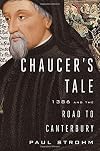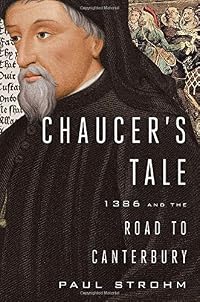
Chaucer's Tale: 1386 and the Road to Canterbury
by Paul Strohm
On This Page
Description
" A lively microbiography of Chaucer that tells the story of the tumultuous year that led to the creation of The Canterbury Tales. In 1386, Geoffrey Chaucer endured his worst year, but began his best poem. The father of English literature did not enjoy in his lifetime the literary celebrity that he has today-far from it. The middle-aged Chaucer was living in London, working as a midlevel bureaucrat and sometime poet, until a personal and professional crisis set him down the road leading to show more The Canterbury Tales. In the politically and economically fraught London of the late fourteenth century, Chaucer was swept up against his will in a series of disastrous events that would ultimately leave him jobless, homeless, separated from his wife, exiled from his city, and isolated in the countryside of Kent-with no more audience to hear the poetry he labored over. At the loneliest time of his life, Chaucer made the revolutionary decision to keep writing, and to write for a national audience, for posterity, and for fame. Brought expertly to life by Paul Strohm, this is the eye-opening story of the birth one of the most celebrated literary creations of the English language"-- "A lively microbiography of Geoffrey Chaucer, the "father of English literature", focusing on the surprising and fascinating story of the tumultuous year that led to the creation of the Canterbury Tales"-- show lessTags
Recommendations







Member Recommendations
How to Live: Or A Life of Montaigne in One Question and Twenty Attempts at an Answer by Sarah Bakewell
dajashby A similar technique of using biography to shed light on the subject's literature.
Member Reviews
Paul Strohm reminds us in this book that the Canterbury Tales is almost the very first medieval writing to truly include members of several "estates" (social classes), from the Knight, who is a member of the gentry, down to the Ploughman and the other "churls." Much of the power of the tales (and the Tales) comes from this very mixture of classes. Some of its contents are very modern, as in the feminism of the Wife of Bath or the blatant sexual interests of the Miller; sometimes it offers something so medieval as to be almost unreadable, as in the anti-Semitism of the Prioress.
Chaucer's Tale is an equally curious mixture of gold and lead, without even the excuse of being intended for medieval tastes.
The gold is the brilliant description show more of life in fourteenth century England, and the political environment in which Chaucer found himself. I have read a lot of fourteenth century history, and I don't think any book has conveyed the feeling of it as well. There are a few places where Strohm seems a little too sure of himself -- for instance, he is convinced that Chaucer's long-time residence above Aldgate was a miserable hole in the wall (literally), while others are convinced it was a comfortable, desirable home. Who is right? I would guess the latter, but I don't know; I do know that Strohm should have mentioned that there is disagreement.
The one real problem, though, is the portrayal of Chaucer. In particular, Strohm's contention that, until 1386, Chaucer had been basically a private poet, writing only for himself and some sort of inner circle, which is why his poetry never seems to be mentioned in all our "Life-records."
I just don't buy it. By that time, Guillaume de Machaut had called Chaucer a great translator, and John Gower was talking about Chaucer's poetry. Later, lesser writers like Lydgate and Hoccleve were growing up with his poetry. But the kicker is Chaucer's first long work, The Book of the Duchess. There is near-universal agreement (including by Strohm) that this is about Blanche of Lancaster, the first wife of John of Gaunt. Why would Chaucer have written such a book, were it not for presentation to Gaunt? (Since Blanche was dead by then; it is, in large part, an exploration of how Gaunt reacted to her death.) Chaucer was a public poet; it's just that our records are about his work as a civil servant and ambassador, in which his poetry is not relevant.
Also, I think Strohm is missing the clues in Chaucer's portrayal of himself. Yes, Chaucer the Pilgrim, and the narrator of the House of Fame, and all the others, are caricature, but they are caricature based on the real Chaucer -- as bookish as a medieval man could be, private, not a great success with women (Strohm himself suggests that he and his wife Philippa mostly lived apart), a bit bumbling in manner. Throw in a fact that Strohm doesn't use: of Chaucer's six longest works, three (The House of Fame, The Legend of Good Women, and The Canterbury Tales) are unfinished. These hints add up to a clear personality, and it's not the personality Strohm describes. It's a man who was an intellectual genius, but not a good manager; a man who knew almost everything it was possible to know in medieval England (remember, apart from his poetry, he wrote the first English-language scientific textbook, the Treatise on the Astrolabe!, and he knew at least four languages) -- but who wasn't good at planning. For this reason, I don't think, e.g., that Chaucer in his work at the wool custom went along with the infamous Nicholas Bembre; I think he just couldn't push back -- and didn't try.
Many of the conclusions in this book are dependent on Chaucer's psychology, and I just don't think that Strohm has that right. So I am forced to strenuously disagree with him on those matters. But he certainly makes an interesting case. I don't think this should be anyone's first reading about Chaucer, because of that psychological error, but this is clearly a must-read for anyone truly interested in the life of the man who brought iambic pentameter into English, the first great author Britain ever produced, the greatest poet ever to write in English. show less
Chaucer's Tale is an equally curious mixture of gold and lead, without even the excuse of being intended for medieval tastes.
The gold is the brilliant description show more of life in fourteenth century England, and the political environment in which Chaucer found himself. I have read a lot of fourteenth century history, and I don't think any book has conveyed the feeling of it as well. There are a few places where Strohm seems a little too sure of himself -- for instance, he is convinced that Chaucer's long-time residence above Aldgate was a miserable hole in the wall (literally), while others are convinced it was a comfortable, desirable home. Who is right? I would guess the latter, but I don't know; I do know that Strohm should have mentioned that there is disagreement.
The one real problem, though, is the portrayal of Chaucer. In particular, Strohm's contention that, until 1386, Chaucer had been basically a private poet, writing only for himself and some sort of inner circle, which is why his poetry never seems to be mentioned in all our "Life-records."
I just don't buy it. By that time, Guillaume de Machaut had called Chaucer a great translator, and John Gower was talking about Chaucer's poetry. Later, lesser writers like Lydgate and Hoccleve were growing up with his poetry. But the kicker is Chaucer's first long work, The Book of the Duchess. There is near-universal agreement (including by Strohm) that this is about Blanche of Lancaster, the first wife of John of Gaunt. Why would Chaucer have written such a book, were it not for presentation to Gaunt? (Since Blanche was dead by then; it is, in large part, an exploration of how Gaunt reacted to her death.) Chaucer was a public poet; it's just that our records are about his work as a civil servant and ambassador, in which his poetry is not relevant.
Also, I think Strohm is missing the clues in Chaucer's portrayal of himself. Yes, Chaucer the Pilgrim, and the narrator of the House of Fame, and all the others, are caricature, but they are caricature based on the real Chaucer -- as bookish as a medieval man could be, private, not a great success with women (Strohm himself suggests that he and his wife Philippa mostly lived apart), a bit bumbling in manner. Throw in a fact that Strohm doesn't use: of Chaucer's six longest works, three (The House of Fame, The Legend of Good Women, and The Canterbury Tales) are unfinished. These hints add up to a clear personality, and it's not the personality Strohm describes. It's a man who was an intellectual genius, but not a good manager; a man who knew almost everything it was possible to know in medieval England (remember, apart from his poetry, he wrote the first English-language scientific textbook, the Treatise on the Astrolabe!, and he knew at least four languages) -- but who wasn't good at planning. For this reason, I don't think, e.g., that Chaucer in his work at the wool custom went along with the infamous Nicholas Bembre; I think he just couldn't push back -- and didn't try.
Many of the conclusions in this book are dependent on Chaucer's psychology, and I just don't think that Strohm has that right. So I am forced to strenuously disagree with him on those matters. But he certainly makes an interesting case. I don't think this should be anyone's first reading about Chaucer, because of that psychological error, but this is clearly a must-read for anyone truly interested in the life of the man who brought iambic pentameter into English, the first great author Britain ever produced, the greatest poet ever to write in English. show less
This book markets itself as an exploration of 1386 being Chaucer’s year of doom. As it turns out this is short section of literary criticism at the end where Strohm argues that Chaucer was lonely without his poetry group so he invented a group of pilgrims who listened to each other’s poetry. Fine.
The rest of the book is far more interesting. Strohm’s procedure is as follows. He takes what we know of Chaucer from the documentary evidence and fleshes it out, giving us a snapshot history of the late 14th Century. This history informs our knowledge of Chaucer and there’s thus a nice feedback loop. So we have a picture drawn for us of the court of John of Gaunt, one of conditions in London and Chaucer’s digs, and the English wool show more trade. Particularly interesting were the digs and, strangely, the wool trade, which Strohm presents as a hive of scum and villainy.
Strohm is at pains to stress a sort of low-status Chaucer living in poor housing in a filthy city. I’ll accept that London was filthy, but otherwise I think we need a reality check. His father may have been ‘in trade’, but in comparison to the poor shack-dwellings sods whose job it was to collect faecal matter he was living it large in his stone tower. I wonder if Strohm is attempting to create a vulnerable Chaucer we can identify with. Still, you don’t need to agree with everything to learn something from it.
The first edition is particularly nice. Paper cover covered boards blind-stamped with the author’s initials. Quarter bound in cloth with gilt lettering on the spine. The dust jacket is platicky on the inside and pithy on the outside. A bit like an inside-out satsuma. show less
The rest of the book is far more interesting. Strohm’s procedure is as follows. He takes what we know of Chaucer from the documentary evidence and fleshes it out, giving us a snapshot history of the late 14th Century. This history informs our knowledge of Chaucer and there’s thus a nice feedback loop. So we have a picture drawn for us of the court of John of Gaunt, one of conditions in London and Chaucer’s digs, and the English wool show more trade. Particularly interesting were the digs and, strangely, the wool trade, which Strohm presents as a hive of scum and villainy.
Strohm is at pains to stress a sort of low-status Chaucer living in poor housing in a filthy city. I’ll accept that London was filthy, but otherwise I think we need a reality check. His father may have been ‘in trade’, but in comparison to the poor shack-dwellings sods whose job it was to collect faecal matter he was living it large in his stone tower. I wonder if Strohm is attempting to create a vulnerable Chaucer we can identify with. Still, you don’t need to agree with everything to learn something from it.
The first edition is particularly nice. Paper cover covered boards blind-stamped with the author’s initials. Quarter bound in cloth with gilt lettering on the spine. The dust jacket is platicky on the inside and pithy on the outside. A bit like an inside-out satsuma. show less
The importance of Geoffrey Chaucer on English literature cannot be measured, but if not for one bad year both Chaucer and the history of English literature could have been remembered completely differently. Paul Strohm writes in his new book, “Chaucer’s Tale”, that if not for the rapidly changing political environment in 1386 Chaucer’s life might have not provided him the opportunity to write “The Canterbury Tales”.
Strohm begins his microbiography of Chaucer by placing the author within English society as first the son of a wine importer then a courtier and finally a bureaucrat. Chaucer’s connects to the growing Lancastrian family through family connections while politically aligned to Richard II are discussed in show more connection to the position he received in London. Chaucer’s professional career in London, along with his sideline interest in composing words into poems and tales, is discussed before he is transitioned into a Member of Parliament for the fateful 1386 Parliament.
After setting the stage, Strohm shows how Chaucer became adrift in the political storm that was just beginning in 1386 which resulted in him losing his job and home leading to a change of focus. At this point Strohm gives a glimpse into the emerging culture of English letters in the late fourteenth century and how Chaucer approached the concept of fame before and after 1386. Strohm then relates how Chaucer did something completely different in relation to audience and creating the spark of English literature that would continue through Shakespeare through Joyce to today.
The research that Strohm put into this book is excellent, even with the lack of sources because of the seven centuries gap. The detailed descriptions of life in medieval London were fascinating as well as the political drama going into the background that impacted Chaucer for good and ill. However this detail in setting background for 1386 dominates the first half of the book leaving the reader waiting for Strohm to show how 1386 resulted in Chaucer’s masterpiece. The biggest fault of the book is that Strohm continually adds detail after detail along with supporting evidence to facts he has already proven for background while not advancing towards the central thrust of the book.
“Chaucer’s Tale” shows how a minor individual in the political landscape of medieval England became a literary giant that is better remember than the kings, lords, and gentlemen of his time. Paul Strohm shows Chaucer’s radically new idea that spawned “The Canterbury Tales” and jumped started English literature, however he takes his time to get to the point while over describing the background of life and events leading to the fateful Parliament of 1386 and the consequences of it.
I received an Advanced Uncorrected Proofs edition of this book through Goodreads First Reads. show less
Strohm begins his microbiography of Chaucer by placing the author within English society as first the son of a wine importer then a courtier and finally a bureaucrat. Chaucer’s connects to the growing Lancastrian family through family connections while politically aligned to Richard II are discussed in show more connection to the position he received in London. Chaucer’s professional career in London, along with his sideline interest in composing words into poems and tales, is discussed before he is transitioned into a Member of Parliament for the fateful 1386 Parliament.
After setting the stage, Strohm shows how Chaucer became adrift in the political storm that was just beginning in 1386 which resulted in him losing his job and home leading to a change of focus. At this point Strohm gives a glimpse into the emerging culture of English letters in the late fourteenth century and how Chaucer approached the concept of fame before and after 1386. Strohm then relates how Chaucer did something completely different in relation to audience and creating the spark of English literature that would continue through Shakespeare through Joyce to today.
The research that Strohm put into this book is excellent, even with the lack of sources because of the seven centuries gap. The detailed descriptions of life in medieval London were fascinating as well as the political drama going into the background that impacted Chaucer for good and ill. However this detail in setting background for 1386 dominates the first half of the book leaving the reader waiting for Strohm to show how 1386 resulted in Chaucer’s masterpiece. The biggest fault of the book is that Strohm continually adds detail after detail along with supporting evidence to facts he has already proven for background while not advancing towards the central thrust of the book.
“Chaucer’s Tale” shows how a minor individual in the political landscape of medieval England became a literary giant that is better remember than the kings, lords, and gentlemen of his time. Paul Strohm shows Chaucer’s radically new idea that spawned “The Canterbury Tales” and jumped started English literature, however he takes his time to get to the point while over describing the background of life and events leading to the fateful Parliament of 1386 and the consequences of it.
I received an Advanced Uncorrected Proofs edition of this book through Goodreads First Reads. show less
My graduate work at Baylor mainly focused on the High Middle Ages and the Renaissance. So, anytime an interesting book about either appears, I can’t help myself in returning to those wonderful days of grad school. Paul Strohm has written a detailed and interesting look at London inhabited by Geoffrey Chaucer in the late 14th century. Chaucer’s Tale: 1386 and the Road to Canterbury sheds some light on the gaps in Chaucer’s life story.
Paul Strohm has been the J.R.R. Tolkien Professor of English at Oxford University and Garbedian Professor of the Humanities at Columbia University. He has written several books on the period and he divides his time between New York, and Oxford, England.
While there are large gaps in the details of show more Chaucer’s life, Strohm has painted the background of the city in which Chaucer lived, worked, and died. Chaucer held several important positions as a trusted member of the extended family of King Edward III. One post had him as a collector of revenue for the crucial wool market. A large portion of the crown’s treasury came from this market. The market was also riddled with corruption, theft, and palace intrigues. Chaucer nimbly skated in an out of the danger surrounding him. Strohm doesn’t know exactly how, but he surmises Chaucer looked the other way, and most likely did not participate in the corruption. Strohm writes of Geoffrey’s patron, John of Gaunt, son of Edward III: “He was embroiled in the murky circumstances surrounding the slaying of the insurrectionary leader Wat Tyler at the peak of the Peasant’s Revolt in 1381 and earned a knighthood as a reward. His no-holds-barred contests with mayoral adversary John Northhampton culminated in factional violence, Northhampton’s imprisonment, and an urban climate so poisoned by partisan rancor that as late as 1391 city authorities issued an ordinance ‘forbidding any one whatsoever to express opinions about Nicholas Bembre or John Northhampton, former mayors of the city, nor show any sign as to which of the two parties they favored’” (111). Sounds a little familiar.
I particularly liked the descriptions of the city, some of which amazed me at the level of filth, garbage, and waste poured into the Thames and other cities. The description of Chaucer’s tiny residence at “Aldgate, the eastern most and busiest of the city’s seven gates. There, literally under his feet, passed royal and religious processions, spectacles of public humiliation, expelled convicts and sanctuary seekers, provisioners and trash haulers with iron-wheeled carts and vans drovers, water and wood sellers, traders with Baltic and northern European luxuries, runaway serfs, Essex rebels flowing in on their way to burn Gaunt’s Savoy Palace in 1381 and all the rest of a busy city’s shifting populace … Surely no residence more fitting could be imagined for a poet whose subject was soon to become, as Dryden put it, ‘God’s plenty’” (49).
The longest and most detailed of Paul Strohm’s chapters involved the wool market. I guess he felt it necessary to provide an enormous amount of detail – bordering on tedium. After a while, I had lost track of the tangled corruption going on, and I skimmed a few pages. However, Chaucer’s Tale: 1386 and the Road to Canterbury proved overall as and excellent addition to my library on the middle ages. 4-1/2 stars
--Jim, 5/11/16 show less
Paul Strohm has been the J.R.R. Tolkien Professor of English at Oxford University and Garbedian Professor of the Humanities at Columbia University. He has written several books on the period and he divides his time between New York, and Oxford, England.
While there are large gaps in the details of show more Chaucer’s life, Strohm has painted the background of the city in which Chaucer lived, worked, and died. Chaucer held several important positions as a trusted member of the extended family of King Edward III. One post had him as a collector of revenue for the crucial wool market. A large portion of the crown’s treasury came from this market. The market was also riddled with corruption, theft, and palace intrigues. Chaucer nimbly skated in an out of the danger surrounding him. Strohm doesn’t know exactly how, but he surmises Chaucer looked the other way, and most likely did not participate in the corruption. Strohm writes of Geoffrey’s patron, John of Gaunt, son of Edward III: “He was embroiled in the murky circumstances surrounding the slaying of the insurrectionary leader Wat Tyler at the peak of the Peasant’s Revolt in 1381 and earned a knighthood as a reward. His no-holds-barred contests with mayoral adversary John Northhampton culminated in factional violence, Northhampton’s imprisonment, and an urban climate so poisoned by partisan rancor that as late as 1391 city authorities issued an ordinance ‘forbidding any one whatsoever to express opinions about Nicholas Bembre or John Northhampton, former mayors of the city, nor show any sign as to which of the two parties they favored’” (111). Sounds a little familiar.
I particularly liked the descriptions of the city, some of which amazed me at the level of filth, garbage, and waste poured into the Thames and other cities. The description of Chaucer’s tiny residence at “Aldgate, the eastern most and busiest of the city’s seven gates. There, literally under his feet, passed royal and religious processions, spectacles of public humiliation, expelled convicts and sanctuary seekers, provisioners and trash haulers with iron-wheeled carts and vans drovers, water and wood sellers, traders with Baltic and northern European luxuries, runaway serfs, Essex rebels flowing in on their way to burn Gaunt’s Savoy Palace in 1381 and all the rest of a busy city’s shifting populace … Surely no residence more fitting could be imagined for a poet whose subject was soon to become, as Dryden put it, ‘God’s plenty’” (49).
The longest and most detailed of Paul Strohm’s chapters involved the wool market. I guess he felt it necessary to provide an enormous amount of detail – bordering on tedium. After a while, I had lost track of the tangled corruption going on, and I skimmed a few pages. However, Chaucer’s Tale: 1386 and the Road to Canterbury proved overall as and excellent addition to my library on the middle ages. 4-1/2 stars
--Jim, 5/11/16 show less
Strohm looks at the events of 1386 and how they affected Geoffrey Chaucer. Chaucer's life changed dramatically in 1386 - he was essentially kicked out of London and lost his job as a wool customs clerk. As a writer, this meant that Chaucer no longer had access to his audience, and there wasn't yet a concept of writing for a general audience. Strohm surmises that this led Chaucer to conceive of the pilgrims in the Canterbury Tales as his audience: in other words, having lost his real audience, Chaucer invented a new one.
Unfortunately, Strohm takes a very long time to get to this interesting thesis. He goes into exhaustive detail about the workings of the wool customs, and about London politics in 1386. This is interesting information, show more but it feels like padding - it doesn't further Strohm's main argument, and it can get pretty tedious. It seems like he wrote an essay about Chaucer's audience, and then needed to make it three times longer, so he added a whole bunch of detail about customs and politics.
Nonetheless, this is an interesting read and provides fascinating information about Chaucer and the circumstances under which the Canterbury Tales were written. show less
Unfortunately, Strohm takes a very long time to get to this interesting thesis. He goes into exhaustive detail about the workings of the wool customs, and about London politics in 1386. This is interesting information, show more but it feels like padding - it doesn't further Strohm's main argument, and it can get pretty tedious. It seems like he wrote an essay about Chaucer's audience, and then needed to make it three times longer, so he added a whole bunch of detail about customs and politics.
Nonetheless, this is an interesting read and provides fascinating information about Chaucer and the circumstances under which the Canterbury Tales were written. show less
Since my college English literature course, Chaucer has faded from my mind and I enjoyed this examination of him, both as a refresher for my memory and an interesting take on medieval life. The author poses his thesis that the year 1386 marked a turning point for Chaucer as his civil career was put in jeopardy by shifting politics and Chaucer shortly after began writing his pivotal work The Canterbury Tales. Besides the literary analysis, what I really liked about this book was its details about medieval life and work, as through the eyes of Chaucer and his contemporaries. A good read for anyone who likes the Middle Ages.
One year changed the life of Chaucer. The year when he lost basically everything is when he turned to what he had left, his writing. This year would lead to his writing Canterbury tales.
Loved the first part of the book, it wasn't just centered on Chaucer but also on John the Gault, his scandalous life and mistress of many years, and the political and personal maneuverings of the time. The second part of the book dragged a bit, but all in all it was a good book for those who are interested in The Canterbury Tales and its creator.
ARC from NetGalley.One year changed the life of Chaucer. The year when he lost basically everything is when he turned to what he had left, his writing. This year would lead to his writing Canterbury tales.
Loved show more the first part of the book, it wasn't just centered on Chaucer but also on John the Gault, his scandalous life and mistress of many years, and the political and personal maneuverings of the time. The second part of the book dragged a bit, but all in all it was a good book for those who are interested in The Canterbury Tales and its creator.
ARC from NetGalley. show less
Loved the first part of the book, it wasn't just centered on Chaucer but also on John the Gault, his scandalous life and mistress of many years, and the political and personal maneuverings of the time. The second part of the book dragged a bit, but all in all it was a good book for those who are interested in The Canterbury Tales and its creator.
ARC from NetGalley.One year changed the life of Chaucer. The year when he lost basically everything is when he turned to what he had left, his writing. This year would lead to his writing Canterbury tales.
Loved show more the first part of the book, it wasn't just centered on Chaucer but also on John the Gault, his scandalous life and mistress of many years, and the political and personal maneuverings of the time. The second part of the book dragged a bit, but all in all it was a good book for those who are interested in The Canterbury Tales and its creator.
ARC from NetGalley. show less
Members
- Recently Added By
Lists

John Carey's Sunday Best
82 works; 3 members
Author Information

12+ Works 466 Members
Paul Strohm is William B. Ransford Professor of Medieval Literature at Columbia University.
Common Knowledge
- Original publication date
- 2014
- People/Characters
- Geoffrey Chaucer; Nicholas Brembre; Philippa Chaucer; Edward III, King of England; John Gower; John of Gaunt, Duke of Lancaster (show all 8); Richard II, King of England; Katherine Swynford
- Important places
- Aldgate, London, England, UK; Southwark, London, England, UK
- Important events
- Wonderful Parliament
- First words
- INTRODUCTION
Chaucer's Crisis
Geoffrey Chaucer often wrote about reversals of Fortune. - Blurbers
- Shapiro, James; Lovett, Charlie; Jones, Terry
Classifications
- Genres
- Literature Studies and Criticism, Nonfiction, Biography & Memoir
- DDC/MDS
- 821.1 — Literature & rhetoric English & Old English literatures English poetry 1066-1400 Early English period, medieval period
- LCC
- PR1905 .S77 — Language and Literature English English Literature Anglo-Norman period. Early English. Middle English
- BISAC
Statistics
- Members
- 220
- Popularity
- 147,540
- Reviews
- 7
- Rating
- (3.52)
- Languages
- English
- Media
- Paper, Ebook
- ISBNs
- 6
- ASINs
- 1