Adverbs
by Daniel Handler
On This Page
Description
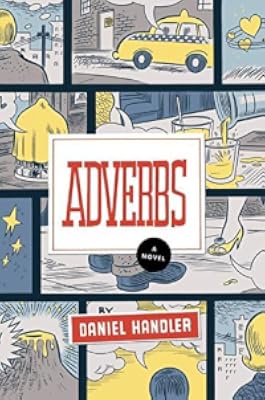
Hello. I am Daniel Handler, the author of this book. Did you know that authors often write the summaries that appear on their book's dust jacket? You might want to think about that the next time you read something like, "A dazzling page-turner, this novel shows an internationally acclaimed storyteller at the height of his astonishing powers." Adverbs is a novel about love -- a bunch of different people, in and out of different kinds of love. At the start of the novel, Andrea is in love with show more David -- or maybe it's Joe -- who instead falls in love with Peter in a taxi. At the end of the novel, it's Joe who's in the taxi, falling in love with Andrea, although it might not be Andrea, or in any case it might not be the same Andrea, as Andrea is a very common name. So is Allison, who is married to Adrian in the middle of the novel, although in the middle of the ocean she considers a fling with Keith and also with Steve, whom she meets in an automobile, unless it's not the same Allison who meets the Snow Queen in a casino, or the same Steve who meets Eddie in the middle of the forest. . . . It might sound confusing, but that's love, and as the author -- me -- says, "It is not the nouns. The miracle is the adverbs, the way things are done." This novel is about people trying to find love in the ways it is done before the volcano erupts and the miracle ends. Yes, there's a volcano in the novel. In my opinion a volcano automatically makes a story more interesting. show lessTags
Recommendations












Member Recommendations

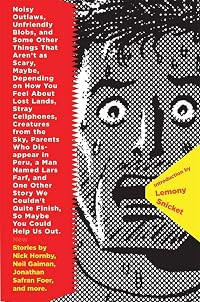
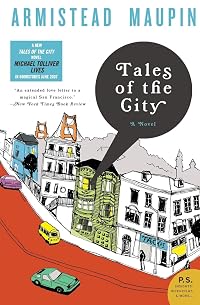
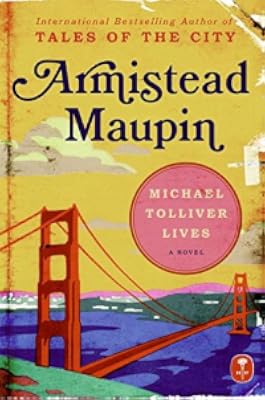
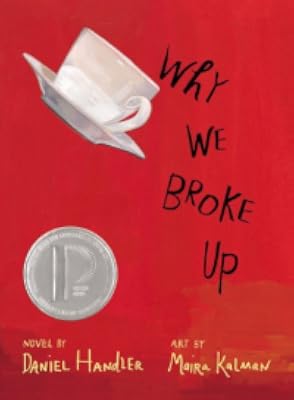
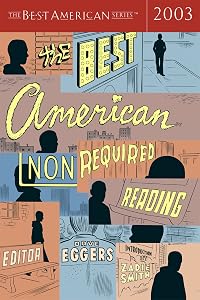
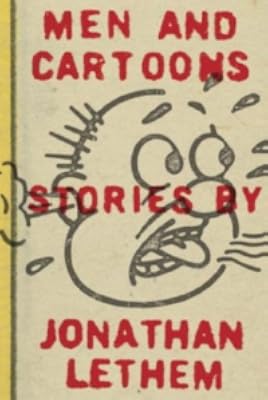
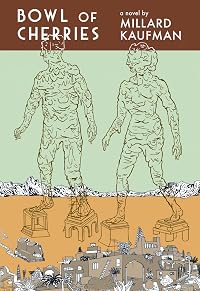
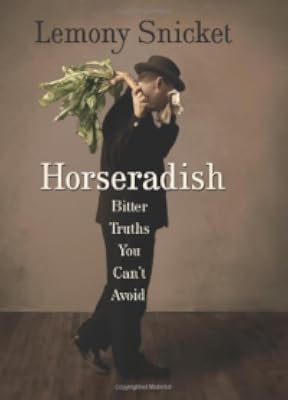
Lirmac Both of these works are playful, form-bending novels-that-aren't-novels.
Member Reviews
When I teach genre classes, I like to conclude with an "edge case" for the genre, one that pushes my students to make a claim as to whether or not the book fits the genre, which in doing so forces to them to articulate what the genre is. When I taught The Modern Novel, I ended with Daniel Handler's Adverbs, which you might define as a collection of linked short stories, yet the cover of my HarperPerennial edition, at least, claims the subtitle A NOVEL. Though the book is not unified in terms of plot, a number of characters recur (or seem to recur) between stories, and there are recurrent motifs, like pop songs and birds, that bring unity to the book, beyond the fact that the whole book is a meditation on one topic, that of love.
Handler show more does tie much of the book together in the chapter "Truly," which is more of an essay about the rest of the book (it reminds me of the half chapter in Julian Barnes's A History of the World in 10½ Chapters, a novel similarly on the edge of novel-ness). In "Truly," Handler suggests both that the book is unified and that you're a bit foolish for chasing the unification:
Nobody keeps score, because there's no sense in keeping track of what everything is doing. You might as well trace birds through a book, [...] or follow the pop songs that stick in people's heads or follow the people themselves, although you're likely to confuse them, as so many people in this book have the same names. You can't follow all the Joes, or all the Davids or Andreas. You can't follow Adam or Allison or Keith, up to Seattle or down to San Francisco or across-- three thousand miles, as the bird flies-- to New York City, and anyway they don't matter. (193-4)
I would argue, then, that the book is unified by its very lack of unity: the reader of Adverbs seeks coherence in an incoherent universe, much as all the characters in the book do. And creating coherence in an incoherent universe, or at least raising the spectre of coherence and then destroying it, is precisely what the novel is all about. (My students liked the book, and did indeed say it was a novel, but I think maybe they just wanted the discussion to end so that class would be over.) show less
Handler show more does tie much of the book together in the chapter "Truly," which is more of an essay about the rest of the book (it reminds me of the half chapter in Julian Barnes's A History of the World in 10½ Chapters, a novel similarly on the edge of novel-ness). In "Truly," Handler suggests both that the book is unified and that you're a bit foolish for chasing the unification:
Nobody keeps score, because there's no sense in keeping track of what everything is doing. You might as well trace birds through a book, [...] or follow the pop songs that stick in people's heads or follow the people themselves, although you're likely to confuse them, as so many people in this book have the same names. You can't follow all the Joes, or all the Davids or Andreas. You can't follow Adam or Allison or Keith, up to Seattle or down to San Francisco or across-- three thousand miles, as the bird flies-- to New York City, and anyway they don't matter. (193-4)
I would argue, then, that the book is unified by its very lack of unity: the reader of Adverbs seeks coherence in an incoherent universe, much as all the characters in the book do. And creating coherence in an incoherent universe, or at least raising the spectre of coherence and then destroying it, is precisely what the novel is all about. (My students liked the book, and did indeed say it was a novel, but I think maybe they just wanted the discussion to end so that class would be over.) show less
This collection of stories is woven together as delicately as a cobweb. There are dozens of characters whose lives all intersect if just for a moment. All their stories have a lot in common. They are all people in love, whether happily or not, whether knowingly or not, logically or not. Despite the compelling and fascinating characters, it's truly the author's words that are the star of this book. One gets the sense that he is constantly at play. He is weaving his language into a complex tapestry to surprise and delight. He succeeds. Before long, I found myself falling helplessly in love with the author himself. I could have listened to him forever.
I thought this book was beautifully written and very unusual. Each individual chapter was like a long prose-poem and could easily be read just by itself. The whole book also worked as a whole, with arcing issues and themes intertwined in every story. I wouldn't recommend it to anyone, necessarily. It's not a particularly easy read - the plot (if there is one) is confused and it's very difficult to keep track of the characters - are they different people with the same name? Or are they the same people every time they show up? Doe it really matter? Couldn't they just be anyone? I do think it's a lovely and meditative book though. I really enjoyed reading it.
I came to Adverbs having just read The Basic Eight, which I loved. Adverbs has the same poetic prose and even more of the earlier book's whimsy, but when it comes to plot and characters the differences couldn't be greater. One of Daniel Handler's greatest successes in The Basic Eight is managing a large cast of characters, keeping them all individual, memorable and relevant. In Adverbs he does exactly the opposite. On purpose. Multiple characters have the same name and sometimes (but not always) the same traits. This is quite confusing until the author explains it to us (in the first person). This is not a book where the nouns are important – the 'who' and the 'what' – the stars of this story the adverbs – the 'how'. Adverbs is a show more book where plot and character are subservient to tropes, themes and nuances – an unusual conceit, but not necessarily a bad one. If The Basic Eight is The Deer Hunter, Adverbs is Heaven's Gate (a maligned an underestimated movie). There is much to enjoy here, but approach with caution. show less
Life is not a progression from the beginning of a story to the end, it's a mess of contradictory ideas and occurences. This book reflects that fact with wit and a brilliantly, honestly chaotic style.
Daniel Handler rocks. I am stalking him across the globe. I had a chance to see him in Wales for the Guardian’s Hay on Wye literary festival both as Lemony Snicket (or more accurately in place of Lemony Snicket) and as Daniel Handler. I also saw him in Seattle for a Mcsweeney’s fundraiser where he had Ben Gibbard (of Death Cab for Cutie and Postal Service fame) Sarah Vowell (“Assassination Vacation”) and Colin Meloy (the Decemberists) act out a play about his life. He was fantastic on each occasion. He is one of a new breed along with fellow Mcsweeney’s friends Dave Eggers, Michael Chabon, and Jonathan Safran Foer, to name a few, who can write serious literate novels, that are also fresh, funny, witty, and playful.
I haven’t show more yet read Handler’s earlier two ‘adult novels’ (that makes them sound like porn, but it is really just an annoying tag given to novels written by people who also write kid’s books), but Adverbs is an excellent novel. The prose is playful and fun, there is a lot of wordplay and humour, and colourful phrasing, but there is also a lot of heart. The characters are deftly portrayed and are brought fully to life. The book is a set of short stories each titled with an adverb and are about love in some form. The characters all move in and out of each other’s stories as they criss-cross the US and fall in and out of love. Though not all of the characters who have the same name are the same person. It would take a careful and exacting read to truly sort out who is who and who knows who and who loves or loved who. But each of the stories are well written and engaging. The characters are lively and fun, and also depressing or creepy, and often sad (how could you write a book about love without sadness?). But they are always real, and always compelling. There are a lot of pop culture in jokes strewn through the pages, and the book manages to be funny and serious at the same time. No mean feat these days. This is a great collection of stories that also reads as (and is indeed titled as) a novel. This is a rich, warm, funny, and all round excellent book. My stalking will continue. In fact I will see him again this week (finally in my home town) appearing in place of Lemony Snicket. No doubt he will not disappoint. show less
I haven’t show more yet read Handler’s earlier two ‘adult novels’ (that makes them sound like porn, but it is really just an annoying tag given to novels written by people who also write kid’s books), but Adverbs is an excellent novel. The prose is playful and fun, there is a lot of wordplay and humour, and colourful phrasing, but there is also a lot of heart. The characters are deftly portrayed and are brought fully to life. The book is a set of short stories each titled with an adverb and are about love in some form. The characters all move in and out of each other’s stories as they criss-cross the US and fall in and out of love. Though not all of the characters who have the same name are the same person. It would take a careful and exacting read to truly sort out who is who and who knows who and who loves or loved who. But each of the stories are well written and engaging. The characters are lively and fun, and also depressing or creepy, and often sad (how could you write a book about love without sadness?). But they are always real, and always compelling. There are a lot of pop culture in jokes strewn through the pages, and the book manages to be funny and serious at the same time. No mean feat these days. This is a great collection of stories that also reads as (and is indeed titled as) a novel. This is a rich, warm, funny, and all round excellent book. My stalking will continue. In fact I will see him again this week (finally in my home town) appearing in place of Lemony Snicket. No doubt he will not disappoint. show less
A collection of interwoven short love stories. Silly, clever, and tragic love stories about different varieties of love. Besides the theme, what ties them together are a cast of like-named characters who may or may not be the same characters and a few distinctive events or objects, like the magpies, the volcano under San Francisco, the taxis, or the couple arguing at the diner. The title of each story is an adverb because, as Handler points out on the dust jacket flap, what’s important is how the thing is done.
Members
- Recently Added By
Author Information

152+ Works 210,630 Members
Lemony Snicket is the pen name of Daniel Handler, who was born on February 28, 1970. As Lemony Snicket, he is the author of and appears as a character in the children's book series A Series of Unfortunate Events. He has also written or contributed to other works using this pen name including Baby in the Manger, The Lump of Coal, The Composer Is show more Dead, and Where Did You See Her Last?. Under his real name, Handler is the author of several books for adults including The Basic Eight, Watch Your Mouth, and Adverbs. (Bowker Author Biography) show less
Awards and Honors
Distinctions
Common Knowledge
- Canonical title
- Adverbs
- Original publication date
- 2006
- People/Characters
- Keith
- Important places
- San Francisco, California, USA
- Epigraph
- What do you mean where does the music come from? Where does the music ever come from? The guy says to the girl Something is on my mind and the girl says Really? What is it? and somebody in the orchestra hits a note and they s... (show all)ing. That's where the music comes from. --Morrie Ryskind on the set of a Marx Brothers movie.
- Dedication
- For Rook--for whom else the book on love?
The author would like to thank the following people: Lisa Brown, Charlotte Sheedy, Ron Bernstein, Don Halpern, Susan Rich, Josh Greenhut, Darla Spiers, Kezia Pearlman, Paula Sharp, Ayelet Waldman, Helena Echlin, Don Clows, an... (show all)d Amanda Davis, much missed. - First words
- Love was in the air, so both of us walked through love on our way to the corner.
- Last words
- (Click to show. Warning: May contain spoilers.)"You've arrived," she said.
- Blurbers
- Chabon, Michael; Eggers, Dave
Classifications
Statistics
- Members
- 1,016
- Popularity
- 25,734
- Reviews
- 44
- Rating
- (3.33)
- Languages
- English, French, Italian, Spanish
- Media
- Paper, Audiobook, Ebook
- ISBNs
- 18
- ASINs
- 6