On This Page
Description
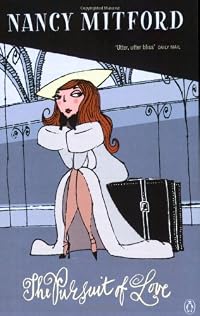
Mitford's most enduringly popular novel, The Pursuit of Love is a classic comedy about growing up and falling in love among the privileged and eccentric. Mitford modeled her characters on her own famously unconventional family. We are introduced to the Radletts through the eyes of their cousin Fanny, who stays with them at Alconleigh, their Gloucestershire estate. Uncle Matthew is the blustering patriarch, known to hunt his children when foxes are scarce; Aunt Sadie is the vague but doting show more mother; and the seven Radlett children, despite the delights of their unusual childhood, are recklessly eager to grow up. The first of three novels featuring these characters, The Pursuit of Love follows the travails of Linda, the most beautiful and wayward Radlett daughter, who falls first for a stuffy Tory politician, then an ardent Communist, and finally a French duke named Fabrice. show lessTags
Recommendations






















Member Recommendations
Imprinted There's an enthralling section in the middle of this memorable novel about the heroine's exploits in Paris during the "phoney war" (Sept. 1939 to May 1940) that will enhance your understanding of Parisien elites of that period.
Member Reviews
I pulled this off the shelf to re-read because I needed something to get the 'romance' square on my book bingo board. There are love stories here, but it's not a romance in either the 2020s sense or the Anthony Trollope sense. There's no wooing, no will-they won't-they, no chase and be chased.
But then the title is The Pursuit of Love, not The Pursuit of Romance.
The characters who find it the easiest are mostly in the background.
In the foreground are Fanny's mother, "the Bolter", who left her husband and Fanny as soon as she could, and Linda, who left her husband and daughter as soon as she could. Mostly Linda. Who after leaving her "traditional life" husband, falls for a Communist, then leaves him when he cheats on her, and falls hard show more for Frenchman Fabrice, who scoops her up at a Paris train station, where Linda is stranded. I guess all her running did lead to love in the end, both on her part and, surprisingly, on his. Then the Nazis invade France.
I want unexpected and quirky details in novels, and liked the amount I got. Like the girl whose dream always was to raise a baby badger. And the gentleman who proposed to his wife by the cage of a two-headed nightingale at the White City.
And I also got the humor I like to have, even in a "serious" novel. Like:
Being a Conservative is much more restful ..., though one must remember that it is bad, not good. But it does take place during certain hours, and then finishes, whereas Communism seems to eat up all one's life and energy.
And: "I think housework is far more tiring and frightening than hunting is, no comparison, and yet after hunting, we had eggs for tea and were made to rest for hours, but after housework, people expect one to go on just as if nothing special had happened." She sighed. show less
But then the title is The Pursuit of Love, not The Pursuit of Romance.
The characters who find it the easiest are mostly in the background.
In the foreground are Fanny's mother, "the Bolter", who left her husband and Fanny as soon as she could, and Linda, who left her husband and daughter as soon as she could. Mostly Linda. Who after leaving her "traditional life" husband, falls for a Communist, then leaves him when he cheats on her, and falls hard show more for Frenchman Fabrice, who scoops her up at a Paris train station, where Linda is stranded. I guess all her running did lead to love in the end, both on her part and, surprisingly, on his. Then the Nazis invade France.
I want unexpected and quirky details in novels, and liked the amount I got. Like the girl whose dream always was to raise a baby badger. And the gentleman who proposed to his wife by the cage of a two-headed nightingale at the White City.
And I also got the humor I like to have, even in a "serious" novel. Like:
Being a Conservative is much more restful ..., though one must remember that it is bad, not good. But it does take place during certain hours, and then finishes, whereas Communism seems to eat up all one's life and energy.
And: "I think housework is far more tiring and frightening than hunting is, no comparison, and yet after hunting, we had eggs for tea and were made to rest for hours, but after housework, people expect one to go on just as if nothing special had happened." She sighed. show less
this is a load of fun, but retains enough spikiness to not be cosy or predictable.
It is narrated by Fanny, a cousin of the Radletts, a large family of children who Aunt Sadie & Uncle Matthew produced and don't quite seem to know what to do with. Fanny gets deposited in the family for the holidays, and so we see the family through her eyes. The story focusses on Linda, the second daughter and closes in age to Fanny. They come out together and while Fanny finds a steady husband, Linda's love affairs follow a rather more tortuous path, the course of true love never did run smooth.
It's all very upper class, but the author has wit enough to see that and is spiky enough to skewer the idea that this is a story of privilege. It is funny, in a show more sly way, and touching by turns. The ending caught me completely by surprise. show less
It is narrated by Fanny, a cousin of the Radletts, a large family of children who Aunt Sadie & Uncle Matthew produced and don't quite seem to know what to do with. Fanny gets deposited in the family for the holidays, and so we see the family through her eyes. The story focusses on Linda, the second daughter and closes in age to Fanny. They come out together and while Fanny finds a steady husband, Linda's love affairs follow a rather more tortuous path, the course of true love never did run smooth.
It's all very upper class, but the author has wit enough to see that and is spiky enough to skewer the idea that this is a story of privilege. It is funny, in a show more sly way, and touching by turns. The ending caught me completely by surprise. show less
Really fun read read that turns into a surprisingly moving read. The power and beauty of people being their unapologetic selves. Eccentric, selfish, funny, loving, and all too human. The manner in which the war alters the view is deftly and poignantly handled by Mitford. A smart and funny book that has something to say about our strange species.
"Life is sometimes sad and often dull, but there are currents in the cake, and here is one of them."
'The Pursuit of Love' is an over-the-top tale of the love affairs and the lives of an aristocratic family, the Radletts', and is a satire of Mitford’s own family, who were well-known eccentrics in their own right.
“Always either on a peak of happiness or drowning in black waters of despair they loved or they loathed, they lived in a world of superlatives.”
The story follows Linda, one of the five Radlett children, and her pursuit of love. It begins with her as a young girl innocently yearning for it, and ends with a her as a middle-aged woman who after two disastrous marriages is pregnant by a French philanderer, and is narrated by show more her cousin.
Perhaps because of the era, it reminded me of 'Brideshead Revisited' but with less gloom and more humour. It pokes fun at a class who were already losing their relevance in an increasingly 'capitalist' world of but had simply failed to notice it.
Some of the characters are bizzarre and amusing. In particular I enjoyed Linda’s bombastic, xenophobic father and the narrator's own hypochondriac step-father, who both made me smile.
Overall I found this an entertaining if light read. I really enjoyed some of the reflections on the years between the two World Wars but as much of the satire is aimed at Mitford's own family, who are no longer as notorious as they were when this was published, I felt that some of the humour passed me by. I would suggest doing some background reading in to the author's family beforehand. I certainly feel that it would have helped me. show less
'The Pursuit of Love' is an over-the-top tale of the love affairs and the lives of an aristocratic family, the Radletts', and is a satire of Mitford’s own family, who were well-known eccentrics in their own right.
“Always either on a peak of happiness or drowning in black waters of despair they loved or they loathed, they lived in a world of superlatives.”
The story follows Linda, one of the five Radlett children, and her pursuit of love. It begins with her as a young girl innocently yearning for it, and ends with a her as a middle-aged woman who after two disastrous marriages is pregnant by a French philanderer, and is narrated by show more her cousin.
Perhaps because of the era, it reminded me of 'Brideshead Revisited' but with less gloom and more humour. It pokes fun at a class who were already losing their relevance in an increasingly 'capitalist' world of but had simply failed to notice it.
Some of the characters are bizzarre and amusing. In particular I enjoyed Linda’s bombastic, xenophobic father and the narrator's own hypochondriac step-father, who both made me smile.
Overall I found this an entertaining if light read. I really enjoyed some of the reflections on the years between the two World Wars but as much of the satire is aimed at Mitford's own family, who are no longer as notorious as they were when this was published, I felt that some of the humour passed me by. I would suggest doing some background reading in to the author's family beforehand. I certainly feel that it would have helped me. show less
"‘Oh, don’t pity me. I’ve had eleven months of perfect and unalloyed happiness, very few people can say that, in the course of long long lives, I imagine.’
I imagined so too. Alfred and I are happy, as happy as married people can be. We are in love, we are intellectually and physically suited in every possible way, we rejoice in each other’s company, we have no money troubles and three delightful children. And yet, when I consider my life, day by day, hour by hour, it seems to be composed of a series of pinpricks. Nannies, cooks, the endless drudgery of housekeeping, the nerve-racking noise and boring repetitive conversation of small children (boring in the sense that it bores into one’s very brain), their absolute incapacity show more to amuse themselves, their sudden and terrifying illnesses, Alfred’s not infrequent bouts of moodiness, his invariable complaints at meals about the pudding, the way he will always use my tooth-paste and will always squeeze the tube in the middle. These are the components of marriage, the wholemeal bread of life, rough, ordinary, but sustaining; Linda had been feeding upon honey-dew, and that is an incomparable diet."
for a while during reading I thought I wasn't really into it then I reached the end and realised it had really taken hold of me without realising. the doings of a bunch of very explicitly aristocratic aristocrats seems designed to turn me off but it's written well with a lot of dry humour. everything is treated with mockery but a sympathetic kind of mockery, one about how silly we can be but how that's how things are and we get on with it and it's ok. if that makes sense. i found the portrayal of communists pretty good on that count - affectionate mockery understanding. a pretty enjoyable book that i think will be a grower on my imagination over time
one thing that really bothers me: what's the french guy's final written message say? it's just said that it's unreadable but there's no hint at all given of what it might be supposed to say or anything. maybe i missed an obvious joke or something.
oh one big problem is it uses a good amount of untranslated French you can generally get the gist but it kind of sucks show less
I imagined so too. Alfred and I are happy, as happy as married people can be. We are in love, we are intellectually and physically suited in every possible way, we rejoice in each other’s company, we have no money troubles and three delightful children. And yet, when I consider my life, day by day, hour by hour, it seems to be composed of a series of pinpricks. Nannies, cooks, the endless drudgery of housekeeping, the nerve-racking noise and boring repetitive conversation of small children (boring in the sense that it bores into one’s very brain), their absolute incapacity show more to amuse themselves, their sudden and terrifying illnesses, Alfred’s not infrequent bouts of moodiness, his invariable complaints at meals about the pudding, the way he will always use my tooth-paste and will always squeeze the tube in the middle. These are the components of marriage, the wholemeal bread of life, rough, ordinary, but sustaining; Linda had been feeding upon honey-dew, and that is an incomparable diet."
for a while during reading I thought I wasn't really into it then I reached the end and realised it had really taken hold of me without realising. the doings of a bunch of very explicitly aristocratic aristocrats seems designed to turn me off but it's written well with a lot of dry humour. everything is treated with mockery but a sympathetic kind of mockery, one about how silly we can be but how that's how things are and we get on with it and it's ok. if that makes sense. i found the portrayal of communists pretty good on that count - affectionate mockery understanding. a pretty enjoyable book that i think will be a grower on my imagination over time
one thing that really bothers me: what's the french guy's final written message say? it's just said that it's unreadable but there's no hint at all given of what it might be supposed to say or anything. maybe i missed an obvious joke or something.
oh one big problem is it uses a good amount of untranslated French you can generally get the gist but it kind of sucks show less
My first Nancy Mitford read was Love in a Cold Climate and while I could recognise the talent in the writing, and enjoy the humor, I failed to see anything significant or profound in the story. That means this, my only other Mitford book, languished on the TBR for years. I finally picked it up a couple of days ago. It is a significantly better book, in my opinion.
Told in third person by a narrator that is the niece/cousin of the Radlett family, it chronicles the life of one of the Radlett daughters, second-oldest of 7 (I think), Linda. Linda is a delicate natured, highly emotional child who loves animals, in a family that is hilariously savage, headed by a father that is the very stereotype of landed gentry. As a teen she becomes show more highly romantic and impatient for her Grand True Love. Most importantly to her future, she is undereducated and naive, but kind, charming and pleasant.
Of the two books, this one is the most realistic; Linda is just as likely a character today as she was almost 100 years ago. I didn't read reviews of it before beginning it, but when searching for a synopsis I glanced over several that read of the tragic undercurrent of this book. On the face of it, I see why people claim this, but really, I can't see it. Linda herself would not see her life as tragic, and I"m not at all sure Fanny (the narrator) sees it either. Linda's life was not blameless, but Linda herself never thought it was, and undereducated or not, she owned her mistakes and would repeat them all given a choice, in the end. I admired her for that.
I could talk forever about this book, but I'll just wrap up with a note about the introduction to my edition, written by Hugo Vickers. In it he states that it is widely believed that this book is largely autobiographical, with Fanny, the narrator, being Mitford. I know nothing about Nancy Mitford save what he himself wrote in a quick biographical sketch, but based on this, I don't see it; she appears to have lived much more of Linda's life than the solid, quiet life of Fanny. Perhaps Mitford, as Fanny, was playing the omniscient observer of her own history, adding the ending she'd have preferred, over the one she ultimately got. I suppose that's what Vickers meant, but if it was, he didn't make that clear.
By far my favorite of the two books, this is engaging writing, amusing reading, and offers readers a depth of insight that will stay with them without weighing them down. show less
Told in third person by a narrator that is the niece/cousin of the Radlett family, it chronicles the life of one of the Radlett daughters, second-oldest of 7 (I think), Linda. Linda is a delicate natured, highly emotional child who loves animals, in a family that is hilariously savage, headed by a father that is the very stereotype of landed gentry. As a teen she becomes show more highly romantic and impatient for her Grand True Love. Most importantly to her future, she is undereducated and naive, but kind, charming and pleasant.
Of the two books, this one is the most realistic; Linda is just as likely a character today as she was almost 100 years ago. I didn't read reviews of it before beginning it, but when searching for a synopsis I glanced over several that read of the tragic undercurrent of this book. On the face of it, I see why people claim this, but really, I can't see it. Linda herself would not see her life as tragic, and I"m not at all sure Fanny (the narrator) sees it either. Linda's life was not blameless, but Linda herself never thought it was, and undereducated or not, she owned her mistakes and would repeat them all given a choice, in the end. I admired her for that.
I could talk forever about this book, but I'll just wrap up with a note about the introduction to my edition, written by Hugo Vickers. In it he states that it is widely believed that this book is largely autobiographical, with Fanny, the narrator, being Mitford. I know nothing about Nancy Mitford save what he himself wrote in a quick biographical sketch, but based on this, I don't see it; she appears to have lived much more of Linda's life than the solid, quiet life of Fanny. Perhaps Mitford, as Fanny, was playing the omniscient observer of her own history, adding the ending she'd have preferred, over the one she ultimately got. I suppose that's what Vickers meant, but if it was, he didn't make that clear.
By far my favorite of the two books, this is engaging writing, amusing reading, and offers readers a depth of insight that will stay with them without weighing them down. show less
I wasn't sure about this at first. It took a while to get going. I found the characters too superficial and frivolous until Linda heads for France and is transformed. Then the superficiality made sense as context for such an alteration. I ended the book loving Linda. I enjoyed the way Mitford brought to life Linda's reluctant capitulation to love, and the way she becomes more solid as a result. The backdrop of the Spanish Civil War and the Second World War provide a striking relief to the intensity of Linda's personal experiences.
Members
- Recently Added By
Lists

1001 Books You Must Read Before You Die
1,448 works; 1,132 members

The Guardian's 1000 Novels Everyone Must Read
1,005 works; 549 members

Folio Society
831 works; 48 members

The Guardian's 100 greatest novels of all time
100 works; 16 members
1940s
221 works; 25 members
Best Family Stories
241 works; 22 members

Female Author
1,235 works; 67 members
20th Century Literature
1,161 works; 55 members

Books Set in Great Britain
191 works; 13 members

Novels featuring siblings
133 works; 8 members

Best family sagas
244 works; 33 members

A Novel Cure
742 works; 23 members
Love Triangles in Literature
108 works; 15 members

Houses and Buildings as Characters in Fiction
182 works; 29 members

NPR Readers Poll: 100 Favorite Funny Books
100 works; 5 members

Books Read in 2023
5,547 works; 145 members

Julie Parson’s Old Books
52 works; 4 members

Read This Next
120 works; 3 members

Paris, City of Lights
103 works; 17 members

Books Read in 2020
4,379 works; 124 members
Best Audiobooks
240 works; 114 members

Books Read in 2026
1,684 works; 62 members
Reading LIst
648 works; 1 member

Books Read in 2025
4,090 works; 97 members

Art of Reading
188 works; 5 members

Books Read in 2024
4,623 works; 126 members

Mustich's 1000 Books to Read Before You Die: A Life Changing List
1,001 works; 18 members

Books Read in 2018
4,360 works; 110 members
Books referenced in A Very Great Profession: The Woman's Novel 1914-39
199 works; 6 members

Michael Dirda's 100 Best Comic Novels
100 works; 1 member
Author Information

33+ Works 13,495 Members
Some Editions
Awards and Honors
Awards
Notable Lists
Series

Belongs to Publisher Series
Work Relationships
Is contained in
Has the adaptation
Common Knowledge
- Canonical title*
- Englische Liebschaften
- Original title
- The Pursuit of Love
- Alternate titles*
- Inseguendo l'amore
- Original publication date
- 1945
- People/Characters
- Linda Radlett; Louisa Radlett; Lord Alconleigh (Uncle Matthew); Fanny Wincham (née Logan); Lady Alconleigh (Aunt Sadie); Davey Warbeck (show all 12); Emily Warbeck (Aunt Emily); The Bolter; Fabrice de Sauveterre; Lord Merlin; Jassy Radlett; Matt Radlett
- Important places
- Alconleigh, England, UK (fictional); Paris, France; Perpignan, Occitanie, France; United Kingdom
- Important events
- Spanish Civil War (1936 | 1939); Phoney War (1939-1940)
- Related movies
- Love in a Cold Climate (2001 | IMDb); The Pursuit of Love (2021 | IMDb)
- Dedication
- To Gaston Palewski
- First words
- There is a photograph in existence of Aunt Sadie and her six children sitting round the tea-table at Alconleigh.
- Quotations
- We worked hard, mending and making and washing, doing any chores for Nanny rather than actually look after the children ourselves. I have seen too many children brought up without Nannies to think this at all desirable. In Ox... (show all)ford, the wives of progressive dons did it often as a matter of principle; they would gradually become morons themselves, while the children looked like slum children and behaved like barbarians.
"Education! I was always led to suppose that no educated person ever spoke of notepaper, and yet I hear poor Fanny asking Sadie for notepaper. What is this education? Fanny talks about mirrors and mantelpieces, handbags and p... (show all)erfume, she takes sugar in her coffee, has a tassel on her umbrella, and I have no doubt that if she is ever fortunate enough to catch a husband she will call his father and mother Father & Mother. Will the wonderful education she is getting make up to the unhappy brute for all these endless pinpricks? Fancy hearing one's wife talk about notepaper - the irritation!'
... `She'll get a husband all right, even if she does talk about lunch, and *en*velope, and put the milk in first.' - Last words
- (Click to show. Warning: May contain spoilers.)"Oh, dulling," said my mother, sadly. "One always thinks that. Every, every time."
- Original language*
- Englisch
*Some information comes from Common Knowledge in other languages. Click "Edit" for more information.
Classifications
Statistics
- Members
- 2,129
- Popularity
- 9,552
- Reviews
- 84
- Rating
- (3.89)
- Languages
- 11 — Catalan, Danish, Dutch, English, Estonian, French, German, Italian, Portuguese, Serbian, Spanish
- Media
- Paper, Audiobook, Ebook
- ISBNs
- 62
- ASINs
- 35