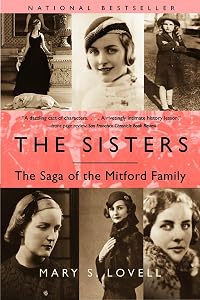
The Sisters: The Saga of the Mitford Family
by Mary S. Lovell
On This Page
Description
This is the story of a close, loving family splintered by the violent ideologies of Europe between the world wars. Jessica was a Communist; Debo became the Duchess of Devonshire; Nancy was one of the best-selling novelists of her day; beautiful Diana married the Fascist leader Sir Oswald Mosley; and Unity, a close friend of Hitler, shot herself in the head when England and Germany declared war. The Mitfords had style and presence and were extremely gifted. Above all, they were funny -- show more hilariously and mercilessly so. Mary Lovell captures the vitality and drama of a family that took the twentieth century by storm and became, in some respects, its victims. show lessTags
Recommendations
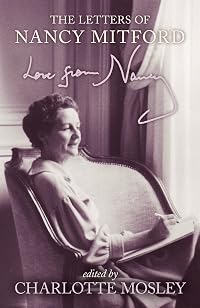
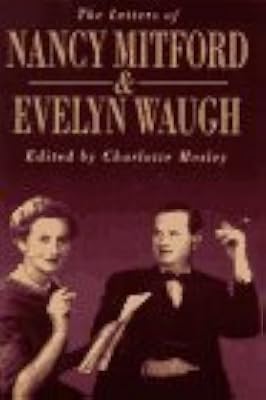

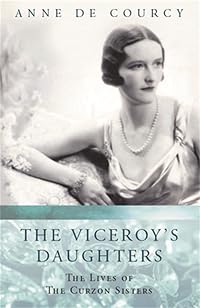
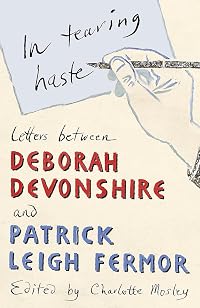














Member Recommendations
Member Reviews
Well, it would seem that I am now entirely obsessed with the Mitford family, mostly stemming from my obsession with Nancy Mitford, who unfortunately is not given a ton of air time in this biography.
I still loved it, so much that I hugged it at one point - but it could in reality have been called "A Biography of Diana, Unity and Decca Mitford, Who Also Had Three Other Sisters Plus a Brother." Heavily slanted toward the more political sisters for sure, and with a weirdly defensive/adoring tone when it came to Diana, her husband Mosley, and their lifelong dedication to Fascism.
I still loved it, so much that I hugged it at one point - but it could in reality have been called "A Biography of Diana, Unity and Decca Mitford, Who Also Had Three Other Sisters Plus a Brother." Heavily slanted toward the more political sisters for sure, and with a weirdly defensive/adoring tone when it came to Diana, her husband Mosley, and their lifelong dedication to Fascism.
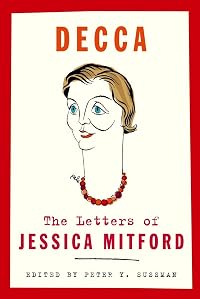
Before reading "The Mitford Girls: The Biography of an Extraordinary Family" by Mary S. Lovell, I had already read Hons and Rebels: The Classic Memoir of One of Last Century's Most Extraordinary Families by Jessica Mitford, Decca: The Letters of Jessica Mitford, and the first two novels by Nancy Mitford.
Mary S. Lovell does an extraordinary job of condensing down the lives of the Mitford girls, their parents, their brother, and numerous partners, children, grandchildren, and various other notable relatives, all of which takes place against some of the most momentous historical moments of the twentieth century. In a sense the family's story mirrors that of the century they lived in.
The parents known to their children as Muv and Farve, show more aka Lord Redesdale and his wife Sydney, represent the early twentieth century aristocracy. Both, to varying degrees are appalled by the changes wrought throughout the 1920s and the emergence of the post-WW1 generation of young people, dubbed Bright Young Things, who erupted into society determined to change the world for the better now once the war to end all wars was over. Oldest daughter, Nancy, and her arty friends were an anathema to her father.
Three of the daughters were split across the two political ideologies that wreaked havoc on the twentieth century: Unity (who unbelievably was conceived in a Canadian town called Swastika) and Diana both being unapologetic fascists, and Jessica (aka Decca) a staunch communist. Not only were Unity and Diana fascists but both formed a close friendship with Hitler and other leading Nazis in pre-WW2 Germany, and Diana married British fascist leader Oswald Mosley. Shortly after Britain declared war on Germany Unity unsuccessfully tried to kill herself, and Decca ran away to help the Republican cause in Spain during the Spanish Civil War. These events, along with Nancy's success as a writer, are what make this book so fascinating for anyone interested in this era.
I was slightly less interested in the early childhood years, and in the post-WW2 era. After the war, the book details how each life played out. This is all worth reading but of less interest to me than the extraordinary events detailed in the 1930s and 1940s.
All told though, a very interesting biography, with plenty of conflict (both familial and global) to keep the story moving forward. show less
Mary S. Lovell does an extraordinary job of condensing down the lives of the Mitford girls, their parents, their brother, and numerous partners, children, grandchildren, and various other notable relatives, all of which takes place against some of the most momentous historical moments of the twentieth century. In a sense the family's story mirrors that of the century they lived in.
The parents known to their children as Muv and Farve, show more aka Lord Redesdale and his wife Sydney, represent the early twentieth century aristocracy. Both, to varying degrees are appalled by the changes wrought throughout the 1920s and the emergence of the post-WW1 generation of young people, dubbed Bright Young Things, who erupted into society determined to change the world for the better now once the war to end all wars was over. Oldest daughter, Nancy, and her arty friends were an anathema to her father.
Three of the daughters were split across the two political ideologies that wreaked havoc on the twentieth century: Unity (who unbelievably was conceived in a Canadian town called Swastika) and Diana both being unapologetic fascists, and Jessica (aka Decca) a staunch communist. Not only were Unity and Diana fascists but both formed a close friendship with Hitler and other leading Nazis in pre-WW2 Germany, and Diana married British fascist leader Oswald Mosley. Shortly after Britain declared war on Germany Unity unsuccessfully tried to kill herself, and Decca ran away to help the Republican cause in Spain during the Spanish Civil War. These events, along with Nancy's success as a writer, are what make this book so fascinating for anyone interested in this era.
I was slightly less interested in the early childhood years, and in the post-WW2 era. After the war, the book details how each life played out. This is all worth reading but of less interest to me than the extraordinary events detailed in the 1930s and 1940s.
All told though, a very interesting biography, with plenty of conflict (both familial and global) to keep the story moving forward. show less
A Nazi, A Fascist, A Communist, A Novelist, A Countrywoman, A Duchess---All Mitford Sisters. That was the headline of a NY Times review of a book about the Mitford sisters released in 2016. It caught my eye and I knew I had to read about them. After reading Nancy’s most well-known novels and Decca’s (Jessica) memoir I finally chose this 2002 bio about the Mitford family because it was fairly highly rated here on LT. I’m glad I did.
Is there a more fascinating family living in the 1930s-2000? I don’t think so. The first part of the book dealt with the early years of the sisters, their childhood experiences, their development, their aristocratic, yet somehow not really very wealthy, lives. The author smoothly glided from one of the show more sisters to another, moving the story of their lives along through the years. Most of the info about their early years I already knew from Decca’s memoir, Hons and Rebels. But once she moved past their “coming out” and the sisters moved into adulthood, their lives got to be really intriguing.
Lovell did a masterful job exposing their lives and some of their questionable decisions, through letters the sisters wrote to each other and outsiders. That seemed to put the reader right in the thick of it. And Lovell answered all my questions. What in the world was Unity’s attraction to Hitler? How did Diana end up married to the head of the British Fascist Party? And then how did she end up in a British prison for three years during WWII? How did Debo know from the time she was a young child that she would be a Duchess? How did Decca, an avowed Communist, become a U.S citizen in mid-century? And what about the one brother, Tom? Why is so little known about him? And what exactly is a countrywoman, as Pam is described?
Fascinating stuff. And I loved every bit of it. I don’t think I’m done with the Mitfords yet. I’m not sure when I will be. Of course they’re all dead now but the're just so…..fascinating. Very highly recommended for those who enjoy family dynamics. show less
Is there a more fascinating family living in the 1930s-2000? I don’t think so. The first part of the book dealt with the early years of the sisters, their childhood experiences, their development, their aristocratic, yet somehow not really very wealthy, lives. The author smoothly glided from one of the show more sisters to another, moving the story of their lives along through the years. Most of the info about their early years I already knew from Decca’s memoir, Hons and Rebels. But once she moved past their “coming out” and the sisters moved into adulthood, their lives got to be really intriguing.
Lovell did a masterful job exposing their lives and some of their questionable decisions, through letters the sisters wrote to each other and outsiders. That seemed to put the reader right in the thick of it. And Lovell answered all my questions. What in the world was Unity’s attraction to Hitler? How did Diana end up married to the head of the British Fascist Party? And then how did she end up in a British prison for three years during WWII? How did Debo know from the time she was a young child that she would be a Duchess? How did Decca, an avowed Communist, become a U.S citizen in mid-century? And what about the one brother, Tom? Why is so little known about him? And what exactly is a countrywoman, as Pam is described?
Fascinating stuff. And I loved every bit of it. I don’t think I’m done with the Mitfords yet. I’m not sure when I will be. Of course they’re all dead now but the're just so…..fascinating. Very highly recommended for those who enjoy family dynamics. show less
I had read other books, particularly those set during WWII, that mention the Mitford sisters, so I decided to find out more about them. This book provides mini biographies of the six sisters (Nancy, Pamela, Diana, Unity, Jessica, Deborah) and their brother, Tom. The family was wealthy, and the Mitford children were brought up in relative luxury, often traveling, participating in fox hunts, and socializing with other prominent families. They were cousins of the Churchills on Clementine’s side.
Nancy became an author, writing several well-received books, most notably The Pursuit of Love and Love in a Cold Climate. Pamela was the least controversial. Nicknamed “the rural sister” she preferred to focus on family and farming. Tom was show more the only son. He died in his thirties, killed in action during World War II. Diana was one of the most controversial of the sisters. She was married to Bryan Guinness, and later to the head of the British Union of Fascists, Sir Oswald Mosely. She was incarcerated during World War II for ties to Hitler. Speaking of Hitler, Unity got so involved with Nazi views that she moved to Germany, learned German, and found a way to meet and become friends with Hitler. At the outbreak of war, she attempted suicide. Jessica (known as "Decca") embraced Communism, eloped to Spain, and later moved to the US. Deborah "Debo" tried to avoid the controversies of her sisters. Through marriage she became the Duchess of Devonshire and was an accomplished businesswoman.
The author provides extensive detail on the lives of these women. I was interested in the historical aspects, especially the nineteen thirties and forties, and less so about the socializing and detailed accounts of various relatives. The writing is strangely detached and dry in places. I was hoping for more insight as to why two of these sisters were so attracted to Hitler. In places, it felt like the author was making excuses for Unity and Diana in their obsession with Fascism. This could be due to her interview with Diana, one of the two sisters still living when this book was published (2001). She also relied on family letters and other published works.
Lovell makes an unusual disclaimer, stating “Although politics plays a major role in the story of the sisters, this is not a political book so anyone expecting a stand against Unity or Diana and the far right, or Decca and the far left, should look elsewhere…This book seeks to explore the richness of the personalities, not to judge them. The reader is as capable as I am of forming his or her own opinions based on the evidence, and an individual social ideology.” I did not get the impression this was a fair-minded impartial assessment. I got what I needed out of the book. but for my purposes it could have been shorter. I also expected more analysis. show less
Nancy became an author, writing several well-received books, most notably The Pursuit of Love and Love in a Cold Climate. Pamela was the least controversial. Nicknamed “the rural sister” she preferred to focus on family and farming. Tom was show more the only son. He died in his thirties, killed in action during World War II. Diana was one of the most controversial of the sisters. She was married to Bryan Guinness, and later to the head of the British Union of Fascists, Sir Oswald Mosely. She was incarcerated during World War II for ties to Hitler. Speaking of Hitler, Unity got so involved with Nazi views that she moved to Germany, learned German, and found a way to meet and become friends with Hitler. At the outbreak of war, she attempted suicide. Jessica (known as "Decca") embraced Communism, eloped to Spain, and later moved to the US. Deborah "Debo" tried to avoid the controversies of her sisters. Through marriage she became the Duchess of Devonshire and was an accomplished businesswoman.
The author provides extensive detail on the lives of these women. I was interested in the historical aspects, especially the nineteen thirties and forties, and less so about the socializing and detailed accounts of various relatives. The writing is strangely detached and dry in places. I was hoping for more insight as to why two of these sisters were so attracted to Hitler. In places, it felt like the author was making excuses for Unity and Diana in their obsession with Fascism. This could be due to her interview with Diana, one of the two sisters still living when this book was published (2001). She also relied on family letters and other published works.
Lovell makes an unusual disclaimer, stating “Although politics plays a major role in the story of the sisters, this is not a political book so anyone expecting a stand against Unity or Diana and the far right, or Decca and the far left, should look elsewhere…This book seeks to explore the richness of the personalities, not to judge them. The reader is as capable as I am of forming his or her own opinions based on the evidence, and an individual social ideology.” I did not get the impression this was a fair-minded impartial assessment. I got what I needed out of the book. but for my purposes it could have been shorter. I also expected more analysis. show less
I picked this biography up last year, having read a couple of Nancy Mitford’s enjoyable and sharply written biographies of historical figures (Madame de Pompadour and The Sun King), but found I couldn’t get into it - perhaps because I didn’t know enough at that point about the rest of this extraordinary family. Then this year I read Nancy’s two most famous novels, the semi-autobiographical The Pursuit of Love and Love in a Cold Climate, followed by Jessica (Decca) Mitford’s autobiography Hons and Rebels - each of which I throughly enjoyed. Drawn in, I finally turned back to Mary Lovell’s biography to find out more. Disappointingly, while I found it fascinating and packed with absorbing detail, I agree with a number of show more earlier reviewers that it seemed strangely biased against ‘red sheep’ and runaway communist and risk-taker Decca - who, after all, seems to have done a great deal of good in her life through her energy and commitment to civil rights causes and lift-the-lid-style ‘muck-raking’. At the same time it was relatively uncritical, indeed almost fawning, towards Unity and especially Diana, the two Hitler-loving sisters whose unrepentant behaviour is frequently rationalised and downplayed throughout. While I learned much more about ‘Muv’ than I had previously understood, there was little of note about Debo, even less about Pam, and not enough about Nancy, beyond a fairly one-note portrayal as a scathing, even bitchy wit who was unlucky in love. I would like to have understood ‘Farve’ in more depth, too. All in all a compelling but lopsided portrait of one of last century’s most famous families. show less
It is so strange to view the 20th century through the lens of this eccentric English family with members on both sides of the ideological spectrum! Whilst it can be highly entertaining to read about the sisters’ unconventional upbringing, there are many moments in here that are less than charming. Unfortunately, the author of this biography really went out of her way to justify and make excuses for the behaviour of the sisters who were passionately involved with the Nazi/fascist movement, which comes across as a pretty tasteless move (just sayin’). Maybe if the author didn’t spend so much time defending Diana and describing her beauty, we might have actually learned some things about Pam, the sadly neglected “rural” sister! show more #justiceforPam show less
Before the Hilton sisters, before the Kardashians, the "It" sisters were 6 women of aristocratic English upbringing who each went very different ways, but still held on to the bonds of sisterhood. In the early twentieth century, these were the Mitfords.
This biography is very comprehensive and extensive, considering the number of characters that demand attention. Each sister is dynamic and given her due, even Pam, the Mitford sister of whom little is published because she was the least scandalous. Each sister is depicted in all their layers: Nancy, the acerbic writer who poked fun at her class, yet embraced its snobbery; Pam, the "rural one" who was the maternal center of the sisters; Diana, the beauty who left her first husband for show more Oswald Moseley and was an unrepentant fascist; Unity, the one so besotted by Hitler that she attempted suicide after hearing that England and Germany had declared war; Decca, the one who ran away from home to become a communist and became an immigrant writer in America; and Deborah, the one who became a Duchess and held the family together through their many tiffs.
Each sister is handled fairly, which is difficult concerning some of their troubling politics. It is their bond that means most to them, and nowhere is this most evident in the strong affection between Unity and Decca. The two were on opposite sides politically: the room they shared as children was full of swastikas and hammer and sickles on their respective sides. Still, the two girls had unending affection for each other. Decca had no such forgiveness for her other fascist sister, Diana, whom she treated as a fallen idol. This is just one of the many "warts and all" revelations of the sisters' personalities.
The biography truly brings the sisters to life with their letters and many nicknames, any woman with a sister can recognize the heartfelt affection in the Mitfords. Many past biographies and news reports delight in reporting the evilness of Unity and Diana's politics, and the muckraking of Decca, but overlook the fact that these women were human and meant something to their family. (Understandably, though, that point may be too sentimental for newspapers.) When a biography of Unity is published soon after her death, the sisters rally to defend her memory. This move was criticized, but the sisters made it clear that whether or not they agreed with each others' politics, the main thing was to remain loyal to the family. Whereas the girls' upbringing was often depicted as frivolous and indulgent, this biography expands on their early life and helps explain how and why they each chose their paths in life. It makes for an engrossing, fascinating read.
In addition to the sisters' lives, the book is also interesting for the depicition of Hitler as a gentleman whose charm was so strong that many of the Mitfords (and other British citizens) who met him refused to believe he was wrong. Showing this side of Hitler is not an attempt to make him look like a good guy, but to warn us how the devil can come to us smiling, dressed well, and offering kindness to deceive us. What a contrast from the man who paid all of Unity's medical bills after her attempted suicide and sent her home safely to her parents in England after the war started, to the man who ordered the extermination of Jews, homosexuals, and anyone not specifically "Aryan." To the sheltered, upper-class Mitfords, Hitler's attention to Unity meant more than the yet-untold horror unfolding across the Channel. It's a complicated portrayal of how strong family ties are that Lady Redesdale (the girls' mother) and Diana still support Hitler during the war (and after). They associate the man with the memory of Unity at her most vibrant. It still doesn't make their politics any more palatable, but at least we can see why they remained so stubborn and steadfast to their beliefs.
The book is only outdated in that, when written, Diana was alive. She has since passed after reaching a ripe old age, leaving Deborah as the only surviving Mitford sister. show less
This biography is very comprehensive and extensive, considering the number of characters that demand attention. Each sister is dynamic and given her due, even Pam, the Mitford sister of whom little is published because she was the least scandalous. Each sister is depicted in all their layers: Nancy, the acerbic writer who poked fun at her class, yet embraced its snobbery; Pam, the "rural one" who was the maternal center of the sisters; Diana, the beauty who left her first husband for show more Oswald Moseley and was an unrepentant fascist; Unity, the one so besotted by Hitler that she attempted suicide after hearing that England and Germany had declared war; Decca, the one who ran away from home to become a communist and became an immigrant writer in America; and Deborah, the one who became a Duchess and held the family together through their many tiffs.
Each sister is handled fairly, which is difficult concerning some of their troubling politics. It is their bond that means most to them, and nowhere is this most evident in the strong affection between Unity and Decca. The two were on opposite sides politically: the room they shared as children was full of swastikas and hammer and sickles on their respective sides. Still, the two girls had unending affection for each other. Decca had no such forgiveness for her other fascist sister, Diana, whom she treated as a fallen idol. This is just one of the many "warts and all" revelations of the sisters' personalities.
The biography truly brings the sisters to life with their letters and many nicknames, any woman with a sister can recognize the heartfelt affection in the Mitfords. Many past biographies and news reports delight in reporting the evilness of Unity and Diana's politics, and the muckraking of Decca, but overlook the fact that these women were human and meant something to their family. (Understandably, though, that point may be too sentimental for newspapers.) When a biography of Unity is published soon after her death, the sisters rally to defend her memory. This move was criticized, but the sisters made it clear that whether or not they agreed with each others' politics, the main thing was to remain loyal to the family. Whereas the girls' upbringing was often depicted as frivolous and indulgent, this biography expands on their early life and helps explain how and why they each chose their paths in life. It makes for an engrossing, fascinating read.
In addition to the sisters' lives, the book is also interesting for the depicition of Hitler as a gentleman whose charm was so strong that many of the Mitfords (and other British citizens) who met him refused to believe he was wrong. Showing this side of Hitler is not an attempt to make him look like a good guy, but to warn us how the devil can come to us smiling, dressed well, and offering kindness to deceive us. What a contrast from the man who paid all of Unity's medical bills after her attempted suicide and sent her home safely to her parents in England after the war started, to the man who ordered the extermination of Jews, homosexuals, and anyone not specifically "Aryan." To the sheltered, upper-class Mitfords, Hitler's attention to Unity meant more than the yet-untold horror unfolding across the Channel. It's a complicated portrayal of how strong family ties are that Lady Redesdale (the girls' mother) and Diana still support Hitler during the war (and after). They associate the man with the memory of Unity at her most vibrant. It still doesn't make their politics any more palatable, but at least we can see why they remained so stubborn and steadfast to their beliefs.
The book is only outdated in that, when written, Diana was alive. She has since passed after reaching a ripe old age, leaving Deborah as the only surviving Mitford sister. show less
Members
- Recently Added By
Lists

Top Five Books of 2013
1,562 works; 715 members

Best Biographies of Notable Women
277 works; 101 members

The Complete Rory Gilmore Reading List
506 works; 5 members
Talk Discussions
Past Discussions
labwriter's Mitford Sisters thread, #1 in 75 Books Challenge for 2011 (April 2011)
Author Information

14 Works 4,963 Members
She is the author of acclaimed biographies of Richard & Isabel Burton, Amelia Earhart & Beryl Markham among others. She lives in Gloucestershire, England. (Bowker Author Biography) Mary Sybilla Lovell is a British writer who has written biographies of Beryl Markham, Amelia Earhart, Jane Digby, Richard Francis Burton, Amy Elizabeth Thorpe, the show more Mitford Girls, Bess of Hardwick and The Churchills. Her book on Markham, Straight on Till Morning, became an immediate international bestseller when it was published in 1987 and spent twelve weeks on the New York Times Best Seller list. She also wrote The Mitford Girls (titled The Sisters in the USA), a biography of the celebrated Mitford sisters, first published in September 2001, and her Bess of Hardwick, was published in the UK in 2005. Four of her books have been optioned for films. (Bowker Author Biography) show less
Some Editions
Work Relationships
Is a supplement to
Common Knowledge
- Canonical title
- The Sisters: The Saga of the Mitford Family
- Original title
- The Mitford Girls
- Original publication date
- 2001
- People/Characters
- Nancy Mitford; Jessica Mitford; Diana Mosley; Unity Mitford; Pamela Mitford; Andrew Cavendish, 11th Duke of Devonshire (show all 25); Deborah Mitford; Kathleen Kennedy; William Cavendish, Marquess of Hartington; David Freeman-Mitford (Lord Redesdale); Sydney Freeman-Mitford (Lady Redesdale, nee Bowles); Winston Churchill; Peregrine Cavendish, 12th Duke of Devonshire; Bryan Guinness; Jonathan Guinness; Desmond Guinness; Adolf Hitler; Derek Ainslie Jackson; Oswald Mosley; Esmond Romilly; Constancia Romilly; Robert Treuhaft; Lady Emma Cavendish; Lady Sophia Cavendish; Tom Mitford
- Important places*
- Inghilterra, Regno Unito; Regno Unito
- Dedication
- This book is for Graeme, Shari, Robyn and Imogen
With all the love in the world - First words
- Sydney Bowles was fourteen years old when she first set eyes on David Freeman Mitford.
- Last words
- (Click to show. Warning: May contain spoilers.)Isn't it odd how, when one looks back at that time, it seems to have been all summers.
- Blurbers
- Gottlieb, Robert; Powers, John
- Original language*
- Inglese
- Canonical DDC/MDS
- 920.720941
- Canonical LCC
- CT787.M57
*Some information comes from Common Knowledge in other languages. Click "Edit" for more information.
Classifications
- Genres
- Biography & Memoir, Nonfiction, General Nonfiction, History, Literature Studies and Criticism
- DDC/MDS
- 920.720941 — History & geography Biographies, Genealogy, Healdry Biographies Famous People of Native Nations Women
- LCC
- CT787 .M57 — Auxiliary Sciences of History Biography Biography National biography
- BISAC
Statistics
- Members
- 1,965
- Popularity
- 10,759
- Reviews
- 51
- Rating
- (4.04)
- Languages
- English, Estonian, Finnish, Italian
- Media
- Paper, Audiobook, Ebook
- ISBNs
- 11
- UPCs
- 1
- ASINs
- 13