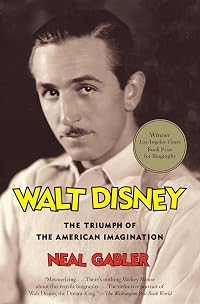
Walt Disney: The Triumph of the American Imagination
by Neal Gabler
On This Page
Description
A portrait of the private life and public career of Walt Disney ranges from his deprived youth, to his contributions to the art of animation, to his visionary creation of the first synergistic entertainment empire, to his reclusive and lonely private world.Tags
Recommendations









Member Reviews
It was never really about the money... well, almost never. Walt Disney was always more interested in "the next thing," and making money on a venture was usually just a way to finance his projects. Initially drawn to drawing and animation but burned by dishonest partners, he created his own studio to produce animated "shorts" – short Mickey Mouse and Silly Symphony cartoons shown before regular feature movies. But he was always pushing for better animation and quality, eventually creating "Snow White," the first feature-length animated movie, with the best animation for the time. But even then he wasn't breaking-even financially and eventually had to cut corners just to pay the bills. Even as his fame soared, money was tight and some show more movies were made just to generate income (like "Dumbo" and some live-action films). As Walt became bogged down in the studio and trying to make too many movies at once and always striving to create something bigger or better (realism in "Bambi" and high-class art in "Fantasia"), plus with WWII forcing him to rely on government work just to keep going, he became discouraged. As a result, the animation that was once the top in the industry lost its edge and Walt turned to other interests like trains and eventually television and Disneyland. But in the end he left a legacy of memorable characters and family-friendly entertainment that still continues.
Neal Gabler'sbook was especially enjoyable to read because Walt Disney is especially familiar to most of us. But I was surprised to learn that Disney was always financially strapped and borrowing anywhere he could until after Disneyland. And it was fascinating while reading to go back and watch some of the movies, like "Three Little Pigs" and "Snow White" (which I never really liked before) and compare the styles, knowing what went into them and what made them great. And visiting Disneyland after reading the book makes you look at the place differently and notice more details. But I was also surprised to learn that the genius behind "the happiest place on earth" usually wasn't a very happy man himself. Mr. Gabler describes Walt's constant need to create "control" in his surroundings that drove his efforts at perfection. Animation, his trains, and Disneyland each in turn gave him an escape from reality into an environment where he had near-total control.
Books about Walt Disney either paint him as a saint or an evil tyrant, and I guess he could be both depending on the perspective. Gabler is careful to point out where the "legends" were embellished, and that "Walt Disney" became more of a brand than a man, but I thought he portrayed him fairly and honestly. Gabler tells Disney's faults, ego, and the complaints many of his employees had, but also why he did what he did and what motivated him. It sometimes bogs down in too much detail about finances, but it not only shows why he was so culturally influential but also that he was as human as all of us.
(This review is modified from my 5/26/12 blog review at bookworm-dad.blogspot.com) show less
Neal Gabler'sbook was especially enjoyable to read because Walt Disney is especially familiar to most of us. But I was surprised to learn that Disney was always financially strapped and borrowing anywhere he could until after Disneyland. And it was fascinating while reading to go back and watch some of the movies, like "Three Little Pigs" and "Snow White" (which I never really liked before) and compare the styles, knowing what went into them and what made them great. And visiting Disneyland after reading the book makes you look at the place differently and notice more details. But I was also surprised to learn that the genius behind "the happiest place on earth" usually wasn't a very happy man himself. Mr. Gabler describes Walt's constant need to create "control" in his surroundings that drove his efforts at perfection. Animation, his trains, and Disneyland each in turn gave him an escape from reality into an environment where he had near-total control.
Books about Walt Disney either paint him as a saint or an evil tyrant, and I guess he could be both depending on the perspective. Gabler is careful to point out where the "legends" were embellished, and that "Walt Disney" became more of a brand than a man, but I thought he portrayed him fairly and honestly. Gabler tells Disney's faults, ego, and the complaints many of his employees had, but also why he did what he did and what motivated him. It sometimes bogs down in too much detail about finances, but it not only shows why he was so culturally influential but also that he was as human as all of us.
(This review is modified from my 5/26/12 blog review at bookworm-dad.blogspot.com) show less
Good bio. Kind of.
I did have my problems with it. The author, whether for dramatic effect or disenchantment during his research, didn't seem to be on Walt Disney's side very often. In fact it seemed to have a kind of pro-leftist union feel to it. Gabler rarely came to Disney's defense on issues, branding him constantly dissatisfied and naive, especially when it came to politics. Walt was a conservative, not for naivete, but for certain convictions. The author subtly peppers his opinion throughout the more trying times in Walt's life, and more often than not he's a little unfair.
Also, despite Gabler's attempt to soften the issue, it is plainly apparent that the unions, more than once, ruined Disney's vision and were the source of much, show more if not all, of what went wrong with Walt Disney Productions. Disneyland was also plagued by union labor.
If you can look past the sympathies Gabler offers Walt's enemies and the grumpy asshole he paints Walt as at times, you do actually end up with a good idea of what this great man was like. It will take a careful reader to preen the facts from Gabler's misdirection though.
One more thing. The narrative was infected with if/then clauses and other devices that make long stretches of reading obnoxious. There were other constructions too that just made me cringe when I came to them.
OK. One more thing. The author did, in agreement with other reviews, make jumps in time that were a little confusing. You will read 50 or so pages and think you have a good idea about what was happening at the time, but then he goes back and, in effect, ruins or at least alters the perception you spent the last half-hour building. It's not bad, per se, it was just, well, fucking annoying.
It's a 4-star on account of the information, but on style and delivery a less than solid 2.5
I would have liked A LOT more information on Disneyland.But that's just me. show less
I did have my problems with it. The author, whether for dramatic effect or disenchantment during his research, didn't seem to be on Walt Disney's side very often. In fact it seemed to have a kind of pro-leftist union feel to it. Gabler rarely came to Disney's defense on issues, branding him constantly dissatisfied and naive, especially when it came to politics. Walt was a conservative, not for naivete, but for certain convictions. The author subtly peppers his opinion throughout the more trying times in Walt's life, and more often than not he's a little unfair.
Also, despite Gabler's attempt to soften the issue, it is plainly apparent that the unions, more than once, ruined Disney's vision and were the source of much, show more if not all, of what went wrong with Walt Disney Productions. Disneyland was also plagued by union labor.
If you can look past the sympathies Gabler offers Walt's enemies and the grumpy asshole he paints Walt as at times, you do actually end up with a good idea of what this great man was like. It will take a careful reader to preen the facts from Gabler's misdirection though.
One more thing. The narrative was infected with if/then clauses and other devices that make long stretches of reading obnoxious. There were other constructions too that just made me cringe when I came to them.
OK. One more thing. The author did, in agreement with other reviews, make jumps in time that were a little confusing. You will read 50 or so pages and think you have a good idea about what was happening at the time, but then he goes back and, in effect, ruins or at least alters the perception you spent the last half-hour building. It's not bad, per se, it was just, well, fucking annoying.
It's a 4-star on account of the information, but on style and delivery a less than solid 2.5
I would have liked A LOT more information on Disneyland.But that's just me. show less
It was never really about the money... well, almost never. Walt Disney was always more interested in "the next thing," and making money on a venture was usually just a way to finance his projects. Initially drawn to drawing and animation but burned by dishonest partners, he created his own studio to produce animated "shorts" – short Mickey Mouse and Silly Symphony cartoons shown before regular feature movies. But he was always pushing for better animation and quality, eventually creating "Snow White," the first feature-length animated movie, with the best animation for the time. But even then he wasn't breaking-even financially and eventually had to cut corners just to pay the bills. Even as his fame soared, money was tight and some show more movies were made just to generate income (like "Dumbo" and some live-action films). As Walt became bogged down in the studio and trying to make too many movies at once and always striving to create something bigger or better (realism in "Bambi" and high-class art in "Fantasia"), plus with WWII forcing him to rely on government work just to keep going, he became discouraged. As a result, the animation that was once the top in the industry lost its edge and Walt turned to other interests like trains and eventually television and Disneyland. But in the end he left a legacy of memorable characters and family-friendly entertainment that still continues.
Neal Gabler'sbook was especially enjoyable to read because Walt Disney is especially familiar to most of us. But I was surprised to learn that Disney was always financially strapped and borrowing anywhere he could until after Disneyland. And it was fascinating while reading to go back and watch some of the movies, like "Three Little Pigs" and "Snow White" (which I never really liked before) and compare the styles, knowing what went into them and what made them great. And visiting Disneyland after reading the book makes you look at the place differently and notice more details. But I was also surprised to learn that the genius behind "the happiest place on earth" usually wasn't a very happy man himself. Mr. Gabler describes Walt's constant need to create "control" in his surroundings that drove his efforts at perfection. Animation, his trains, and Disneyland each in turn gave him an escape from reality into an environment where he had near-total control.
Books about Walt Disney either paint him as a saint or an evil tyrant, and I guess he could be both depending on the perspective. Gabler is careful to point out where the "legends" were embellished, and that "Walt Disney" became more of a brand than a man, but I thought he portrayed him fairly and honestly. Gabler tells Disney's faults, ego, and the complaints many of his employees had, but also why he did what he did and what motivated him. It sometimes bogs down in too much detail about finances, but it not only shows why he was so culturally influential but also that he was as human as all of us.
(This review is modified from my 5/26/12 blog review at bookworm-dad.blogspot.com) show less
Neal Gabler'sbook was especially enjoyable to read because Walt Disney is especially familiar to most of us. But I was surprised to learn that Disney was always financially strapped and borrowing anywhere he could until after Disneyland. And it was fascinating while reading to go back and watch some of the movies, like "Three Little Pigs" and "Snow White" (which I never really liked before) and compare the styles, knowing what went into them and what made them great. And visiting Disneyland after reading the book makes you look at the place differently and notice more details. But I was also surprised to learn that the genius behind "the happiest place on earth" usually wasn't a very happy man himself. Mr. Gabler describes Walt's constant need to create "control" in his surroundings that drove his efforts at perfection. Animation, his trains, and Disneyland each in turn gave him an escape from reality into an environment where he had near-total control.
Books about Walt Disney either paint him as a saint or an evil tyrant, and I guess he could be both depending on the perspective. Gabler is careful to point out where the "legends" were embellished, and that "Walt Disney" became more of a brand than a man, but I thought he portrayed him fairly and honestly. Gabler tells Disney's faults, ego, and the complaints many of his employees had, but also why he did what he did and what motivated him. It sometimes bogs down in too much detail about finances, but it not only shows why he was so culturally influential but also that he was as human as all of us.
(This review is modified from my 5/26/12 blog review at bookworm-dad.blogspot.com) show less
It was never really about the money... well, almost never. Walt Disney was always more interested in "the next thing," and making money on a venture was usually just a way to finance his projects. Initially drawn to drawing and animation but burned by dishonest partners, he created his own studio to produce animated "shorts" – short Mickey Mouse and Silly Symphony cartoons shown before regular feature movies. But he was always pushing for better animation and quality, eventually creating "Snow White," the first feature-length animated movie, with the best animation for the time. But even then he wasn't breaking-even financially and eventually had to cut corners just to pay the bills. Even as his fame soared, money was tight and some show more movies were made just to generate income (like "Dumbo" and some live-action films). As Walt became bogged down in the studio and trying to make too many movies at once and always striving to create something bigger or better (realism in "Bambi" and high-class art in "Fantasia"), plus with WWII forcing him to rely on government work just to keep going, he became discouraged. As a result, the animation that was once the top in the industry lost its edge and Walt turned to other interests like trains and eventually television and Disneyland. But in the end he left a legacy of memorable characters and family-friendly entertainment that still continues.
Neal Gabler'sbook was especially enjoyable to read because Walt Disney is especially familiar to most of us. But I was surprised to learn that Disney was always financially strapped and borrowing anywhere he could until after Disneyland. And it was fascinating while reading to go back and watch some of the movies, like "Three Little Pigs" and "Snow White" (which I never really liked before) and compare the styles, knowing what went into them and what made them great. And visiting Disneyland after reading the book makes you look at the place differently and notice more details. But I was also surprised to learn that the genius behind "the happiest place on earth" usually wasn't a very happy man himself. Mr. Gabler describes Walt's constant need to create "control" in his surroundings that drove his efforts at perfection. Animation, his trains, and Disneyland each in turn gave him an escape from reality into an environment where he had near-total control.
Books about Walt Disney either paint him as a saint or an evil tyrant, and I guess he could be both depending on the perspective. Gabler is careful to point out where the "legends" were embellished, and that "Walt Disney" became more of a brand than a man, but I thought he portrayed him fairly and honestly. Gabler tells Disney's faults, ego, and the complaints many of his employees had, but also why he did what he did and what motivated him. It sometimes bogs down in too much detail about finances, but it not only shows why he was so culturally influential but also that he was as human as all of us.
(This review is modified from my 5/26/12 blog review at bookworm-dad.blogspot.com) show less
Neal Gabler'sbook was especially enjoyable to read because Walt Disney is especially familiar to most of us. But I was surprised to learn that Disney was always financially strapped and borrowing anywhere he could until after Disneyland. And it was fascinating while reading to go back and watch some of the movies, like "Three Little Pigs" and "Snow White" (which I never really liked before) and compare the styles, knowing what went into them and what made them great. And visiting Disneyland after reading the book makes you look at the place differently and notice more details. But I was also surprised to learn that the genius behind "the happiest place on earth" usually wasn't a very happy man himself. Mr. Gabler describes Walt's constant need to create "control" in his surroundings that drove his efforts at perfection. Animation, his trains, and Disneyland each in turn gave him an escape from reality into an environment where he had near-total control.
Books about Walt Disney either paint him as a saint or an evil tyrant, and I guess he could be both depending on the perspective. Gabler is careful to point out where the "legends" were embellished, and that "Walt Disney" became more of a brand than a man, but I thought he portrayed him fairly and honestly. Gabler tells Disney's faults, ego, and the complaints many of his employees had, but also why he did what he did and what motivated him. It sometimes bogs down in too much detail about finances, but it not only shows why he was so culturally influential but also that he was as human as all of us.
(This review is modified from my 5/26/12 blog review at bookworm-dad.blogspot.com) show less
This Disney biography an American entrepreneur, animator, writer, voice actor and film producer that as a pioneer of animation, animatronics and theme parks that continually pushed the possibilities and technology reminded me of the Marvel Cinematic Universe of Iron Man-siring Howard Stark. And, apparently that is a thing.
Much of this book is about the history of cartooning and corporate Disney, such as surviving the Depression, WW II and labor organizing. As for The Depression, I now see how the title and drunken jape of Who's Afraid of Virginia Woolf? is a pun on the song "Who's Afraid of the Big Bad Wolf?" from Three Little Pigs (1933). This song was apparently a near ubiquitous leitmotif for surviving this adverse period during show more which Disney did quite well as a refuge and escape.
I read with fascination with the details of introducing synchronized sound, full-color three-strip Technicolor, feature-length cartoons and other technical developments in cameras that furthered the development of animated film are here in great detail including roles of key personnel and partnerships. New animated and live-action films followed after World War II, including early nature documentaries and the immensely popular Davy Crockett and other TV programs.
Of course, there is the amusement park industry. All of this energy and accomplishment makes sudden the death by lung cancer of Disney who was a heavy smoker throughout his life. He died in December 1966 before either the park or the EPCOT project were completed.
Two things I came away with is that (1) animation was incidental to Disney's cinematic vision. (He rather fell into animation and later more fully realized his vision while along the way he pushed six-track Fantasound. "...thanks to Fantasound, the seats actually vibrated when the music blasted.")
and (2) that there is "...the central Disney theme of the responsibilities of maturity and what one had to sacrifice to grow up..." This, somehow blends together in my view with the "small town, mythic America" enshrined explicitly and implicitly in the Disney mythos and, I feel (not really stressed here) has had a serious impact on how American views itself. show less
Much of this book is about the history of cartooning and corporate Disney, such as surviving the Depression, WW II and labor organizing. As for The Depression, I now see how the title and drunken jape of Who's Afraid of Virginia Woolf? is a pun on the song "Who's Afraid of the Big Bad Wolf?" from Three Little Pigs (1933). This song was apparently a near ubiquitous leitmotif for surviving this adverse period during show more which Disney did quite well as a refuge and escape.
I read with fascination with the details of introducing synchronized sound, full-color three-strip Technicolor, feature-length cartoons and other technical developments in cameras that furthered the development of animated film are here in great detail including roles of key personnel and partnerships. New animated and live-action films followed after World War II, including early nature documentaries and the immensely popular Davy Crockett and other TV programs.
Of course, there is the amusement park industry. All of this energy and accomplishment makes sudden the death by lung cancer of Disney who was a heavy smoker throughout his life. He died in December 1966 before either the park or the EPCOT project were completed.
Two things I came away with is that (1) animation was incidental to Disney's cinematic vision. (He rather fell into animation and later more fully realized his vision while along the way he pushed six-track Fantasound. "...thanks to Fantasound, the seats actually vibrated when the music blasted.")
and (2) that there is "...the central Disney theme of the responsibilities of maturity and what one had to sacrifice to grow up..." This, somehow blends together in my view with the "small town, mythic America" enshrined explicitly and implicitly in the Disney mythos and, I feel (not really stressed here) has had a serious impact on how American views itself. show less
This might possibly be the definitive biography on Walt Disney. I have personally taken the time to read most of the biographies on the man, and found this one to be the most unbiased, and most detailed. Though it does drag in the 1940s, this book clearly knows what it wants to say, and it said it well. I would recommend this book to anyone who wants to know about him, and isn't afraid to read such a large book.
Very well written and incredibly thorough, this book does a good job of showing Walt Disney as a person; not a villain and not a saint, but like the rest of us, a flawed human who did some amazing things.
Members
- Recently Added By
Lists

Books Cited in Wasteland by W. Scott Poole
120 works; 1 member
Author Information

Awards and Honors
Common Knowledge
- People/Characters
- Walt Disney
- Dedication
- Once again, for my beloved daughters, Laurel and Tänne, who make all things worthwile, and for all those who have ever wished upon a star
- First words
- Elias Disney was a hard man.
- Last words
- (Click to show. Warning: May contain spoilers.)Walt Disney had at last attained perfectionl.
Classifications
- Genres
- Biography & Memoir, Nonfiction, Business
- DDC/MDS
- 791.43092 — Arts & recreation Recreation, sports, and performing arts Movies, TV, Video Motion pictures, radio, television, podcasting Motion pictures Standard subdivisions History, geographic treatment, biography; description, critical appraisal of specific companies and studios {for specific films see 791.437} Biography
- LCC
- NC1766 .U52 .D5375 — Fine Arts Drawing. Design. Illustration Drawing. Design. Illustration Pictorial humor, caricature, etc.
- BISAC
Statistics
- Members
- 1,069
- Popularity
- 23,944
- Reviews
- 22
- Rating
- (4.12)
- Languages
- 5 — English, Finnish, Norwegian (Bokmål), Norwegian, Portuguese (Portugal)
- Media
- Paper, Audiobook, Ebook
- ISBNs
- 15
- ASINs
- 8