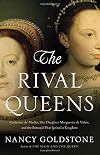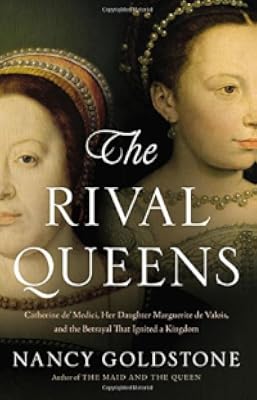
The Rival Queens: Catherine de' Medici, Her Daughter Marguerite de Valois, and the Betrayal that Ignited a Kingdom
by Nancy Goldstone
On This Page
Description
Goldstone documents the turbulent mother-daughter relationship between Catherine de' Medici and Marguerite de Valois to explore the court politics, assassinations, espionage and betrayals that shaped their time.Tags
Recommendations























Member Reviews
And speaking of toxic families (elsewhere), you don't much more toxic than the French monarchy in the mid 16-17th century. Holy crow, what an astonishing and horrifying piece of work they were. This is the story of Queen Margot and her mum. Her mum was a PROBLEM. So were her brothers. La Reign on the other hand, displayed an astonishing ability to survive and eventually (veeeeery eventually) thrive. This biography is quite candidly pro Margot and anti-Catherine, but there is also a significant amount of time exploring what made Catherine what she was, and that is also interesting. It bogged down a bit in the middle, but on the whole another enjoyable history from Nancy Goldstone, whose footnotes occasionally make me snort with laughter.
This was the perfect audiobook title for me - great personalities, intrigue, an extraordinary historical period, religious wars, a parade of kings, queens, duchesses; assassinations, money, sex, dynastic politics. Catherine de Medici has dominated a period that has seen several of her sons living, dying and mismanaging the country. Power-hungry, ruthless, scheming, yet always just reacting, never really manipulating events in a planned way, she had ruled over an overspending, lavish, morally and financially bankrupt French court for decades. She favored her son, Henri, a vengeful, narcisstic and petty man, over her other, more talented and gracious children, especially Margot, whom she had actively tried to murder when she got in the show more way. Great mothering...
The title is misleading. This book is more about Catherine and Margot’s time than themselves. A better title would have been the Huguenot wars. There is a lot of political intrigue and a war that keeps swinging both ways. This is sometimes difficult to follow, and the characters of the title women takes a back seat. I have enjoyed it, the narrator was great. Highly recommend to history buffs. show less
The title is misleading. This book is more about Catherine and Margot’s time than themselves. A better title would have been the Huguenot wars. There is a lot of political intrigue and a war that keeps swinging both ways. This is sometimes difficult to follow, and the characters of the title women takes a back seat. I have enjoyed it, the narrator was great. Highly recommend to history buffs. show less
I found this dual biography that sheds light on the fraught relationship between misused, determined power-seeker Catherine de Medici and her equally misused, more idealistic daughter Marguerite fascinating and its tone just right. Rich with historical detail and compelling personalities, it’s as engaging as a novel but more substantial, and it’s backed up by 24 pages of notes and an extensive bibliography.
Taking place in France during the reign of Elizabeth I, the book helped expand my knowledge of that era beyond the borders of England. Its eloquent but hair-raising accounts of arranged marriages, shifting alliances, deadly power struggles, disfiguring diseases, royal family dysfunction, and religious wars between Catholics and show more Huguenots kept me reading late into the night, and many interesting people of the time, including Mary Queen of Scots, Philip II of Spain, and Nostradamus make appearances on its pages.
Daughter Marguerite was forced by Catherine to marry her Huguenot kinsman Henry, King of Navarre, which went against Marguerite's strongly held Catholic beliefs, only to have her wedding celebration turn into a Huguenot slaughter orchestrated by her mother. Later Marguerite was imprisoned by her mother and her brother the king of France under circumstances that could have led her to a fate similar to that of Mary Queen of Scots, who had just been executed by Elizabeth I accross the channel, but Marguerite’s good sense, good negotiating skills, and good luck saved her neck.
One of my favorite facts from the book: Marguerite and Henry’s court at Navarre was parodied by Shakespeare in Love’s Labor’s Lost--though it wasn’t Marguerite he was poking fun at. In a time of religious power struggles, Protestant England was tired of Huguenot King Henry’s compromises with French Catholics.
Marguerite comes across as romantic but devout, as well as intelligent, self-educated, and compassionate. Her diplomacy skills helped changed the course of French history and promoted religious tolerance. Catherine was treated shoddily by her husband Henri II--his blatant affair with Diane de Poitiers humiliated her--but after his death she herself was often opportunistic, ruthless, and cruel making her unpopular during her lifetime. Her daughter Marguerite lived and died mostly beloved by the French people, but according to this author the two reputations have been somewhat reversed in the minds of many modern historians, with Catherine being portrayed as pragmatic in a difficult time and Marguerite not given credit for her achievements. Goldstone’s book succeeds at tipping the balance back a little. show less
Taking place in France during the reign of Elizabeth I, the book helped expand my knowledge of that era beyond the borders of England. Its eloquent but hair-raising accounts of arranged marriages, shifting alliances, deadly power struggles, disfiguring diseases, royal family dysfunction, and religious wars between Catholics and show more Huguenots kept me reading late into the night, and many interesting people of the time, including Mary Queen of Scots, Philip II of Spain, and Nostradamus make appearances on its pages.
Daughter Marguerite was forced by Catherine to marry her Huguenot kinsman Henry, King of Navarre, which went against Marguerite's strongly held Catholic beliefs, only to have her wedding celebration turn into a Huguenot slaughter orchestrated by her mother. Later Marguerite was imprisoned by her mother and her brother the king of France under circumstances that could have led her to a fate similar to that of Mary Queen of Scots, who had just been executed by Elizabeth I accross the channel, but Marguerite’s good sense, good negotiating skills, and good luck saved her neck.
One of my favorite facts from the book: Marguerite and Henry’s court at Navarre was parodied by Shakespeare in Love’s Labor’s Lost--though it wasn’t Marguerite he was poking fun at. In a time of religious power struggles, Protestant England was tired of Huguenot King Henry’s compromises with French Catholics.
Marguerite comes across as romantic but devout, as well as intelligent, self-educated, and compassionate. Her diplomacy skills helped changed the course of French history and promoted religious tolerance. Catherine was treated shoddily by her husband Henri II--his blatant affair with Diane de Poitiers humiliated her--but after his death she herself was often opportunistic, ruthless, and cruel making her unpopular during her lifetime. Her daughter Marguerite lived and died mostly beloved by the French people, but according to this author the two reputations have been somewhat reversed in the minds of many modern historians, with Catherine being portrayed as pragmatic in a difficult time and Marguerite not given credit for her achievements. Goldstone’s book succeeds at tipping the balance back a little. show less
When I saw this book was about to be published, I was really excited because it covers the same subject as Alexandre Dumas's book La Reine Margot which I've been wanting to read. I'm interested to see how this nonfiction account pairs with a fictional retelling.
Goldstone has chosen a fascinating subject and time period to write about. France in the 1500s was rife with Kings dying young and religious wars between the reigning Catholics and the rising Huguenots. Catherine de Medici went from being a marginalized wife to the Queen Regent for a succession of young and fairly incompetent sons. Marguerite was her youngest daughter and a staunch Catholic. This did not stop Catherine from marrying her daughter off to Henry of Navarre, a show more Huguenot.
Marguerite has mainly been represented by her numerous affairs by historians. In this biography, Goldstone marginalizes Marguerite's love life in favor of focusing on her political acumen, her intelligence, and her love of the arts. Though Marguerite rarely had any real power, she managed to use her political savvy and people skills to remain alive through turbulent times and end her life in a comfortable way.
I enjoyed this book, the topic is fascinating, but I can't say I was enamored of the writing. For some reason, this exciting story kept losing my interest. I can't put my finger on anything in the writing of the book that caused this, but nevertheless it happened. I think it is a book well worth reading, but I can't give it an unconditional rave review. show less
Goldstone has chosen a fascinating subject and time period to write about. France in the 1500s was rife with Kings dying young and religious wars between the reigning Catholics and the rising Huguenots. Catherine de Medici went from being a marginalized wife to the Queen Regent for a succession of young and fairly incompetent sons. Marguerite was her youngest daughter and a staunch Catholic. This did not stop Catherine from marrying her daughter off to Henry of Navarre, a show more Huguenot.
Marguerite has mainly been represented by her numerous affairs by historians. In this biography, Goldstone marginalizes Marguerite's love life in favor of focusing on her political acumen, her intelligence, and her love of the arts. Though Marguerite rarely had any real power, she managed to use her political savvy and people skills to remain alive through turbulent times and end her life in a comfortable way.
I enjoyed this book, the topic is fascinating, but I can't say I was enamored of the writing. For some reason, this exciting story kept losing my interest. I can't put my finger on anything in the writing of the book that caused this, but nevertheless it happened. I think it is a book well worth reading, but I can't give it an unconditional rave review. show less
Although THE RIVAL QUEENS appears to be a story about the relationship between mother (Catherine de Medici) and daughter (Marguerite de Valois) it is much more a general history of a particular period of French history, focused much more on the struggle between Catholics and Protestants.
Catherine de Medici was the wealthy Italian merchant's daughter who married Henri II of France, who in turn, demonstrated a marked preference for his mistress, Diane de Poitiers, throughout his lifetime, humiliating his wife. After Henri's death, shortly followed by the death of Henry's first son -- Catherine steps into the power void, acting as Regent for her underage son, Charles IX.
As the power behind the throne for nearly 30 years (Charles IX is show more eventually succeeded by another of Catherine's sons, Henri III) Catherine uses her daughter Marguerite as one of many tools to try to balance the enmity between French Catholics and Protestant Hugenots. Marguerite, forced into a loveless marriage with Henry of Navarre, in turn finds outlets for her lively personality and intelligence in books and with a series of lovers.
Unfortunately, though readable, I found this biography plodding... And wound up skimming sections. There are only so many religious assassinations I'm interested in. What clearly comes across is how dysfunctional Catherine's family truly was -- with everyone involved in rivalries, jealousies, and internal struggles for power. show less
Catherine de Medici was the wealthy Italian merchant's daughter who married Henri II of France, who in turn, demonstrated a marked preference for his mistress, Diane de Poitiers, throughout his lifetime, humiliating his wife. After Henri's death, shortly followed by the death of Henry's first son -- Catherine steps into the power void, acting as Regent for her underage son, Charles IX.
As the power behind the throne for nearly 30 years (Charles IX is show more eventually succeeded by another of Catherine's sons, Henri III) Catherine uses her daughter Marguerite as one of many tools to try to balance the enmity between French Catholics and Protestant Hugenots. Marguerite, forced into a loveless marriage with Henry of Navarre, in turn finds outlets for her lively personality and intelligence in books and with a series of lovers.
Unfortunately, though readable, I found this biography plodding... And wound up skimming sections. There are only so many religious assassinations I'm interested in. What clearly comes across is how dysfunctional Catherine's family truly was -- with everyone involved in rivalries, jealousies, and internal struggles for power. show less
I picked up this book because I enjoyed Goldstone’s more recent book, Daughters of the Winter Queen. It’s about a historical period and a region I don’t read about often — most of my French history knowledge comes from whatever intersects with English or Scottish history. In this case, Mary, Queen of Scots, is connected to the two queens chronicled here, as is Elizabeth I. I found this much harder to focus on than a book about English or Scottish history, especially keeping track of all the Henris and Louis, but I’m not going to get any better at keeping track of everyone if I don’t keep reading about the period. Goldstone acknowledges the difficulties of keeping track and refers to people by a single name show more throughout—Marguerite is Margot, and a couple of her siblings, who changed their names from childhood to adulthood, are referred to by their adult names. I found this quite comprehensive and would recommend it, even if my tired brain took a while to get through it. show less
I received this book as part of a FirstReads giveaway.
starting this book, I had next to no knowledge of the subject matter beyond a vague recollection about Catherine de Medici. But I love history books in all forms and dove in readily.
The Rival Queens did not disappoint. The book is superbly and engagingly written, and delves into great detail about the lives of Catherine de Medici and her daughter Marguerite de Valois. Their story is set against a dangerous and volatile time in French history, and the author does an excellent job in providing context without overwhelming the reader.
I highly recommend this book to any student of history, any francophile, or any lover of good intrigue.
starting this book, I had next to no knowledge of the subject matter beyond a vague recollection about Catherine de Medici. But I love history books in all forms and dove in readily.
The Rival Queens did not disappoint. The book is superbly and engagingly written, and delves into great detail about the lives of Catherine de Medici and her daughter Marguerite de Valois. Their story is set against a dangerous and volatile time in French history, and the author does an excellent job in providing context without overwhelming the reader.
I highly recommend this book to any student of history, any francophile, or any lover of good intrigue.
Members
- Recently Added By
Lists

Best Biographies
216 works; 24 members

Books Read in 2015
3,299 works; 126 members
Author Information

16 Works 6,753 Members
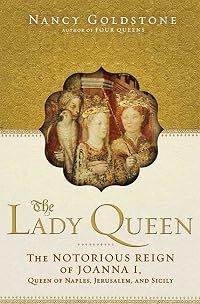
Nancy Goldstone's previous books include The Rival Queens: Catherine de' Medici, Her Daughter, Marguerite de Valois, and the Betrayal That Ignited a Kingdom and The Lady Queen: The Notorious Reign of Joanna I, Queen of Naples, Jerusalem, and Sicily. She lives in Sagaponack New York. Nancygoldstone.com
Some Editions
Common Knowledge
- Original publication date
- 2015
- People/Characters
- Catherine de Medici; Marguerite de Valois (1553-1615)
- Important places
- France
- Dedication
- For Larry and Lee, with all my love
Classifications
- Genres
- History, Nonfiction, General Nonfiction, Biography & Memoir
- DDC/MDS
- 944.0280922 — History & geography History of Europe France and Monaco France Capet and Valois 987-1589 Francis I 1515-47; Henry II 1547-59 ; XVIth Century
- LCC
- DC119.8 .G65 — History of Europe, Asia, Africa and Oceania France – Andorra – Monaco History of France Modern, 1515- 1515-1589. 16th century
- BISAC
Statistics
- Members
- 440
- Popularity
- 69,675
- Reviews
- 16
- Rating
- (3.68)
- Languages
- English
- Media
- Paper, Audiobook, Ebook
- ISBNs
- 10
- ASINs
- 4