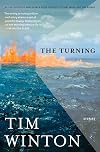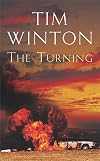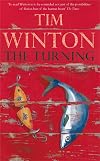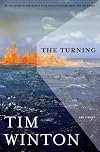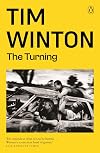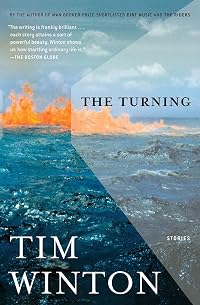
The Turning: Stories
by Tim Winton
On This Page
Description
In his highest selling Australian short story collection to date, Tim Winton presents seventeen overlapping stories of second thoughts and mid-life regret set in the brooding small-town world of coastal Western Australia. Here are turnings of all kinds e" changes of heart, nasty surprises, slow awakenings, sudden detours e" where people struggle against the terrible weight of the past and challenge the lives theye(tm)ve made for themselves. Beautifully crafted, and as tender as they are show more confronting, these elegant stories examine the darkness and frailty of ordinary people and celebrate the moments when the light shines through. show lessTags
Recommendations








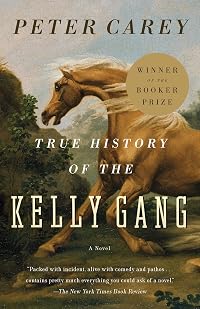
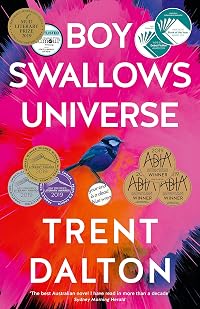


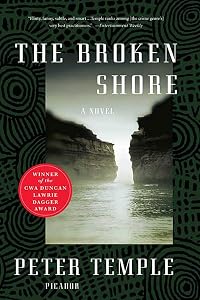
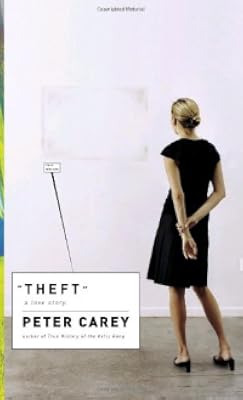








Member Recommendations
Breath by Tim Winton
by tandah
Member Reviews
In a series of compelling short stories variously connected by time, place and character, Tim Winton's The Turning explores the trajectory of ordinary lives irrevocably altered by disappointment, tragedy, struggle and the yearning for something different...something more.
Set in Western Australia, the stories feature residents with ties to the fictional coastal town of Angelus. Though Winton shifts back and forth during the lifetime of of one man, Vic, who appears in nine of the seventeen stories, the stories begin in the 1970's.
The stories in The Turning focus on moments of change for the characters, sometimes as a result of a significant event or deliberate decision but more often simply as a result of circumstance, a chance meeting, show more or a seemingly trivial act. There is a strong thread of fatalism through the stories, the idea that a persons journey is predestined. Winston's characters are largely resigned to their past and their future, any hope for escape, for change, glimmering just out of reach.
I found Winton's child and teenage characters the most affecting, empathising with their confusion at changes thrust upon them, pitying the erosion of their innocence and dreams. The adult male characters are generally grimly working class, from fishermen to abattoir workers. The women are often mothers, though not always housewives. The Turning is often bleak and depressing as Winton exposes domestic violence, addiction and corruption.
Though nominally a collection of short stories, I feel The Turning is essentially an unusually structured novel and as such it is best to consider the individual stories as chapters, though they are capable of standing on their own. The connections are sometimes subtle but they are there for the discerning reader to discover, ensuring continuity and flow. The writing is effortless, eloquent and emotive, capturing the essence of place and people without unnecessary flourish.
Though first published in 2005, The Turning has been republished to coincide with this month's (September 2013) movie adaption release in Australian cinema's starring Rose Byrne, Cate Blanchett, Richard Roxburgh, Miranda Otto and Hugo Weaving among others. The Turning is moving and compelling reading and I will be interested to see how it translates to the big screen. show less
Set in Western Australia, the stories feature residents with ties to the fictional coastal town of Angelus. Though Winton shifts back and forth during the lifetime of of one man, Vic, who appears in nine of the seventeen stories, the stories begin in the 1970's.
The stories in The Turning focus on moments of change for the characters, sometimes as a result of a significant event or deliberate decision but more often simply as a result of circumstance, a chance meeting, show more or a seemingly trivial act. There is a strong thread of fatalism through the stories, the idea that a persons journey is predestined. Winston's characters are largely resigned to their past and their future, any hope for escape, for change, glimmering just out of reach.
I found Winton's child and teenage characters the most affecting, empathising with their confusion at changes thrust upon them, pitying the erosion of their innocence and dreams. The adult male characters are generally grimly working class, from fishermen to abattoir workers. The women are often mothers, though not always housewives. The Turning is often bleak and depressing as Winton exposes domestic violence, addiction and corruption.
Though nominally a collection of short stories, I feel The Turning is essentially an unusually structured novel and as such it is best to consider the individual stories as chapters, though they are capable of standing on their own. The connections are sometimes subtle but they are there for the discerning reader to discover, ensuring continuity and flow. The writing is effortless, eloquent and emotive, capturing the essence of place and people without unnecessary flourish.
Though first published in 2005, The Turning has been republished to coincide with this month's (September 2013) movie adaption release in Australian cinema's starring Rose Byrne, Cate Blanchett, Richard Roxburgh, Miranda Otto and Hugo Weaving among others. The Turning is moving and compelling reading and I will be interested to see how it translates to the big screen. show less
The Turning by Tim Winton is a collection of short stories set in and around a fictional town called Angelus on the coast of Western Australia. In the collection Winton returns to some of his favourite themes of adolescent boys, coming of age stories, working classes, domestic disharmony, beaches and surfing.
Early on, the main character in Big World enjoys camping and hiking with his mate Biggie and describes him as 'not a very introspective bloke':
"Biggie loves all the practical stuff, reading maps, trying survival techniques, learning bushcraft. I'm more into the birds and plants and stars and things... Biggie truly is a funny bugger.... He can fart whole sentences, a skill St Augustine admired in others. He's not much for hygiene. show more His hair's always greasy and that navel smells like toejam. He doesn't swim. He couldn't carry a tune in a bucket but he can find true north by instinct." Page 9
This relationship between two mates leaving school was a solid start to the collection and I found the deep insight provided into their bond of mateship eye opening.
Later in Aquifer, our narrator reflects on the time a red telephone box was installed near to where he lived, and those of us of a certain age will surely be able to relate:
"I suppose I was five or six when I learned to go in and stand on tiptoe to reach up and dial 1194 to hear a man with a BBC voice announce the exact time. I did that for years, alone and in company, listening to the authority in the man 's voice. He sounded like he knew what he was on about, that at the stroke it would indeed be the time he said it was. It was a delicious thing to know, that at any moment of the day, when adults weren't about, you could dial yourself something worth knowing, something irrefutable, and not need to pay." Page 40
Cloudstreet by Tim Winton remains one of my favourite books and I've been hesitant to pick up another by this much beloved Australian author out of fear it wouldn't be anywhere near as good. Regular Carpe Librum readers will know I hate it when authors don't include punctuation for dialogue in their novels, and while it curiously didn't bother me in Cloudstreet I found it irritating here; often interrupting my reading flow to determine who was speaking.
The settings, character arcs and dialogue are all very Australian, and I could definitely relate to this:
"Erin and I walked everywhere. Outside of school there was nothing else to do but traipse to the wharf or the beach or down the drab strip of shops where the unchanging window displays and familiar faces made me feel desperate." Page 255
Some of the short stories seemed to have a natural end point while others left me wanting more. I was hoping the author would bring all of the characters together in the end and while there was certainly some overlap of characters in the present and the past, the lack of resolution or overarching conclusion made for a 3 star reading experience overall.
Published in 2004, I've since learned The Turning was adapted into a film in 2013 starring Cate Blanchett, Hugo Weaving and Miranda Otto. The Turning by Tim Winton is recommended for those who enjoy short stories and Australian fiction. show less
Early on, the main character in Big World enjoys camping and hiking with his mate Biggie and describes him as 'not a very introspective bloke':
"Biggie loves all the practical stuff, reading maps, trying survival techniques, learning bushcraft. I'm more into the birds and plants and stars and things... Biggie truly is a funny bugger.... He can fart whole sentences, a skill St Augustine admired in others. He's not much for hygiene. show more His hair's always greasy and that navel smells like toejam. He doesn't swim. He couldn't carry a tune in a bucket but he can find true north by instinct." Page 9
This relationship between two mates leaving school was a solid start to the collection and I found the deep insight provided into their bond of mateship eye opening.
Later in Aquifer, our narrator reflects on the time a red telephone box was installed near to where he lived, and those of us of a certain age will surely be able to relate:
"I suppose I was five or six when I learned to go in and stand on tiptoe to reach up and dial 1194 to hear a man with a BBC voice announce the exact time. I did that for years, alone and in company, listening to the authority in the man 's voice. He sounded like he knew what he was on about, that at the stroke it would indeed be the time he said it was. It was a delicious thing to know, that at any moment of the day, when adults weren't about, you could dial yourself something worth knowing, something irrefutable, and not need to pay." Page 40
Cloudstreet by Tim Winton remains one of my favourite books and I've been hesitant to pick up another by this much beloved Australian author out of fear it wouldn't be anywhere near as good. Regular Carpe Librum readers will know I hate it when authors don't include punctuation for dialogue in their novels, and while it curiously didn't bother me in Cloudstreet I found it irritating here; often interrupting my reading flow to determine who was speaking.
The settings, character arcs and dialogue are all very Australian, and I could definitely relate to this:
"Erin and I walked everywhere. Outside of school there was nothing else to do but traipse to the wharf or the beach or down the drab strip of shops where the unchanging window displays and familiar faces made me feel desperate." Page 255
Some of the short stories seemed to have a natural end point while others left me wanting more. I was hoping the author would bring all of the characters together in the end and while there was certainly some overlap of characters in the present and the past, the lack of resolution or overarching conclusion made for a 3 star reading experience overall.
Published in 2004, I've since learned The Turning was adapted into a film in 2013 starring Cate Blanchett, Hugo Weaving and Miranda Otto. The Turning by Tim Winton is recommended for those who enjoy short stories and Australian fiction. show less
“I’d been in some desolate rooms in my time but I never saw anything so melancholy,âÂ? comments Vic, a character in Tim WintonâÂÂs new release, The Turning. He may just as well be speaking of the collection itself.
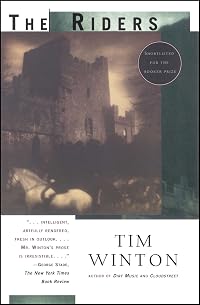
The author, twice shortlisted for the Booker Prize for his superb novels The Riders and Dirt Music, is a fine writer who specializes in presenting the modern sun-burnished boondocks of his native Australia with polish and sympathy, creating evocative tales of human existence set against the oftentimes merciless backdrop of a desolate outback.
The Turning is no exception to this pattern. In overlapping short stories set in small-town and rural Australia, Winton again crafts elegant and intriguing slice-of-life show more tales of second thoughts and late-life regret, where every character has to face a defining moment.
Yet what may excel in novel form overwhelms the short story format; there exists a nagging sameness to much of The Turning that ultimately cripples the stories as a whole.
At his best, Winton captures lifetimes of disappointment with a few incisive strokes. âÂÂSmall MerciesâÂÂ, arguably the finest of the offerings, follows Peter, a man whose life âÂÂwas not joyless yet its pleasures were close to theoretical.âÂ? After his wife commits suicide, he packs up his son and moves back into his parentâÂÂs deserted house, where he unwillingly faces the still-living ghost of a past love.
In the title story, an abused wife looks for some kind of meaning between the bruises, wondering if religion is the answer, or merely a placebo to her ills. âÂÂFamilyâ chronicles the return of the prodigal son, a famed football player who mysteriously up and quit the game.
âÂÂCommissionâÂÂ, a remarkable study in bitterness, documents the aforementioned VicâÂÂs forced reunion with his long-absent father. Winton artfully draws VicâÂÂs immediate reaction to his fatherâÂÂs shack: âÂÂIt was not an unpleasant odour, that mix of shaving soap, leathery skin and sweat, but the sudden familiarity of it overwhelmed me. It was the scent of a lost time, how my father smelled before the funk of antacids and the peppermints that never quite hid the stink of booze.âÂ?
Despite the obvious power of WintonâÂÂs writing, the sense of nostalgia that permeates the pages quickly threatens to suffocate the reader. Each of WintonâÂÂs yarns concludes on the same note of discontented resignation, each character coming to an uncertain realization. Like the room Vic visits, the stories are suffused with melancholy to the point of distraction.
As well, much of The Turning reads as segments of an unfinished novel, as Vic and his family reappear in various guises over the course of the book. At first intriguing, it rapidly becomes a distracting and tiresome device, padding out stories that may have been more effectively serves as stand-alone narratives.
There is much to admire in The Turning; Winton captures the gritty, uncompromising nature of Australia as no one else can. But The Turning is a collection that is best experienced, like the emotion of melancholy, in small doses. show less
The author, twice shortlisted for the Booker Prize for his superb novels The Riders and Dirt Music, is a fine writer who specializes in presenting the modern sun-burnished boondocks of his native Australia with polish and sympathy, creating evocative tales of human existence set against the oftentimes merciless backdrop of a desolate outback.
The Turning is no exception to this pattern. In overlapping short stories set in small-town and rural Australia, Winton again crafts elegant and intriguing slice-of-life show more tales of second thoughts and late-life regret, where every character has to face a defining moment.
Yet what may excel in novel form overwhelms the short story format; there exists a nagging sameness to much of The Turning that ultimately cripples the stories as a whole.
At his best, Winton captures lifetimes of disappointment with a few incisive strokes. âÂÂSmall MerciesâÂÂ, arguably the finest of the offerings, follows Peter, a man whose life âÂÂwas not joyless yet its pleasures were close to theoretical.âÂ? After his wife commits suicide, he packs up his son and moves back into his parentâÂÂs deserted house, where he unwillingly faces the still-living ghost of a past love.
In the title story, an abused wife looks for some kind of meaning between the bruises, wondering if religion is the answer, or merely a placebo to her ills. âÂÂFamilyâ chronicles the return of the prodigal son, a famed football player who mysteriously up and quit the game.
âÂÂCommissionâÂÂ, a remarkable study in bitterness, documents the aforementioned VicâÂÂs forced reunion with his long-absent father. Winton artfully draws VicâÂÂs immediate reaction to his fatherâÂÂs shack: âÂÂIt was not an unpleasant odour, that mix of shaving soap, leathery skin and sweat, but the sudden familiarity of it overwhelmed me. It was the scent of a lost time, how my father smelled before the funk of antacids and the peppermints that never quite hid the stink of booze.âÂ?
Despite the obvious power of WintonâÂÂs writing, the sense of nostalgia that permeates the pages quickly threatens to suffocate the reader. Each of WintonâÂÂs yarns concludes on the same note of discontented resignation, each character coming to an uncertain realization. Like the room Vic visits, the stories are suffused with melancholy to the point of distraction.
As well, much of The Turning reads as segments of an unfinished novel, as Vic and his family reappear in various guises over the course of the book. At first intriguing, it rapidly becomes a distracting and tiresome device, padding out stories that may have been more effectively serves as stand-alone narratives.
There is much to admire in The Turning; Winton captures the gritty, uncompromising nature of Australia as no one else can. But The Turning is a collection that is best experienced, like the emotion of melancholy, in small doses. show less
My uncle sent this book to me with a post-it stuck to the cover that said, "If you want to write short stories, you must read these."
They are fantastic short stories, some of which share characters, at different stages in their lives. They all centre around a small town in Western Australia. They're amazing, wonderful little pieces, with characters that portray depression and ugliness and beauty in a way that makes it seem as if you're sitting in a cafe, watching them across the street. And yes, it's a big inspiration to read, especially if you're wondering about how to plot a short story in terms of length, and how to make a character live within the confines of a short story. Winton makes his characters live within two lines - what show more skill. This is definitely a five out of five book. show less
They are fantastic short stories, some of which share characters, at different stages in their lives. They all centre around a small town in Western Australia. They're amazing, wonderful little pieces, with characters that portray depression and ugliness and beauty in a way that makes it seem as if you're sitting in a cafe, watching them across the street. And yes, it's a big inspiration to read, especially if you're wondering about how to plot a short story in terms of length, and how to make a character live within the confines of a short story. Winton makes his characters live within two lines - what show more skill. This is definitely a five out of five book. show less
The stories in this collection set in western Australia explore pivotal points in character's lives. Each is told in a very personal way, as a sort of understanding of an event or an analysis of a moment in time. Each incident is not resolved or justified but rather explored. Some do lead to an understanding, others remain as a stepping stone to life. The stories mostly revolve around a community in southwestern Australia, either being lived by a character or being reflected upon later. Most of the incidents seem to occur during teen years. Several of the stories feature the same character at various times in his life but not chronologically although the last story is the latest in his life. I had a little trouble with some of the show more colloquialisms and slang, but this did not impair the impact of the story. The landscape was as much a part of the atmosphere of the story as the actions. Poignant, thoughtful and remarkable. show less
Tim Winton is a beloved Australian author. I have only read one other novel by him (Breath), and I can certainly see a pattern emerging.
He writes about life in Australia. It’s gritty. It’s real. You can actually feel yourself immersed in the culture and people of another time and another place (for those of us who did not grow up in Australia). There is no ‘rose-tinted’ filter to his stories, yet I did get a sense of some nostalgia and some regret.
The Turning is a collection of short stories all centring around a small fictional town in Western Australia. The stories are all mostly vaguely connected and work well as a novel, but could also be stand-alone as well. He tells the tale of the people of Angelus focusing on one show more character in particular – Victor Lang. I think Victor featured in nine of the seventeen stories. He is a damaged man trapped in his adolescent past – and Winton allows us to witness some very important moments in his life through the eyes of his mother, his father, his wife, even a girl who has a crush on him in school.
Along with Vic there are some other very memorable characters: An abused woman who develops and interest in the Christian couple who recently moved into the neighbourhood; a strange relationship between the school bad boy and the smart yet ostracised girl; and a girl with a strawberry scar.
It was a good read. Fans of Tim Winton will love it. The Turning was originally published in 2005 and has won numerous Australian Literary awards. In 2013 it was made into a movie starring Cate Blanchett, Rose Byrne, Hugo Weaving and a host of other acclaimed Auzzie actors.
So why only 3.5 stars? As well written and poignant as this book is, I don’t think it is one I will be tempted to read again. Having said that, I think I will undoubtedly read more of Winton’s work. show less
He writes about life in Australia. It’s gritty. It’s real. You can actually feel yourself immersed in the culture and people of another time and another place (for those of us who did not grow up in Australia). There is no ‘rose-tinted’ filter to his stories, yet I did get a sense of some nostalgia and some regret.
The Turning is a collection of short stories all centring around a small fictional town in Western Australia. The stories are all mostly vaguely connected and work well as a novel, but could also be stand-alone as well. He tells the tale of the people of Angelus focusing on one show more character in particular – Victor Lang. I think Victor featured in nine of the seventeen stories. He is a damaged man trapped in his adolescent past – and Winton allows us to witness some very important moments in his life through the eyes of his mother, his father, his wife, even a girl who has a crush on him in school.
Along with Vic there are some other very memorable characters: An abused woman who develops and interest in the Christian couple who recently moved into the neighbourhood; a strange relationship between the school bad boy and the smart yet ostracised girl; and a girl with a strawberry scar.
It was a good read. Fans of Tim Winton will love it. The Turning was originally published in 2005 and has won numerous Australian Literary awards. In 2013 it was made into a movie starring Cate Blanchett, Rose Byrne, Hugo Weaving and a host of other acclaimed Auzzie actors.
So why only 3.5 stars? As well written and poignant as this book is, I don’t think it is one I will be tempted to read again. Having said that, I think I will undoubtedly read more of Winton’s work. show less
Tim Winton's "The Turning" is an excellent albeit uneven thematically related collection of stories. The best are five, worst are around two or three but the bad certainly outweigh the good. The stories revolve around the lives of different characters who are either in relationship or grew up in the coastal Australian town of Angelus. The first half is near flawless and as the book progresses it looses its momentum. The best stories are those that are impactful yet also self-contained, which is the challenge of structuring a book in this way. "Aquifer" is the most widely reprinted for good reason and stands on it's own as a man's recollection of his suburban neighborhood takes a sinister twist. The stories that lost me were the ones show more that relied too much on character to drive the plot of the narrative and although they added to the milieu of the book, ones like "Fog" or "Boner McPharlin's Moll" they lacked immediacy and I found it hard to care about the story insomuch as it was a story and really only gleaned additional insight into other characters in the collection. show less
Members
- Recently Added By
Author Information

42+ Works 13,856 Members
Tim Winton was born in 1960 in Western Australia. He attended a Creative Writing Course at Curtin University in Perth, and it was there that he began his first novel, An Open Swimmer. It was entered for The Australian/Vogel Award in 1981 and won. His other works include Shallows, which won the Miles Franklin Award in 1984; The Riders Winton, which show more won the Miles Franklin Award in 1992; and Island Home: A Landscape Memoir, the winner of the 2016 Australian Book Industry Awards, General nonfiction book of the year. The Boy Behind the Curtain, published in 2016, won the 2018 Adelaide Festival Awards for Literature, Nonfiction. His books also include The Shepherd's Hut, Breath, and Dirt Music. (Bowker Author Biography) show less
Some Editions
Awards and Honors
Awards
Common Knowledge
- Canonical title*
- La svolta
- Original publication date
- 2005
- Important places
- Perth, Western Australia, Australia; Western Australia, Australia
- Related movies
- The Turning (IMDb)
- First words
- After five years of high school the final November arrives and leaves as suddenly as a spring storm.
*Some information comes from Common Knowledge in other languages. Click "Edit" for more information.
Classifications
Statistics
- Members
- 948
- Popularity
- 28,041
- Reviews
- 24
- Rating
- (3.99)
- Languages
- 6 — English, French, German, Italian, Swedish, Turkish
- Media
- Paper, Audiobook, Ebook
- ISBNs
- 42
- ASINs
- 8