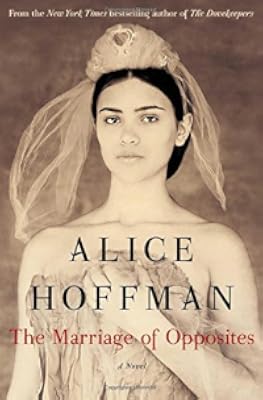
The Marriage of Opposites
by Alice Hoffman
On This Page
Description
"From the New York Times bestselling author of The Dovekeepers and The Museum of Extraordinary Things: a forbidden love story set on the tropical island of St. Thomas about the extraordinary woman who gave birth to painter Camille Pissarro the Father of Impressionism"--Tags
Recommendations

Member Reviews
Awash with as much color and depth as as Pissaro painting, Alice Hoffman's "The Marriage of Opposites" tells the story of three generations of a family living in St. Thomas, including the famous painter Camille Pissaro.
With lyrical prose, Hoffman engages readers with multi-dimensional characters and a strong sense of place and time. While this historical fiction story includes a famous person, I loved that the real "star" of the novel is Rachel, Camille Pissaro's mother, a fascinating character in her own right -- not for historical reasons but simply by the way Hoffman created her. It seems Hoffman's message is that ordinary people are just as complex and fascinating as famous ones.
I also appreciated the different points of view in the show more book. From Rachel's point of view we see Camille as somewhat belligerent and disrespectful, while the same story from his point of view gives us an overbearing and inflexible mother.
The last Hoffman novel I read was [b:Turtle Moon|165840|Turtle Moon |Alice Hoffman|https://s.gr-assets.com/assets/nophoto/book/50x75-a91bf249278a81aabab721ef782c4a74.png|4030674] over 20 years ago. I don't know why I haven't read anything since. I've also been sitting on this book for almost a year without reading it! I truly enjoyed this one and guarantee I'll be reading more Hoffman in the future.
4.5 stars
Thank you to Simon & Schuster and NetGalley for a galley of this book in exchange for an honest review. I ended up listening to this book on audio, which was excellent. show less
With lyrical prose, Hoffman engages readers with multi-dimensional characters and a strong sense of place and time. While this historical fiction story includes a famous person, I loved that the real "star" of the novel is Rachel, Camille Pissaro's mother, a fascinating character in her own right -- not for historical reasons but simply by the way Hoffman created her. It seems Hoffman's message is that ordinary people are just as complex and fascinating as famous ones.
I also appreciated the different points of view in the show more book. From Rachel's point of view we see Camille as somewhat belligerent and disrespectful, while the same story from his point of view gives us an overbearing and inflexible mother.
The last Hoffman novel I read was [b:Turtle Moon|165840|Turtle Moon |Alice Hoffman|https://s.gr-assets.com/assets/nophoto/book/50x75-a91bf249278a81aabab721ef782c4a74.png|4030674] over 20 years ago. I don't know why I haven't read anything since. I've also been sitting on this book for almost a year without reading it! I truly enjoyed this one and guarantee I'll be reading more Hoffman in the future.
4.5 stars
Thank you to Simon & Schuster and NetGalley for a galley of this book in exchange for an honest review. I ended up listening to this book on audio, which was excellent. show less
Just barely 4 stars. I have never been disappointed in an Alice Hoffman book - though this one came close. Like her other books, the prose of The Marriage of Opposites is beautiful. But there was also something not quite satisfactory to me in the structure of the novel.
The marriage referenced in the title is between the parents of Impressionist artist Camille Pissarro, who live their lives primarily on the island of St. Thomas and a bit, near the end, in Paris. They flaunt society's rules in order to pursue their passion for one another, despite the implications for their children. Pissarro's mother in particular is a formidable person, clever and independent compared with most women of the mid 1880s.
Hoffman adheres to the known facts show more of Pissarro's parents' lives but also introduces a rich cast of fictitious characters who add great dimension to the book. And through them, Hoffman captures a lot of cultural variety from the period, like the island's mystique, the sensitive issues of cross-racial romance, and the tightly knit Jewish community that included Pissarro's family.
I think what was difficult for me is Hoffman's changing of voice throughout the book. Some sections are first person, others not. One chapter focuses on one character and the next on a different one. The pace also feels uneven. Sometimes the story feels rich and complex. And other parts feel superficial. Still, I'm glad I read it and it did send me off to the Internet to research Pissarro's life. So it definitely sparked a new interest. show less
The marriage referenced in the title is between the parents of Impressionist artist Camille Pissarro, who live their lives primarily on the island of St. Thomas and a bit, near the end, in Paris. They flaunt society's rules in order to pursue their passion for one another, despite the implications for their children. Pissarro's mother in particular is a formidable person, clever and independent compared with most women of the mid 1880s.
Hoffman adheres to the known facts show more of Pissarro's parents' lives but also introduces a rich cast of fictitious characters who add great dimension to the book. And through them, Hoffman captures a lot of cultural variety from the period, like the island's mystique, the sensitive issues of cross-racial romance, and the tightly knit Jewish community that included Pissarro's family.
I think what was difficult for me is Hoffman's changing of voice throughout the book. Some sections are first person, others not. One chapter focuses on one character and the next on a different one. The pace also feels uneven. Sometimes the story feels rich and complex. And other parts feel superficial. Still, I'm glad I read it and it did send me off to the Internet to research Pissarro's life. So it definitely sparked a new interest. show less
Just barely 4 stars. I have never been disappointed in an Alice Hoffman book - though this one came close. Like her other books, the prose of The Marriage of Opposites is beautiful. But there was also something not quite satisfactory to me in the structure of the novel.
The marriage referenced in the title is between the parents of Impressionist artist Camille Pissarro, who live their lives primarily on the island of St. Thomas and a bit, near the end, in Paris. They flaunt society's rules in order to pursue their passion for one another, despite the implications for their children. Pissarro's mother in particular is a formidable person, clever and independent compared with most women of the mid 1880s.
Hoffman adheres to the known facts show more of Pissarro's parents' lives but also introduces a rich cast of fictitious characters who add great dimension to the book. And through them, Hoffman captures a lot of cultural variety from the period, like the island's mystique, the sensitive issues of cross-racial romance, and the tightly knit Jewish community that included Pissarro's family.
I think what was difficult for me is Hoffman's changing of voice throughout the book. Some sections are first person, others not. One chapter focuses on one character and the next on a different one. The pace also feels uneven. Sometimes the story feels rich and complex. And other parts feel superficial. Still, I'm glad I read it and it did send me off to the Internet to research Pissarro's life. So it definitely sparked a new interest. show less
The marriage referenced in the title is between the parents of Impressionist artist Camille Pissarro, who live their lives primarily on the island of St. Thomas and a bit, near the end, in Paris. They flaunt society's rules in order to pursue their passion for one another, despite the implications for their children. Pissarro's mother in particular is a formidable person, clever and independent compared with most women of the mid 1880s.
Hoffman adheres to the known facts show more of Pissarro's parents' lives but also introduces a rich cast of fictitious characters who add great dimension to the book. And through them, Hoffman captures a lot of cultural variety from the period, like the island's mystique, the sensitive issues of cross-racial romance, and the tightly knit Jewish community that included Pissarro's family.
I think what was difficult for me is Hoffman's changing of voice throughout the book. Some sections are first person, others not. One chapter focuses on one character and the next on a different one. The pace also feels uneven. Sometimes the story feels rich and complex. And other parts feel superficial. Still, I'm glad I read it and it did send me off to the Internet to research Pissarro's life. So it definitely sparked a new interest. show less
The Marriage of Opposites - Hoffman
Audio performance by multiple narrators
4 stars
“Then I understood that when someone begins to tell you her story, you are entwined together. Perhaps even more so if the ending hasn’t been divulged.”
Rachel Monsanto Pomie Petit Pizzarro was mother and step-mother to eleven children, including the well known painter, Camille Pissarro. This book is a richly imagined, fictional autobiography of Rachel Petit Pizzarro. Mostly, it is Rachel’s first person account of her life, although Hoffman switches to a third person perspective in the middle of the book, and in one chapter to the voice of the rebellious, adolescent Camille.
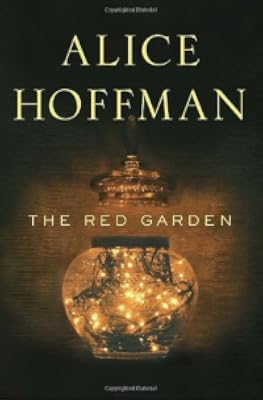
I’d previously read two of Hoffman’s books of linked short stories; show more The Red Garden and Blackbird House. With those books, I was impressed with her ability to create vibrant characters in a limited number of pages. This book impressed me with it’s clarity, despite the intricate family relationships, the generational history, and the societal complexities of religion and race. Although the book follows Rachel from girlhood to old age, I was never felt lost in the details of the back story or the plot. The storytelling is so immediate. I feel like I’ve been to 19th century St. Thomas and eavesdropped on the conversations of these characters.
Camille Pissarro is featured in this book, mostly in respect to his relationship to his mother. It is his mother’s story, and the story of her (fictional) best friend, the ‘mulatto’ Jestine. Together, they give voice to the severe racial and gender discrimination of their age. There’s a great deal of tragedy, suffering ,and sacrifice, with an ending that is a bit too neatly tied up with a pretty bow. Not that I’m complaining. I felt completely satisfied when I closed the book.
I had both text and audio editions of this book. The audio was well done with three performers, but would have been just as good with only one. The text version allowed me to reread favorite descriptions just for the pleasure of the words.
“As I turned the pages, I felt as if there were bees on my fingertips, for I had never felt so alive as when reading.” show less
Audio performance by multiple narrators
4 stars
“Then I understood that when someone begins to tell you her story, you are entwined together. Perhaps even more so if the ending hasn’t been divulged.”
Rachel Monsanto Pomie Petit Pizzarro was mother and step-mother to eleven children, including the well known painter, Camille Pissarro. This book is a richly imagined, fictional autobiography of Rachel Petit Pizzarro. Mostly, it is Rachel’s first person account of her life, although Hoffman switches to a third person perspective in the middle of the book, and in one chapter to the voice of the rebellious, adolescent Camille.
I’d previously read two of Hoffman’s books of linked short stories; show more The Red Garden and Blackbird House. With those books, I was impressed with her ability to create vibrant characters in a limited number of pages. This book impressed me with it’s clarity, despite the intricate family relationships, the generational history, and the societal complexities of religion and race. Although the book follows Rachel from girlhood to old age, I was never felt lost in the details of the back story or the plot. The storytelling is so immediate. I feel like I’ve been to 19th century St. Thomas and eavesdropped on the conversations of these characters.
Camille Pissarro is featured in this book, mostly in respect to his relationship to his mother. It is his mother’s story, and the story of her (fictional) best friend, the ‘mulatto’ Jestine. Together, they give voice to the severe racial and gender discrimination of their age. There’s a great deal of tragedy, suffering ,and sacrifice, with an ending that is a bit too neatly tied up with a pretty bow. Not that I’m complaining. I felt completely satisfied when I closed the book.
I had both text and audio editions of this book. The audio was well done with three performers, but would have been just as good with only one. The text version allowed me to reread favorite descriptions just for the pleasure of the words.
“As I turned the pages, I felt as if there were bees on my fingertips, for I had never felt so alive as when reading.” show less
I LOVED this book. I listened to it on Audio and found myself wanting more. I will admit, halfway through the book I realized that it was somewhat about the famed "father of impressionism" Camille Pissaro. Once I realized that the book took a better spin for me. What I enjoyed most was the spirit and spunk of the main character, Rachel. For a woman during that time (the 19th century) she knew what she wanted and was willing to get it. The author wrote well too. Often describing St. Thomas and Paris with such vivid detail that I felt like I was there. A must read!
What a wonderful book! And this kind of praise doesn't come out of my keyboard often. I picked this novel as my vacation read due to its setting on St. Thomas island, but it has far surpassed my expectations. It made the already beautiful destination alive with local folklore and history.
When it comes to the Caribbean, what most people would associate with historical fiction set in those parts would probably be pirates, plantations and slavery. This book takes a fresher approach as this is a family saga about a Jewish family who came to the island that used to be a Danish colony at the time in search of a refuge. Their destinies are intertwined with the black people on the island while existing in apparently separate worlds.
I find it show more very interesting that the family in question is the one of Camille Pissarro, the father of impressionism. I wasn't aware he was from St.Thomas and the book describes in a wonderful way how a childhood on the island might have sparked a different kind of vision needed to create a new artistic movement.
The book is centred mostly around Rachel, the mother of Camille Pissarro and the first part of the book that describes her childhood and coming of age is the strongest, truly magical. The book is very sensual and haunting at times. I did find a slight disconnect between the character of Rachel as a young woman and later on, when she was more mature, esp. as the later years were more rushed in the novel, but it didn't disturb me so much.
I cannot say enough about the writing in this book. There are great characters, an interesting story and a very vivid description of the setting. The magical realism in this book is extremely subtle, but magic permeates the whole book which makes it hard to put it down and impossible to forget.
10/10 from me. show less
When it comes to the Caribbean, what most people would associate with historical fiction set in those parts would probably be pirates, plantations and slavery. This book takes a fresher approach as this is a family saga about a Jewish family who came to the island that used to be a Danish colony at the time in search of a refuge. Their destinies are intertwined with the black people on the island while existing in apparently separate worlds.
I find it show more very interesting that the family in question is the one of Camille Pissarro, the father of impressionism. I wasn't aware he was from St.Thomas and the book describes in a wonderful way how a childhood on the island might have sparked a different kind of vision needed to create a new artistic movement.
The book is centred mostly around Rachel, the mother of Camille Pissarro and the first part of the book that describes her childhood and coming of age is the strongest, truly magical. The book is very sensual and haunting at times. I did find a slight disconnect between the character of Rachel as a young woman and later on, when she was more mature, esp. as the later years were more rushed in the novel, but it didn't disturb me so much.
I cannot say enough about the writing in this book. There are great characters, an interesting story and a very vivid description of the setting. The magical realism in this book is extremely subtle, but magic permeates the whole book which makes it hard to put it down and impossible to forget.
10/10 from me. show less
Set primarily in St. Thomas during the 1800's The Marriage of Opposites tells the story of Rachel Pomie, a young girl who dreams of Paris and refuses to live by the rules. However, she has no choice but to do so when she is to be married to a widower more than twice her age in order to save her father's business. Rachel becomes a mother to his three young children then goes on to have four of her own, the fourth one born after her husband suddenly dies. Her husband's nephew arrives from France to settle her husband's affairs since women were not allowed to do so. It is then that Rachel falls in love and goes against her family, her religion and the island of St. Thomas to follow her heart and to fight for what she truly wants.
Some show more chapters also tell the story of one of her sons from her second marriage - Camille Pissarro, who would one day become a famous painter.
Often times confusing keeping track of some of Rachel's family, but another well-written and interesting book from Alice Hoffman nonetheless. show less
Some show more chapters also tell the story of one of her sons from her second marriage - Camille Pissarro, who would one day become a famous painter.
Often times confusing keeping track of some of Rachel's family, but another well-written and interesting book from Alice Hoffman nonetheless. show less
Members
- Recently Added By
Lists

Historical Fiction
889 works; 91 members

Favorite Caribbean Books
60 works; 28 members

Top Five Books of 2015
811 works; 240 members

Kirkus Starred Fiction Reviews of Books Published in 2015
310 works; 6 members
Author Information

74+ Works 61,274 Members
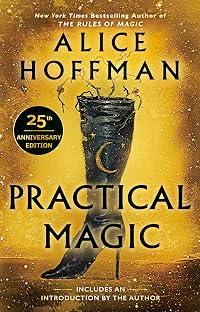
Alice Hoffman, an American novelist and screenwriter, was born in New York City on March 16, 1952. She earned a B.A. from Adelphi University in 1973 and an M.A. in creative writing from Stanford University in 1975 before publishing her first novel, Property Of, in 1977. Known for blending realism and fantasy in her fiction, she often creates show more richly detailed characters who live on society's margins and places them in extraordinary situations as she did with At Risk, her 1988 novel about the AIDS crisis. Her other works include The Drowning Season, Seventh Heaven, The River King, Blue Diary, The Probable Future, The Ice Queen, and The Dovekeepers. Her book, The Third Angel, won the 2008 New England Booksellers' Award for fiction. Two of her novels, Practical Magic and Aquamarine, were made into films. She has also written numerous screenplays, including adaptations of her own novels and the original screenplay, Independence Day. Her title's The Museum of Exteaordinary Things, The Marriage of Opposites, Seventh Heaven, and The Rules of Magic made The New York Times Best Seller List. (Bowker Author Biography) show less
Awards and Honors
Series
Belongs to Publisher Series
Work Relationships
Has as a reference guide/companion
Common Knowledge
- Canonical title*
- Un mariage contre-nature
- Original title
- The Marriage of Opposites
- Original publication date
- 2015
- People/Characters
- Rachel Pomie Petit Pizzarro; Madame Sara Monsanto Pomie; Monsieur Moses Monsanto Pomie; Aaron Rodrigues; Jestine; Adelle (show all 33); Isaac Petit; Esther Petit; David Petit; Samuel Petit; Hannah Petit; Rosalie; Joseph Petit; Mr. Enrique; Rebecca Emma Petit; Abigail Delphine Petit; Lydia "Lyddie" Cassin Rodrigues Cohen; Elise Rodrigues; Isaac Petit (child); Abraham Gabriel Frederic Pizzarro; Madame Halevy; Joseph Felix Pizzarro; Moses Alfred Pizzarro; Abraham Jacobo Camille Pizzarro; Aaron Gustave Pizzarro; Henri Cohen; Sophie; Helena James; Rebecca Halevy-Stein; Marianna King Morris; Fritz Melbye; Julie Vellay; Jeanne-Rachel "Minette" Pizzarro
- Important places
- Charlotte Amalie, St. Thomas, Danish West Indies (now U.S. Virgin Islands); Paris, France; St. Thomas, U.S. Virgin Islands
- First words
- I always left my window open at night, despite the warnings I'd been given.
- Quotations
- There are those who say that heaven and hell are not so far apart. They are not at opposite ends of the world beyond ours, only a step away from one another.
- Last words
- (Click to show. Warning: May contain spoilers.)Our sister, who could not decide whether or not to be human, sat down with us at last.
*Some information comes from Common Knowledge in other languages. Click "Edit" for more information.
Classifications
Statistics
- Members
- 1,729
- Popularity
- 12,794
- Reviews
- 79
- Rating
- (3.96)
- Languages
- Dutch, English, French, Italian
- Media
- Paper, Audiobook, Ebook
- ISBNs
- 30
- ASINs
- 8