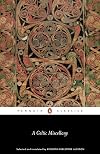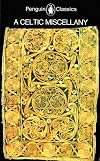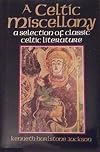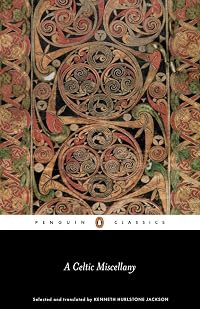
A Celtic Miscellany: Translations from the Celtic Literatures
by Kenneth Hurlstone Jackson
On This Page
Description
Including works from Welsh, Irish and Scottish Gaelic, Cornish, Breton and Manx, this Celtic Miscellany offers a rich blend of poetry and prose from the eighth to the nineteenth century, and provides a unique insight into the minds and literature of the Celtic people. It is a literature dominated by a deep sense of wonder, wild inventiveness and a profound sense of the uncanny, in which the natural world and the power of the individual spirit are celebrated with astonishing imaginative show more force. Skifully arranged by theme, from the hero-tales of Cú Chulainn, Bardic poetry and elegies, to the sensitive and intimate writings of early Celtic Christianity, this anthology provides a fascinating insight into a deeply creative literary tradition. For more than seventy years, Penguin has been the leading publisher of classic literature in the English-speaking world. With more than 1,700 titles, Penguin Classics represents a global bookshelf of the best works throughout history and across genres and disciplines. Readers trust the series to provide authoritative texts enhanced by introductions and notes by distinguished scholars and contemporary authors, as well as up-to-date translations by award-winning translators. show lessTags
Recommendations












Member Reviews
A Celtic Miscellany is an anthology of excerpts from Celtic literature (mainly Irish and Welsh, but also Scottish, Breton, Cornish, and Manx). It contains a lot of material, from mythology to love poetry to folk songs and prayers to bardic elegies, both well-known tales and many pieces that would likely be hard to find elsewhere. That said, it's kind of an odd book. It groups the pieces by theme (hero-tale, nature, love, etc.) rather than by country of origin or chronologically, and many of the excerpts are quite short and presented without much context or explanation (there's a short introduction to each themed section, and a series of notes at the back, but I'm not sure that either of these is that helpful). Most oddly (I thought), show more the poetry is presented as prose, which makes sense due to the difficulties of translating Celtic verse-forms into English, but makes for a somewhat disconcerting reading experience. That said, however, I did enjoy slowly reading through this book. As I said above, the material is varied and it's likely that you'll find something in it to interest you. This would be a good book to round out a collection of Celtic literature, but I would not suggest it as your first introduction to the subject. show less
I really enjoyed this collection, experiencing a range of Celtic literature.
Unfortunately, the excerpts only whetted my appetite for wanting to read the rest of the works, but then it was time to move on to the next subject.
The author made a choice to not attempt to rhyme the poetic excerpts and instead focus on meaning, which I understand, but I would have liked perhaps to see the original as well, so I could get some idea of the rhythm and rhyme of the native language.
Unfortunately, the excerpts only whetted my appetite for wanting to read the rest of the works, but then it was time to move on to the next subject.
The author made a choice to not attempt to rhyme the poetic excerpts and instead focus on meaning, which I understand, but I would have liked perhaps to see the original as well, so I could get some idea of the rhythm and rhyme of the native language.
This book has problems that made it nowhere near as worthwhile as I'd hoped:
First, it's full of fragments, except where the wholes are very short, anyway. Excerpts just make me want to see the full thing, to get the context and story properly. Second, there's poetry in here, but it's translated as prose. Whenever someone says, "It's not possible to translate poetry," they really mean, "I'm not up to the task but my ego won't allow me to admit it."
One does get a flavour of the literatures (all six Celtic languages) but it forever left me wanting more or better.
First, it's full of fragments, except where the wholes are very short, anyway. Excerpts just make me want to see the full thing, to get the context and story properly. Second, there's poetry in here, but it's translated as prose. Whenever someone says, "It's not possible to translate poetry," they really mean, "I'm not up to the task but my ego won't allow me to admit it."
One does get a flavour of the literatures (all six Celtic languages) but it forever left me wanting more or better.
It's really hard, unfortunately, to read this anthology of Celtic literature. Anthologies themselves don't tend to lend themselves to reading straight through, and in many cases in this volume, even with the notes, the references can be obscure. Strictly, I think, for Celtic studies/Old English types.
paperback
Ratings
Members
- Recently Added By
Lists

Philip Ward's Lifetime Reading Plan
592 works; 22 members
Author Information

18+ Works 1,121 Members
Awards and Honors
Notable Lists
Series
Belongs to Publisher Series
Common Knowledge
- Canonical title
- A Celtic Miscellany: Translations from the Celtic Literatures
- Original title
- A Celtic Miscellany: Translations from the Celtic Literatures
- Original publication date
- 1951; 1971 (Revised edition) (Revised edition)
- People/Characters
- Edarcomhol; Ceithern; Deirdre (of the sorrows); Conchobar; Celtchar; Cobhthach (show all 22); Suibhne; Tristan; Kate of Garnavilla; Ifor Hael; Lludd; Llefelys; Blodeuedd; Froech; Olwen; Culhwch; William Gould; Gruffudd ap Addaf ap Dafydd; Bresal son of Diarmaid; St. Scoithin; St. Meriasek; Cú Chulainn
- Dedication
- To Janet, Stephanie, and Alastar
- First words
- PREFACE
There have been a number of anthologies of translations from Celtic literature published since Charlotte Brooke's Reliques of Irish Poetry (1789), though hardly any are now still in print.
HERO-TALE AND ADVENTURE
NOTE
Literary historians are familiar with the concept of what is called the Heroic Age. The theory is that early in the evolution of society a stage is reached when, in a mat... (show all)erially and socially simple contest, an aristocratic warrior caste dominates the scene.... - Last words
- (Click to show. Warning: May contain spoilers.)May I be an island, may I be sea
May I be a hill on the land
May I be a stare when the moon wanes
May I be a staff to the weak one:
I shall wound every man, no man shall wound me.
Scottish Gaelic traditional folk charm
Classifications
- Genres
- Fiction and Literature, Poetry
- DDC/MDS
- 891.6 — Literature & rhetoric Literatures of other languages East Indo-European and Celtic literatures Celtic languages
- LCC
- PB1100 .J3 — Language and Literature Modern languages. Celtic languages and literature Modern languages. Celtic languages Celtic languages and literature
- BISAC
Statistics
- Members
- 978
- Popularity
- 26,994
- Reviews
- 5
- Rating
- (3.62)
- Languages
- English, German
- Media
- Paper, Ebook
- ISBNs
- 6
- ASINs
- 15