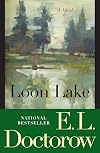
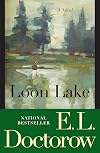
Loon Lake
by E. L. Doctorow
On This Page
Description
It is the Great Depression of the 1930s, and a passionate young man from Paterson, New Jersey, leaves home to find his fortune. What he finds, on a cold and lonely night in the Adirondack Mountains, is a vision of life so different from his own that it changes his destiny, leading him from the side of a railroad track to a magical place called Loon Lake.Tags
Recommendations




















Member Reviews
Loon Lake is one of Doctorow's more experimental novels. Set largely during the Depression years of the 1930s, it is the narrative of Joe, a young man from Patterson, New Jersey who drifts across the east coast of the USA. Following a private railroad into the Adirondacks, Joe arrives at the titular Loon Lake, a private estate owned by business magnate F.W. Bennett and home to the eccentric poet Warren Penfield.
The novel's idiosyncratic style is its strong point. Certain chapters are presented through interior monologue (or "stream of consciousness") that recalls the great modernist works of the early twentieth century and other chapters are framed through the poetry of Penfield, drawing attention to the way in which places and periods show more of history become mythologized. That said, the novel is uneven in places, particularly the slightly unconvincing third act, which takes the action away from the eponymous Lake and feels a little tacked on. Despite this, the novel is generally an entertaining and stimulating read, with Doctorow tackling familiar themes within his ouevre (the excesses of capitalism, the organisation of labour, masculinity and violence) in an innovative fashion. show less
The novel's idiosyncratic style is its strong point. Certain chapters are presented through interior monologue (or "stream of consciousness") that recalls the great modernist works of the early twentieth century and other chapters are framed through the poetry of Penfield, drawing attention to the way in which places and periods show more of history become mythologized. That said, the novel is uneven in places, particularly the slightly unconvincing third act, which takes the action away from the eponymous Lake and feels a little tacked on. Despite this, the novel is generally an entertaining and stimulating read, with Doctorow tackling familiar themes within his ouevre (the excesses of capitalism, the organisation of labour, masculinity and violence) in an innovative fashion. show less
Let me preface this review with this: I LOVE E.L. Doctorow. Loved City of God. Loved Ragtime. Loved The Book of Daniel. So, ok...I didn't LOVE Homer & Langley, but at least I didn't finish the book thinking I had lost my facility to comprehend English.
I wish I could tell you I know what this book is about. There's a con-man/fugitive "protagonist" who is not at all likeable or even interestingly evil. There's a bizarre ladylove who dances in and out of self-respect every chapter or so. The most interesting character is a maid, who disappears from the narrative fairly early on. The depressed and eccentric poet holds promise, yet he also vanishes.
I get that this was an experiment. There are moments of that great Doctorow language that I show more treasure. But as a coherent book it fails. I totally understand that some people find this work a "stunning masterpiece" and "utterly compelling." Variety is definitely the spice of life, and I am probably the dry saltine of literature here, but this one really did not do it for me. show less
I wish I could tell you I know what this book is about. There's a con-man/fugitive "protagonist" who is not at all likeable or even interestingly evil. There's a bizarre ladylove who dances in and out of self-respect every chapter or so. The most interesting character is a maid, who disappears from the narrative fairly early on. The depressed and eccentric poet holds promise, yet he also vanishes.
I get that this was an experiment. There are moments of that great Doctorow language that I show more treasure. But as a coherent book it fails. I totally understand that some people find this work a "stunning masterpiece" and "utterly compelling." Variety is definitely the spice of life, and I am probably the dry saltine of literature here, but this one really did not do it for me. show less
A Vöcsök-tó ura Mr. Bennett, a dúsgazdag mágnás. Nem tipikus mágnás, de képzeljük el őt ezúttal tipikus mágnásként: frakk, cilinder, vaskos szivar a szájban, ami takarni hivatott a megvető mosolyt azokkal szemben, akik nem pont olyan dúsgazdag mágnások, mint ő. Ameddig a szem ellát, minden az övé: az erdő, a fodrozódás a víz tükrén, de még a tó halainak gondolatai is. Birodalmát kerítés veszi körül, a kerítésen túl pedig vérmes kutyafalkák garázdálkodnak, elvadult, gazdáik emlékét feledő ebek bandái, akik lerántanak mindenkit, ha lehet. Az egyik ilyen vadkutya – és itt most tényleg átmegyek metaforikusba – Joe, a szegény nagyvárosi srác, munkás szülők porontya, tolvaj, show more rabló, csavargó, akinek sikerül átrágnia magát a kerítésen, és beférkőznie a Paradicsomba. Hogy ott háziasítják-e, vagy épp azáltal tud ott megragadni, hogy megőrzi a vadkutyák ambícióit, nos, ez a regény tétje.
Az a gyanúm, hogy Doctorow nem bízik a saját történetében. Hogy elég ereje lesz ennek a szimpla karrierregénynek, ha lineárisan vezet minket végig rajta. Inkább szétkapja és újra összerakja, csak épp nem mindig érzem, hogy indokoltan. Itt van például egyik központi figurája, Warren Penfield, az önjelölt költő, aki Bennett házi lírikusaként tengeti napjait. Ha akarom, és hajlamos vagyok olvasatokat eszkábálni magamnak, akkor ő Joe párhuzamos énje, jó pár évvel idősebben, kiégettebben, kövérebben – puszta jelenlétével arra figyelmezteti Joe-t, hogy miféle Hamlet lesz majd belőle, ha nem találja meg magában Fortinbras tetterejét. De ha épp morózus pillanatban kapott el a szöveg (mint most), akkor azt gondolom, Penfield csak azért került bele a szövegbe, hogy a szerző elsüthessen egy csomó erősen politikus szabadverset, amelyek különben az íróasztalfiókban maradtak volna*. Szóval: metablöff. Végig efféle kétségekkel harcoltam olvasás közben. Látom Doctorow plasztikus karakterrajzain, vagy a cselekményvezetés bizonyos szilánkjaiban, hogy kiváló képességű íróról van szó, de az egész mégis kicsit túl eklektikus, összehányt, vagy mondhatni, avantgárd. Inkább fárasztott most, mint értékeltem.
* Különben nem olyan rossz szabadversek ezek. Enyhén a beatirodalomra emlékeztetnek, még enyhébben Whitmanre. Bár ki tud egy jó szabadverset megkülönböztetni egy rossz szabadverstől, kérdezhetnétek erre. Mit tudom én. show less
Az a gyanúm, hogy Doctorow nem bízik a saját történetében. Hogy elég ereje lesz ennek a szimpla karrierregénynek, ha lineárisan vezet minket végig rajta. Inkább szétkapja és újra összerakja, csak épp nem mindig érzem, hogy indokoltan. Itt van például egyik központi figurája, Warren Penfield, az önjelölt költő, aki Bennett házi lírikusaként tengeti napjait. Ha akarom, és hajlamos vagyok olvasatokat eszkábálni magamnak, akkor ő Joe párhuzamos énje, jó pár évvel idősebben, kiégettebben, kövérebben – puszta jelenlétével arra figyelmezteti Joe-t, hogy miféle Hamlet lesz majd belőle, ha nem találja meg magában Fortinbras tetterejét. De ha épp morózus pillanatban kapott el a szöveg (mint most), akkor azt gondolom, Penfield csak azért került bele a szövegbe, hogy a szerző elsüthessen egy csomó erősen politikus szabadverset, amelyek különben az íróasztalfiókban maradtak volna*. Szóval: metablöff. Végig efféle kétségekkel harcoltam olvasás közben. Látom Doctorow plasztikus karakterrajzain, vagy a cselekményvezetés bizonyos szilánkjaiban, hogy kiváló képességű íróról van szó, de az egész mégis kicsit túl eklektikus, összehányt, vagy mondhatni, avantgárd. Inkább fárasztott most, mint értékeltem.
* Különben nem olyan rossz szabadversek ezek. Enyhén a beatirodalomra emlékeztetnek, még enyhébben Whitmanre. Bár ki tud egy jó szabadverset megkülönböztetni egy rossz szabadverstől, kérdezhetnétek erre. Mit tudom én. show less
Doctorow makes you think. This is not a quick read, you have to read digest and contemplate. Words and paragraphs are disruptive. The pace is uneven from what you expect in a novel to hitting a stone wall of change characters abruptly change and evolve. Is this all good or is it bad. That is for the reader to decide. The ratings of this novel are all over the board and, being a fan of Doctorow, it is what I would expect. I have found that his writings, especially the experimental ones like this, are not the easiest read but when you take the time and commit to the to the story and the writing they can be very rewarding. So often what can be perceived as a disruption is creating a deeper feeling of the uncertainty relevant to the story show more at that moment. Other times we are being taken within a particular character to depth many other writers will not take us nor in a manner that is expected. It feels like there are times Doctorow strives to develop characters we must know intimately if the story is to work. While I did enjoy the journey I was taken on do not believe this is his best work. Possibly if I read this first, without knowing him and his style, I might not have become a fan. For anyone who wants to explore very creative writing or truly enjoys a novel that forces you to think, to digest and understand the meaning of every paragraph, every sentence, every word and puts great importance in character development they should definitely give this novel a chance. show less
I love Doctorow, but this really wasn't what I expected. Whenever I thought I knew what was going on, I didn't really, and some of the scenes are hideously graphic, but at times it was the best, most inspired thing I'd ever read.
Reader Beware: I created a long-needed "weird" bookshelf after reading this one.
Reader Beware: I created a long-needed "weird" bookshelf after reading this one.
It is rare that I am left without words in trying to describe how utterly bad a book is, and the horrible taste that it has left in its' wake. I am not sure that I have an adequate enough vocabulary to give this book the scathing review it so richly deserves. I found all the characters to be just repugnant, and I could care less about any of them, or any of the events that happened to them. The plot was confusing and I wasn't sure whether it was the author, or whether the editors and publishers really messed up how this book was put together. The story would relate one event and then several chapters later relate the same event again, only from a slightly earlier time. The character development was non existent and the characters show more themselves were shallow, uninteresting sub-humans and I found their actions to be putrid. I have often thought that even if I did not like a book, I should be willing to give the author a second chance. I don't see that happening here. if someone wanted to borrow this book, more than likely, I would refuse that request. I cannot emphasize strongly enough to pass on this book, even if it means reading a mediocre book for the third or fourth time. show less
Interesting from a historical fiction point of view and from what I consider a bit of experimental litetary endeavor, with a somewhat surprising ending, but not of the same caliber as nearly all of the other novels that I have read by this author.
Members
- Recently Added By
Lists

living room bookshelf
150 works; 1 member
Author Information

57+ Works 25,179 Members
E. L. (Edgar Lawrence) Doctorow was born on January 6, 1931, in the Bronx, New York. He received an A.B. in philosophy in 1952 from Kenyon College and did graduate work at Columbia University. He served in the U.S. Army Signal Corps from 1953-1955. He began his career as a script reader for CBS Television and Columbia Pictures and as a senior show more editor for the New American Library. He was editor-in-chief for Dial Press from 1964 to 1969, where he also served as vice president and publisher in his last year on staff. It was at this time that he decided to write full time. He wrote novels, short stories, essays, and a play. His debut novel, Welcome to Hard Times, was published in 1960 and was adapted into a film in 1967. His other works include, Loon Lake, The Waterworks, The March, Homer and Langley, and Andrew's Brain. He won the National Book Award for Fiction in 1986 for World's Fair and the National Book Critics Circle Award for fiction in 1976 for Ragtime, which was adapted into a film in 1981 and a Broadway musical in 1998. Billy Bathgate received the PEN/Faulkner Award, the National Book Critics Circle Award, and the William Dean Howells Medal in 1990. The Book of Daniel and Billy Bathgate were also adapted into films. He received the 2013 Medal for Distinguished Contribution to American Letters for his outstanding achievement in fiction writing. He died of complications from lung cancer on July 21, 2015 at the age of 84. (Bowker Author Biography) show less
Some Editions
Awards and Honors
Series
Belongs to Publisher Series
Keltainen kirjasto (173)
Work Relationships
Is contained in
Common Knowledge
- Canonical title
- Loon Lake
- Original title
- Loon Lake
- Original publication date
- 1980
- Important places
- Adirondack Mountains, New York, USA; New York, USA; Paterson, New Jersey, USA
- Dedication
- To Helen Henslee
- First words
- They were hateful presences in me.
- Last words
- (Click to show. Warning: May contain spoilers.)Master of Loon Lake.
Classifications
Statistics
- Members
- 888
- Popularity
- 30,467
- Reviews
- 11
- Rating
- (3.23)
- Languages
- 13 — Catalan, Danish, Dutch, English, Finnish, French, German, Hungarian, Italian, Norwegian (Bokmål), Polish, Portuguese, Spanish
- Media
- Paper, Audiobook, Ebook
- ISBNs
- 32
- ASINs
- 7