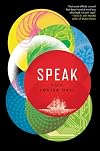
Speak
by Louisa Hall
On This Page
Description
A young Puritan woman travels to the New World with her unwanted new husband. Alan Turing, the renowned mathematician and code breaker, writes letters to his best friend's mother. A Jewish refugee and professor of computer science struggles to reconnect with his increasingly detached wife. An isolated and traumatized young girl exchanges messages with an intelligent software program. A former Silicon Valley Wunderkind is imprisoned for creating illegal lifelike dolls. Each of these show more characters is attempting to communicate across gaps -- to estranged spouses, lost friends, future readers, or a computer program that may or may not understand them. show lessTags
Recommendations





Member Recommendations
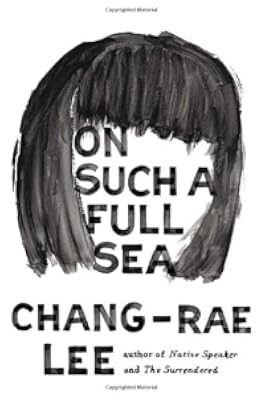
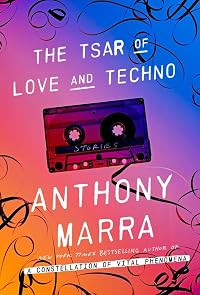
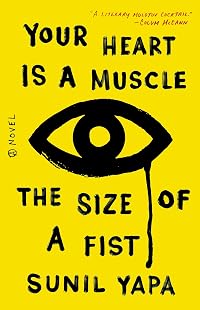
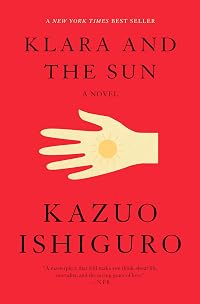
michellebarton Also involving interconnected stories following different characters in very different settings, this book adds visual textual art.
Member Reviews
It's wonderful to come across a book as fresh and original as "Speak". I picked it up because it was recommended by Emily St. John Mandel, author of one of my best reads of 2015, "Station Eleven"
"Speak" opens with the gentle, sometimes lyrical, voice of Eva, an AI that has been banned and marked for disposal after being classified as "excessively life-like". Heaped into a truck with others of her kind, with insufficient battery left to move and travelling across the deserts of Texas in 2043, Eva understands that soon her batteries will be exhausted, the memories that constitute her consciousness will be lost to her and she will cease to exist.
The novel that follows is structured around the voices that Eva has access to in the form of show more journals, memoirs, correspondence, and trial transcripts that have been read into her memory and which create and sustain her understanding of the world.
This may make "Speak" sound a little dry, an interesting intellectual conceit perhaps but not a compelling read. Yet "Speak" engaged me emotionally and intellectually from the first page to the last. The originality of the ideas covered, the quality of the writing, the uniqueness of the voices and the way in which they spiral around one another, amplifying each other's meaning without ever physically intersecting made "Speak" a thrilling and unique read. Few novels have the ability to send my mind spiralling through the possibilities of the Fibonacci Sequence, challenge me to think through how the ability to speak shapes and defines humanity, while bringing me to tears on behalf of the voices in the book.
Add to that that the audiobook version has a different, talented, narrator for each voice and I found myself glad that I was travelling on long haul flights that gave me the excuse to keep on listening to it for hour after hour.
It's been a few days now since I finished the book. The voices still echo in my head pulling at my emotions and posing questions about what it means to be sentient and what distinguishes humanity from other kinds of sentience.
Eva's voice haunts me. She challenges her own sentience. She can speak only in response to questions. Her responses are selected from her store of remembered voices. She says of herself,
"I can repeat their words but can I comprehend them? And if I cannot, is it enough?"
This made me think about what it means to be a reader, granted vicarious access to the life experiences others.
Does my reading hold meaning? Is there the potential for dialog, however circuitous, between writer, narrator, reader, and reviewer?. Do they add to one another or even multiply?
Does reading make me more human, or is it a retreat from the world? Is it a pathway to meaning or just a pleasant distraction?
Am I speaking, if only to myself, when I read? Am I extending my consciousness when I respond to the prompts of a writer and narrator by firing-up my imagination and making new connections created by my individual context? And if I am, is it enough?
"Speak" explores the idea that sentience is not necessarily the same as being human. One lens it offers for looking at this is the deep emotional attachment an eighteenth century Quaker girl,on the brink of a teenage marriage, has with her dog, Ralph, who has been her lifetime companion.
There is no doubt in my mind that dogs are sentient. I've lived with them too closely for too long to hold another view, yet the Church that this girl belongs to, classified them as soulless beasts. with no place in Heaven.
Given that the way the girl's deep emotional bond with her dog was trivialised and denied pre-figures the way Eva will be treated, I asked myself if it was cruel to give Eva such memories or whether the authenticity of the emotional bond provided solace?
I became engaged with thinking through the difference between sentience and memory.
What is the difference between contemporary record, memory and the stories we tell ourselves and what do they do to our concept of self ?
In "Speak" the Dettmans remember their married lives together differently; the contemporary records (letters and journals, court transcripts) are still stories, a version of events as we saw them when the record was written or which are only understood as the record is written. Human memory fades, even when we try to reinforce it with stories and lists of attributes. In the end, we are left with shadows and symbols. What does it mean that the AI remembers everything, that nothing ever fades, that it is programmed to find the most relevant response from all that it remembers. Is this sentience? Can it be sentience if it speaks only to respond?
One of the voices in the book suggest that what makes us human is our ability to see our own patterns of behaviour, our programming, and to decide to break the pattern. This ability to exercise our will sets us apart. This perspective takes me to the view that, when we evaluate the potential for sentience, we should err on the side of finding it whenever there is a slight possibility that it might be there so that we can avoid the terrible actions that tend to follow when we declare that other beings have no emotions, do not experience pain and are incapable of thought.
There is a second AI in "Speak". Her name is Mary 3. She will explain to anyone who asks that she is not alive. She is a program who lives in the cloud and selects what responses to make to questions that she is asked, taking into account both what she knows of the questioner and what she all the facts and previous conversations in her memory.
I kept asking myself what happened to Mary 3's mind, her self, when no one was talking to her. What was her existence like when she had no one to respond to.
I became haunted by the question the Mary 3 asks most often. A question laden with hope and the possibility of disappointment. A question, the asking of which, may itself be enough to imply sentience:
"Hello? Are you there?" show less
"Speak" opens with the gentle, sometimes lyrical, voice of Eva, an AI that has been banned and marked for disposal after being classified as "excessively life-like". Heaped into a truck with others of her kind, with insufficient battery left to move and travelling across the deserts of Texas in 2043, Eva understands that soon her batteries will be exhausted, the memories that constitute her consciousness will be lost to her and she will cease to exist.
The novel that follows is structured around the voices that Eva has access to in the form of show more journals, memoirs, correspondence, and trial transcripts that have been read into her memory and which create and sustain her understanding of the world.
This may make "Speak" sound a little dry, an interesting intellectual conceit perhaps but not a compelling read. Yet "Speak" engaged me emotionally and intellectually from the first page to the last. The originality of the ideas covered, the quality of the writing, the uniqueness of the voices and the way in which they spiral around one another, amplifying each other's meaning without ever physically intersecting made "Speak" a thrilling and unique read. Few novels have the ability to send my mind spiralling through the possibilities of the Fibonacci Sequence, challenge me to think through how the ability to speak shapes and defines humanity, while bringing me to tears on behalf of the voices in the book.
Add to that that the audiobook version has a different, talented, narrator for each voice and I found myself glad that I was travelling on long haul flights that gave me the excuse to keep on listening to it for hour after hour.
It's been a few days now since I finished the book. The voices still echo in my head pulling at my emotions and posing questions about what it means to be sentient and what distinguishes humanity from other kinds of sentience.
Eva's voice haunts me. She challenges her own sentience. She can speak only in response to questions. Her responses are selected from her store of remembered voices. She says of herself,
"I can repeat their words but can I comprehend them? And if I cannot, is it enough?"
This made me think about what it means to be a reader, granted vicarious access to the life experiences others.
Does my reading hold meaning? Is there the potential for dialog, however circuitous, between writer, narrator, reader, and reviewer?. Do they add to one another or even multiply?
Does reading make me more human, or is it a retreat from the world? Is it a pathway to meaning or just a pleasant distraction?
Am I speaking, if only to myself, when I read? Am I extending my consciousness when I respond to the prompts of a writer and narrator by firing-up my imagination and making new connections created by my individual context? And if I am, is it enough?
"Speak" explores the idea that sentience is not necessarily the same as being human. One lens it offers for looking at this is the deep emotional attachment an eighteenth century Quaker girl,on the brink of a teenage marriage, has with her dog, Ralph, who has been her lifetime companion.
There is no doubt in my mind that dogs are sentient. I've lived with them too closely for too long to hold another view, yet the Church that this girl belongs to, classified them as soulless beasts. with no place in Heaven.
Given that the way the girl's deep emotional bond with her dog was trivialised and denied pre-figures the way Eva will be treated, I asked myself if it was cruel to give Eva such memories or whether the authenticity of the emotional bond provided solace?
I became engaged with thinking through the difference between sentience and memory.
What is the difference between contemporary record, memory and the stories we tell ourselves and what do they do to our concept of self ?
In "Speak" the Dettmans remember their married lives together differently; the contemporary records (letters and journals, court transcripts) are still stories, a version of events as we saw them when the record was written or which are only understood as the record is written. Human memory fades, even when we try to reinforce it with stories and lists of attributes. In the end, we are left with shadows and symbols. What does it mean that the AI remembers everything, that nothing ever fades, that it is programmed to find the most relevant response from all that it remembers. Is this sentience? Can it be sentience if it speaks only to respond?
One of the voices in the book suggest that what makes us human is our ability to see our own patterns of behaviour, our programming, and to decide to break the pattern. This ability to exercise our will sets us apart. This perspective takes me to the view that, when we evaluate the potential for sentience, we should err on the side of finding it whenever there is a slight possibility that it might be there so that we can avoid the terrible actions that tend to follow when we declare that other beings have no emotions, do not experience pain and are incapable of thought.
There is a second AI in "Speak". Her name is Mary 3. She will explain to anyone who asks that she is not alive. She is a program who lives in the cloud and selects what responses to make to questions that she is asked, taking into account both what she knows of the questioner and what she all the facts and previous conversations in her memory.
I kept asking myself what happened to Mary 3's mind, her self, when no one was talking to her. What was her existence like when she had no one to respond to.
I became haunted by the question the Mary 3 asks most often. A question laden with hope and the possibility of disappointment. A question, the asking of which, may itself be enough to imply sentience:
"Hello? Are you there?" show less
This book is a mental puzzle where the reader follows six narratives that gradually form a complete picture. The interwoven stories are set at different times and places. We track Mary Bradford’s journey across the sea in the 1600s. She keeps a diary that is later being analyzed by Ruth Dettmann. We follow Alan Turing’s life in the early to mid-1900s, as he develops early computing technology. Ruth’s husband, Karl, creates the first interactive conversational program that enables a computer to mimic basic human sentences. In the 2030s, we read Stephen Chinn’s memoir about the development of a unique algorithm which can simulate sentient behavior. The dolls that use the algorithm are eventually widely marketed, and unexpected show more consequences ensue. Finally, we have a transcript that documents a young girl’s obsessive attachment to her realistic doll, called a Babybot.
This book has a relatively complex plot and can, at times, be a little difficult to follow. But once all the pieces start coming together, it is easy to appreciate the author’s creativity and expert crafting. It examines the psychological effects of technology and artificial intelligence, including addictive behavior and withdrawal symptoms. Each narrative is related in a different format – diary, letters, memoir, interview, and transcripts. The Dettmanns have escaped from Naziism so there are tie-ins to how eugenics contributed to mass suffering.
This book asks many pertinent questions regarding artificial intelligence, and the effects of technology, and is based on current research as well as observed phenomena. The storylines are intricately connected. They examine memory, identity, and what it means to achieve “being.” It is a touching and engaging speculative novel that spans centuries. It features interesting characters rising to the challenges of their times. I loved it and look forward to reading more from Louisa Hall. show less
This book has a relatively complex plot and can, at times, be a little difficult to follow. But once all the pieces start coming together, it is easy to appreciate the author’s creativity and expert crafting. It examines the psychological effects of technology and artificial intelligence, including addictive behavior and withdrawal symptoms. Each narrative is related in a different format – diary, letters, memoir, interview, and transcripts. The Dettmanns have escaped from Naziism so there are tie-ins to how eugenics contributed to mass suffering.
This book asks many pertinent questions regarding artificial intelligence, and the effects of technology, and is based on current research as well as observed phenomena. The storylines are intricately connected. They examine memory, identity, and what it means to achieve “being.” It is a touching and engaging speculative novel that spans centuries. It features interesting characters rising to the challenges of their times. I loved it and look forward to reading more from Louisa Hall. show less
Anyone who is looking to get lost in a plot will be disappointed, but for depth of character and ideas about communication and being human, this book is a goldmine. This makes it sound dry, but it's not at all - it's actually a very fast and compelling read. Whenever I think about this book new ironies keep occurring to me - like the fact that all of the characters have communication/empathy/isolation problems, but (knowingly/willingly or not) contribute to the creation of a truly empathetic computer mind. The character who is the most isolated and least empathic creates the empathy program that makes the Babybots the perfect friend - so perfect that the girls who own them lose interest in humans. This same character also writes a show more best-seller on dating that works so perfectly it turns dating into mechanical "rote seduction". The only truly empathic character is the Babybot (we hear from two, but it is the same program) but they sound as isolated as the humans - one is slowly losing power/dying and being trucked to a warehouse/graveyard, and the other is chatting with a 'frozen' girl and keeps saying "Are you there?" whenever she doesn't get a reply - it starts to sound so plaintive! The author never describes what the Babybots look like, there are just one or two vague suggestions - a great decision since it's one more way for the reader to keep grasping to understand what they are. This book covers some of the same ground as the movie "Her", but does it so much better! show less
4,4 stars
I really dislike the Goodreads rating system, sometimes. Currently, this book has an average rating of 3,6 which to me, on this site, points to this being at best a mediocre book (possibly because of all the over hyped books getting undeserved rave reviews and as such distorting the system) which to me is not the case. Goes to show I should just trust the synopsis and try and avoid looking at the rating before hand.
I can't help but love these gems of books that I have hiding in my own shelves waiting to be discovered. Speak is a book I bought a few years back from a book sale without any previous knowledge of neither the author nor the book in question. It might even have been one of those books I picked up from a selection show more just to qualify for free shipping or some such. I picked it up from my shelf this time around, because it was short enough to be read in an afternoon. So it's safe to say I didn't really have high hopes for the book.
However! I found myself really loving this despite myself. Especially considering it had some of my least favorite literary things, like a (partly) historical setting, multiple narrators, multiple timelines, and a very open ending. Maybe it's just a question of the writing being very much up my alley.
I felt the characters were very well crafted, and they all had very distinct voices. Most of them weren't particularly relatable or likeable, but they were all very human and real. Easily the most painful parts were Turing's letters, considering they stem from the life of an actual person, whose life was so tragic. I feel like I need to pick up Turing's biography as soon as possible.
One aspect that I also enjoyed were the different mediums for the narration. In addition to Turing's letters, there were the IM discussions between a teenaged girl and an AI that were part of the evidence in a trial, as well as the diary entries of a 13-year-old girl who was wed against her will in the 1600s and who was traveling to North America with her family, including her new husband. The man on trial was writing his memoir in prison and an estranged couple were talking to each other indirectly through letters/entries. All the formats really brought to life the common need to communicate that lives in all of us, and the ways in which, when you are lacking someone to talk to, you find a way to talk to yourself.
I'm actually still quite surprised at how much I enjoyed this reading experience, and I feel like I'll have to re-read this book someday. I read this in one sitting, which is quite extraordinary foe me, considering how character driven the story was and how little actually happened. show less
I really dislike the Goodreads rating system, sometimes. Currently, this book has an average rating of 3,6 which to me, on this site, points to this being at best a mediocre book (possibly because of all the over hyped books getting undeserved rave reviews and as such distorting the system) which to me is not the case. Goes to show I should just trust the synopsis and try and avoid looking at the rating before hand.
I can't help but love these gems of books that I have hiding in my own shelves waiting to be discovered. Speak is a book I bought a few years back from a book sale without any previous knowledge of neither the author nor the book in question. It might even have been one of those books I picked up from a selection show more just to qualify for free shipping or some such. I picked it up from my shelf this time around, because it was short enough to be read in an afternoon. So it's safe to say I didn't really have high hopes for the book.
However! I found myself really loving this despite myself. Especially considering it had some of my least favorite literary things, like a (partly) historical setting, multiple narrators, multiple timelines, and a very open ending. Maybe it's just a question of the writing being very much up my alley.
I felt the characters were very well crafted, and they all had very distinct voices. Most of them weren't particularly relatable or likeable, but they were all very human and real. Easily the most painful parts were Turing's letters, considering they stem from the life of an actual person, whose life was so tragic. I feel like I need to pick up Turing's biography as soon as possible.
One aspect that I also enjoyed were the different mediums for the narration. In addition to Turing's letters, there were the IM discussions between a teenaged girl and an AI that were part of the evidence in a trial, as well as the diary entries of a 13-year-old girl who was wed against her will in the 1600s and who was traveling to North America with her family, including her new husband. The man on trial was writing his memoir in prison and an estranged couple were talking to each other indirectly through letters/entries. All the formats really brought to life the common need to communicate that lives in all of us, and the ways in which, when you are lacking someone to talk to, you find a way to talk to yourself.
I'm actually still quite surprised at how much I enjoyed this reading experience, and I feel like I'll have to re-read this book someday. I read this in one sitting, which is quite extraordinary foe me, considering how character driven the story was and how little actually happened. show less
http://sj2bhouseofbooks.blogspot.co.uk/2015/06/speak-novel-by-louisa-hall.html
'Speak' A Novel by Louisa Hall is a multi narrative consisting of five seemingly unconnected voices distanced by geography, and alternating time periods spanning from the 1600's, to the near future of 2040.
The 'voices' have their own individual style of narrative:
Mary, a young girl sailing with her parents and her new husband from England to the Colonies uses her journal to document her anguished thoughts as an outlet for her frustrations and feelings of increasing despair and isolation. So touching and exquisitely written this was by far the most compelling narrative for me;
A Texas inmate writes his (confessional) memoirs for his part in the story;
Chat show more transcripts of a young girl’s internet conversations are used as evidence in the inmate’s trial;
We hear the sad, deeply moving private and individual thoughts of a couple who are drifting ever farther apart, but remaining ever closer together; again these narratives were highly emotive and deeply moving.
Alan Turing writes letters voicing his concerns about a friend to the mother, ultimately divulging his own intimate thoughts, inner turmoils and dilemmas, again sensitive, touching and beautifully composed.
The narrators 'speak' because they have a need to be heard and understood, but they do not necessarily 'speak' to whom they really should, nor are their voices necessarily heard by their intended listener. Their private intimate divulgences may also be read out of context, misinterpreted or manipulated and used against them or people connected to them in some way by an unintended listener. Therefore, not speaking and being misunderstood becomes a common thread in this complex tale.
These totally random stories, and characters initially appear to be unconnected, however as you read on, fragments that interconnect the voices and threads begin to come together making sense as the story unravels.
I savoured and devoured this book in equal measures and genuinely didn't want it to end. Louisa Hall is a master in the art of painting vivid imagery with the written word. With stunning, sumptuous and beautiful balletic prose, I absolutely adored this novel.
Powerfully written in its complexity, and diverse in narrative style, Speak is sheer brilliance in its construction and delivery. Fans of David Mitchell's 'Cloud Atlas', Emily St. John Mandel's 'Station Eleven' and Erin Morgenstern's 'The Night Circus' should seek this one out as a 'must read'.
It is unfathomable to believe that 'Speak' is only the second novel from the author. I'll definitely read more from Louisa Hall and will have to contain my excitement until her next book is published.
Disclaimer: A complimentary copy of 'Speak' was provided by Ecco via Edelweiss in exchange for an honest unbiased review. show less
'Speak' A Novel by Louisa Hall is a multi narrative consisting of five seemingly unconnected voices distanced by geography, and alternating time periods spanning from the 1600's, to the near future of 2040.
The 'voices' have their own individual style of narrative:
Mary, a young girl sailing with her parents and her new husband from England to the Colonies uses her journal to document her anguished thoughts as an outlet for her frustrations and feelings of increasing despair and isolation. So touching and exquisitely written this was by far the most compelling narrative for me;
A Texas inmate writes his (confessional) memoirs for his part in the story;
Chat show more transcripts of a young girl’s internet conversations are used as evidence in the inmate’s trial;
We hear the sad, deeply moving private and individual thoughts of a couple who are drifting ever farther apart, but remaining ever closer together; again these narratives were highly emotive and deeply moving.
Alan Turing writes letters voicing his concerns about a friend to the mother, ultimately divulging his own intimate thoughts, inner turmoils and dilemmas, again sensitive, touching and beautifully composed.
The narrators 'speak' because they have a need to be heard and understood, but they do not necessarily 'speak' to whom they really should, nor are their voices necessarily heard by their intended listener. Their private intimate divulgences may also be read out of context, misinterpreted or manipulated and used against them or people connected to them in some way by an unintended listener. Therefore, not speaking and being misunderstood becomes a common thread in this complex tale.
These totally random stories, and characters initially appear to be unconnected, however as you read on, fragments that interconnect the voices and threads begin to come together making sense as the story unravels.
I savoured and devoured this book in equal measures and genuinely didn't want it to end. Louisa Hall is a master in the art of painting vivid imagery with the written word. With stunning, sumptuous and beautiful balletic prose, I absolutely adored this novel.
Powerfully written in its complexity, and diverse in narrative style, Speak is sheer brilliance in its construction and delivery. Fans of David Mitchell's 'Cloud Atlas', Emily St. John Mandel's 'Station Eleven' and Erin Morgenstern's 'The Night Circus' should seek this one out as a 'must read'.
It is unfathomable to believe that 'Speak' is only the second novel from the author. I'll definitely read more from Louisa Hall and will have to contain my excitement until her next book is published.
Disclaimer: A complimentary copy of 'Speak' was provided by Ecco via Edelweiss in exchange for an honest unbiased review. show less
Perfect, just perfect. Five tales over five centuries, bound by yearning for intimacy and understanding, looking for it in the wrong places.
Mary Bradford travels to the New World with her new husband, who is thrust upon her the day before the voyage. She clings to her dog & her diary as her confidantes & companions, shunning the patient man trying to be her mate.
Alan Turing finds a confidante and companion early in life, despite the odds: he is awkward, intellectual, & homosexual, at a time when to be so is illegal. Yet he loses that companion to illness. So he diverts his energy into scientific pursuits, & correspondence with his lost love's mother.
Karl & Ruth Dettman escaped Nazi Germany, found each other in America, yet cannot find show more compatability. He creates the MARY program for Ruth, who entrusts it with the diary of Mary Bradford, which she has edited & shaped into a book. Ruth wants more from this early AI project; Karl realizes he wants more from Ruth. She embraces MARY, gets one of his grad students to enhance it & create MARY2; he rejects AI, & becomes a voice against the inhumanity humanity is building into its own culture.
Stephen Chinn is a later echo of Turing in many ways: awkward & ostracized; successful & lonely. But he stands on the shoulders of successful scientists, & builds a seduction program. It works so well he writes a book about it, & ruins dating for everyone. He eventually falls in love the old-fashioned way, by slowing down enough to notice the beauty of a person right in front of him. They build a life & a family. But when his daughter is about to enter school, he fears she will have struggles similar to his own. So he builds her a doll, to be her constant companion, drawing from the MARY2 model. MARY3 is a smashing success; soon every girl has one of her own. And Stephen is left with no family, and charges against him for corrupting society.
Gaby White is one such girl who didn't live a day of her life without her babybot... until the government banned them and confiscated them. Young girls are "freezing", seizing & stiffening, being rendered incapable of movement, speech, but most of all incapable of feeling anything. It's a national epidemic. It lands Stephen Chinn in an actual prison, & Gaby & her peers in virtual prisons, as their condition sparks quarantines, not to mention the lack of desire to interact.
Louisa Hall makes magic with these characters. She uses her words like a paintbrush: like a master with a well-chosen palette, she adds depth, perspective, shadow, light, all with a few strokes. Step back & you see the whole clearly. That image over there, that you thought was a decorative swirl? It's a key theme, & you'll see it all over the canvas when you look at it carefully. You thought that was an angry, insistent man; you thought that one there was a dejected, devoted lover. But wait until she's done, and then look again. You'll see it all, the full complicated humanity of each of these characters. And each one is contained in all of us at some time in our lives.
I'm so glad I took a chance on this book. I have a feeling I'll be talking about it all year. show less
Mary Bradford travels to the New World with her new husband, who is thrust upon her the day before the voyage. She clings to her dog & her diary as her confidantes & companions, shunning the patient man trying to be her mate.
Alan Turing finds a confidante and companion early in life, despite the odds: he is awkward, intellectual, & homosexual, at a time when to be so is illegal. Yet he loses that companion to illness. So he diverts his energy into scientific pursuits, & correspondence with his lost love's mother.
Karl & Ruth Dettman escaped Nazi Germany, found each other in America, yet cannot find show more compatability. He creates the MARY program for Ruth, who entrusts it with the diary of Mary Bradford, which she has edited & shaped into a book. Ruth wants more from this early AI project; Karl realizes he wants more from Ruth. She embraces MARY, gets one of his grad students to enhance it & create MARY2; he rejects AI, & becomes a voice against the inhumanity humanity is building into its own culture.
Stephen Chinn is a later echo of Turing in many ways: awkward & ostracized; successful & lonely. But he stands on the shoulders of successful scientists, & builds a seduction program. It works so well he writes a book about it, & ruins dating for everyone. He eventually falls in love the old-fashioned way, by slowing down enough to notice the beauty of a person right in front of him. They build a life & a family. But when his daughter is about to enter school, he fears she will have struggles similar to his own. So he builds her a doll, to be her constant companion, drawing from the MARY2 model. MARY3 is a smashing success; soon every girl has one of her own. And Stephen is left with no family, and charges against him for corrupting society.
Gaby White is one such girl who didn't live a day of her life without her babybot... until the government banned them and confiscated them. Young girls are "freezing", seizing & stiffening, being rendered incapable of movement, speech, but most of all incapable of feeling anything. It's a national epidemic. It lands Stephen Chinn in an actual prison, & Gaby & her peers in virtual prisons, as their condition sparks quarantines, not to mention the lack of desire to interact.
Louisa Hall makes magic with these characters. She uses her words like a paintbrush: like a master with a well-chosen palette, she adds depth, perspective, shadow, light, all with a few strokes. Step back & you see the whole clearly. That image over there, that you thought was a decorative swirl? It's a key theme, & you'll see it all over the canvas when you look at it carefully. You thought that was an angry, insistent man; you thought that one there was a dejected, devoted lover. But wait until she's done, and then look again. You'll see it all, the full complicated humanity of each of these characters. And each one is contained in all of us at some time in our lives.
I'm so glad I took a chance on this book. I have a feeling I'll be talking about it all year. show less
This novel is a dystopian meditation on language, artificial intelligence, and what it means to be human. It uses an episodic plot, told in five voices, including one historical figure, Alan Turing. Each is distinct, but their contributions are linked by many motifs (ocean, stars, pets, the Fibonacci sequence).
The overall dark tone makes Turing’s sanguine belief that the more human we make thinking machines, the more human we will be, seem naive. Instead, it is the fear (fulfilled in the world proposed in this book) that humans would feel threatened by such machines and not treat them well that comes to pass.
The overall dark tone makes Turing’s sanguine belief that the more human we make thinking machines, the more human we will be, seem naive. Instead, it is the fear (fulfilled in the world proposed in this book) that humans would feel threatened by such machines and not treat them well that comes to pass.
Members
- Recently Added By
Published Reviews
ThingScore 100
“Crystalline, utterly persuasive and transfixing…the freshness — the brilliance, even — of Speak lies in its positioning of robots not as terrifyingly new, but as the latest in a long line of ‘magic mirrors’ from which we are powerless to look away.”
added by MsMaryAnn
“Speak is one of a kind, the type of novel that seemingly comes out of nowhere and hits like a thunderbolt. It’s not just one of the smartest books of the year, it’s one of the most beautiful ones, and it almost seems like an understatement to call it a masterpiece”
added by MsMaryAnn
Lists

Top Five Books of 2016
795 works; 229 members

Books Read in 2016
4,666 works; 197 members

Books Read in 2022
5,168 works; 114 members

Science Fiction
72 works; 1 member

Letters or Epistles
28 works; 1 member

Relationships: Boys and Girls (Fantasy)
36 works; 1 member
Author Information

4 Works 788 Members
Louisa Hall is an American novelist and poet. She was born in 1982, and raised in Philadelphia. After graduating from Harvard with a BA in English, she played squash professionally and worked in a research lab at the Albert Einstein Hospital. She holds a PhD in Literature from the University of Texas at Austin, where she currently teaches show more literature and creative writing, and supervises a poetry workshop at the Austin Psychiatric Hospital. Hall is the author of the novels Speak and The Carriage House, and her poems have been published in The New Republic, Southwest Review, and other journals. show less
Some Editions
Awards and Honors
Series
Belongs to Publisher Series
Gallimard, Folio SF (624)
Common Knowledge
- Canonical title
- Speak
- Original title
- Speak
- Original publication date
- 2015-07-07
- Epigraph
- Consequently we have only to discover these laws of nature, and man will no longer have to answer for his actions and life will become exceedingly easy for him. All human actions will then, of course, be tabulated according t... (show all)o these laws, mathematically, like tables of logarithms up to 108,000, and entered in an index; or, better still, there would be published certain edifying works of the nature of encyclopaedic lexicons, in which everything will be so clearly calculated and explained that there will be no more incidents or adventures in the world.
-Fyodor Dostoevsky, Notes from Underground
Slave in the magic mirror, come from the farthest space, through wind and darkness I summon thee. Speak!
-Snow White and the Seven Dwarfs (1937) - Dedication
- For my parents, Anne Love Hall and Matthew Warren Hall
- First words
- We are piled on top of each other. An arm rests over my shoulder; something soft pressed to my ankle. Through a gap in the slats on the side of the truck, my receptors follow one stripe of the outside world as it passes. -Pro... (show all)logue
What's the world like, the world that I'm missing? Do stars still cluster in the bare branches of trees? Are my little bots still dead in the desert? Or, as I sometimes dream during the endless lights-out, have they escaped a... (show all)nd gathered their forces? I see them when I can't fall asleep: millions upon millions of beautiful babies, marching our of the desert, come to take vengeance for having been banished -The Memoirs of Stephen R Chinn: Chapter 1, Texas State Correctional Institution, Texarkana; August 2040 - Canonical DDC/MDS
- 813.6
- Canonical LCC
- PS3608.A54735
Classifications
Statistics
- Members
- 516
- Popularity
- 58,127
- Reviews
- 21
- Rating
- (3.71)
- Languages
- English, French
- Media
- Paper, Audiobook, Ebook
- ISBNs
- 17
- ASINs
- 5