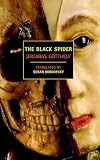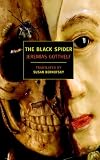
The Black Spider
by Jeremias Gotthelf
On This Page
Description
"It is a sunny summer Sunday in a remote Swiss village, and a christening is being celebrated at a lovely old farmhouse. One of the guests notes an anomaly in the fabric of the venerable edifice: a blackened post that has been carefully built into a trim new window frame. Thereby hangs a tale, one that, as the wise old grandfather who has lived all his life in the house proceeds to tell it, takes one chilling turn after another, while his audience listens in appalled silence. Featuring a show more cruelly overbearing lord of the manor and the oppressed villagers who must render him service, an irreverent young woman who will stop at nothing, a mysterious stranger with a red beard and a green hat, and, last but not least, the black spider, the tale is as riveting and appalling today as when Jeremias Gotthelf set it down more than a hundred years ago. The Black Spider can be seen as a parable of evil in the heart or of evil at large in society (Thomas Mann saw it as foretelling the advent of Nazism), or as a vision, anticipating H. P. Lovecraft, of cosmic horror. There's no question, in any case, that it is unforgettably creepy"-- show lessTags
Recommendations







































Member Reviews
I have a general rule that, once I have started to read a book, I must continue with it to the end before I can claim the right to comment on it.
In the case of 'The Black Spider', I was beginning to get depressed by page 20 of this classic early nineteenth century Swiss horror novella. One fifth of the tale gone and I had been treated to a lengthy, rather dull and wholesome account of a christening feast for the child of a prosperous Swiss peasant circa 1842.
But 'Jeremias Gotthelf' knows what he is doing. He has set the reader up for a multi-layered morality tale that loosely bases itself on pre-modern folk interpretations of the causes of the plague. He weaves, from the security of the first section, a genuinely horrific and show more disturbing tale of a demon black spider that punishes all those who have defied God and tried to short-circuit the demands of authority with an appeal to the Devil. The spider, a truly nasty creation, punishes not a few good people also (although the reader knows that these latter die only to take the straight path to Heaven).
I wonder which is more horrific today - the graphic account of death and mayhem at the behest of the spider or the fact that a whole society was being held together socially on the basis of fear and anxiety. The horror, for me, lay as much in the latter as the former but then, if the author is right, my lack of fear of God would have meant that I would not have lasted long if the demon spider had been released in my town.
How ironic was Gotthelf (actually a Protestant pastor called Josef Bitzius) in his portayal of the roots of evil? One suspects not at all. Allowing for any problems of translation, irony - that irony that says that, surely, this writer cannot possibly have believed this nonsense (not the spider as such, of course, because it is clearly allegorical but the pre-scientific belief-system to which the spider belongs)- is absent. Even if he gives himself a pseudonym, Pastor Bitzius fully endorses the values of the Swiss free peasant in a story that is valuable evidence of what historian Peter Laslett once called ' The World We Have Lost'.
However, we know that he was also a progressive by contemporary standards - interested in welfare issues - so there is an ambiguity in the tale. It is as if he wants to improve the lot of his peasant congregation but not at the expense of the values that hold the community together. Right conduct is cemented by a horror story that provides the space in which right-minded persons like Pastor Bitzius can do their stuff.
Regardless of Bitzius' own views (we are not expert), there is much meat for a cultural analysis of Middle European pre-modernity in its last days in this story. It is instructive to see how the recalcitrant crooked timber of men (house timber represents an apposite metaphor as you will see if you read the tale) is brought into line by fear of the physical and supernatural consequences of questioning tradition and defying authority. This is a quietly sinister book in more ways than the obvious ones.
'The Black Spider' is highly recommended if you are interested in the self-policing of sexuality and private conduct and the maintenance of order in pre-industrial rural Europe (remember that this is the world of witch-hunts as you read the tale) but also if you are interested in the evolution of the European tale of horror. show less
In the case of 'The Black Spider', I was beginning to get depressed by page 20 of this classic early nineteenth century Swiss horror novella. One fifth of the tale gone and I had been treated to a lengthy, rather dull and wholesome account of a christening feast for the child of a prosperous Swiss peasant circa 1842.
But 'Jeremias Gotthelf' knows what he is doing. He has set the reader up for a multi-layered morality tale that loosely bases itself on pre-modern folk interpretations of the causes of the plague. He weaves, from the security of the first section, a genuinely horrific and show more disturbing tale of a demon black spider that punishes all those who have defied God and tried to short-circuit the demands of authority with an appeal to the Devil. The spider, a truly nasty creation, punishes not a few good people also (although the reader knows that these latter die only to take the straight path to Heaven).
I wonder which is more horrific today - the graphic account of death and mayhem at the behest of the spider or the fact that a whole society was being held together socially on the basis of fear and anxiety. The horror, for me, lay as much in the latter as the former but then, if the author is right, my lack of fear of God would have meant that I would not have lasted long if the demon spider had been released in my town.
How ironic was Gotthelf (actually a Protestant pastor called Josef Bitzius) in his portayal of the roots of evil? One suspects not at all. Allowing for any problems of translation, irony - that irony that says that, surely, this writer cannot possibly have believed this nonsense (not the spider as such, of course, because it is clearly allegorical but the pre-scientific belief-system to which the spider belongs)- is absent. Even if he gives himself a pseudonym, Pastor Bitzius fully endorses the values of the Swiss free peasant in a story that is valuable evidence of what historian Peter Laslett once called ' The World We Have Lost'.
However, we know that he was also a progressive by contemporary standards - interested in welfare issues - so there is an ambiguity in the tale. It is as if he wants to improve the lot of his peasant congregation but not at the expense of the values that hold the community together. Right conduct is cemented by a horror story that provides the space in which right-minded persons like Pastor Bitzius can do their stuff.
Regardless of Bitzius' own views (we are not expert), there is much meat for a cultural analysis of Middle European pre-modernity in its last days in this story. It is instructive to see how the recalcitrant crooked timber of men (house timber represents an apposite metaphor as you will see if you read the tale) is brought into line by fear of the physical and supernatural consequences of questioning tradition and defying authority. This is a quietly sinister book in more ways than the obvious ones.
'The Black Spider' is highly recommended if you are interested in the self-policing of sexuality and private conduct and the maintenance of order in pre-industrial rural Europe (remember that this is the world of witch-hunts as you read the tale) but also if you are interested in the evolution of the European tale of horror. show less
An antiquated morality tale that seeks to punish its female characters, and so therefore is not the most riveting read; HOWEVER also features some grotesque cosmic horror, interesting labor politics, and a scene in which a woman gives birth to a spider plague from a mole on her face whilst another simultaneously gives birth to a human child. A great portrait of motherhood :-D
This review applies to the NYRB version translated by Susan Bernofsky.
Published in 1842, Gotthelf's The Black Spider, though clearly written by a devout man as a warning to Christians to take their faith seriously and not neglect their worship of god, turns out to be a great horror tale due to its author's vivid imagination. Peasants, under the rule of a cruel master, are faced with the impossible task of transferring 100 full grown trees to the lane leading up to the castle the same peasants have just broken their backs building. It is an impossible task--until a mysterious green man appears. Of course, we all know who he is, and so did the peasants, who were terrified. But faced with ruin at the hands of their evil master or immediate show more relief of their problem by the green man, perhaps there is room to consider. It is left to a woman to actually take the initiative....and that is about all you need to know. The story is told many years later in a nice framing device concerning the baptism of a new baby. You'll be lulled into this peaceful world, notable for the baptism feast, which the author describes lovingly and at great length. But then--the horror, the horror!
It certainly isn't necessary to be religious to enjoy this tale--I'm not. The descriptions of the horrible black spider and its rampage are quite graphic and very well done. Translator Susan Bernofsky has done a great job. Before buying this version, I read a comparison of this translation with another one, and this came out on top. It's a quick and worthwhile read. Unusally, for an NYRB published book, there is no foreword, no afterword, no supplementary material at all. Since such material often gives away the entire plot, and this book really doesn't require explanation, I'll count that as a plus. show less
Published in 1842, Gotthelf's The Black Spider, though clearly written by a devout man as a warning to Christians to take their faith seriously and not neglect their worship of god, turns out to be a great horror tale due to its author's vivid imagination. Peasants, under the rule of a cruel master, are faced with the impossible task of transferring 100 full grown trees to the lane leading up to the castle the same peasants have just broken their backs building. It is an impossible task--until a mysterious green man appears. Of course, we all know who he is, and so did the peasants, who were terrified. But faced with ruin at the hands of their evil master or immediate show more relief of their problem by the green man, perhaps there is room to consider. It is left to a woman to actually take the initiative....and that is about all you need to know. The story is told many years later in a nice framing device concerning the baptism of a new baby. You'll be lulled into this peaceful world, notable for the baptism feast, which the author describes lovingly and at great length. But then--the horror, the horror!
It certainly isn't necessary to be religious to enjoy this tale--I'm not. The descriptions of the horrible black spider and its rampage are quite graphic and very well done. Translator Susan Bernofsky has done a great job. Before buying this version, I read a comparison of this translation with another one, and this came out on top. It's a quick and worthwhile read. Unusally, for an NYRB published book, there is no foreword, no afterword, no supplementary material at all. Since such material often gives away the entire plot, and this book really doesn't require explanation, I'll count that as a plus. show less
Continuando na minha saga de livros pandêmicos, o da semana é o A Aranha Negra de Jeremias Gotthelf, livro este que é uma alegoria da peste negra na Idade Média, mesmo tendo sido escrito no século XIX.
Como era de esperar num livro escrito por um pastor há muitas referências bíblicas e de quebra muita misoginia, como toda boa religião patriarcal é perita em fazer. A narrativa é um grande exemplo de unheimliche freudiano, mas a misoginia presente nele quase deixa o livro intragável, tem que ser muito zen para atravessar essa grande narrativa e não deixá-la se conspurcar pelo ódio às mulheres que o autor evidentemente tem.
É um livro que indico pela narrativa que beira um livro de horror e que é muito boa, mas que deve show more ser lido com o devido espírito crítico e sem passar a mão na cabeça do autor. show less
Como era de esperar num livro escrito por um pastor há muitas referências bíblicas e de quebra muita misoginia, como toda boa religião patriarcal é perita em fazer. A narrativa é um grande exemplo de unheimliche freudiano, mas a misoginia presente nele quase deixa o livro intragável, tem que ser muito zen para atravessar essa grande narrativa e não deixá-la se conspurcar pelo ódio às mulheres que o autor evidentemente tem.
É um livro que indico pela narrativa que beira um livro de horror e que é muito boa, mas que deve show more ser lido com o devido espírito crítico e sem passar a mão na cabeça do autor. show less
Meh. Overly Christian morality tale, set in a 19thC Swiss village. The main action takes place a few centuries earlier, when the village was ruled by Teutonic Knights.
The tale is an old-style deal-with-the-devil story, in which the villagers are presented with a series of impossible tasks. The devil shows up, offering to help in exchange for an unbaptized child. A moral quandary ensues.
Much of this novella is engaging: the food porn that opens it, the actual tale, the writing. Where it went wrong for me was in the overbearing and nonsensical "lessons" that the author highlights. As a non-christian, I cannot help but think that the villagers cheated their way out of a deal they had knowingly entered into and which they then reneged show more on , so it was hard to sympathise with them. Furthermore, if their god is incapable or unwilling to help out, prevent the impossible task, or interfere in anything but coy and minuscule and indirect ways, he does not deserve the worship lavished upon him -- the devil is the real mvp here .
Other than the eyerolling Christianity on display, this was fairly enjoyable: dark enough to counterbalance the saccharine god-worship. show less
The tale is an old-style deal-with-the-devil story, in which the villagers are presented with a series of impossible tasks. The devil shows up, offering to help in exchange for an unbaptized child. A moral quandary ensues.
Much of this novella is engaging: the food porn that opens it, the actual tale, the writing. Where it went wrong for me was in the overbearing and nonsensical "lessons" that the author highlights. As a non-christian, I cannot help but think that the villagers
Other than the eyerolling Christianity on display, this was fairly enjoyable: dark enough to counterbalance the saccharine god-worship. show less
I don't know why Thomas Mann "saw it as foretelling the advent of Nazism," as the marketing copy says. If anything, this heavy-handed morality tale really puts the blame of evil on women. Still, the black spider really was fucking creepy.
I thought this was incredibly charming and atmospheric, despite the fact that it's essentially the sort of simple religious allegory that normally makes me run a mile. The Christian symbolism is indeed the whole point: the author was a nineteenth-century village pastor who regarded his fiction as a kind of extended sermon. And yet his sense of pacing and the detail of his descriptions just make it such a pleasure to read for all kinds of unexpected reasons.
The bucolic early scenes of life in a tiny Swiss village are clearly written from experience, and I was just fascinated by the insight into daily life that's on show here. The way the maids tie their hair into bunches, how the old men light their pipes, how thickly the bread should be show more cut – lovely rich sense-pictures of all the kitchen activity:
These are part of the preparations for a meal to celebrate a christening. The first course, incidentally, is a crazy local speciality that sounds like some sort of sweet-savoury mulled wine, yum:
So if you ever have to celebrate a christening in Bern, now you know what to serve.
Anyway, I'm making this sound like a culinary textbook. It's actually an effectively creepy tale of Satanic possession – one that draws on that whole folkloric tradition of simple villagers making pacts with the Devil. There is much thunder and lightning and several dramatic set-pieces involving new-born babies, green huntsmen, evil knights, heroic priests, hideous deaths, and of course the anticipated variety of arachnean antics.
Having just read [book:A Concise History of Switzerland|17804227], it was interesting to me that the story-within-a-story comprising the main part of this tale takes place in the sixteenth century, before this little patch of the Emmental had become fully part of the Swiss confederacy. One theme that emerges from Swiss history is the idea of different communities banding together to form self-governing political units, without the feudal overlordship that was the norm everywhere else in Europe. It's striking then that when this nineteenth-century villager is telling a story about the bad old days, he looks all the way back to when this little area was still a commandery of the Teutonic Knights, when the villagers had to bow their heads to the lord of Sumiswald Castle. Clearly this is secondary to the religious allegory on show here, but it adds a fascinating extra layer to the story.
And indeed, going through the original German text, even a beginner like me can see that it contains several specifically Swiss elements – local foodstuffs like Züpfe (translated as ‘Bernese cake’) or Hafermus (‘porridge’), as well as words like Meitschi ‘girl’, which is here given a comparably regional flavour by the translation ‘lass’. Actually the translation as a whole, from HM Waidon back in 1958 (reprinted in the 2009 OneWorld Classics edition), is wonderfully supple and readable.
Thomas Mann famously said that he admired The Black Spider ‘like almost no other piece of world literature’, and sure enough, although it really shouldn't be that interesting, somehow it seems to add up to more than the sum of its parts. I recommend turning the lights down and indulging in a copy for a literary, arachnophobic Halloween treat. show less
The bucolic early scenes of life in a tiny Swiss village are clearly written from experience, and I was just fascinated by the insight into daily life that's on show here. The way the maids tie their hair into bunches, how the old men light their pipes, how thickly the bread should be show more cut – lovely rich sense-pictures of all the kitchen activity:
Drinnen in der weiten, reinen Küche knisterte ein mächtiges Feuer von Tannenholz, in weiter Pfanne knallten Kaffeebohnen, die eine stattliche Frau mit hölzerner Kelle durcheinanderrührte, nebenbei knarrte die Kaffeemühle zwischen den Knien einer frischgewaschenen Magd […].
Inside in the big, clean kitchen a huge fire of pine wood was crackling; in a big pan could be heard the popping of coffee beans which a stately-looking woman was stirring around with a wooden ladle, while nearby the coffee mill was grinding between the knees of a freshly washed maid….
These are part of the preparations for a meal to celebrate a christening. The first course, incidentally, is a crazy local speciality that sounds like some sort of sweet-savoury mulled wine, yum:
…guten Bernersuppe, bestehend aus Wein, geröstetem Brot, Eiern, Zucker, Zimmet und Safran, diesem ebenso altertümlichen Gewürze, das an einem Kindstaufeschmaus in der Suppe, im Voressen, im süßen Tee vorkommen muß.
…good Bernese soup, consisting of wine, toasted bread, eggs, sugar, cinnamon and saffron, that equally old-fashioned spice which has to be present at a christening feast in the soup, in the first course after the soup and in the sweetened tea.
So if you ever have to celebrate a christening in Bern, now you know what to serve.
Anyway, I'm making this sound like a culinary textbook. It's actually an effectively creepy tale of Satanic possession – one that draws on that whole folkloric tradition of simple villagers making pacts with the Devil. There is much thunder and lightning and several dramatic set-pieces involving new-born babies, green huntsmen, evil knights, heroic priests, hideous deaths, and of course the anticipated variety of arachnean antics.
Having just read [book:A Concise History of Switzerland|17804227], it was interesting to me that the story-within-a-story comprising the main part of this tale takes place in the sixteenth century, before this little patch of the Emmental had become fully part of the Swiss confederacy. One theme that emerges from Swiss history is the idea of different communities banding together to form self-governing political units, without the feudal overlordship that was the norm everywhere else in Europe. It's striking then that when this nineteenth-century villager is telling a story about the bad old days, he looks all the way back to when this little area was still a commandery of the Teutonic Knights, when the villagers had to bow their heads to the lord of Sumiswald Castle. Clearly this is secondary to the religious allegory on show here, but it adds a fascinating extra layer to the story.
And indeed, going through the original German text, even a beginner like me can see that it contains several specifically Swiss elements – local foodstuffs like Züpfe (translated as ‘Bernese cake’) or Hafermus (‘porridge’), as well as words like Meitschi ‘girl’, which is here given a comparably regional flavour by the translation ‘lass’. Actually the translation as a whole, from HM Waidon back in 1958 (reprinted in the 2009 OneWorld Classics edition), is wonderfully supple and readable.
Thomas Mann famously said that he admired The Black Spider ‘like almost no other piece of world literature’, and sure enough, although it really shouldn't be that interesting, somehow it seems to add up to more than the sum of its parts. I recommend turning the lights down and indulging in a copy for a literary, arachnophobic Halloween treat. show less
Members
- Recently Added By
Lists

German Literature
514 works; 49 members

Short and Sweet
243 works; 23 members

Metamorphoses
35 works; 4 members

Speculative Fiction from around the World
610 works; 17 members

Best Horror Mega-List
342 works; 6 members

Books Read in 2016
4,666 works; 197 members

CH-Autoren (Swiss Authors)
265 works; 9 members

Harold Bloom - The Western Canon: C. The Democratic Age
336 works; 15 members

Jones and Newman's Horror: The 100 Best Books
100 works; 4 members

School Made Us Read It
380 works; 196 members
Author Information

Some Editions
Awards and Honors
Series
Belongs to Publisher Series
Work Relationships
Is contained in
Has the adaptation
Has as a commentary on the text
Has as a student's study guide
Common Knowledge
- Canonical title
- The Black Spider
- Original title
- Die schwarze Spinne
- Original publication date
- 1842
- People/Characters
- Hans von Stoffeln; The Devil; Christine of Lindau; Christen
- Important places
- Switzerland
- Related movies*
- Die schwarze Spinne (1983 | IMDb); Die schwarze Spinne (1921 | IMDb)
- First words
- Jeremias Gotthelf was the pseudonym by which the Swiss pastor Albert Bitzius, who died in 1854, was known as a writer of prose fiction. (Introduction)
The sun rose over the hills, shone with clear majesty down into a friendly, narrow valley and awakened to joyful consciousness the beings who are created to enjoy the sunlight of their life.
Über die Berge hob sich die Sonne, leuchtete in klarer Majestät in ein freundliches, aber enges Tal und weckte zu fröhlichem Leben die Geschöpfe, die geschaffen sind, an der Sonne ihres Lebens sich zu freuen. - Quotations*
- Unter tausendfachen Todesschmerzen drückte sie mit der einen Hand die Spinne ins bereitete Loch, mit der andern den Zapfen davor und schlug mit dem Hammer ihn fest.
- Last words
- (Click to show. Warning: May contain spoilers.)But what power the spider has when men's spirits change is known only to Him Who knows everything and allots His strength to each and all, to spiders and to mankind.
(Click to show. Warning: May contain spoilers.)Was ihr aber für eine Macht wird, wenn der Sinn ändert, das weiß der, der alles weiß und jedem seine Kräfte zuteilt, den Spinnen wie den Menschen. - Blurbers
- Mann, Thomas
- Original language
- German
*Some information comes from Common Knowledge in other languages. Click "Edit" for more information.
Classifications
- Genres
- Fiction and Literature, General Fiction, Horror
- DDC/MDS
- 833.7 — Literature & rhetoric German & related literatures German fiction 1832-1856 : 19th century
- LCC
- PT1819 .B6 .S3513 — Language and Literature German, Dutch and Scandinavian literatures German literature Individual authors or works 1700-ca. 1860/70
- BISAC
Statistics
- Members
- 858
- Popularity
- 31,571
- Reviews
- 23
- Rating
- (3.60)
- Languages
- 10 — Dutch, English, Estonian, French, German, Italian, Portuguese, Spanish, Swedish, Turkish
- Media
- Paper, Audiobook, Ebook
- ISBNs
- 51
- ASINs
- 18