On This Page
Description
Private investigator, hit man, and the world's last robot Raymond Electromatic is hired by a familiar-looking woman to search for a missing movie star in a glittering world of fame, fortune, and secrecy with ties to a sinister plot.Tags
Recommendations


Member Recommendations
Member Reviews
MADE TO KILL is a noir crime novel with all the required elements. Ray is a wisecracking, slightly bitter and twisted investigator, who takes the punches and wears out the shoe leather. Ada, his female sidekick, is the brains behind the operation, with a full-time job keeping Ray on track and out of trouble. And of course there's a glamorous client who walks into their Los Angeles office one morning, large bag of gold in hand, promptly turning everything upside down.
Author Adam Christopher's open about the idea behind this tale - "What if Raymond Chandler wrote sci-fi?". Probably not a question that would wander into many people's heads, but Christopher takes it and comes up with his version of a private eye, and then twists that even show more further.
The difference being Ray is a robot and Ada is a computer. Luckily the client is still a gorgeous girl with something to hide, but what's she's hiding has a very nice twist on the expected as you'd hope from something as gloriously odd as MADE TO KILL. Classic noir with a mash-up that's slightly science fiction and slightly comedic relief creating something surprisingly believable. After a while Ray's being a robot is only foremost in your mind because he does keep reminding you.
There is a lot more to Ray and Ada than meets the eye however. Aside from Ray being the last robot on earth with the controlling supercomputer is in his ear all the time, there's the question of daily wipes of his memory tapes and the lucrative sideline of eliminations rather than investigations. Needless to say Ray's a bit hazy on what's really going on, as Ada ensures he's under control and focused in the directions she wants.
Not being a particular fan of this type of genre blurring I fully admit to being a bit leery of MADE TO KILL. Fortunately right from the opening pages it grabbed attention, made me laugh a lot and kept me turning pages right until the end. The balance between the whole "last robot" thing and the actual investigating is nicely done, the humour well pitched, frequently self-deprecating and never distracting from the more hard-boiled, noir elements. Somehow Christopher has even managed to inject a little pathos, and some vulnerability into a character who is, after all, a hulking heap of metal in a hat.
MADE TO KILL comes straight from the "well I wasn't expecting that pile", and even better, it looks like the opening salvo in a trilogy that will be well worth following.
https://www.austcrimefiction.org/review/review-made-kill-adam-christopher show less
Author Adam Christopher's open about the idea behind this tale - "What if Raymond Chandler wrote sci-fi?". Probably not a question that would wander into many people's heads, but Christopher takes it and comes up with his version of a private eye, and then twists that even show more further.
The difference being Ray is a robot and Ada is a computer. Luckily the client is still a gorgeous girl with something to hide, but what's she's hiding has a very nice twist on the expected as you'd hope from something as gloriously odd as MADE TO KILL. Classic noir with a mash-up that's slightly science fiction and slightly comedic relief creating something surprisingly believable. After a while Ray's being a robot is only foremost in your mind because he does keep reminding you.
There is a lot more to Ray and Ada than meets the eye however. Aside from Ray being the last robot on earth with the controlling supercomputer is in his ear all the time, there's the question of daily wipes of his memory tapes and the lucrative sideline of eliminations rather than investigations. Needless to say Ray's a bit hazy on what's really going on, as Ada ensures he's under control and focused in the directions she wants.
Not being a particular fan of this type of genre blurring I fully admit to being a bit leery of MADE TO KILL. Fortunately right from the opening pages it grabbed attention, made me laugh a lot and kept me turning pages right until the end. The balance between the whole "last robot" thing and the actual investigating is nicely done, the humour well pitched, frequently self-deprecating and never distracting from the more hard-boiled, noir elements. Somehow Christopher has even managed to inject a little pathos, and some vulnerability into a character who is, after all, a hulking heap of metal in a hat.
MADE TO KILL comes straight from the "well I wasn't expecting that pile", and even better, it looks like the opening salvo in a trilogy that will be well worth following.
https://www.austcrimefiction.org/review/review-made-kill-adam-christopher show less
I breezed through this fast little novel in two days, and it was a nice palate cleanser after my last read.
Good things: I really love how they explain that Ray, our robot protagonist, can pick up sensory details, how he relates to Ada and applies afterimages that may or may not be connected to whoever her personality imprint is based off of. The templating is good, and the afterimages are excellent -- he explains Ada's control of him, but he doesn't seem to rankle at the idea that she broke into him at some point and reprogrammed him to get from the semi-profitable PI business to the killer-for-hire business. At no time do we know what Ray was originally programmed for, but that's easily explained by knowing that he was broken down and show more rebuilt...
...but not perfectly. Between his creator's template and his own 'after image' memories, he is able to have some idea of what it is to smile, frown, laugh. He sometimes remembers details he shouldn't, after images on his tapes. He remembers a humanity that he's been gifted, and it makes him more sympathetic even if he can throw sparks from his fingertips and has an internal Geiger counter.
The prose is short and sharp, and has a nice pulpy feel to it. I didn't quite like how the dialogue was handled because it seemed a touch choppy, but beyond that it was good.
Bad things: I could have done with some fleshing of the plot, and more on Ada's involvement expounded on -- especially since it's clear that she has Ray on a leash and without him she has no hands or eyes or legs, but with her he's a puppet and less free than he seems. That relationship needed more meat. However, the ending brings up great questions about how their relationship will evolve in regards to his upgrades, and I definitely want to get the next book because it opens up a lot of character possibility, so hopefully in the next book we'll learn a lot more.
In short: good noir read, needs a little meatier plot but the character of Ray and his attempts to sort of human through his robot life is engaging and makes the thinner plot worth the read. Will get the next book. show less
Good things: I really love how they explain that Ray, our robot protagonist, can pick up sensory details, how he relates to Ada and applies afterimages that may or may not be connected to whoever her personality imprint is based off of. The templating is good, and the afterimages are excellent -- he explains Ada's control of him, but he doesn't seem to rankle at the idea that she broke into him at some point and reprogrammed him to get from the semi-profitable PI business to the killer-for-hire business. At no time do we know what Ray was originally programmed for, but that's easily explained by knowing that he was broken down and show more rebuilt...
...but not perfectly. Between his creator's template and his own 'after image' memories, he is able to have some idea of what it is to smile, frown, laugh. He sometimes remembers details he shouldn't, after images on his tapes. He remembers a humanity that he's been gifted, and it makes him more sympathetic even if he can throw sparks from his fingertips and has an internal Geiger counter.
The prose is short and sharp, and has a nice pulpy feel to it. I didn't quite like how the dialogue was handled because it seemed a touch choppy, but beyond that it was good.
Bad things: I could have done with some fleshing of the plot, and more on Ada's involvement expounded on -- especially since it's clear that she has Ray on a leash and without him she has no hands or eyes or legs, but with her he's a puppet and less free than he seems. That relationship needed more meat. However, the ending brings up great questions about how their relationship will evolve in regards to his upgrades, and I definitely want to get the next book because it opens up a lot of character possibility, so hopefully in the next book we'll learn a lot more.
In short: good noir read, needs a little meatier plot but the character of Ray and his attempts to sort of human through his robot life is engaging and makes the thinner plot worth the read. Will get the next book. show less
This is a good fun read, and highly entertaining, but also really frustrating because it misses out on a lot of potential.
This is written as if it were a Raymond-Chandler-style noir novel in the 1950s. The narrator is Raymond Electromatic, a robot hit man/detective who is largely controlled by a mainframe computer named Ada. In typical noir fashion, a pretty dame turns up to request that Raymond find a missing person, and he ends up getting involved in something much more complicated: in this case, a very bizarre Russian conspiracy to take over Hollywood and therefore the world.
As far as noir detective stories and Soviet conspiracies go, it's all quite entertaining.
However, there are several big complications introduced in the book, show more which then have very little effect on the book. They should have either been left out, or should have been used better. For instance, Raymond stories his memories in a tape drive, but due to limitations of 1950s technology, he can only store 24 hours of memories at a time. This is rather poorly handled, because what he can and cannot remember seems pretty selective. He apparently has enough memory space to store the entirety of human culture, but he can't remember more than 24 hours? Perhaps I would have been willing to let that detail go, except that the 24-hour memory doesn't actually have any effect on what happens in the book. There's no unreliable narrator, no problems with a detective without a memory.... you could take out the detail about the 24-hour memory, and the book wouldn't change at all.
The same goes for Raymond's identity as a hit-man. The backstory is that he was originally a detective, but then Ada's prime directive is to make money, and she realized Raymond could make more money as a hit-man than a detective, so now he's a hit-man and the detective thing is just a front. Except that he spends the whole book detecting. Again, you could take out this detail, and it wouldn't actually change the story.
And then there's Ada.... There's a really fun schtick with Ada and how Raymond can always imagine her smoking a cigarette and drinking coffee even though she's just a computer. There are some hints that there is something somewhat sinister about Ada, and since Ada controls his memory (more or less), she could really manipulate him and that could add some interesting dimensions to the story.... except the book never does anything with it.
This is a fun book, and I enjoyed reading it (I listened to the audiobook, and the narrator was good). But I was frustrated by under-used backstory elements, and by the missed potential of those elements. show less
This is written as if it were a Raymond-Chandler-style noir novel in the 1950s. The narrator is Raymond Electromatic, a robot hit man/detective who is largely controlled by a mainframe computer named Ada. In typical noir fashion, a pretty dame turns up to request that Raymond find a missing person, and he ends up getting involved in something much more complicated: in this case, a very bizarre Russian conspiracy to take over Hollywood and therefore the world.
As far as noir detective stories and Soviet conspiracies go, it's all quite entertaining.
However, there are several big complications introduced in the book, show more which then have very little effect on the book. They should have either been left out, or should have been used better. For instance, Raymond stories his memories in a tape drive, but due to limitations of 1950s technology, he can only store 24 hours of memories at a time. This is rather poorly handled, because what he can and cannot remember seems pretty selective. He apparently has enough memory space to store the entirety of human culture, but he can't remember more than 24 hours? Perhaps I would have been willing to let that detail go, except that the 24-hour memory doesn't actually have any effect on what happens in the book. There's no unreliable narrator, no problems with a detective without a memory.... you could take out the detail about the 24-hour memory, and the book wouldn't change at all.
The same goes for Raymond's identity as a hit-man. The backstory is that he was originally a detective, but then Ada's prime directive is to make money, and she realized Raymond could make more money as a hit-man than a detective, so now he's a hit-man and the detective thing is just a front. Except that he spends the whole book detecting. Again, you could take out this detail, and it wouldn't actually change the story.
And then there's Ada.... There's a really fun schtick with Ada and how Raymond can always imagine her smoking a cigarette and drinking coffee even though she's just a computer. There are some hints that there is something somewhat sinister about Ada, and since Ada controls his memory (more or less), she could really manipulate him and that could add some interesting dimensions to the story.... except the book never does anything with it.
This is a fun book, and I enjoyed reading it (I listened to the audiobook, and the narrator was good). But I was frustrated by under-used backstory elements, and by the missed potential of those elements. show less
I don’t want to be mean about this good natured, light hearted book, which could be just your thing as a lightweight robot noir entertainment. For me it was just too lightweight, too much wasted space, too little plot, and too derivative. It was like when you want junk food, but the brand you like isn’t in the store, so you try another brand but it not only is still junk food but it doesn’t taste that good either. Not to me, but your tastebuds are yours alone, and your library probably has it.
Review originally found on Looking Glass Reads.
I can’t begin to describe how happy I was when I first found Made to Kill by Adam Christopher. I was in the library right after Fallout 4’s Far Harbor DLC came out, and really wanted to read something with a cyborg main character. (Because Nick Valentine is awesome, and I need more of that in my life.)
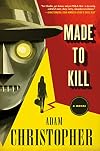
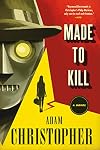
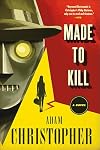
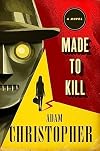
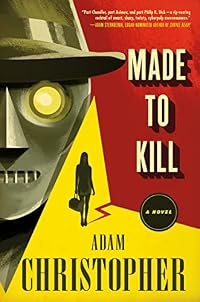
And, lo! Right there, directly at eye level was Made to Kill with a robot on the front cover and just begging me to read it. So I skimmed the synopsis, piled another book or two on the pile, and immediately checked it out. Checkpoint passed, game saved, achievement acquired!
But what did I think of it?
The book didn’t disappoint. It’s a science fiction and noir mystery rolled into a show more ball of wonderful. This is the first book in a series, but the end wraps up very nicely. We learn who-dun-it, and everything’s more or less okay. If you want to read without the fear of needing to commit to yet another series, don’t worry. It’s just fine as a standalone novel.
And no, the main character isn’t much like Nick Valentine (sorry guys), but he is a robot. The last robot. The rest have been turned off and decommissioned because people found them, well, creepy. They were human-like, only off. Sales fell, and now Ray is the only one left.
One of the things I really liked about this was how it addressed issues, especially considering the year it’s supposed to be in this alternate version of America. Every night the robot must be shut off – he runs out of power and memory after a certain number of hours. Probably. It’s a bit vague, after all, as the supercomputer that oversees Ray doesn’t seem to always tell him everything. He doesn’t mind terribly, he’s an assassin after all, detective as far as the phone book’s concerned. Now he’s been hired for not one, but two jobs that tangle dangerously. And, to boot, someone seems to be after him.
If you like mysteries, science fiction, or alternate history you should definitely read Made to Kill. show less
I can’t begin to describe how happy I was when I first found Made to Kill by Adam Christopher. I was in the library right after Fallout 4’s Far Harbor DLC came out, and really wanted to read something with a cyborg main character. (Because Nick Valentine is awesome, and I need more of that in my life.)
And, lo! Right there, directly at eye level was Made to Kill with a robot on the front cover and just begging me to read it. So I skimmed the synopsis, piled another book or two on the pile, and immediately checked it out. Checkpoint passed, game saved, achievement acquired!
But what did I think of it?
The book didn’t disappoint. It’s a science fiction and noir mystery rolled into a show more ball of wonderful. This is the first book in a series, but the end wraps up very nicely. We learn who-dun-it, and everything’s more or less okay. If you want to read without the fear of needing to commit to yet another series, don’t worry. It’s just fine as a standalone novel.
And no, the main character isn’t much like Nick Valentine (sorry guys), but he is a robot. The last robot. The rest have been turned off and decommissioned because people found them, well, creepy. They were human-like, only off. Sales fell, and now Ray is the only one left.
One of the things I really liked about this was how it addressed issues, especially considering the year it’s supposed to be in this alternate version of America. Every night the robot must be shut off – he runs out of power and memory after a certain number of hours. Probably. It’s a bit vague, after all, as the supercomputer that oversees Ray doesn’t seem to always tell him everything. He doesn’t mind terribly, he’s an assassin after all, detective as far as the phone book’s concerned. Now he’s been hired for not one, but two jobs that tangle dangerously. And, to boot, someone seems to be after him.
If you like mysteries, science fiction, or alternate history you should definitely read Made to Kill. show less
I liked this book - it was fairly cliched - but than again, it was written to be cliched. It manages to take standard tropes about 1940's Science Fiction and Noir Mystery tropes - and turn into something that is fairly seamless.
The characters are fairly flat, but likable. The joy of reading this book is the world building - an alternate reality where robots came, and than went in America. The last robot built is still around - being special. Of course - with 1950's technology - he needs to recharge nightly and his memory tapes only hold about 12 hours of information. If it wasn't for the super computer running the business- our robotic hero wouldn't be able to function.
It has a lot of standard science fiction tropes - Russian spies with show more the technology to transfer their brain into other bodies - cute blond haired clients - who only gives enough information about the task to do it. A supercomputer with motives not intended by its maker - its a fun mashup.
This is a well written easy read, with interesting characters, in an interesting world. It's not great literature, but it's written as fun to read, and that is exactly what it is. show less
The characters are fairly flat, but likable. The joy of reading this book is the world building - an alternate reality where robots came, and than went in America. The last robot built is still around - being special. Of course - with 1950's technology - he needs to recharge nightly and his memory tapes only hold about 12 hours of information. If it wasn't for the super computer running the business- our robotic hero wouldn't be able to function.
It has a lot of standard science fiction tropes - Russian spies with show more the technology to transfer their brain into other bodies - cute blond haired clients - who only gives enough information about the task to do it. A supercomputer with motives not intended by its maker - its a fun mashup.
This is a well written easy read, with interesting characters, in an interesting world. It's not great literature, but it's written as fun to read, and that is exactly what it is. show less
Definitely, a fun read, but I can't quite tell if this is going to be more fun for you straight mystery lovers or for those of you who just like a great rampaging robot private eye/assassin running about the streets of Hollywood.
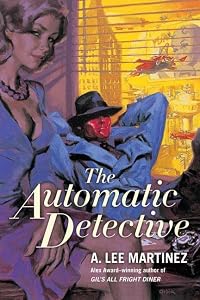
Me, I like both. It's very Chandler. And as I read it, I was reminded VERY pleasantly of A Lee Martinez's Automatic Detective which has a lot of the same elements.
Still, let's be honest here. The Noir mystery field has a million imitators and what really makes each stand out from the others is just the quality of the writing and the best quirkiness of the main characters.
I think this town is big enough for both books. :)
Especially since its relatively sparse with the SF element unlike the UF element with all show more that Fantasy Mystery mixes. I believe we need a lot more of this mashup.
Quirky robots are FUN! :)
And this Noir was just as fun as any other mystery I've enjoyed, so double fun! :)
Now on to read the sequel that just came out! :) show less
Me, I like both. It's very Chandler. And as I read it, I was reminded VERY pleasantly of A Lee Martinez's Automatic Detective which has a lot of the same elements.
Still, let's be honest here. The Noir mystery field has a million imitators and what really makes each stand out from the others is just the quality of the writing and the best quirkiness of the main characters.
I think this town is big enough for both books. :)
Especially since its relatively sparse with the SF element unlike the UF element with all show more that Fantasy Mystery mixes. I believe we need a lot more of this mashup.
Quirky robots are FUN! :)
And this Noir was just as fun as any other mystery I've enjoyed, so double fun! :)
Now on to read the sequel that just came out! :) show less
Members
- Recently Added By
Author Information

41+ Works 2,595 Members
Some Editions
Awards and Honors
Distinctions
Series

Common Knowledge
- Canonical title
- Made to Kill
- Original publication date
- 2015-11
- People/Characters
- Ray Electromatic; Ada
- Important places
- Hollywood, Los Angeles, California, USA
- Epigraph
- Did you ever read what they call Science Fiction? It's a scream. It is written like this . . .
--Raymond Chandler
March 14, 1953 - Dedication
- For Sandra, the beat of my heart, the music heard faintly on the edge of sound
- Publisher's editor
- Miriam Weinberg
- Blurbers
- Sternbergh, Adam; Wendig, Chuck; Gregory, Daryl
Classifications
Statistics
- Members
- 297
- Popularity
- 107,695
- Reviews
- 19
- Rating
- (3.41)
- Languages
- English
- Media
- Paper, Audiobook, Ebook
- ISBNs
- 9
- ASINs
- 4