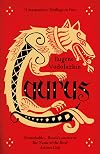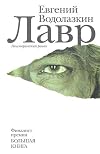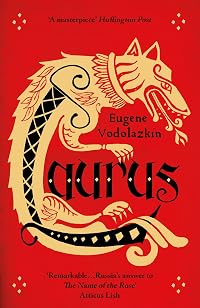
Laurus
by Eugene Vodolazkin
On This Page
Description
It is the late fifteenth century and a village healer in Russia called Laurus is powerless to help his beloved as she dies in childbirth, unwed and without having received communion. Devastated and desperate, he sets out on a journey in search of redemption. But this is no ordinary journey: it is one that spans ages and countries, and which brings him face-to-face with a host of unforgettable, eccentric characters and legendary creatures from the strangest medieval bestiaries. Laurus's show more travels take him from the Middle Ages to the Plague of 1771, where as a holy fool he displays miraculous healing powers, to the political upheavals of the late-twentieth century. At each transformative stage of his journey he becomes more revered by the church and the people, until he decides, one day, to return to his home village to lead the life of a monastic hermit-not realizing that it is here that he will face his most difficult trial yet. Laurus is a remarkably rich novel about the eternal themes of love, loss, self-sacrifice, and faith, from one of Russia's most exciting and critically acclaimed novelists. show lessTags
Recommendations














Member Reviews
When I got to the end of Laurus I thought: "this is the best book I've ever read." I've had that feeling before with other novels and I hope I will have it again in the future but even so Laurus will remain one of the most perfect and memorable experiences of my reading life.
It probably changed my experience to have read "The Confession of St. Patrick" before reading Laurus. Unlike Augustine's Roman intellectualism, St. Patrick's Confession describes a chaotic reality where the spiritual and the physical worlds are so intertwined that they sometimes interact in brutish ways--as when Patrick writes:
"The very same night while I was sleeping Satan attacked me violently, as I will remember as long as I shall be in this body; and there show more fell on top of me as it were, a huge rock,and not one of my members had any force."
St. Patrick describes the Devil as a force that can reach through from the spiritual world and manifest itself physically in this world, and the same sort of Christianity is at work in Laurus. In both Ireland and Russia Christianity developed without the mitigating rationality of Rome. This faith is visceral and unforgiving and absolute. Demons and angels are corporate. Faith healers are real. Holy fools are venerated. Future and past events can appear in dreams, and the consequences of sin and virtue are made manifest in this life: in the health of the body, in good or bad events, in the weather and the seasons.
The world view described with such tender care in this novel is very foreign to mine, and yet the writing is so grounded in physical detail, and so consistent throughout the novel, that I bought into it completely and was immersed in it entirely as I read.
I cried a lot. Even for the donkey. It's an amazing novel. It got to the absolute heart of me. show less
It probably changed my experience to have read "The Confession of St. Patrick" before reading Laurus. Unlike Augustine's Roman intellectualism, St. Patrick's Confession describes a chaotic reality where the spiritual and the physical worlds are so intertwined that they sometimes interact in brutish ways--as when Patrick writes:
"The very same night while I was sleeping Satan attacked me violently, as I will remember as long as I shall be in this body; and there show more fell on top of me as it were, a huge rock,and not one of my members had any force."
St. Patrick describes the Devil as a force that can reach through from the spiritual world and manifest itself physically in this world, and the same sort of Christianity is at work in Laurus. In both Ireland and Russia Christianity developed without the mitigating rationality of Rome. This faith is visceral and unforgiving and absolute. Demons and angels are corporate. Faith healers are real. Holy fools are venerated. Future and past events can appear in dreams, and the consequences of sin and virtue are made manifest in this life: in the health of the body, in good or bad events, in the weather and the seasons.
The world view described with such tender care in this novel is very foreign to mine, and yet the writing is so grounded in physical detail, and so consistent throughout the novel, that I bought into it completely and was immersed in it entirely as I read.
I cried a lot. Even for the donkey. It's an amazing novel. It got to the absolute heart of me. show less
In the words of Monty Python, “And now for something completely different,” Laurus is an experimental novel well off the beaten path. It is literary historical fiction set in 15th century medieval Russia that follows the life of an herbal healer, doctor, and mystic who takes various names on his journey to sainthood. After his parents die of the plague, Arseny is brought up by his herbalist grandfather, who teaches him the healing arts. He becomes renowned in the region for his miraculous ability to cure people suffering from the plague and other afflictions. He makes mistakes that lead to the death of a loved one, and subsequently lives a disciplined life of atonement. He endures great suffering in service to others. He embarks on show more physical and spiritual journeys. At various times, he becomes a healer, a “holy fool”, a pilgrim, a monk, and a hermit. This book transports the reader to the middle ages, complete with sights, sounds, smells, superstitions, and the spiritual beliefs of Orthodox Christianity.
This is not light reading. It explores metaphysical concepts, contemplates the fluidity of time, and considers the nature of eternity. Themes include loss, suffering, timelessness, and redemption. For me, it required focused concentration and at times felt like a I was reading a fable. The author does not use quotation marks, frequently transitions into archaic phrasing, inserts anachronisms and modern slang, and injects visions of future events (shifting between medieval and modern times). Content warnings include graphic descriptions of childbirth, violence, diseases, death, and decomposition. I would call this a well-crafted novel, but not a particularly enjoyable reading experience. I thought it was original, creative, beautifully written, with a thin plot and only a couple of characters developed in any depth. Recommended to readers that enjoy Russian literature, medieval history, experimental works, or tales of spiritual journeys. show less
This is not light reading. It explores metaphysical concepts, contemplates the fluidity of time, and considers the nature of eternity. Themes include loss, suffering, timelessness, and redemption. For me, it required focused concentration and at times felt like a I was reading a fable. The author does not use quotation marks, frequently transitions into archaic phrasing, inserts anachronisms and modern slang, and injects visions of future events (shifting between medieval and modern times). Content warnings include graphic descriptions of childbirth, violence, diseases, death, and decomposition. I would call this a well-crafted novel, but not a particularly enjoyable reading experience. I thought it was original, creative, beautifully written, with a thin plot and only a couple of characters developed in any depth. Recommended to readers that enjoy Russian literature, medieval history, experimental works, or tales of spiritual journeys. show less
‘Laurus’ has a quite different approach to time than any other novel I can remember. On the face of things, it simply recounts the life of a man in chronological order. In fact, the narrator throws in reminders that it’s set in the middle ages, snapshots of completely different times, and disorienting flashes of modernity in the 15th century (I swear I caught a mention of plastic bottles). Characters display notable disregard for a linear version of time, regularly sensing the past or future and employing linguistic code-switching. On a single page, for example, we see both of these:
I enjoyed the oddness of this veering between pseudo-old-english and US slang. It reminded me slightly of [b:Riddley Walker|776573|Riddley Walker|Russell Hoban|https://images.gr-assets.com/books/1383166398s/776573.jpg|762606], although as I recall that was much, much harder to follow. And I hadn’t actually consciously noticed the lack of speech marks until now, so clearly that conceit no longer bothers me as it once did.
The nature of time is also a frequent subject of conversation, which I appreciated. Such as:
It took me a while, maybe 100 pages, to get into ‘Laurus’ as I didn’t find it had a great deal of narrative momentum at the beginning. Subsequently, though, it was a really intriguing experience. The deadpan humour that surfaces in the latter half is great, especially the moment when an oblivious pilgrim narrowly escapes being thrown in the sea. In fact, Arseny and Ambrogio’s journey is the strongest part of the book. Possibly because it has the plot momentum of a more modernistic novel, whereas other parts have a more archaic-seeming air of moral fable. Also, I liked Ambrogio very much and found him to be an excellent foil for Arseny. As for the overall moral, philosophical, or religious message, I found it hard to unpick. I think Vodolazkin manages to evoke Arseny/Laurus’s mindset and sense of grief and guilt in a way that feels genuinely alien to modern sensibilities. Following his shifting status during his life does seem like a journey to another time, however there’s also a great deal of mythic ambiguity about it. As is always the case with Russian novels in particular, I wondered whether translation and my lack of cultural knowledge caused me to miss subtexts and allegories. Be that as it may, ‘Laurus’ was an original, clever, and sometimes moving experience. show less
I simply prayed for him, Arseny told Ustina. I requested: O Lord, laye not this synne to his charge, for he knoweth not what he creates.show more
[...]
Well,
like, you know, said the concerned Zavelichye residents. Beating might not be so bad, but killing, is that really piousness? It is a mortal, if it can put that way, sin.
Screw that, exclaimed holy fool Foma in a fit of pique.
I enjoyed the oddness of this veering between pseudo-old-english and US slang. It reminded me slightly of [b:Riddley Walker|776573|Riddley Walker|Russell Hoban|https://images.gr-assets.com/books/1383166398s/776573.jpg|762606], although as I recall that was much, much harder to follow. And I hadn’t actually consciously noticed the lack of speech marks until now, so clearly that conceit no longer bothers me as it once did.
The nature of time is also a frequent subject of conversation, which I appreciated. Such as:
Leaning over him, Arseny said:
The words sooner and later do not determine the content of occurrences. They relate only to the form in which they flow: time. Which Ambroglio reckons does not, in the final analysis, exist.
Arseny glanced back at Ambrogio.
I think, said Ambrogio, that it is not time that runs out, but the occurrence. An occurrence expresses itself and ceases its own existence. The poet dies at, say, thirty-seven years old, and when people lament over him, they begin debating about what he might have yet written. But perhaps he had already accomplished what he had to and expressed all of himself.
It took me a while, maybe 100 pages, to get into ‘Laurus’ as I didn’t find it had a great deal of narrative momentum at the beginning. Subsequently, though, it was a really intriguing experience. The deadpan humour that surfaces in the latter half is great, especially the moment when an oblivious pilgrim narrowly escapes being thrown in the sea. In fact, Arseny and Ambrogio’s journey is the strongest part of the book. Possibly because it has the plot momentum of a more modernistic novel, whereas other parts have a more archaic-seeming air of moral fable. Also, I liked Ambrogio very much and found him to be an excellent foil for Arseny. As for the overall moral, philosophical, or religious message, I found it hard to unpick. I think Vodolazkin manages to evoke Arseny/Laurus’s mindset and sense of grief and guilt in a way that feels genuinely alien to modern sensibilities. Following his shifting status during his life does seem like a journey to another time, however there’s also a great deal of mythic ambiguity about it. As is always the case with Russian novels in particular, I wondered whether translation and my lack of cultural knowledge caused me to miss subtexts and allegories. Be that as it may, ‘Laurus’ was an original, clever, and sometimes moving experience. show less
They say not to judge a book by its cover, but this is how I obtained my copy of Laurus. An acquaintance had cleaned out their bookcase, and at a gathering the books were piled high on a table for anyone to take. Out of politeness I took a gander, and was drawn to the red and gold cover, and so took it home. It took me a while to get around to it, and apart from knowing it was Russian historical fiction I went in blindly.
Laurus gave me the medieval quest that I expected, but otherwise completely defied any expectation that I had. A few pages in I found the receipt of its initial purchase, which leads me to believe my acquaintance has never read the book, which is truly a shame. Laurus is a journey, through the inhabited world of the show more fifteenth century, through time, as well as an inward journey, both for its protagonist as perhaps for the reader. Or, as Elder Innokenty might say, it contains both horizontal motion and vertical motion.
The prose can be poetic, but never frivolous. It can be piously archaic and surprisingly modern. The dialog is not seperated from the text by quotation marks, but never confusing. It reads like something from a different day and age, though never alienating and highly original.
Laurus, the man of many names, is both unusually wise as a child and unusually endearing as a man, and I would highly recommend joining him on his pelgrimage.
One of a kind. show less
Laurus gave me the medieval quest that I expected, but otherwise completely defied any expectation that I had. A few pages in I found the receipt of its initial purchase, which leads me to believe my acquaintance has never read the book, which is truly a shame. Laurus is a journey, through the inhabited world of the show more fifteenth century, through time, as well as an inward journey, both for its protagonist as perhaps for the reader. Or, as Elder Innokenty might say, it contains both horizontal motion and vertical motion.
The prose can be poetic, but never frivolous. It can be piously archaic and surprisingly modern. The dialog is not seperated from the text by quotation marks, but never confusing. It reads like something from a different day and age, though never alienating and highly original.
Laurus, the man of many names, is both unusually wise as a child and unusually endearing as a man, and I would highly recommend joining him on his pelgrimage.
One of a kind. show less
At times I found myself so frustrated with this book because of the turmoil experienced by the protagonist, but at no point did I want to stop reading. The protagonist, who undergoes several name changes, experiences some of the worst life has to offer, and at one point, despair seems to drive him literally mad, but the more he is tormented, from within or without, the more he gives himself away in the service of others. While young, he experiences trauma that shapes the remainder of his days, and he spends the majority of his life trying to make up for a sin/mistake that can’t be fixed. Moments of torment intertwined with moments of beauty comprise the lifetime of Laurus, a soul that heals others but that itself will not be healed.
This novel harked back to pre-Soviet fiction plus a large dollop of Russian Orthodox spirituality. The grandfather of a young man in 15th century Russia, Arseny, teaches him the secrets of herbal healing. Also, he learns the power of undying love from a young woman, Ustina, who arrives at his hut one day. After her death in childbirth and that of their son, out of self-blame for their deaths, he becomes a wanderer and fool-for-Christ. He becomes clairvoyant, with eccentric behavior, taking on the masculine form of her name, Ustin. He has a rude shelter by a convent. We are introduced to Ambrogio, an Italian, who becomes a dear friend and who prophesies through his visions of the future. At the behest of the mayor of Pskov, they make a show more journey to Jerusalem to lay a beautiful icon lamp at the holy Sepulcher and pray for the mayor's daughter, who had drowned. Ustin becomes Arseny again. They travel through Poland, to Venice, taking ship across the Mediterranean to Jaffa, then by camel to Jerusalem. Their trip is ultimately unsuccessful, and after pouring out his heart to God at the Tomb, Arseny returns to Pskov without his friend, who is murdered for the lamp. He then goes to his hometown and becomes a monk at the Kirillov Monastery with the name Amvrosy. After years he is tonsured into the Great Schema; he becomes an austere hermit with the name Laurus and lives in a cave in the woods, still using his gift of healing. The novel ends with his death.
This was a masterwork, a gorgeous book with a window into the Russian "soul" and through our hero, a glimpse into Orthodox spirituality. We are meant to accept all the miracles at face value as in a hagiography. The translation was excellent, mixing old and new language.
Most highly recommended. show less
This was a masterwork, a gorgeous book with a window into the Russian "soul" and through our hero, a glimpse into Orthodox spirituality. We are meant to accept all the miracles at face value as in a hagiography. The translation was excellent, mixing old and new language.
Most highly recommended. show less
Евгений Водолазкин - автор романа "Соловьев и Ларионов" (финалист "Большой книги" и Премии Андрея Белого), сборника эссе "Инструмент языка" и других книг. Филолог, специалист по древнерусской литературе, он не любит исторических романов, "их навязчивого этнографизма - кокошников, повойников, портов, зипунов" и прочую унылую стилизацию. Используя интонации древнерусских текстов, Водолазкин причудливо show more смешивает разные эпохи и языковые стихии, даря читателю не гербарий, но живой букет. Герой нового романа "Лавр" - средневековый врач. Обладая даром исцеления, он тем не менее не может спасти свою возлюбленную и принимает решение пройти земной путь вместо нее. Так жизнь превращается в житие. Он выхаживает чумных и раненых, убогих и немощных, и чем больше жертвует собой, тем очевиднее крепнет его дар. Но возможно ли любовью и жертвой спасти душу человека, не сумев уберечь ее земной оболо... show less
Members
- Recently Added By
Lists

Top Five Books of 2013
1,562 works; 721 members

History novels (not too romancey)
37 works; 5 members

Reading Globally
136 works; 16 members

Top Five Books of 2025
954 works; 303 members
Author Information

17 Works 1,196 Members
Some Editions
Awards and Honors
Awards
Distinctions
Common Knowledge
- Canonical title
- Laurus
- Original title
- Лавр
- Original publication date
- 2012; 2015 (English Translation) (English Translation)
- People/Characters*
- Арсений
- Important places
- Rukina Quarter, Russia; Belozersk, Russia; Pskov, Russia
- Dedication
- Татьяне
To Tatyana - First words
- He had four names at various times.
- Last words
- (Click to show. Warning: May contain spoilers.)Of course we, too, do not understand.
- Original language
- Russian
*Some information comes from Common Knowledge in other languages. Click "Edit" for more information.
Classifications
- Genres
- General Fiction, Fiction and Literature, Historical Fiction
- DDC/MDS
- 891.7 — Literature & rhetoric Literatures of other languages East Indo-European and Celtic literatures Russian and East Slavic languages
- LCC
- PG3493.76 .D65 .L3813 — Language and Literature Slavic languages and literatures. Baltic languages. Albanian language Slavic. Baltic. Albanian Russian literature Individual authors and works 2001-
- BISAC
Statistics
- Members
- 746
- Popularity
- 37,711
- Reviews
- 23
- Rating
- (4.14)
- Languages
- 11 — Dutch, English, Estonian, Finnish, French, German, Italian, Romanian, Russian, Spanish, Swedish
- Media
- Paper, Audiobook, Ebook
- ISBNs
- 24
- ASINs
- 6