On This Page
Description
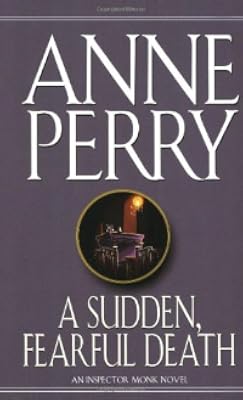
The Victorian mystery series starring Inspector Thomas Pitt and Charlotte Pitt reaches new heights. When Dr. Stephen Shaw's fancy Highgate Rise home is burned to the ground with his wife inside, the Inspector and his wife must solve a baffling mystery.Tags
Recommendations
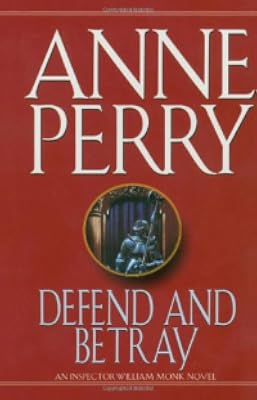
Member Reviews
It took me a few Anne Perry and Victoria Thompson novels to discover that the term 'mystery' has changed from how it was used let's say 10 to 20 years ago. Most readers might still associated a mystery novel with a puzzle and with sleuthing, but those terms rarely apply anymore to modern mysteries. Anne Perry is one of many contemporary authors who writes historical fiction with a romantic inclination, which is probably a better label than mystery. Granted, the reader does not know until the very end who has committed the heinous crime, but then again the reveal is most of the time arrived at by the culprit confessing without provocation and regularly without convincing motivation. You could say: with enough time and social pressure the show more murderer will eventually show him or herself without the need for evidence. Rarely in these novels is there actual hard evidence linking the crime to the crimee.
Traditionally in the context of a murder mystery there are a number of suspects each with the appropriate motivation as to why they wanted to snuff the life out of the poor victim. At the end of the story a sleuth or consulting detective explains why only one of the suspects could have actually committed the crime and why the rest of the bunch are not eligible for the title of murderer, no matter how much they desired that tribute.
In an Anne Perry novel the mechanism is reversed, we now have a number of suspects each of which was potentially at the proper place (one will never know) with the right intentions and correct means, but physical evidence and eyewitness reports don't matter that much. The one who has the best motive wins, it's that simple. Instead of the traditional plotting of the author, sleuthing by the detective and puzzling by the readers, we now have novels where the mystery content revolves around veiled dramatic character interactions. Most of these interactions will mostly appeal only to female audiences and ironically portray a rather traditional domestic picture and gender role division.
From a historical perspective there is much to be found and experienced. Authors like Anne Perry, Victoria Thompson and Caleb Carr to name just a few, are heavily invested in accurate depictions and appropriately original detail. Reading an Anne Perry is just as much an immersive trip into Victorian Times as it is an ongoing daytime television saga. Readers aren't really invested in an Anne Perry for the story, but for the endless almost but not quite amorous interactions between Charlotte and Thomas. For a Victoria Thompson novel you can swap out Frank and Sarah, everything else stays the same.
If you like a trip into a complete and convincing Victorian world with lots of interesting drama and elaborate character interactions through dialog, then you're in for a treat. If you're looking for an Agatha Christie mystery then I suggest you read an Agatha Christie. show less
Traditionally in the context of a murder mystery there are a number of suspects each with the appropriate motivation as to why they wanted to snuff the life out of the poor victim. At the end of the story a sleuth or consulting detective explains why only one of the suspects could have actually committed the crime and why the rest of the bunch are not eligible for the title of murderer, no matter how much they desired that tribute.
In an Anne Perry novel the mechanism is reversed, we now have a number of suspects each of which was potentially at the proper place (one will never know) with the right intentions and correct means, but physical evidence and eyewitness reports don't matter that much. The one who has the best motive wins, it's that simple. Instead of the traditional plotting of the author, sleuthing by the detective and puzzling by the readers, we now have novels where the mystery content revolves around veiled dramatic character interactions. Most of these interactions will mostly appeal only to female audiences and ironically portray a rather traditional domestic picture and gender role division.
From a historical perspective there is much to be found and experienced. Authors like Anne Perry, Victoria Thompson and Caleb Carr to name just a few, are heavily invested in accurate depictions and appropriately original detail. Reading an Anne Perry is just as much an immersive trip into Victorian Times as it is an ongoing daytime television saga. Readers aren't really invested in an Anne Perry for the story, but for the endless almost but not quite amorous interactions between Charlotte and Thomas. For a Victoria Thompson novel you can swap out Frank and Sarah, everything else stays the same.
If you like a trip into a complete and convincing Victorian world with lots of interesting drama and elaborate character interactions through dialog, then you're in for a treat. If you're looking for an Agatha Christie mystery then I suggest you read an Agatha Christie. show less
This one was fine though it irked me sort of beyond reason due to some series continuity issues.
In this installment of the Charlotte/Thomas series Aunt Vespasia wears a black dress on page 125. Discerning reader that I am, I had to stop and think - wait, hasn't it been said that Aunt Vespasia never wears black? I tried searching prior books in the series for the word 'black' to see if I could find proof but that got boring pretty quickly.
In the end I hadn't needed to seek out evidence at all - it came to find me in the form of this sentence, on page 322: "Aunt Vespasia, dressed in deep lavender (she refused to wear black), stood next to Charlotte, her chin high, her shoulders square, her hand gripping fiercely her silver-handled show more cane."
Another issue: I had been surprised to learn that Caroline, Charlotte and Emily's mother, had moved to Rutland Place. Now I know it was only so that book #5 could have a name. Here in book #11, she's back at Cater Street as if nothing happened at all. It's weird that neither the writer nor anyone involved in the publishing of this book noticed the direct contradiction of the basis for a whole prior book.
Many ravings of a political/religious nature. Pitt does not come close to solving the crime. I still like the characters enough to continue, especially now that a) Jack might do something other than be Emily's husband, and b) Gracie has become more than just a handy babysitter/person for Charlotte to talk to when she gets tired of thinking/wondering/hypothesizing in silence. show less
In this installment of the Charlotte/Thomas series Aunt Vespasia wears a black dress on page 125. Discerning reader that I am, I had to stop and think - wait, hasn't it been said that Aunt Vespasia never wears black? I tried searching prior books in the series for the word 'black' to see if I could find proof but that got boring pretty quickly.
In the end I hadn't needed to seek out evidence at all - it came to find me in the form of this sentence, on page 322: "Aunt Vespasia, dressed in deep lavender (she refused to wear black), stood next to Charlotte, her chin high, her shoulders square, her hand gripping fiercely her silver-handled show more cane."
Another issue: I had been surprised to learn that Caroline, Charlotte and Emily's mother, had moved to Rutland Place. Now I know it was only so that book #5 could have a name. Here in book #11, she's back at Cater Street as if nothing happened at all. It's weird that neither the writer nor anyone involved in the publishing of this book noticed the direct contradiction of the basis for a whole prior book.
Many ravings of a political/religious nature. Pitt does not come close to solving the crime. I still like the characters enough to continue, especially now that a) Jack might do something other than be Emily's husband, and b) Gracie has become more than just a handy babysitter/person for Charlotte to talk to when she gets tired of thinking/wondering/hypothesizing in silence. show less
This Charlotte & Thomas Pitt mystery involved Charlotte more than Inspector Pitt. Even Gracie, the maid, got into the sleuthing act--and was realistically helpful. Emily made her appearance, along with her new husband. He is growing into an added plus. The actual guilty party was indicted on a purely emotional basis. That didn't seem quite right, but I suppose that was the most one could expect in Victorian times. The local police complained throughout that Bow Street didn't need to be brought in to solve this case, but were never allowed to accept the necessity in the end.
I was surprised that in two or three instances Dr. Shaw's landlady was misnamed. I expect better of Perry's editing staff. All in all, I thought Perry should have show more taken the time to strengthen her plot and fix these errors. I expect too much, it seems. show less
I was surprised that in two or three instances Dr. Shaw's landlady was misnamed. I expect better of Perry's editing staff. All in all, I thought Perry should have show more taken the time to strengthen her plot and fix these errors. I expect too much, it seems. show less
This was a good story but not Perry's best. I enjoy Charlotte and Thomas Pitt and the way they work together on cases. Some of the characters in this one went into too long discourses over liberty, free speech and other things that just went on too long. I really liked that the first victim, Clemency, had found out about the type of people that were getting rich from getting rent from their slums. These were some of her very pious relatives. Could they be the murderers?
8.25/10
The author explored many thought provoking themes in this installment in the Charlotte & Thomas Pitt series of mysteries. Strongly held ideas and beliefs are very powerful—powerful enough to be motive for murder.
The author explored many thought provoking themes in this installment in the Charlotte & Thomas Pitt series of mysteries. Strongly held ideas and beliefs are very powerful—powerful enough to be motive for murder.
Anne Perry is one of the authors I routinely look for at book sales, and so I read rather old titles such as this one from 1991. I like her Thomas and Charlotte Pitt very much. They are a loving couple who understand each other, and although Pitt is a cop and their income is low, Charlotte is originally from gentry and has family and friends from that class. This gives them unusual access to people of all walks of life. Charlotte "meddles" in Thomas' cases, but he values her input so unless she gets herself into a dangerous situation, he's fine with that.
This was definitely not my favorite novel in the series, but one wonderful thing about all of them is that the reader gets a bird's eye view of society customs, dress, and rigorous show more rules as well as the plight of the poor. That's particularly true in this book where one character is determined to do something about the rich living off the exorbitant rents they receive from living quarters that are simply death traps. The story begins with a huge house fire and that leads to descriptions of the uselessness of firefighting techniques of the time. Vivid storytelling of this kind is Perry's forte.
I grew impatient with the storylines in HIghgate Rise though. Characters are questioned over and over by both Thomas and Charlotte, each character's personality and beliefs are gone over ad nauseum. The story veers from one storyline to another and back again. Although we do learn the identity of the killer in the end, there are multiple loose ends left which may or may not be tied up in following novels. Since I read them out of order, I don't know. I just felt like I'd been dropped off in the middle of London in the middle of the night without direction.
Not that this will stop me from searching for more unread titles by Perry. Far from it. I do enjoy most of her books and characters so I will continue to find them for a nice change of pace in my reading life. show less
This was definitely not my favorite novel in the series, but one wonderful thing about all of them is that the reader gets a bird's eye view of society customs, dress, and rigorous show more rules as well as the plight of the poor. That's particularly true in this book where one character is determined to do something about the rich living off the exorbitant rents they receive from living quarters that are simply death traps. The story begins with a huge house fire and that leads to descriptions of the uselessness of firefighting techniques of the time. Vivid storytelling of this kind is Perry's forte.
I grew impatient with the storylines in HIghgate Rise though. Characters are questioned over and over by both Thomas and Charlotte, each character's personality and beliefs are gone over ad nauseum. The story veers from one storyline to another and back again. Although we do learn the identity of the killer in the end, there are multiple loose ends left which may or may not be tied up in following novels. Since I read them out of order, I don't know. I just felt like I'd been dropped off in the middle of London in the middle of the night without direction.
Not that this will stop me from searching for more unread titles by Perry. Far from it. I do enjoy most of her books and characters so I will continue to find them for a nice change of pace in my reading life. show less
As usual from Anne Perry, this was an engaging mystery. I wanted to know how it ended, and had perhaps better success than usual in working out the end before it became readily apparent. Thomas and Charlotte Pitt are always charming, and Gracie (the maid) was rather winning here as well.I did feel that this book suffered from the characters' being eager to expound on their philosophical, religious and political feelings. One or two people -- passionate, as many of these were -- who run off at the mouth are understandable. But when suspect after suspect and neighbor after neighbor digresses into long, frank tirades and phillippics, it seems like too much exposition. This may be because of the incorporation of historical figures and show more controversies into this volume, or part of the more thematically focused nature of this book (compared to others by the author.) At any rate, I found it distracting, and it was capped by both Charlotte and Vespasia being rather obnoxiously didactic in the closing scene.About the audiobook: Davina Porter is my favorite Recorded Books narrator, and she is a perfect match for these books. She has flawlessly clear enunciation, a variety of voices at her command, and consistently gives the dialogue precisely the emotional tone it requires. show less
Members
- Recently Added By
Author Information

199+ Works 55,154 Members
Anne Perry was born Juliet Hume on October 28, 1938 in Blackheath, London. Sent to Christchurch, New Zealand to recover from a childhood case of severe pneumonia, she became very close friends with another girl, Pauline Parker. When Perry's family abandoned her, she had only Parker to turn to, and when the Parkers planned to move from New Zealand, show more Parker asked that Perry be allowed to join them. When Parker's mother disagreed, Perry and Parker bludgeoned her to death. Perry eventually served five and a half years in an adult prison for the crime. Once she was freed, she changed her name and moved to America, where she eventually became a writer. Her first Victorian novel, The Cater Street Hangman, was published in 1979. Although the truth of her past came out when the case of Mrs. Parker's murder was made into a movie (Heavenly Creatures), Perry is still a popular author and continues to write. She has written over 50 books and short story collections including the Thomas Pitt series, the William Monk series, and the Daniel Pitt series. Her story, Heroes, won the 2001 Edgar Award for Best Short Story. Her title's Blind Justice and The Angel Court Affair made The New York Times Best Seller List. (Bowker Author Biography) show less
Some Editions
Series

Belongs to Publisher Series
Il giallo Mondadori (2268)
Work Relationships
Is contained in
Common Knowledge
- Canonical title
- Highgate Rise
- Original title
- Highgate Rise
- Original publication date
- 1991-05-15
- People/Characters
- Thomas Pitt (Police Inspector); James Murdo (Constable); Quinton Pascoe; Alfred Lutterworth; Josiah Hatch; Flora Lutterworth (show all 29); Amos Lindsay; Stephen Shaw; Charlotte Pitt; Emily Ellison (as Emily Radley); Vespasia Cumming-Gould (Lady); Somerset Carlisle; Micah Drummond; Clemency Shaw; Eulalia Clitheridge; Hector Clitheridge; John Dalgetty; Caroline Ellison; Celeste Worlingham; Angeline Worlingham; Prudence Hatch; Maude Dalgetty; Matthew Oliphant; Bessie Jones; Jack Radley; Tom Thickett; Fred Buffery; George Bernard Shaw; Theophilus Worlingham
- Important events
- Victorian Era (1837 | 1901); Whitechapel Murders (1888)
- Original language*
- Inglese
*Some information comes from Common Knowledge in other languages. Click "Edit" for more information.
Classifications
Statistics
- Members
- 777
- Popularity
- 36,060
- Reviews
- 11
- Rating
- (3.65)
- Languages
- 6 — English, French, German, Italian, Nepali, Spanish
- Media
- Paper, Audiobook, Ebook
- ISBNs
- 29
- ASINs
- 9