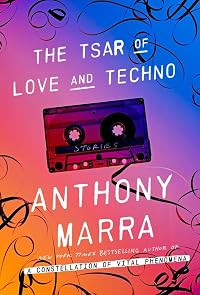
The Tsar of Love and Techno: Stories
by Anthony Marra
On This Page
Description
From the New York Times bestselling author of A Constellation of Vital Phenomena—dazzling, poignant, and lyrical interwoven stories about family, sacrifice, the legacy of war, and the redemptive power of art.This stunning, exquisitely written collection introduces a cast of remarkable characters whose lives intersect in ways both life-affirming and heartbreaking. A 1930s Soviet censor painstakingly corrects offending photographs, deep underneath Leningrad, bewitched by the image of a show more disgraced prima ballerina. A chorus of women recount their stories and those of their grandmothers, former gulag prisoners who settled their Siberian mining town. Two pairs of brothers share a fierce, protective love. Young men across the former USSR face violence at home and in the military. And great sacrifices are made in the name of an oil landscape unremarkable except for the almost incomprehensibly peaceful past it depicts.
In stunning prose, with rich... show less
Tags
Recommendations

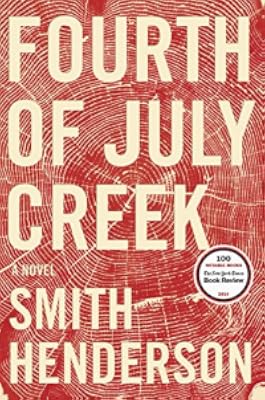
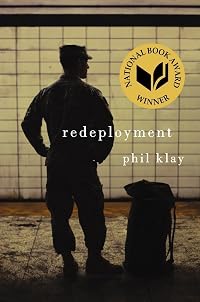
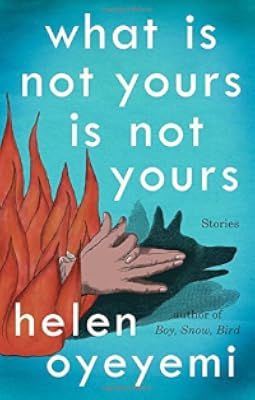

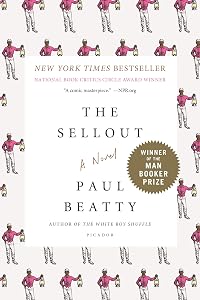

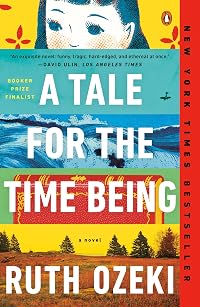
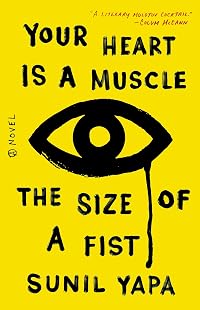
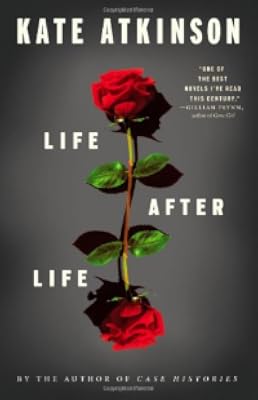
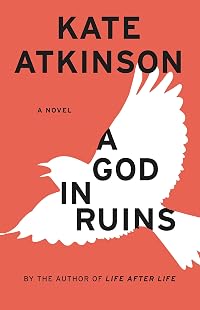
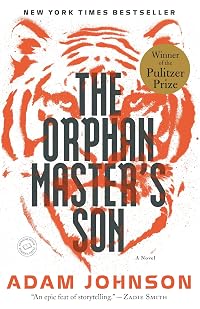
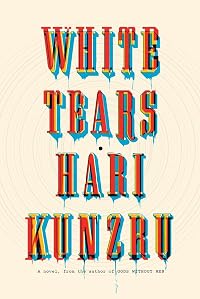
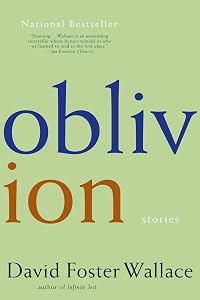
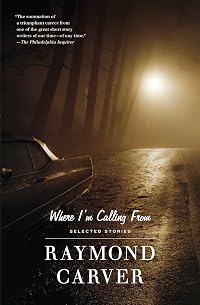
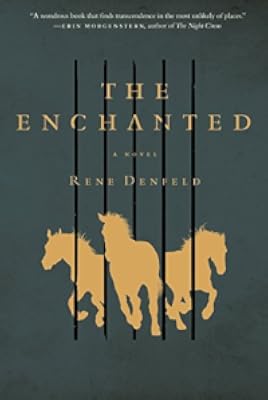
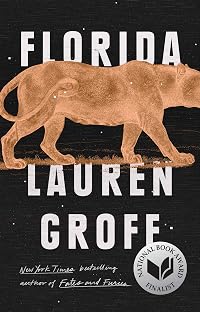
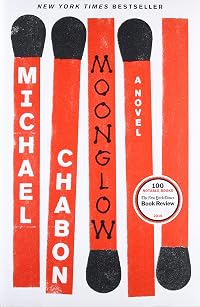
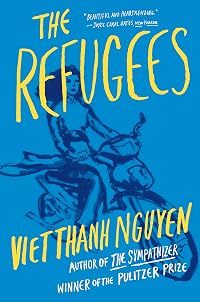
Member Recommendations
by anonymous user
Member Reviews
Anthony Marra's "Constellation of Vital Phenomena" was one of my favorite books of 2014. His return to Chechnya in "Tsar of Love and Techno" is another huge success. His characters are beautifully limned and swoop in and out of time and each other's lives. It was a complete delight to discover how a 1930's censor (who excels at painting out the pockmarks on Stalin's cheeks) is connected to an oligarch's wife and minor movie star, or to a young Internet scammer .... Or .... Or....Marra's writing is original and breathtaking. Although his character's circumstances are often quite grim, there are flashes of humor. One character shudders at the malign Swedish government who forces its citizenry to assemble furniture. Art, conformity, show more connection and betrayal are constant themes. I truly didn't want this one to end. show less
The Tsar of Love and Techno is easily my favorite read in more than five years. It's profound, touching, and oh so incredibly clever. This is a book that I hope to get around to again someday.
First, a bit of clarification. This book is billed as a collection of stories. Why this is the case, I do not know. It's not uncommon for publishers to sell a collection with the thinnest thread joining them as a novel. Why? Novels sell better. So why would a publisher push what could easily be called a novel as a collection? I have no idea. These "stories" are all very much linked. The connection between them gives a more complete picture than many novels do. More than that, I don't think these stories could stand on their own, and that alone show more should be a big indicator that this is not a collection of stories. Why does it matter? Because when you first go into The Tsar of Love and Techno, you're going to want to look at the big picture. Knowing that everything in this "collection" is connected to an overarching story is important to appreciating it fully. So I will be referring to this book as a novel.
Why did I love this novel so much? Because it has nearly everything I want in a story. It's cerebral and emotional. The way Marra brings together all the threads is ambitious. As is evident from this book as well as his debut, he's a clever author with a strong understanding of how all the fragments of a story can be seamlessly pieced together. And yet, Marra knows how to tug on the emotional heartstrings. The stories of these characters seeking peace, acceptance, forgiveness, family... they're all so wonderfully heartbreaking.
What else? Well, the characters are wonderfully drawn. They're authentic in their construction and they grow in ways that are believable and captivating. The history and the landscapes are richly detailed, but in a way that doesn't cause the story to get bogged down. Marra's style is lyrical, gritty when it needs to be, full of pain, but not devoid of hope.
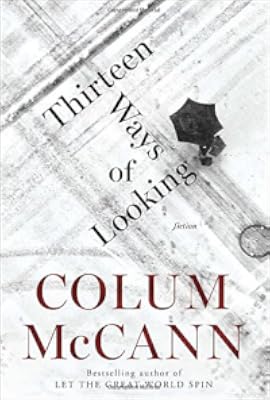
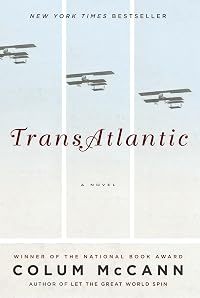
You know, Marra kind of reminds me of David Mitchell meets Colum McCann. Does anyone else see this? I don't like putting too much stock in comparisons, but I'll put that out there anyway.
If I had one critique of Marra in general, it's that for whatever reason his stories don't quite stick with me the way that they should for being so impressive. I don't even know why this is, and it could be a flaw of my own. Despite enjoying every passage of this novel, I walk away retaining only the broadest sense of the story. This does mean however, that I'm actually eager to read it again, hopeful that I'll pick up more on a second read. (And I'm not generally a re-reader.)
Personally, I thought The Tsar of Love and Techno was superior to a A Constellation of Vital Phenomena, a novel that is adored by so many. Marra's debut was intense, reflective, vivid, and beautiful, just like this one, but I found the added layers that spanned time and space to be enriching and entertaining. Despite not being a re-reader, I do hope I'll be able to return to both of these novels. And hopefully, Marra's future is paved with many more. show less
First, a bit of clarification. This book is billed as a collection of stories. Why this is the case, I do not know. It's not uncommon for publishers to sell a collection with the thinnest thread joining them as a novel. Why? Novels sell better. So why would a publisher push what could easily be called a novel as a collection? I have no idea. These "stories" are all very much linked. The connection between them gives a more complete picture than many novels do. More than that, I don't think these stories could stand on their own, and that alone show more should be a big indicator that this is not a collection of stories. Why does it matter? Because when you first go into The Tsar of Love and Techno, you're going to want to look at the big picture. Knowing that everything in this "collection" is connected to an overarching story is important to appreciating it fully. So I will be referring to this book as a novel.
Why did I love this novel so much? Because it has nearly everything I want in a story. It's cerebral and emotional. The way Marra brings together all the threads is ambitious. As is evident from this book as well as his debut, he's a clever author with a strong understanding of how all the fragments of a story can be seamlessly pieced together. And yet, Marra knows how to tug on the emotional heartstrings. The stories of these characters seeking peace, acceptance, forgiveness, family... they're all so wonderfully heartbreaking.
What else? Well, the characters are wonderfully drawn. They're authentic in their construction and they grow in ways that are believable and captivating. The history and the landscapes are richly detailed, but in a way that doesn't cause the story to get bogged down. Marra's style is lyrical, gritty when it needs to be, full of pain, but not devoid of hope.
You know, Marra kind of reminds me of David Mitchell meets Colum McCann. Does anyone else see this? I don't like putting too much stock in comparisons, but I'll put that out there anyway.
If I had one critique of Marra in general, it's that for whatever reason his stories don't quite stick with me the way that they should for being so impressive. I don't even know why this is, and it could be a flaw of my own. Despite enjoying every passage of this novel, I walk away retaining only the broadest sense of the story. This does mean however, that I'm actually eager to read it again, hopeful that I'll pick up more on a second read. (And I'm not generally a re-reader.)
Personally, I thought The Tsar of Love and Techno was superior to a A Constellation of Vital Phenomena, a novel that is adored by so many. Marra's debut was intense, reflective, vivid, and beautiful, just like this one, but I found the added layers that spanned time and space to be enriching and entertaining. Despite not being a re-reader, I do hope I'll be able to return to both of these novels. And hopefully, Marra's future is paved with many more. show less
I don’t normally read short stories as I either find them ho-hum or I am left wanting more, a lot more. In short I am always left feeling frustrated. So why did I pick up yet another collection of short stories? Because I had a quick dip inside and it was like finding gold. I jumped in and nearly cried when I finished it. Each “short story” is connected to another somewhere in the book.
There is more cleverness, wonder and magic in this one book that any I have read since Riddley Walker. Beyond that I find the Soviet era fascinating in its bizarreness and this book meets that and then some.
I will be reading more by this guy.
There is more cleverness, wonder and magic in this one book that any I have read since Riddley Walker. Beyond that I find the Soviet era fascinating in its bizarreness and this book meets that and then some.
I will be reading more by this guy.
Set in Russia from the 1930s to the 2010s, and spanning the country from Siberia to Chechnya, this book covers a block of Russian history, showing many hardships and losses faced by the people, and bringing these down to a personal level. Primary characters include a censor, ballerina, a pair of brothers, a prisoner of war, a drug dealer, and a scam artist. The book starts out as a series of short stories, but they gradually become more interrelated. By the end, it feels like reading a novel.
Marra employs humor to offset the many tragic segments. One of my favorite stories is “The Grozny Tourist Bureau,” in which a man is charged with creating a travel brochure to lure tourists to war-torn Chechnya: “Upon seeing the empty space show more where an apartment block once stood, I wrote wide and unobstructed skies! I watched jubilantly as a pack of feral dogs chased a man, and wrote unexpected encounters with natural wildlife! The city bazaar hummed with the sales of looted industrial equipment, humanitarian aid rations, and munitions suited for every occasion: unparalleled shopping opportunities at the Grozny bazaar! Even before I reached the first checkpoint, I had scribbled first-rate security! The copy wrote itself; the real challenge was finding images that substantiated it.”
Marra is an expressive, intelligent writer and I enjoy his style. The content is sad, and I liked some parts more than others, as it typical in a series of stories, but the penultimate chapter brings everything together. The final story is “out there.” I also recommend A Constellation of Vital Phenomena. show less
Marra employs humor to offset the many tragic segments. One of my favorite stories is “The Grozny Tourist Bureau,” in which a man is charged with creating a travel brochure to lure tourists to war-torn Chechnya: “Upon seeing the empty space show more where an apartment block once stood, I wrote wide and unobstructed skies! I watched jubilantly as a pack of feral dogs chased a man, and wrote unexpected encounters with natural wildlife! The city bazaar hummed with the sales of looted industrial equipment, humanitarian aid rations, and munitions suited for every occasion: unparalleled shopping opportunities at the Grozny bazaar! Even before I reached the first checkpoint, I had scribbled first-rate security! The copy wrote itself; the real challenge was finding images that substantiated it.”
Marra is an expressive, intelligent writer and I enjoy his style. The content is sad, and I liked some parts more than others, as it typical in a series of stories, but the penultimate chapter brings everything together. The final story is “out there.” I also recommend A Constellation of Vital Phenomena. show less
I wanted to read this book because I loved Anthony Marra's first book, A Constellation of Vital Phenomena. These are interlocking short stories that, to me, read almost like a novel. It's hard to imagine that both of these books about Chechnya could be so fascinating, but they are. It's hard to stop reading them once you start. This begins in the 1930s, in the tunnels in Leningrad where an artist has been given the job of erasing political dissidents from all official images and artworks beginning with his own brother. When an old painting of a dacha comes to his desk, he begins to draw his brother into every picture he censors. This decision goes through the decades, holding together the stories of a ballerina and her granddaughter, a show more gangster, a widower, a soldier all connected to this dacha. This is such an original book, like that of his first, that it's hard to imagine them being written by someone so young. Absolutely loved this. show less
Set in Russia from the 1930s to the 2010s, and spanning the country from Siberia to Chechnya, this book covers a block of Russian history, showing many hardships and losses faced by the people, and bringing these down to a personal level. Primary characters include a censor, ballerina, a pair of brothers, a prisoner of war, a drug dealer, and a scam artist. The book starts out as a series of short stories, but they gradually become more interrelated. By the end, it feels like reading a novel.
Marra employs humor to offset the many tragic segments. One of my favorite stories is “The Grozny Tourist Bureau,” in which a man is charged with creating a travel brochure to lure tourists to war-torn Chechnya: “Upon seeing the empty space show more where an apartment block once stood, I wrote wide and unobstructed skies! I watched jubilantly as a pack of feral dogs chased a man, and wrote unexpected encounters with natural wildlife! The city bazaar hummed with the sales of looted industrial equipment, humanitarian aid rations, and munitions suited for every occasion: unparalleled shopping opportunities at the Grozny bazaar! Even before I reached the first checkpoint, I had scribbled first-rate security! The copy wrote itself; the real challenge was finding images that substantiated it.”
Marra is an expressive, intelligent writer and I enjoy his style. The content is sad, and I liked some parts more than others, as it typical in a series of stories, but the penultimate chapter brings everything together. The final story is “out there.” I also recommend A Constellation of Vital Phenomena. show less
Marra employs humor to offset the many tragic segments. One of my favorite stories is “The Grozny Tourist Bureau,” in which a man is charged with creating a travel brochure to lure tourists to war-torn Chechnya: “Upon seeing the empty space show more where an apartment block once stood, I wrote wide and unobstructed skies! I watched jubilantly as a pack of feral dogs chased a man, and wrote unexpected encounters with natural wildlife! The city bazaar hummed with the sales of looted industrial equipment, humanitarian aid rations, and munitions suited for every occasion: unparalleled shopping opportunities at the Grozny bazaar! Even before I reached the first checkpoint, I had scribbled first-rate security! The copy wrote itself; the real challenge was finding images that substantiated it.”
Marra is an expressive, intelligent writer and I enjoy his style. The content is sad, and I liked some parts more than others, as it typical in a series of stories, but the penultimate chapter brings everything together. The final story is “out there.” I also recommend A Constellation of Vital Phenomena. show less
“There was coherence in exiting by the same door through which you entered, bookending with order this senselessly churning existence.”
In the 1930s, a failed portrait artist, is given the task, by Soviet censors, to erase images, from photographs. He will blot out the faces, of all political dissidents, including his own brother, who fell astray, a few years earlier. It is a painstaking job and he excels at it, until he makes a fateful mistake of his own...
This is the first tale, in a collection of interconnected stories, that span the decades. There is a legendary ballerina, a retired gangster, a pair of mercenaries, nickel miners and various war criminals, all thrown in to a vast human mixtape and all anchored by Marra's wonderful show more prose and his uncanny ability to capture the Russian landscape, in it's many diverse forms.
I was first introduced to Marra, through his novel, A Constellation of Vital Phenomena which completely blew me away. I am happy to report, his streak continues. He is quickly becoming a very important American writer. show less
In the 1930s, a failed portrait artist, is given the task, by Soviet censors, to erase images, from photographs. He will blot out the faces, of all political dissidents, including his own brother, who fell astray, a few years earlier. It is a painstaking job and he excels at it, until he makes a fateful mistake of his own...
This is the first tale, in a collection of interconnected stories, that span the decades. There is a legendary ballerina, a retired gangster, a pair of mercenaries, nickel miners and various war criminals, all thrown in to a vast human mixtape and all anchored by Marra's wonderful show more prose and his uncanny ability to capture the Russian landscape, in it's many diverse forms.
I was first introduced to Marra, through his novel, A Constellation of Vital Phenomena which completely blew me away. I am happy to report, his streak continues. He is quickly becoming a very important American writer. show less
Members
- Recently Added By
Lists

2016 Tournament of Books
17 works; 20 members

Unread books
1,063 works; 82 members

2016 Notable Books for Adults
26 works; 7 members

Top Five Books of 2015
811 works; 240 members

Top Five Books of 2016
795 works; 229 members

Kirkus Starred Fiction Reviews of Books Published in 2015
310 works; 6 members
Books Read in 2016
4,666 works; 198 members

NYT: Notable Books of 2015 (Fiction & Poetry)
20 works; 1 member

Kirkus Reviews Best Fiction of 2015
98 works; 6 members

Europe
205 works; 6 members
Author Information

5+ Works 4,313 Members
Anthony Marra received a bachelor's degree from the University of Southern California and an MFA from the Iowa Writers Workshop. His work has appeared in The Atlantic, Narrative Magazine, and MAKE Magazine. His short story Chechnya won a 2010 Pushcart Prize and the 2010 Narrative Prize. His debut novel, A Constellation of Vital Phenomena, was show more published in 2013 and received the inaugural John Leonard Prize. He also received 2018 Simpson Family Literary Prize. (Bowker Author Biography) show less
Some Editions
Awards and Honors
Awards
Distinctions
Common Knowledge
- Original publication date
- 2015
- People/Characters
- Roman Markin; Galina Ivanovna; Kolya Kalugin; Alexei Kalugin; Ruslan Dokurov; Nadia (show all 9); Vladimir Markin; Sergei Markin; Vera Andreyevna
- Important places
- St. Petersburg, Russia; Chechnya; Kirovsk, Siberia, Russia; Grozny, Chechnya
- Important events
- Chechen conflict
- Dedication
- For Janet, Lindsay, and Rachel
- First words
- I am an artist first, a censor second.
- Last words
- (Click to show. Warning: May contain spoilers.)Just give me that. Please.
- Original language
- English
Classifications
Statistics
- Members
- 1,027
- Popularity
- 25,221
- Reviews
- 81
- Rating
- (4.31)
- Languages
- 5 — Dutch, English, Korean, Spanish, Portuguese (Portugal)
- Media
- Paper, Audiobook, Ebook
- ISBNs
- 21
- ASINs
- 13