On This Page
Description
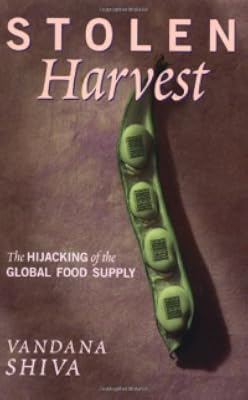
For the farmer, the seed is not merely the source of future plants and food; it is a vehicle through which culture and history can be preserved and spread to future generations. For centuries, farmers have evolved crops and produced an incredible diversity of plants that provide life-sustaining nutrition. In India alone, the ingenuity of farmers has produced over 200,000 varieties of rice, many of which now line store shelves around the world. This productive tradition, however, is under show more attack as globalized, corporate regimes increasingly exploit intellectual property laws to annex these sustaining seeds and remove them from the public sphere. In Stolen Harvest: The Hijacking of the Global Food Supply, Shiva explores the devastating effects of commercial agriculture and genetic engineering on the food we eat, the farmers who grow it, and the soil that sustains it. This prescient critique and call to action covers some of the most pressing topics of this ongoing dialogue, from the destruction of local food cultures and the privatization of plant life, to unsustainable industrial fish farming and safety concerns about corporately engineered foods. The preeminent agricultural activist and scientist of a generation, Shiva implores the farmers and consumers of the world to make a united stand against the genetically modified crops and untenable farming practices that endanger the seeds and plants that give us life. show lessTags
Recommendations


























Member Reviews
Lots of good information but rather repetitive for such a small book.
In her latest book, "the South's best known environmentalist" (New Internationalist) and 1993 Right Livelihood Award winner, Vandana Shiva, continues her path-breaking work on uncovering the devastating human and environmental impacts of corporate-engineered international trade agreements. In "Stolen Harvest", she charts the impacts of industrial agriculture and what they mean for small farmers, the environment, and the quality and healthfulness of the foods we eat. A short, impassioned, and inspiring book that will shape the debate about genetic engineering and commercial agriculture for years to come.
About the Author:
Vandana Shiva (b. November 5, 1952, Dehra Dun, Uttarakhand, India), is a philosopher, environmental activist, eco show more feminist and author of several books. Shiva, currently based in Delhi, is author of over 300 papers in leading scientific and technical journals. She received her Ph.D. in physics from the University of Western Ontario, Canada, in 1978 with the doctoral dissertation:“Hidden Variables and Non-locality in Quantum Theory”.
Shiva participated in the nonviolent Chipko movement during the 1970s. The movement, some of whose main participants were women, adopted the approach of forming human circles around trees to prevent their felling. She is one of the leaders of the International Forum on Globalization, (along with Jerry Mander, Edward Goldsmith, Ralph Nader, Jeremy Rifkin, et al.), and a figure of the global solidarity movement known as the alter-globalization movement. She has argued for the wisdom of many traditional practices, as is evident from her interview in the book "Vedic Ecology" (by Ranchor Prime) that draws upon India's Vedic heritage. show less
About the Author:
Vandana Shiva (b. November 5, 1952, Dehra Dun, Uttarakhand, India), is a philosopher, environmental activist, eco show more feminist and author of several books. Shiva, currently based in Delhi, is author of over 300 papers in leading scientific and technical journals. She received her Ph.D. in physics from the University of Western Ontario, Canada, in 1978 with the doctoral dissertation:“Hidden Variables and Non-locality in Quantum Theory”.
Shiva participated in the nonviolent Chipko movement during the 1970s. The movement, some of whose main participants were women, adopted the approach of forming human circles around trees to prevent their felling. She is one of the leaders of the International Forum on Globalization, (along with Jerry Mander, Edward Goldsmith, Ralph Nader, Jeremy Rifkin, et al.), and a figure of the global solidarity movement known as the alter-globalization movement. She has argued for the wisdom of many traditional practices, as is evident from her interview in the book "Vedic Ecology" (by Ranchor Prime) that draws upon India's Vedic heritage. show less
I've recently started reading Stolen Harvest by Vandana Shiva, who is a dedicated activist, prolific writer, and seriously cool lady.
Ratings
Members
- Recently Added By
Lists

South End Press Favorites
26 works; 2 members
Author Information

107+ Works 2,880 Members
Vandana Shiva is a world-renowned environmental leader, activist, and scholar who has dedicated her life to defending the sovereignty of biological and Indigenous knowledge.
Awards and Honors
Series

Common Knowledge
- Canonical title
- Stolen Harvest: the Hijacking of the Global Food Supply
- Original publication date
- 2000
Classifications
- Genres
- Economics, Nonfiction, General Nonfiction, Science & Nature, Business, Sexuality and Gender Studies, Food & Cooking, History
- DDC/MDS
- 338.47664 — Society, government, & culture Economics Production Secondary industries and services Services and specific products Technology
- LCC
- HD9000.5 .S454 — Social sciences Industries. Land use. Labor Industries. Land use. Labor Special industries and trades Agricultural industries
- BISAC
Statistics
- Members
- 393
- Popularity
- 79,596
- Reviews
- 3
- Rating
- (3.81)
- Languages
- English, German, Spanish
- Media
- Paper, Audiobook, Ebook
- ISBNs
- 13
- ASINs
- 6