On This Page
Description
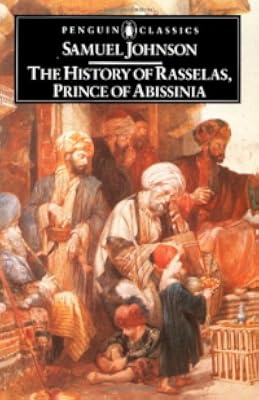
In this thought-provoking parable from esteemed essayist and lexicographer Samuel Johnson, a young prince has been banished to a small, secluded valley until it is his time to ascend to the throne. Will Rasselas be able to find happiness in his exile, or will he choose another course?.
Tags
Recommendations







Member Recommendations


Member Reviews
This novella is ostensibly a tale about an Ethiopian prince, Rasselas, who, chafing under the boredom of the life of luxury he leads in the Happy Valley, contrives to escape with two companions, his sister Nekayeh, and a man named Imlac. In fact this is a vehicle for Johnson's exploring various philosophical ideas, in particular around the sources of and how to seek happiness in life, including who in society has or might achieve happiness and how, whether through living a good life or not, and what that means. There are some interesting pithy aphorisms arising from their conversations with each other and with other characters, including with a philosopher-astronomer who believes he has the personal power to move the sun and planets. show more Quite amusing and interesting. show less
Hilaire Belloc has said, "Every man ought to read Rasselas, and every wise man will read it half a dozen times in his life . . . for never was wisdom better put, or more enduringly.'
This is an eastern tale only in name. Unlike the popular Arabian Nights Entertainments and Persian Tales, which had appeared in English earlier in the century, Rasselas was intended to curb imagination rather than excite it. Putting the eastern setting to ironical use, Johnson presents not an exotic world of romance and escape, or even a succession of romantic reversals of fortune, but a searching and deliberately un-optimistic analysis of the human condition. Instead of dismissing his characters to a happiness-ever-after, he forces upon them and his reader show more the realisation that no such happiness exists. show less
This is an eastern tale only in name. Unlike the popular Arabian Nights Entertainments and Persian Tales, which had appeared in English earlier in the century, Rasselas was intended to curb imagination rather than excite it. Putting the eastern setting to ironical use, Johnson presents not an exotic world of romance and escape, or even a succession of romantic reversals of fortune, but a searching and deliberately un-optimistic analysis of the human condition. Instead of dismissing his characters to a happiness-ever-after, he forces upon them and his reader show more the realisation that no such happiness exists. show less
Johnson’s Bildungsroman is the tale of a bored young Ethiopian prince imprisoned in a “happy valley,” an artificial Eden reserved for progeny of the emperor and their servants and companions.
"The valley, wide and fruitful, supplied its inhabitants with the necessities of life, and all delights and superfluities were added at the annual visit which the emperor paid his children, when the iron gate was opened to the sound of music; and, during eight days, everyone that desired resided in the valley was required to propose whatever might contribute to make seclusion pleasant, to fill up the vacancies of attentions and lessen the tediousness of time. Every desire was immediately granted." (page 8)
Yet Prince Rasselas is bored. He longs show more for a purpose in life. When told that he is being spared the miseries of the outside world, he yearns to experience them. When he meets Imlac, a poet and world traveler, he begs him to help him escape and be his guide to the outside world so that he can see how others live and
decide on a choice of life. Reluctantly Imlac agrees, and with Rasselas’s sister Nekayah and a small group of attendants they discover a path over the surrounding mountains and out into the world.
They travel north following the course of the Nile to the great metropolis of Cairo. There they meet the active young and the disillusioned old. Rasselas meets a successful man whose happiness is ruined by the death of his daughter, encounters hermits, monks, scholars, and a delusional astronomer. He and his sister try the pastoral life, debate the pros and cons of domesticity and marriage, visit the rich and the great, and explore the pyramids.
During their time inside a pyramid, a band of marauding Arabs kidnap Nekayah’s lady-in-waiting, and favorite Pekuah, and hold her for ransom. When the ransom is paid Pekuah reveals that she had been well treated and reports on life in the castle of the rogue with genteel manners. She finds life among the womenfolk to be lacking in good conversation.
But Rasselas and Nekayah are unable to discover any of these outsiders that have found true happiness, or a way of life that they want to adopt as their own. So having experienced all the outside world has to offer, they decide to return home.
With the precision of language characteristic of the lexicographer, Johnson returns—this time in prose—to the theme of his earlier poem “The Vanity of Human Wishes” to make the point that happiness is not to be found in earthly existence. show less
"The valley, wide and fruitful, supplied its inhabitants with the necessities of life, and all delights and superfluities were added at the annual visit which the emperor paid his children, when the iron gate was opened to the sound of music; and, during eight days, everyone that desired resided in the valley was required to propose whatever might contribute to make seclusion pleasant, to fill up the vacancies of attentions and lessen the tediousness of time. Every desire was immediately granted." (page 8)
Yet Prince Rasselas is bored. He longs show more for a purpose in life. When told that he is being spared the miseries of the outside world, he yearns to experience them. When he meets Imlac, a poet and world traveler, he begs him to help him escape and be his guide to the outside world so that he can see how others live and
decide on a choice of life. Reluctantly Imlac agrees, and with Rasselas’s sister Nekayah and a small group of attendants they discover a path over the surrounding mountains and out into the world.
They travel north following the course of the Nile to the great metropolis of Cairo. There they meet the active young and the disillusioned old. Rasselas meets a successful man whose happiness is ruined by the death of his daughter, encounters hermits, monks, scholars, and a delusional astronomer. He and his sister try the pastoral life, debate the pros and cons of domesticity and marriage, visit the rich and the great, and explore the pyramids.
During their time inside a pyramid, a band of marauding Arabs kidnap Nekayah’s lady-in-waiting, and favorite Pekuah, and hold her for ransom. When the ransom is paid Pekuah reveals that she had been well treated and reports on life in the castle of the rogue with genteel manners. She finds life among the womenfolk to be lacking in good conversation.
But Rasselas and Nekayah are unable to discover any of these outsiders that have found true happiness, or a way of life that they want to adopt as their own. So having experienced all the outside world has to offer, they decide to return home.
With the precision of language characteristic of the lexicographer, Johnson returns—this time in prose—to the theme of his earlier poem “The Vanity of Human Wishes” to make the point that happiness is not to be found in earthly existence. show less
Now here’s a wee tale that reads like a novelist’s version of the Biblical book of Ecclesiastes. If you’re not familiar with that particular section of the Bible, I’d definitely suggest you check it out. It’s a piece of classic literature in its own right. But it is often criticised for being a bit laissez faire about life, as if there’s no real point in pursuing anything cos, ultimately, none of it really means anything.
So, Rasselas is this guy who lives in Happy Valley (no, not the Monty Python audio sketch). He has everything he needs and is (therefore?) deeply unhappy. He contrives a plan of escape which is as straightforward as it is unrealistic. Nevertheless, we needn’t argue about that literary device. The deed is show more done and he finds himself with his sister and a couple of servants out in the big wide world.
Once there, there’s a bit of culture-shock to get over and then they’re off on a journey to find something, anything that will satisfy them in life.
The short story is that they don’t find anything and then they head back to the valley.
The long story is that they visit all sorts of people and places and hear all sorts of wisdom and foolishness and basically discover that no one else is satisfied either and so it’s okay for them not to be and then they head back to the valley.
And if you think I’ve ruined the story for you now, you’ve missed the point. It isn’t about whether they get back to the valley or not. It’s about the philosophical discussions they have and I won’t be spoiling that for you by detailing them here. You can go and read them for yourself and a quick read it will be. show less
So, Rasselas is this guy who lives in Happy Valley (no, not the Monty Python audio sketch). He has everything he needs and is (therefore?) deeply unhappy. He contrives a plan of escape which is as straightforward as it is unrealistic. Nevertheless, we needn’t argue about that literary device. The deed is show more done and he finds himself with his sister and a couple of servants out in the big wide world.
Once there, there’s a bit of culture-shock to get over and then they’re off on a journey to find something, anything that will satisfy them in life.
The short story is that they don’t find anything and then they head back to the valley.
The long story is that they visit all sorts of people and places and hear all sorts of wisdom and foolishness and basically discover that no one else is satisfied either and so it’s okay for them not to be and then they head back to the valley.
And if you think I’ve ruined the story for you now, you’ve missed the point. It isn’t about whether they get back to the valley or not. It’s about the philosophical discussions they have and I won’t be spoiling that for you by detailing them here. You can go and read them for yourself and a quick read it will be. show less
Nobody reads Johnson anymore except english majors. Which is a shame since while Johnson is disdained for his lack of political correctness in his conservative particulars, his wisdom in generalization is unassailable. Much can be gleaned from his philosophy and general opinions about life and our condition on this mortal coil.
Hence, The History of Rasselas, Prince of Abissinia a moral tale if there ever was one. One of the things one has to keep in mind when reading Rasselas is that Johnson is an adherent to the 18th century pre-Romantic notion that writing should be elevating, morality-wise. Therefore, this is a tale of moral opposites in order to not only entertain but teach us something, make us better persons, along the way. show more Forget this and you are in for a dull and confusing journey.
Prince Rasselas lives in the "Happy Valley," a veritable Garden of Eden, but he is bored by the prospect of unmitigated happiness and yearns to partake of the fruit of the Tree of Knowledge, so to speak. The prince wants to see life. He feels that happiness is not valued unless the opposite can be obtained and studied. The entire narrative revolves around Rasselas escaping from the Valley along with his sister, the princess, her entourage, and a wise man named Imlac. Along the way various adventures and lessons are learned. It is a no-brainer to see that after years of a taste of life on the outside of their gilded cage they all return to the valley.
Many conceive Rasselas as a children's moral tale but children today would neither understand the language nor have the emotional maturity to understand the philosophy and lessons involved (at one point Johnson takes on the philosopher David Hume). The story does have a 1,001 Nights feel to it. At other times it is like Poor Richard's First Almanac.
If you are into 18th english literature or history, or Johnson in general, you owe it to yourself to read Wrastle-Ass. show less
Hence, The History of Rasselas, Prince of Abissinia a moral tale if there ever was one. One of the things one has to keep in mind when reading Rasselas is that Johnson is an adherent to the 18th century pre-Romantic notion that writing should be elevating, morality-wise. Therefore, this is a tale of moral opposites in order to not only entertain but teach us something, make us better persons, along the way. show more Forget this and you are in for a dull and confusing journey.
Prince Rasselas lives in the "Happy Valley," a veritable Garden of Eden, but he is bored by the prospect of unmitigated happiness and yearns to partake of the fruit of the Tree of Knowledge, so to speak. The prince wants to see life. He feels that happiness is not valued unless the opposite can be obtained and studied. The entire narrative revolves around Rasselas escaping from the Valley along with his sister, the princess, her entourage, and a wise man named Imlac. Along the way various adventures and lessons are learned. It is a no-brainer to see that after years of a taste of life on the outside of their gilded cage they all return to the valley.
Many conceive Rasselas as a children's moral tale but children today would neither understand the language nor have the emotional maturity to understand the philosophy and lessons involved (at one point Johnson takes on the philosopher David Hume). The story does have a 1,001 Nights feel to it. At other times it is like Poor Richard's First Almanac.
If you are into 18th english literature or history, or Johnson in general, you owe it to yourself to read Wrastle-Ass. show less
I find it hard to believe that a book this good could be written in a week, but the evidence is before me and I have read it. A strange mix of fairy tale, light philosophy and speculum regis. Smooth, unobtrusive writing. He has a way of turning a thought into a phrase that really speaks to you. Don't come to this looking for plot and characterisation.
I read the OUP edition. The notes are geared towards the international market with many definitions of words. If English is your first language you won't need them.
I read the OUP edition. The notes are geared towards the international market with many definitions of words. If English is your first language you won't need them.
Though presented as "The History of Rasselas, Prince of Abissinia", this is not a factual history but a tale of adventure and self discovery, centered around the eponymous prince, his sister, her maid, and their wise companion Imlac. It begins with his growing up in the "Happy Valley", which is isolated from the rest of the world by mountains and a large gate, and arranged by the king to provide every entertainment and pleasure he could wish for his children and their large entourage. However as Rasselas grows up he becomes disenchanted with the shallow existence, and wants to see the outside world and experience unhappiness and worldly strife first hand. So begins his adventure to find more meaning to life.
Along the way, they meet show more people from various walks of life, including sages, hermits, ordinary families, mercenaries, monks, and an astronomer. They discuss the various ways of living that they come accross, with the main recurring theme throughout the book being what is the best "choice of life". They discuss their various viewpoints, with arguments for and against each mode of existence. Each time they think they have found the ideal state of being, they come to realise that the situation is more complex than first thought, and thus the search for happiness continues. As such this is quite a philosophical tale and has many moments of deep reflection. There are some good quotable sections in here too, but what lets it down somewhat is that the setting is not further elaborated - ie there is little of the exotic flavour that one might expect from a story mostly set in and around Cairo. Because the quest for a happy, fulfilling, and moral life is of at least some concern to most people, this story is still of wide appeal. However, its manner of telling is often more like a fairy tale, which somewhat undermines its more serious themes. show less
Along the way, they meet show more people from various walks of life, including sages, hermits, ordinary families, mercenaries, monks, and an astronomer. They discuss the various ways of living that they come accross, with the main recurring theme throughout the book being what is the best "choice of life". They discuss their various viewpoints, with arguments for and against each mode of existence. Each time they think they have found the ideal state of being, they come to realise that the situation is more complex than first thought, and thus the search for happiness continues. As such this is quite a philosophical tale and has many moments of deep reflection. There are some good quotable sections in here too, but what lets it down somewhat is that the setting is not further elaborated - ie there is little of the exotic flavour that one might expect from a story mostly set in and around Cairo. Because the quest for a happy, fulfilling, and moral life is of at least some concern to most people, this story is still of wide appeal. However, its manner of telling is often more like a fairy tale, which somewhat undermines its more serious themes. show less
Members
- Recently Added By
Lists

1001 Books You Must Read Before You Die
1,448 works; 1,134 members

The Guardian's 1000 Novels Everyone Must Read
1,005 works; 550 members

1898 C.K. Shorter List of Best 100 Novels
100 works; 34 members

100 Books to Read in a Lifetime (That Are Older Than 200 Years)
415 works; 173 members

Folio Society
831 works; 53 members

Books Read in 2014
2,343 works; 89 members

1,001 BYMRBYD Concensus
723 works; 27 members

Read in 2014
334 works; 11 members
150 Best Novels Selected by Brander Matthews (1883)
150 works; 7 members

How to Read a Book's Recommended Reading List
309 works; 10 members

Greatest Books, allegedly
484 works; 9 members

Recommended Reading : 600 Classics Reviewed, Editors of Salem Press, 2015
634 works; 6 members

DigitalDreamDoor top 300
300 works; 4 members
Author Information

491+ Works 9,446 Members
Samuel Johnson was born in 1709, in Lichfield, England. The son of a bookseller, Johnson briefly attended Pembroke College, Oxford, taught school, worked for a printer, and opened a boarding academy with his wife's money before that failed. Moving to London in 1737, Johnson scratched out a living from writing. He regularly contributed articles and show more moral essays to journals, including the Gentleman's Magazine, the Adventurer, and the Idler, and became known for his poems and satires in imitation of Juvenal. Between 1750 and 1752, he produced the Rambler almost single-handedly. In 1755 Johnson published Dictionary of the English Language, which secured his place in contemporary literary circles. Johnson wrote Rasselas in a week in 1759, trying to earn money to visit his dying mother. He also wrote a widely-read edition of Shakespeare's plays, as well as Journey to the Western Isles of Scotland and Lives of the Poets. Johnson's writing was so thoughtful, powerful, and influential that he was considered a singular authority on all things literary. His stature attracted the attention of James Boswell, whose biography, Life of Johnson, provides much of what we know about its subject. Johnson died in 1784. (Bowker Author Biography) show less

Samuel Johnson has a Legacy Library. Legacy libraries are the personal libraries of famous readers, entered by LibraryThing members from the Legacy Libraries group.
Some Editions
Awards and Honors
Awards
Series

Belongs to Publisher Series
Work Relationships
Is contained in
Has the (non-series) sequel
Common Knowledge
- Canonical title
- Rasselas
- Original title
- The Prince of Abyssinia, a tale
- Alternate titles
- The History of Rasselas, Prince of Abissinia; The History Rasselas, Prince of Abyssinia. A Tale; Rasselas, Prince of Abyssinia. A Tale; Johnson's History of Rasselas, prince of Abyssinia; Choice of life
- Original publication date
- 1759
- People/Characters
- Rasselas; Nekayah; Pekuah; Imlac
- Important places
- Abyssinia; Egypt
- First words
- Ye who listen with credulity to the whispers of fancy, and pursue with eagerness the phantoms of hope, who expect that age will perform the promise of youth, and that the deficiencies of the present day will be supplied by th... (show all)e morrow, -- attend to the history of Rasselas, prince of Abyssinia.
- Quotations
- The miseries of life would be increased beyond all human power of endurance, if we were to enter the world with the same opinions as we carry from it.
- Last words
- (Click to show. Warning: May contain spoilers.)They deliberated awhile what was to be done, and resolved, when the inundation should cease, to return to Abyssinia.
- Publisher's editor
- Jessica Richard
- Original language*
- Engels
- Disambiguation notice
- Choice of Life was the working title of the book first published as Prince of Abyssinia, a Tale, and later in variations of Rasselas, Prince of Abyssina.
*Some information comes from Common Knowledge in other languages. Click "Edit" for more information.
Classifications
Statistics
- Members
- 1,961
- Popularity
- 10,805
- Reviews
- 33
- Rating
- (3.38)
- Languages
- 11 — Arabic, Danish, Dutch, English, French, German, Italian, Japanese, Portuguese, Spanish, Swedish
- Media
- Paper, Audiobook, Ebook
- ISBNs
- 104
- ASINs
- 54