On This Page
Description
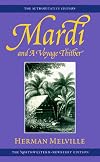
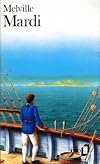
Presented as narratives of his own South Sea experiences, Melville's first two books had roused incredulity in many readers. Their disbelief, he declared, had been "the main inducement" in altering his plan for his third book, Mardi: and a Voyage Thither (1849). Melville wanted to exploit the "rich poetical material" of Polynesia and also to escape feeling "irked, cramped, & fettered" by a narrative of facts. "I began to feel . . . a longing to plume my pinions for a flight," he told his show more English publisher. This scholarly edition aims to present a text as close to the author's intention as surviving evidence permits. Based on collations of all editions publishing during Melville's lifetime, it incorporates author corrections and many emendations made by the present editors. This edition of Mardi is an Approved Text of the Center for Editions of American Authors (Modern Language Association of America). -- Amazon.com. show lessTags
Recommendations





















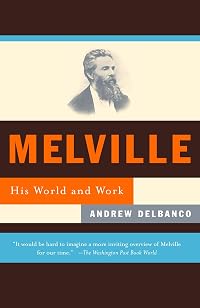
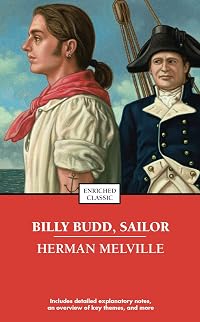






Member Recommendations
Member Reviews
I've read some strange books in my time but this could well be the strangest. I suspect that Melville started out writing one kind of book, shifted to another and then decided just to jump off at the deep end. An amalgamation of Swift, Bunyan, Rabelais, the Quest narrative for starters and a large dollop of fantasy - moose in the South Pacific? It's compelling in the fact that you don't know where Melville will take you next in this surreal journey. From Copernicus to free will to natural philosophy to the British Empire and slavery, in the company of travelers which include a philosopher Babbalanja (Plato?) whose oracle resembles Socrates, Mohi, a credulous historian (Herodotus?) and Yoomy the poet (Homer? Virgil?). The narrator show more himself, who is pursued by three avengers throughout the novel (the Furies?), drops out of most of the story until his Quest is achieved (somewhat) at the end. Weird, surreal but strangely enchanting. show less
In the authors own words
"...And so is Mardi itself: nothing but episodes; valleys and hills; rivers, digressing from plains; vines, roving all over; ...and here and there, fens and moors.
...Ay, plenty of dead-desert chapters there; horrible sands to wade through."
I've previously read Moby-Dick but i really don't remember it being written so archaically as this is. This felt so old fashioned in its writing almost shakespearean. It also has a lot of dry humour and witty back and forth repartee which reminded me of shakespeare too. But if you're not good at parsing Ye Olde talking or don't know your world history, greek myth or the other old timey references that tend to crop up in these kinds of books then you may have problems with this. show more Melville really likes his old timey references as well as his old timey language.
Oh and he also knows how to completely torture a metaphor. If you can't stand a sunrise being described in terms of clashing armies, then this isn't going to be your thing.
This starts off as a high seas adventure story albeit a very languid one. Languid is a word which constantly stalked me through the first volume. It feels like lying on a beach in the sun, slightly drunk, while someone (probably also drunk) tells you a story... a seemingly endless story. One which you'll probably drift in and out of.
Still i thought it was better than Moby-Dick for the first 3rd of volume one. All of the 'voyage thither' part basically.
It still goes off on numerous tangents like Moby-Dick, but in that book there was a clear goal, so every tangent was annoying as it was getting between you and the point of the book. However the goal in Mardi is a lot less clearly defined and therefore the meanderings less frustrating. Also there's no were near as much whale biolology :) .
Finally though we make it to Mardi and things slow down even more, i don't even know what the point was and i don't think the author did either. Up until the end of volume 1 it was a real slog and Melville didn't seem to know what to do next.
On to volume 2! Ah the author finally made a decision... and that decision was just to change genres completely.
Seriously, while there is a thin veneer connecting this to volume one its really a different type of book entirely. We're now in the realm of pure satire/allegory, and incredibly obvious allegory's at that, apart from a couple of obtuse moments where i couldn't figure out what the hell he was talking about..
We have 10-15 chapters taking shots at organized religon, then we're off for a trek round the entire world covering the irish rebellion, french revolution, opium wars, american civil war etc. With occasional stops at the evils of civil law, the nature of human consciousness, how awesome smoking is, beauty being in the eye of the beholder etc.
Also at least two chapters of apology and excuse, pointing out that its really hard writing a book which is where the above quote comes from. I like the honesty but if he'd just written something better he probably could have skipped those parts ;) .
And the ending... i didn't see that coming and i'm still not entirely sure what the point was but interesting at least.
Volume One: 2/5
Volume Two: 3/5 show less
"...And so is Mardi itself: nothing but episodes; valleys and hills; rivers, digressing from plains; vines, roving all over; ...and here and there, fens and moors.
...Ay, plenty of dead-desert chapters there; horrible sands to wade through."
I've previously read Moby-Dick but i really don't remember it being written so archaically as this is. This felt so old fashioned in its writing almost shakespearean. It also has a lot of dry humour and witty back and forth repartee which reminded me of shakespeare too. But if you're not good at parsing Ye Olde talking or don't know your world history, greek myth or the other old timey references that tend to crop up in these kinds of books then you may have problems with this. show more Melville really likes his old timey references as well as his old timey language.
Oh and he also knows how to completely torture a metaphor. If you can't stand a sunrise being described in terms of clashing armies, then this isn't going to be your thing.
This starts off as a high seas adventure story albeit a very languid one. Languid is a word which constantly stalked me through the first volume. It feels like lying on a beach in the sun, slightly drunk, while someone (probably also drunk) tells you a story... a seemingly endless story. One which you'll probably drift in and out of.
Still i thought it was better than Moby-Dick for the first 3rd of volume one. All of the 'voyage thither' part basically.
It still goes off on numerous tangents like Moby-Dick, but in that book there was a clear goal, so every tangent was annoying as it was getting between you and the point of the book. However the goal in Mardi is a lot less clearly defined and therefore the meanderings less frustrating. Also there's no were near as much whale biolology :) .
Finally though we make it to Mardi and things slow down even more, i don't even know what the point was and i don't think the author did either. Up until the end of volume 1 it was a real slog and Melville didn't seem to know what to do next.
On to volume 2! Ah the author finally made a decision... and that decision was just to change genres completely.
Seriously, while there is a thin veneer connecting this to volume one its really a different type of book entirely. We're now in the realm of pure satire/allegory, and incredibly obvious allegory's at that, apart from a couple of obtuse moments where i couldn't figure out what the hell he was talking about..
We have 10-15 chapters taking shots at organized religon, then we're off for a trek round the entire world covering the irish rebellion, french revolution, opium wars, american civil war etc. With occasional stops at the evils of civil law, the nature of human consciousness, how awesome smoking is, beauty being in the eye of the beholder etc.
Also at least two chapters of apology and excuse, pointing out that its really hard writing a book which is where the above quote comes from. I like the honesty but if he'd just written something better he probably could have skipped those parts ;) .
And the ending... i didn't see that coming and i'm still not entirely sure what the point was but interesting at least.
Volume One: 2/5
Volume Two: 3/5 show less
A tough but fascinating read for me. Hawthorne called Mardi a book "of depths that compel a man to swim for his life". A key fact: Mardi was published in 1849 which means that Joseph Smith, the Mormon prophet, could not have been influenced by it - he was, of course, assassinated in 1844. There can be no question that Melville knew The Book of Mormon - he mentions it by name in Pierre (XXI:iii). It is therefore reasonable to conclude that Melville must have read Mosiah and Alma in the Book of Mormon, for the "great prophet Alma" is repeatedly referred to by Babbalanja, who dominates the second volume of Mardi and who is ultimately, at the Isle of Serenia, converted to Alma's doctrines (which include the resurrection of the body and many show more other Christian ideas). In Mardi, Alma is the son of Oro, Father and God of all Mardians, while in the Book of Mormon (in Alma chapter 13) Alma (son of Alma) assures his hearers of his calling as a High Priest "after the order of the Son, the only begotten of the Father". The first volume of Mardi is more or less realistic fiction similar to Omoo in a Pacific setting. The second volume switches to something like a fusion of Swift and Bunyan and rambles a bit, but has both funny and profound sections well worth the effort of staying with this, Melville's first attempt at real fiction - with many premonitions of his later masterpiece Moby Dick. Considering its many passages pleading for a more just world, it would surprise me if Melville hadn't been additionally moved by King Benjamin's Temple address to the Nephites (Mosiah 2-5) as well. Notable also is the character Yoomy, a singer and poet who represents Melville's poetic voice - though some of the prose in Mardi is also exquisite poetry worthy of Whitman. show less
Kurzbeschreibung bei Amazon:
Im ersten Viertel des Romanes werden wir Zeugen einer seltsamen Rundreise um die vielen verstreuten Inseln eines Südseeatolls, lernen die Riten der Eingeborenen kennen und lauschen den wahnwitzigen und obskuren Gesprächen der Protagonisten. Doch vor dem Hintergrund dieses exotischen Reiseberichts aus der Südsee wird die eigentliche Idee Melvilles, eine allumfassenden Beschreibung des Menschen und seiner Welt, entwickelt.
5.0 von 5 Sternen Ein Buch, ohne das "Moby Dick"nicht möglich gewesen wäre., 29. Juni 2000
Von Ein Kunde
Rezension bezieht sich auf: Mardi und eine Reise dorthin (Taschenbuch)
Mardi ist im Gegensatz zu Melville's ersxten beiden Werken "Omoo" ond "Typee" bezüglich der Handlung rein fiktiv. show more Melville schildert die Erlebnisse eines Seefahrers, der ein Walfängerboot verlässt, um der dort zu erwartenden Eintönigkeit zu entkommen. Anfangs weist Mardi noch die typischen Merkmale eines Abenteuerromanes auf, doch das Werk wandelt sich immer mehr in ein tief philosophisches Werk, das eine Sinnsuchenden auf seiner Reise begleitet. Mardi ist in viele kleine Unterkapitel unterteilt und Melville widmet viele davon der Beschreibung der Flora und Fauna und er beweist dabei enzeklopedisches Wissen. Wie in seinem späteren Hauptwerk etabliert Melville einemn Ich-Erzähler als Hauptperson und Handlungsträger und legt dessen Gühls- und Gedankenwelt vor dem Leser offen. Alles in allem íst meiner Meinung nach "MArdi" eindeutig als das Vorwerk zu "Moby Dick" zu sehen. hen. show less
Im ersten Viertel des Romanes werden wir Zeugen einer seltsamen Rundreise um die vielen verstreuten Inseln eines Südseeatolls, lernen die Riten der Eingeborenen kennen und lauschen den wahnwitzigen und obskuren Gesprächen der Protagonisten. Doch vor dem Hintergrund dieses exotischen Reiseberichts aus der Südsee wird die eigentliche Idee Melvilles, eine allumfassenden Beschreibung des Menschen und seiner Welt, entwickelt.
5.0 von 5 Sternen Ein Buch, ohne das "Moby Dick"nicht möglich gewesen wäre., 29. Juni 2000
Von Ein Kunde
Rezension bezieht sich auf: Mardi und eine Reise dorthin (Taschenbuch)
Mardi ist im Gegensatz zu Melville's ersxten beiden Werken "Omoo" ond "Typee" bezüglich der Handlung rein fiktiv. show more Melville schildert die Erlebnisse eines Seefahrers, der ein Walfängerboot verlässt, um der dort zu erwartenden Eintönigkeit zu entkommen. Anfangs weist Mardi noch die typischen Merkmale eines Abenteuerromanes auf, doch das Werk wandelt sich immer mehr in ein tief philosophisches Werk, das eine Sinnsuchenden auf seiner Reise begleitet. Mardi ist in viele kleine Unterkapitel unterteilt und Melville widmet viele davon der Beschreibung der Flora und Fauna und er beweist dabei enzeklopedisches Wissen. Wie in seinem späteren Hauptwerk etabliert Melville einemn Ich-Erzähler als Hauptperson und Handlungsträger und legt dessen Gühls- und Gedankenwelt vor dem Leser offen. Alles in allem íst meiner Meinung nach "MArdi" eindeutig als das Vorwerk zu "Moby Dick" zu sehen. hen. show less
Apr 6, 2012 (Edited)German
> Herman Melville : Mardi, traduit par Rose Celli (Gallimard).
Se reporter au compte rendu de Jean-François ROLLIN
In: Revue Esprit Nouvelle série, No. 378 (2) (Février 1969), pp. 343-347… ; (en ligne),
URL : https://esprit.presse.fr/article/rollin-jean-francois/herman-melville-mardi-1879...
Se reporter au compte rendu de Jean-François ROLLIN
In: Revue Esprit Nouvelle série, No. 378 (2) (Février 1969), pp. 343-347… ; (en ligne),
URL : https://esprit.presse.fr/article/rollin-jean-francois/herman-melville-mardi-1879...
Jan 20, 2021French
Ratings
Members
- Recently Added By
Lists

1001 Books You Must Read Before You Die
1,448 works; 1,133 members

Fiction (Mostly) in Selective Bibliography of American Literature 1775-1900
431 works; 3 members

Evan's Wish List
86 works; 2 members
Author Information

658+ Works 78,473 Members
Herman Melville (August 1, 1819 - September 28, 1891) was born into a seemingly secure, prosperous world, a descendant of prominent Dutch and English families long established in New York State. That security vanished when first, the family business failed, and then, two years later, in young Melville's thirteenth year, his father died. Without show more enough money to gain the formal education that professions required, Melville was thrown on his own resources and in 1841 sailed off on a whaling ship bound for the South Seas. His experiences at sea during the next four years were to form in part the basis of his best fiction. Melville's first two books, Typee (1846) and Omoo (1847), were partly romance and partly autobiographical travel books set in the South Seas. Both were popular successes, particularly Typee, which included a stay among cannibals and a romance with a South Sea maiden. During the next several years, Melville published three more romances that drew upon his experiences at sea: Redburn (1849) and White-Jacket (1850), both fairly realistic accounts of the sailor's life and depicting the loss of innocence of central characters; and Mardi (1849), which, like the other two books, began as a romance of adventure but turned into an allegorical critique of contemporary American civilization. Moby Dick (1851) also began as an adventure story, based on Melville's experiences aboard the whaling ship. However, in the writing of it inspired in part by conversations with his friend and neighbor Hawthorne and partly by his own irrepressible imagination and reading of Shakespeare and other Renaissance dramatists Melville turned the book into something so strange that, when it appeared in print, many of his readers and critics were dumbfounded, even outraged. By the mid-1850s, Melville's literary reputation was all but destroyed, and he was obliged to live the rest of his life taking whatever jobs he could find and borrowing money from relatives, who fortunately were always in a position to help him. He continued to write, however, and published some marvelous short fiction pieces Benito Cereno" (1855) and "Bartleby, the Scrivener" (1853) are the best. He also published several volumes of poetry, the most important of which was Battle Pieces and Aspects of the War (1866), poems of occasionally great power that were written in response to the moral challenge of the Civil War. His posthumously published work, Billy Budd (1924), on which he worked up until the time of his death, became Melville's last significant literary work, a brilliant short novel that movingly describes a young sailor's imprisonment and death. Melville's reputation, however, rests most solidly on his great epic romance, Moby Dick. It is a difficult as well as a brilliant book, and many critics have offered interpretations of its complicated ambiguous symbolism. Darrel Abel briefly summed up Moby Dick as "the story of an attempt to search the unsearchable ways of God," although the book has historical, political, and moral implications as well. Melville died at his home in New York City early on the morning of September 28, 1891, at age 72. The doctor listed "cardiac dilation" on the death certificate. He was interred in the Woodlawn Cemetery in The Bronx, New York, along with his wife, Elizabeth Shaw Melville. (Bowker Author Biography) show less

Herman Melville has a Legacy Library. Legacy libraries are the personal libraries of famous readers, entered by LibraryThing members from the Legacy Libraries group.
Some Editions
Series

Belongs to Publisher Series
Work Relationships
Is contained in
Contains
Is abridged in
Common Knowledge
- Canonical title
- Mardi and a Voyage Thither
- Original title
- Mardi and a Voyage Thither
- Original publication date
- 1849
Classifications
Statistics
- Members
- 279
- Popularity
- 115,603
- Reviews
- 5
- Rating
- (4.07)
- Languages
- 6 — Danish, English, French, German, Hebrew, Italian
- Media
- Paper, Ebook
- ISBNs
- 46
- ASINs
- 14