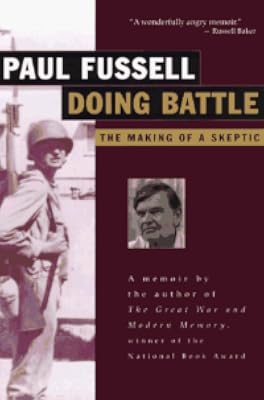
Doing Battle: The Making of a Skeptic
by Paul Fussell
On This Page
Description
Fussell writes about an idyllic boyhood shattered by World War II - and the way the war experience changed his perspective on everything that came before and after. His life began in Pasadena, California, a pastoral middle-class sanctuary almost untouched by the Great Depression. He went as an innocent to nearby Pomona College, where he learned about drink and women, and spent afternoons marching on the football field with the ROTC. And then, when the United States entered World War II, the show more spell was broken. At nineteen he joined the army and began the central event of his life. He endured basic training, became a second lieutenant in the infantry, and, leading his platoon into battle, was seriously wounded. When he recovered, he vowed never to take orders again. His newly subversive sensibility would color all his later years, as a Harvard Ph. D. student, as a professor of literature, and as one of America's most distinguished commentators on twentieth-century life. show lessTags
Recommendations





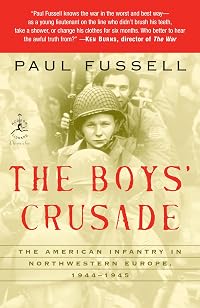





Member Recommendations
Member Reviews
--------------------------------------
Most people who have read Paul Fussell have read The Great War and Modern Memory and/or :Wartime: Understanding and Behavior in the Second World War. Both are superb analyses
of modern mass war.
And Paul Fussell is a combat veteran of World War II. He has "earned" his right as an historical analyst.
Doing Battle: The Making of a Skeptic is Fussell's own memoir/confession of his actual experience on the ground in the European Theater as an American Infantry Lieutenant. It is also scattered throughout with historical background of the Allied ground invasion after D-Day--the crawling horror that was the advance across western Europe towards Berlin.
Fussell says he felt that he owed to his readers his own show more story in the events of which he has written before.
His own story is honest. It is as tedious as warfare. It is horrific in some details. It is as despicable as is politics. It is as pathetic as a flawed human being can be. It is a confession as well as a memoir.
My already deep respect for Fussell found new fathoms through this profoundly honest retelling of this veteran's story.
Paul Fussell is a flawed human being whose excellent, internationally-acclaimed historical writings were informed by his own less-than-spectacular but tragic experience of the pandemic of warfare. And he helps us to understand this.
Paul Fussell is an American treasure. show less
Most people who have read Paul Fussell have read The Great War and Modern Memory and/or :Wartime: Understanding and Behavior in the Second World War. Both are superb analyses
of modern mass war.
And Paul Fussell is a combat veteran of World War II. He has "earned" his right as an historical analyst.
Doing Battle: The Making of a Skeptic is Fussell's own memoir/confession of his actual experience on the ground in the European Theater as an American Infantry Lieutenant. It is also scattered throughout with historical background of the Allied ground invasion after D-Day--the crawling horror that was the advance across western Europe towards Berlin.
Fussell says he felt that he owed to his readers his own show more story in the events of which he has written before.
His own story is honest. It is as tedious as warfare. It is horrific in some details. It is as despicable as is politics. It is as pathetic as a flawed human being can be. It is a confession as well as a memoir.
My already deep respect for Fussell found new fathoms through this profoundly honest retelling of this veteran's story.
Paul Fussell is a flawed human being whose excellent, internationally-acclaimed historical writings were informed by his own less-than-spectacular but tragic experience of the pandemic of warfare. And he helps us to understand this.
Paul Fussell is an American treasure. show less
Fussell's preparation for war was limited. ROTC was “a wonderland” of marching and snappy uniforms. Nothing was mentioned of “tree bursts and Graves Registration” or trench foot, nor that first-aid kits were adequate for bullet holes but hardly for a “foot blown off by a Schumine.” They soon realized that they were being trained as lieutenants to replace dead ones. In France, their first operation was to perform a night relief of another battalion. Hopelessly lost, they were ordered to lie down and sleep. At dawn they discovered they were lying in a field of dead Germans. A sobering sight. “My boyish illusions, largely intact to that moment of awakening, fell away at once, and suddenly I knew that I was not and would never show more be in a world that was reasonable or just.” It wasn’t just the sight of the dead. Many were mere children. Two, no older than 14, had been shot in the head, one with brains dripping from his nostrils. The realization sets in that he has been trained to commit like murders. Nor had training prepared him for other indignities: the gut-twisting cramps of instant diarrhea, ruining layers of clothing, and having no place to wash. Often half the platoon might disappear frantically into the woods.
He soon learned what a marine sergeant told Philip Caputo many years later during the Vietnam War: “Before you leave here, Sir, you’re going to learn that one of the most brutal things in the world is your average nineteen-year-old American boy.” The “Great Turkey Shoot” bore mute witness to that. The men in F Company came upon a trench holding two squads of German infantry wishing to surrender. The Americans gleefully shot all of them dead.
Fussell soon realized that most army documents were intricately prepared falsehoods, that cowards are maimed and injured with the same regularity as heroes, that heroes are often invented post-death to make the survivors feel good, that “the Good War,” when it ended, did not lead to riotous celebrations by the troops, rather a feeling of bitterness at the appalling destruction and death. As Kay Summersby (Eisenhower’s British mistress) said, “No one laughed., No one smiled. It was all over. We had won, but the victory was not anything like what I thought it would be. . . So many deaths. So much destruction. And everybody was very, very tired.”
Finally, a bitter Fussell, having been shunted around after the war to various camps doing all sorts of make-work, mind-numbing activities, came face-to-face with the terrible reality of the way we conduct war. He realized the truth behind military historian Russell Weigley’s comment: “The American army of World War II habitually filled the ranks of its combat infantry with its least promising recruits, the uneducated, the unskilled, the unenthusiastic.” Fussell speculated as to why no one seemed to care terribly that those remaining after the marines, air corps and navy got their pick, were expected to bear the brunt of sustained battle: “Perhaps the reason is that the bulk of those killed by bullets and shells were the ones normally killed in peacetime in mine disasters, industrial and construction accidents, lumbering, and fire and police work. . . . Wasn’t the ground war, for the United States, a form of eugenics, clearing the population of the dumbest, the least skilled, the least promising of all young American males? Killed in the tens of thousands, their disappearance from the pool of future fathers had the effect, welcome or not, of improving the breed. Their fate constituted an unintended but inescapable holocaust.” (Deborah Shapeley in her biography of Robert McNamara [b:Promise and Power: The Life and Times of Robert McNamara|677540|Promise and Power The Life and Times of Robert McNamara|Deborah Shapley|http://photo.goodreads.com/books/1227972721s/677540.jpg|663539] records his program to enlist thousands of men who formerly had not been able to pass the minimal entrance tests for the army. They were allowed to enter on his assumption the army would raise their skill levels. Most were killed in Vietnam.)
show less
He soon learned what a marine sergeant told Philip Caputo many years later during the Vietnam War: “Before you leave here, Sir, you’re going to learn that one of the most brutal things in the world is your average nineteen-year-old American boy.” The “Great Turkey Shoot” bore mute witness to that. The men in F Company came upon a trench holding two squads of German infantry wishing to surrender. The Americans gleefully shot all of them dead.
Fussell soon realized that most army documents were intricately prepared falsehoods, that cowards are maimed and injured with the same regularity as heroes, that heroes are often invented post-death to make the survivors feel good, that “the Good War,” when it ended, did not lead to riotous celebrations by the troops, rather a feeling of bitterness at the appalling destruction and death. As Kay Summersby (Eisenhower’s British mistress) said, “No one laughed., No one smiled. It was all over. We had won, but the victory was not anything like what I thought it would be. . . So many deaths. So much destruction. And everybody was very, very tired.”
Finally, a bitter Fussell, having been shunted around after the war to various camps doing all sorts of make-work, mind-numbing activities, came face-to-face with the terrible reality of the way we conduct war. He realized the truth behind military historian Russell Weigley’s comment: “The American army of World War II habitually filled the ranks of its combat infantry with its least promising recruits, the uneducated, the unskilled, the unenthusiastic.” Fussell speculated as to why no one seemed to care terribly that those remaining after the marines, air corps and navy got their pick, were expected to bear the brunt of sustained battle: “Perhaps the reason is that the bulk of those killed by bullets and shells were the ones normally killed in peacetime in mine disasters, industrial and construction accidents, lumbering, and fire and police work. . . . Wasn’t the ground war, for the United States, a form of eugenics, clearing the population of the dumbest, the least skilled, the least promising of all young American males? Killed in the tens of thousands, their disappearance from the pool of future fathers had the effect, welcome or not, of improving the breed. Their fate constituted an unintended but inescapable holocaust.” (Deborah Shapeley in her biography of Robert McNamara [b:Promise and Power: The Life and Times of Robert McNamara|677540|Promise and Power The Life and Times of Robert McNamara|Deborah Shapley|http://photo.goodreads.com/books/1227972721s/677540.jpg|663539] records his program to enlist thousands of men who formerly had not been able to pass the minimal entrance tests for the army. They were allowed to enter on his assumption the army would raise their skill levels. Most were killed in Vietnam.)
show less
Fussell describes his youth and early adulthood, including the experience of war.
Ratings
Members
- Recently Added By
Author Information

24+ Works 7,316 Members
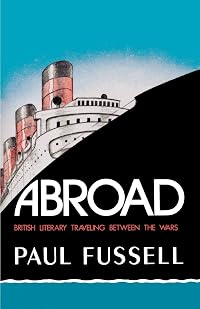
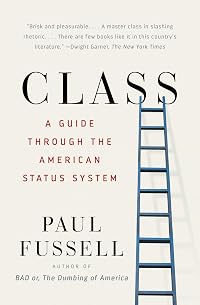
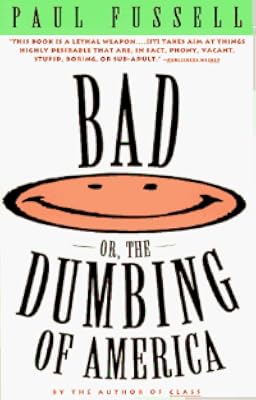
Paul Fussell Jr. was born in Pasadena, California on March 22, 1924. He was drafted into the Army in 1943 while attending Pomona College. During his tour of duty, he won the Bronze Star and two Purple Hearts. He returned to college in 1945. He received a bachelor of arts degree from Pomona College in 1947 and a master's degree and a doctorate in show more English from Harvard University. He taught English at Connecticut College for Women, Rutgers University, and the University of Pennsylvania. During this time he wrote several books on literary topics including The Rhetorical World of Augustan Humanism: Ethics and Imagery from Swift to Burke, Poetic Meter and Poetic Form, and Samuel Johnson and the Life of Writing. In 1975, he published The Great War and Modern Memory, which was a study of World War I and how its horrors fostered a disillusioned modernist sensibility. This book won both the National Book Critics Circle Award for Criticism and the National Book Award for Arts and Letters. His other works include Abroad: British Literary Traveling Between the Wars, Class: A Guide Through the American Status System, Wartime: Understanding and Behavior in the Second World War, BAD: Or, the Dumbing of America, and Doing Battle: The Making of a Skeptic. He died of natural causes on May 23, 2012 at the age of 88. (Bowker Author Biography) show less
Work Relationships
Is abridged in
Common Knowledge
- Dedication
- To the memory of three teachers at Pomona College who encouraged me, Joseph Warner Angell, Charles Shiveley Holmes, Frederick Ludwig Mulhauser
- First words
- Alsace, the Germanized eastern province of France with borders on German and Switzerland, has a few large cities like Strasbourg, Nancy, and Colmar, but for the most part it is a land of farms and small towns, a poor place wh... (show all)ere in 1944 and 1945 the inhabitants (most of dubious loyalty to the Allied cause) eked out a hard living in picturesque but primitative houses and barns, set in the midst of steaming manure piles.
- Last words
- (Click to show. Warning: May contain spoilers.)Had she been angry for a long time, too?
- Blurbers
- Baker, Russell; Heller, Joseph; Wolff, Tobias; Gilbert, Martin; Ambrose, Stephen E.
Classifications
- Genres
- Biography & Memoir, Literature Studies and Criticism
- DDC/MDS
- 820.9 — Literature & rhetoric English & Old English literatures English and Old English (Anglo-Saxon) literatures History, description, critical appraisal of works in more than one form
- LCC
- PE64 .F85 .A3 — Language and Literature English language English
- BISAC
Statistics
- Members
- 271
- Popularity
- 119,052
- Reviews
- 4
- Rating
- (4.04)
- Languages
- English
- Media
- Paper
- ISBNs
- 2
- ASINs
- 2