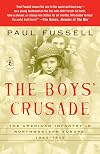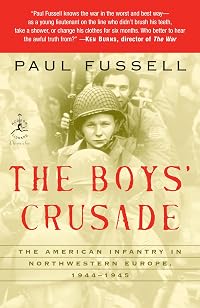
The Boys' Crusade: The American Infantry in Northwestern Europe, 1944–1945
by Paul Fussell
On This Page
Description
Looks at World War II in Europe, from D-Day to the fall of Berlin, from the perspective of the American infantry soldiers who fought, capturing the horrors and hardships of battle while dealing with issues of leadership, strategy, and tactics.Tags
Recommendations




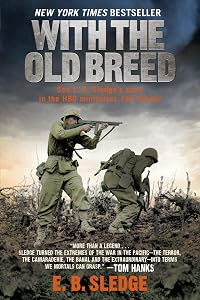

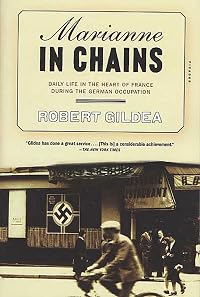
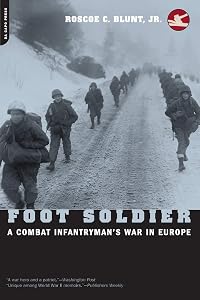
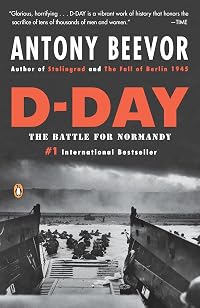
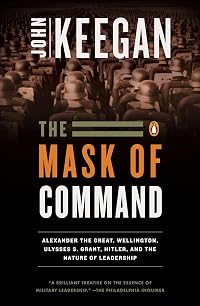

Member Recommendations
Member Reviews
It's hard to know what to make of this book. It's certainly no Class or The Great War and Modern Memory. It's patchy and unfocused, a series of short chapters working to up-end easy notions of the "Good War." American soldiers were untrained boys, war was gristly and stupid, soldiers hated (and had good reasons to hate) the British, the French, their commanders but not--until the very end--the enemy. There was more command stupidity, self-inflicted wounds, diarrhea, and horrifying carnage than you'd ever know from The Greatest Generation.
Another nod to depictions of the war is telling:
"The heartrending events of Omaha Beach need no further description here... Speaking of which, Id like to recommend the retention of and familiarity with show more the first few minutes of Steven Spielberg's Saving Private Ryan depicting the landing horrors. ... The rest of the Spielberg film I'd consign to the purgatory where boys' bad adventure films end up."
Like all wars, World War Two had no point. Until it did. And so Fussell ends with a chapter on the American discovery of Nazi camps, like Dachau and Buchenwald, and how the realization of the--to most, unexpected--Nazi brutality changed everyone's perceptions of the war. Not surprisingly, the last chapter feels like it belongs in a different book.
There is something healthy and important about Fussell's main point. World War Two was a meat-grinder, not a boy's adventure film. But it was a very necessary and--all the evil not forgotten--a "good" one. show less
Another nod to depictions of the war is telling:
"The heartrending events of Omaha Beach need no further description here... Speaking of which, Id like to recommend the retention of and familiarity with show more the first few minutes of Steven Spielberg's Saving Private Ryan depicting the landing horrors. ... The rest of the Spielberg film I'd consign to the purgatory where boys' bad adventure films end up."
Like all wars, World War Two had no point. Until it did. And so Fussell ends with a chapter on the American discovery of Nazi camps, like Dachau and Buchenwald, and how the realization of the--to most, unexpected--Nazi brutality changed everyone's perceptions of the war. Not surprisingly, the last chapter feels like it belongs in a different book.
There is something healthy and important about Fussell's main point. World War Two was a meat-grinder, not a boy's adventure film. But it was a very necessary and--all the evil not forgotten--a "good" one. show less
Paul Fussell’s book is an unusual contribution to the Modern Library Chronicles series. Whereas most volumes provide short introductions to their respective subjects, as other reviewers have noted, this is not a straightforward military history of the war with Germany. Instead, Fussell offers a much more idiosyncratic work, a social and cultural history of the American riflemen who fought in northwestern Europe after Normandy.
This is not to say that this book isn’t worth reading – quite the contrary. Throughout this book, Fussell dispels much of the “greatest generation” mythology cultivated in recent years by writers such as Stephen Ambrose. A veteran of the war, Fussell provides a much more complicated portrait of show more inexperienced young boys thrown into the chaos and violence of combat. In a series of short chapters, he covers topics ranging from the interactions with the French to the treatment of the wounded and the dead to the discovery of the work camps – all of which he addresses with the same blunt and insightful analysis that is a hallmark of his work. Anyone seeking to get a more accurate portrait of what the “good war” was really like for the men who fought in it would do well to start here. show less
This is not to say that this book isn’t worth reading – quite the contrary. Throughout this book, Fussell dispels much of the “greatest generation” mythology cultivated in recent years by writers such as Stephen Ambrose. A veteran of the war, Fussell provides a much more complicated portrait of show more inexperienced young boys thrown into the chaos and violence of combat. In a series of short chapters, he covers topics ranging from the interactions with the French to the treatment of the wounded and the dead to the discovery of the work camps – all of which he addresses with the same blunt and insightful analysis that is a hallmark of his work. Anyone seeking to get a more accurate portrait of what the “good war” was really like for the men who fought in it would do well to start here. show less
Fussell states that he is concerned about a return to "military romanticism” about WWII and seeks to clarify the realities of fighting in that war. There was, first and foremost, the matter of the constant traumatic threat and reality of a horrible death. As a result, there was a large and underreported rate of desertion among the American soldiers. Fussell writes about “the impulse to run” and how difficult it was to keep soldiers motivated not to desert or to inflict injuries upon themselves so they would be removed from the action. The army did not learn until late in the war that small until cohesiveness and the threat of shame was the only effective motivator to prevent cowardice.
In addition, the army became a less effective show more or competent institution as the war progressed because the best soldiers got killed.
And in direct contradiction to the romantic images of movies and books, there were numerous gaps between battle plans and battle actualities. For example, in July 1944, a U.S. aerial bombardment intending to help U.S. forces get out of Normandy inadvertently attacked their own soldiers after smoke obscured the area on the ground. Some five hundred U.S. soldiers were injured and more than one hundred killed as a result.
Fussell focuses on the 17-, 18-, and 19-year-olds who were the backbone of the infantry, telling us how they shared a belief in the greatness of America, and how they shared some hatreds too - against officers, against the French, against those who got exempted from service, and against anyone occupying a position in combat to the rear of the infantrymen.
This is just a short book with a narrow focus, but the narrative is gripping and it serves as a welcome corrective about the realities of fighting in the WWII European Theater of Operations.
(JAB) show less
In addition, the army became a less effective show more or competent institution as the war progressed because the best soldiers got killed.
And in direct contradiction to the romantic images of movies and books, there were numerous gaps between battle plans and battle actualities. For example, in July 1944, a U.S. aerial bombardment intending to help U.S. forces get out of Normandy inadvertently attacked their own soldiers after smoke obscured the area on the ground. Some five hundred U.S. soldiers were injured and more than one hundred killed as a result.
Fussell focuses on the 17-, 18-, and 19-year-olds who were the backbone of the infantry, telling us how they shared a belief in the greatness of America, and how they shared some hatreds too - against officers, against the French, against those who got exempted from service, and against anyone occupying a position in combat to the rear of the infantrymen.
This is just a short book with a narrow focus, but the narrative is gripping and it serves as a welcome corrective about the realities of fighting in the WWII European Theater of Operations.
(JAB) show less
This was a quick and easy read about WWII in the ETO with focus on young infantry recruits. What made it special was occasional examples of eloquence.
Two quotes I particularly like:
[Hitler] radioed Kluge: "I command the attack be prosecuted daringly and recklessly to the sea — regardless of risk... Greatest daring, determination, imagination must give wings to all echelons of command. Each and every man must believe in victory." (Phrases like "1 command," "give wings to," and "must believe" are pure Hitler, power nuttiness wedded to Viennese sentimentality.)
There were actually plenty of intelligence reports of strengthened German activity behind their line: heavy tank noise was heard and noted; spotter planes saw and brought back show more news of odd armored- vehicle concentrations hiding in forests. So the problem was not really paucity of evidence and data. It was, as so often, complacency and the lust for intellectual comfort overriding the meaning of evidence. The Americans' Ardennes intelligence failure takes its place in a long line of similar, apparently inexplicable modern events, like the failure of radar to convey that immense groups of Japanese planes were approaching Pearl Harbor. show less
Two quotes I particularly like:
[Hitler] radioed Kluge: "I command the attack be prosecuted daringly and recklessly to the sea — regardless of risk... Greatest daring, determination, imagination must give wings to all echelons of command. Each and every man must believe in victory." (Phrases like "1 command," "give wings to," and "must believe" are pure Hitler, power nuttiness wedded to Viennese sentimentality.)
There were actually plenty of intelligence reports of strengthened German activity behind their line: heavy tank noise was heard and noted; spotter planes saw and brought back show more news of odd armored- vehicle concentrations hiding in forests. So the problem was not really paucity of evidence and data. It was, as so often, complacency and the lust for intellectual comfort overriding the meaning of evidence. The Americans' Ardennes intelligence failure takes its place in a long line of similar, apparently inexplicable modern events, like the failure of radar to convey that immense groups of Japanese planes were approaching Pearl Harbor. show less
Paul Fussell served in the US Army infantry in Europe during World War Two. It was the defining event of his life. His war-related writings unrelentingly attempt to de-romanticize warfare in general and infantry service in particular by bluntly portraying the horrors of modern battle.
The Boys' Crusade is a thin volume of short chapters covering familiar ground. There's not much new here. The discussion of the COBRA affair highlights the book's small strengths and major weakness. COBRA was a plan by General Omar Bradley to use fighter-bombers and strategic bombers to blast a gap in the German defenses near St. Lo. Although the US infantry pulled back some 800 yards in advance of the bombing many were still killed when 'friendly fire' show more strayed off target. The chapter provides a tragic, but useful illustration of the FUBAR principle. On the other hand, the entire COBRA chapter is only eight short pages, far too short to develop the full story. Indeed, the chapters are too short to develop the repellent awfulness of infantry life and death.
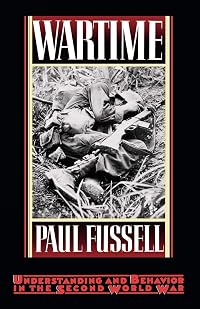
Any reader familiar with Paul Fussell's work is likely to be disappointed and anyone not familiar with it is likely to be misled by The Boys Crusade. Anyone wanting to read a far superior book that also takes aim at de-romanticizing the infantry soldier's war need look no farther than Fussell's own Wartime: Understanding and Behavior in the Second World War. Or try E.B. Sledge's the With the Old Breed: At Peleliu and Okinawa. World War One spawned its own memoirs on the horrors of war such as Ernst Junger's Storm of Steel (Penguin Modern Classics) and Robert Graves' Good-Bye to All That. The best I can really say about The Boys Crusade is that it may open the eyes of the uninitiated and it will not long detain you because of its brevity. show less
The Boys' Crusade is a thin volume of short chapters covering familiar ground. There's not much new here. The discussion of the COBRA affair highlights the book's small strengths and major weakness. COBRA was a plan by General Omar Bradley to use fighter-bombers and strategic bombers to blast a gap in the German defenses near St. Lo. Although the US infantry pulled back some 800 yards in advance of the bombing many were still killed when 'friendly fire' show more strayed off target. The chapter provides a tragic, but useful illustration of the FUBAR principle. On the other hand, the entire COBRA chapter is only eight short pages, far too short to develop the full story. Indeed, the chapters are too short to develop the repellent awfulness of infantry life and death.
Any reader familiar with Paul Fussell's work is likely to be disappointed and anyone not familiar with it is likely to be misled by The Boys Crusade. Anyone wanting to read a far superior book that also takes aim at de-romanticizing the infantry soldier's war need look no farther than Fussell's own Wartime: Understanding and Behavior in the Second World War. Or try E.B. Sledge's the With the Old Breed: At Peleliu and Okinawa. World War One spawned its own memoirs on the horrors of war such as Ernst Junger's Storm of Steel (Penguin Modern Classics) and Robert Graves' Good-Bye to All That. The best I can really say about The Boys Crusade is that it may open the eyes of the uninitiated and it will not long detain you because of its brevity. show less
A short, brutal history of the Good War in the European Theater of Operations. Fussell is not as succinct as General Sherman in making the same point, but he does document the assertion that war is hell with statistics, first-hand accounts, and his own eperiences.
The preface made it sound remarkable; the body didn't live up to the promise. It was, I suppose, too abbreviated, in every respect. Granted he wanted it to be analytical rather than sentimental, but I think the subject might require rather more sentimentality than he seemed inclined to acknowledge. It left me with an empty, unsatisfied feeling.
Members
- Recently Added By
Published Reviews
ThingScore 100
Paul Fussell's short powerful book of linked essays about ground fighting in the European theater of World War II should be mandatory reading for future military leaders at West Point. The unbearable fear, systemic screw-ups and mangled corpses that are the daily ration of any infantry combat soldier are so vividly and personally drawn that it might give pause to any glory-lovers among the show more cadets who dream of conquest without blood...
Fussell still suffers lingering survivor guilt laced with an ordinary rifleman's rage -- not at the Germans but first and foremost at his officers; the U.S. government propagandists; the furiously unwelcoming French who resented being slaughtered by deliberately imprecise Allied bombing raids, and any form of patriotic coercion. In "The Boys' Crusade" he has given us the most eloquent meditation on war I have read since the World War I poets Siegfried Sassoon, Robert Graves and Edmund Blunden. show less
Fussell still suffers lingering survivor guilt laced with an ordinary rifleman's rage -- not at the Germans but first and foremost at his officers; the U.S. government propagandists; the furiously unwelcoming French who resented being slaughtered by deliberately imprecise Allied bombing raids, and any form of patriotic coercion. In "The Boys' Crusade" he has given us the most eloquent meditation on war I have read since the World War I poets Siegfried Sassoon, Robert Graves and Edmund Blunden. show less
added by SnootyBaronet
Author Information

24+ Works 7,291 Members
Paul Fussell Jr. was born in Pasadena, California on March 22, 1924. He was drafted into the Army in 1943 while attending Pomona College. During his tour of duty, he won the Bronze Star and two Purple Hearts. He returned to college in 1945. He received a bachelor of arts degree from Pomona College in 1947 and a master's degree and a doctorate in show more English from Harvard University. He taught English at Connecticut College for Women, Rutgers University, and the University of Pennsylvania. During this time he wrote several books on literary topics including The Rhetorical World of Augustan Humanism: Ethics and Imagery from Swift to Burke, Poetic Meter and Poetic Form, and Samuel Johnson and the Life of Writing. In 1975, he published The Great War and Modern Memory, which was a study of World War I and how its horrors fostered a disillusioned modernist sensibility. This book won both the National Book Critics Circle Award for Criticism and the National Book Award for Arts and Letters. His other works include Abroad: British Literary Traveling Between the Wars, Class: A Guide Through the American Status System, Wartime: Understanding and Behavior in the Second World War, BAD: Or, the Dumbing of America, and Doing Battle: The Making of a Skeptic. He died of natural causes on May 23, 2012 at the age of 88. (Bowker Author Biography) show less
Awards and Honors
Awards
Series
Belongs to Publisher Series
Common Knowledge
- Canonical title
- The Boys' Crusade: The American Infantry in Northwestern Europe, 1944–1945
- Original title
- The boys' crusade : American GIs in Europe ; chaos and fear in World War Two
- Original publication date
- 2003
- Important events
- World War II (1939 | 1945)
- Dedication
- To those on both sides who suffered
- First words
- Preface: Those intimate with the military and its ways have experienced the army's obsession with the Western European campaign of World War II.
When Ike Eisenhower was a boy, European history was more avidly pursued in schools than now, and it's also possible that he knew a bit about the Crusades from his own reading, if he hadn't heard about them in church - his fam... (show all)ily was pious - or at elementary or high school or even at West Point. - Last words
- (Click to show. Warning: May contain spoilers.)The years proved it unnecessary, but at the time it made a kind of sense available only to a boy who had enacted the role of a murderous Crusader and by some miracle survived.
Classifications
Statistics
- Members
- 335
- Popularity
- 94,390
- Reviews
- 10
- Rating
- (3.74)
- Languages
- English
- Media
- Paper, Audiobook, Ebook
- ISBNs
- 10
- ASINs
- 3