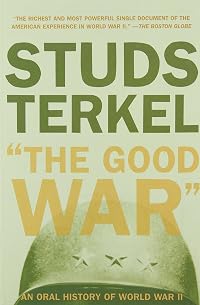
The Good War: An Oral History of World War II
by Studs Terkel
On This Page
Description
The Good War for which Terkel won the Pulitzer Prize, is a testament not only to the experience of war but to the extraordinary skill of Terkel as interviewer. As always, Terkel's subjects are open and unrelenting in their analyses of themselves and their experiences, producing what People magazine has called "a splendid epic history of World War II." With this volume Terkel expanded his scope to the global and the historical and the result is a masterpiece of oral history.Tags
Recommendations






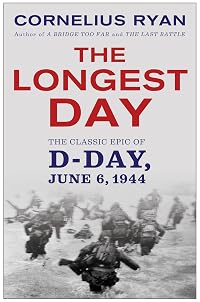
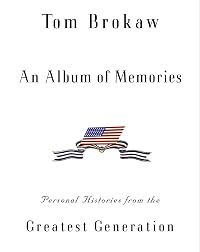


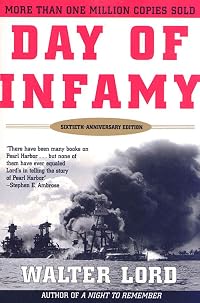

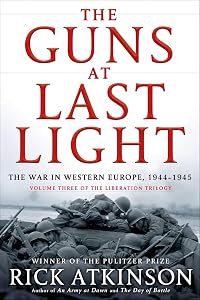





Member Recommendations

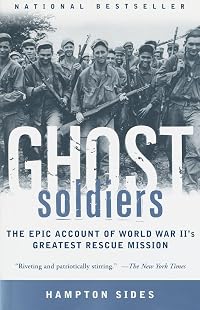
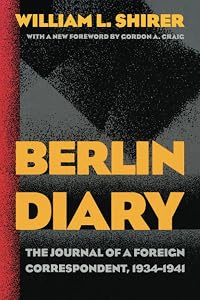
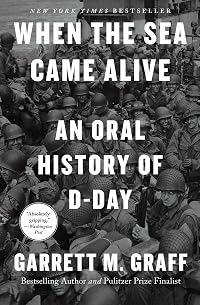
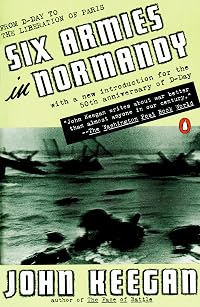
charlie68 Same sort of vibe with different points of view of World War II. No one point of view dominant.
Member Reviews
"The Good War" is a collection of over a hundred interviews with veterans and civilians about their experiences during to WWII, conducted some forty years after the fact. What stands out the most for me is the realness of every voice – this genuinely reads like a pure, unfiltered transcription of each person’s own words. It’s not just a compilation of war stories, although there are plenty of them here, it’s also about how people’s outlooks shifted and their lives were dramatically changed. For some it was the best thing that could have happened to them, and for others it was the worst. The significance of the quotation marks around the title was lost on me before I read this but now they are the most defining thing about the show more book. show less
The best way to read "The Good War" is to sit down with a cup of coffee and envision a WWII vet sitting across from you. He has a faraway look in his eyes and a slight tremor in his hands as he remembers best a single event that most likely changed his life forever. But, don't stop there. Now sitting across from you could be a businessman, a nurse, a dress maker, a dancer, a man who was just a child during the war and thought the battlefield was place of adventure. you might imagine someone who survived a prison camp, or a conscientious objector, or a young boy who thought enlisting would be a chance to prove himself...Terkel interviewed people from all walks of life. Each story is unique and yet, yet hauntingly similar. You hear of show more young men losing their sense of humanity in the face of unimaginable cruelty: a man remembers watching his comrade in arms throw pebbles into the open skull of a dead Japanese soldier; the smell of cooking cats. Other young men speak of hiding their sexual orientation while trying to appear manly enough for battle (Ted Allenby's story reminded me of Ryan O'Callaghan a great deal). But, you also hear from the women: wives and girlfriends left behind, Red Cross nurses on the front lines, even singers sent to entertain the troops. It is easy to see why this stunning nonfiction won a Pulitzer. show less
I think what impressed me most about this book is the way that Terkel was able to preserve the integrity of each person's voice; each interview is truly a unique perspective on the war (even though many of the interviews are built around the same events). Furthermore, the grouping of the interviews, while broadly thematic, is just random enough to preserve the feel of an actual conversation. For me, both of these aspects are huge wins and make this book a unique achievement.
Given the diversity, there are two themes that constantly appear:
1) Fear of a nuclear holocaust (especially in the later sections)
2) Strong anti-war sentiment
Obviously, this may (probably does) reflect Terkel's own feelings but it DOES give the reader a chance to show more pause and consider some very deep questions about American history & culture: Why was there a huge shift in our attitude toward/enthusiasm for war between World War II and Vietnam (btw, the Korean Conflict was BARELY mentioned anywhere)? Did nuclear proliferation play a key role in that changing attitude as "blowing ourselves off the map" became a real possibility? Why does war look so glorious to those who've never participated in one...and so ambiguous to those who were in the thick of it? (One of the most astounding things to me were the soldiers' affirmations that World War II was a "good war" while simultaneously bemoaning their own inhuman acts and attitudes toward the enemy, especially the Japanese. It seemed to me a very odd contradiction; something that you would think would quickly fracture the psyche in unhealthy ways. But these soldiers had lived for DECADES with these thoughts.
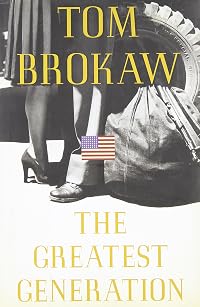
I think this book is too disjointed to be an "introduction" to World War II era, but I think anyone who wants to understand the era must read this book alongside Tom Brokaw's much more hagiographic "The Greatest Generation." Together, I think they provide a very good portrait of the American experience of World War II at all social levels.
A truly tremendous work that leaves me eager to read more of Terkel's oral histories... show less
Given the diversity, there are two themes that constantly appear:
1) Fear of a nuclear holocaust (especially in the later sections)
2) Strong anti-war sentiment
Obviously, this may (probably does) reflect Terkel's own feelings but it DOES give the reader a chance to show more pause and consider some very deep questions about American history & culture: Why was there a huge shift in our attitude toward/enthusiasm for war between World War II and Vietnam (btw, the Korean Conflict was BARELY mentioned anywhere)? Did nuclear proliferation play a key role in that changing attitude as "blowing ourselves off the map" became a real possibility? Why does war look so glorious to those who've never participated in one...and so ambiguous to those who were in the thick of it? (One of the most astounding things to me were the soldiers' affirmations that World War II was a "good war" while simultaneously bemoaning their own inhuman acts and attitudes toward the enemy, especially the Japanese. It seemed to me a very odd contradiction; something that you would think would quickly fracture the psyche in unhealthy ways. But these soldiers had lived for DECADES with these thoughts.
I think this book is too disjointed to be an "introduction" to World War II era, but I think anyone who wants to understand the era must read this book alongside Tom Brokaw's much more hagiographic "The Greatest Generation." Together, I think they provide a very good portrait of the American experience of World War II at all social levels.
A truly tremendous work that leaves me eager to read more of Terkel's oral histories... show less
In “The Good War”, Chicago journalist Studs Terkel presents hundreds of oral histories he conducted with a variety of men and women on their experiences during World War II, be it citizens on the home front or soldiers involved in the fighting. Conducted forty years after the fact, the interviews provide a fascinating firsthand account grouped thematically. Wide ranging in scope, the interviewees include Caucasians, African Americans, Latinos, Asian Americans, and a sprinkling of Japanese and Germans as well. What makes the book so special is his focus on average citizens, rather than politicians or high ranking officers. In doing so, the reader is presented with stories and experiences rarely discussed in general history texts show more about the conflict.
While World War II has often been called “the good war,” for many of these people that certainly was not the case. They recount injuries, deaths, and the horrors experienced on the battlefield. In reflection, they also discuss the ethical issues of warfare and reactions to mass bombings of civilians in Germany and Japan, as well as the use of the atomic bombs on Hiroshima and Nagasaki. That is contrasted with experiences on the home front where women began to work in large numbers outside the home in well paying jobs. For the people who remained in the country, while there was rationing to deal with, life did indeed get better during the war. For the Asian Americans who were interned in camps, however, a much darker picture emerges.
Published in 1984, “The Good War” won the 1985 Prize for General Nonfiction. Now in 2025, all of those interviewed in this oral history are long dead. But thanks to this time capsule, their experiences and thoughts on the conflict are preserved to inform and enlighten current generations on the cost and trauma of warfare. This book ranks as a must read for anyone wanting to get a fuller picture of World War II. show less
While World War II has often been called “the good war,” for many of these people that certainly was not the case. They recount injuries, deaths, and the horrors experienced on the battlefield. In reflection, they also discuss the ethical issues of warfare and reactions to mass bombings of civilians in Germany and Japan, as well as the use of the atomic bombs on Hiroshima and Nagasaki. That is contrasted with experiences on the home front where women began to work in large numbers outside the home in well paying jobs. For the people who remained in the country, while there was rationing to deal with, life did indeed get better during the war. For the Asian Americans who were interned in camps, however, a much darker picture emerges.
Published in 1984, “The Good War” won the 1985 Prize for General Nonfiction. Now in 2025, all of those interviewed in this oral history are long dead. But thanks to this time capsule, their experiences and thoughts on the conflict are preserved to inform and enlighten current generations on the cost and trauma of warfare. This book ranks as a must read for anyone wanting to get a fuller picture of World War II. show less
Oral histories can be very flawed histories in that it is difficult for those living through an event to see it objectively; yet, they also provide those who did not live through an event to see it through the eyes of those who did and to see how it has changed their perceptions of the world around them. In "The Good War," Stud's Terkel does an excellent job of this by interviewing a variety of people from different ages, backgrounds, and nationalities to show us how the war affected them. The book brings the war to life for those of us who did not live it and allows us to question whether any war can ever truly be a "good war."
Terkel's methodology of presenting this to us enhances the reader's understanding of the stark reality of the show more horrors of war, the camaraderie of the soldiers, the pros and cons of dropping the atomic bomb, and the way that the war affected the people of the post-war generation. He does this through the topical sequence of the individual histories and through rarely interjecting his own thoughts but instead allowing those who lived it to tell their own stories without the interference of a biased editor.
In order to fully appreciate this book, the modern reader should already have some knowledge of world war history and some knowledge of the conflicting viewpoints of Americans about the Cold War and the war in Vietnam. However, anyone with a working knowledge about these topics should find this book very enlightening, and it will definitely enhance their appreciation of what these men and women went through. As far as oral histories go, "The Good War" is one of the best I have read. show less
Terkel's methodology of presenting this to us enhances the reader's understanding of the stark reality of the show more horrors of war, the camaraderie of the soldiers, the pros and cons of dropping the atomic bomb, and the way that the war affected the people of the post-war generation. He does this through the topical sequence of the individual histories and through rarely interjecting his own thoughts but instead allowing those who lived it to tell their own stories without the interference of a biased editor.
In order to fully appreciate this book, the modern reader should already have some knowledge of world war history and some knowledge of the conflicting viewpoints of Americans about the Cold War and the war in Vietnam. However, anyone with a working knowledge about these topics should find this book very enlightening, and it will definitely enhance their appreciation of what these men and women went through. As far as oral histories go, "The Good War" is one of the best I have read. show less
Want to know how we fought Nazis since things are starting to look a little Nazi-like? Fearing a totalitarian regime and fascism? Want to know how Americans of all walks of life came together and what came out of that? This book is filled with their personal stories. Studs Terkel is the man, he won the Pulitzer for this, and you should read it at least once in your life.
Just as good as hoped. Covers the gamut from combat vets to wives to the home front, and among all combatants - including a few stories from Germany and Japan.
Written in his usual style, that feels like you are overhearing a conversation at an airport bar.
Written in his usual style, that feels like you are overhearing a conversation at an airport bar.
Members
- Recently Added By
Lists

Books About World War II
102 works; 29 members

Books about World War II
241 works; 22 members

Used books to buy next
565 works; 1 member

r/History Recommended Reading List
603 works; 12 members

THE WAR ROOM
813 works; 24 members
Author Information

32+ Works 10,581 Members
Studs Terkel was an actor, writer, and radio host. He was born Louis Terkel on May 16, 1912 in New York City. He took his name from the James T. Farrell novel, Studs Lonigan. Terkel attended the University of Chicago and graduated with a law degree in 1934. Terkel acted in local stage productions and on radio dramas until he began one of the first show more television programs, an unscripted show called Studs Place in the early 1950s. In 1952, Terkel began Studs Terkel's Almanac on radio station WFMT in Chicago. Terkel compiled a series of books based on oral histories that defined America in the 20th Century. Working: People Talk About What They Do All Day and How They Feel About What They Do received a National Book Award nomination in 1975. The Good War: An Oral History of World War II won the Pulitzer Prize in nonfiction in 1985. Working was turned into a hit musical in 1978. Terkel was named the Communicator of the Year by the University of Chicago in 1969. He also won a Peabody Award for excellence in journalism in 1980 and the National Book Foundation Medal for contributions to American letters in 1997. He died on October 31, 2008 at the age of 96. (Bowker Author Biography) show less
Awards and Honors
Awards
Distinctions
Notable Lists
Work Relationships
Is abridged in
Common Knowledge
- Canonical title
- The Good War: An Oral History of World War II
- Original publication date
- 1984
- Important places
- Japan
- Important events
- World War II (1939 | 1945)
- Epigraph
- In memory, we find the most complete release from the narrowness of presented time and place. ... The picture is one of human beings confronted by a world in which they can be masters only as they ... discover ways of escape ... (show all)from the complete sway of immediate circumstances. -- F.C. Bartlett, Remembering
What did you learn in school today, dear little boy of mine?
What did you learn in school today, dear little boy of mine?
I learned that war is not so bad
I learned about the great ones we have had
We fought in Ge... (show all)rmany and in France
And I am someday to get my chance
That's what I learned in school today
That's what I learned in school.
-- A song by Tom Paxton - Dedication
- For James Cameron, master of his trade
- First words
- "I was in combat for six weeks, forty-two days."
- Last words
- (Click to show. Warning: May contain spoilers.)It wasn't...
- Blurbers
- Shirer, William L.; Boyle, Kay; Corwin, Norman; Rosenblatt, Roger; Galbraith, John Kenneth
Classifications
Statistics
- Members
- 1,908
- Popularity
- 11,209
- Reviews
- 22
- Rating
- (4.19)
- Languages
- 9 — Bulgarian, Danish, Dutch, English, French, German, Russian, Spanish, Swedish
- Media
- Paper, Audiobook, Ebook
- ISBNs
- 27
- ASINs
- 11