
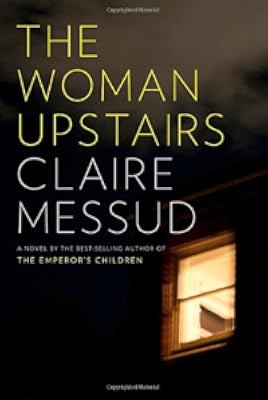
The Woman Upstairs
by Claire Messud
On This Page
Description
Relegated to the status of schoolteacher and friendly neighbor after abandoning her dreams of becoming an artist, Nora advocates on behalf of a charismatic Lebanese student and is drawn into the child's family until his artist mother's careless ambition leads to a shattering betrayal.Tags
Recommendations























Member Recommendations


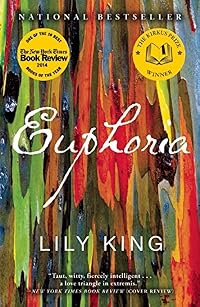
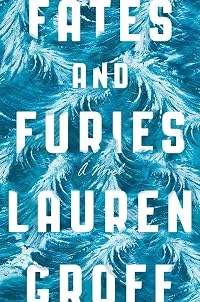
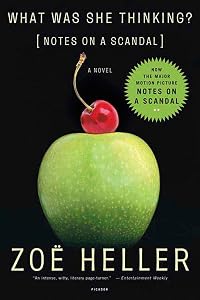
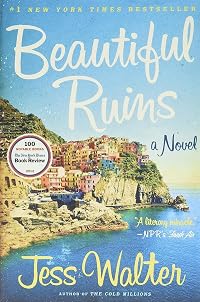
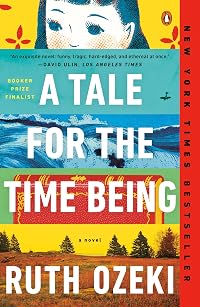
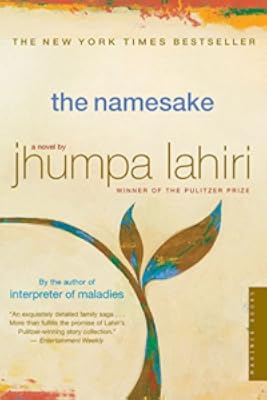
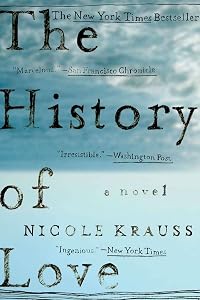
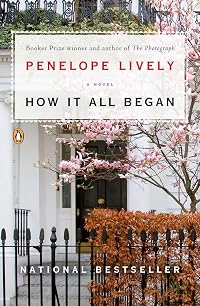
jayne_charles Not many parallels between these two books plot-wise, but they had a strikingly similar tone and while reading one I was constantly reminded of the other.
01
Member Reviews
I want to love all of Claire Messud's books because she is living the dream of A-List literary writer married to A-List literary critic...the closest thing to a celebrity literary couple we've got. Also, I love hearing her speak. But this book seems to be written by the rule of "why use one word, when you can use four?"...which is a kind of writing that gets you called a "prose stylist," but really, talk about sound and fury signifying nothing. Once you notice that the pretty words are just repeating the same thing that other pretty words already said a little earlier in the sentence, the book becomes an exercise in stuttering dullness.
Also...talk about first-world problems! I just can't get overly worried about a woman feeling fury show more about her miserable experience of creating art that she doesn't get famous for. I feel offended by her rage, not empowered by it or attracted by it. What a whiner!
A final no-no in my estimation is the perpetual set-up of highly implausible scenes just so stultifying dialog can advance the relationship between unlikely characters. For example, the main character, a third grade teacher, asks a mother to come in to the school to pick up her son early after a bullying incident, even though school is almost over for the day...just so these characters can meet, basically, and start to form a friendship. Their second meeting is even more implausible. Once I got the feeling that these characters were being manipulated into highly unlikely situations for the sake, possibly, of some thematic point, they really lost interest for me, and so did the book.
Ok, another final no-no...Claire Messud doesn't know much about elementary school teaching. The references to school routines ring either trite or factually wrong.
And the ending is ridiculous.
But really, the prose style is what depressed me most. I am left with a level of despair about what people call "good writing" in our current literary culture, because in so many ways this writing just seems to me like the most superficial shiny sentences strung one after another, each with very little of substance to say. The most lauded of our literary lights are more often than not the authors that leave me fleeing to read George Eliot again. show less
Also...talk about first-world problems! I just can't get overly worried about a woman feeling fury show more about her miserable experience of creating art that she doesn't get famous for. I feel offended by her rage, not empowered by it or attracted by it. What a whiner!
A final no-no in my estimation is the perpetual set-up of highly implausible scenes just so stultifying dialog can advance the relationship between unlikely characters. For example, the main character, a third grade teacher, asks a mother to come in to the school to pick up her son early after a bullying incident, even though school is almost over for the day...just so these characters can meet, basically, and start to form a friendship. Their second meeting is even more implausible. Once I got the feeling that these characters were being manipulated into highly unlikely situations for the sake, possibly, of some thematic point, they really lost interest for me, and so did the book.
Ok, another final no-no...Claire Messud doesn't know much about elementary school teaching. The references to school routines ring either trite or factually wrong.
And the ending is ridiculous.
But really, the prose style is what depressed me most. I am left with a level of despair about what people call "good writing" in our current literary culture, because in so many ways this writing just seems to me like the most superficial shiny sentences strung one after another, each with very little of substance to say. The most lauded of our literary lights are more often than not the authors that leave me fleeing to read George Eliot again. show less
I have bookmarked so many passages in this book on my Kindle; where would I start to explain the raw emotions and thoughts of Nora Eldridge. She's an elementary school teacher with regrets, as all of us have I'm sure, about choices not made. The road not traveled. Dutiful daughter, dependable Nora, the quiet lady upstairs. Not the great artist with a passionate love life as she'd imagined.
Nora's mother Bella was Italian, an artist, creative and intelligent. She desperately wanted Nora to go do more, follow her dreams and not be "trapped" in a marriage and dependent on anyone.
"I always understood that the great dilemma of my mother's life had been to glimpse freedom too late, at too high a price."
In the beginning Nora is talking to us show more and she is angry. A barely controlled anger where she spits out her thoughts, regrets, grievances with a fuck you to the world. Not a spoiler, but this dovetails neatly into the end as we learn about her life, assumptions made by her and others and a great betrayal.
Nora falls in love with a family. Arriving late into her third grade class is Reza Shahid, an adorable little boy Nora comes to love. She is also enamoured with Reza's mother Sirena and his Lebanese father, a scholar named Skandar. She is slowly enveloped in their lives, sharing friendship and family time with them - all together and sometimes alone with only Sirena in a shared art studio or Skandar as he walks her home evenings she stays for dinner.
They talk as they walk… well actually Skandar does most of the talking about history, philosophy and life.
Nora and Sirena talk and share their thoughts and goals for their art. Close relationships between all of the Shahid family and Nora. What could go wrong.
This is a literary fiction I enjoyed very much and will seek out more of Claire Messud's work. 5 stars.........keep me reading :-) show less
Nora's mother Bella was Italian, an artist, creative and intelligent. She desperately wanted Nora to go do more, follow her dreams and not be "trapped" in a marriage and dependent on anyone.
"I always understood that the great dilemma of my mother's life had been to glimpse freedom too late, at too high a price."
In the beginning Nora is talking to us show more and she is angry. A barely controlled anger where she spits out her thoughts, regrets, grievances with a fuck you to the world. Not a spoiler, but this dovetails neatly into the end as we learn about her life, assumptions made by her and others and a great betrayal.
Nora falls in love with a family. Arriving late into her third grade class is Reza Shahid, an adorable little boy Nora comes to love. She is also enamoured with Reza's mother Sirena and his Lebanese father, a scholar named Skandar. She is slowly enveloped in their lives, sharing friendship and family time with them - all together and sometimes alone with only Sirena in a shared art studio or Skandar as he walks her home evenings she stays for dinner.
They talk as they walk… well actually Skandar does most of the talking about history, philosophy and life.
Nora and Sirena talk and share their thoughts and goals for their art. Close relationships between all of the Shahid family and Nora. What could go wrong.
This is a literary fiction I enjoyed very much and will seek out more of Claire Messud's work. 5 stars.........keep me reading :-) show less
One of the central tragedies of adulthood is that virtually no one reaches the childhood potential promised to them. There's simply only a handful of spots to truly be a protagonist in the national narrative. It was a blow to me to learn that I could become a great physician and a pretty decent scientist, but that it's extremely unlikely that I'll ever be known outside of my field. And it's particularly hard because once you make it to a field, you get to rub shoulders with the true giants and feel how little you are.
And that, in a nutshell, is the story of Nora Elridge. Looking at her life in her 30's and realizing that while she's a great teacher and an OK artist, she'll never make a name for herself and other people will always be show more better and more famous than her. And Nora sacrifices being the protagonist in her own, tiny little story, for being part of something grander. To pretend that this is a novel narrative would be foolish -- and indeed, Messud acknowledges that by directly quoting the famous Love Song of J Alfred Prufrock ("No, am not Prince Hamlet, nor was meant to be; am an attendant lord, one that will do...") -- but it's such a central narrative to humanity that I think it's worth revisiting.
What makes Messud's take on this tale particularly noteworthy are two things: 1) Messud's command of the English language, which is simply incomparable. She never weighs the story down with prose, but each sentence is precise and beautiful. And 2) telling this narrative from a female lens.
I've learned that women are being asked to do too much, so even when I feel like I'm doing a good job at work, I feel like I'm not being the protagonist in my parenting story (since parenting is supposed to be a narrative of lovingly hand-crafted...everything, every moment); when I feel like I'm doing a good job parenting, I feel like I'm not being the protagonist in the canonical scientist story, where science is in all-consuming passion; and when I'm doing either, I feel like I'm losing the plot of the story of being a part of a community of friends and neighbors, or being a leftist who has time during business hours to call my senators or being a book hobbyist, or or or. And yet, I find very few books that resonate with this tension the way that The Woman Upstairs does.
I also think that reading the reviews for this book on goodreads is a pretty incisive tale on why this book is needed: women who don't make it to becoming the protagonist are expected to be Nice above all things. That, in fact, is Messud's point: women have to either be a central protagonist, or they have to be the Woman Upstairs, who follows gender norms, and is nice and helpful and has no personality or drive. It's biting and true. And yet, many reviewers here seem to fault Nora Elridge for not constraining herself to that role -- quite exemplary of how this is a conversation that needs to happen. show less
And that, in a nutshell, is the story of Nora Elridge. Looking at her life in her 30's and realizing that while she's a great teacher and an OK artist, she'll never make a name for herself and other people will always be show more better and more famous than her. And Nora sacrifices being the protagonist in her own, tiny little story, for being part of something grander. To pretend that this is a novel narrative would be foolish -- and indeed, Messud acknowledges that by directly quoting the famous Love Song of J Alfred Prufrock ("No, am not Prince Hamlet, nor was meant to be; am an attendant lord, one that will do...") -- but it's such a central narrative to humanity that I think it's worth revisiting.
What makes Messud's take on this tale particularly noteworthy are two things: 1) Messud's command of the English language, which is simply incomparable. She never weighs the story down with prose, but each sentence is precise and beautiful. And 2) telling this narrative from a female lens.
I've learned that women are being asked to do too much, so even when I feel like I'm doing a good job at work, I feel like I'm not being the protagonist in my parenting story (since parenting is supposed to be a narrative of lovingly hand-crafted...everything, every moment); when I feel like I'm doing a good job parenting, I feel like I'm not being the protagonist in the canonical scientist story, where science is in all-consuming passion; and when I'm doing either, I feel like I'm losing the plot of the story of being a part of a community of friends and neighbors, or being a leftist who has time during business hours to call my senators or being a book hobbyist, or or or. And yet, I find very few books that resonate with this tension the way that The Woman Upstairs does.
I also think that reading the reviews for this book on goodreads is a pretty incisive tale on why this book is needed: women who don't make it to becoming the protagonist are expected to be Nice above all things. That, in fact, is Messud's point: women have to either be a central protagonist, or they have to be the Woman Upstairs, who follows gender norms, and is nice and helpful and has no personality or drive. It's biting and true. And yet, many reviewers here seem to fault Nora Elridge for not constraining herself to that role -- quite exemplary of how this is a conversation that needs to happen. show less
I had high hopes for this book--the premise and the supposed unlikability of the protagonist were both appealing. I had read a bit about the book and heard a Fresh Air interview about it, but I knew with all this build up, I was courting disappointment.
I am not disappointed, exactly, although the book did not meet expectations. Nora Eldridge was not nearly so unlikeable as I had imagined, even hoped. She was all too easy to identify with, at least in part (thankfully not in whole). I found her character to be a sad, somewhat hyperbolic conglomeration of many people's, worst traits: she lives too much in fantasy and too little in the real world; she is too needy; she is angry and blaming and somewhat the victim; she is at times passive show more to her detriment; she has an unrealistic view of how others view her and herself.
I think the story, the character just didn't quite coalesce. The book didn't seem finished. What the book does well to is to explore these themes--what it means when none of your dreams come true, when you are living a life based on other people's expectation, when you allow yourself to be consumed with fantasy and live in your own head instead of the world around you. I enjoyed reading it, I like the plot, and it is definitely worth reading. show less
I am not disappointed, exactly, although the book did not meet expectations. Nora Eldridge was not nearly so unlikeable as I had imagined, even hoped. She was all too easy to identify with, at least in part (thankfully not in whole). I found her character to be a sad, somewhat hyperbolic conglomeration of many people's, worst traits: she lives too much in fantasy and too little in the real world; she is too needy; she is angry and blaming and somewhat the victim; she is at times passive show more to her detriment; she has an unrealistic view of how others view her and herself.
I think the story, the character just didn't quite coalesce. The book didn't seem finished. What the book does well to is to explore these themes--what it means when none of your dreams come true, when you are living a life based on other people's expectation, when you allow yourself to be consumed with fantasy and live in your own head instead of the world around you. I enjoyed reading it, I like the plot, and it is definitely worth reading. show less
"In our lives of quiet desperation, the woman upstairs is all we are, with or without a goddamn tabby or a pesky lolloping Labrador, and not a soul registers that we are furious. We're completely invisible. I thought it wasn't true, or not true of me, but I've learned that I am no different at all. The question now is how to work it, how to use that invisibility, to make it burn." Her anger, her pain, her postponed dreams almost took me down even though the writing is skillful. I love a bleak book but this one found me racing through just to leave her world. The touches of Lebanese politics were welcome diversions but the tenor of this story is fury and the character unsympathetic.
This is another book that seems to divide opinions into love it or hate it camps. I didn’t react that strongly to it, but it wasn’t a bad book and I enjoyed the slow burn of the narrative. I think it had a lot to say about a subject not easily made into the dramatic without venturing into the cliched. That is womens’ anger. Usually in fiction an angry woman quickly becomes a crazy one. A criminal one. A violent one. One to be feared, pitied and locked away. Maybe Nora isn’t angry enough to become those things, but she has a perfect right to be so. As soon as certain elements came into play, I knew what the upshot would be and the form of Sirena’s betrayal. Because we aren’t told how Nora’s anger will manifest itself, who show more knows, maybe she does become the madwoman in the attic instead of just the woman upstairs, but I like imagining what she might do.
Chances are though, she’ll do nothing. And if she did attempt to right the wrong or even just get a bit of her own back, I can’t imagine it will upset Sirena and Skandar. Nora’s vision of them makes me think they probably laughed behind her back a lot, which makes me angry. Granted, Sirena is an artist who dares. Who thinks big and creates out loud. Nora’s art is quiet and so introverted it might as well not even exist at all. Comparing it to Persian Miniatures is a bit of a stretch, because diorama boxes are pretty childish, as if she’s showing her students what their art projects could be if they just spent a little more time inside that Kleenex box. They suit her though and the confined life she’s led. Circumstances or not, she’s allowed this to happen. Nora’s world is small and proscribed and correct. She’s just not cut out for loud and angry and so that’s what makes me doubt she did anything at all while it possessed her.
Some reviewers wonder if the friendship Nora described was even real. For her, I think it was, and even if it was faked on Sirena’s part, the illusion of it was there and so I think that validates Nora’s feeling of betrayal. If Sirena just fed her a line and made her act the fool for the sake of her ego and her art, it was a shame Nora couldn’t spot it. The babysitting was the real indicator of Nora’s status; a servant. Also the fact that no one called her to follow up after Reza’s run-in with the bully. She should have taken the hint. She wasn’t a collaborator or a partner even if that’s how Sirena used her in the studio or over coffee. Nora yearned to be the center of someone’s life so much that she couldn’t see she was really kept at arm’s length and that was sad and frustrating at the same time. I wanted her to stop being so available to these people. To not schedule her life around them, but she couldn’t help herself. Each individual represented something she wanted for herself; to be a stunning artist, to have an attractive and accomplished husband, to have a child as luminous and sensitive as Raza. Having each of them vicariously was as close as she could come. In the end, it was her undoing. show less
Chances are though, she’ll do nothing. And if she did attempt to right the wrong or even just get a bit of her own back, I can’t imagine it will upset Sirena and Skandar. Nora’s vision of them makes me think they probably laughed behind her back a lot, which makes me angry. Granted, Sirena is an artist who dares. Who thinks big and creates out loud. Nora’s art is quiet and so introverted it might as well not even exist at all. Comparing it to Persian Miniatures is a bit of a stretch, because diorama boxes are pretty childish, as if she’s showing her students what their art projects could be if they just spent a little more time inside that Kleenex box. They suit her though and the confined life she’s led. Circumstances or not, she’s allowed this to happen. Nora’s world is small and proscribed and correct. She’s just not cut out for loud and angry and so that’s what makes me doubt she did anything at all while it possessed her.
Some reviewers wonder if the friendship Nora described was even real. For her, I think it was, and even if it was faked on Sirena’s part, the illusion of it was there and so I think that validates Nora’s feeling of betrayal. If Sirena just fed her a line and made her act the fool for the sake of her ego and her art, it was a shame Nora couldn’t spot it. The babysitting was the real indicator of Nora’s status; a servant. Also the fact that no one called her to follow up after Reza’s run-in with the bully. She should have taken the hint. She wasn’t a collaborator or a partner even if that’s how Sirena used her in the studio or over coffee. Nora yearned to be the center of someone’s life so much that she couldn’t see she was really kept at arm’s length and that was sad and frustrating at the same time. I wanted her to stop being so available to these people. To not schedule her life around them, but she couldn’t help herself. Each individual represented something she wanted for herself; to be a stunning artist, to have an attractive and accomplished husband, to have a child as luminous and sensitive as Raza. Having each of them vicariously was as close as she could come. In the end, it was her undoing. show less
The reviews for Claire Messud's novel about a lonely woman who befriends a family has received mixed reviews. I went into reading it with low expectations and ended up liking it quite a bit. It turned the usual expectations on their head in a way I enjoyed and I liked the prickly, cynical, yet hopeful Nora quite a bit.
Set in Cambridge, Massachusetts, where Nora teaches elementary school, the story begins when a new boy enters her classroom. Reza's english isn't very good, but his charm wins over his classmates and Nora herself. Then she meets Reza's mother, Sirena, who is an artist poised at the edge of fame, successful in her art as Nora is not. They rent a studio together and form a friendship, which soon includes Skandar, Reza's show more father, with whom she enjoys long conversations that make her feel both intelligent and taken seriously.
While this is a much quieter and understated book than The Dinner or Gone Girl, it has the same sense that something isn't right, and while the final revealed betrayal isn't murder or violence, it's as meaningful in its own way. show less
Set in Cambridge, Massachusetts, where Nora teaches elementary school, the story begins when a new boy enters her classroom. Reza's english isn't very good, but his charm wins over his classmates and Nora herself. Then she meets Reza's mother, Sirena, who is an artist poised at the edge of fame, successful in her art as Nora is not. They rent a studio together and form a friendship, which soon includes Skandar, Reza's show more father, with whom she enjoys long conversations that make her feel both intelligent and taken seriously.
While this is a much quieter and understated book than The Dinner or Gone Girl, it has the same sense that something isn't right, and while the final revealed betrayal isn't murder or violence, it's as meaningful in its own way. show less
Members
- Recently Added By
Published Reviews
ThingScore 56
In this ingenious, disquieting novel, she has assembled an intricate puzzle of self-belief and self-doubt, showing the peril of seeking your own image in someone else’s distorted mirror — or even, sometimes, in your own.
added by ozzer
This imprecision is also true of the characterisation. Nora seems more a construct, a collection of female stereotypes, than a rounded character. She's a spinster schoolteacher, dutiful daughter and handmaiden to an artist. There's a nod to Ibsen's A Doll's House in both her name and the little confining rooms of her art, and references to tragic women from Virginia Woolf to Jean Rhys are show more scattered around. The problem and the promise of this novel lie with Nora, whose yearning for a heightened life could be pushed beyond her obsession with Sirena and her enchanting family. She needs to be less a composite of women and more herself. show less
added by vancouverdeb
The interplay between reality and imagination in this textual hall of mirrors makes for a deft study of character underpinned by a gripping narrative. Messud writes beautifully and wryly (a crowd of tourists visiting an art gallery with audio guides are described as "a mass that drifted slow and imperturbable as oxen") but the real achievement of this novel is to imbue every chapter with show more thought-provoking questions surrounding the place of women in literature, society and – most importantly – their own minds. Female anger has never been so readable. show less
added by vancouverdeb
Lists

Top Five Books of 2013
1,562 works; 721 members

Best Contemporary Literary Fiction (Around the Last 30 Years)
388 works; 124 members

Dishonourable Mentions of 2013
189 works; 63 members

Best Feminist Literature
188 works; 26 members

50 Books by Women Authors
50 works; 10 members

Female Protagonist
1,056 works; 56 members

Books Read in 2014
2,343 works; 89 members

Books Set in Massachusetts
41 works; 8 members

Literature About Women and Girls
394 works; 39 members

2014 Notable Books for Adults
26 works; 5 members
Kirkus Reviews Best Fiction of 2013
99 works; 6 members

KayStJ's to-read list
1,616 works; 11 members

Angry Women Reading List
17 works; 2 members

LitHub's Best Novels of the Decade 2010-2019
39 works; 1 member
Author Information

Claire Messud is the author of six works of fiction. A recipient of Guggenheim and Radcliffe Fellowships and the Strauss Living Award from the American Academy of Arts and Letters, she lives in Cambridge, Massachusetts, with her family.
Some Editions
Awards and Honors
Awards
Distinctions
Notable Lists
Series
Belongs to Publisher Series
Common Knowledge
- Canonical title*
- La femme d'en haut
- Original title
- The woman upstairs
- Original publication date
- 2013-04-30
- People/Characters
- Nora Eldridge; Reza Shahid; Sirena Shahid; Skandar Shahid
- Important places
- Cambridge, Massachusetts, USA; Paris, France
- Epigraph
- Ognuno vede quello che tu pari, pochi sentono quello che tu se'.
- Machiavelli, The Prince
Very few people understand the purely subjective mature of the phenomenon that we call love, or how it creates, so to speak, a fresh, a third, a supplementary person, distinct from the person whom the world knows by the same ... (show all)name, a person most of whose constituent elements are derived from oneself, the lover.
- Marcel Proust, Remembrance of Things Past
Fuck the laudable ideologies.
- Philip Roth, Sabbath's Theater - Dedication
- For Georges and Anne Borchardt
and, as ever, for J.W. - First words
- How angry am I? You don't want to know. Nobody wants to know about that.
- Quotations
- Life is about deciding what matters. It's about the fantasy that determines the reality.
I always thought I'd get farther. I'd like to blame the world for what I've failed to do, but the failure--the failure that sometimes washes over me as anger, makes me so angry I could spit--is all mine, in the end. What made... (show all) my obstacles insurmountable, what consigned me to mediocrity, is me, just me.
No, obviously what strength was all along was the ability to say "Fuck off" to the lot of it, to turn your back on all the suffering and contemplate, unmolested, your own desires above all. men have generations of practice at... (show all) this. Men have figured out how to spawn children and leave them to others to raise, how to placate their mothers with a mere phone call from afar, how to insist, as calmly as if insisting that the sun is in the sky, as if any other possibility were madness, that their work, of all things, is what must--and must first--be done.
But who I am in my head, very few people really get to see that. Almost none. It's the most precious gift I can give, to bring her out of hiding. Maybe I've learned it's a mistake to reveal her at all.
It doesn't even occur to you, as you fashion your mask so carefully, that it will grow into your skin and graft itself, come to seem irremovable.
It's the strangest thing about being human: to know so much, to communicate so much, and yet always to fall so drastically short of clarity, to be, in the end, so isolate and inadequate. Even when people try to say things, th... (show all)ey say them poorly, or obliquely, or they outright lie, sometimes because they're lying to you, but as often because they're lying to themselves.
Above all, in my anger, I was sad. Isn't that always the way, that at the heart of the fire is a frozen kernel of sorrow that the fire is trying--valiantly, fruitlessly--to eradicate.
But do you know this idea of the imaginary homeland? Once you set out from shore on your little boat, once you embark, you'll never truly be at home again. What you've left behind exists only in your memory, and your ideal pl... (show all)ace becomes some strange imaginary concoction of all you've left behind at every stop.
Life's funny. You have to find a way to keep going, to keep laughing, even after you realize that none of your dreams will come true. When you realize that, there's still so much of a life to get through.
Does Being Happy simply Create More Time, in the way that Being Sad, as we all know, slows time and thickens it, like cornstarch in a sauce? - Last words
- (Click to show. Warning: May contain spoilers.)Just watch me.
- Publisher's editor*
- Bollati Boringhieri
- Original language*
- Anglais (Etats-Unis) (Etats-Unis)
- Canonical DDC/MDS
- 813.54
- Canonical LCC
- PS3563.E8134
*Some information comes from Common Knowledge in other languages. Click "Edit" for more information.
Classifications
Statistics
- Members
- 1,767
- Popularity
- 12,388
- Reviews
- 131
- Rating
- (3.36)
- Languages
- 8 — Dutch, English, French, German, Greek, Italian, Spanish, Swedish
- Media
- Paper, Audiobook, Ebook
- ISBNs
- 34
- UPCs
- 1
- ASINs
- 10