On This Page
Description
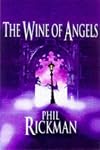
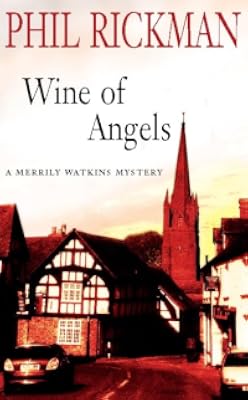
The first in the historically rich, atmospheric mystery series featuring female exorcist Reverend Merrily Watkins The new vicar had never wanted a picture-postcard parish-or a huge and haunted vicarage. Nor had she wanted to walk into a dispute over a controversial play about a 17th-century clergyman accused of witchcraft, a story that certain long-established families would rather remained obscure. But this is Ledwardine, steeped in cider and secrets. A paradise of cobbled streets and show more timber-framed houses. And also-as Merrily Watkins and her teenage daughter, Jane, discover-a village where horrific murder is a tradition that spans centuries. show lessTags
Recommendations











Member Recommendations
ehines Very different books, but both the Merrily Watkins series and Courting Shadows are deeply concerned with the places where the deeply ingrained beliefs of the English countryside run up against more "sophisticated" or cosmopolitan views from outside. And both are much concerned with the actual fabric of the county village.
Member Reviews
Caveat Emptor: This is Merrily in Pre-Exorcist Days
Review of the Corvus paperback edition (April 1, 2011) of the MacMillan hardcover original (July 10, 1998).
I'm not going to bury the lede. This is the first of the Merrily Watkins series (1998-2021 and presumably ongoing) which is promoted as featuring, even in the GR synopsis for this book, the "female exorcist Reverend Merrily Watkins." BUT THERE IS NO EXORCISM IN THIS BOOK. This first book was written as a standalone crime & mystery thriller and Merrily was only later developed as the series character. Apparently the exorcism angle doesn't come into it until Book #2 Midwinter of the Spirit (1999).
So this still represents the introduction to the characters of Merrily Watkins and her show more teenage daughter Jane Watkins, and possibly several continuing characters in the vicarage and town of Ledwardine in Welsh & English border country. There are suspected hauntings, some bizarre deaths, some disappearances, perilous situations and ties to historical crimes and executions, i.e. there are lots of mystery angles to this. Just don't expect or hope for the drama of any exorcisms.
Once I got over my initial disappointment and some of the tiresome talk about cider and apple orchards and the teenage angst etc. I did finally settle in and enjoy the book. There was a historical mystery about an early vicar in the parish which was also solved. The finale section was especially gripping with Merrily on the one hand explaining the solutions to the various mysteries in the standard "gather all the suspects in a room" setting, with cut scenes toggling with daughter Jane who is confronted by the finally revealed culprit.
There was much to enjoy with the various historical references and background. For instance, there were excerpts from the writings of Thomas Traherne (c. 1636-1674). I especially enjoyed the constant references to singer/songwriter Nick Drake (1948-1974), whether it was to specific songs or even in the naming of chapter titles.
So this is good to read as background, but don't be fooled by the false advertising. Marked down to 3 stars for that. I do hope to continue with the series.
Soundtrack
I've enjoyed the music of Nick Drake for a long time, so this was a great opportunity to get reacquainted with his music. The musician apparently sold only 4,000 records in his lifetime and was only rediscovered gradually in the 1990s. The breakthrough came with an inventive 1999 Volkswagen commercial which excerpted Drake's song Pink Moon. This song is regularly referred to in the book. Although it has a foreboding quality in the book, for me it has always had a joyous quality.
Bonus Tracks
I'm adding some of my favourite cover versions of the Pink Moon song here. There is a baroque arrangement by the Ensemble Phoenix Munich which you can see in the front half of the video here. There is a mass amateur choir version by Toronto's own Choir! Choir! Choir! which you can see here. show less
Review of the Corvus paperback edition (April 1, 2011) of the MacMillan hardcover original (July 10, 1998).
I'm not going to bury the lede. This is the first of the Merrily Watkins series (1998-2021 and presumably ongoing) which is promoted as featuring, even in the GR synopsis for this book, the "female exorcist Reverend Merrily Watkins." BUT THERE IS NO EXORCISM IN THIS BOOK. This first book was written as a standalone crime & mystery thriller and Merrily was only later developed as the series character. Apparently the exorcism angle doesn't come into it until Book #2 Midwinter of the Spirit (1999).
So this still represents the introduction to the characters of Merrily Watkins and her show more teenage daughter Jane Watkins, and possibly several continuing characters in the vicarage and town of Ledwardine in Welsh & English border country. There are suspected hauntings, some bizarre deaths, some disappearances, perilous situations and ties to historical crimes and executions, i.e. there are lots of mystery angles to this. Just don't expect or hope for the drama of any exorcisms.
Once I got over my initial disappointment and some of the tiresome talk about cider and apple orchards and the teenage angst etc. I did finally settle in and enjoy the book. There was a historical mystery about an early vicar in the parish which was also solved. The finale section was especially gripping with Merrily on the one hand explaining the solutions to the various mysteries in the standard "gather all the suspects in a room" setting, with cut scenes toggling with daughter Jane who is confronted by the finally revealed culprit.
There was much to enjoy with the various historical references and background. For instance, there were excerpts from the writings of Thomas Traherne (c. 1636-1674). I especially enjoyed the constant references to singer/songwriter Nick Drake (1948-1974), whether it was to specific songs or even in the naming of chapter titles.
So this is good to read as background, but don't be fooled by the false advertising. Marked down to 3 stars for that. I do hope to continue with the series.
Soundtrack
I've enjoyed the music of Nick Drake for a long time, so this was a great opportunity to get reacquainted with his music. The musician apparently sold only 4,000 records in his lifetime and was only rediscovered gradually in the 1990s. The breakthrough came with an inventive 1999 Volkswagen commercial which excerpted Drake's song Pink Moon. This song is regularly referred to in the book. Although it has a foreboding quality in the book, for me it has always had a joyous quality.
Bonus Tracks
I'm adding some of my favourite cover versions of the Pink Moon song here. There is a baroque arrangement by the Ensemble Phoenix Munich which you can see in the front half of the video here. There is a mass amateur choir version by Toronto's own Choir! Choir! Choir! which you can see here. show less
It's been a few years since I've read anything by Rickman and I'd forgotten how good he was at creating the constrained and cloying atmosphere of life in a small village. Merrily Watkins is the new priest-in-charge, though from the moment she gets there things begin to unravel. This is no cosy village out of Vicar of Dibley, even if they do insist on calling her Vicar. She not only has to deal with local politics, including a play based around a controversial local figure, but also a darker secret at the heart of the village. One based around the cider orchard that surrounds the church. Rickman brings his usual touch of Olde English magic clashing with the new world, but for a change steps back from the supernatural leanings of his show more earlier work. He unfolds the story with great detail, building up slow tension, which makes the brief sketch-like ending seem quite out of place when it finally arrives. Still, it's a small criticism compared to the quality of the rest of the book, and it does its job. show less
What a brilliant start in a new series for me. It's so good that I ordered the next three books from the Merrily Watkins series at my favourite bookstore, as only the newer volumes are available in the library.
This series plays in Herefordshire and is a mixture of mystery and paranormalism, which gives the whole thing a certain spice. In this first volume, Merrily Watkins - mother of a Teenage daughter - is used as a pastor in a small village. However, until she can take the oath, an awful lot happens and she's more busy solving a crime than fulfilling the obligations for which she should be hired. For hundreds of years there has been an old apple orchard behind the church. These are very special apples from which cider was made. show more However, during these years, people died in this apple orchard - some were murdered, others died in mysterious ways. Jane, Merrily's daughter, has the gift of seeing these souls out of the past and believes in their predictions. This puts her in great danger.
A great debut, well written and read quickly. show less
This series plays in Herefordshire and is a mixture of mystery and paranormalism, which gives the whole thing a certain spice. In this first volume, Merrily Watkins - mother of a Teenage daughter - is used as a pastor in a small village. However, until she can take the oath, an awful lot happens and she's more busy solving a crime than fulfilling the obligations for which she should be hired. For hundreds of years there has been an old apple orchard behind the church. These are very special apples from which cider was made. show more However, during these years, people died in this apple orchard - some were murdered, others died in mysterious ways. Jane, Merrily's daughter, has the gift of seeing these souls out of the past and believes in their predictions. This puts her in great danger.
A great debut, well written and read quickly. show less
Something's rotten in Ledwardine. Trouble is fermenting in the ancient village in Herefordshire's cider-making country. And it only takes a few rotten apples to spoil the whole bunch. OK, apples figure prominently in this story, particuarly the ancient apple orchard just outside the churchyard -- the "first unhallowed ground," as it was known, where suicides were likely to be buried in times past.
The Rev. Merrily Watkins is about to be installed as the Priest-In-Charge of the congregation at Ledwardine. But she finds herself mired in all kinds of conflict: with her teenage daughter, and her odd behavior; with various locals pressuring her from both sides in the controversy over a proposed play by a gay playwright about a local show more 16th-century priest accused of witchcraft; with a lecherous parishioner who has a fetish for women in priestly vestments. She also finds herself at a sort of crossroads where Christian faith and pagan beliefs may intersect, as she works cautiously with a local (who has been labeled a modern witch by some) to understand odd events.
This last issue really struck me, as Merrily begins to question why the institutional Church seems to have abandoned, or at least downplayed, its belief in the supernatural -- except for "the old guy in the sky, Himself." She calls her advisor at theological college for advice about paranormal activity in her vicarage (a subject which her education did not cover) who, while acknowledging the Medieval church's work in the paranormal sphere, responds with the question ". . . do these phenomena really fit inside our field of operation" these days? She seems to wonder: at a time when so many people are fascinated by the paranormal, why has the mainline Church left the subject of angels and demons largely to pagan/New Age religions?
The Wine of Angels is a long book (631 pages). The tale develops slowly -- odd to say when somebody's dead by the end of the prologue, but apart from that, the author spends a lot of time setting the scene, introducing the characters, and creating atmosphere before much real action takes place. This is a complex tale with interwoven plot lines, some of which only connect together at the end. There are elements of the supernatural, and elements of human evil -- and it's hard to tell how much of which is in play until the very end.
And it was the end which left me a little disappointed. Some of the connections didn't quite fit for me -- how did Rev. Merrily get from "here" to "there" in figuring out a centuries-old mystery? Some of it seemed a little implausible (and I'm not talking about the supernatural elements -- I'm willing to "suspend disbelief" for those when reading this genre.) Perhaps my American sensibilities are less attuned to what might happen in a small village in the English countryside.
One thing that did ring true, at least in some respects, was the conflict between old residents of Ledwardine and the "newcomers" who think they know what's best for the town. That seems to be a universal issue in small communities, whatever side of the Big Pond you live on.
This is a long book, maybe a little too long. But it held my attention and I kept wanting to read on. I can't remember the last time I read a 600+ page book so quickly. show less
The Rev. Merrily Watkins is about to be installed as the Priest-In-Charge of the congregation at Ledwardine. But she finds herself mired in all kinds of conflict: with her teenage daughter, and her odd behavior; with various locals pressuring her from both sides in the controversy over a proposed play by a gay playwright about a local show more 16th-century priest accused of witchcraft; with a lecherous parishioner who has a fetish for women in priestly vestments. She also finds herself at a sort of crossroads where Christian faith and pagan beliefs may intersect, as she works cautiously with a local (who has been labeled a modern witch by some) to understand odd events.
This last issue really struck me, as Merrily begins to question why the institutional Church seems to have abandoned, or at least downplayed, its belief in the supernatural -- except for "the old guy in the sky, Himself." She calls her advisor at theological college for advice about paranormal activity in her vicarage (a subject which her education did not cover) who, while acknowledging the Medieval church's work in the paranormal sphere, responds with the question ". . . do these phenomena really fit inside our field of operation" these days? She seems to wonder: at a time when so many people are fascinated by the paranormal, why has the mainline Church left the subject of angels and demons largely to pagan/New Age religions?
The Wine of Angels is a long book (631 pages). The tale develops slowly -- odd to say when somebody's dead by the end of the prologue, but apart from that, the author spends a lot of time setting the scene, introducing the characters, and creating atmosphere before much real action takes place. This is a complex tale with interwoven plot lines, some of which only connect together at the end. There are elements of the supernatural, and elements of human evil -- and it's hard to tell how much of which is in play until the very end.
And it was the end which left me a little disappointed. Some of the connections didn't quite fit for me -- how did Rev. Merrily get from "here" to "there" in figuring out a centuries-old mystery? Some of it seemed a little implausible (and I'm not talking about the supernatural elements -- I'm willing to "suspend disbelief" for those when reading this genre.) Perhaps my American sensibilities are less attuned to what might happen in a small village in the English countryside.
One thing that did ring true, at least in some respects, was the conflict between old residents of Ledwardine and the "newcomers" who think they know what's best for the town. That seems to be a universal issue in small communities, whatever side of the Big Pond you live on.
This is a long book, maybe a little too long. But it held my attention and I kept wanting to read on. I can't remember the last time I read a 600+ page book so quickly. show less
First Line: Twisty old devil.
The Reverend Merrily Watkins had never thought she'd find herself posted to a picturesque English village where she'd be expected to live in a huge, drafty vicarage. She also didn't think she'd find herself in the middle of a dispute over a controversial play about a seventeenth-century clergyman accused of witchcraft. It's not long at all before Merrily and her teenage daughter, Jane, find that the village of Ledwardine is far from being the idyllic English village.
Rickman's Merrily Watkins mystery series is one that was highly recommended to me shortly after I joined Paperback Swap. It didn't take long for me to obtain a copy of this book, but for some reason it sat on the shelf for almost two years.
The show more book is set in an area of Herefordshire where cider making had been an art form for a long time. The author has certainly done his homework because he brings the village of Ledwardine to life, with its half-timbered buildings, its new residents from the city who think they know what's best for everyone, the old residents who know they don't, and all the myths and legends surrounding its ancient apple orchards.
Rickman certainly knows how to set the scene, as when Merrily is finally able to move into the vicarage:
"There was quaint, Merrily thought, and there was horribly old-fashioned. Like the steel-grey four-bar electric fire blocking up the inglenook. Like a kitchen the size of a small abattoir with no real cupboards but endless open shelves and all the pipes coiled under the sink like a nest of cobras."
The setting isn't the only thing that Rickman is gifted at doing-- his characters are marvelous. Merrily and her daughter Jane soon felt like people I'd known my entire life. Merrily at first seems to be a quiet, serious person who never learned how to say no. The villagers take advantage of her, and she's soon exhausted and sleep-deprived. But she does have a backbone, and she does have a line that no one should cross. (I cheered when I read that particular scene.) Jane is a typical teenager. You want to hug her one second and strangle her the next. Deep down, she's a good person who can admit her mistakes and learn from them. Merrily should be proud.
Rickman is also very very good at atmosphere. I, for one, will never again walk into an apple orchard the way I always have in the past. I'm not sure I trust the trees, you know.... And that vicarage gave me the creeps!
I've read several other books that mention the resentment villagers feel toward city people who move in, throw their money around, think they know what's best for everyone, and generally believe they should be allowed to take total control of the town. But this is usually glossed over and used more as a secondary prop than anything else. Rickman fleshes this conflict out perfectly and makes it an integral part of the story.
Fleshing out. Rickman is excellent at fleshing out. In fact, he's so good at it that it's the major reason why I didn't rate this book an A+ and wax poetical about it. This book weighs in at 631 pages. The story could very easily have been told in half the number of pages. Granted, I feel as though I've been treated to a very special place and people, and that I know them better than the places and people of hundreds of previous books I've read. However, it's just not a "year's best" read for me when I repeatedly stop reading a book, turn it over and look at the back cover and think, "Is anything ever going to happen?"
Thankfully something did happen. Something spine-tingling and creepy and plausible. And thankfully it happened in Ledwardine, a village well known to me now, and to people I feel as though I've known all my life. On the power of that I now have the second book in the series. It's well over 500 pages. Only time will tell if Rickman ultimately leaves too much flesh on the bones for this reader. show less
The Reverend Merrily Watkins had never thought she'd find herself posted to a picturesque English village where she'd be expected to live in a huge, drafty vicarage. She also didn't think she'd find herself in the middle of a dispute over a controversial play about a seventeenth-century clergyman accused of witchcraft. It's not long at all before Merrily and her teenage daughter, Jane, find that the village of Ledwardine is far from being the idyllic English village.
Rickman's Merrily Watkins mystery series is one that was highly recommended to me shortly after I joined Paperback Swap. It didn't take long for me to obtain a copy of this book, but for some reason it sat on the shelf for almost two years.
The show more book is set in an area of Herefordshire where cider making had been an art form for a long time. The author has certainly done his homework because he brings the village of Ledwardine to life, with its half-timbered buildings, its new residents from the city who think they know what's best for everyone, the old residents who know they don't, and all the myths and legends surrounding its ancient apple orchards.
Rickman certainly knows how to set the scene, as when Merrily is finally able to move into the vicarage:
"There was quaint, Merrily thought, and there was horribly old-fashioned. Like the steel-grey four-bar electric fire blocking up the inglenook. Like a kitchen the size of a small abattoir with no real cupboards but endless open shelves and all the pipes coiled under the sink like a nest of cobras."
The setting isn't the only thing that Rickman is gifted at doing-- his characters are marvelous. Merrily and her daughter Jane soon felt like people I'd known my entire life. Merrily at first seems to be a quiet, serious person who never learned how to say no. The villagers take advantage of her, and she's soon exhausted and sleep-deprived. But she does have a backbone, and she does have a line that no one should cross. (I cheered when I read that particular scene.) Jane is a typical teenager. You want to hug her one second and strangle her the next. Deep down, she's a good person who can admit her mistakes and learn from them. Merrily should be proud.
Rickman is also very very good at atmosphere. I, for one, will never again walk into an apple orchard the way I always have in the past. I'm not sure I trust the trees, you know.... And that vicarage gave me the creeps!
I've read several other books that mention the resentment villagers feel toward city people who move in, throw their money around, think they know what's best for everyone, and generally believe they should be allowed to take total control of the town. But this is usually glossed over and used more as a secondary prop than anything else. Rickman fleshes this conflict out perfectly and makes it an integral part of the story.
Fleshing out. Rickman is excellent at fleshing out. In fact, he's so good at it that it's the major reason why I didn't rate this book an A+ and wax poetical about it. This book weighs in at 631 pages. The story could very easily have been told in half the number of pages. Granted, I feel as though I've been treated to a very special place and people, and that I know them better than the places and people of hundreds of previous books I've read. However, it's just not a "year's best" read for me when I repeatedly stop reading a book, turn it over and look at the back cover and think, "Is anything ever going to happen?"
Thankfully something did happen. Something spine-tingling and creepy and plausible. And thankfully it happened in Ledwardine, a village well known to me now, and to people I feel as though I've known all my life. On the power of that I now have the second book in the series. It's well over 500 pages. Only time will tell if Rickman ultimately leaves too much flesh on the bones for this reader. show less
The first book in the Merrily Watkins series. Whilst not as overtly 'spooky' as his older books, this one mixes the mysterious with the murderous as parish priest Merrily Watkins moves into the historic village of Ledwardine. Rickman is great at creating realistic characters and dialogue. Lucy Devenish and Gomer Parry are particularly well realised characters. The blend of 'country ways', apples and damaged personalities creates a compelling read.
Fantastic. Merrily feels like a well rounded character, who smokes, drinks and has the usual troubles with her teenage daughter but none of this is done to excess. Phil Rickman exposes the underbelly of the English country village with humour and horror.
Following the recent publication of the eleventh book in the series, I've decided it's time to re-read the series. This book effectively sets the scene for the remainder of the series as Merrily's introduction to Ledwardine involves a violent death, nightmares in a possibly haunted vicarage, entanglement in local politics as the village becomes embroiled the controversy surrounding the possibility of a play about local history being staged at the church, plus a teenager daughter with a show more growing interest in paganism. show less
Following the recent publication of the eleventh book in the series, I've decided it's time to re-read the series. This book effectively sets the scene for the remainder of the series as Merrily's introduction to Ledwardine involves a violent death, nightmares in a possibly haunted vicarage, entanglement in local politics as the village becomes embroiled the controversy surrounding the possibility of a play about local history being staged at the church, plus a teenager daughter with a show more growing interest in paganism. show less
Members
- Recently Added By
Lists

Crime-Solving Clerics
57 works; 3 members
Author Information

43+ Works 6,928 Members
Series

Common Knowledge
- Canonical title
- The Wine of Angels
- Original title
- The Wine of Angels
- Original publication date
- 1998
- People/Characters
- Merrily Watkins; Jane Watkins; Lol Robinson; Gomer Parry; Annie Howe
- Important places
- Ledwardine, Herefordshire, England, UK; Herefordshire, England, UK
- Epigraph
- "Tears are the Wine of Angels . . . the best . . . to quench the devil's fires. " from a seventeenth-century meditation attributed to Thomas Traherne
- First words
- Twisty old devil.
- Last words
- (Click to show. Warning: May contain spoilers.)Be assured that I shall keep you fully informed of any further developments; meanwhile, please accept my very best wishes for your Installation Service next Friday. Yours sincerely, Harold L. McCready
Classifications
Statistics
- Members
- 650
- Popularity
- 44,469
- Reviews
- 33
- Rating
- (3.82)
- Languages
- Danish, English, German
- Media
- Paper, Audiobook, Ebook
- ISBNs
- 21
- ASINs
- 9