On This Page
Description
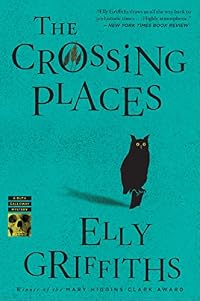
The first entry in the acclaimed Ruth Galloway series follows the "captivating"* archaeologist as she investigates a child's bones found on a nearby beach, thought to be the remains of a little girl who went missing ten years before. Forensic archeologist Dr. Ruth Galloway is in her late thirties. She lives happily alone with her two cats in a bleak, remote area near Norfolk, land that was sacred to its Iron Age inhabitants--not quite earth, not quite sea. But her routine days of digging up show more bones and other ancient objects are harshly upended when a child's bones are found on a desolate beach. Detective Chief Inspector Nelson calls Galloway for help, believing they are the remains of Lucy Downey, a little girl who went missing a decade ago and whose abductor continues to taunt him with bizarre letters containing references to ritual sacrifice, Shakespeare, and the Bible. Then a second girl goes missing and Nelson receives a new letter--exactly like the ones about Lucy. Is it the same killer? Or a copycat murderer, linked in some way to the site near Ruth's remote home? *Louise Penny show lessTags
Recommendations
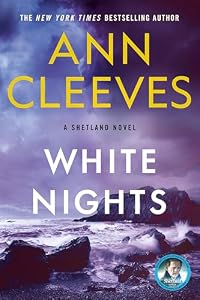
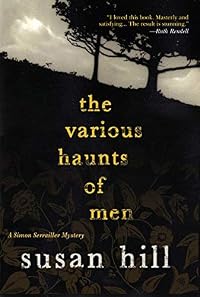
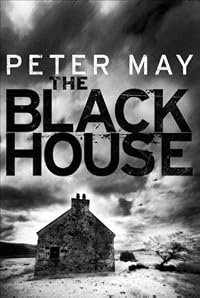
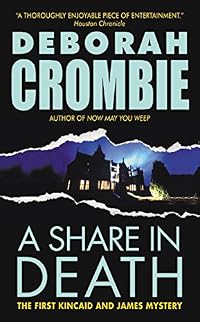
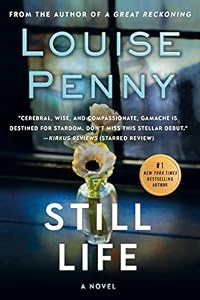
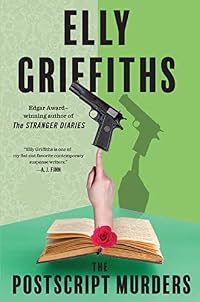

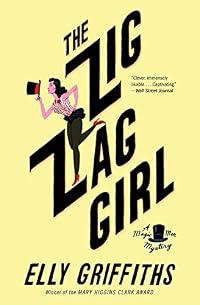
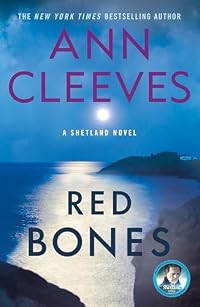
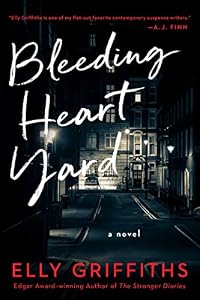

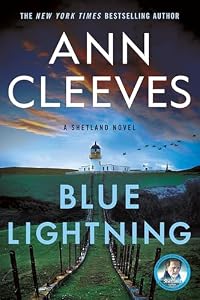
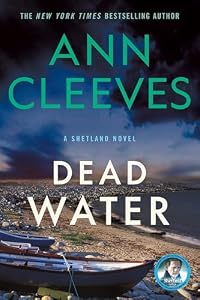
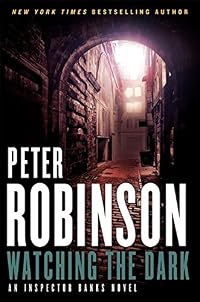
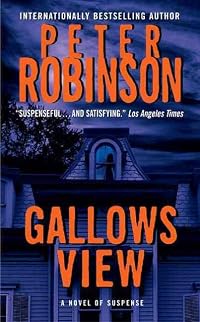
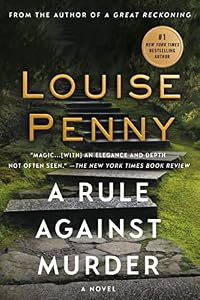
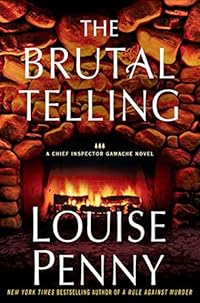

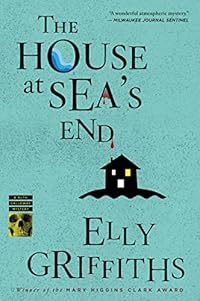
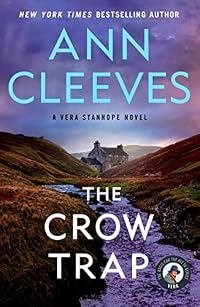
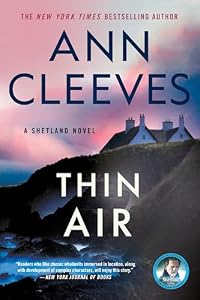
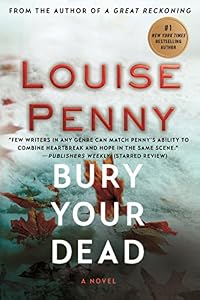
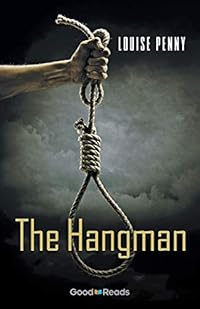
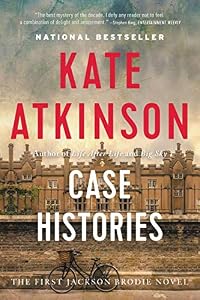
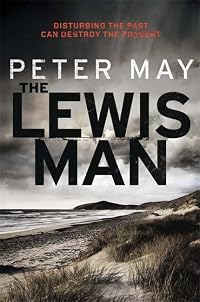
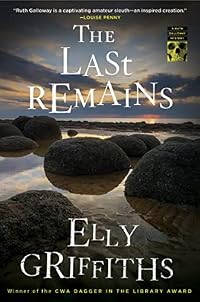
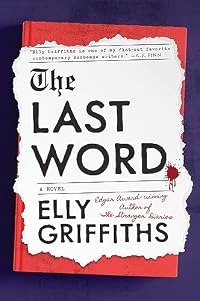

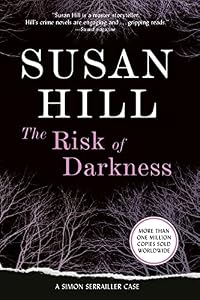
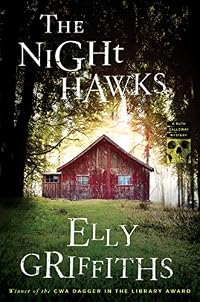
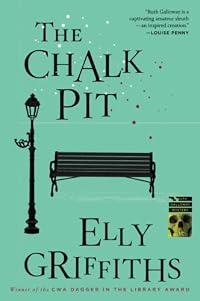

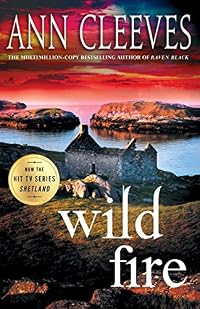
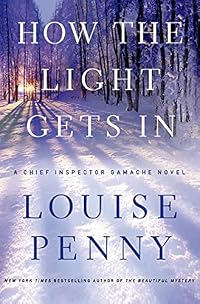
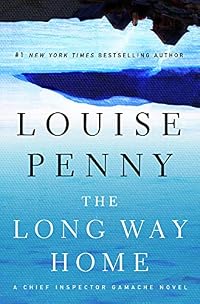
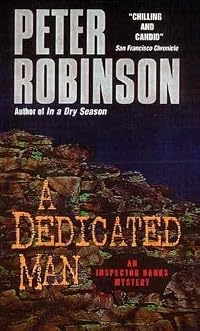
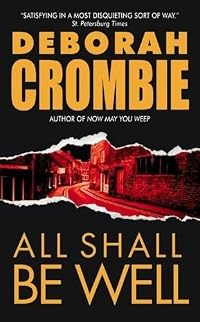

Member Recommendations
sharolinarose The main character of this very enjoyable series is a forensic anthropologist.
sarahemmm Wesley is a police detective with a degree in archaeology.
Member Reviews
I enjoyed this book, and I would have given it one more star, but for all the damn fat shaming of the main character throughout the entire book, from literally the beginning to the end--both by other characters in the novel and the main character's own thoughts about herself. I mean, come on Elly Griffiths [author], you're a woman, you wrote this book in 2009, did you really need to add to society's swirling maelstrom of sexism and body shaming and fat shaming? Ugh.
I was immediately drawn into The Crossing Places by Elly Griffiths, making an instant connection with the main character. Ruth is portrayed as a mature woman, invested in her academic career, independent and capable, living in beautiful isolation with her two cats. She has her issues and problems, but she is far from a helpless heroine. With wry humor and intelligence, she faces her weight problem and loneliness in equal measures.
Ruth, a forensic archaeologist, is approached by the police to assist in the case of a missing young girl. Bones have been found and they need an expert opinion to date them. Even though these turn out to be Iron Age bones, Ruth and DI Nelson have established a connection and he continues to rely on her show more expertise in this case. He is also haunted by another, older case involving a missing child. Connecting these two cases are anonymous letters that make archaeological, biblical and literary references which resonate with Ruth.
The author has written a absorbing story and her main characters are both interesting and well developed. I felt she didn’t do quite as good a job with her secondary characters, as they seemed a little stereotypic She has placed her story in a unique setting of barren salt marshes, and blended the ancient and modern worlds to make The Crossing Places a creative ands well-crafted mystery. show less
Ruth, a forensic archaeologist, is approached by the police to assist in the case of a missing young girl. Bones have been found and they need an expert opinion to date them. Even though these turn out to be Iron Age bones, Ruth and DI Nelson have established a connection and he continues to rely on her show more expertise in this case. He is also haunted by another, older case involving a missing child. Connecting these two cases are anonymous letters that make archaeological, biblical and literary references which resonate with Ruth.
The author has written a absorbing story and her main characters are both interesting and well developed. I felt she didn’t do quite as good a job with her secondary characters, as they seemed a little stereotypic She has placed her story in a unique setting of barren salt marshes, and blended the ancient and modern worlds to make The Crossing Places a creative ands well-crafted mystery. show less
The Crossing Places opens on an archaelogical dig where the protagonist, Dr Ruth Galloway, discovers a body – but it is an Iron Age body preserved in the peat of the saltmarsh. Not all the bodies in this book are so old.
The mixture of sand, sea, marsh, wind, lost tribes and lost voices is a compelling one. Ms Griffiths’ first book successfully combines a dry academic subject with the more painful aspects of policing to produce a crime drama swept up in the sometimes glorious, sometimes desolate skies of Norfolk. In Ruth we find a reasonable, intelligent and lonesome soul, concerned about her age, weight and purpose, meeting a policeman concerned with the ghosts of cases past and present. She becomes his expert witness – the bones show more expert – but they find they work well as a team, since neither can let sleeping dogs lie.
There are likable and dislikable characters, old hippies and born-again Christians. There are forlorn lovers and distraught parents. There are samples and mixtures of literature designed to lead one astray. The whole is an excellent piece of misdirection and evocative description that tends towards the gothic in its eerie delivery. When I had to put it down, I couldn’t wait to pick it up again. I’m looking forward to the next one. show less
The mixture of sand, sea, marsh, wind, lost tribes and lost voices is a compelling one. Ms Griffiths’ first book successfully combines a dry academic subject with the more painful aspects of policing to produce a crime drama swept up in the sometimes glorious, sometimes desolate skies of Norfolk. In Ruth we find a reasonable, intelligent and lonesome soul, concerned about her age, weight and purpose, meeting a policeman concerned with the ghosts of cases past and present. She becomes his expert witness – the bones show more expert – but they find they work well as a team, since neither can let sleeping dogs lie.
There are likable and dislikable characters, old hippies and born-again Christians. There are forlorn lovers and distraught parents. There are samples and mixtures of literature designed to lead one astray. The whole is an excellent piece of misdirection and evocative description that tends towards the gothic in its eerie delivery. When I had to put it down, I couldn’t wait to pick it up again. I’m looking forward to the next one. show less
Well! I thoroughly enjoyed this auspicious start to Elly Griffiths' Ruth Galloway mystery series. Ruth, a forensic archeologist, co-stars with DCI Harry Nelson and the fictional Saltmarsh in Norfolk, England to deliver a neat little piece that goes down easily.
Ten years before the story begins, a little girl named Lucy Downey disappeared near the Saltmarsh. When a child’s bones are discovered in the marsh, DCI Nelson asks Dr. Ruth Galloway to help the police determine the age of the bones on the chance that they may be Lucy’s remains. The body is indeed that of an Iron Age child, so Lucy is still lost and soon after Ruth becomes involved, another child disappears. Evil is afoot.
I like Ruth. She lives on the edge of the Saltmarsh, show more teaches archeology at the local university, is a zaftig size 16, and counts Iron Age burial sites to put herself to sleep. She has a weakness for bugle beads, sequins, and diamanté but wears only plain dark clothes because of her weight. Her specialty is forensics and she’s an expert in bone preservation and a mine of information on Iron Age archeological sites, especially those in the Saltmarsh.
The mystery itself is unremarkable. There is a cast of rather quirky secondary characters and some misdirection and a red-herring or two that are fairly standard fare. Someone is writing cryptic, taunting letters about the missing girls to DCI Nelson that generally confuse things. I actually enjoyed those as they had me searching the internet for things mentioned therein like "cursuses" and "causeways." I learned things from doing that, always a plus for me. There's a littlef romance thrown in largely, I suspect, as a sop to the romantically inclined. It didn't interest me but neither did it put me off. Galloway does have an enjoyable sense of humor and an ability to create tension without causing satiety.
The marsh, in league with the sea, provides some absolutely white-knuckle moments. The archeological material throughout is wonderful.There are also thought-provoking questions raised within the narrative flow about the comparative virtues, or vices, of leaving sacred sites in situ versus removing them to museums to preserve them artificially. The writing is good, sometimes very good, and the denouement satisfactory.
This is a book in which, for me at least, the setting trumps human characters as the most compelling force in the story. The Saltmarsh and the tides that maintain it are ruthless, unforgiving and beautiful to those who love them. We meet it in winter when it is a dark presence with secrets and mysteries far more fascinating than those contrived by mere humans. The marsh, it is said, does not easily give up what it has once claimed, but humans, scraping at the surface, do occasionally break its hold.
Author Ellie Griffiths, like Ruth Galloway, fell in love with the real salt marsh in Norfolk while on an archeological dig. Her love of the place and her knowledge of archeology shine through the book and that alone would make it well worth reading. The main character, too, is a draw for me. I look forward eagerly to her next one.
This is a review of the audible.com edition superbly narrated by Jane McDowell. show less
Ten years before the story begins, a little girl named Lucy Downey disappeared near the Saltmarsh. When a child’s bones are discovered in the marsh, DCI Nelson asks Dr. Ruth Galloway to help the police determine the age of the bones on the chance that they may be Lucy’s remains. The body is indeed that of an Iron Age child, so Lucy is still lost and soon after Ruth becomes involved, another child disappears. Evil is afoot.
I like Ruth. She lives on the edge of the Saltmarsh, show more teaches archeology at the local university, is a zaftig size 16, and counts Iron Age burial sites to put herself to sleep. She has a weakness for bugle beads, sequins, and diamanté but wears only plain dark clothes because of her weight. Her specialty is forensics and she’s an expert in bone preservation and a mine of information on Iron Age archeological sites, especially those in the Saltmarsh.
The mystery itself is unremarkable. There is a cast of rather quirky secondary characters and some misdirection and a red-herring or two that are fairly standard fare. Someone is writing cryptic, taunting letters about the missing girls to DCI Nelson that generally confuse things. I actually enjoyed those as they had me searching the internet for things mentioned therein like "cursuses" and "causeways." I learned things from doing that, always a plus for me. There's a littlef romance thrown in largely, I suspect, as a sop to the romantically inclined. It didn't interest me but neither did it put me off. Galloway does have an enjoyable sense of humor and an ability to create tension without causing satiety.
The marsh, in league with the sea, provides some absolutely white-knuckle moments. The archeological material throughout is wonderful.There are also thought-provoking questions raised within the narrative flow about the comparative virtues, or vices, of leaving sacred sites in situ versus removing them to museums to preserve them artificially. The writing is good, sometimes very good, and the denouement satisfactory.
This is a book in which, for me at least, the setting trumps human characters as the most compelling force in the story. The Saltmarsh and the tides that maintain it are ruthless, unforgiving and beautiful to those who love them. We meet it in winter when it is a dark presence with secrets and mysteries far more fascinating than those contrived by mere humans. The marsh, it is said, does not easily give up what it has once claimed, but humans, scraping at the surface, do occasionally break its hold.
Author Ellie Griffiths, like Ruth Galloway, fell in love with the real salt marsh in Norfolk while on an archeological dig. Her love of the place and her knowledge of archeology shine through the book and that alone would make it well worth reading. The main character, too, is a draw for me. I look forward eagerly to her next one.
This is a review of the audible.com edition superbly narrated by Jane McDowell. show less
25. Pearl Ruled: [THE CROSSING PLACES] by [[ELLY GRIFFITHS]]
Rating: 1.875* of five (p126)
The Book Description: When she’s not digging up bones or other ancient objects, quirky, tart-tongued archaeologist Ruth Galloway lives happily alone in a remote area called Saltmarsh near Norfolk, land that was sacred to its Iron Age inhabitants - not quite earth, not quite sea.
When a child’s bones are found on a desolate beach nearby, Detective Chief Inspector Harry Nelson calls Galloway for help. Nelson thinks he has found the remains of Lucy Downey, a little girl who went missing ten years ago. Since her disappearance he has been receiving bizarre letters about her, letters with references to ritual and sacrifice.
The bones actually turn out show more to be two thousand years old, but Ruth is soon drawn into the Lucy Downey case and into the mind of the letter writer, who seems to have both archaeological knowledge and eerie psychic powers. Then another child goes missing and the hunt is on to find her.
As the letter writer moves closer and the windswept Norfolk landscape exerts its power, Ruth finds herself in completely new territory – and in serious danger.
THE CROSSING PLACES marks the beginning of a captivating new crime series featuring an irresistible heroine.
My Review: Hell, damn and BLAST!! I love the idea for this series. I am a fiend for archaeological settings in novels. I am a fan of tart-tongued women. (Look at my friends list and tell me that's exaggerated.) And I am always down for another series, since that makes the spaces between discoveries of books fuller and more bearable.
But it's just not good.
And that is where my patience snapped. The rest of that paragraph floated past me like poop down the john. A huge sucking sound was heard, the bowl of my mind filled up with clear water, and there was no more interest to be found by me in this book. This writing is what, politely (yes, I do know what the word means), I would characterize as “serviceable.” But laddies and gentlewomen, I am over 50 and the days ahead number fewer than the days behind. What am I doing mucking about with “serviceable” when so much that's GOOD awaits discovery?
So no more Mr. Nice Guy. You don't cut the mustard, writer dear, you're on the scrapheap of history. show less
Rating: 1.875* of five (p126)
The Book Description: When she’s not digging up bones or other ancient objects, quirky, tart-tongued archaeologist Ruth Galloway lives happily alone in a remote area called Saltmarsh near Norfolk, land that was sacred to its Iron Age inhabitants - not quite earth, not quite sea.
When a child’s bones are found on a desolate beach nearby, Detective Chief Inspector Harry Nelson calls Galloway for help. Nelson thinks he has found the remains of Lucy Downey, a little girl who went missing ten years ago. Since her disappearance he has been receiving bizarre letters about her, letters with references to ritual and sacrifice.
The bones actually turn out show more to be two thousand years old, but Ruth is soon drawn into the Lucy Downey case and into the mind of the letter writer, who seems to have both archaeological knowledge and eerie psychic powers. Then another child goes missing and the hunt is on to find her.
As the letter writer moves closer and the windswept Norfolk landscape exerts its power, Ruth finds herself in completely new territory – and in serious danger.
THE CROSSING PLACES marks the beginning of a captivating new crime series featuring an irresistible heroine.
My Review: Hell, damn and BLAST!! I love the idea for this series. I am a fiend for archaeological settings in novels. I am a fan of tart-tongued women. (Look at my friends list and tell me that's exaggerated.) And I am always down for another series, since that makes the spaces between discoveries of books fuller and more bearable.
But it's just not good.
When he has gone, Ruth sits on the sofa, at the opposite end to the place where there is a faint bloodstain on the faded chintz. She looks at the remains of her meal with Shona and wonders, dully, how long ago it was that they sat at this table talking about men.(p126, US hardcover edition)
And that is where my patience snapped. The rest of that paragraph floated past me like poop down the john. A huge sucking sound was heard, the bowl of my mind filled up with clear water, and there was no more interest to be found by me in this book. This writing is what, politely (yes, I do know what the word means), I would characterize as “serviceable.” But laddies and gentlewomen, I am over 50 and the days ahead number fewer than the days behind. What am I doing mucking about with “serviceable” when so much that's GOOD awaits discovery?
So no more Mr. Nice Guy. You don't cut the mustard, writer dear, you're on the scrapheap of history. show less
I picked up "The Crossing Places" in an audible book sale offering first-in-a-series books. I half expected it to be Temperance Brennan / Kay Scarpetta with an English accent. It turned out to be something much more orginal and engaging than that:a thriller seasoned with a strong sense of place, revolving around a normal English woman who finds herself at the centre of events she has no control over.
"The Crossing Places" is set in the desolate salt marshes in Norfolk on the east coast of England. The whole novel is encrusted with the smell of sea and dominated by the vast sweep of the treacherous marsh and the brooding sky it stretches out to meet.
Ruth Galloway fell in love with the desolate beauty of this landscape ten years earlier, show more while on a dig to find a bronze-age sacred circle of wooden posts buried in the treacherous mudflats at the furthest point that the marsh meets the see. She stayed when the dig finished, becoming a member of faculty, specialising in forensic anthropology, at the local university. choosing to live in relative isolation at the edge of the Saltmarsh.
Ruth is the anchor of the book. A large part of the appeal of this book is that Ruth is not the typical kick-ass heroine I've grown used to reading about in these kinds of books. She's the kind of woman I might meet and like in real life. Ruth sees herself as an over-weight, no-longer ambitious woman, a year away from being forty, single and likely to stay that way, living alone with two child-substitute cats, comfortable with her own company and bespelled by the mercurial spirit of the Saltmarsh.
Ruth is counterpointed by DCI Harry Nelson, who hates the Saltmarsh in particular and Norfolk in general, is haunted by his failure to find a little girl abducted ten years earlier and driven by the need to bring closure for the family and himself.
The two are brought together by the discovery of bones in the Saltmarsh, which Harry asks Ruth to attest to the age of. Ruth becomes entangled in reviewing the circumstances of the old abduction and what has happened since and then in the search for another girl, recently abducted and perhaps linked to the first.
"The Crossing Places" sustains an atmosphere of brooding menance from both the characters and the location. I was kept guessing until the end about who would be guilty of what. I found the tension was more effective than usual because the people affected by the events were so normal.
I did struggle from time to time with the slightly clumsy use of first person present tense. I don't mind the technique, but even in the audiobook version, it was occasionally distracting.
Overall, this is an above-average crime novel which I hope is a stong start to a good series.
I was a little intimidated when I saw "The Crossing Places" listed as a debut novel because the writing seemed too accomplished to be a first effort. It turns out that Elly Griffiths was created by an editor when, after writing three novels about Italian families, Domenica de Rosa's fourth novel, "The Crossing Places", took a new direction. The editor believed that a crime novel required a crime name and so Ely Griffiths was summoned into being. You can find out more at Ely Griffith's website. show less
"The Crossing Places" is set in the desolate salt marshes in Norfolk on the east coast of England. The whole novel is encrusted with the smell of sea and dominated by the vast sweep of the treacherous marsh and the brooding sky it stretches out to meet.
Ruth Galloway fell in love with the desolate beauty of this landscape ten years earlier, show more while on a dig to find a bronze-age sacred circle of wooden posts buried in the treacherous mudflats at the furthest point that the marsh meets the see. She stayed when the dig finished, becoming a member of faculty, specialising in forensic anthropology, at the local university. choosing to live in relative isolation at the edge of the Saltmarsh.
Ruth is the anchor of the book. A large part of the appeal of this book is that Ruth is not the typical kick-ass heroine I've grown used to reading about in these kinds of books. She's the kind of woman I might meet and like in real life. Ruth sees herself as an over-weight, no-longer ambitious woman, a year away from being forty, single and likely to stay that way, living alone with two child-substitute cats, comfortable with her own company and bespelled by the mercurial spirit of the Saltmarsh.
Ruth is counterpointed by DCI Harry Nelson, who hates the Saltmarsh in particular and Norfolk in general, is haunted by his failure to find a little girl abducted ten years earlier and driven by the need to bring closure for the family and himself.
The two are brought together by the discovery of bones in the Saltmarsh, which Harry asks Ruth to attest to the age of. Ruth becomes entangled in reviewing the circumstances of the old abduction and what has happened since and then in the search for another girl, recently abducted and perhaps linked to the first.
"The Crossing Places" sustains an atmosphere of brooding menance from both the characters and the location. I was kept guessing until the end about who would be guilty of what. I found the tension was more effective than usual because the people affected by the events were so normal.
I did struggle from time to time with the slightly clumsy use of first person present tense. I don't mind the technique, but even in the audiobook version, it was occasionally distracting.
Overall, this is an above-average crime novel which I hope is a stong start to a good series.
I was a little intimidated when I saw "The Crossing Places" listed as a debut novel because the writing seemed too accomplished to be a first effort. It turns out that Elly Griffiths was created by an editor when, after writing three novels about Italian families, Domenica de Rosa's fourth novel, "The Crossing Places", took a new direction. The editor believed that a crime novel required a crime name and so Ely Griffiths was summoned into being. You can find out more at Ely Griffith's website. show less
The Crossing Places is the first in a mystery series I'm really enjoying (I'm on the third). Ruth Galloway is the head of the forensic archaeology department at an eastern England university, and when she's not teaching or on a dig, she happily lives alone in a stark, remote area called Saltmarsh, a crossing place between the sea and solid ground. She loves the mood and look of the expanse, and it hides its own sacred Iron Age treasures.
This story is triggered by a child's bones being found on a desolate beach nearby. Detective Chief Inspector Harry Nelson asks Galloway to help, thinking this may be a child named Lucy Downey who went missing ten years ago. He has been tormented by letters, apparently from the kidnapper, during those show more years.
The bones turn out to be two thousand years old, and of archaeological rather than current interest. But the teaming up pulls Ruth into the Lucy Downey case and questions about the letter writer. Then another child goes missing, and the hunt is on.
Ruth is, in her own view, overweight and not very attractive, but Nelson and other men are drawn to her, perhaps in part because of her wit and strength of mind. When danger appears, she is believably brave but human. Like Fiona Griffiths, she is a three-dimensional, continually interesting character whose adventures I want to follow. show less
This story is triggered by a child's bones being found on a desolate beach nearby. Detective Chief Inspector Harry Nelson asks Galloway to help, thinking this may be a child named Lucy Downey who went missing ten years ago. He has been tormented by letters, apparently from the kidnapper, during those show more years.
The bones turn out to be two thousand years old, and of archaeological rather than current interest. But the teaming up pulls Ruth into the Lucy Downey case and questions about the letter writer. Then another child goes missing, and the hunt is on.
Ruth is, in her own view, overweight and not very attractive, but Nelson and other men are drawn to her, perhaps in part because of her wit and strength of mind. When danger appears, she is believably brave but human. Like Fiona Griffiths, she is a three-dimensional, continually interesting character whose adventures I want to follow. show less
Members
- Recently Added By
Published Reviews
ThingScore 75
A highly atmospheric mystery set in the desolate salt marshes of England’s Norfolk coast.
added by Shortride
Lists

Female Protagonist
1,056 works; 56 members

Books Read in 2015
3,298 works; 129 members
Books Read in 2016
4,666 works; 197 members

Books Read in 2018
4,360 works; 110 members

Books Read in 2021
5,361 works; 113 members

Books read in 2024
26 works; 1 member

Kindle Mystery/Thriller
310 works; 2 members
Author Information

54+ Works 24,527 Members
Some Editions
Awards and Honors
Awards
Distinctions
Notable Lists
Series

Work Relationships
Is contained in
Common Knowledge
- Canonical title
- The Crossing Places
- Original title
- Crossing Places
- Original publication date
- 2009-08-06
- People/Characters
- Ruth Galloway; Harry Nelson (DCI); "Cathbad" Malone; Shona; Erik Anderssen; Lucy Downey (show all 9); Scarlet Henderson; David; Peter
- Important places
- Norwich, Norfolk, England, UK; Norfolk, England, UK; King's Lynn, Norfolk, England, UK
- Epigraph
- What the sand gets, the sand keeps forever.
Wilkie Collins, The Moonstone - Dedication
- For Marge
- First words
- They wait for the tide and set out at first light.
- Quotations*
- Ruth Galloway: Frågorna är viktigare än svaren
- Last words
- (Click to show. Warning: May contain spoilers.)And they turn and walk back towards the dunes.
- Publisher's editor
- Wood, Jane
- Blurbers
- Penny, Louise
- Original language
- English
- Canonical DDC/MDS
- 823.92
- Canonical LCC
- PR6107.R534
*Some information comes from Common Knowledge in other languages. Click "Edit" for more information.
Classifications
Statistics
- Members
- 2,833
- Popularity
- 6,372
- Reviews
- 192
- Rating
- (3.74)
- Languages
- 17 — Czech, Danish, Dutch, English, Estonian, Finnish, French, German, Greek, Italian, Norwegian (Bokmål), Norwegian, Polish, Russian, Spanish, Swedish, Turkish
- Media
- Paper, Audiobook, Ebook
- ISBNs
- 61
- ASINs
- 22