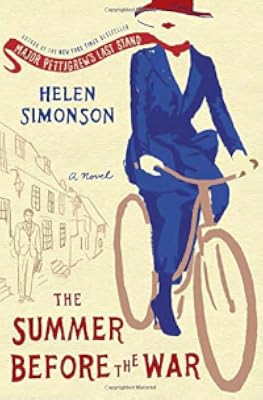
The Summer Before the War
by Helen Simonson
On This Page
Description
Bestselling author Helen Simonson returns with a splendid historical novel full of the same wit, romance, and insight into the manners and morals of small-town British life as her beloved "Major Pettigrew's Last Stand." It's the summer of 1914 and life in the sleepy village of Rye, England is about to take an interesting turn. Agatha Kent is expecting an unusual candidate to be the school's Latin teacher: Beatrice Nash, a young woman of good breeding in search of a position after the death show more of her father. Agatha's nephews, meanwhile, have come to spend the summer months, as always, both with dreams of their own. When Hugh is sent to pick up Beatrice from the train station - life, of course, changes. Here, these characters and others we come to love and root for become characters we hope and pray for when the shadow of the Great War looms ever closer to home. show lessTags
Recommendations




Member Reviews
Helen Simonson's THE SUMMER BEFORE THE WAR (2016) is a book to read slowly, to savor its beautiful writing and to appreciate the richness of the dialect of the Edwardian age reflected in the story. And to gradually get to know the diverse cast of characters, from its heroine, 23 year-old Latin teacher, Beatrice Nash, to the two dissimilar cousins, Hugh and Daniel, and their richly realized Aunt Agatha, to the pompous, self-aggrandizing "Writer," all the way down to the 15 year-old Gypsy boy nicknamed "Snout." All of these people come together in the small village of Rye in the summer of 1914 as Germany invades Belgium and England is drawn precipitously into what will become the Great War.
But this is so much more than just another war show more novel. It's about class and prejudice and a time when women had virtually no rights, and about homophobia before it even had a name. Beatrice Nash is forced to work as a teacher because her late father, a respected academic, put her inheritance into a trust which a jealous relative administers in a niggardly fashion. She has vowed never to marry, and wants to be a writer in a time when women are not taken seriously. Indeed, she has collected and edited her father's letters into a book, but her father's agent gives her work to "the Writer," and she's to receive no credit. Daniel, the budding young poet, is involved in an intimate, unspoken affair with Craigmore, a wealthy young artist and nobleman whose father breaks up the relationship by forcing his son into the Army. In fact, both Daniel and his cousin, Hugh, a young surgeon (who is draw to Beatrice), also end up in the Army, as does young Snout, Beatrice's most promising student, who realizes he'll never go far, because he's "just a Gypsy." So there are any number of threads to follow in this richly woven tapestry of love, war, class, loss and heartbreak. The narrative moves at a leisurely pace until the principals are separated by the war, the women on the home front and the men in war-torn France, at which time things begin to move much more quickly, taking the reader along.
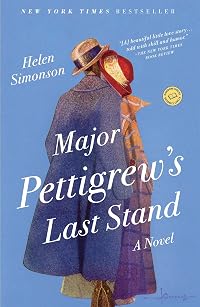
I knew Simonson was a talented writer, as I had read and loved her first novel, MAJOR PETTIGREW'S LAST STAND, which was an international bestseller. So I'm not surprised how much I enjoyed this one. I took small bedtime bites of its nearly 500 pages over a week's time. It was absolutely delicious. I'm still digesting. My very highest recommendation.
- Tim Bazzett author of the memoir, BOOKLOVER show less
But this is so much more than just another war show more novel. It's about class and prejudice and a time when women had virtually no rights, and about homophobia before it even had a name. Beatrice Nash is forced to work as a teacher because her late father, a respected academic, put her inheritance into a trust which a jealous relative administers in a niggardly fashion. She has vowed never to marry, and wants to be a writer in a time when women are not taken seriously. Indeed, she has collected and edited her father's letters into a book, but her father's agent gives her work to "the Writer," and she's to receive no credit. Daniel, the budding young poet, is involved in an intimate, unspoken affair with Craigmore, a wealthy young artist and nobleman whose father breaks up the relationship by forcing his son into the Army. In fact, both Daniel and his cousin, Hugh, a young surgeon (who is draw to Beatrice), also end up in the Army, as does young Snout, Beatrice's most promising student, who realizes he'll never go far, because he's "just a Gypsy." So there are any number of threads to follow in this richly woven tapestry of love, war, class, loss and heartbreak. The narrative moves at a leisurely pace until the principals are separated by the war, the women on the home front and the men in war-torn France, at which time things begin to move much more quickly, taking the reader along.
I knew Simonson was a talented writer, as I had read and loved her first novel, MAJOR PETTIGREW'S LAST STAND, which was an international bestseller. So I'm not surprised how much I enjoyed this one. I took small bedtime bites of its nearly 500 pages over a week's time. It was absolutely delicious. I'm still digesting. My very highest recommendation.
- Tim Bazzett author of the memoir, BOOKLOVER show less
I just couldn't stay awake last night to finish the last 75 pages of The Summer Before the War. So now I'm starting today with that bittersweet feeling of finishing a wonderful book. I laughed and cried and felt nostalgic for the loss of that last Edwardian summer before the war. Helen Simonson created a whole village of memorable characters who seem to sense they are on the edge of real change in their lives beyond just men going to war. We see women coming into their own strength, some leading the charge while others are pulled along. And, we see tragedy leading to a new understanding of who might be brave and deserving outside the strict rules of polite society.
This book is amazing. I liked its length; it took its time to develop interesting characters and recreate the details of the time period. It was a wonderful book for being immersed in the past, and it seemed very reminiscent of Downton Abbey, with its depictions of the war, of the wealthy (and not-so-wealthy) families, and of the difficulties of navigating the dangerous waters of society. I also liked the book very much for what wasn't said. This book reminds me somewhat of Hemingway in that Simonson clearly understands the power of subtlety; although she is no minimalist, she obviously knows that what is left out can be more powerful than what's put in, and she uses it to great advantage. The heroine, Beatrice, is a strong woman but show more never a cliché, and Hugh's gentle nature is a breath of fresh air. I also thought the LGTB romance was beautifully developed and very moving, and again, it's all the more powerful for how much goes unsaid. A beautiful and poignant book. show less
The summer of 1914 was supposedly one of the most pleasant in memory. Helen Simonson’s The Summer Before the War doesn’t dwell on it too much except in the title. Not quite a romance novel; no bodices are ripped; but the interested parties flush when their hands accidently touch. Sometimes it seems like the author is working her way down a checklist of stereotypes: spinster schoolteacher, check; closeted gay, check; arrogant nobility, check; wise gypsy woman, check; small town gossips, check. Still, all those people likely existed in that time and place. I can’t say too much lest spoilers; however, one of the most moving passages was not in the text at all but in the acknowledgements, where the author comments that after the war, show more rape was not treated as an official war crime since there was no evidence that the high command had explicitly forbidden it. show less
The Summer Before the War is a rather misleading title, since war is declared partway through, interrupting the tea parties and small-town politics, and summer ends before the book does. Fortunately, I also like stories set during world wars.
Hugh, a medical student, and his cousin Daniel, recently graduated from Oxford, have grown up spending summers with their Aunt Agatha and Uncle John in the coastal town of Rye. In the summer of 1914, they became caught up in Agatha’s latest project: getting a woman appointed as the Latin teacher at the local grammar school. The newly-arrived teacher, Beatrice, is grieving for her father, desperate for independence from her disapproving relatives, and much younger than anyone expects. When the show more success of her appointment is thrown into doubt, Hugh and Daniel step forward.
And then war is declared, and the village takes in a group of Belgium refugees, and young men begin signing up.
The Summer Before the War pulled me in and then broke my heart. I fell in love with the characters, especially Agatha and Beatrice, with their passions for change, for education, for helping others, and their very human limitations.
There are charming, picturesque “summer in the countryside” aspects to this story. Even after war breaks out, there are things to be hopeful about. But this isn’t a romanticised idea of the past. It doesn’t shy away from the problematic attitudes and injustices within the community - and some of those attitudes really surprised me.
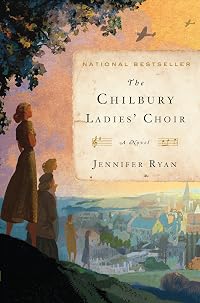
It was interesting reading this so soon after The Chilbury Ladies’ Choir, because both deal with similar themes and scandals - but The Summer Before the War does so with greater subtlety and nuance. At first it seems like there’s a significant shift partway through this story when war breaks out, and yet it continues to be a tightly focused exploration of social politics, prejudice and and consequences of breaking with convention. I appreciated the way all the pieces ultimately fitted together, even the way the final ‘twist’ was something I had suspected.
I’m going to have trouble choosing only a dozen favourite books at the end of the year, but I think this will be on that list.
”I only know that I want to teach something other than elementary school,” [Beatrice] said. “I want to teach and study and write, as my father did, and to have my efforts treated no less seriously just because I am a woman.”
Agatha sighed. “You are an educated person and can be of use to the country, but women like us need to demonstrate our worth, rather than demonstrating in the streets. Besides,” she added, “we don’t need all the housemaids declaring their independence and running off to join the music hall, do we?”
“Who would boil the tea?” said Beatrice, before she could stop herself. show less
Hugh, a medical student, and his cousin Daniel, recently graduated from Oxford, have grown up spending summers with their Aunt Agatha and Uncle John in the coastal town of Rye. In the summer of 1914, they became caught up in Agatha’s latest project: getting a woman appointed as the Latin teacher at the local grammar school. The newly-arrived teacher, Beatrice, is grieving for her father, desperate for independence from her disapproving relatives, and much younger than anyone expects. When the show more success of her appointment is thrown into doubt, Hugh and Daniel step forward.
And then war is declared, and the village takes in a group of Belgium refugees, and young men begin signing up.
The Summer Before the War pulled me in and then broke my heart. I fell in love with the characters, especially Agatha and Beatrice, with their passions for change, for education, for helping others, and their very human limitations.
There are charming, picturesque “summer in the countryside” aspects to this story. Even after war breaks out, there are things to be hopeful about. But this isn’t a romanticised idea of the past. It doesn’t shy away from the problematic attitudes and injustices within the community - and some of those attitudes really surprised me.
It was interesting reading this so soon after The Chilbury Ladies’ Choir, because both deal with similar themes and scandals - but The Summer Before the War does so with greater subtlety and nuance. At first it seems like there’s a significant shift partway through this story when war breaks out, and yet it continues to be a tightly focused exploration of social politics, prejudice and and consequences of breaking with convention. I appreciated the way all the pieces ultimately fitted together, even the way the final ‘twist’ was something I had suspected.
I’m going to have trouble choosing only a dozen favourite books at the end of the year, but I think this will be on that list.
”I only know that I want to teach something other than elementary school,” [Beatrice] said. “I want to teach and study and write, as my father did, and to have my efforts treated no less seriously just because I am a woman.”
Agatha sighed. “You are an educated person and can be of use to the country, but women like us need to demonstrate our worth, rather than demonstrating in the streets. Besides,” she added, “we don’t need all the housemaids declaring their independence and running off to join the music hall, do we?”
“Who would boil the tea?” said Beatrice, before she could stop herself. show less
Beatrice Nash had been raised by her professor father to be well-educated, independent, and capable but, when he dies, he leaves her inheritance in trust with relatives until she should marry despite the fact that this leaves her at the economic mercy of relatives who consider her incapable of handling money. She takes a position as a Latin teacher in Rye, a small village on the Essex coast under the sponsorship of Agatha Kent, an upper class pillar of this small community, who has fought for her despite prejudice against female teachers and with the rather sneaky support of Agatha’s two nephews, medical student Hugh, and aspiring poet Daniel. Among her pupils is a boy called Snout, a surprisingly gifted and intelligent student but show more whose talent is dismissed by almost everyone because of his Romani father.
Germany’s invasion of Belgium changes the village dynamic in both large and small ways. They take in several Belgian refugees, most of whom are peasants and therefore a great disappointment to the village with the exception of a professor and his beautiful daughter, Celeste whose own tragedy highlights the cruelty of many of the attitudes of the time. When England goes to war, many of the young men who go off to fight will not return and the reaction of the villagers when they view mothers bereft by the loss of their sons is one of the most poignant and heartrending scenes of the novel.
The Summer Before the War by author Helen Simonson begins, as the title suggests, in the summer of 1914 in Rye, a small village on the coast of England. Less a romance or a war story than a comedy of manners, it explores the British class system, the position of women in society at the time, and attitudes towards homosexuality, divorce, and rape among other things. But don’t get me wrong, Simonson has a gentle but deft touch even as she skewers some of the mores and customs of the era, especially all of the restrictions placed on women and the lower classes and she does it often in the coy way of literature of the period - she gives a peek at the ankle but never bares the leg. She also buries this critique of Edwardian society in a beautifully-written and interesting story with complex characters and flashes of humour and satire. show less
Germany’s invasion of Belgium changes the village dynamic in both large and small ways. They take in several Belgian refugees, most of whom are peasants and therefore a great disappointment to the village with the exception of a professor and his beautiful daughter, Celeste whose own tragedy highlights the cruelty of many of the attitudes of the time. When England goes to war, many of the young men who go off to fight will not return and the reaction of the villagers when they view mothers bereft by the loss of their sons is one of the most poignant and heartrending scenes of the novel.
The Summer Before the War by author Helen Simonson begins, as the title suggests, in the summer of 1914 in Rye, a small village on the coast of England. Less a romance or a war story than a comedy of manners, it explores the British class system, the position of women in society at the time, and attitudes towards homosexuality, divorce, and rape among other things. But don’t get me wrong, Simonson has a gentle but deft touch even as she skewers some of the mores and customs of the era, especially all of the restrictions placed on women and the lower classes and she does it often in the coy way of literature of the period - she gives a peek at the ankle but never bares the leg. She also buries this critique of Edwardian society in a beautifully-written and interesting story with complex characters and flashes of humour and satire. show less
The Great War, as World War I was called before another, larger conflict came along and made numeration necessary, introduced to the world the Industrial Revolution’s penchant for efficiency, streamlining one of mankind’s oldest activities, that of killing each other. What with poison gas, machine guns, barbed wire, tanks, airplanes and explosive artillery, the ability to commit wholesale slaughter achieved apocalyptic proportions. Soldiers from all over the globe died in the millions trying to capture or recapture terrain that was measured in yards, or even feet. In Verdun, there is a single crypt that contains the remains of an estimated 130,000 unidentified soldiers who fell on that battlefield alone. Sometimes numbers are so show more great they lose all meaning but when you see the Mémorial Ossuaire, the impact is staggering.
In the summer before the war, though, and in Helen Simonson’s book of that name war on such a scale was beyond anyone’s imagining. How could a little unpleasantness in the Balkans possibly disrupt the most pleasant summer East Sussex has seen in years? For a cast of characters that Downton Abbey’s mourners will appreciate, the coming conflict is seen more as an opportunity. Men’s careers and reputations will be made and women will be able to exhibit their philanthropic natures by tending to the needs of refugees fleeing Belgium.
In less skillful hands, Beatrice the spinster Latin teacher, Hugh the stuffy aspiring surgeon, and Daniel the flamboyant poet cousin would be stereotypical caricatures. Fortunately, Simonson has done an amazing job of fleshing out a varied cast of characters, artfully endowing each with his or her own unique personality.
As I listened to this spellbinding story, ably narrated by Fiona Hardingham, I could not help but recall a poem that perfectly captures the melancholy spirit of this excellent novel. The poem is by by A.E. Housman, a kindred spirit of Daniel.
In the summer before the war, though, and in Helen Simonson’s book of that name war on such a scale was beyond anyone’s imagining. How could a little unpleasantness in the Balkans possibly disrupt the most pleasant summer East Sussex has seen in years? For a cast of characters that Downton Abbey’s mourners will appreciate, the coming conflict is seen more as an opportunity. Men’s careers and reputations will be made and women will be able to exhibit their philanthropic natures by tending to the needs of refugees fleeing Belgium.
In less skillful hands, Beatrice the spinster Latin teacher, Hugh the stuffy aspiring surgeon, and Daniel the flamboyant poet cousin would be stereotypical caricatures. Fortunately, Simonson has done an amazing job of fleshing out a varied cast of characters, artfully endowing each with his or her own unique personality.
As I listened to this spellbinding story, ably narrated by Fiona Hardingham, I could not help but recall a poem that perfectly captures the melancholy spirit of this excellent novel. The poem is by by A.E. Housman, a kindred spirit of Daniel.
When I would muse in boyhoodshow less
The wild green woods among,
And nurse resolves and fancies
Because the world was young,
It was not foes to conquer,
Nor sweethearts to be kind,
But it was friends to die for
That I would seek and find.
I sought them far and found them,
The sure, the straight, the brave,
The hearts I lost my own to,
The souls I could not save.
They braced their belts about them,
They crossed in ships the sea,
They sought and found six feet of ground,
And there they died for me.
Members
- Recently Added By
Published Reviews
ThingScore 75
Now Simonson is back with The Summer Before the War, a gentle comedy of provincial manners that rivals her first in the charm department...In The Summer Before the War, the novelist's attention to sensory detail is lovely, simple yet evocative.... Droll dialogue dominates, with gentle zingers regularly applied. There are the time-tested markers of small town life: a parade, a harvest festival, show more country dances....The contrast between pastoral peace and the violent chaos of war is what gives this novel its heft; show less
added by vancouverdeb
Rather than making characters sympathetic, this virtuous quirk prevents the reader from discovering the mild contradictions in human nature. And that is what we travel to social-comedy land to enjoy.
added by vancouverdeb
Lists

Historical Fiction
889 works; 91 members

Books Read in 2016
4,666 works; 199 members

Books Read in 2018
4,360 works; 110 members
Author Information

3+ Works 8,896 Members
Helen Simonson was born in England, lived many years in Brooklyn, N.Y. and currently resides in the Washington, D.C. area. Simonson's literary inspirations include Virginia Woolf and Henry James. Her novels, Major Pettigrews Last Stand and The Summer Before the War, are New York Times Bestsellers. (Bowker Author Biography)
Some Editions
Awards and Honors
Work Relationships
Has as a reference guide/companion
Common Knowledge
- Canonical title
- The Summer Before the War
- Original title
- The Summer Before the War
- Original publication date
- 2016-03-22
- People/Characters
- Agatha Kent; Beatrice Nash; Hugh Grange; Daniel Bookham; John Kent; Mr Tillingham (show all 10); Harry Wheaton; Bettina Fothergill; Celeste; Snout
- Important places
- Rye, East Sussex, England, UK
- Important events
- World War I (1914 | 1918)
- Dedication
- To my parents,
Alan and Margaret Phillips - First words
- The town of Rye rose from the flat marshes like an island, its tumbled pyramid of red-tiled roofs glowing in the slanting evening light.
- Last words
- (Click to show. Warning: May contain spoilers.)Overhead, a single lark spilled its praise into the blue dome of the sky.
- Blurbers
- Barrows, Annie; McLain, Paula
Classifications
Statistics
- Members
- 2,057
- Popularity
- 10,142
- Reviews
- 134
- Rating
- (3.79)
- Languages
- 8 — Albanian, Bulgarian, English, French, German, Italian, Spanish, Swedish
- Media
- Paper, Audiobook, Ebook
- ISBNs
- 36
- ASINs
- 8