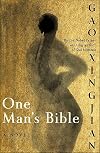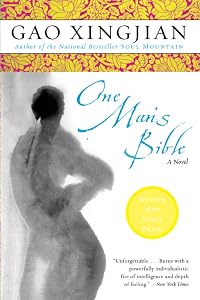
One Man's Bible
by Gao Xingjian
On This Page
Description
One Man's Bible is a fictionalized account of Gao Xingjian's life under the Chinese Communist regime. Daily life is riddled with paranoia and fear, and government propaganda turns citizens against one another. It is a place where a single sentence spoken ten years earlier can make one an enemy of the state. But One Man's Bible is also a profound meditation on the essence of writing, on exile, on the effects of political oppression on the human spirit, and on how the human spirit can triumph.Tags
Recommendations

Member Reviews
Imagine having lived a life so traumatic that you are unable to consider yourself in the first person. Yes, you have managed to leave the country where those terrible events happened, but you will never come to terms with the events, the country, or yourself at that time.
This means that now you refer to yourself in one of two ways. Recounting your life, you have to use either the second or the third person. The person you were when you endured so much is “he”. The person you are now is “you”. There is no “I”.
Now, in Hong Kong, just before the turnover, so much comes back. Friends there ask what will happen; will they be safe? How to explain? Your French travel documents give you refugee status, so you are relatively safe. show more Where should your friends go?
The protagonist tried to escape all this, as he had ever since leaving China, by losing himself in sexual encounters at every opportunity, often enhanced by recounting other encounters. Here in Hong Kong, however, he may have met his match. As he said when speaking with Margarethe about the Cultural Revolution, “ only a Jewish woman with a German mind, who has learned Chinese, could possibly be interested.”
Much of this semi-autobiographical novel is concerned with this struggle to free his former self. Gao writes of his self examination, While observing and examining him unmasked, you must turn him into fiction, a character that is unrelated to you and has qualities yet to be discovered. [[…]] You do not play the role of judge, and you should not regard him as a victim[[… ]] Of interest is not your judgement nor his righteous indignation, your sorrow or his suffering, but, rather, the process of this inquiry.
The Hong Kong period works well. There is enough uncertainty in the political situation to keep the protagonist active. That may sound like an odd description, but later in the book, we find him in Europe. Since leaving China he had become a well known author and playwright, and has invitations from many countries to appear in that role. Once back in Europe though, he seems to be less engaged, almost to the point of becoming a dilettante. His former self , his “he”, is never forgotten, but now he seems unable to decide what to do as his current self, his “you”. The process breaks down. In literature as in life, there is no resolution. show less
This means that now you refer to yourself in one of two ways. Recounting your life, you have to use either the second or the third person. The person you were when you endured so much is “he”. The person you are now is “you”. There is no “I”.
Now, in Hong Kong, just before the turnover, so much comes back. Friends there ask what will happen; will they be safe? How to explain? Your French travel documents give you refugee status, so you are relatively safe. show more Where should your friends go?
The protagonist tried to escape all this, as he had ever since leaving China, by losing himself in sexual encounters at every opportunity, often enhanced by recounting other encounters. Here in Hong Kong, however, he may have met his match. As he said when speaking with Margarethe about the Cultural Revolution, “ only a Jewish woman with a German mind, who has learned Chinese, could possibly be interested.”
Much of this semi-autobiographical novel is concerned with this struggle to free his former self. Gao writes of his self examination, While observing and examining him unmasked, you must turn him into fiction, a character that is unrelated to you and has qualities yet to be discovered. [[…]] You do not play the role of judge, and you should not regard him as a victim[[… ]] Of interest is not your judgement nor his righteous indignation, your sorrow or his suffering, but, rather, the process of this inquiry.
The Hong Kong period works well. There is enough uncertainty in the political situation to keep the protagonist active. That may sound like an odd description, but later in the book, we find him in Europe. Since leaving China he had become a well known author and playwright, and has invitations from many countries to appear in that role. Once back in Europe though, he seems to be less engaged, almost to the point of becoming a dilettante. His former self , his “he”, is never forgotten, but now he seems unable to decide what to do as his current self, his “you”. The process breaks down. In literature as in life, there is no resolution. show less
The Cultural Revolution was a 10-year long, horrific period in China's modern history. To Western readers of One man's bible by Gao Xingjian, a Chinese writer who has now settled in France, the almost incredible descriptions of the struggles during that period will impress them most. Details about, for instance, the Jinggangshan group at Tsinghua University are outragious and not usually known to the general readership, as they are largely omitted from films and history books. Historical landmark events mentioned throughout the book track the progress in time through this dark period.
It is tempting to assume that the unnamed main character is the book, who is also a writer, stands for the author, but this is not logical. The novel is a show more work of fiction, and the main character would be several years younger than the author would have been at that time. The sense of distance is enhanced by the use of the second and third person singular throughout the narrative.
Some readers have expressed discontent about the title of the novel, One man's bible. They suggest One Man's Testament would be more appropriate. However, by using the word "testament" would shift the focus to the events of the Cultural Revolution is the book, which is clearly not what the author has in mind. The Cultural Revolution should not be in the foreground of the story, but in the background: Chairman Mao's Cultural Revolution alone could not be blamed. He himself was also to blame, although this could not compensate her for her lost youth.. The context of this quote is his divorce from Qian -- the woman he took because she was available.
The Cultural Revolution in the background, what is in the foreground, and partly the blame of the CR, is the writer's yearning for the freedom to write, and the freedom to fuck around. Rationing and restrictions did not only apply to rights, food, goods, but also to social relations, access to women in particular.
The sexual freedom the main character experiences in the village, learning from the peasants, an unmoderated expression of vulgarities, incest and rape, is not exactly what he seeks, but it is "liberating." He marries Qian there, but is soon deserted by her, as his eyes and heart wander to other girls and women in the village.
Lin, Xu Qian, Maomei, Xiaoxiao, Martina, Silvie, Linda, Margarethe; they do not all have names, sometimes it is merely a French filly.
You are filled with gratitude to women, and it is not just lust. You seek them, but they do not necessarily want to give themselves to you. You are insatiable, but it's impossible for you to have them all. God did not give them to you, and you don't have to thank God, but, finally, you do feel a sort of universal gratitude. p.448
and
While he could not find a way out, by seizing these beautiful specks of feeling, he was able to avoid spiritual collapse. p.447
The words 圣经 (shengjing) in the original Chinese title, 一个人的圣经, may refer to the Bible or the Confucian Classics. They are not a testament, but guides to avoid spiritual collapse. show less
It is tempting to assume that the unnamed main character is the book, who is also a writer, stands for the author, but this is not logical. The novel is a show more work of fiction, and the main character would be several years younger than the author would have been at that time. The sense of distance is enhanced by the use of the second and third person singular throughout the narrative.
Some readers have expressed discontent about the title of the novel, One man's bible. They suggest One Man's Testament would be more appropriate. However, by using the word "testament" would shift the focus to the events of the Cultural Revolution is the book, which is clearly not what the author has in mind. The Cultural Revolution should not be in the foreground of the story, but in the background: Chairman Mao's Cultural Revolution alone could not be blamed. He himself was also to blame, although this could not compensate her for her lost youth.. The context of this quote is his divorce from Qian -- the woman he took because she was available.
The Cultural Revolution in the background, what is in the foreground, and partly the blame of the CR, is the writer's yearning for the freedom to write, and the freedom to fuck around. Rationing and restrictions did not only apply to rights, food, goods, but also to social relations, access to women in particular.
The sexual freedom the main character experiences in the village, learning from the peasants, an unmoderated expression of vulgarities, incest and rape, is not exactly what he seeks, but it is "liberating." He marries Qian there, but is soon deserted by her, as his eyes and heart wander to other girls and women in the village.
Lin, Xu Qian, Maomei, Xiaoxiao, Martina, Silvie, Linda, Margarethe; they do not all have names, sometimes it is merely a French filly.
You are filled with gratitude to women, and it is not just lust. You seek them, but they do not necessarily want to give themselves to you. You are insatiable, but it's impossible for you to have them all. God did not give them to you, and you don't have to thank God, but, finally, you do feel a sort of universal gratitude. p.448
and
While he could not find a way out, by seizing these beautiful specks of feeling, he was able to avoid spiritual collapse. p.447
The words 圣经 (shengjing) in the original Chinese title, 一个人的圣经, may refer to the Bible or the Confucian Classics. They are not a testament, but guides to avoid spiritual collapse. show less
One Man's Bible is a profound meditation on the excruciating effects of sordid political oppression on human spirit. The sobriety of writing bespeaks a dignity, which is an awareness of existence, and it is in this existence that the power of the frail individual lies. In a laudably detached voice, Gao Xinjian stipples a vivid picture of human frailty, repression and suffering under the totalitarian regime that exists only in memory, like a hidden spring of spring gushing forth a deluge of feelings that are difficult to articulate.
The book, unlike many of the contemporaries that expose austerity of life under Red Horror, is shockingly realistic and yet not a tale of suffering, at least that is not what Gao intends it to be. The show more delineation is so genuine and faithful to the reckless truth and excruciatingly painful purging that only men in Gao's generation can identify with. The reality is almost too heartrending to bear, even in words: the acrimonious politics, the class struggles, and a society that is riddled with paranoia and fear under such taut repression and miasma.
Gao reflected on his childhood and adolescence, cudgeled his memory of China's most obstreperous times, and yet found an incredulously detached voice as if he is an outsider to all the horror. His narrative in the book is almost a form of joy without any connotations of morality. He is indeed like an outsider who narrates transparently the events, who scrapes off the thick residue of resentment and anger deep in his heart and articulates his thoughts and impression with amazing equanimity, and audacity.
The result is a brand new voice in modern Chinese literature, a genre that deviates from post-modernism. It is a pure form of narration in which he contrives to describe in simple language the terrible contamination of life by politics, the tragic infringement of human rights, and at the same time manages to expunge the pervasive politics that penetrates every pore and sense. One can realize that Gao has carefully excised the insights that he possesses at the instant and in the place, as well as shoving aside his present thoughts.
The meaning of the title is at total loggerhead to any preoccupied speculation that readers might possess prior to reading the book. Gao contrives not to write about politics though he means to accent his memories during the dark period. The outcome is a stunning account of man person's fate is being miraculously and calumnously determined with surpassing accuracy than the prophecies of the bible, attributing to the policies and regulations that fluctuate so frequently, according to the bitter contention of Party members.
As accurate as it claims to be, the dossier, which exists for each individual, is generally inaccessible to the general public, does not necessarily reflect the truth (including mentality, thoughts, political stance, and affiliations) of individuals. People learn to wear a mask, to extinguish their voices, to hide their true feelings deep at the bottom of their heart in the midst of paranoia. Everyone seizes the opportunity to put on an act to score some good points for himself. Nobody dares to look one another in the eyes for fear of betraying any allegedly reactionary or counter-revolutionary thoughts.
The sense of time is warped as Margarethe, Gao Xinjian's Jewish lover, stirs up his memories of the embittered childhood under the shadow of Mao in a hotel room during pre-handover Hong Kong. Though a fictionalized account, Gao has engaged in a dialogue that produces a state of mind that allows him to endure the pain of articulating the painful events. To him the country doesn't exist but exists only in memory that the country is possessed by him alone, and is thus a one man's account. The book is an epistle of freedom that is obtainable only through seizing the moments in life and capturing instant-to-instant transformations. show less
The book, unlike many of the contemporaries that expose austerity of life under Red Horror, is shockingly realistic and yet not a tale of suffering, at least that is not what Gao intends it to be. The show more delineation is so genuine and faithful to the reckless truth and excruciatingly painful purging that only men in Gao's generation can identify with. The reality is almost too heartrending to bear, even in words: the acrimonious politics, the class struggles, and a society that is riddled with paranoia and fear under such taut repression and miasma.
Gao reflected on his childhood and adolescence, cudgeled his memory of China's most obstreperous times, and yet found an incredulously detached voice as if he is an outsider to all the horror. His narrative in the book is almost a form of joy without any connotations of morality. He is indeed like an outsider who narrates transparently the events, who scrapes off the thick residue of resentment and anger deep in his heart and articulates his thoughts and impression with amazing equanimity, and audacity.
The result is a brand new voice in modern Chinese literature, a genre that deviates from post-modernism. It is a pure form of narration in which he contrives to describe in simple language the terrible contamination of life by politics, the tragic infringement of human rights, and at the same time manages to expunge the pervasive politics that penetrates every pore and sense. One can realize that Gao has carefully excised the insights that he possesses at the instant and in the place, as well as shoving aside his present thoughts.
The meaning of the title is at total loggerhead to any preoccupied speculation that readers might possess prior to reading the book. Gao contrives not to write about politics though he means to accent his memories during the dark period. The outcome is a stunning account of man person's fate is being miraculously and calumnously determined with surpassing accuracy than the prophecies of the bible, attributing to the policies and regulations that fluctuate so frequently, according to the bitter contention of Party members.
As accurate as it claims to be, the dossier, which exists for each individual, is generally inaccessible to the general public, does not necessarily reflect the truth (including mentality, thoughts, political stance, and affiliations) of individuals. People learn to wear a mask, to extinguish their voices, to hide their true feelings deep at the bottom of their heart in the midst of paranoia. Everyone seizes the opportunity to put on an act to score some good points for himself. Nobody dares to look one another in the eyes for fear of betraying any allegedly reactionary or counter-revolutionary thoughts.
The sense of time is warped as Margarethe, Gao Xinjian's Jewish lover, stirs up his memories of the embittered childhood under the shadow of Mao in a hotel room during pre-handover Hong Kong. Though a fictionalized account, Gao has engaged in a dialogue that produces a state of mind that allows him to endure the pain of articulating the painful events. To him the country doesn't exist but exists only in memory that the country is possessed by him alone, and is thus a one man's account. The book is an epistle of freedom that is obtainable only through seizing the moments in life and capturing instant-to-instant transformations. show less
55. One Man's Bible by Gao Xingjian
published: 1999
format: 450 page Hardcover
acquired: 2003 from a 75% Off Books (do they still exist?)
read: Dec 14-24
rating: 4
Another dusty book on the shelf, this one has been hanging around for some 14 years with my eye on it, but with my never having any clue what it contained. After reading a few pages, I looked up a few reviews and found some really critical, especially in comparison to [Soul Mountain] (which led to his Nobel prize). These negative reviews were a bit unfair but perfect for lowering my expectations and allowing me to really enjoy this.
It's a lightly fictionalized memoir of Gao's experiences in the Chinese Cultural Revolution (roughly 1966 to Mao's death in 1976). He mixes in a life as show more a Chinese exile in the present (1996-1998) obviously based on him, but likely heavily fictionalized, or he was quite the promiscuous one. He is, I imagine, playful with the truth in many ways.
His life in and memories of the Cultural Revolution are insane. It's not clear to me how political involved he was, but he experienced purges that flipflopped on themselves and purge the purgers. There was no right answer except to learn to mimic everyone around you with full emotional commitment. Anything that stood out brought suspicion, which brought a lot of suffering or worse. He says that it was almost easier to try to rebel than not to, since he craved independent thought and expression. Gao is an artist in different ways, visually, in play writing and as a novelist. The cover of the book is his own art work.
There is a sophistication to how the book is presented. First in how he mixes the present and past so that they are distinct but become a whole. Part of this distinction is in how his younger self is always described in third person, but his (fictional?) current self is addressed directly always as "you". Second is in how he strives to create atmosphere. A lot of this stuff is beyond words, he has to create the experience in the text to really express it, and he does this really well. And third is the pacing. There is weak narrative drive as the each section, each chapter generally closes a story, with some notable exceptions. But it paces nicely and continuously so that it becomes a really nice to book to get lost it, and pick up anytime. It comes apart at the end where he ties off the past and then spends a lot of time about his fictional present and all his love affairs. He tells how content he is, but the impression is the opposite as it all comes out empty, and I'm not sure that wasn't his intention.
All this together made for a really enjoyable reading experience and I think a fine book that leaves the reader with a lot to think about. A writer and artist's book. And it makes me really want to read [Soul Mountain].
2017
https://www.librarything.com/topic/260412#6295324 show less
published: 1999
format: 450 page Hardcover
acquired: 2003 from a 75% Off Books (do they still exist?)
read: Dec 14-24
rating: 4
Another dusty book on the shelf, this one has been hanging around for some 14 years with my eye on it, but with my never having any clue what it contained. After reading a few pages, I looked up a few reviews and found some really critical, especially in comparison to [Soul Mountain] (which led to his Nobel prize). These negative reviews were a bit unfair but perfect for lowering my expectations and allowing me to really enjoy this.
It's a lightly fictionalized memoir of Gao's experiences in the Chinese Cultural Revolution (roughly 1966 to Mao's death in 1976). He mixes in a life as show more a Chinese exile in the present (1996-1998) obviously based on him, but likely heavily fictionalized, or he was quite the promiscuous one. He is, I imagine, playful with the truth in many ways.
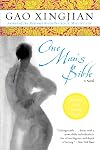
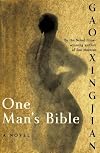
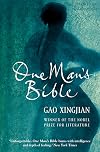
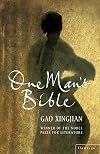
His life in and memories of the Cultural Revolution are insane. It's not clear to me how political involved he was, but he experienced purges that flipflopped on themselves and purge the purgers. There was no right answer except to learn to mimic everyone around you with full emotional commitment. Anything that stood out brought suspicion, which brought a lot of suffering or worse. He says that it was almost easier to try to rebel than not to, since he craved independent thought and expression. Gao is an artist in different ways, visually, in play writing and as a novelist. The cover of the book is his own art work.
There is a sophistication to how the book is presented. First in how he mixes the present and past so that they are distinct but become a whole. Part of this distinction is in how his younger self is always described in third person, but his (fictional?) current self is addressed directly always as "you". Second is in how he strives to create atmosphere. A lot of this stuff is beyond words, he has to create the experience in the text to really express it, and he does this really well. And third is the pacing. There is weak narrative drive as the each section, each chapter generally closes a story, with some notable exceptions. But it paces nicely and continuously so that it becomes a really nice to book to get lost it, and pick up anytime. It comes apart at the end where he ties off the past and then spends a lot of time about his fictional present and all his love affairs. He tells how content he is, but the impression is the opposite as it all comes out empty, and I'm not sure that wasn't his intention.
All this together made for a really enjoyable reading experience and I think a fine book that leaves the reader with a lot to think about. A writer and artist's book. And it makes me really want to read [Soul Mountain].
"You know you are certainly not the embodiment of truth, and you write simply to indicate that a sort of life, worse than a quagmire, more real than an imaginary hell, more terrifying than Judgement Day, has, in fact, existed."
2017
https://www.librarything.com/topic/260412#6295324 show less
One Man's Bible is a fictionalized memoir of the author's life in communist China. It begins with a conversation between the narrator (who is never named) and his Jewish-German lover. Margarethe wants to have a better understanding of this man's past, but also, indirectly, of her own people's struggle against oppression. The narrator at first resists looking back, but soon finds himself lost in the memories of his former life.
I was hooked at the first paragraph, and had a hard time putting the book down. This is a story that's going to stick with me for some time, I think. Of course, I had a basic understanding of the history of Mao's China, but it's one thing to know the facts and another to hear the stories from someone who was show more actually there. Most of us can't begin to fathom a life where we're not free to express our thoughts and ideas, and where the wrong move could have you tortured, send you to prison, or your death. Sometimes we need to be reminded of the freedom we often take for granted. show less
I was hooked at the first paragraph, and had a hard time putting the book down. This is a story that's going to stick with me for some time, I think. Of course, I had a basic understanding of the history of Mao's China, but it's one thing to know the facts and another to hear the stories from someone who was show more actually there. Most of us can't begin to fathom a life where we're not free to express our thoughts and ideas, and where the wrong move could have you tortured, send you to prison, or your death. Sometimes we need to be reminded of the freedom we often take for granted. show less
This is one of those books which seems disappointing in its early stages but which does pick up considerably after about the first quarter or third of the way through. The difficulties in getting into it were essentially two-fold:
1. Gao is writing predominantly in flashback to the years of the Cultural Revolution and although it's obviously autobiographical the POV of the narrative shifts constantly between addressing his younger self (you do this, you did that) and writing about his younger self (he did this, he did that), which feels stilted and artificial throughout; and
2. The early chapters are largely taken up with his sexual relationship with a self-pitying and self-indulgent German Jewish woman with a major chip on her shoulder show more (whether justifiably or not). In these early stages of the book, Gao swings alternately between beginning the recounting of his experiences and chapters focusing on their endless sessions of sex and her self-loathing and whining for reassurance and his endlessly having to provide the reassurance that she seems to need but never seems to benefit from. It is, in effect, from the moment that Margarethe leaves the novel that it really begins to take off.
Inevitably it is Gao's depictions of the horrors and trauma of the years of Cultural Revolution with its cult of terror, arbitrary arrest, denouncements and punishments which hold the fascination.
It therefore strikes me that it would perhaps have been closer to the spirit of the book if its English title had been One Man's Testament since what Gao has written here is indeed a testament, ie an act of witnessing the tumultuous moment in history known as The Cultural Revolution.
Having read it, however, I'm now interested in finding out more about the Cultural Revolution and its predecessor, the Great Leap Forward (that wasn't) than I was before. show less
1. Gao is writing predominantly in flashback to the years of the Cultural Revolution and although it's obviously autobiographical the POV of the narrative shifts constantly between addressing his younger self (you do this, you did that) and writing about his younger self (he did this, he did that), which feels stilted and artificial throughout; and
2. The early chapters are largely taken up with his sexual relationship with a self-pitying and self-indulgent German Jewish woman with a major chip on her shoulder show more (whether justifiably or not). In these early stages of the book, Gao swings alternately between beginning the recounting of his experiences and chapters focusing on their endless sessions of sex and her self-loathing and whining for reassurance and his endlessly having to provide the reassurance that she seems to need but never seems to benefit from. It is, in effect, from the moment that Margarethe leaves the novel that it really begins to take off.
Inevitably it is Gao's depictions of the horrors and trauma of the years of Cultural Revolution with its cult of terror, arbitrary arrest, denouncements and punishments which hold the fascination.
It therefore strikes me that it would perhaps have been closer to the spirit of the book if its English title had been One Man's Testament since what Gao has written here is indeed a testament, ie an act of witnessing the tumultuous moment in history known as The Cultural Revolution.
Having read it, however, I'm now interested in finding out more about the Cultural Revolution and its predecessor, the Great Leap Forward (that wasn't) than I was before. show less
I have to admit that I was unable to finish this book. I only made it a bit over halfway through.
The book is well written; the story line and subject matter are both intriguing. The book deserves to be read.
I think my mood at the time I attempted to read, and the pacing of the book threw me off the first time. I wholly plan pick this one back up one day and give it the time it deserves - and probably a better rating.
The book is well written; the story line and subject matter are both intriguing. The book deserves to be read.
I think my mood at the time I attempted to read, and the pacing of the book threw me off the first time. I wholly plan pick this one back up one day and give it the time it deserves - and probably a better rating.
Members
- Recently Added By
Author Information

61+ Works 4,382 Members
Xingjian Gao was born on January 4, 1940 in Ganzhou, China. As a child, he was encouraged to paint, write and play the violin, and at the age of 17, he attended the Beijing Foreign languages Institute, majoring in French and Literature. He is known as being at the fore of Chinese/French Literature, attempting to revolutionize Chinese literature show more and art. At the height of the Cultural Revolution, Gao destroyed all of his early work after being sent to the country for "rehabilitation." His "Preliminary Explorations Into the Techniques of Modern Fiction" caused serious debate in the Chinese literary world by challenging the social realism that was at the core of Chinese literature and art. The authorities condemned his work and Gao was placed under surveillance. He left China for Paris in 1987 and was honored by the French with the title of Chevalier de L'Ordere des Artes et des Lettres. None of Gao's plays have been performed in China since 1987, when "The Other Shore" had been banned. In 1989, Gao left the Communist party. After the publication of "Fugitives," which was about the reason he left the communist party, Gao was declared "persona noon grata" by the Chinese regime and all of his works banned. On October 12, 2000, Gao won the Nobel Prize for Literature, becoming the first Chinese writer ever to do so. He is well known for his writing as well as his painting and has had exhibitions all over the world. (Bowker Author Biography) show less
Series
Belongs to Publisher Series
Otavan kirjasto (150)
Fischer Taschenbuch (15241)
Common Knowledge
- Canonical title*
- Das Buch eines einsamen Menschen
- Original title
- 一個人的聖經
- Original publication date
- 1998 (original Chinese) (original Chinese); 2002 (English: Lee) (English: Lee)
- People/Characters
- Gao Xingjian; Marguerite
- Important places
- Hong Kong, China; Beijing, China; rural towns, China
- Important events
- Cultural Revolution (1966 | 1976)
- First words
- It was not that he didn't remember he once had another sort of life.
- Last words
- (Click to show. Warning: May contain spoilers.)It is Sunday, late morning, and you are waiting for friends to take you to the airport to catch the plane back to Paris some time after noon.
- Original language*
- Chinesisch
*Some information comes from Common Knowledge in other languages. Click "Edit" for more information.
Classifications
- Genres
- General Fiction, Fiction and Literature, Historical Fiction
- DDC/MDS
- 813 — Literature & rhetoric American literature in English American fiction in English
- LCC
- PL2869 .O128 .Y49413 — Language and Literature Languages and literatures of Eastern Asia, Africa, Oceania Languages of Eastern Asia, Africa, Oceania Chinese language and literature Chinese literature Individual authors and works
- BISAC
Statistics
- Members
- 720
- Popularity
- 39,610
- Reviews
- 15
- Rating
- (3.69)
- Languages
- 12 — Catalan, Chinese, Czech, Danish, English, Finnish, French, German, Italian, Norwegian (Bokmål), Spanish, Swedish
- Media
- Paper, Ebook
- ISBNs
- 47
- ASINs
- 8