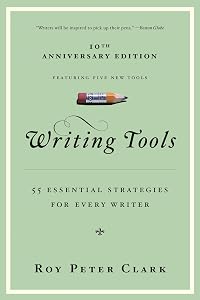
Writing Tools: 50 Essential Strategies for Every Writer
by Roy Peter Clark
On This Page
Description
A special 10th anniversary edition of Roy Peter Clark's bestselling guide to writing, featuring five bonus tools. Ten years ago, Roy Peter Clark, America's most influential writing teacher, whittled down almost thirty years of experience in journalism, writing, and teaching into a series of fifty short essays on different aspects of writing. In the past decade, Writing Tools has become a classic guidebook for novices and experts alike and remains one of the best loved books on writing show more available. Organized into four sections, "Nuts and Bolts," "Special Effects," "Blueprints for Stories," and "Useful Habits," Writing Tools is infused with more than 200 examples from journalism and literature. This new edition includes five brand new, never-before-shared tools. Accessible, entertaining, inspiring, and above all, useful for every type of writer, from high school student to novelist, Writing Tools is essential reading. show lessTags
Recommendations



Member Reviews
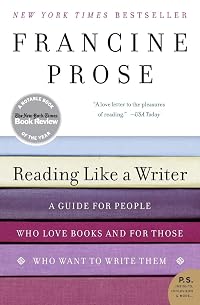
Writing in "Reading as a Writer," Francine Prose says she taught creative writing classes using rules until she realized the best writers broke those same rules on their way to creating masterpieces. Anton Chekhov's classic short story "The Lady with the Dog" is famous for breaking rules.
Another writing teacher, Roy Peter Clark of the Poynter Institute in St. Petersburg, puts the focus not on rules but rather on tools. His valuable guidebook for writers of all kinds, amateurs and professionals alike, is "Writing Tools: 50 Essential Strategies for Every Writer," published in 2006. The word essential in the subtitle is unfortunate, for it implies something mandatory, and thus a rule. A tool, on the other hand, is something that may be show more useful sometimes, but not always. A handyman doesn't necessarily use both a hammer and a screwdriver on every project.
In St. Petersburg I once heard Clark speak on the subject of writing, and he spoke at length on a six-word sentence written by William Shakespeare in "Macbeth" and discussed early in this book: "The Queen, my lord, is dead." He noted that Shakespeare might have ordered the same six words differently, "The Queen is dead, my lord" or "My lord, the Queen is dead." So what makes Shakespeare's order the best one? Because it places the subject of the sentence near the front, where it usually works best in a clear sentence, and saves the key word, dead, for the end, where it will have the most impact.
"Order words for emphasis" is the second tool in Clark's toolbox. Others include "Activate your verbs" (but notice Shakespeare chose a passive verb for his sentence), "Fear not the long sentence," "Vary the length of paragraphs," "Work from a plan" and "Learn from your critics."
Clark advises against reading his book in one sitting, although it may be short enough for some readers to accomplish this. A carpenter in training cannot master all the tools in the toolbox at the same time, and neither can a writer in training, and that includes anyone who opens this book. I took his advice and read one chapter a day, but that still may be too quickly to master many of these tools. Many take time both to digest and to implement, such as that one about learning from one's critics. Even the best writers may never master that one. show less
Another writing teacher, Roy Peter Clark of the Poynter Institute in St. Petersburg, puts the focus not on rules but rather on tools. His valuable guidebook for writers of all kinds, amateurs and professionals alike, is "Writing Tools: 50 Essential Strategies for Every Writer," published in 2006. The word essential in the subtitle is unfortunate, for it implies something mandatory, and thus a rule. A tool, on the other hand, is something that may be show more useful sometimes, but not always. A handyman doesn't necessarily use both a hammer and a screwdriver on every project.
In St. Petersburg I once heard Clark speak on the subject of writing, and he spoke at length on a six-word sentence written by William Shakespeare in "Macbeth" and discussed early in this book: "The Queen, my lord, is dead." He noted that Shakespeare might have ordered the same six words differently, "The Queen is dead, my lord" or "My lord, the Queen is dead." So what makes Shakespeare's order the best one? Because it places the subject of the sentence near the front, where it usually works best in a clear sentence, and saves the key word, dead, for the end, where it will have the most impact.
"Order words for emphasis" is the second tool in Clark's toolbox. Others include "Activate your verbs" (but notice Shakespeare chose a passive verb for his sentence), "Fear not the long sentence," "Vary the length of paragraphs," "Work from a plan" and "Learn from your critics."
Clark advises against reading his book in one sitting, although it may be short enough for some readers to accomplish this. A carpenter in training cannot master all the tools in the toolbox at the same time, and neither can a writer in training, and that includes anyone who opens this book. I took his advice and read one chapter a day, but that still may be too quickly to master many of these tools. Many take time both to digest and to implement, such as that one about learning from one's critics. Even the best writers may never master that one. show less
This writing guide was actually inspiring. I would highly recommend all aspiring writers to read it. He provides good, simple exercises at the end of each chapter, which I did not do. It may be worth a second read, but a little more slowly next time, and to perform the exercises to train my mind how to see the things he's saying not to do as I'm reading, or even as I'm working on my own writing projects. Most assignments are to scour the newspapers or read certain books. You will learn what bores you to death and why.
From now on, I will read news articles, novels and nonfiction now with some extra tools in my toolbox. I usually don't even pay attention to whether or not a sentence is a good sentence or bad sentence until I come across show more one that throws me off. Maybe words were ackwardly twisted around or the punctuation was off. Then, and only then, will it grab my attention. Facebook news is usually where I find journalists are constantly repeating themselves, lengthening the article, and wasting everyones time. Maybe it's because they don't really have anything else to say on the subject, or they are trying to beat everyone else on getting the news out that they aren't taking the time to organize their thoughts and write a good piece. I definitely could learn from them what not to do as a writer.
He provides loads of simple tips for writing and organization, and provides plenty of examples from other writers in all genres. If you're like me, you are going to want to tag some of his many references to read again later on. show less
From now on, I will read news articles, novels and nonfiction now with some extra tools in my toolbox. I usually don't even pay attention to whether or not a sentence is a good sentence or bad sentence until I come across show more one that throws me off. Maybe words were ackwardly twisted around or the punctuation was off. Then, and only then, will it grab my attention. Facebook news is usually where I find journalists are constantly repeating themselves, lengthening the article, and wasting everyones time. Maybe it's because they don't really have anything else to say on the subject, or they are trying to beat everyone else on getting the news out that they aren't taking the time to organize their thoughts and write a good piece. I definitely could learn from them what not to do as a writer.
He provides loads of simple tips for writing and organization, and provides plenty of examples from other writers in all genres. If you're like me, you are going to want to tag some of his many references to read again later on. show less
A great collection of tools. As the author said, they may not apply in every situation, but they give you some good angle to use to improve your writing. I appreciated the extensive use of examples to show when things were effective or not. There's somewhat of a lean towards non-fiction/journalism, because that's the author's field, but in this case I think it's not such a big issue. It doesn't delve into larger things like world building or plot, but keeps the advice in bite-sized chapters that you can read quickly. Each chapter also has workshop exercises if you're into that sort of thing.
I have my favorite books about writing, so I went into this one a bit biased against it. However, it really is a great resource, starting with the basics and moving on to advanced "tools" good writers use to make their writing a form of art, rather than just words on a page/screen.
Roy Peter Clark has been teaching writing to journalists and others (including schoolchildren) for several decades — and now he has taught me.
I’ve read a number of writing books over the years and this is one of the better ones.
The book consists of 50 tips — with 5 more thrown in the for the latest (2016) edition. My personal favourite is No. 41: “Turn procrastination into rehearsal.” Here’s a sample of what he says: “One writer daydreams, another eats, another walks, another listens to music, another paces … Each act of procrastination can become a time of planning and preparation.”
As one who has a tendency to procrastinate myself, I love this idea.
A great book.
I’ve read a number of writing books over the years and this is one of the better ones.
The book consists of 50 tips — with 5 more thrown in the for the latest (2016) edition. My personal favourite is No. 41: “Turn procrastination into rehearsal.” Here’s a sample of what he says: “One writer daydreams, another eats, another walks, another listens to music, another paces … Each act of procrastination can become a time of planning and preparation.”
As one who has a tendency to procrastinate myself, I love this idea.
A great book.
I like how easy to dip in and out of this book. I read it a few chapters every now and again for a few months. It was easy to read, and had some good stories hidden inside. The advice made sense and was easy to follow.
I don't however find myself referring back to it. It's more of a read it and leave it on the shelf rather than have it on the writing desk sort of book.
I don't however find myself referring back to it. It's more of a read it and leave it on the shelf rather than have it on the writing desk sort of book.
Excellent book on writing for two simple reasons: Clark keeps his points short and concise, and he makes the point applicable and usable for the writer. Highly recommended.
Members
- Recently Added By
Author Information

27+ Works 3,223 Members
Roy Peter Clark was born in 1948 in New York City and raised on Long Island. He graduated from Providence College in Rhode Island with a degree in English and earned a PhD from the State University of New York at Stony Brook. He was hired by St. Petersburg Times in 1977 to become a writing coach. He worked with the American Society of Newspaper show more Editors to improve newspaper writing nationwide. He was soon elected a distinguished service member which was a rare honor for a journalist who has never edited a newspaper. He has nurtured Pulitzer Prize winning writers such as Thomas French and Diana Sugg. He has worked full-time at The Poynter Institute starting in 1979 as director of the writing center, dean of the faculty, senior scholar and vice president. He has authored or edited several books on journalism and writing such as: Free to Write: A Journalist Teaches Young Writers; Coaching Writers: Editors and Reporters Working Together Across Media Platforms and Glamour of Grammar. (Bowker Author Biography) show less
Common Knowledge
- Canonical title
- Writing Tools: 50 Essential Strategies for Every Writer
- Original title
- Writing Tools: 50 Essential Strategies for Every Writer
- Original publication date
- 2008-02
- Dedication
- To Donald M. Murray and to the memory of Minnie Mae Murray, godparents to a nation of writers
- First words
- Americans do not write for many reasons.
- Last words
- (Click to show. Warning: May contain spoilers.)And never forget to get the name of the dog.
- Original language
- English
Classifications
Statistics
- Members
- 1,683
- Popularity
- 13,323
- Reviews
- 19
- Rating
- (4.28)
- Languages
- Danish, English, German
- Media
- Paper, Audiobook, Ebook
- ISBNs
- 10
- ASINs
- 11