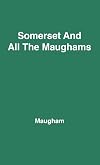
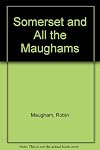
Somerset and All the Maughams
by Robin Maugham
On This Page
Description
ugham /f RobinTags
Recommendations





















Member Reviews
As a young man, Robin Maugham blackmailed his famous uncle W. Somerset Maugham by threatening to write a biography that exposed the great man's life. Appalled at the prospect, Somerset Maugham paid Robin an enormous sum of money not to write such a book. Having taken the money, Robin broke his promise, and immediately after his uncle’s death, published Somerset and All the Maughams. In the process, he violated WSM's lifelong desire for privacy by publicly 'outing' him as homosexual. (This backstory has been detailed in several biographies of Somerset Maugham, including the recent one by Selina Hastings). With the passage of nearly half a century, the author's dishonesty and selfish motives continue to cast doubts on credibility of his show more book, as do elements of its contents.
In the first half of this book (~116 pages), Robin details his attempts to track the history of the Maugham lineage. His efforts were amateurish but modestly successful. To his credit, Robin unearthed obscure genealogical details dating back to the mid- 1700s, located the houses in France and England where his uncle had spent his childhood, and in both countries (allegedly) found elderly persons who recalled him as a boy. Robin’s naiveté is reflected in his penchant for imagining physical resemblances between his uncle and distant relatives, such as Maugham’s great- great- great- uncle (the Reverend William Maugham) from the 1700s. Despite Robin's inference of a close resemblance, the Reverend looks (to my eye) nothing at all like Somerset Maugham. Further, as an amateur at geneology, Robin overlooked the fact that his uncle and the Reverend William were separated by six generations, meaning that their closest ancestor is one of 64 individuals of that generation from whom WSM was also directly descended -- making any physical resemblance highly unlikely. Another such case involved an American named Ralph Maugham who had no traceable connection to the author. Robin is impressed to find that the man’s older brother had a stammer (like his uncle), from which he naively infers a family connection.
In the second half of this book, the author focuses specifically on W. Somerset Maugham. There is much conjecture based on amateur psychology, as Robin attempts to infer the formative influences on WSM’s life. For example, he speculates that if Willie’s childhood prayer to be relieved of his stammer had been answered, that he would not have later become agnostic. The personal anecdotes that Robin relates are what make the book of potential interest to modern readers. Many show the great writer in unguarded moments; some are amusing; and several appear to reveal insights into the author’s private musings. Others reveal details about WSM’s sexual inclinations and alleged activities, and too many of them show the author in his declining years after senility has set in. In search of profit, Robin clearly cared nothing for the dignity, privacy, or reputation of his famous uncle. Indeed, he even characterizes WSM's fiction in disparaging tones.
Such issues aside, is Robin Maugham’s account credible? Apparently not, and that problem places this entire book under suspicion. Direct evidence of Robin’s penchant for editing peoples' words comes from comparison of quotations in WSM’s “The Summing Up” to Robin’s own version of what the book says. The credibility issue extends beyond the precise wording of quotations to entire incidents reported by Robin. His co-author on the subsequent “Conversations with Willie” has publically revealed that Robin routinely invented stories about his uncle with which to spice up his books. The revelation is devastating to Robin Maugham's credibility.
In the present work, Robin too often provides an alleged, direct quote from Somerset Maugham to illustrate a point he wishes to make. As one of many examples, a quotation about the inborn nature of homosexuality that he attributes to WSM reflects a 1960s- era sensibility, and it is hard to imagine it coming from the great author himself. Likewise, WSM is quoted as saying that he’d once persuaded himself that he was three quarters normal and one quarter “queer,” whereas “it was the other way round.” The quote has been widely repeated, often without attribution, in nearly every biographical work dealing with the author. Yet no corroborative evidence exists that WSM ever said it. Robin Maugham's chief legacy may well be the invention of a statement about Somerset Maugham's sexual makeup that the author never uttered.
In sum, Somerset and All the Maughams reports interesting anecdotes about the great writer from a relative who knew him well. Unfortunately, it is marred by questionable inferences and persistent suspicions about its credibility. Thus, the wise reader would do well to remain skeptical of its contents. show less
In the first half of this book (~116 pages), Robin details his attempts to track the history of the Maugham lineage. His efforts were amateurish but modestly successful. To his credit, Robin unearthed obscure genealogical details dating back to the mid- 1700s, located the houses in France and England where his uncle had spent his childhood, and in both countries (allegedly) found elderly persons who recalled him as a boy. Robin’s naiveté is reflected in his penchant for imagining physical resemblances between his uncle and distant relatives, such as Maugham’s great- great- great- uncle (the Reverend William Maugham) from the 1700s. Despite Robin's inference of a close resemblance, the Reverend looks (to my eye) nothing at all like Somerset Maugham. Further, as an amateur at geneology, Robin overlooked the fact that his uncle and the Reverend William were separated by six generations, meaning that their closest ancestor is one of 64 individuals of that generation from whom WSM was also directly descended -- making any physical resemblance highly unlikely. Another such case involved an American named Ralph Maugham who had no traceable connection to the author. Robin is impressed to find that the man’s older brother had a stammer (like his uncle), from which he naively infers a family connection.
In the second half of this book, the author focuses specifically on W. Somerset Maugham. There is much conjecture based on amateur psychology, as Robin attempts to infer the formative influences on WSM’s life. For example, he speculates that if Willie’s childhood prayer to be relieved of his stammer had been answered, that he would not have later become agnostic. The personal anecdotes that Robin relates are what make the book of potential interest to modern readers. Many show the great writer in unguarded moments; some are amusing; and several appear to reveal insights into the author’s private musings. Others reveal details about WSM’s sexual inclinations and alleged activities, and too many of them show the author in his declining years after senility has set in. In search of profit, Robin clearly cared nothing for the dignity, privacy, or reputation of his famous uncle. Indeed, he even characterizes WSM's fiction in disparaging tones.
Such issues aside, is Robin Maugham’s account credible? Apparently not, and that problem places this entire book under suspicion. Direct evidence of Robin’s penchant for editing peoples' words comes from comparison of quotations in WSM’s “The Summing Up” to Robin’s own version of what the book says. The credibility issue extends beyond the precise wording of quotations to entire incidents reported by Robin. His co-author on the subsequent “Conversations with Willie” has publically revealed that Robin routinely invented stories about his uncle with which to spice up his books. The revelation is devastating to Robin Maugham's credibility.
In the present work, Robin too often provides an alleged, direct quote from Somerset Maugham to illustrate a point he wishes to make. As one of many examples, a quotation about the inborn nature of homosexuality that he attributes to WSM reflects a 1960s- era sensibility, and it is hard to imagine it coming from the great author himself. Likewise, WSM is quoted as saying that he’d once persuaded himself that he was three quarters normal and one quarter “queer,” whereas “it was the other way round.” The quote has been widely repeated, often without attribution, in nearly every biographical work dealing with the author. Yet no corroborative evidence exists that WSM ever said it. Robin Maugham's chief legacy may well be the invention of a statement about Somerset Maugham's sexual makeup that the author never uttered.
In sum, Somerset and All the Maughams reports interesting anecdotes about the great writer from a relative who knew him well. Unfortunately, it is marred by questionable inferences and persistent suspicions about its credibility. Thus, the wise reader would do well to remain skeptical of its contents. show less
This is an account of Somerset Maugham's life from a member of his extended family. As such, it provides details and insights that may not be found in other literary biographies of this great author.
Ratings
Members
- Recently Added By
Lists

Works concerning W. Somerset Maugham
62 works; 2 members
Author Information

36+ Works 798 Members
Common Knowledge
- Canonical title
- Somerset and All the Maughams
- Original title
- Somerset and All the Maughams
- Original publication date
- 1966
- People/Characters
- W. Somerset Maugham
- Original language
- English
Classifications
Statistics
- Members
- 58
- Popularity
- 528,973
- Reviews
- 2
- Rating
- (3.00)
- Languages
- English, German
- Media
- Paper
- ISBNs
- 3
- ASINs
- 6