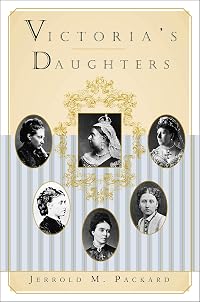
Victoria's Daughters
by Jerrold M. Packard
On This Page
Description
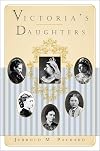
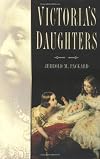
The story of five women who shared one of the most extraordinary and privileged sisterhoods of all time. Vicky, Alice, Helena, and Beatrice were historically unique sisters, born to a sovereign who ruled over a quarter of the earth's people and who gave her name to an era: Queen Victoria. Two of these princesses would themselves produce children of immense consequence. All five would curiously come to share many of the social restrictions and familial machinations borne by nineteenth-century show more women of less-exulted class. Victoria and Albert's precocious firstborn child, Vicky, wed a Prussian prince in a political match her high-minded father hoped would bring about a more liberal Anglo-German order. That vision met with disaster when Vicky's son Wilhelm-- to be known as Kaiser Wilhelm-- turned against both England and his mother, keeping her out of the public eye for the rest of her life. Gentle, quiet Alice had a happier marriage, one that produced Alexandra, later to become Tsarina of Russia, and yet another Victoria, whose union with a Battenberg prince was to found the present Mountbatten clan. However, she suffered from melancholia and died at age thirty-five of what appears to have been a deliberate, grief-fueled exposure to the diphtheria germs that had carried away her youngest daughter. Middle child Helena struggled against obesity and drug addition but was to have lasting effect as Albert's literary executor. By contrast, her glittering and at times scandalous sister Louise, the most beautiful of the five siblings, escaped the claustrophobic stodginess of the European royal courts by marrying a handsome Scottish commoner, who became governor general of Canada, and eventually settled into artistic salon life as a respected sculptor. And as the baby of the royal brood of nine, rebelling only briefly to forge a short-lived marriage, Beatrice lived under the thumb of her mother as a kind of personal secretary until the queen's death. Principally researched at the houses and palaces of its five subjects in London, Scotland, Berlin, Darmstadt, and Ottawa-- and entertainingly written by an experienced biographer whose last book concerned Victoria's final days-- Victoria's Daughters closely examines a generation of royal women who were dominated by their mother, married off as much for political advantage as for love, and finally passed over entirely with the accession of their n0 brother Bertie to the throne. Packard provides valuable insights into their complex, oft-tragic lives as daughters of their time. show lessTags
Recommendations











Member Reviews
3.75 stars
This is a nonfiction book about Queen Victoria and her daughters. Of course, there is info about her and her entire family, but the focus is on her five daughters: Vicky, Alice, Helena (known as Lenchen), Louise, and Beatrice. They all had very different personalities. Of course, Victoria wanted to keep one of her girls with her all her life – someone to be there and take care of her, particularly after she lost her husband, Albert, quite young.
3.5 stars for enjoyability – that is, it was good – but I gave it that little extra because of the sheer amount of information included. I do feel like this is a really good source to find information about Queen Victoria’s daughters. There were a few parts where I lost show more interest, mostly with German/Prussian politics, but I can see why it was included with Vicky married to a future Kaiser, so it absolutely affected her life.
Being Canadian myself, I was interested in Louise and Lorne’s years in Canada; also of interest were where a couple of the province and city names came from. I did find it started to get confusing when the focus started being on Victoria’s grandchildren. Partly because of the common, repeated names, but also just because there got to be so many! Luckily, the author did find ways to refresh my memory. I found it interesting at the end as the generations passed on to the next monarch(s) – something we usually don’t think about – those sisters became further and further away from the crown every time it passed on. show less
This is a nonfiction book about Queen Victoria and her daughters. Of course, there is info about her and her entire family, but the focus is on her five daughters: Vicky, Alice, Helena (known as Lenchen), Louise, and Beatrice. They all had very different personalities. Of course, Victoria wanted to keep one of her girls with her all her life – someone to be there and take care of her, particularly after she lost her husband, Albert, quite young.
3.5 stars for enjoyability – that is, it was good – but I gave it that little extra because of the sheer amount of information included. I do feel like this is a really good source to find information about Queen Victoria’s daughters. There were a few parts where I lost show more interest, mostly with German/Prussian politics, but I can see why it was included with Vicky married to a future Kaiser, so it absolutely affected her life.
Being Canadian myself, I was interested in Louise and Lorne’s years in Canada; also of interest were where a couple of the province and city names came from. I did find it started to get confusing when the focus started being on Victoria’s grandchildren. Partly because of the common, repeated names, but also just because there got to be so many! Luckily, the author did find ways to refresh my memory. I found it interesting at the end as the generations passed on to the next monarch(s) – something we usually don’t think about – those sisters became further and further away from the crown every time it passed on. show less
Queen Victoria's eldest daughter was born 17 years before the youngest. Her daughters had drastically different relationships with their parents: their mother alternated between codependency and harsh dislike for each of them. Their father lavished attention on some and gave almost none to others: Vicky was her father's star pupil, and recieved his training before she married into the Prussian royal family, while Beatrice was only four when her father died. Vicky was an intellectual, Alice had an appetite for nursing and good works, Lenchen loved sports and engineering, Louise was a gifted artist, Beatrice devoted to family. Vicky married into the Prussian royal family, Alice to a German Grand-Duke (the equivalent of being the king of a show more small kingdom), Lenchen and Beatrice to landless German royals, and Louise to a British duke (the first English princess to marry within her country in 350 years). And yet, despite their different personalities, upbringings, marriages, and countries in which they spent their adulthood, the feeling I got from all of them was the same. Regardless of their capabilities, regardless of how much money they had or how many palaces, their lives seem so straitened to the modern eye. Victoria's daughters were born into an age in which the monarchy was fast fading from political importance. They were too royal and too female to be allowed to do almost anything.
Which is not to say they did not try. Vicky pushed for a more liberal, united Germany all her life, to the detriment of her reputation in Prussia and her relationship with her eldest son, the future Kaiser Wilhelm II. (Reading this book made me want to punch Bismark in the face like a billion times.) Alice founded hospitals and tended to the sick with her own hands; her influence lent credence to the emerging nursing style. Lenchen became a drug addict. Louise was the first British royal to be publicly educated (she forced her mother to let her take art classes) and became a beloved society dame who did a good deal of charity work. Beatrice was the Queen of England's right hand for decades.
But reading this book, I was not so much impressed by their accomplishments as by their tragedies. Child after child dead of hemophilia, disease, or killed in wars. Loveless marriages. Used as political pawns and figure-heads, with all the appearance of power and none of it. Vicky and Alice apparently had no friends (certainly they were allowed none in childhood); the younger daughters managed to make only a few. No control over where they lived. Bound by endless, astoundingly strict protocol. Vicky watched her husband die an agonized death that took years, then suffered through death by breast cancer under doctors who refused to give her pain killers. Assasination attempts (even on their wedding days). And hideous, horrifying clothing. No one needs that many ruffles!
The story of Queen Victoria's family is a fascinating one, filled with odd tidbits. (Such as, Louise's father-in-law wanted to be buried with his first wife. His third wife was so annoyed with this that she threatened to cut her late husband's heart out so she could bury part of him with her, too.) And I did enjoy this book: it's pretty well organized, the style is readable but not gossipy, and the research is definitely there. The problem is, Packard's biases shine through immediately. He hates women of intelligence or power--as controlling as Victoria was, sure there was *something* positive about her? And surely Alfred didn't do *all* the ruling for her? Their eldest, Vicky, is continually described in the most horrid terms possible: her intelligence is described as "flamboyant" and "egocentric;" even as a child Packard has nothing but harsh words for her. He blames her for the cluster-fuck that was the Prussian royal family--even though she was a TEENAGER when she entered it, her parents-in-law were monstrous, and Prussia was under control of the manipulative chancellor, who worked for decades to turn the country and her family against Vicky. (This is not supposition--it's a matter of historical record that the most powerful man in Prussia did everything in his power to cause her pain.) The only women Packard has kind words for are the ones who selflessly devoted themselves to other people in the least political fashion possible. And even those women, he makes careful note of their weight and how they looked like sausages.
The history of Victoria's daughters is a fascinating one, but this is not the book to read it in. Look for something a bit less overwhelmingly sexist. show less
Which is not to say they did not try. Vicky pushed for a more liberal, united Germany all her life, to the detriment of her reputation in Prussia and her relationship with her eldest son, the future Kaiser Wilhelm II. (Reading this book made me want to punch Bismark in the face like a billion times.) Alice founded hospitals and tended to the sick with her own hands; her influence lent credence to the emerging nursing style. Lenchen became a drug addict. Louise was the first British royal to be publicly educated (she forced her mother to let her take art classes) and became a beloved society dame who did a good deal of charity work. Beatrice was the Queen of England's right hand for decades.
But reading this book, I was not so much impressed by their accomplishments as by their tragedies. Child after child dead of hemophilia, disease, or killed in wars. Loveless marriages. Used as political pawns and figure-heads, with all the appearance of power and none of it. Vicky and Alice apparently had no friends (certainly they were allowed none in childhood); the younger daughters managed to make only a few. No control over where they lived. Bound by endless, astoundingly strict protocol. Vicky watched her husband die an agonized death that took years, then suffered through death by breast cancer under doctors who refused to give her pain killers. Assasination attempts (even on their wedding days). And hideous, horrifying clothing. No one needs that many ruffles!
The story of Queen Victoria's family is a fascinating one, filled with odd tidbits. (Such as, Louise's father-in-law wanted to be buried with his first wife. His third wife was so annoyed with this that she threatened to cut her late husband's heart out so she could bury part of him with her, too.) And I did enjoy this book: it's pretty well organized, the style is readable but not gossipy, and the research is definitely there. The problem is, Packard's biases shine through immediately. He hates women of intelligence or power--as controlling as Victoria was, sure there was *something* positive about her? And surely Alfred didn't do *all* the ruling for her? Their eldest, Vicky, is continually described in the most horrid terms possible: her intelligence is described as "flamboyant" and "egocentric;" even as a child Packard has nothing but harsh words for her. He blames her for the cluster-fuck that was the Prussian royal family--even though she was a TEENAGER when she entered it, her parents-in-law were monstrous, and Prussia was under control of the manipulative chancellor, who worked for decades to turn the country and her family against Vicky. (This is not supposition--it's a matter of historical record that the most powerful man in Prussia did everything in his power to cause her pain.) The only women Packard has kind words for are the ones who selflessly devoted themselves to other people in the least political fashion possible. And even those women, he makes careful note of their weight and how they looked like sausages.
The history of Victoria's daughters is a fascinating one, but this is not the book to read it in. Look for something a bit less overwhelmingly sexist. show less
Not riveting material, and I don't understand where the comments regarding the relative attractiveness of each daughter was coming from. Who decided that Lenchen is plain, for instance? Why is it necessary to comment repeatedly on how "matronly" Beatrice was? It made me wonder as I was reading it -- was this written by a man? Yes? well, there goes his credibility. If the opinion was based off of popular accounts, that's one thing, but it seemed more personal and intrusive than that.
He did do a good job of keeping the vast numbers of family members straight, and of maintaining a timeline over a lot of different courts and countries.
He did do a good job of keeping the vast numbers of family members straight, and of maintaining a timeline over a lot of different courts and countries.
I've never found the Victorian monarchs quite so interesting as their Tudor ancestors and I wondered if this book would hold my attention. No worries; though the Victorian princesses often lead uneventful (sometimes stultifyingly boring) lives and they weren't particularly important as historical/dynastic figures, Packard was able to maintain my interest in them and I got a good sense of the personality of each one. It was not easy being a child of Queen Victoria, who comes off as a neurotic and imperious woman in this biography -- but then, it can't have been easy being Victoria either.
This book will cure you of your childhood fantasy of wanting to be a princess! An interesting accessible read about the daughters of Queen Victoria. Sheltered childhoods created young ladies who were painfully shy and not particularly worldly. The small numbers of 'home grown' royals meant that they were expected to marry foreign princes, indeed it was a minor scandal,within the family when one chose to marry the son of a Scottish Duke.
Voctoria felt her daughters, at least one at any given time, were there to serve as her servant, and wishes to find love of their own were secondary to her needs ( nice parenting). While this book focuses on the daughters, the author infers that the sons were given the shaft attention wise, odd as te show more eldest was going to replace Victoria upon her death.
Two of the daughters ended up in present day Germany, two imported minor royals but remained in England,,and the last married a minor Scots royal. The girls themselves were not particular trailblazers, barring Louise who tried her hand at art ( sculpting), her work can still be seen in Kensington Gardens.
The daughters legacy lies more in their children. Five of Victorias forty grandchildren ended up becoming queens or tsarinas. You can read about that generation in Julia Gelardis book Born to Rule, which makes a nice follow up to this one. show less
Voctoria felt her daughters, at least one at any given time, were there to serve as her servant, and wishes to find love of their own were secondary to her needs ( nice parenting). While this book focuses on the daughters, the author infers that the sons were given the shaft attention wise, odd as te show more eldest was going to replace Victoria upon her death.
Two of the daughters ended up in present day Germany, two imported minor royals but remained in England,,and the last married a minor Scots royal. The girls themselves were not particular trailblazers, barring Louise who tried her hand at art ( sculpting), her work can still be seen in Kensington Gardens.
The daughters legacy lies more in their children. Five of Victorias forty grandchildren ended up becoming queens or tsarinas. You can read about that generation in Julia Gelardis book Born to Rule, which makes a nice follow up to this one. show less
This is a great journey through the families descended from Queen Victoria. As a biology professor who loves to teach genetics, and one who loves to read about this particular family, I found this book to be informative, not only about the transmission of the gene, but also about the family members about whom one does not hear.
OK but quite detailed history of Victoria's 5 royal daughters and what they did. Queen Victoria lived a long life and her relatives were among several thrones in Europe, especially in Germany. Kaiser Wilhelm II of World War One was her grandson on the mother's side ! Good inside information. Some parts get a little tedious.
Members
- Recently Added By
Lists

Best Biographies of Notable Women
277 works; 101 members
Author Information
10 Works 1,218 Members
Common Knowledge
- Canonical title
- Victoria's Daughters
- Original publication date
- 1998-10-15
- People/Characters
- Victoria, Queen of the United Kingdom; Victoria, German Empress and Queen of Prussia; Alice, Grand Duchess of Hesse and by Rhine; Helena, Princess Christian of Schleswig-Holstein; Princess Louise, Duchess of Argyll; Beatrice, Princess Henry of Battenberg (show all 12); John Campbell, 9th Duke of Argyll; Prince Christian of Schleswig-Holstein; Prince Henry of Battenberg; Frederick III, German Emperor and King of Prussia; Louis IV, Grand Duke of Hesse and by Rhine; Albert, Prince Consort
- Dedication
- For Sara
Classifications
- Genres
- History, Biography & Memoir, Nonfiction, General Nonfiction
- DDC/MDS
- 941.0810922 — History & geography History of Europe British Isles Historical periods of British Isles 1837- Period of Victoria and House of Windsor Victoria 1837-1901
- LCC
- DA554 .P33 — History of Europe, Asia, Africa and Oceania Great Britain History of Great Britain England History By period Modern, 1485- Victorian era, 1837-1901
- BISAC
Statistics
- Members
- 748
- Popularity
- 37,540
- Reviews
- 10
- Rating
- (3.86)
- Languages
- English, German
- Media
- Paper, Audiobook, Ebook
- ISBNs
- 8
- ASINs
- 4