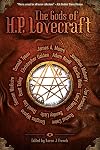
The Gods of HP Lovecraft
by Aaron J French (Editor)
Ile-Rien (Non Ile-Rien Anthologies Containing Short Stories — short story - "The Dark Gates")
On This Page
Description
The Gods of H.P. Lovecraft: a brand new anthology that collects the twelve principal deities of the Lovecraftian Mythos and sets them loose within its pages. Featuring the biggest names in horror and dark fantasy, including many New York Times bestsellers, full of original fiction and artwork, and individual commentary on each of the deities by Donald Tyson. Lovecraft's bestiary of gods has had a major influence on the horror scene from the time these sacred names were first evoked. Cthulhu, show more Azathoth, Nyarlathotep, Yog-Sothoth—this pantheon of the horrific calls to mind the very worst of cosmic nightmares and the very darkest signs of human nature. The Gods of H.P. Lovecraft brings together twelve all-new Mythos tales from:- Cthulhu (Adam Nevill)
- Yog-Sothoth (Martha Wells)
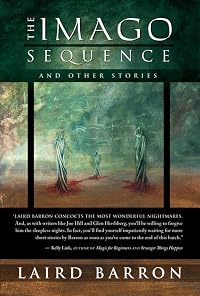
- Azathoth (Laird Barron)
- Nyarlathotep (Bentley Little)
- Shub-Niggurath (David Liss)
- Tsathoggua (Brett Talley)
- The Mi-Go (Christopher Golden & James A. Moore)
- Night-gaunts (Jonathan Maberry)
- Elder Things (Joe Lansdale)
- Great Race (Rachel Caine)
- Yig (Douglas Wynne)
- The Deep Ones (Seanan McGuire)
Tags
Recommendations










Member Reviews
H.P. Lovecraft never claimed to be creating a "mythos" in his invention of the "Yog-Sothothery" (his term) lore that appears in his stories and those of his fellow weird fiction authors. It was only after his death that his literary executor August Derleth coined the phrase "Cthulhu Mythos" in an effort to impose a false coherence on Lovecraft's oeuvre--not that it lacks coherence, just not this coherence--and to burden it with metaphysical premises that HPL certainly never intended: cosmic moralism, alignments to the classical elements of Empedocles, etc.
While many of Derleth's impositions have happily faded from both critical and creative approaches to Yog-Sothothery, the notion of an integrated "Cthulhu Mythos" has endured. An show more important reinforcement of that framing was propagated in the early editions of the Advanced Dungeons & Dragons role-playing game supplement Deities & Demigods (1980), where the "Lovecraft Mythos" appeared alongside the "Chinese Mythos," "Finnish Mythos," "Nehwon Mythos," "Sumerian Mythos," and so forth. It is to that book, rather than Derleth's systematizing, that the recent collection The Gods of H.P. Lovecraft seems to have its greatest conceptual debt. The jacket copy of The Gods of H.P. Lovecraft even refers to "Lovecraft's bestiary of gods," and the old Deities & Demigods volume was in many ways treated merely as a higher-order Monster Manual. Indeed, not all of the alleged "principal deities" addressed by the twelve stories in the book are even gods in the exotic sense afforded by Yog-Sothothery, many are monstrous species, such as Mi-Go, Nightgaunts, and Deep Ones, but all of them were the subjects of individual entries in the "Lovecraft Mythos" chapter of Deities & Demigods.
Beyond that, the contributions here vary considerably. Most but not all of them emphasize worship of, or by, or theological notions about the Lovecraftian bugaboos with which they are concerned. Some are set in the pulp 1920s, and verge on pastiche, with references to Miskatonic University and Arkham Country common among those. A few of the stories seem to be set in "dark/urban fantasy" worlds, developed more extensively by their authors elsewhere. This approach works quite badly in the Yog-Sothoth story by Martha Wells, and somewhat better in the Nightgaunt tale by Jonathan Maberry. I was surprised to find traces of it in the genre-busting Azathoth contribution from Laird Barron, about which I'm still ambivalent. The opening piece is set in a credibly dismal near future period, and most have contemporary settings. The book ends with two of its better (though least "theological") stories, and these are constructed as 21st-century sequels to particular Lovecraft tales, namely "The Shadow Out of Time" and "The Shadow over Innsmouth."
After each story, there is a "commentary" essay by Donald Tyson, author of a successful Necronomicon mock-up. These short essays are not straight excerpts from his Necronomicon, but they have some similar content, and they are very much written in the voice of some medieval grimoire's scribe, with reference to classical sources, and at one point to America as "the great island that lies far to the west, beyond the Pillars of Hercules" (248). The essays do not comment on the stories; they simply provide a sort of theological exposition regarding the "god" at issue in each. I didn't find these offensive, but they fall far short of the mark set in Robert M. Price's literary and theological introductions to the "Cycle" volumes in the "Call of Cthulhu Fiction" publishing by Chaosium.
Each of the twelve stories is also prefaced with a full-page black-and-white illustration. These were clearly commissioned for this volume, typically showing details peculiar to each story. Of the three contributing artists, Steve Santiago seems to have provided both the best (Yog-Sothoth, Shub-Niggurath) and the worst (Tsathoaggua), although the illustration quality is good here, on the whole. show less
While many of Derleth's impositions have happily faded from both critical and creative approaches to Yog-Sothothery, the notion of an integrated "Cthulhu Mythos" has endured. An show more important reinforcement of that framing was propagated in the early editions of the Advanced Dungeons & Dragons role-playing game supplement Deities & Demigods (1980), where the "Lovecraft Mythos" appeared alongside the "Chinese Mythos," "Finnish Mythos," "Nehwon Mythos," "Sumerian Mythos," and so forth. It is to that book, rather than Derleth's systematizing, that the recent collection The Gods of H.P. Lovecraft seems to have its greatest conceptual debt. The jacket copy of The Gods of H.P. Lovecraft even refers to "Lovecraft's bestiary of gods," and the old Deities & Demigods volume was in many ways treated merely as a higher-order Monster Manual. Indeed, not all of the alleged "principal deities" addressed by the twelve stories in the book are even gods in the exotic sense afforded by Yog-Sothothery, many are monstrous species, such as Mi-Go, Nightgaunts, and Deep Ones, but all of them were the subjects of individual entries in the "Lovecraft Mythos" chapter of Deities & Demigods.
Beyond that, the contributions here vary considerably. Most but not all of them emphasize worship of, or by, or theological notions about the Lovecraftian bugaboos with which they are concerned. Some are set in the pulp 1920s, and verge on pastiche, with references to Miskatonic University and Arkham Country common among those. A few of the stories seem to be set in "dark/urban fantasy" worlds, developed more extensively by their authors elsewhere. This approach works quite badly in the Yog-Sothoth story by Martha Wells, and somewhat better in the Nightgaunt tale by Jonathan Maberry. I was surprised to find traces of it in the genre-busting Azathoth contribution from Laird Barron, about which I'm still ambivalent. The opening piece is set in a credibly dismal near future period, and most have contemporary settings. The book ends with two of its better (though least "theological") stories, and these are constructed as 21st-century sequels to particular Lovecraft tales, namely "The Shadow Out of Time" and "The Shadow over Innsmouth."
After each story, there is a "commentary" essay by Donald Tyson, author of a successful Necronomicon mock-up. These short essays are not straight excerpts from his Necronomicon, but they have some similar content, and they are very much written in the voice of some medieval grimoire's scribe, with reference to classical sources, and at one point to America as "the great island that lies far to the west, beyond the Pillars of Hercules" (248). The essays do not comment on the stories; they simply provide a sort of theological exposition regarding the "god" at issue in each. I didn't find these offensive, but they fall far short of the mark set in Robert M. Price's literary and theological introductions to the "Cycle" volumes in the "Call of Cthulhu Fiction" publishing by Chaosium.
Each of the twelve stories is also prefaced with a full-page black-and-white illustration. These were clearly commissioned for this volume, typically showing details peculiar to each story. Of the three contributing artists, Steve Santiago seems to have provided both the best (Yog-Sothoth, Shub-Niggurath) and the worst (Tsathoaggua), although the illustration quality is good here, on the whole. show less
 This review was written for LibraryThing Early Reviewers.
This is a diverse collection of takes on the Lovecraft mythos. The standouts for me were the opener, Adam Nevill's "Call the Name", and the last story, "Deep, Deep Down, Below the Waves" by Seanan McGuire. The former skilfully situates Cthulu in a near-future of ecocide and sea-level rise; the latter is a modern return to Innsmouth (my favourite Lovecraft location) told from the point of view of one of Dagon's brood, which deploys its dramatic irony deftly and to amusing effect.
In between I enjoyed the Shub-Niggurath story, "The Doors that Never Close and the Doors that are Always Open" by David Liss, who correctly identifies Wall Street as the most plausible location for a modern-day cult of the Black Goat of the Woods, as well as "A show more Dying Light" by Rachel Caine, which is well-paced and plotted and manages to actually be a bit creepy which is not generally the case in this volume. I liked Caine's connection of Alzheimer's disease with possession (the Lovecraft referent is "The Shadow out of Time") and also her working-in of the Voynich manuscript.
A very pleasant surprise was Martha Wells's "The Dark Gates", a high-spirited, almost anarchic detective story which gleefully mixes fairies, steampunk and Yog-Sothoth and totally gets away with it. "We Smoke the Northern Lights" by Laird Barron, a writer I admire, is similarly audacious with its melange of genres but seemed a wee bit strained to me.
The other stories are more or less standard genre fare, but none are total duds and all ought to be appreciated by Lovecraft fans.
Donald Tyson's 2-3 page commentaries on each "god" are pretty preposterous, written in an embarrassing faux-antique style, but I suppose no-one's forcing you to read them. The 12 illustrations are excellent. show less
In between I enjoyed the Shub-Niggurath story, "The Doors that Never Close and the Doors that are Always Open" by David Liss, who correctly identifies Wall Street as the most plausible location for a modern-day cult of the Black Goat of the Woods, as well as "A show more Dying Light" by Rachel Caine, which is well-paced and plotted and manages to actually be a bit creepy which is not generally the case in this volume. I liked Caine's connection of Alzheimer's disease with possession (the Lovecraft referent is "The Shadow out of Time") and also her working-in of the Voynich manuscript.
A very pleasant surprise was Martha Wells's "The Dark Gates", a high-spirited, almost anarchic detective story which gleefully mixes fairies, steampunk and Yog-Sothoth and totally gets away with it. "We Smoke the Northern Lights" by Laird Barron, a writer I admire, is similarly audacious with its melange of genres but seemed a wee bit strained to me.
The other stories are more or less standard genre fare, but none are total duds and all ought to be appreciated by Lovecraft fans.
Donald Tyson's 2-3 page commentaries on each "god" are pretty preposterous, written in an embarrassing faux-antique style, but I suppose no-one's forcing you to read them. The 12 illustrations are excellent. show less
This review was written for LibraryThing Early Reviewers.I received this ebook free for an honest review
A bit of a curate's egg, as anthologies often are, several of these tales feel as if the Lovecraft element was shoehorned in to make them fit the theme, and those stories feel less complete, and a bit out of place here as a result.
That said, there's a few gems to be had - Moore and Golden's pulpy Mi-Go story hit the spot perfectly, as did Maberry's Nightgaunts meet weird PI modern noir. Lansdale and Barron show off their own particular tics and flourishes to great effect too.
But the highlight for me was Adam Nevill's CALL THE NAME, which manages to be both epic in scale in time and space, yet claustrophobic in the horrors growing inside a woman's mind. The way it unfolds will stick with me show more for a while, and for me, that's what Lovecaft's monsters are all about. show less
A bit of a curate's egg, as anthologies often are, several of these tales feel as if the Lovecraft element was shoehorned in to make them fit the theme, and those stories feel less complete, and a bit out of place here as a result.
That said, there's a few gems to be had - Moore and Golden's pulpy Mi-Go story hit the spot perfectly, as did Maberry's Nightgaunts meet weird PI modern noir. Lansdale and Barron show off their own particular tics and flourishes to great effect too.
But the highlight for me was Adam Nevill's CALL THE NAME, which manages to be both epic in scale in time and space, yet claustrophobic in the horrors growing inside a woman's mind. The way it unfolds will stick with me show more for a while, and for me, that's what Lovecaft's monsters are all about. show less
This review was written for LibraryThing Early Reviewers.A Solid Collection of Stories Rooted in the Lovecraft Mythos
(Full disclosure: I received a free copy of this book for review through Library Thing's Early Reviewers program. Trigger warning for rape and animal abuse.)
Confession time: I'm not a fan of H.P. Lovecraft. I'm not not a fan, I just know very little about his work. Most of my limited knowledge comes from the recent World Fantasy Awards controversy (which, I must admit, doesn't exactly make me want to run out and buy copy of The Complete Works of H.P. Lovecraft), and that one episode of Supernatural (which, as it just so happened, TNT reran this morning. Serendipity!)
I am, however, I huge Seanan McGuire fangirl, and it's her contribution that sold me on this anthology. (Her show more short stories in particular are phenomenal, and "Down, Deep Down, Below the Waves" is no exception.) I'm glad, too, because The Gods of HP Lovecraft is a pretty solid collection of science fiction stories. As you can see, I rated everything a 4 or 5, which is pretty impressive; usually anthologies are more of a mixed bag for me. The individual summaries are relatively vague and un-spoilery, but please skip them if you'd rather read this book with fresh eyes.
"Call the Name" by Adam LG Nevill (Cthulhu) - The year is 2045, and humanity has awakened Cthulhu, our alien creator and one temperamental god. Responsible for mass extinction events 443 million, 200 million, and 65 million years ago, our overpopulation, warming, and general degradation of the planet will be our downfall - just not in the way most scientists predict. 4/5 stars. While I loved the environmentally-friendly message of the story (not to mention Cleo and her proud lineage of mad women scientists), the language is a little florid for my taste (though quite possibly in line with the source material).
"The Dark Gates" by Martha Wells (Yog-Sothoth) - When the Baron Mille's stepdaughter and secretary go missing, the Baroness hires "lady detective" Reja and her team to find them. It turns out that the Baron hasn't quite been himself since exploring a mysterious fissure in an old mine... 4/5 stars. This story has a lovely steampunk vibe to it, and I love Reja and her diverse (not always human) crew of detectives.
"We Smoke the Northern Lights" by Laird Barron (Azathoth) - A probe sent to Pluto in 1956 returns earlier than expected - perhaps after slipping through a wormhole in space? Now NCY-93's core contains information the likes of which threatens to corrupt anyone who views it. 5/5 stars. The protagonists of this story are two precocious young geniuses/psychopaths named Mac and Dred whose training in the Himalayan mountains evokes images of Pai Mei - and whose current occupation feels like an alternate 'verse version of the Men of Letters.
"Petohtalrayn" by Bentley Little (Nyarlathotep) - An unassuming archaeologist named Ellison is summoned to the underground prison of Nyarlathotep to lead his army of rat-people into the sun. 4/5 stars. I would love to adopt a rat with opposable thumbs!
"The Doors that Never Close and the Doors that Are Always Open" by David Liss (Shub-Niggurath) - Blessed be the bankers ... by Shub-Niggurath, at least. 4/5 stars. Not quite what I expected!
"The Apotheosis of a Rodeo Clown" by Brett J. Talley (Tsathoggua) - When a mining company blasted a new shaft deep within the bowels of the Sutter's End mine, they unleashed a terrible god (the drawing of which looks suspiciously like blob-Chet of Weird Science fame). A god embraced by the local biker gang, natch. 4/5 stars. I could do without the heroic bullfighter, okay. (Pro tip: all of the cows you torture for fun are "terrified" - not just the old, broken ones.)
"Rattled" by Douglass Wynne (Yig) - Two thirteen-year-old boys go on a vision quest to mark their passage into manhood - but only one of them comes out the other side. Seventeen years later, Nathan returns to the desert to find out what fate befell his best friend Adam.
The story is based on the Curse of Yig: "If you kill a snake on sacred ground, you become a snake, or a snakelike creature. [...] Anyway, the curse, it's like karma, right? It means that Indians valued the lowest of the low, creatures literally without a leg to stand on. And if you hurt one, you should expect to find yourself stripped of power and crawling on your belly on the ground among them, yeah?" Let's just say that Adam is kind of a shithead who loves to kill defenseless animals and leave it at that.
5/5 stars. While the vegan in me would like to see this principle extended to all animals (and not just snakes), you learn to take the animal-friendly crumbs where you can.
"In Their Presence" by Christopher Golden & James A. Moore (The Mi-Go) - The crew of the Burleson travels the Arctic in search of the remains of the Eleanor Lockley, lost at sea some 80 years before - but her cargo may be more valuable than any of them realize. 4/5 stars.
"Dream a Little Dream of Me" by Jonathan Maberry (Nightgaunts) - Set in Maberry's Sam Hunter universe, this is a pulpy story starring a hard-bitten, shape-shifting PI. A weirdo hires Sam to protect a precious artifact from the Thule Society; but the job goes sideways when Sam learns that his idea of being a "champion" differs greatly from his employer's. 4/5 stars. It feels a little more contemporary and stylistically different from the other stories, but in a good way.
"In the Mad Mountains" by Joe R. Lansdale (Elder Things) - The survivors of a shipwreck - who remember nothing of the trip they were on - find themselves stranded on barren sheet of ice, along with the detritus of other wayward travelers. And they aren't alone. 5/5 stars.
"A Dying of the Light" by Rachel Caine (Great Race of Yith) - Based on "The Shadow Out of Time," as well as the author's own experiences caring for a parent with Alzheimer's, "Dying" tells the story of an elderly Alzheimer's patient who makes a miraculous recovery. Only the woman who reclaims Acanthus Porter's body may not be Mrs. Porter after all. 5/5 stars.
"Down, Deep Down, Below the Waves" by Seanan McGuire (The Deep Ones) - Despite the apparent lack of lesbians, Seanan McGuire's story is one of my favorites. I don't want to reveal too much, but suffice it to say that thar be mermaids here...or at least mermaid-like creatures who enjoy experimenting on humans. But said humans torture mice for a living, so karma. 5/5 stars.
Though the stories are inspired by Lovecraft's twelve principal deities, you don't have to be a fan to enjoy them; they all pretty much stand on their own. But. Those who are familiar with Lovecraft will likely get more out of them. For example, I spotted a number of recurring elements (the scientist known as Ellison; Miskatonic University) that I didn't know quite what to do with. I suspect that there were even more Easter eggs that I didn't pick up on.
Finally, a note on the formatting: Usually I prefer ebooks to print books, at least when it comes to books that don't have many graphic elements (comic books; crafty, "found footage" novels like Illuminae and The Dead House). I decided to go with a print copy of The Gods of HP Lovecraft because of the illustrations - which are lovely, by the way. But there are only twelve of them, and the type's a little on the small side, and even harder to read when italicized, as it occasionally is in large chunks (e.g., Cleo's letter to Yolanda in "Call the Name"). Or maybe the adjustable font on my Kindle has just spoiled me. Either way, I wish I'd opted for the ebook instead. The print book is indeed handsome, but at what cost? (Eyestrain, that's what.)
http://www.easyvegan.info/2016/01/15/the-gods-of-hp-lovecraft-edited-by-aaron-j-... show less
(Full disclosure: I received a free copy of this book for review through Library Thing's Early Reviewers program. Trigger warning for rape and animal abuse.)
Confession time: I'm not a fan of H.P. Lovecraft. I'm not not a fan, I just know very little about his work. Most of my limited knowledge comes from the recent World Fantasy Awards controversy (which, I must admit, doesn't exactly make me want to run out and buy copy of The Complete Works of H.P. Lovecraft), and that one episode of Supernatural (which, as it just so happened, TNT reran this morning. Serendipity!)
I am, however, I huge Seanan McGuire fangirl, and it's her contribution that sold me on this anthology. (Her show more short stories in particular are phenomenal, and "Down, Deep Down, Below the Waves" is no exception.) I'm glad, too, because The Gods of HP Lovecraft is a pretty solid collection of science fiction stories. As you can see, I rated everything a 4 or 5, which is pretty impressive; usually anthologies are more of a mixed bag for me. The individual summaries are relatively vague and un-spoilery, but please skip them if you'd rather read this book with fresh eyes.
"Call the Name" by Adam LG Nevill (Cthulhu) - The year is 2045, and humanity has awakened Cthulhu, our alien creator and one temperamental god. Responsible for mass extinction events 443 million, 200 million, and 65 million years ago, our overpopulation, warming, and general degradation of the planet will be our downfall - just not in the way most scientists predict. 4/5 stars. While I loved the environmentally-friendly message of the story (not to mention Cleo and her proud lineage of mad women scientists), the language is a little florid for my taste (though quite possibly in line with the source material).
"The Dark Gates" by Martha Wells (Yog-Sothoth) - When the Baron Mille's stepdaughter and secretary go missing, the Baroness hires "lady detective" Reja and her team to find them. It turns out that the Baron hasn't quite been himself since exploring a mysterious fissure in an old mine... 4/5 stars. This story has a lovely steampunk vibe to it, and I love Reja and her diverse (not always human) crew of detectives.
"We Smoke the Northern Lights" by Laird Barron (Azathoth) - A probe sent to Pluto in 1956 returns earlier than expected - perhaps after slipping through a wormhole in space? Now NCY-93's core contains information the likes of which threatens to corrupt anyone who views it. 5/5 stars. The protagonists of this story are two precocious young geniuses/psychopaths named Mac and Dred whose training in the Himalayan mountains evokes images of Pai Mei - and whose current occupation feels like an alternate 'verse version of the Men of Letters.
"Petohtalrayn" by Bentley Little (Nyarlathotep) - An unassuming archaeologist named Ellison is summoned to the underground prison of Nyarlathotep to lead his army of rat-people into the sun. 4/5 stars. I would love to adopt a rat with opposable thumbs!
"The Doors that Never Close and the Doors that Are Always Open" by David Liss (Shub-Niggurath) - Blessed be the bankers ... by Shub-Niggurath, at least. 4/5 stars. Not quite what I expected!
"The Apotheosis of a Rodeo Clown" by Brett J. Talley (Tsathoggua) - When a mining company blasted a new shaft deep within the bowels of the Sutter's End mine, they unleashed a terrible god (the drawing of which looks suspiciously like blob-Chet of Weird Science fame). A god embraced by the local biker gang, natch. 4/5 stars. I could do without the heroic bullfighter, okay. (Pro tip: all of the cows you torture for fun are "terrified" - not just the old, broken ones.)
"Rattled" by Douglass Wynne (Yig) - Two thirteen-year-old boys go on a vision quest to mark their passage into manhood - but only one of them comes out the other side. Seventeen years later, Nathan returns to the desert to find out what fate befell his best friend Adam.
The story is based on the Curse of Yig: "If you kill a snake on sacred ground, you become a snake, or a snakelike creature. [...] Anyway, the curse, it's like karma, right? It means that Indians valued the lowest of the low, creatures literally without a leg to stand on. And if you hurt one, you should expect to find yourself stripped of power and crawling on your belly on the ground among them, yeah?" Let's just say that Adam is kind of a shithead who loves to kill defenseless animals and leave it at that.
5/5 stars. While the vegan in me would like to see this principle extended to all animals (and not just snakes), you learn to take the animal-friendly crumbs where you can.
"In Their Presence" by Christopher Golden & James A. Moore (The Mi-Go) - The crew of the Burleson travels the Arctic in search of the remains of the Eleanor Lockley, lost at sea some 80 years before - but her cargo may be more valuable than any of them realize. 4/5 stars.
"Dream a Little Dream of Me" by Jonathan Maberry (Nightgaunts) - Set in Maberry's Sam Hunter universe, this is a pulpy story starring a hard-bitten, shape-shifting PI. A weirdo hires Sam to protect a precious artifact from the Thule Society; but the job goes sideways when Sam learns that his idea of being a "champion" differs greatly from his employer's. 4/5 stars. It feels a little more contemporary and stylistically different from the other stories, but in a good way.
"In the Mad Mountains" by Joe R. Lansdale (Elder Things) - The survivors of a shipwreck - who remember nothing of the trip they were on - find themselves stranded on barren sheet of ice, along with the detritus of other wayward travelers. And they aren't alone. 5/5 stars.
"A Dying of the Light" by Rachel Caine (Great Race of Yith) - Based on "The Shadow Out of Time," as well as the author's own experiences caring for a parent with Alzheimer's, "Dying" tells the story of an elderly Alzheimer's patient who makes a miraculous recovery. Only the woman who reclaims Acanthus Porter's body may not be Mrs. Porter after all. 5/5 stars.
"Down, Deep Down, Below the Waves" by Seanan McGuire (The Deep Ones) - Despite the apparent lack of lesbians, Seanan McGuire's story is one of my favorites. I don't want to reveal too much, but suffice it to say that thar be mermaids here...or at least mermaid-like creatures who enjoy experimenting on humans. But said humans torture mice for a living, so karma. 5/5 stars.
Though the stories are inspired by Lovecraft's twelve principal deities, you don't have to be a fan to enjoy them; they all pretty much stand on their own. But. Those who are familiar with Lovecraft will likely get more out of them. For example, I spotted a number of recurring elements (the scientist known as Ellison; Miskatonic University) that I didn't know quite what to do with. I suspect that there were even more Easter eggs that I didn't pick up on.
Finally, a note on the formatting: Usually I prefer ebooks to print books, at least when it comes to books that don't have many graphic elements (comic books; crafty, "found footage" novels like Illuminae and The Dead House). I decided to go with a print copy of The Gods of HP Lovecraft because of the illustrations - which are lovely, by the way. But there are only twelve of them, and the type's a little on the small side, and even harder to read when italicized, as it occasionally is in large chunks (e.g., Cleo's letter to Yolanda in "Call the Name"). Or maybe the adjustable font on my Kindle has just spoiled me. Either way, I wish I'd opted for the ebook instead. The print book is indeed handsome, but at what cost? (Eyestrain, that's what.)
http://www.easyvegan.info/2016/01/15/the-gods-of-hp-lovecraft-edited-by-aaron-j-... show less
This review was written for LibraryThing Early Reviewers.The Gods of H.P. Lovecraft, edited by Aaron J. French, is an all-original anthology of stories, mostly of novella-length, inspired by the various deities in the canon of H.P. Lovecraft’s world. Some are by well-known authors, such as Laird Barron, Bentley Little, Christopher Golden and James A. Moore, and Joe R. Lansdale; others are by people unknown to me such as Martha Wells, Brett J. Talley and Seanan McGuire. What is interesting about this anthology is the broad range of styles and genres contained within it, ranging from urban fantasy to straight pulp to science fiction to horror to modern crime fantasy tropes. What is uniform about these stories is their very high quality throughout; I enjoyed absolutely every single one of show more these 12 stories, which is incredibly rare in any type of anthology. My favourite was Martha Wells’ “The Dark Gates” (and I’m going to search out her numerous novels on the basis of this story); my least favourite was Laird Barron’s “We Smoke the Northern Lights” (too pulpy for me), but all of them are really good. The other thing that sets this anthology apart is that each story is followed by a short essay, written by Donald Tyson, describing the Lovecraftian deity which is the subject of the story, an excellent way to introduce this mythos to a new audience. My two quibbles with this volume are that there is no introduction and there are no biographies of the authors, but since this is an Early Review copy, perhaps those will be included in the final publication. In spite of that (small, in this case) disappointment, the volume as a whole is absolutely excellent - though it may give you nightmares as you read it! Highly recommended. show less
This review was written for LibraryThing Early Reviewers.There are a lot of different tones and registers you can chose when picking the voices for a collection of Cthulhu Mythos stories.
But, if you’re going to pull off the promise inherent in the title The Gods of H. P. Lovecraft, that tone better be one of mystery, awe, reverence, and a de-privileging of human values and concerns.
Largely it does.
First off, it has 12 nice black and white illustrations, one for each god, done by Paul Carrick, Steve Santiago, and John Coulthart. Even more singular are Donald Tyson’s pieces on each god. Together, they read like a primer you’d find in the pocket of a new acolyte in one of those dark cults of Lovecraft.
The stories …
Well, the stories mostly work in providing the promised tone and show more affect.
There are a couple that go astray because they are entries in series that shoehorned Lovecraft into their plots.
One is Martha Wells’ “The Dark Gates” which has Yog-Sothoth showing up in a story of detection in her Ile-Rein series. The other is from Jonathan Maberry. “Dream a Little Dream of Me”, a Sam Hunter story. He’s a vulgar, tough talking, werewolf private eye turned lose in an overstuffed narrative with an Etruscan god, the Thule Society ( beloved by occult-minded Nazis), and Lovecraft’s nightgaunts. There’s a whole lot more comedic mashup than mystery, real danger, or grandeur, dark or otherwise.
There’s a couple of other stories with odd tones that still carry off the title premise.
“We Smoke the Northern Lights” from Laird Barron, the self-contained first half of his short novel X’s for Eyes, has a twisted Hardy Boys-Renaissance Florence-Doc Savage-Tom Swift vibe going on – in a devil’s key since it’s the tale of Macbeth and Drederick, the 14 and 12 year old scions, respectively, of the thoroughly unpleasant Tooms family, arms merchants and defense contractors extraordinaire. They have to deal with the return to Earth of one of their secret space probes (in June 1956, no less) – before it’s been launched.
Human sacrifice, a bad biker gang, and an abandoned mining town are the set up for “The Apotheosis of Rodeo Clown” from Brett J. Talley. Its narrator speaks in one those faux folksy western hero drawls (which I’ve never actually heard any one speak in the rural west of America), but the surprise ending makes up for that defect.
The rest of the stories all work in a straight-up, unwatered down, dreadful awe sort of way.
“Petohtalrayn” from Bentley Little mostly follows a familiar template. A scholar, here an archaeologist, finds traces of the Dark Man, a figure associated with doom, in widely dispersed and dead civilizations. But the ending is definitely not something Lovecraft ever did.
“The Doors that Never Close and the Doors that Are Always Open” from David Liss takes the current heightened hostility towards bankers and combines it with that Lovecraftian template of a scholar, horrible correlations of scholarly knowledge, and the ramification of specific bloodlines. In it, a graduate student of America’s Second Awakening in the 19th Century gets a strange job (with disquieting perks and restrictions) with CapitalBank.
Another story brings in topicality, “Rattled” by Douglas Wynne, though its narrator’s involvement with Occupy Wall Street is mostly a background detail to him discovering the truth about a strange and deadly camping trip of his youth.
Lovecraft’s Mi-Go, as depicted in his “The Whisperer in Darkness”, are both sinister and enviable in their ability to wing their way between planets. Christopher Golden and James A. Moore’s “In Their Presence” heightens that rapturous terror with a story set on a marine salvage ship in the North Atlantic.
Editor French certainly follows the wise anthologist’s creed to begin and end a collection on strong stories.
Adam LG Neville’s “Call the Name” opens the book in the hellish world of 2055. The Sixth Great Extinction is under way. Hordes from Africa cross the Mediterranean. The Opening Eye cult is strong in England, and our heroine, a 75 year old marine biologist, dementia lapping at her mind, contemplates the failing world and the peculiar history of her maternal line of scientists and the revelations from deep time they uncovered.
Dementia is also present in Rachel Caine’s “A Dying of the Light” with its decidedly unLovecraftian heroine who works as an attendant in an Arkham nursing home. Not only is it another story contemporary in its feel with its underclass narrator but a logical and, to my knowledge, novel variation on the conscious swapping Great Race of Lovecraft’s “The Shadow Out of Time”.
Joe Lansdale is an author that I have not warmed to in my brief encounters with him. But his “In the Mad Mountains” may be the most memorable story here. Opening right after a shipwreck in polar waters, it follows its amnesiac and lifeboated survivors through a landscape and plot that echoes not only the Antarctica of Lovecraft’s “At the Mountains of Madness” but John Carpenter’s The Thing, and Dante with a final, awe-full and awful ending.
As scientists are to lab rats, we are to the gods in Seanan McGuire’s “Deep, Deep Down, Below the Waters”. The narrator, a poor Harvard graduate student in cancer research is unable to continue her studies and wants to reward her colleagues with a stay in her parents’ seaside inn before bidding them good bye. It’s an Innsmouth inn, so you know there’s way more to the story. The collection’s concluding story, it’s also one of the best.
A strong collection whose effect is a dissipated in parts with the contributions of Barron, Wells, Mayberry, and Talley but still worth a look especially with the internal artwork. show less
But, if you’re going to pull off the promise inherent in the title The Gods of H. P. Lovecraft, that tone better be one of mystery, awe, reverence, and a de-privileging of human values and concerns.
Largely it does.
First off, it has 12 nice black and white illustrations, one for each god, done by Paul Carrick, Steve Santiago, and John Coulthart. Even more singular are Donald Tyson’s pieces on each god. Together, they read like a primer you’d find in the pocket of a new acolyte in one of those dark cults of Lovecraft.
The stories …
Well, the stories mostly work in providing the promised tone and show more affect.
There are a couple that go astray because they are entries in series that shoehorned Lovecraft into their plots.
One is Martha Wells’ “The Dark Gates” which has Yog-Sothoth showing up in a story of detection in her Ile-Rein series. The other is from Jonathan Maberry. “Dream a Little Dream of Me”, a Sam Hunter story. He’s a vulgar, tough talking, werewolf private eye turned lose in an overstuffed narrative with an Etruscan god, the Thule Society ( beloved by occult-minded Nazis), and Lovecraft’s nightgaunts. There’s a whole lot more comedic mashup than mystery, real danger, or grandeur, dark or otherwise.
There’s a couple of other stories with odd tones that still carry off the title premise.
“We Smoke the Northern Lights” from Laird Barron, the self-contained first half of his short novel X’s for Eyes, has a twisted Hardy Boys-Renaissance Florence-Doc Savage-Tom Swift vibe going on – in a devil’s key since it’s the tale of Macbeth and Drederick, the 14 and 12 year old scions, respectively, of the thoroughly unpleasant Tooms family, arms merchants and defense contractors extraordinaire. They have to deal with the return to Earth of one of their secret space probes (in June 1956, no less) – before it’s been launched.
Human sacrifice, a bad biker gang, and an abandoned mining town are the set up for “The Apotheosis of Rodeo Clown” from Brett J. Talley. Its narrator speaks in one those faux folksy western hero drawls (which I’ve never actually heard any one speak in the rural west of America), but the surprise ending makes up for that defect.
The rest of the stories all work in a straight-up, unwatered down, dreadful awe sort of way.
“Petohtalrayn” from Bentley Little mostly follows a familiar template. A scholar, here an archaeologist, finds traces of the Dark Man, a figure associated with doom, in widely dispersed and dead civilizations. But the ending is definitely not something Lovecraft ever did.
“The Doors that Never Close and the Doors that Are Always Open” from David Liss takes the current heightened hostility towards bankers and combines it with that Lovecraftian template of a scholar, horrible correlations of scholarly knowledge, and the ramification of specific bloodlines. In it, a graduate student of America’s Second Awakening in the 19th Century gets a strange job (with disquieting perks and restrictions) with CapitalBank.
Another story brings in topicality, “Rattled” by Douglas Wynne, though its narrator’s involvement with Occupy Wall Street is mostly a background detail to him discovering the truth about a strange and deadly camping trip of his youth.
Lovecraft’s Mi-Go, as depicted in his “The Whisperer in Darkness”, are both sinister and enviable in their ability to wing their way between planets. Christopher Golden and James A. Moore’s “In Their Presence” heightens that rapturous terror with a story set on a marine salvage ship in the North Atlantic.
Editor French certainly follows the wise anthologist’s creed to begin and end a collection on strong stories.
Adam LG Neville’s “Call the Name” opens the book in the hellish world of 2055. The Sixth Great Extinction is under way. Hordes from Africa cross the Mediterranean. The Opening Eye cult is strong in England, and our heroine, a 75 year old marine biologist, dementia lapping at her mind, contemplates the failing world and the peculiar history of her maternal line of scientists and the revelations from deep time they uncovered.
Dementia is also present in Rachel Caine’s “A Dying of the Light” with its decidedly unLovecraftian heroine who works as an attendant in an Arkham nursing home. Not only is it another story contemporary in its feel with its underclass narrator but a logical and, to my knowledge, novel variation on the conscious swapping Great Race of Lovecraft’s “The Shadow Out of Time”.
Joe Lansdale is an author that I have not warmed to in my brief encounters with him. But his “In the Mad Mountains” may be the most memorable story here. Opening right after a shipwreck in polar waters, it follows its amnesiac and lifeboated survivors through a landscape and plot that echoes not only the Antarctica of Lovecraft’s “At the Mountains of Madness” but John Carpenter’s The Thing, and Dante with a final, awe-full and awful ending.
As scientists are to lab rats, we are to the gods in Seanan McGuire’s “Deep, Deep Down, Below the Waters”. The narrator, a poor Harvard graduate student in cancer research is unable to continue her studies and wants to reward her colleagues with a stay in her parents’ seaside inn before bidding them good bye. It’s an Innsmouth inn, so you know there’s way more to the story. The collection’s concluding story, it’s also one of the best.
A strong collection whose effect is a dissipated in parts with the contributions of Barron, Wells, Mayberry, and Talley but still worth a look especially with the internal artwork. show less
This review was written for LibraryThing Early Reviewers.(Review based on free advance copy from the publisher in exchange for a review.)
I first heard about Lovecraft in 1975, thanks to a discussion of The Dream-Quest of Unknown Kadath in Lin Carter's book Tolkien: A Look Behind the Lord of the Rings. I read more about him in the introductions to various Robert E. Howard collections two or three years later. I picked up the October 1979 special Lovecraft issue of Heavy Metal, and in December of 1979 I picked up my first Lovecraft book (The Doom That Came to Sarnath and Other Stories) and my first collection of Lovecraft-inspired mythos tales (Tales of the Cthulhu Mythos Volume Two).
So, I've been reading Lovecraft-influenced (or Cthulhu mythos, if you prefer) fiction for a long time. I have a show more bookcase full of Lovecraft and mythos material, and a significant amount on my ereaders as well. I can safely say a fair number of mythos anthologies are amateurish, uninspired exercises in nostalgia. This age of self-publishing, micropresses, and ebooks has generated more of these than ever. Fortunately, The Gods of H.P. Lovecraft, edited by Aaron J. French, is not one of them.
For a start, there are some good and well-regarded writers here, including Martha Wells, Seanan McGuire, Joe Lansdale, and others. There's also a concept that shapes the book without limiting it: each story focuses on a particular entity or group from Lovecraft's fiction and is followed by a few pages of lore on that entity or group, as if excerpted from the Necronomicon or some other dusty tome of forbidden knowledge. These bits of commentary are written with the occasional touch of macabre humour by Donald Tyson, who's written a version of the Necronomicon, a biography of its alleged author, Abdul Alhazred, and other mythos works. Each story also gets an illustration, which explains the ebook's large file size.
Adam LG Nevill starts the book with a story that I found a little oddly written at first. It snapped into focus for me when it occurred to me that it read very much like a mythos tale as written by JG Ballard, in the style of his stories about damaged people in unexplained postapocalyptic settings. I don't know if he was going for that, but it works.
A few of the other stories read as though they might be adventures of characters and settings the authors have used elsewhere. The stories aren't all set in the word as we know it; there are hints of steampunk or alternate worlds or fantasy here and there. More importantly, though, the authors all seem to want to avoid the cliches of mythos fiction, and by and large they succeed. There's a lot of fresh takes on Lovecraft's gods and monsters.
Overall, this was a good, entertaining anthology, one I'm glad I gave a chance. show less
I first heard about Lovecraft in 1975, thanks to a discussion of The Dream-Quest of Unknown Kadath in Lin Carter's book Tolkien: A Look Behind the Lord of the Rings. I read more about him in the introductions to various Robert E. Howard collections two or three years later. I picked up the October 1979 special Lovecraft issue of Heavy Metal, and in December of 1979 I picked up my first Lovecraft book (The Doom That Came to Sarnath and Other Stories) and my first collection of Lovecraft-inspired mythos tales (Tales of the Cthulhu Mythos Volume Two).
So, I've been reading Lovecraft-influenced (or Cthulhu mythos, if you prefer) fiction for a long time. I have a show more bookcase full of Lovecraft and mythos material, and a significant amount on my ereaders as well. I can safely say a fair number of mythos anthologies are amateurish, uninspired exercises in nostalgia. This age of self-publishing, micropresses, and ebooks has generated more of these than ever. Fortunately, The Gods of H.P. Lovecraft, edited by Aaron J. French, is not one of them.
For a start, there are some good and well-regarded writers here, including Martha Wells, Seanan McGuire, Joe Lansdale, and others. There's also a concept that shapes the book without limiting it: each story focuses on a particular entity or group from Lovecraft's fiction and is followed by a few pages of lore on that entity or group, as if excerpted from the Necronomicon or some other dusty tome of forbidden knowledge. These bits of commentary are written with the occasional touch of macabre humour by Donald Tyson, who's written a version of the Necronomicon, a biography of its alleged author, Abdul Alhazred, and other mythos works. Each story also gets an illustration, which explains the ebook's large file size.
Adam LG Nevill starts the book with a story that I found a little oddly written at first. It snapped into focus for me when it occurred to me that it read very much like a mythos tale as written by JG Ballard, in the style of his stories about damaged people in unexplained postapocalyptic settings. I don't know if he was going for that, but it works.
A few of the other stories read as though they might be adventures of characters and settings the authors have used elsewhere. The stories aren't all set in the word as we know it; there are hints of steampunk or alternate worlds or fantasy here and there. More importantly, though, the authors all seem to want to avoid the cliches of mythos fiction, and by and large they succeed. There's a lot of fresh takes on Lovecraft's gods and monsters.
Overall, this was a good, entertaining anthology, one I'm glad I gave a chance. show less
This review was written for LibraryThing Early Reviewers.Members
- Recently Added By
Published Reviews
ThingScore 100
THE GODS OF H. P. LOVECRAFT is a dream of an anthology. For anyone who loves Lovecraft, August Derleth, Robert E. Howard, and any of the others who have kept this mythos alive, make some room on your bookshelf. The anthology collects the twelve principal deities of the Lovecraftian Mythos, hands them over to some of the world’s best writers and stands back. There isn’t one name I did not show more know and many already on my own bookshelves, so this really is a treat. As if that wasn’t enough we also get some great artwork and individual commentary on each of the deities by Donald Tyson. show less
added by JournalStone
STARRED Review - H. P. Lovecraft and his Mythos have seen a resurgence in popularity in the last 10 years, in both popular and scholarly circles, but this collection stands out among the crowd. Editor French selected 12 of the key deities from Lovecraft’s universe and handed them to some of today’s best and most popular dark-fiction writers, including Jonathan Maberry, Bentley Little, show more David Liss, Joe Lansdale, Christopher Golden, and Seanan McGuire, with the direction that they should craft a story from their own imagination, in their own voice, but featuring their assigned Lovecraftian god and paying homage to that character’s origin. The result is a book that serves as an excellent introduction to the Mythos for novices but that also will be grabbed up by Lovecraft enthusiasts, who will love seeing their beloved cosmic horror deities of the past being reinterpreted by some of their favorite writers of today. Even taken out of the Lovecraftian frame, all 12 stories are scary and well crafted with plenty to offer readers looking for a post-Halloween fix. Take, for example, horror up-and-comer Douglas Wynne’s “Rattled,” a terrifying story featuring Yig, Father of Serpents, that also works as a moving coming-of-age tale. This volume also contains original artwork and a commentary on each deity by Lovecraft scholar Donald Tyson. These essays are particularly compelling as readers encounter them immediately after being immersed in each God’s terrifying world. This is a must for all horror collections. show less
added by JournalStone
Lists

Books Read By artturnerjr - 2016
30 works; 1 member

Lovecraftian anthologies
137 works; 4 members
Talk Discussions
Past Discussions
The Gods of HP Lovecraft in The Weird Tradition (March 2016)
Author Information
All Editions
Series

Work Relationships
Contains
Common Knowledge
- Original title
- The Gods of HP Lovecraft
- Original publication date
- 2015-12-11
Classifications
- Genres
- Fiction and Literature, Horror, Fantasy
- DDC/MDS
- 813.0873808 — Literature & rhetoric American literature in English American fiction in English By type Genre fiction Adventure fiction Horror fiction; Ghost fiction Horror fiction Anthologies Collections
- LCC
- PS648 .H6 .G63 — Language and Literature American literature American literature Collections of American literature Prose (General)
Statistics
- Members
- 137
- Popularity
- 238,792
- Reviews
- 34
- Rating
- (3.73)
- Languages
- English
- Media
- Paper, Audiobook, Ebook
- ISBNs
- 3
- ASINs
- 2