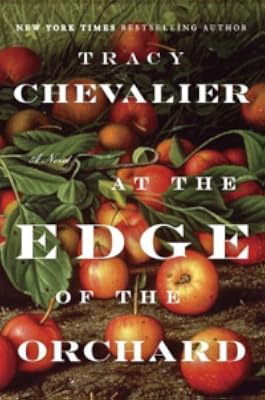
At the Edge of the Orchard
by Tracy Chevalier
On This Page
Description
“With impeccable research and flawless prose, Chevalier perfectly conjures the grandeur of the pristine Wild West . . . and the everyday adventurers—male and female—who were bold enough or foolish enough to be drawn to the unknown. She crafts for us an excellent experience.”—USA Today
From internationally bestselling author Tracy Chevalier, author of A Single Thread, comes a riveting drama of a pioneer family on the American frontier
1838: James and Sadie Goodenough have settled show more where their wagon got stuck – in the muddy, stagnant swamps of northwest Ohio. They and their five children work relentlessly to tame their patch of land, buying saplings from a local tree man known as John Appleseed so they can cultivate the fifty apple trees required to stake their claim on the property. But the orchard they plant sows the seeds of a long battle. James loves the apples, reminders of an easier life back in Connecticut; while Sadie prefers the applejack they make, an alcoholic refuge from brutal frontier life.
1853: Their youngest child Robert is wandering through Gold Rush California. Restless and haunted by the broken family he left behind, he has made his way alone across the country. In the redwood and giant sequoia groves he finds some solace, collecting seeds for a naturalist who sells plants from the new world to the gardeners of England. But you can run only so far, even in America, and when Robert’s past makes an unexpected appearance he must decide whether to strike out again or stake his own claim to a home at last.
Chevalier tells a fierce, beautifully crafted story in At the Edge of the Orchard, her most graceful and richly imagined work yet. show less
Tags
Recommendations














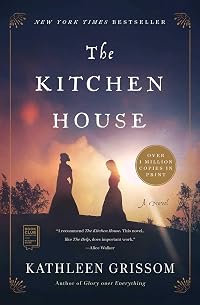
Member Recommendations
Member Reviews
At the Edge of the Orchard by Tracy Chevalier highlights her excellent storytelling ability and her creation of memorable characters. The novel paints a vivid picture of the hard and rough-hewn life of American pioneers as they ventured westward.
The story is about one family, the Goodenoughs as they leave Connecticut for Ohio, and take up farming in an area known as the Black Swamp. One of the conditions to qualify for free land is that an orchard of at least 50 trees must be planted within three years. Apples are such an ordinary fruit, yet this author has produced a hypnotically sweeping novel centred around them. The Goodenoughs struggle on their new land and, James, the father, an apple lover, finds that for every 10 trees he show more plants, five die. He and his wife constantly battle as he prefers to grow eating apples and Sadie who seeks solace from her dark life would rather he grow “spitters”, apples to be used to produce cider and applejack. Many of their trees are bought from John Chapman, who became know as Johnny Appleseed. There are five chapters, each describing a different era and at first we follow their bitter, self-centered and often violent marriage but eventally the story moves on to follow the lives of a couple of their children, Robert and Martha and the ever westward movement of their lives until they are under the giant Redwood and Sequoia trees of California.
Trees and landscapes are an important element of this beautifully written story. The author’s impeccable research and emotional storytelling has produced a wonderful book. Although it can be quite dark at times, I found At the Edge of the Orchard to be quite inspiring. show less
The story is about one family, the Goodenoughs as they leave Connecticut for Ohio, and take up farming in an area known as the Black Swamp. One of the conditions to qualify for free land is that an orchard of at least 50 trees must be planted within three years. Apples are such an ordinary fruit, yet this author has produced a hypnotically sweeping novel centred around them. The Goodenoughs struggle on their new land and, James, the father, an apple lover, finds that for every 10 trees he show more plants, five die. He and his wife constantly battle as he prefers to grow eating apples and Sadie who seeks solace from her dark life would rather he grow “spitters”, apples to be used to produce cider and applejack. Many of their trees are bought from John Chapman, who became know as Johnny Appleseed. There are five chapters, each describing a different era and at first we follow their bitter, self-centered and often violent marriage but eventally the story moves on to follow the lives of a couple of their children, Robert and Martha and the ever westward movement of their lives until they are under the giant Redwood and Sequoia trees of California.
Trees and landscapes are an important element of this beautifully written story. The author’s impeccable research and emotional storytelling has produced a wonderful book. Although it can be quite dark at times, I found At the Edge of the Orchard to be quite inspiring. show less
Ok. I’ll admit it. I bought this book for the cover.
Kinda.
Yes, the cover is what attracted me first, but also the author and finally the description. Back when Chevalier published what I think was her breakout book, The Girl with the Pearl Earring, I read it and a couple of her other books. Then she sort of fell off my bookshelf as sometimes happens. I’m glad to add this one to my set though. It’s a historical fiction novel set in frontier America, albeit a part that isn’t nearly as treated or romanticized as some like the Dakotas, prairie states or places in Big Sky country. Instead our hapless family washes up in northwestern Ohio in what is essentially a swamp. Let the wretchedness begin.
The story is told in two main parts; show more direct narrative from the perspectives of James and Sadie, husband and wife who had to leave Connecticut because there wasn’t enough of James’ family land to go around, with he being a younger son and marrying beneath him. The first Sadie won’t let him forget, the second she believes, too, and it gives her an excuse to undermine him, the family and everything they’re working hard to overcome. Well the family is working, Sadie believes that one of the reasons people have children is to foist off the hardest work to. She’s a wholly unpleasant and surprisingly unsympathetic character. Usually in these kinds of books when there’s a severely put-upon woman who acts the harridan, the writer will suddenly give us some heartbreaking reason for it. In this there is no such magic wand. Sadie is a sociopath through and through and I wished she’d just fall into her jack bottle and stay there.
The other piece of the story comes from letters written by youngest son Robert after he escapes his horror show of a life in Black Swamp. Semi-literate, he writes to his left behind brothers and sisters (ominous that mom and dad are not mentioned). He doesn’t receive a single reply, but keeps on for something like ten years. Now don’t get worried that you’re going to have to wade through hundreds of misspelled letters; you won’t. He writes one a year and sometimes skips years. He’s pretty wayward at first, but finally meets William Lobb, a man who collects plants for a firm in England. Without really meaning to, Lobb hires Robert and begins to teach him about the great trees of California; the Sequoia and the Redwood. Once again, Robert’s life is run by trees; immutable and uncaring, causing his silent awe and devotion to their care.
The two types of trees in the book couldn’t be more different. The highly cultivated and domesticated apple which is the ruin of the Goodenough family. By ending up in swamp, the farming is poor and farming apples made more difficult because James wants eating apples and Sadie wants drinking apples. Neither do well and James has to be diligent in his grafting campaign or else Sadie will rip down the trees out of spite.
Robert’s relationship with the sequoias and redwoods is no less demanding and only affected by humans when he has to pay to be able to collect seeds and saplings. Soon he’s doing this on his own and likes his solitary life among the giants.
It doesn’t last with the arrival of not one, but two pregnant women in his life. I like their depiction and how he handles each of them and the way things end up, despite some more sorrow added onto the heap that had come before. The end was hopeful, which was more than I expected given the grinding misery of the first part. show less
Kinda.
Yes, the cover is what attracted me first, but also the author and finally the description. Back when Chevalier published what I think was her breakout book, The Girl with the Pearl Earring, I read it and a couple of her other books. Then she sort of fell off my bookshelf as sometimes happens. I’m glad to add this one to my set though. It’s a historical fiction novel set in frontier America, albeit a part that isn’t nearly as treated or romanticized as some like the Dakotas, prairie states or places in Big Sky country. Instead our hapless family washes up in northwestern Ohio in what is essentially a swamp. Let the wretchedness begin.
The story is told in two main parts; show more direct narrative from the perspectives of James and Sadie, husband and wife who had to leave Connecticut because there wasn’t enough of James’ family land to go around, with he being a younger son and marrying beneath him. The first Sadie won’t let him forget, the second she believes, too, and it gives her an excuse to undermine him, the family and everything they’re working hard to overcome. Well the family is working, Sadie believes that one of the reasons people have children is to foist off the hardest work to. She’s a wholly unpleasant and surprisingly unsympathetic character. Usually in these kinds of books when there’s a severely put-upon woman who acts the harridan, the writer will suddenly give us some heartbreaking reason for it. In this there is no such magic wand. Sadie is a sociopath through and through and I wished she’d just fall into her jack bottle and stay there.
The other piece of the story comes from letters written by youngest son Robert after he escapes his horror show of a life in Black Swamp. Semi-literate, he writes to his left behind brothers and sisters (ominous that mom and dad are not mentioned). He doesn’t receive a single reply, but keeps on for something like ten years. Now don’t get worried that you’re going to have to wade through hundreds of misspelled letters; you won’t. He writes one a year and sometimes skips years. He’s pretty wayward at first, but finally meets William Lobb, a man who collects plants for a firm in England. Without really meaning to, Lobb hires Robert and begins to teach him about the great trees of California; the Sequoia and the Redwood. Once again, Robert’s life is run by trees; immutable and uncaring, causing his silent awe and devotion to their care.
The two types of trees in the book couldn’t be more different. The highly cultivated and domesticated apple which is the ruin of the Goodenough family. By ending up in swamp, the farming is poor and farming apples made more difficult because James wants eating apples and Sadie wants drinking apples. Neither do well and James has to be diligent in his grafting campaign or else Sadie will rip down the trees out of spite.
Robert’s relationship with the sequoias and redwoods is no less demanding and only affected by humans when he has to pay to be able to collect seeds and saplings. Soon he’s doing this on his own and likes his solitary life among the giants.
It doesn’t last with the arrival of not one, but two pregnant women in his life. I like their depiction and how he handles each of them and the way things end up, despite some more sorrow added onto the heap that had come before. The end was hopeful, which was more than I expected given the grinding misery of the first part. show less
This is the kind of historical fiction I love: strong sense of time and place, interesting characters, and the opportunity to learn about something new. In this one, Chevalier has created a fascinating character in Robert Goodenough who flees his family's farm in Ohio in 1838 after tragedy strikes. He grows up with the young nation and almost embodies the idea of Manifest Destiny - continually moving westward and expanding his horizons. Most of the story is about his time in California where he assists a tree and plant collector who sends specimens to England. There is a bit of heavy-handed metaphor in the story about apples and sin, and some of the plot details beggar belief, but overall, this was an engrossing read. Chevalier rarely show more disappoints.
4 stars show less
4 stars show less
I never come away from a Chevalier novel without knowing I have gained something. Sometimes that "something" is a wonderful bit of fiction, but often, it also is that more elusive classroom of life, where I have learned a bit more about the subject of which she's written. It can be painting a masterpiece, weaving one of my favorite medieval tapestries, finding fossils, or as in this book, more about trees and our nation's history in the early to mid 1800's. The story starts in the swamps of northwest Ohio (okay, I admit it. I didn't know there were swamps there) with the somewhat hapless and luckless Goodenough family, who are, indeed, good enough to make a mess of things, including planting the orchard that would allow them to claim show more ownership of their land. (Now that decree I did know about: to claim a sake of farmland, there needed to be 50 trees planted as an orchard in 3 years of settling, to show you were really serious about farming the land.) The story bounces back and forth between James and Sadie, sometimes sideswiping their surviving children, and then moves to follow the youngest, Robert, as he travels west. The day Robert first saw the giant sequoias of California was the day I also discovered old family pictures from 1962 when my own family discovered them as well. Chevalier has woven two actual figures into the novel, both of whom have crossed my interest radar in the past: John Chapman (aka Johnny Appleseed) and William Lobb, each of whom helped transport trees (actually seeds, seedlings, and saplings) from their natural environment to new ones, often miles and growing zones away. Fascinating stuff, how we changed our world through plants. And because that fascinates me, the story built around it interested me, too.
Tags: 2016-read, an-author-i-read, made-me-look-something-up, read, taught-me-something, thank-you-charleston-county-library show less
Tags: 2016-read, an-author-i-read, made-me-look-something-up, read, taught-me-something, thank-you-charleston-county-library show less
Originally posted here
Wow, what a beautifully written book. At the Edge of the Orchard begins in 1838, and focuses on the dysfunctional Goodenough family of twelve who are trying to eke out a living on their claim in a swamp. The father of the family, James Goodenough needs to rear fifty apple trees in order to officially own his land. Life is hard, five children die and are buried. James' wife Sadie deals with her meagre existence by turning to applejack, a kind of strong alcohol made from apples. The five children that are left have hard lives and needless to say I got very emotionally invested in the Goodenough family, particularly the two youngest children Martha and Robert.
Abruptly through letters the narrative fast forwards show more eighteen years focusing on Robert as he tries to make a living west in California whilst also trying to forget his past. Slowly what happened to his family in the past is revealed. The whole book fascinated me from start to finish and I just could not stop reading. Trees are the pervasive theme in this book and are woven into the story beautifully. I learned a bunch of things about trees and I couldn't stop googling all the different kinds that were mentioned in the book. Robert is trying to escape his past, his roots and he truly finds out the truth of the saying 'the apple doesn't fall far from the tree'.
There are plenty of revelations and a whole cast of very colourful characters. Life for Robert and his family was hard resulting in much of the book seeming bleak and depressing, but there is an underlying glimmer of hope throughout. I loved the ending so much and I found the whole book to be so wonderfully poignant. It was brilliant. show less
I liked this book, but not as much as earlier books I've read by Chevalier. Some reviewers have disliked the founding Goodenough characters James and Sadie who have a bitter destructive marriage, but I've seen some of those in my own family and neighbors. I recognized the oppression and pure drudgery of rural life in a tough environment and how that can twist people. Those characters rang more true to me than the ones in the later half of the book who seemed more stereotypical.
What stood out and appealed to me were the settings. Chevalier lovingly details the Great Black Swamp of northwest Ohio and the redwood/sequoia forests of California. As an Ohioan with relatives who live in both those places, it felt familiar yet strange. (The show more Ohio swamps have been drained and the land is fertile farm land with not much left in the way of orchards.) As an avid gardener, I appreciated the passages on grafting and caring for fruit trees; the annual rhythms of crops sowed and harvested; and the history of land, plants, and plant hunters.
I also enjoyed the craft of the writing. The first part of the book is written in alternating scenes from the close third person James and first person Sadie. Chevalier bridges a time and character gap with letters from their youngest child Robert who left home and is making his way West. His story is picked up in close third person and interrupted by another series of letters from his sister Martha who fills in her story. Toward the end, Robert's story is again punctuated by his parent's alternating scenes in flashback. It's a clever structure and manages to mask the weaker characterizations of Robert and the other California characters. Altogether this was a satisfying read for me, but folks with less interest in the settings or plants might find it a bit of a slog. show less
What stood out and appealed to me were the settings. Chevalier lovingly details the Great Black Swamp of northwest Ohio and the redwood/sequoia forests of California. As an Ohioan with relatives who live in both those places, it felt familiar yet strange. (The show more Ohio swamps have been drained and the land is fertile farm land with not much left in the way of orchards.) As an avid gardener, I appreciated the passages on grafting and caring for fruit trees; the annual rhythms of crops sowed and harvested; and the history of land, plants, and plant hunters.
I also enjoyed the craft of the writing. The first part of the book is written in alternating scenes from the close third person James and first person Sadie. Chevalier bridges a time and character gap with letters from their youngest child Robert who left home and is making his way West. His story is picked up in close third person and interrupted by another series of letters from his sister Martha who fills in her story. Toward the end, Robert's story is again punctuated by his parent's alternating scenes in flashback. It's a clever structure and manages to mask the weaker characterizations of Robert and the other California characters. Altogether this was a satisfying read for me, but folks with less interest in the settings or plants might find it a bit of a slog. show less
The story begins with James and Sadie Goodenough and their 5 surviving children settling in swampy Ohio when they can't get through the mud. James has brought Golden Pippin apple seedlings with him and intends to grow them. They get additional seedlings from John Chapman that end up being perfect for Applejack and the parents begin a feud over what is best. After a tragedy youngest son Robert heads West taking a series of jobs and writing letters home that are never answered. He finally lands in California. Upon hearing of giant redwoods heads to Calaveras County where he encounters giant sequoias and a man collecting tree seeds and seedlings to send to England. Robert is enthralled by working with the trees until someone from home show more shows up and Robert has to face what he wants out of life and how to achieve it. One of Chevalier's best. show less
Members
- Recently Added By
Lists

Top Five Books of 2017
757 works; 230 members

Family Drama
55 works; 14 members

Epistolary Books
105 works; 27 members

Dysfunctional Families
133 works; 7 members

Books Read in 2016
4,666 works; 199 members

Books Read in 2018
4,360 works; 110 members
Author Information

27+ Works 42,996 Members
Tracy Chevalier was born on October 19, 1962 in Washington, D.C. After receiving a B.A. in English from Oberlin College, she moved to England in 1984 where she worked several years as a reference book editor. Leaving her job in 1993, she began a year-long M.A in creative writing at the University of East Anglia. She is the author of several novels show more including The Virgin Blue, Burning Bright, Remarkable Creatures, and The Last Runaway. Her novel Girl with a Pearl Earring was made into a film starring Colin Firth and Scarlett Johansson. (Bowker Author Biography) show less
Awards and Honors
Distinctions
Series
Belongs to Publisher Series
Gallimard, Folio (6464)
Common Knowledge
- Canonical title
- At the Edge of the Orchard
- Original title
- At the Edge of the Orchard
- Original publication date
- 2016
- People/Characters
- John Chapman (Johnny Appleseed); William Lobb; Billie Lapham; James Goodenough; Robert Goodenough; Sadie Goodenough (show all 12); Martha Goodenough; Hattie Day; Molly Jones; Nancy Lapham; Mrs. Dody Bienenstock; John Day
- Important places
- The Black Swamp, Ohio, USA; Calaveras County, California, USA; San Francisco, California, USA
- Important events
- California Gold Rush (1849)
- Epigraph
- The juice of Apples likewise, as of pippins, and pearemaines, is of very good use in Melancholicke diseases, helping to procure mirth, and to expel heavinesse.
-John Parkinson, Paradisi in Sole Paradisus Terrestris, 1629
To the spirit bowed with affliction, or harrowed with cares, a pilgrimage to these shadowy shrines affords most soothing consolation. Behold the evergreen summits of trees that have withstood the storms of more than three th... (show all)ousand years!...While lost in wonder and admiration, the turmoil of earthly strife seems to vanish. -Edward Vischer, The Mammoth Tree Grove, Calaveras County, California, 1862
Go West, young man, and grow up with the country. -- John Babsone Lane Soule, 1851, and Horace Greeley, 1865 - Dedication
- For Claire and Pascale finding their way in the world
- First words
- They were fighting over apples again.
- Quotations
- She'd had a terrible time with his brothers' wives: seeing her with them was like watching someone pet a cat against its fur.
"What about the seedlings?"
"Of the four I brought back, two are still growing; the other two perished after being transplanted into English soil, the like of which probably shocked them to death after the Californian soil... (show all) they were accustomed to. I myself felt rather similarly."
She held herself like a ship steering a slow, proud passage through calm waters.
The words cut through the air like a knife through meat—resistant, and then gliding effortlessly.
it was hard to imagine Molly and Jimmy living at Mrs. Bienenstock's. He was pretty sure no woman had ever entered the boardinghouse apart from Mrs. B. herself, and a baby there would be like a yellow dress at a funeral.
"I am real tired of men doin' stupid things in this town."
"How did you know?"
Mrs. Bienenstock grunted. "Men are too easy to figure out. I need more of a challenge." - Last words
- (Click to show. Warning: May contain spoilers.)Seeds could keep for a long time. All they needed was the right place to take root. He would know it when he saw it.
- Blurbers
- Harris, Joanne; Brooks, Geraldine
- Original language
- English
Classifications
Statistics
- Members
- 1,095
- Popularity
- 23,138
- Reviews
- 69
- Rating
- (3.68)
- Languages
- 6 — English, French, German, Italian, Portuguese, Spanish
- Media
- Paper, Audiobook, Ebook
- ISBNs
- 40
- ASINs
- 8