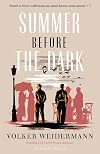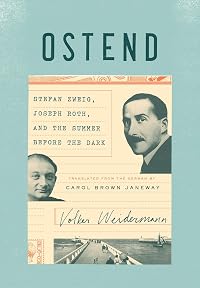
Summer Before the Dark: Stefan Zweig and Joseph Roth, Ostend 1936
by Volker Weidermann
On This Page
Description
"The true story of two of the twentieth century's great writers exiled from Nazi Germany to a Belgian seaside resort, and the world they built there: written with a novelist's eye for pacing, chronology, and language--a dazzling work of historical nonfiction. It's the summer of 1936, and the writer Stefan Zweig is in crisis. His German publisher no longer wants him, his marriage is collapsing, and his home in Austria has been seized. He's been dreaming of Ostend, the Belgian beach town--a show more paradise of promenades, parasols, and old friends. So he journeys there with his new lover, Lotte Altmann, and reunites with his semi-estranged fellow writer and close friend Joseph Roth, himself newly in love. For a moment, they create a fragile paradise. But as Europe begins to crumble around them, the writers find themselves trapped on vacation, in exile, watching the world burn. In Ostend, Volker Weidermann lyrically recounts "the summer before the dark," when a coterie of artists, intellectuals, drunks, revolutionaries, and madmen found themselves in limbo while Europe teetered on the edge of fascism and total war"-- show lessTags
Recommendations














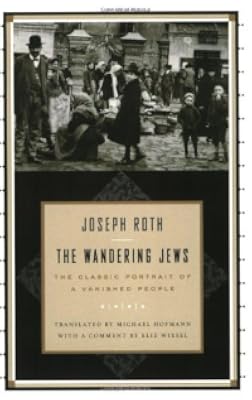

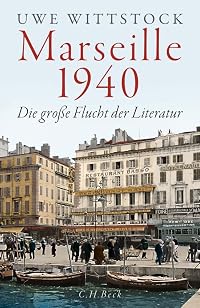
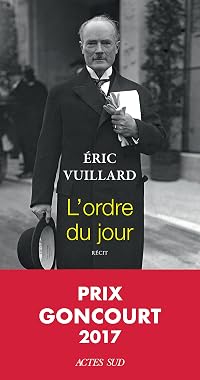


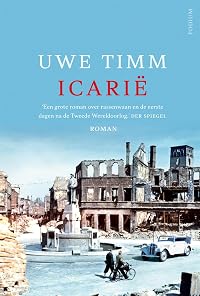




Member Recommendations

bluepiano 5 years later, after the dark had suffocated Euro;pe, Breton, Wilfredo Lam, Lévi-Strauss, Victor Serge & others are aboard a freighter escaping it. Less of the imagined, more of the historical.
Member Reviews
The title of this biographical novel already tells us the scene: It is 1936, and the main characters meet in O(o)stend(e) to spend one last glorious summer there, one summer to pretend that everything is good, that the darkness will not come, that they are happy.
In the centre of the story there are Stefan Zweig and Joseph Roth, connected by a strong friendship, but there are also Irmgard Keun, Ernst Toller, Egon Erwin Kisch and a handful of other writers, as well as their wives and associates: All of them exiled, trying to find a way in this new world, needing to come to terms with the hatred of their home countries of Germany and Austria, but some of them also still hoping against reason that everything will be alright.
The story does show more not have a real plot, but it does not matter. I could not stop reading because the author puts scene after scene together like a mosaic, painting a vivid and emotional picture of this unique place and time, where a circle of friends come together once more before everything falls apart, and they drift from each other through further exile, sickness, suicide.
It is a short work, but I savored every sentence, every word. show less
In the centre of the story there are Stefan Zweig and Joseph Roth, connected by a strong friendship, but there are also Irmgard Keun, Ernst Toller, Egon Erwin Kisch and a handful of other writers, as well as their wives and associates: All of them exiled, trying to find a way in this new world, needing to come to terms with the hatred of their home countries of Germany and Austria, but some of them also still hoping against reason that everything will be alright.
The story does show more not have a real plot, but it does not matter. I could not stop reading because the author puts scene after scene together like a mosaic, painting a vivid and emotional picture of this unique place and time, where a circle of friends come together once more before everything falls apart, and they drift from each other through further exile, sickness, suicide.
It is a short work, but I savored every sentence, every word. show less
Weidermann gives us a charming, intelligent vignette of the life of the complicated, diverse community of writers exiled from Nazi Germany from the perspective of the group that came together to spend the summer of 1936 in the Flemish resort of Oostende. Maybe not the first place we would pick for a holiday, but it was apparently a lot nicer before it was bombed in WWII; and it seems to have been a convenient spot for them, not far from the exile publishing centre of Amsterdam, and only a short hop from both London and Paris. In any case, there was a formidable array of German literary and political talent assembled there, including the two writers who most interest Weidermann, the urbane, wealthy and popular Stefan Zweig and the show more touchy, impoverished and alcoholic Joseph Roth.
At the heart of the story is the unlikely friendship and literary collaboration between Zweig and Roth and the perhaps equally unlikely love affair that developed between the jaded Roth and the bright young novelist Irmgard Keun, an author of semi-frivolous "chicklit" novels thrown together with the heavyweights of German Lit only by the quirks of Nazi censorship, but apparently well able to keep up with Roth's drinking. From reading their books, it would be hard to see what Roth and Zweig might have had in common apart from race and nationality, but clearly they each had a great deal of respect for the other's work, and they trusted each other far enough to work on rewriting unpublished texts together. Weidermann describes Roth solving a difficult problem of composition in one of Zweig's stories by writing a complete new scene for him.
Although it's presented like a novel, this doesn't really seem to be a work of fiction in the usual sense - it's more like a piece of imaginative biography. Where Weidermann attributes thoughts or statements to his characters, he always seems to have a letter, diary entry or memoir to back it up, although he doesn't go to the length of providing footnotes. The novelist's freedom of invention seems to be exercised more in identifying patterns in the random events of his characters' lives than in interpolating fictional events between those in the historical record. It's obviously not meant as a profound piece of scholarship, but it gives us a few interesting insights into how literature copes with the idea of exile and it brings a generation of writers it's all too easy to overlook back into the limelight for a moment or two. show less
At the heart of the story is the unlikely friendship and literary collaboration between Zweig and Roth and the perhaps equally unlikely love affair that developed between the jaded Roth and the bright young novelist Irmgard Keun, an author of semi-frivolous "chicklit" novels thrown together with the heavyweights of German Lit only by the quirks of Nazi censorship, but apparently well able to keep up with Roth's drinking. From reading their books, it would be hard to see what Roth and Zweig might have had in common apart from race and nationality, but clearly they each had a great deal of respect for the other's work, and they trusted each other far enough to work on rewriting unpublished texts together. Weidermann describes Roth solving a difficult problem of composition in one of Zweig's stories by writing a complete new scene for him.
Although it's presented like a novel, this doesn't really seem to be a work of fiction in the usual sense - it's more like a piece of imaginative biography. Where Weidermann attributes thoughts or statements to his characters, he always seems to have a letter, diary entry or memoir to back it up, although he doesn't go to the length of providing footnotes. The novelist's freedom of invention seems to be exercised more in identifying patterns in the random events of his characters' lives than in interpolating fictional events between those in the historical record. It's obviously not meant as a profound piece of scholarship, but it gives us a few interesting insights into how literature copes with the idea of exile and it brings a generation of writers it's all too easy to overlook back into the limelight for a moment or two. show less
http://www.mytwostotinki.com/?p=886
The Belgian kings Leopold I and Leopold II liked to spend their summer holidays in the seaside town Ostende, a place which was famous then and now for its long sandy beaches. What followed in the late 19th and early 20th century was a construction boom: the small harbor town developed into an opulent summer holiday location for the wealthy bourgeoisie and the upper echelons of society. Those who visit Ostende today will realize that a lot of the splendor of those days has gone and many of the gorgeous buildings of that time were destroyed either by the bombings of WWII or by the similarly devastating “modernization” frenzy in the 1950s and 1960s.
But in 1936, the old Ostende was still very much show more alive. Those who could afford it were packing their things and spending a few weeks here. Among them were also a group of German-language writers. They enjoy the sun, the swimming, the drinks, the company, and their talks about literature. But all of them either lost their homes, or had to prepare for losing it in the near future. They had mostly also lost their by far biggest publication market, Germany, and with it also the biggest part of their income. The small new book by Volker Weidermann, Ostende. 1936 – Sommer der Freundschaft (published this year and not yet translated) describes this summer, the strange atmosphere between holiday mood and depression that most of the writers felt. And it shows also the difficulties to be a writer in exile, and what happened to the friends that met in Ostende during that summer.
I was amazed to read who was in Ostende at exactly the same time – it reads like a part of the Who is who of German literature of that period: Stefan Zweig (with his secretary and lover Lotte Altmann); Joseph Roth; Irmgard Keun; Ernst Toller with his wife, the actress Christiane Grautoff; Egon Erwin Kisch, the famous “Raging Reporter from Prague” with his wife; Hermann Kesten; Arthur Koestler; also Willi Münzenberg, the “Red Press Czar” and founder of one of the biggest media empires of the world was there with his wife and some aides, among them the shady Otto Katz, one of the most notorious GPU agents, also known as Andre Simone.
Weidermann focuses the book mainly on the friendship between Stefan Zweig and Joseph Roth. Zweig, one of the few German-language writers that was not dependend from the German market because his books were popular almost all over the world, was in a similarly privileged position like Thomas Mann, Lion Feuchtwanger, or Erich Maria Remarque: they lived in very comfortable conditions even in exile, but all of them used their wealth and contacts to support the big number of poor colleagues financially or with contacts with publishers. In later years their assistance in getting affidavits and visas was crucial to get many writers out of Europa after the outbreak of the war (Anna Seghers’ Transit gives a haunting description of the emigrants in Marseille).
Joseph Roth was on the other side of the social pyramid of writers: the once well-paid journalist and author had not been very lucky. He was not the kind of person to save money for bad times to come and spent what he earned with full hands, living a life in the most expensive European hotels in the late 1920s and early 1930s. A mental illness of his wife who had to be admitted to an asylum (she was later killed by the Nazis in the framework of the infamous T4 program), his growing problems with alcohol – the book describes Zweig’s caring efforts to feed his friend at least one time or another – and his complete loss of the German and Austrian book market; there was hardly a disaster that didn’t strike Roth in those years. Stefan Zweig proved to be a loyal friend who helped Roth not only financially; he tried to make Roth quit or at least reduce his booze addiction; he discussed manuscripts with him and reminded him to work more slowly and diligently; and he introduced him to his other friends and colleagues in Ostende. Among them was a young and attractive “Aryan” female writer from Germany: Irmgard Keun.
Keun, already an accomplished writer in the early 30s, was caught in an unhappy marriage in Germany from which she ran away, and had also difficulties to publish in Germany. Her books were banned and the works she wrote during her time in Belgium (for example After Midnight, her probably best book) and on travels would be published in German exile publishing houses. When she met Roth, it was obviously a coup de foudre from both sides. They started a relationship almost immediately after their first meeting, much to the surprise of the other emigrants who couldn’t understand what this attractive woman drew to the hopeless drunkard in tattered clothes. Weidermann describes how they got “to work”: they used to go to the same small bar every day, sit on separate tables with their small typewriters (Keun loved the sun, Roth couldn’t stand it) and ordered some liquor. Or more correctly: a lot of liquor. Yes, also Keun was an alcoholic. But for both of them, it seemed to have been an extremely productive time and both wrote excellent works during their time together.
Also for Zweig the times were not easy. But his were more his private problems and sorrows, not so much the political situation. His marriage with Friederike had failed, his home in Austria was soon to be sold to settle the financial issues following the divorce, and he had also sold his extraordinary collection of autographs. But his relationship with a young woman, Lotte Altmann, whom he hired as an assistant and secretary and who later became his mistress and after the divorce his second wife, also set new energies free in Zweig. He wanted to use the fresh energy he felt to do some serious work on some of his book projects in Ostende and also to think about where to settle in the future. It was also a good opportunity to catch up with friends and colleagues, especially with Joseph Roth with whom he entertained a close friendship.
For Zweig it was not the first time he came to Ostende. He had spent the summer 1914, the days before the outbreak of WWI in Ostende to meet his idol Emile Verhaeren. So overwhelmed was the young Zweig by the meeting with his master in 1914 that he didn’t realize at all that the world was preparing for war and that the world he loved would be doomed. (Verhaeren turned soon after the outbreak of the war into one of the most radical chauvinists, a major disappointment for Zweig)
What drew Zweig to Roth, and vice versa? For Zweig, Roth represented the Ostjudentum, the world of the Jews from the periphery of the Austro-Hungarian Empire, a world about which Zweig knew very little but to which he felt in a strange way attracted. And that Roth, despite his insane alcoholism and his financial dependency from Zweig, was so loyal and honest was for Zweig also very attractive. Roth knew no friendship, no superficial friendliness when it came to questions of literature. When he smelled one wrong expression, one superficial adjective, a weak plot, or something else that his unfailing instinct discovered, he would not hide it and let his friend know. Also vice versa, Roth accepted the professional advice of Zweig on many occasions. Due to the extreme difference in their living conditions one could have expected Roth to be a sycophant at least at times, but it seems that this was never the case. Theirs is a dialogue eye to eye when it came to matters of importance, i.e. to literature.
Weidermann’s book is excellently written. Not only writes he almost like an experienced novelist who arranges his material in an interesting way. He also succeeds in making the motives of his heroes understandable to the reader. And he adds interesting details that you can hardly read in any other book about the German exile – such as the unintentional act of disloyalty Zweig commits when he writes to his American publisher that Roth is suffering from being over-productive (writing too much in a short time) with the result that his exile books are much weaker than the previous one’s (I would disagree with Zweig here). As a result, the American publisher writes Roth that he is cancelling his author’s contract, a financial catastrophe for Roth who lives his last years mainly from Stefan Zweig’s support.
Although the other authors are not so much in the center of the book, they play an important role too and Weidermann shows a great talent to integrate their fates almost effortlessly in his small masterpiece. Ernst Toller, the expressionist poet and dramatist, and his beautiful actress wife add a lot of flair to the weeks in Ostende – but Toller has always a rope with a noose in his suitcase; he suffers from extreme bouts of depression and the reader knows that he will sooner or later use the rope to hang himself. (When it finally happened a few years later, Roth collapsed when he heard the news and died shortly thereafter) Also the Münzenberg/Katz story made me shiver, knowing what later happened; and of course the end of the two main protagonists, so sad and unnecessary, victims of a time that was so opposed to the human values they represented in everything they did and wrote.
I hope for a swift translation of this wonderful book of Volker Weidermann. (The translation rights for the English-speaking edition are already sold to Pantheon/Knopf.) It will be a must for all Stefan Zweig and Joseph Roth aficionados, and for all friends of literature in general. And if you visit Ostende, take this book with you. And don’t miss the house of the painter James Ensor. It plays a small but important role in this book too and is different from any other house you will ever visit. show less
The Belgian kings Leopold I and Leopold II liked to spend their summer holidays in the seaside town Ostende, a place which was famous then and now for its long sandy beaches. What followed in the late 19th and early 20th century was a construction boom: the small harbor town developed into an opulent summer holiday location for the wealthy bourgeoisie and the upper echelons of society. Those who visit Ostende today will realize that a lot of the splendor of those days has gone and many of the gorgeous buildings of that time were destroyed either by the bombings of WWII or by the similarly devastating “modernization” frenzy in the 1950s and 1960s.
But in 1936, the old Ostende was still very much show more alive. Those who could afford it were packing their things and spending a few weeks here. Among them were also a group of German-language writers. They enjoy the sun, the swimming, the drinks, the company, and their talks about literature. But all of them either lost their homes, or had to prepare for losing it in the near future. They had mostly also lost their by far biggest publication market, Germany, and with it also the biggest part of their income. The small new book by Volker Weidermann, Ostende. 1936 – Sommer der Freundschaft (published this year and not yet translated) describes this summer, the strange atmosphere between holiday mood and depression that most of the writers felt. And it shows also the difficulties to be a writer in exile, and what happened to the friends that met in Ostende during that summer.
I was amazed to read who was in Ostende at exactly the same time – it reads like a part of the Who is who of German literature of that period: Stefan Zweig (with his secretary and lover Lotte Altmann); Joseph Roth; Irmgard Keun; Ernst Toller with his wife, the actress Christiane Grautoff; Egon Erwin Kisch, the famous “Raging Reporter from Prague” with his wife; Hermann Kesten; Arthur Koestler; also Willi Münzenberg, the “Red Press Czar” and founder of one of the biggest media empires of the world was there with his wife and some aides, among them the shady Otto Katz, one of the most notorious GPU agents, also known as Andre Simone.
Weidermann focuses the book mainly on the friendship between Stefan Zweig and Joseph Roth. Zweig, one of the few German-language writers that was not dependend from the German market because his books were popular almost all over the world, was in a similarly privileged position like Thomas Mann, Lion Feuchtwanger, or Erich Maria Remarque: they lived in very comfortable conditions even in exile, but all of them used their wealth and contacts to support the big number of poor colleagues financially or with contacts with publishers. In later years their assistance in getting affidavits and visas was crucial to get many writers out of Europa after the outbreak of the war (Anna Seghers’ Transit gives a haunting description of the emigrants in Marseille).
Joseph Roth was on the other side of the social pyramid of writers: the once well-paid journalist and author had not been very lucky. He was not the kind of person to save money for bad times to come and spent what he earned with full hands, living a life in the most expensive European hotels in the late 1920s and early 1930s. A mental illness of his wife who had to be admitted to an asylum (she was later killed by the Nazis in the framework of the infamous T4 program), his growing problems with alcohol – the book describes Zweig’s caring efforts to feed his friend at least one time or another – and his complete loss of the German and Austrian book market; there was hardly a disaster that didn’t strike Roth in those years. Stefan Zweig proved to be a loyal friend who helped Roth not only financially; he tried to make Roth quit or at least reduce his booze addiction; he discussed manuscripts with him and reminded him to work more slowly and diligently; and he introduced him to his other friends and colleagues in Ostende. Among them was a young and attractive “Aryan” female writer from Germany: Irmgard Keun.
Keun, already an accomplished writer in the early 30s, was caught in an unhappy marriage in Germany from which she ran away, and had also difficulties to publish in Germany. Her books were banned and the works she wrote during her time in Belgium (for example After Midnight, her probably best book) and on travels would be published in German exile publishing houses. When she met Roth, it was obviously a coup de foudre from both sides. They started a relationship almost immediately after their first meeting, much to the surprise of the other emigrants who couldn’t understand what this attractive woman drew to the hopeless drunkard in tattered clothes. Weidermann describes how they got “to work”: they used to go to the same small bar every day, sit on separate tables with their small typewriters (Keun loved the sun, Roth couldn’t stand it) and ordered some liquor. Or more correctly: a lot of liquor. Yes, also Keun was an alcoholic. But for both of them, it seemed to have been an extremely productive time and both wrote excellent works during their time together.
Also for Zweig the times were not easy. But his were more his private problems and sorrows, not so much the political situation. His marriage with Friederike had failed, his home in Austria was soon to be sold to settle the financial issues following the divorce, and he had also sold his extraordinary collection of autographs. But his relationship with a young woman, Lotte Altmann, whom he hired as an assistant and secretary and who later became his mistress and after the divorce his second wife, also set new energies free in Zweig. He wanted to use the fresh energy he felt to do some serious work on some of his book projects in Ostende and also to think about where to settle in the future. It was also a good opportunity to catch up with friends and colleagues, especially with Joseph Roth with whom he entertained a close friendship.
For Zweig it was not the first time he came to Ostende. He had spent the summer 1914, the days before the outbreak of WWI in Ostende to meet his idol Emile Verhaeren. So overwhelmed was the young Zweig by the meeting with his master in 1914 that he didn’t realize at all that the world was preparing for war and that the world he loved would be doomed. (Verhaeren turned soon after the outbreak of the war into one of the most radical chauvinists, a major disappointment for Zweig)
What drew Zweig to Roth, and vice versa? For Zweig, Roth represented the Ostjudentum, the world of the Jews from the periphery of the Austro-Hungarian Empire, a world about which Zweig knew very little but to which he felt in a strange way attracted. And that Roth, despite his insane alcoholism and his financial dependency from Zweig, was so loyal and honest was for Zweig also very attractive. Roth knew no friendship, no superficial friendliness when it came to questions of literature. When he smelled one wrong expression, one superficial adjective, a weak plot, or something else that his unfailing instinct discovered, he would not hide it and let his friend know. Also vice versa, Roth accepted the professional advice of Zweig on many occasions. Due to the extreme difference in their living conditions one could have expected Roth to be a sycophant at least at times, but it seems that this was never the case. Theirs is a dialogue eye to eye when it came to matters of importance, i.e. to literature.
Weidermann’s book is excellently written. Not only writes he almost like an experienced novelist who arranges his material in an interesting way. He also succeeds in making the motives of his heroes understandable to the reader. And he adds interesting details that you can hardly read in any other book about the German exile – such as the unintentional act of disloyalty Zweig commits when he writes to his American publisher that Roth is suffering from being over-productive (writing too much in a short time) with the result that his exile books are much weaker than the previous one’s (I would disagree with Zweig here). As a result, the American publisher writes Roth that he is cancelling his author’s contract, a financial catastrophe for Roth who lives his last years mainly from Stefan Zweig’s support.
Although the other authors are not so much in the center of the book, they play an important role too and Weidermann shows a great talent to integrate their fates almost effortlessly in his small masterpiece. Ernst Toller, the expressionist poet and dramatist, and his beautiful actress wife add a lot of flair to the weeks in Ostende – but Toller has always a rope with a noose in his suitcase; he suffers from extreme bouts of depression and the reader knows that he will sooner or later use the rope to hang himself. (When it finally happened a few years later, Roth collapsed when he heard the news and died shortly thereafter) Also the Münzenberg/Katz story made me shiver, knowing what later happened; and of course the end of the two main protagonists, so sad and unnecessary, victims of a time that was so opposed to the human values they represented in everything they did and wrote.
I hope for a swift translation of this wonderful book of Volker Weidermann. (The translation rights for the English-speaking edition are already sold to Pantheon/Knopf.) It will be a must for all Stefan Zweig and Joseph Roth aficionados, and for all friends of literature in general. And if you visit Ostende, take this book with you. And don’t miss the house of the painter James Ensor. It plays a small but important role in this book too and is different from any other house you will ever visit. show less
http://www.mytwostotinki.com/?p=886
The Belgian kings Leopold I and Leopold II liked to spend their summer holidays in the seaside town Ostende, a place which was famous then and now for its long sandy beaches. What followed in the late 19th and early 20th century was a construction boom: the small harbor town developed into an opulent summer holiday location for the wealthy bourgeoisie and the upper echelons of society. Those who visit Ostende today will realize that a lot of the splendor of those days has gone and many of the gorgeous buildings of that time were destroyed either by the bombings of WWII or by the similarly devastating “modernization” frenzy in the 1950s and 1960s.
But in 1936, the old Ostende was still very much show more alive. Those who could afford it were packing their things and spending a few weeks here. Among them were also a group of German-language writers. They enjoy the sun, the swimming, the drinks, the company, and their talks about literature. But all of them either lost their homes, or had to prepare for losing it in the near future. They had mostly also lost their by far biggest publication market, Germany, and with it also the biggest part of their income. The small new book by Volker Weidermann, Ostende. 1936 – Sommer der Freundschaft (published this year and not yet translated) describes this summer, the strange atmosphere between holiday mood and depression that most of the writers felt. And it shows also the difficulties to be a writer in exile, and what happened to the friends that met in Ostende during that summer.
I was amazed to read who was in Ostende at exactly the same time – it reads like a part of the Who is who of German literature of that period: Stefan Zweig (with his secretary and lover Lotte Altmann); Joseph Roth; Irmgard Keun; Ernst Toller with his wife, the actress Christiane Grautoff; Egon Erwin Kisch, the famous “Raging Reporter from Prague” with his wife; Hermann Kesten; Arthur Koestler; also Willi Münzenberg, the “Red Press Czar” and founder of one of the biggest media empires of the world was there with his wife and some aides, among them the shady Otto Katz, one of the most notorious GPU agents, also known as Andre Simone.
Weidermann focuses the book mainly on the friendship between Stefan Zweig and Joseph Roth. Zweig, one of the few German-language writers that was not dependend from the German market because his books were popular almost all over the world, was in a similarly privileged position like Thomas Mann, Lion Feuchtwanger, or Erich Maria Remarque: they lived in very comfortable conditions even in exile, but all of them used their wealth and contacts to support the big number of poor colleagues financially or with contacts with publishers. In later years their assistance in getting affidavits and visas was crucial to get many writers out of Europa after the outbreak of the war (Anna Seghers’ Transit gives a haunting description of the emigrants in Marseille).
Joseph Roth was on the other side of the social pyramid of writers: the once well-paid journalist and author had not been very lucky. He was not the kind of person to save money for bad times to come and spent what he earned with full hands, living a life in the most expensive European hotels in the late 1920s and early 1930s. A mental illness of his wife who had to be admitted to an asylum (she was later killed by the Nazis in the framework of the infamous T4 program), his growing problems with alcohol – the book describes Zweig’s caring efforts to feed his friend at least one time or another – and his complete loss of the German and Austrian book market; there was hardly a disaster that didn’t strike Roth in those years. Stefan Zweig proved to be a loyal friend who helped Roth not only financially; he tried to make Roth quit or at least reduce his booze addiction; he discussed manuscripts with him and reminded him to work more slowly and diligently; and he introduced him to his other friends and colleagues in Ostende. Among them was a young and attractive “Aryan” female writer from Germany: Irmgard Keun.
Keun, already an accomplished writer in the early 30s, was caught in an unhappy marriage in Germany from which she ran away, and had also difficulties to publish in Germany. Her books were banned and the works she wrote during her time in Belgium (for example After Midnight, her probably best book) and on travels would be published in German exile publishing houses. When she met Roth, it was obviously a coup de foudre from both sides. They started a relationship almost immediately after their first meeting, much to the surprise of the other emigrants who couldn’t understand what this attractive woman drew to the hopeless drunkard in tattered clothes. Weidermann describes how they got “to work”: they used to go to the same small bar every day, sit on separate tables with their small typewriters (Keun loved the sun, Roth couldn’t stand it) and ordered some liquor. Or more correctly: a lot of liquor. Yes, also Keun was an alcoholic. But for both of them, it seemed to have been an extremely productive time and both wrote excellent works during their time together.
Also for Zweig the times were not easy. But his were more his private problems and sorrows, not so much the political situation. His marriage with Friederike had failed, his home in Austria was soon to be sold to settle the financial issues following the divorce, and he had also sold his extraordinary collection of autographs. But his relationship with a young woman, Lotte Altmann, whom he hired as an assistant and secretary and who later became his mistress and after the divorce his second wife, also set new energies free in Zweig. He wanted to use the fresh energy he felt to do some serious work on some of his book projects in Ostende and also to think about where to settle in the future. It was also a good opportunity to catch up with friends and colleagues, especially with Joseph Roth with whom he entertained a close friendship.
For Zweig it was not the first time he came to Ostende. He had spent the summer 1914, the days before the outbreak of WWI in Ostende to meet his idol Emile Verhaeren. So overwhelmed was the young Zweig by the meeting with his master in 1914 that he didn’t realize at all that the world was preparing for war and that the world he loved would be doomed. (Verhaeren turned soon after the outbreak of the war into one of the most radical chauvinists, a major disappointment for Zweig)
What drew Zweig to Roth, and vice versa? For Zweig, Roth represented the Ostjudentum, the world of the Jews from the periphery of the Austro-Hungarian Empire, a world about which Zweig knew very little but to which he felt in a strange way attracted. And that Roth, despite his insane alcoholism and his financial dependency from Zweig, was so loyal and honest was for Zweig also very attractive. Roth knew no friendship, no superficial friendliness when it came to questions of literature. When he smelled one wrong expression, one superficial adjective, a weak plot, or something else that his unfailing instinct discovered, he would not hide it and let his friend know. Also vice versa, Roth accepted the professional advice of Zweig on many occasions. Due to the extreme difference in their living conditions one could have expected Roth to be a sycophant at least at times, but it seems that this was never the case. Theirs is a dialogue eye to eye when it came to matters of importance, i.e. to literature.
Weidermann’s book is excellently written. Not only writes he almost like an experienced novelist who arranges his material in an interesting way. He also succeeds in making the motives of his heroes understandable to the reader. And he adds interesting details that you can hardly read in any other book about the German exile – such as the unintentional act of disloyalty Zweig commits when he writes to his American publisher that Roth is suffering from being over-productive (writing too much in a short time) with the result that his exile books are much weaker than the previous one’s (I would disagree with Zweig here). As a result, the American publisher writes Roth that he is cancelling his author’s contract, a financial catastrophe for Roth who lives his last years mainly from Stefan Zweig’s support.
Although the other authors are not so much in the center of the book, they play an important role too and Weidermann shows a great talent to integrate their fates almost effortlessly in his small masterpiece. Ernst Toller, the expressionist poet and dramatist, and his beautiful actress wife add a lot of flair to the weeks in Ostende – but Toller has always a rope with a noose in his suitcase; he suffers from extreme bouts of depression and the reader knows that he will sooner or later use the rope to hang himself. (When it finally happened a few years later, Roth collapsed when he heard the news and died shortly thereafter) Also the Münzenberg/Katz story made me shiver, knowing what later happened; and of course the end of the two main protagonists, so sad and unnecessary, victims of a time that was so opposed to the human values they represented in everything they did and wrote.
I hope for a swift translation of this wonderful book of Volker Weidermann. (The translation rights for the English-speaking edition are already sold to Pantheon/Knopf.) It will be a must for all Stefan Zweig and Joseph Roth aficionados, and for all friends of literature in general. And if you visit Ostende, take this book with you. And don’t miss the house of the painter James Ensor. It plays a small but important role in this book too and is different from any other house you will ever visit. show less
The Belgian kings Leopold I and Leopold II liked to spend their summer holidays in the seaside town Ostende, a place which was famous then and now for its long sandy beaches. What followed in the late 19th and early 20th century was a construction boom: the small harbor town developed into an opulent summer holiday location for the wealthy bourgeoisie and the upper echelons of society. Those who visit Ostende today will realize that a lot of the splendor of those days has gone and many of the gorgeous buildings of that time were destroyed either by the bombings of WWII or by the similarly devastating “modernization” frenzy in the 1950s and 1960s.
But in 1936, the old Ostende was still very much show more alive. Those who could afford it were packing their things and spending a few weeks here. Among them were also a group of German-language writers. They enjoy the sun, the swimming, the drinks, the company, and their talks about literature. But all of them either lost their homes, or had to prepare for losing it in the near future. They had mostly also lost their by far biggest publication market, Germany, and with it also the biggest part of their income. The small new book by Volker Weidermann, Ostende. 1936 – Sommer der Freundschaft (published this year and not yet translated) describes this summer, the strange atmosphere between holiday mood and depression that most of the writers felt. And it shows also the difficulties to be a writer in exile, and what happened to the friends that met in Ostende during that summer.
I was amazed to read who was in Ostende at exactly the same time – it reads like a part of the Who is who of German literature of that period: Stefan Zweig (with his secretary and lover Lotte Altmann); Joseph Roth; Irmgard Keun; Ernst Toller with his wife, the actress Christiane Grautoff; Egon Erwin Kisch, the famous “Raging Reporter from Prague” with his wife; Hermann Kesten; Arthur Koestler; also Willi Münzenberg, the “Red Press Czar” and founder of one of the biggest media empires of the world was there with his wife and some aides, among them the shady Otto Katz, one of the most notorious GPU agents, also known as Andre Simone.
Weidermann focuses the book mainly on the friendship between Stefan Zweig and Joseph Roth. Zweig, one of the few German-language writers that was not dependend from the German market because his books were popular almost all over the world, was in a similarly privileged position like Thomas Mann, Lion Feuchtwanger, or Erich Maria Remarque: they lived in very comfortable conditions even in exile, but all of them used their wealth and contacts to support the big number of poor colleagues financially or with contacts with publishers. In later years their assistance in getting affidavits and visas was crucial to get many writers out of Europa after the outbreak of the war (Anna Seghers’ Transit gives a haunting description of the emigrants in Marseille).
Joseph Roth was on the other side of the social pyramid of writers: the once well-paid journalist and author had not been very lucky. He was not the kind of person to save money for bad times to come and spent what he earned with full hands, living a life in the most expensive European hotels in the late 1920s and early 1930s. A mental illness of his wife who had to be admitted to an asylum (she was later killed by the Nazis in the framework of the infamous T4 program), his growing problems with alcohol – the book describes Zweig’s caring efforts to feed his friend at least one time or another – and his complete loss of the German and Austrian book market; there was hardly a disaster that didn’t strike Roth in those years. Stefan Zweig proved to be a loyal friend who helped Roth not only financially; he tried to make Roth quit or at least reduce his booze addiction; he discussed manuscripts with him and reminded him to work more slowly and diligently; and he introduced him to his other friends and colleagues in Ostende. Among them was a young and attractive “Aryan” female writer from Germany: Irmgard Keun.
Keun, already an accomplished writer in the early 30s, was caught in an unhappy marriage in Germany from which she ran away, and had also difficulties to publish in Germany. Her books were banned and the works she wrote during her time in Belgium (for example After Midnight, her probably best book) and on travels would be published in German exile publishing houses. When she met Roth, it was obviously a coup de foudre from both sides. They started a relationship almost immediately after their first meeting, much to the surprise of the other emigrants who couldn’t understand what this attractive woman drew to the hopeless drunkard in tattered clothes. Weidermann describes how they got “to work”: they used to go to the same small bar every day, sit on separate tables with their small typewriters (Keun loved the sun, Roth couldn’t stand it) and ordered some liquor. Or more correctly: a lot of liquor. Yes, also Keun was an alcoholic. But for both of them, it seemed to have been an extremely productive time and both wrote excellent works during their time together.
Also for Zweig the times were not easy. But his were more his private problems and sorrows, not so much the political situation. His marriage with Friederike had failed, his home in Austria was soon to be sold to settle the financial issues following the divorce, and he had also sold his extraordinary collection of autographs. But his relationship with a young woman, Lotte Altmann, whom he hired as an assistant and secretary and who later became his mistress and after the divorce his second wife, also set new energies free in Zweig. He wanted to use the fresh energy he felt to do some serious work on some of his book projects in Ostende and also to think about where to settle in the future. It was also a good opportunity to catch up with friends and colleagues, especially with Joseph Roth with whom he entertained a close friendship.
For Zweig it was not the first time he came to Ostende. He had spent the summer 1914, the days before the outbreak of WWI in Ostende to meet his idol Emile Verhaeren. So overwhelmed was the young Zweig by the meeting with his master in 1914 that he didn’t realize at all that the world was preparing for war and that the world he loved would be doomed. (Verhaeren turned soon after the outbreak of the war into one of the most radical chauvinists, a major disappointment for Zweig)
What drew Zweig to Roth, and vice versa? For Zweig, Roth represented the Ostjudentum, the world of the Jews from the periphery of the Austro-Hungarian Empire, a world about which Zweig knew very little but to which he felt in a strange way attracted. And that Roth, despite his insane alcoholism and his financial dependency from Zweig, was so loyal and honest was for Zweig also very attractive. Roth knew no friendship, no superficial friendliness when it came to questions of literature. When he smelled one wrong expression, one superficial adjective, a weak plot, or something else that his unfailing instinct discovered, he would not hide it and let his friend know. Also vice versa, Roth accepted the professional advice of Zweig on many occasions. Due to the extreme difference in their living conditions one could have expected Roth to be a sycophant at least at times, but it seems that this was never the case. Theirs is a dialogue eye to eye when it came to matters of importance, i.e. to literature.
Weidermann’s book is excellently written. Not only writes he almost like an experienced novelist who arranges his material in an interesting way. He also succeeds in making the motives of his heroes understandable to the reader. And he adds interesting details that you can hardly read in any other book about the German exile – such as the unintentional act of disloyalty Zweig commits when he writes to his American publisher that Roth is suffering from being over-productive (writing too much in a short time) with the result that his exile books are much weaker than the previous one’s (I would disagree with Zweig here). As a result, the American publisher writes Roth that he is cancelling his author’s contract, a financial catastrophe for Roth who lives his last years mainly from Stefan Zweig’s support.
Although the other authors are not so much in the center of the book, they play an important role too and Weidermann shows a great talent to integrate their fates almost effortlessly in his small masterpiece. Ernst Toller, the expressionist poet and dramatist, and his beautiful actress wife add a lot of flair to the weeks in Ostende – but Toller has always a rope with a noose in his suitcase; he suffers from extreme bouts of depression and the reader knows that he will sooner or later use the rope to hang himself. (When it finally happened a few years later, Roth collapsed when he heard the news and died shortly thereafter) Also the Münzenberg/Katz story made me shiver, knowing what later happened; and of course the end of the two main protagonists, so sad and unnecessary, victims of a time that was so opposed to the human values they represented in everything they did and wrote.
I hope for a swift translation of this wonderful book of Volker Weidermann. (The translation rights for the English-speaking edition are already sold to Pantheon/Knopf.) It will be a must for all Stefan Zweig and Joseph Roth aficionados, and for all friends of literature in general. And if you visit Ostende, take this book with you. And don’t miss the house of the painter James Ensor. It plays a small but important role in this book too and is different from any other house you will ever visit. show less
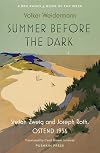
It is the fate of too many of my Kindle editions that, without a physical presence on my shelves, I forget all about them. Back in 2017 after reading Stu's review at Winston's Dad, I bought a Kindle edition of Summer Before the Dark with plans to read it for German Lit Week, but it never happened. What I've just finished reading today is the Pushkin Press edition from the library, though the cover art is by Richard Bravery; it's not the one with the gorgeous 'railway poster art' cover that Stu read.
Stu was right: this is the story of writers as ordinary people slowly waking to what was happening back home as the Nazis tightened their grip on power. The novella is set in Ostend, 1936, and the subtitle of the German edition is 'summer show more of friendship'. Years before, the impoverished but ambitious Joseph Roth had made his way to Vienna from his remote birthplace in Brody in Galicia (now Western Ukraine), in the hope of catching a glimpse of his literary hero Stefan Zweig. Decades later in the interwar years in Ostend we see this friendship deepen, as the older, successful and financially secure Zweig takes on the responsibility for the younger Roth who seems determined to drink himself to death.
Ostend in 1936 was a mecca for literary exiles as the Nazi regime took hold in Germany. From what I can see at Wikipedia, Ostend is — as the author says at the end of the book, not exactly charming. After Allied forces flew numerous missions that reduced the city to nothing, the promenade along the beach is now strewn with white faceless buildings built postwar and later in hideous functional 60s architecture. But you can see that it was once a lovely place even in these photos of the destruction in WW2 from this site. There were cafés, bars and hotels catering to a vibrant street life where émigrés could gather while they tried to rescue what they could of their literary careers after their books were banned in Germany. The book is a literary who's who of pre-war German authors, even Thomas Mann's children Klaus and Erika were there.
To read the rest of my review please visit https://anzlitlovers.com/2021/12/10/summer-before-the-dark-by-volker-weidermann-... show less
Stu was right: this is the story of writers as ordinary people slowly waking to what was happening back home as the Nazis tightened their grip on power. The novella is set in Ostend, 1936, and the subtitle of the German edition is 'summer show more of friendship'. Years before, the impoverished but ambitious Joseph Roth had made his way to Vienna from his remote birthplace in Brody in Galicia (now Western Ukraine), in the hope of catching a glimpse of his literary hero Stefan Zweig. Decades later in the interwar years in Ostend we see this friendship deepen, as the older, successful and financially secure Zweig takes on the responsibility for the younger Roth who seems determined to drink himself to death.
Ostend in 1936 was a mecca for literary exiles as the Nazi regime took hold in Germany. From what I can see at Wikipedia, Ostend is — as the author says at the end of the book, not exactly charming. After Allied forces flew numerous missions that reduced the city to nothing, the promenade along the beach is now strewn with white faceless buildings built postwar and later in hideous functional 60s architecture. But you can see that it was once a lovely place even in these photos of the destruction in WW2 from this site. There were cafés, bars and hotels catering to a vibrant street life where émigrés could gather while they tried to rescue what they could of their literary careers after their books were banned in Germany. The book is a literary who's who of pre-war German authors, even Thomas Mann's children Klaus and Erika were there.
To read the rest of my review please visit https://anzlitlovers.com/2021/12/10/summer-before-the-dark-by-volker-weidermann-... show less
2-22-16 Saw this at BN, Looks very interesting.
3/6/2016 Finished - enjoyed this book
3/6/2016 Finished - enjoyed this book
Members
- Recently Added By
Lists

Writers at Risk
106 works; 17 members

Books Read in 2016
4,666 works; 199 members

Books Read in 2019
4,052 works; 110 members

German Literature
518 works; 56 members
Author Information

Some Editions
Awards and Honors
Notable Lists
Series
Belongs to Publisher Series
btb (74891)
Common Knowledge
- Canonical title*
- Zomer van de vriendschap
- Original title
- Ostende: 1936, Sommer der Freundschaft; Ostende. 1936 – Sommer der Freundschaft
- Original publication date
- 2016 (English Translation) (English Translation); 2014
- People/Characters
- Joseph Roth; Stefan Zweig; Irmgard Keun; Lotte Altmann
- Important places
- Ostend, West Flanders, Belgium
- Original language
- German
*Some information comes from Common Knowledge in other languages. Click "Edit" for more information.
Classifications
- Genres
- Biography & Memoir, Literature Studies and Criticism, Fiction and Literature
- DDC/MDS
- 838.91209 — Literature & rhetoric German & related literatures German miscellaneous writings 1900- 1900-1990 1900-1945 Individual authors not limited to one specific form : description; critical appraisal; biography; collected works
- LCC
- PT405 .W3513613 — Language and Literature German, Dutch and Scandinavian literatures German literature History of German literature Modern
- BISAC
Statistics
- Members
- 336
- Popularity
- 94,655
- Reviews
- 16
- Rating
- (3.83)
- Languages
- 12 — Czech, Danish, Dutch, English, French, German, Greek, Hebrew, Italian, Spanish, Swedish, Turkish
- Media
- Paper, Audiobook, Ebook
- ISBNs
- 30
- ASINs
- 5