Inferno in Chechnya: The Russian-Chechen Wars, the Al Qaeda Myth, and the Boston Marathon Bombings
by Brian Glyn Williams
On This Page
Description
"Details the history behind the Russian treatment of Chechens, the series of wars, the actual role of Arab fighters, and the Boston Marathon bombers, who are profiled in the final chapter"--Provided by publisher.Tags
Recommendations


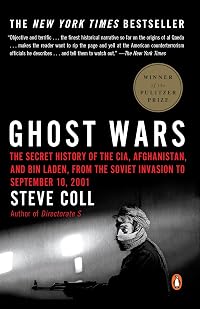
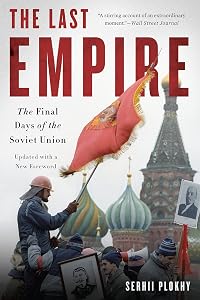
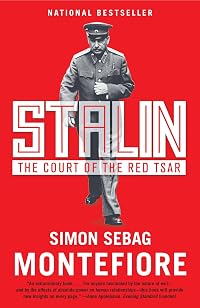
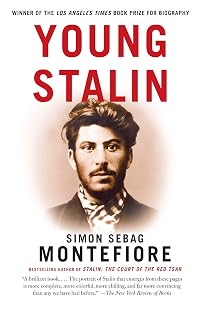




Member Recommendations
Artymedon By a surgeon who helped both Chechen and Russian wounded and escaped to tell his story.
Member Reviews
I first heard about Chechnya and Chechens in college history classes in the early '00s. I've never been there and as far as I know I've never met any Chechens, so this is mostly an academic interest for me.
That being said, the history laid out in this book is fascinating. It's been a depressingly long time since college, and a lot has happened since then. Plus, even at the time I was confused about all the personal and factional names being thrown around, and that's before bringing the Russians into it.
The Chechen story in dealing with the Russians reminds me a lot of 19th century Native American history - a vastly outnumbered indigenous group trying to hold on as long as it can while the invading colonial power annihilates everything show more in sight. Eventually a few shell-shocked or bloodlessly calculating leaders make friends with the conquerors to try to avoid having their people completely obliterated.
This book went a long way to clarifying the few random details I had previously memorized about Chechnya in the 1800s and the random news articles I've seen in various media over the last decade. Now I think I have a reasonably good grasp (for an American who's never been there, anyway) of what's been happening in Chechen politics since the mid-'90s. It's depressing to remember how quickly my country's stance on Chechnya and doing business with human rights violators changed once we needed Russian help to prosecute the Afghan war.
The last two chapters address the two most recent things most Americans have heard about Chechnya - the fantasies about übermensch killing machine Chechen jihadis and the Boston Marathon bombers. The chapter that disassembles Americans' misconceptions about Chechens is by far the more interesting of the two. By my reckoning the last chapter is the weakest but, as another reviewer elsewhere said, that's not really the author's fault. Tamerlan Tsarnaev was a failed wannabe when it came to trying to wage international jihad, so he came back to America and murdered people here instead. I suppose if you're really into the Boston Marathon bombing that might be a strong chapter, but that's not the case for me.
I have a few quibbles at various points in the book, but that's typical. Five stars all around anyway. show less
That being said, the history laid out in this book is fascinating. It's been a depressingly long time since college, and a lot has happened since then. Plus, even at the time I was confused about all the personal and factional names being thrown around, and that's before bringing the Russians into it.
The Chechen story in dealing with the Russians reminds me a lot of 19th century Native American history - a vastly outnumbered indigenous group trying to hold on as long as it can while the invading colonial power annihilates everything show more in sight. Eventually a few shell-shocked or bloodlessly calculating leaders make friends with the conquerors to try to avoid having their people completely obliterated.
This book went a long way to clarifying the few random details I had previously memorized about Chechnya in the 1800s and the random news articles I've seen in various media over the last decade. Now I think I have a reasonably good grasp (for an American who's never been there, anyway) of what's been happening in Chechen politics since the mid-'90s. It's depressing to remember how quickly my country's stance on Chechnya and doing business with human rights violators changed once we needed Russian help to prosecute the Afghan war.
The last two chapters address the two most recent things most Americans have heard about Chechnya - the fantasies about übermensch killing machine Chechen jihadis and the Boston Marathon bombers. The chapter that disassembles Americans' misconceptions about Chechens is by far the more interesting of the two. By my reckoning the last chapter is the weakest but, as another reviewer elsewhere said, that's not really the author's fault. Tamerlan Tsarnaev was a failed wannabe when it came to trying to wage international jihad, so he came back to America and murdered people here instead. I suppose if you're really into the Boston Marathon bombing that might be a strong chapter, but that's not the case for me.
I have a few quibbles at various points in the book, but that's typical. Five stars all around anyway. show less
 This review was written for LibraryThing Early Reviewers.
Brian Glyn Williams offers an in-depth and engaging account of Chechen history via their regular need to fight those attempting to subdue them and control their land. The accounts begin with Russian incursions into Chechen territories, the opposition raised and its inevitable defeat by a force that can readily engage in prolonged attacks and sieges and can rely on a large pool of manpower against the infinitely smaller number of Chechens and their allies who can, at best, take to the mountains and continue a form of guerrilla warfare that leans on ambushes. This resistance continues in the face of the Russian Revolution and eventually during the Second World War, for numerous reasons, the Chechen people are accused of collaboration and, show more along with other minorities in and around the Caucasus, are deported wholesale to Central Asia, where tens of thousands die and suffer for the next decade until in the 1950s Khrushchev's administration allows their return (although in truth Khrushchev had little say in the matter as many simply took their belongings and returned home). Then, the eventual break up of the Soviet Union leads to this minor internal Russian region to demand independence and take up the fight against Russian forces when they resist any such move (fearing a domino effect could ensue). After losing too many troops the Russians begin to negotiate with a variety of Chechen personalities and eventually a very precarious calm settles on the region only to be interrupted by a series of bombings within Russia and a renewal of hostilities against Chechnya.
All of the above is what the majority of this text covers, the Boston bombings are given a chapter, the last, and to be honest that chapter is somewhat the least interesting (not the author's fault). The strengths of this book are that you have an academic with a wide knowledge of both the Chechen people and territory and their place within the history of the Russian Empire, the Soviet Union and the Russian Federation today. Furthermore, he makes a good case for why Chechens and their struggle against Russia should not be conflated with Al Qaeda and other terrorist organizations. At the same time there are some weaknesses readily evident within the pages of this text. First off, there is a distinct bias toward the Chechen side. In part it's understandable but it also translates to at times an omission of the Russian side and at other times a distinct impression that Russians can do no right. The Russian/Soviet side is not represented to the same degree as the Chechens and it also appears that not enough condemnation is being offered for some of the more drastic actions taken by Chechen fighters. Just because they might treat hostages well doesn't mean they're not guilty of perpetrating terrorist acts against civilians. Overall, this is an excellent but at times biased introduction to the history of Chechen resistance and its evolution, especially in the post-Cold War period. It really shows how complex the situation is in and around the Middle East/Central Asia and how we need to have a grasp on the situation there to figure out how best to fight terrorism (international and regional) and avoid creating a worse situation than already exists. show less
All of the above is what the majority of this text covers, the Boston bombings are given a chapter, the last, and to be honest that chapter is somewhat the least interesting (not the author's fault). The strengths of this book are that you have an academic with a wide knowledge of both the Chechen people and territory and their place within the history of the Russian Empire, the Soviet Union and the Russian Federation today. Furthermore, he makes a good case for why Chechens and their struggle against Russia should not be conflated with Al Qaeda and other terrorist organizations. At the same time there are some weaknesses readily evident within the pages of this text. First off, there is a distinct bias toward the Chechen side. In part it's understandable but it also translates to at times an omission of the Russian side and at other times a distinct impression that Russians can do no right. The Russian/Soviet side is not represented to the same degree as the Chechens and it also appears that not enough condemnation is being offered for some of the more drastic actions taken by Chechen fighters. Just because they might treat hostages well doesn't mean they're not guilty of perpetrating terrorist acts against civilians. Overall, this is an excellent but at times biased introduction to the history of Chechen resistance and its evolution, especially in the post-Cold War period. It really shows how complex the situation is in and around the Middle East/Central Asia and how we need to have a grasp on the situation there to figure out how best to fight terrorism (international and regional) and avoid creating a worse situation than already exists. show less
This review was written for LibraryThing Early Reviewers.Written after the Beirut and Paris bombings and massacres of November 2015.
In his ominous introduction, Author and scholar Brian Glyn Williams is somewhat astonished that after the Boston Marathon indiscriminate killings of April 2013 authored by two Chechens, such scenes have only equivalents in the Middle-East or on other continents but are not customary in the West made of secular industrial democracies.
We now know there are no longer such economic, cultural or religious exceptions and that geographically distant conflicts and flash points can have disastrous blow backs regardless of how sophisticated or technologically advanced a society is.
Williams brings the interesting concept that temporal proximity is also not a necessity show more for such violent interference to occur if memories and trauma dating more than one hundred and eighty years ago caused by episodes of imperial conquest have left sufficiently bitter memories within certain ethnic, religious and cultural groups like those located in the Caucasus Mountains that he describes with great insights. All who have read the lives of Alexander Puchkin, Mikhail Lermontov and Leo Tolstoi in Starogladovskaya for instance are reminded in "Inferno in Chechnya" that aside romantic visions of yesteryear the same catalysts can create a new holy war.
The book follows a chronological line but has also fast forwards to the more recent times. The author develops analogies with the Czarist conquest, the attempts to recognize linguistic diversity during the Russian Revolution and the brutal Stalinist treatment of the Chechen. More parallels abound. The author compares the treatment given to the Chechens to that of the plain Indians during the colonization of the West. What Theodore Roosevelt glorified as "Winning the West".
After meeting with two extraordinary individuals of the Eastern Band of the Cherokee Nation, nearly wiped out as a Nation by what Theodore Roosevelt named "A splendid victory", I found the parallel between them and the Chechens striking. Both are mountainous people that lived in harmony with nature. Reading this book you are told how the Chechens had their own "Trail of Tears" and were subjected to deportation, massacres and environmental warfare such as deforestation.
As these two Cherokees were evocating with great empathy the mixed feelings they had with a holiday like "Thanksgiving", Mr. Williams gives us the explanation for such feelings in that with every memory of conquest by one people self-invested in the right to settle a dispute with brute force, a counter-memory is created for the same time period. Think the Madeleine of Proust triggering feelings very far from remembrance of things past or of from those acquired with serenity for a people who was so narrowly exterminated, in the healing houses of the Cherokees, and then you have an explanation of why a Caucasian Emirate is resurrected at the present time.
It remains that even if 5,000.00 armed Chechens joining German Paratroopers in their mountains were a force Stalin could not ignore strategically; his ordered massive deportation and genocide of the Chechen took one page from Louis XIV 1681 Dragonnades that billeted troops into recalcitrant Huguenots homes and the other from Hitler's final solution mobilizing trains and deporting elders, children and mothers in horrid conditions, to Kirgizstan. I found this chapter very well narrated through testimonies selected by the Author.
As it began the book reflects in its conclusion, on the horrific Boston Marathon killings. Will the victims, their relatives and the public at large ponder like the Author that the two brothers who committed this monstrous deed had Chechen parents who were deported to Kirgizstan? Will they have even one thought about the fact that the elder brother and main perpetrator barely knew Chechnya and the Chechen language, was educated in the USA that gave him every opportunities and then fatefully chose to visit Dagestan in the midst of its internal struggle with the nascent Caucasian Emirate where he radicalized? Does this even begin to mitigate the perpetration of such a terror act? The Author is careful not to make assumptions grouping each individual belonging to different ethnic, cultural and linguistic realities into one basket, that of terrorists. His conclusion is humanist, asking that the Chechen people be considered for what they are, humans. show less
In his ominous introduction, Author and scholar Brian Glyn Williams is somewhat astonished that after the Boston Marathon indiscriminate killings of April 2013 authored by two Chechens, such scenes have only equivalents in the Middle-East or on other continents but are not customary in the West made of secular industrial democracies.
We now know there are no longer such economic, cultural or religious exceptions and that geographically distant conflicts and flash points can have disastrous blow backs regardless of how sophisticated or technologically advanced a society is.
Williams brings the interesting concept that temporal proximity is also not a necessity show more for such violent interference to occur if memories and trauma dating more than one hundred and eighty years ago caused by episodes of imperial conquest have left sufficiently bitter memories within certain ethnic, religious and cultural groups like those located in the Caucasus Mountains that he describes with great insights. All who have read the lives of Alexander Puchkin, Mikhail Lermontov and Leo Tolstoi in Starogladovskaya for instance are reminded in "Inferno in Chechnya" that aside romantic visions of yesteryear the same catalysts can create a new holy war.
The book follows a chronological line but has also fast forwards to the more recent times. The author develops analogies with the Czarist conquest, the attempts to recognize linguistic diversity during the Russian Revolution and the brutal Stalinist treatment of the Chechen. More parallels abound. The author compares the treatment given to the Chechens to that of the plain Indians during the colonization of the West. What Theodore Roosevelt glorified as "Winning the West".
After meeting with two extraordinary individuals of the Eastern Band of the Cherokee Nation, nearly wiped out as a Nation by what Theodore Roosevelt named "A splendid victory", I found the parallel between them and the Chechens striking. Both are mountainous people that lived in harmony with nature. Reading this book you are told how the Chechens had their own "Trail of Tears" and were subjected to deportation, massacres and environmental warfare such as deforestation.
As these two Cherokees were evocating with great empathy the mixed feelings they had with a holiday like "Thanksgiving", Mr. Williams gives us the explanation for such feelings in that with every memory of conquest by one people self-invested in the right to settle a dispute with brute force, a counter-memory is created for the same time period. Think the Madeleine of Proust triggering feelings very far from remembrance of things past or of from those acquired with serenity for a people who was so narrowly exterminated, in the healing houses of the Cherokees, and then you have an explanation of why a Caucasian Emirate is resurrected at the present time.
It remains that even if 5,000.00 armed Chechens joining German Paratroopers in their mountains were a force Stalin could not ignore strategically; his ordered massive deportation and genocide of the Chechen took one page from Louis XIV 1681 Dragonnades that billeted troops into recalcitrant Huguenots homes and the other from Hitler's final solution mobilizing trains and deporting elders, children and mothers in horrid conditions, to Kirgizstan. I found this chapter very well narrated through testimonies selected by the Author.
As it began the book reflects in its conclusion, on the horrific Boston Marathon killings. Will the victims, their relatives and the public at large ponder like the Author that the two brothers who committed this monstrous deed had Chechen parents who were deported to Kirgizstan? Will they have even one thought about the fact that the elder brother and main perpetrator barely knew Chechnya and the Chechen language, was educated in the USA that gave him every opportunities and then fatefully chose to visit Dagestan in the midst of its internal struggle with the nascent Caucasian Emirate where he radicalized? Does this even begin to mitigate the perpetration of such a terror act? The Author is careful not to make assumptions grouping each individual belonging to different ethnic, cultural and linguistic realities into one basket, that of terrorists. His conclusion is humanist, asking that the Chechen people be considered for what they are, humans. show less
This review was written for LibraryThing Early Reviewers.In 2013, the United States suffered a terrorist bombing at the annual running of the Boston Marathon. When the criminals turned out to be U.S. residents of Chechen descent, Americans were shocked and confused that two members of an obscure Russian minority group would consider America their home, their enemy? Inferno in Chechnya is the first book to answer this mystery by tracing the roots of the Boston attack to the Caucasus Mountains of southern Russia. Brian Glyn Williams details the tragic history of the bombers war-devastated homeland including tsarist brutal conquest and two bloody wars with post-Soviet Russia that would lead to Vladimir Putin trying to show how the conflict there influenced the rise of Europe’s deadliest show more homegrown terrorist network. Mr. Williams provides a detailed historical account of the Chechens terror campaign in Russia, documents their growing links to Al Qaeda and radical Islam, and shows the story of the Chechen forced migration that sent two Chechens to Boston. Inferno in Chechnya delivers an interesting and deeply tragic story that has much to say about the historical and ethnic role Russia has played and plays even today. This is a wonderfully written and must have book that not just a student or teacher of history should have and read but one who seeks truth and knowledge of the world around us. show less
This review was written for LibraryThing Early Reviewers.I thought this book was an excellent and informative read especially if you are interested in history, military, or terrorism. Their was so much I never knew about Russia's history with Chechnya. The author did a good job of showing the correlation between current and historical events. I thought the book was easy to follow throughout.
This review was written for LibraryThing Early Reviewers.The Chechens, a small ethnic group in the Caucasus Mountains, have been fighting the Russians for much of the last 200 years. They are moderate Sufi Muslims, although in recent decades, a few Chechens have converted to radical and extreme Wahhabi Islam. The Chechens suffered greatly from Russian military campaigns against their civilians in Czarist times and again during World War II when Stalin expelled them from their homeland to the plains of Soviet Central Asia. Only after 1956 were they allowed to return. They have fought two wars with the Putin's Russia in recent decades: 1994-96 and 1999-2009. It was the Russian people's fear of Chechen terrorist bombings that allowed Putin to rise to power in Russia. The author provides show more considerable evidence that the bombings were actually done by political manipulators within Russia and not by the Chechens. The author makes a convincing case that claims by the Western press and some governments that the Chechens fought with Al Quaeda in Afghanistan are false. But it is true that Chechen volunteers are active in the war against Assad in Syria. The author likewise provides evidence that Tamerlan Tsarnaev was radicalized not on a return trip to the Caucasus but in the United States by viewing extremist Islamic web sites while living in Massachusetts. A most informative, extensively researched and valuable book. show less
This review was written for LibraryThing Early Reviewers.Stung by the premature assumption that the Boston Marathon bombers, the Tsarnaev brothers were Chechen and part of a broader plot to wage war on America, Williams corrects those misconception. He disassociates them from the context of Chechen politics and history and, in the process, disassociates Chechnya’s conflict against Russian oppression from the broader international Jihadist terror campaign including both ISIS and Al Qaeda.
Williams is a historian specializing in Central Asia including Chechnya and has travelled extensively in that area and brings a firsthand account of events there. References to other works and sources are well documented. Although obviously sympathetic to the Chechens, he presents a balanced account of show more their war for independence from Russia including the meddling of outside Islamic extremists. The book is difficult to read because of the convoluted politics, competing ethnic cultures and strong personalities with differing strategic and tactical agendas. Strange names of places and people present a challenge to readers unfamiliar with that area of the world.
Put to rest is the adage that an enemy’s enemy is a friend and all other combinations of friends and enemies. The world’s stage has become too complicated for such simplistic answers.
The Tsarnaev nexus with Chechnya are tenuous . Their motivation is unclear but it is clear that Dzhokhar, the younger brother and only survivor, was unduly influenced by his brother Tamerlan. Tamerlan’s inspiration seems to have come from the internet rather than directly from Jihadist mentors. The episode was the product of disturbed minds rather than part of an extremist plot against America. show less
Williams is a historian specializing in Central Asia including Chechnya and has travelled extensively in that area and brings a firsthand account of events there. References to other works and sources are well documented. Although obviously sympathetic to the Chechens, he presents a balanced account of show more their war for independence from Russia including the meddling of outside Islamic extremists. The book is difficult to read because of the convoluted politics, competing ethnic cultures and strong personalities with differing strategic and tactical agendas. Strange names of places and people present a challenge to readers unfamiliar with that area of the world.
Put to rest is the adage that an enemy’s enemy is a friend and all other combinations of friends and enemies. The world’s stage has become too complicated for such simplistic answers.
The Tsarnaev nexus with Chechnya are tenuous . Their motivation is unclear but it is clear that Dzhokhar, the younger brother and only survivor, was unduly influenced by his brother Tamerlan. Tamerlan’s inspiration seems to have come from the internet rather than directly from Jihadist mentors. The episode was the product of disturbed minds rather than part of an extremist plot against America. show less
This review was written for LibraryThing Early Reviewers.Members
- Recently Added By
Lists

Chechnya
10 works; 1 member
Author Information

8 Works 123 Members
Brian Glyn Williams is Professor of Islamic History at the University of Massachusetts, Dartmouth. He was employed by the CIA to track suicide bombers in Afghanistan in 2007. He is author of several books on warfare and terrorism, including Afghanistan Declassified, also available from the University of Pennsylvania Press, and The Last Warlord: show more The Life and Legend of Dostum, the Afghan Warrior Who Led U.S. Special Forces to Topple the Taliban Regime. show less
Common Knowledge
- Original title
- Inferno in Chechnya
- Original publication date
- 2015
- Important places
- Grozny, Chechnya; Boston, Massachusetts, USA; Dagestan
- Important events
- First Russian-Chechen War (1994-1996)
- First words
- The Chechen national symbol is the gray wolf, and since the collapse of the Soviet Union, this emblem has appeared in their poems, on their battle standards, and on their national flag, and it has come to symbolize the Chech... (show all)en's stubborn defense of their homeland.
Classifications
- Genres
- History, Nonfiction, General Nonfiction, Politics and Government
- DDC/MDS
- 947.086 — History & geography History of Europe Eastern European Counties and Russia Russian & Slavic History by Period 1855- 1991-
- LCC
- DK511 .C37 .W55 — History of Europe, Asia, Africa and Oceania Russia. Soviet Union. Former Soviet Republics – Poland History of Russia. Soviet Union. Former Soviet Republics Local history and description Russia (Federation). Russian S.F.S.R.
- BISAC
Statistics
- Members
- 28
- Popularity
- 982,017
- Reviews
- 11
- Rating
- (4.59)
- Languages
- English
- Media
- Paper, Ebook
- ISBNs
- 2
- ASINs
- 2