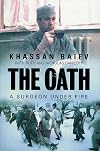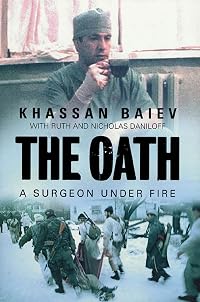
The Oath: A Surgeon Under Fire
by Khassan Baiev
On This Page
Description
Dr. Khassan Baiev describes his experiences after leaving a promising surgical career in Moscow in 1994 to provide medical services to the people of Chechnya which was under attack by Russian troops, discussing how he managed with poor facilities and few supplies, as well as the constant threat of execution by the Russians.Tags
Recommendations
















Member Recommendations
gust Marra baseerde een van zijn hoofdpersonages op deze autobiografie.
20

Inferno in Chechnya: The Russian-Chechen Wars, the Al Qaeda Myth, and the Boston Marathon Bombings by Brian Glyn Williams
Artymedon By a surgeon who helped both Chechen and Russian wounded and escaped to tell his story.
Member Reviews
Khassan Baiev grew up in a small town southwest of Grozny, Chechnya. His family was typically traditional, and they spent every summer up in the mountains with their father's tiep or clan, working the land and listening to the stories of the elders. Sports, especially wrestling and hand to hand sports like judo, are extremely popular in Chechnya and Khassan, who had been born rather small and sickly, trained relentlessly until he was winning national competitions. Although he enjoyed competing, he did not want to be a coach, and decided to study medicine in Russia. He specialized in maxillofacial surgery and became a plastic surgeon. He was earning good money in Russia when the war broke out, but he returned home determined to help his show more people.
Fiercely independent, Chechnya has been governed by Russia in an uneasy relationship for centuries. In 1944 Stalin deported the majority of the Chechen people, including Baiev's parents, to remote regions of Kazakhstan and Siberia. They were only rehabilitated and allowed home fifteen years later, after Stalin's death. When the Berlin wall came down in 1990 and the Soviet Republics began declaring independence, Chechnya did too, seeing the possibility of an independent state in President Yeltsin's initial hands off approach. Unfortunately, Chechen President Dudayev was a poor leader and a terrible politician. In 1994, Russia entered Chechnya to establish order and preserve the integrity of the Russian nation. For two years guerrilla warfare ground away at Russian forces, and the Federal soldiers relentlessly bombed Grozny and other areas, killing up to a 100,000 civilians and displacing a half million. Due to a lack of Russian public support for the war and the stalemate on the ground, a ceasefire was declared in 1996 and a peace treaty was signed a year later. Two years later, a force calling itself the Islamic International Peacekeeping Brigade and comprised of both Chechens and Islamic radicals from outside invaded Dagestan, purportedly to help liberate the area from Russian control. Russia invaded Chechnya in retalitation, and set siege to Grozny. By the following May, the war was over and Chechnya was firmly back in the Russian orbit.
Throughout these wars, Khassan continuously risked his life in order to provide emergency medical care. Often he was the only surgeon in a very large area, and he ran a trauma hospital with a skeleton crew of nurses until it was bombed out and then operated in the basement of his house, which was bombed, rebuilt, and bombed again. Despite threats, Khassan steadfastly operated on Chechens and Russians alike, citing the Hippocratic Oath. At one point he was arrested by the Russians and held in a pit, but he refused to stop working, treating anyone who needed his help. Finally, during the second war, a price was put on his head by the Russians while one of the Chechen factions wanted him dead for operating on Russians. Human rights workers helped Khassan get asylum in the United States, where he was subsequently joined by his family.
Khassan's story is amazing on several fronts. Obviously his actions during the war were heroic, and his work then and now (he spends six months of the year working in Chechnya, operating on children hurt in the wars) is incredible. Yet equally interesting was the story of his childhood, a childhood straight from the pages of a Tolstoy novel of the Caucasus. For example, when his sister is abducted by bride snatchers, Khassan, as oldest son, is sent to steal her back. Yet, despite this traditional upbringing, Khassan is forthright about his struggles with debilitating depression and post traumatic stress. He acknowledges that talking about mental illness, as well as about his wife and family, is not considered acceptable in Chechen society, but he feels it is important to break down these barriers in the hope that others will seek the help they need to recover.
One of my favorite reads of the year so far, I would highly recommend this memoir to anyone even remotely interested in Chechnya or emergency medicine. show less
Fiercely independent, Chechnya has been governed by Russia in an uneasy relationship for centuries. In 1944 Stalin deported the majority of the Chechen people, including Baiev's parents, to remote regions of Kazakhstan and Siberia. They were only rehabilitated and allowed home fifteen years later, after Stalin's death. When the Berlin wall came down in 1990 and the Soviet Republics began declaring independence, Chechnya did too, seeing the possibility of an independent state in President Yeltsin's initial hands off approach. Unfortunately, Chechen President Dudayev was a poor leader and a terrible politician. In 1994, Russia entered Chechnya to establish order and preserve the integrity of the Russian nation. For two years guerrilla warfare ground away at Russian forces, and the Federal soldiers relentlessly bombed Grozny and other areas, killing up to a 100,000 civilians and displacing a half million. Due to a lack of Russian public support for the war and the stalemate on the ground, a ceasefire was declared in 1996 and a peace treaty was signed a year later. Two years later, a force calling itself the Islamic International Peacekeeping Brigade and comprised of both Chechens and Islamic radicals from outside invaded Dagestan, purportedly to help liberate the area from Russian control. Russia invaded Chechnya in retalitation, and set siege to Grozny. By the following May, the war was over and Chechnya was firmly back in the Russian orbit.
Throughout these wars, Khassan continuously risked his life in order to provide emergency medical care. Often he was the only surgeon in a very large area, and he ran a trauma hospital with a skeleton crew of nurses until it was bombed out and then operated in the basement of his house, which was bombed, rebuilt, and bombed again. Despite threats, Khassan steadfastly operated on Chechens and Russians alike, citing the Hippocratic Oath. At one point he was arrested by the Russians and held in a pit, but he refused to stop working, treating anyone who needed his help. Finally, during the second war, a price was put on his head by the Russians while one of the Chechen factions wanted him dead for operating on Russians. Human rights workers helped Khassan get asylum in the United States, where he was subsequently joined by his family.
Khassan's story is amazing on several fronts. Obviously his actions during the war were heroic, and his work then and now (he spends six months of the year working in Chechnya, operating on children hurt in the wars) is incredible. Yet equally interesting was the story of his childhood, a childhood straight from the pages of a Tolstoy novel of the Caucasus. For example, when his sister is abducted by bride snatchers, Khassan, as oldest son, is sent to steal her back. Yet, despite this traditional upbringing, Khassan is forthright about his struggles with debilitating depression and post traumatic stress. He acknowledges that talking about mental illness, as well as about his wife and family, is not considered acceptable in Chechen society, but he feels it is important to break down these barriers in the hope that others will seek the help they need to recover.
One of my favorite reads of the year so far, I would highly recommend this memoir to anyone even remotely interested in Chechnya or emergency medicine. show less
I really like this book. Khassan Baiev is a surgeon who takes the Hippocratic Oath seriously, treating Russian wounded and Chechen terrorists/nationalists alike in the midst of the brutal Chechen wars and earning the antipathy of everyone apart from his patients and the unfortunate civilians caught up in the conflict. He miraculously manages to survive this violent polarization, further complicated by being a Chechen out of sympathy with the nationalists, rejecting the Russian invasion, but neverthless feeling like a Russian from his training and friendships. Now he's unemployed in America (they don't accept his Russian qualifications).
The memoirs of a Chechen doctor who was a plastic surgeon before the 1st Chechen War. He found himself returning to Chechnya to treat victims of the conflict from both sides and eventually he fled to the US once both sides started hunting him to kill him for helping their enemies. Very much a personal view on the events this is no evenhanded account but the story is deeply moving and gives voice to a perspective we rarely hear. Unforgettable.
A sobering and poignant unexpurgated retelling of the horrors of the war in Chechnya told by a Chechen who experienced the fallout of the fighting and the trauma encountered by the Chechen people.
Steven Sinclair is a caring, careful OB/GYN but now he's being sued by a couple who's child was born with serious birth defects. Charlie Mayfield is the prosecutor who must prove that Dr. Sinclair was at fault. If you love legal novels a whole lot, this one is probably a good one for you. I didn't find it as thrilling as the cover implied, but I never considered not finishing it either…
Als oorlog al een onzinnige daad is, hoe onzinnig en vernederend is het leed aan burgerslachtoffers dan wel niet.
Baiev verhaalt over zijn stijd als chirurg in de oorlog tussen Rusland en Tsjetsjenie. Zijn vastberadenheid en geloof in de eigen cultuur, religie en zijn eed van Hippocrates staat centraal in zijn ervaring in de periode van de 2 oorlogen tussen Rusland en Tsjetsjenie. Wat een moed !
Baiev verhaalt over zijn stijd als chirurg in de oorlog tussen Rusland en Tsjetsjenie. Zijn vastberadenheid en geloof in de eigen cultuur, religie en zijn eed van Hippocrates staat centraal in zijn ervaring in de periode van de 2 oorlogen tussen Rusland en Tsjetsjenie. Wat een moed !
1
Ratings
Members
- Recently Added By
Lists

THE WAR ROOM
813 works; 24 members

Chechnya
10 works; 1 member
Author Information
1 Work 129 Members
All Editions
Awards and Honors
Distinctions
Common Knowledge
- Original title
- The Oath: A Surgeon Under Fire
- Alternate titles
- Grief of My Heart: Memoirs of a Chechen Surgeon
- Original publication date
- 2003; 2004
- People/Characters
- Khassan Baiev; Shamil Basayev; Salman Raduyev; Arbi Barayev
- Important places
- Alkhan Kala, Chechnya; Groznyj, Chechen Republic, Russia; Alkhan Kala, Chechen Republic, Russia
- First words
- One night in the fall of 2000, I woke up from a bad dream that had often plagued me during the Russian-Chechen wars. In this nightmare I saw the injured lying on the ground, blood gushing out of their wounds like water from ... (show all)a dam; they looked up, imploring me to save them.
- Last words
- (Click to show. Warning: May contain spoilers.)I draped my American snakeskin over the framed portrait of a Japanese athlete whom I revere: Jigoro Kano, the founder of Judo, a sport which has done so much to lift my spirits and help me in my new life. I sometimes think about how hard it is for snakes to shuck their skins. The reptile must anchor itself between sharp rocks, split the old skin, and wriggle free. Here in America, far from my homeland, I am trying to anchor myself and shed one life--reluctantly and with difficulty--for a new one.
- Publisher's editor
- Johnson, Jackie
- Blurbers
- Brzezinski, Zbigniew; Redgrave, Vanessa; Kalb, Marvin; Rubenstein, Joshua; Rubenstein, Leonard S.; Schecter, Jerrold L.
Classifications
- Genres
- Nonfiction, History, Biography & Memoir, General Nonfiction
- DDC/MDS
- 947.52 — History & geography History of Europe Eastern European Counties and Russia Caucasus region [Lithuania now 947.93] Chechnya
- LCC
- DK511 .C37 .B35 — History of Europe, Asia, Africa and Oceania Russia. Soviet Union. Former Soviet Republics – Poland History of Russia. Soviet Union. Former Soviet Republics Local history and description Russia (Federation). Russian S.F.S.R.
- BISAC
Statistics
- Members
- 129
- Popularity
- 253,330
- Reviews
- 6
- Rating
- (4.02)
- Languages
- 5 — Dutch, English, Finnish, French, Spanish
- Media
- Paper, Audiobook, Ebook
- ISBNs
- 14
- ASINs
- 3