Ghost Riders of Baghdad: Soldiers, Civilians, and the Myth of the Surge
by Daniel A. Sjursen
On This Page
Description
An American officer confronts the realities of war and politics during a year with the 61st Cavalry in IraqTags
Recommendations







Member Reviews
GHOST RIDERS OF BAGHDAD: SOLDIERS, CIVILIANS, AND THE MYTH OF THE SURGE, by Daniel A. Sjursen.
Add one more highly literate and moving memoir to the ever-growing mountain of books to come out of our current wars. Major Daniel Sjursen, currently a history teacher at West Point, gives us a thoughtful and very personal peek into a three-month period in 2006 that he spent as a platoon leader of a Scout squadron in southern Baghdad. In fact his unit had their year-long tour extended by an additional three months - a direct result of the very controversial "surge" he takes stringently to task in these pages.
Although Sjursen tries to think of himself as a street-smart kid from Staten Island (in order, I suspect, to more closely bond with the show more men in his platoon), he reveals early on that in reality he was "A soft kid who liked hanging out with his mother more than most." Which is understandable, given that his parents divorced when he was seven. But he bears them no ill will, thanking them both (in his Acknowledgments) for how they raised him, and his dad in particular for pointing him toward the USMA.
It's not surprising that the emphasis here is about soldiers and soldiering, and Sjursen's story is one of the very close and special bond formed between a small group of young men who went through training together and then faced down their own separate fears on daily patrols in the mean streets of Salman Pak and Baghdad. He introduces us to his men: Fuller, Ford, DeJane, South, Gass, Duzinskas, Faulkner and Smith; and they become real breathing human beings as he tells their stories, and his own. Some survive, some do not.
Sjursen is something of a paradox. A career officer who has served in both Iraq and Afghanistan, he hates these wars, and strongly criticizes the policies and the people in power who have caused them. He is very much aware of his situation, noting, that while still a lieutenant in 2006, he wrote in his journal: "... how does an officer balance personal opposition to a war with his duty to serve and lead a combat platoon? ... I'm not sure I've yet found the answer."
Sjursen has made a careful study of the age-old feud between Sunni and Shia, and sees no easy answers to resolving the bitter and bloody civil wars between these factions that have now spread beyond Iraq into the entire Middle East, a direct result, he feels, of Bush's ill-advised invasion of Iraq and the toppling of Saddam Hussein's regime. His frustration with our own administration's cluelessness is obvious, for example -
"Cultural ignorance got a lot of people killed. Several accounts indicate that President Bush himself was unaware of the divide between Iraq's Sunni and Shia communities. 'I thought they were all Muslims,' he'd supposedly said during a Cabinet meeting."
In that respect, of course, Bush is probably no different than our general populace, but he is the PRESIDENT, for God's sake! He SHOULD know! Yeah, Danny. I get your frustration and anger.
In a narrative that walks us through the deaths and mutilations of some of the men he loves most, Sjursen gives us some excruciatingly concrete examples of just a few of the people killed by that casual ignorance. Some of these stories may bring you to tears. The waste of human lives, both soldier and civilian, is simply horrifying.
One of the things that sets Sjursen's story apart - and I found personally intriguing - is his inquiring mind and his voracious reading. The text is sprinkled throughout with quotes and references to authors he has read. Some are obvious: Heller, Tim O'Brien, Graham Greene, Vonnegut; the WWI writers Owen, Sassoon, Blunden and Graves. But there are also song lyrics here and there, from Steve Earle, Linkin Park, and Springsteen. There are verses from A.E. Housman and Dylan Thomas, mixed in with script lines from TV's THE WIRE and the film, THE CRYING GAME. More than once he quotes lines from Anton Myrer's 1968 bestselling novel, ONCE AN EAGLE - which is certainly appropriate, spanning as it did, both World Wars, Korea and Vietnam.
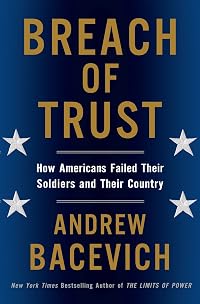
In his musings on the wisdom of the all-volunteer army and how it is often abused and stretched too thin, Sjursen seems in sympathy with retired Army Colonel Andrew Bacevich, and even quotes from his recent book, BREACH OF TRUST: HOW AMERICANS FAILED THEIR SOLDIERS AND THEIR COUNTRY. I mean this is a guy who reads widely, absorbs and remembers - and is still trying valiantly to sort it all out and make sense of the mess - the upheaval - of today's world at war. He makes a very cogent case for connecting the current ISIS problems directly to America's ill-advised invasion of Iraq and subsequent mistakes made in its aftermath. And he is extremely critical of the so-called successes of the "Surge" both in Afghanistan and in Iraq.
But at the heart of this memoir are the stark and intimate portraits Sjursen gives us of the men he fought with, both those who survived and those who did not. He takes a close unblinking look at the lives of these young men post-deployment - at the divorces, the drinking, the addictions, the suicides. And he does not exclude himself either, telling of his own binges, sudden inexplicable rages, and divorce.
GHOST RIDERS OF BAGHDAD is a book that members of Congress should be forced to read. Perhaps if they did they would not be so quick and casual with their "boots on the ground" recommendations. In fact I will recommend it highly to anyone who wants a better understanding of what our beleaguered all-volunteer military faces on a daily basis, and how it impacts not just their own lives, but also their families. This is a very good book, one that deserves a wide readership. Bravo, Major Sjursen. Be well. show less
Add one more highly literate and moving memoir to the ever-growing mountain of books to come out of our current wars. Major Daniel Sjursen, currently a history teacher at West Point, gives us a thoughtful and very personal peek into a three-month period in 2006 that he spent as a platoon leader of a Scout squadron in southern Baghdad. In fact his unit had their year-long tour extended by an additional three months - a direct result of the very controversial "surge" he takes stringently to task in these pages.
Although Sjursen tries to think of himself as a street-smart kid from Staten Island (in order, I suspect, to more closely bond with the show more men in his platoon), he reveals early on that in reality he was "A soft kid who liked hanging out with his mother more than most." Which is understandable, given that his parents divorced when he was seven. But he bears them no ill will, thanking them both (in his Acknowledgments) for how they raised him, and his dad in particular for pointing him toward the USMA.
It's not surprising that the emphasis here is about soldiers and soldiering, and Sjursen's story is one of the very close and special bond formed between a small group of young men who went through training together and then faced down their own separate fears on daily patrols in the mean streets of Salman Pak and Baghdad. He introduces us to his men: Fuller, Ford, DeJane, South, Gass, Duzinskas, Faulkner and Smith; and they become real breathing human beings as he tells their stories, and his own. Some survive, some do not.
Sjursen is something of a paradox. A career officer who has served in both Iraq and Afghanistan, he hates these wars, and strongly criticizes the policies and the people in power who have caused them. He is very much aware of his situation, noting, that while still a lieutenant in 2006, he wrote in his journal: "... how does an officer balance personal opposition to a war with his duty to serve and lead a combat platoon? ... I'm not sure I've yet found the answer."
Sjursen has made a careful study of the age-old feud between Sunni and Shia, and sees no easy answers to resolving the bitter and bloody civil wars between these factions that have now spread beyond Iraq into the entire Middle East, a direct result, he feels, of Bush's ill-advised invasion of Iraq and the toppling of Saddam Hussein's regime. His frustration with our own administration's cluelessness is obvious, for example -
"Cultural ignorance got a lot of people killed. Several accounts indicate that President Bush himself was unaware of the divide between Iraq's Sunni and Shia communities. 'I thought they were all Muslims,' he'd supposedly said during a Cabinet meeting."
In that respect, of course, Bush is probably no different than our general populace, but he is the PRESIDENT, for God's sake! He SHOULD know! Yeah, Danny. I get your frustration and anger.
In a narrative that walks us through the deaths and mutilations of some of the men he loves most, Sjursen gives us some excruciatingly concrete examples of just a few of the people killed by that casual ignorance. Some of these stories may bring you to tears. The waste of human lives, both soldier and civilian, is simply horrifying.
One of the things that sets Sjursen's story apart - and I found personally intriguing - is his inquiring mind and his voracious reading. The text is sprinkled throughout with quotes and references to authors he has read. Some are obvious: Heller, Tim O'Brien, Graham Greene, Vonnegut; the WWI writers Owen, Sassoon, Blunden and Graves. But there are also song lyrics here and there, from Steve Earle, Linkin Park, and Springsteen. There are verses from A.E. Housman and Dylan Thomas, mixed in with script lines from TV's THE WIRE and the film, THE CRYING GAME. More than once he quotes lines from Anton Myrer's 1968 bestselling novel, ONCE AN EAGLE - which is certainly appropriate, spanning as it did, both World Wars, Korea and Vietnam.
In his musings on the wisdom of the all-volunteer army and how it is often abused and stretched too thin, Sjursen seems in sympathy with retired Army Colonel Andrew Bacevich, and even quotes from his recent book, BREACH OF TRUST: HOW AMERICANS FAILED THEIR SOLDIERS AND THEIR COUNTRY. I mean this is a guy who reads widely, absorbs and remembers - and is still trying valiantly to sort it all out and make sense of the mess - the upheaval - of today's world at war. He makes a very cogent case for connecting the current ISIS problems directly to America's ill-advised invasion of Iraq and subsequent mistakes made in its aftermath. And he is extremely critical of the so-called successes of the "Surge" both in Afghanistan and in Iraq.
But at the heart of this memoir are the stark and intimate portraits Sjursen gives us of the men he fought with, both those who survived and those who did not. He takes a close unblinking look at the lives of these young men post-deployment - at the divorces, the drinking, the addictions, the suicides. And he does not exclude himself either, telling of his own binges, sudden inexplicable rages, and divorce.
GHOST RIDERS OF BAGHDAD is a book that members of Congress should be forced to read. Perhaps if they did they would not be so quick and casual with their "boots on the ground" recommendations. In fact I will recommend it highly to anyone who wants a better understanding of what our beleaguered all-volunteer military faces on a daily basis, and how it impacts not just their own lives, but also their families. This is a very good book, one that deserves a wide readership. Bravo, Major Sjursen. Be well. show less
 This review was written for LibraryThing Early Reviewers.
Daniel Sjursen, a West Point graduate has written a very personal story about the Iraq war and the Surge. Experiencing it first hand, he brings in the important perspective of the front line soldier, void of the political chaff of politicians and generals and the claims that we avoided defeat in Iraq. The members of the Ghost Riders platoon saw it all during 2006-07 Surge. He writes of the injustice of the all-volunteer Army, the problems that soldiers face both on the battlefield and at home. He tells it with passion and poignancy. The deaths and injuries to several of his platoon make this book therapy for him—he notes that he can’t forget Iraq. This memoir is a good reminder of what happens when we commit ourselves without an show more initial clear plan and when we are forced to make adjustments to policy with little care to the consequence, both to our soldiers and civilians of Iraq. We see those results 10 years later in the form of continued war and bloodshed. show less
This review was written for LibraryThing Early Reviewers.Ghost Riders of Baghdad is a book of contradictions, and because of this, I have contradictory feelings about it. On one hand, Sjursen is an intelligent and articulate writer with unique insight regarding the Iraqi War and a proper understanding of middle-eastern history. On the other hand, Sjursen is a soldier who has a jaded perspective and ignores some of the facts. It's likely the author is still working through some of his feelings, still sorting through the emotions and the rationalizations, but this book captures that moment and still does a valid job of shining a spotlight on the US invasion of Iraq.
Sjursen knows history. He knows the players on the field and is able to label their sentiments and objectives in detail. He is show more articulate and well read (interestingly none of the authors he mentions are female). He is assertive. He is able to admit mistakes. And he is bold in his assertion that the war was full of corruption and lapses of judgment.
Despite attacking the war, Sjursen defends the army tooth and nail. Instead, he largely focuses his attack on the civilians at home. He complains about the passivity of the American populace and their ignorance of the war. And while some of his claims are certainly true, Sjursen overgeneralizes considerably, ignoring the protests that united a world against a war. While millions protested, Sjursen was an enlisted soldier. And perhaps those protests dwindled with time, but only because those who protested knew better. They knew there was no stopping the machine once the cogs began to turn—and Sjursen, despite his eventual position on the war, was one of those cogs.
The majority of the author's complaints are in response to “The Surge” and its ineffectuality. Sjursen argues that despite the assurance of government officials, the surge was a failure. He complains about how the soldiers were bullied, forced to extend their stay, because the numbers simply weren't there. He suggests that a draft should have been utilized. Here is a classic example of how confused the author seems to be about the facts. Despite his disagreement with the war, he proposes implementing a draft. Not only does this not make sense, but it ignores the fact that a draft would've worked counter to the goals of the American government. A draft would have taken the blinders off of the American populace. Concerned for the welfare of their non-combative child, the average citizen suddenly would know exactly what was going on in Iraq. Obviously, a draft would've been the quickest way to shut down the war. It would've been Vietnam Part II. That Sjursen, despite his impressive knowledge of Sunni and Shia relations and the history of Iraqi neighborhoods, does not realize the results of forced conscription on the war seems way off.
In my opinion, Sjursen is spot on when he is not ruled by his emotions. Justifiably, he is upset and angry about the results of his time in Iraq. But he's largely placing blame on the wrong people. We were in the streets. We were arguing against the war. We were making music and lifting our voices in protest. For what it's worth, we were here... show less
Sjursen knows history. He knows the players on the field and is able to label their sentiments and objectives in detail. He is show more articulate and well read (interestingly none of the authors he mentions are female). He is assertive. He is able to admit mistakes. And he is bold in his assertion that the war was full of corruption and lapses of judgment.
Despite attacking the war, Sjursen defends the army tooth and nail. Instead, he largely focuses his attack on the civilians at home. He complains about the passivity of the American populace and their ignorance of the war. And while some of his claims are certainly true, Sjursen overgeneralizes considerably, ignoring the protests that united a world against a war. While millions protested, Sjursen was an enlisted soldier. And perhaps those protests dwindled with time, but only because those who protested knew better. They knew there was no stopping the machine once the cogs began to turn—and Sjursen, despite his eventual position on the war, was one of those cogs.
The majority of the author's complaints are in response to “The Surge” and its ineffectuality. Sjursen argues that despite the assurance of government officials, the surge was a failure. He complains about how the soldiers were bullied, forced to extend their stay, because the numbers simply weren't there. He suggests that a draft should have been utilized. Here is a classic example of how confused the author seems to be about the facts. Despite his disagreement with the war, he proposes implementing a draft. Not only does this not make sense, but it ignores the fact that a draft would've worked counter to the goals of the American government. A draft would have taken the blinders off of the American populace. Concerned for the welfare of their non-combative child, the average citizen suddenly would know exactly what was going on in Iraq. Obviously, a draft would've been the quickest way to shut down the war. It would've been Vietnam Part II. That Sjursen, despite his impressive knowledge of Sunni and Shia relations and the history of Iraqi neighborhoods, does not realize the results of forced conscription on the war seems way off.
In my opinion, Sjursen is spot on when he is not ruled by his emotions. Justifiably, he is upset and angry about the results of his time in Iraq. But he's largely placing blame on the wrong people. We were in the streets. We were arguing against the war. We were making music and lifting our voices in protest. For what it's worth, we were here... show less
This review was written for LibraryThing Early Reviewers.This book is a must read for anyone who wants to know what it is like to be a pair of boots when 'boots are on the ground' in the Middle East. in Ghost Riders of Baghdad, Daniel Sjursen gives a narrative of his life as an officer leading grunts in Baghdad and the surrounding areas during the famous 'surge'. It is gritty, in your face and brilliantly written. I now KNOW the guys he talks about. I know him.
I wish the 2016 presidential candidates were required to read this book. It isn't about: let's shoot 'em up and win this war; it is about doing the job. The job.
I wish the 2016 presidential candidates were required to read this book. It isn't about: let's shoot 'em up and win this war; it is about doing the job. The job.
This review was written for LibraryThing Early Reviewers.Ghost Riders of Baghdad: Soldiers, Civilians, and the Myth of the Surge by Daniel A. Sjursen is a non-fiction book about the author’s experience in Iraq. Mr. Sjursen served as an officer in the US Army during, what is now known, as “the surge” which has been credited by politicians as helping turn around the war.
Ghost Riders of Baghdad: Soldiers, Civilians, and the Myth of the Surge by Daniel A. Sjursen is the author’s account of his time in Iraq. The book really gives a good impression on what it’s like to be “boots on the ground” during the occupation.
Mr. Sjursen talks about doing the job, how it’s viewed from ground level and what is being sold to the American public. Leading show more his men, the author saw the problems that they all faced on the battlefield as well as their own private hell they faced when returning home.
Mr. Sjursen also shares his own personal views about the war, professional soldering, the ugly business of managing an occupation and the even uglier politics of inserting yourself in the middle of a sectarian civil war. The author obviously had much love and respect for the men he led and those he served with, he writes beautifully about each and every one of the, a testament to the his character as well as theirs.
I do agree with the author’s analysis that the majority of the American people have no stake in the war, either in blood or treasure, which is why there was never major opposition to them. While the issues are complex and staggering, the men on the ground sometimes feel, and rightly so, that the American public is not with them except meaningless faux patriotism gestures.
As well as the personal story, the author does an outstanding job explaining the long and complex feud between the Sunni and Shia Muslims. Anyone who, at least, would like to understand this issue and the affect it has on the US troops who are stuck in the middle of it would benefit from reading it.
Above all, this book is unblinking and intimate, while you might not agree with everything the author has to say it is certainly a worthwhile read.
Disclaimer: I got this book for free
For more reviews and bookish posts please visit: http://www.ManOfLaBook.com show less
Ghost Riders of Baghdad: Soldiers, Civilians, and the Myth of the Surge by Daniel A. Sjursen is the author’s account of his time in Iraq. The book really gives a good impression on what it’s like to be “boots on the ground” during the occupation.
Mr. Sjursen talks about doing the job, how it’s viewed from ground level and what is being sold to the American public. Leading show more his men, the author saw the problems that they all faced on the battlefield as well as their own private hell they faced when returning home.
Mr. Sjursen also shares his own personal views about the war, professional soldering, the ugly business of managing an occupation and the even uglier politics of inserting yourself in the middle of a sectarian civil war. The author obviously had much love and respect for the men he led and those he served with, he writes beautifully about each and every one of the, a testament to the his character as well as theirs.
I do agree with the author’s analysis that the majority of the American people have no stake in the war, either in blood or treasure, which is why there was never major opposition to them. While the issues are complex and staggering, the men on the ground sometimes feel, and rightly so, that the American public is not with them except meaningless faux patriotism gestures.
As well as the personal story, the author does an outstanding job explaining the long and complex feud between the Sunni and Shia Muslims. Anyone who, at least, would like to understand this issue and the affect it has on the US troops who are stuck in the middle of it would benefit from reading it.
Above all, this book is unblinking and intimate, while you might not agree with everything the author has to say it is certainly a worthwhile read.
Disclaimer: I got this book for free
For more reviews and bookish posts please visit: http://www.ManOfLaBook.com show less
This review was written for LibraryThing Early Reviewers.Ghost Riders of Baghdad (ForeEdge ; imprint of the University Press of New England ; 2015) tracks the "fog of war" trials by fire of the 2nd 'Ghost Rider' Platoon, 'Black Knight' Troop, 3rd Squadron, 61st Cavalry Regiment of the 2nd U.S. Infantry Division during Operation Iraqi Freedom, late 2006-early 2007. The author, Daniel A. Sjursen, served as this unit's Platoon Leader, a Lieutenant and (then) recent (2005) graduate of the U.S. Military Academy, West Point. Sjursen tackles three questions, in his words: "First, who really serves in the all-volunteer military of [America's] ostensible democracy [. . . ]? Second, what did the business of counter-insurgency and refereeing a sectarian civil war actually consist of? And, finally, if show more most often forgotten, what exactly did all this mean for the Iraqi people?" (p. xvii)
* * * (more about GROB tomorrow) show less
* * * (more about GROB tomorrow) show less
This review was written for LibraryThing Early Reviewers.Sjursen brings the action in this one. From describing being an accidental soldier to that of dust-filled action of the kill zone, we are able to get the perspective of the inside soldier.
This review was written for LibraryThing Early Reviewers.Members
- Recently Added By
Lists

Remember Shuffle Podcast| Iraq War Series: Parts I - VI
13 works; 1 member
Author Information
4 Works 326 Members
Classifications
- Genres
- Nonfiction, History, Biography & Memoir, General Nonfiction, Politics and Government
- DDC/MDS
- 956.7044 — History & geography History of Asia Middle East Asia: Turkey, Iraq, Syria, Lebanon, Israel, Jordan Iraq 1920- 1979-
- LCC
- DS79.764 .B35 .S58 — History of Europe, Asia, Africa and Oceania Asia History of Asia
- BISAC
Statistics
- Members
- 37
- Popularity
- 764,038
- Reviews
- 7
- Rating
- (4.58)
- Languages
- English
- Media
- Paper, Ebook
- ISBNs
- 2
- ASINs
- 1