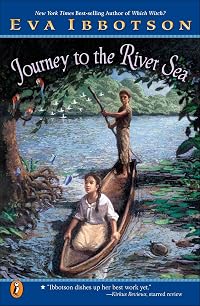
Journey to the River Sea
by Eva Ibbotson
On This Page
Description
Sent with her governess to live with the dreadful Carter family in exotic Brazil in 1910, Maia endures many hardships before fulfilling her dream of exploring the Amazon River.Tags
Recommendations

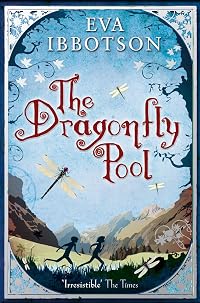
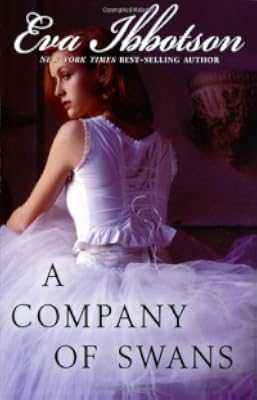
Member Recommendations
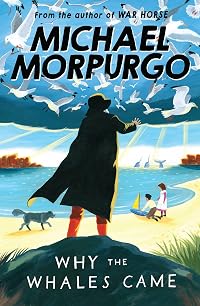
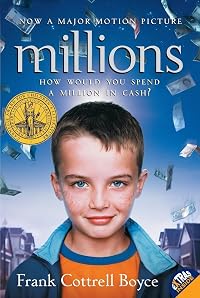
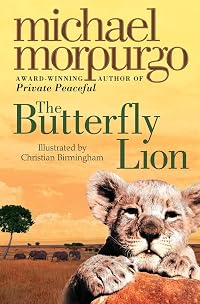
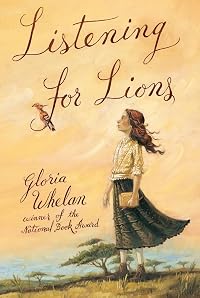
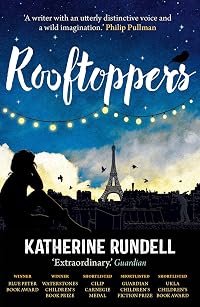
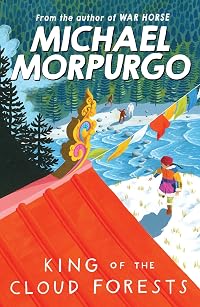
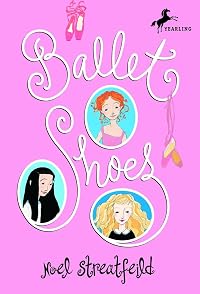
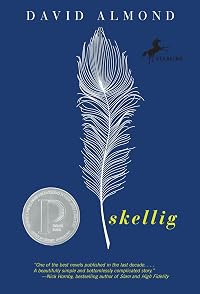
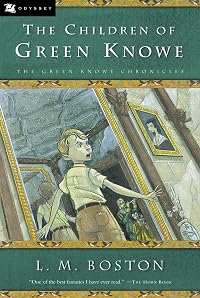
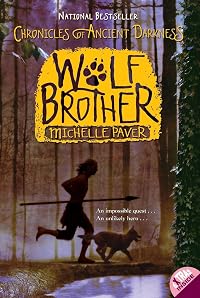
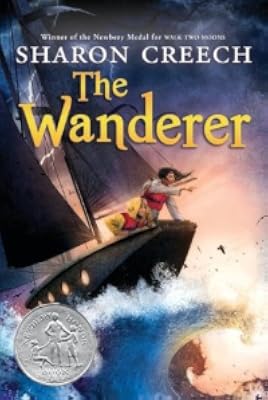
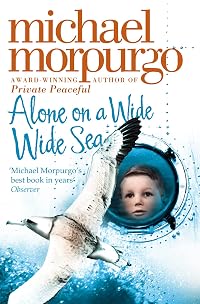
humouress 'Blue Castle' and 'Journey to the River Sea' have the same sense of wonderment and discovery at exploring the wilderness around the protagonist in the company of someone else who has made an effort to live in harmony with nature.
Member Reviews
(Stand alone, juvenile, fiction)
This was an engaging story, set in the early 20th century, about a young girl called Maia who is enrolled at the Mayfair Academy for Young Ladies, an unusually progressive school for 1910. Maia, who is clever, brave and inquisitive, has spent all her holidays for the past two years at the school since being orphaned and the story opens on the day she is to find out if her guardian and lawyer, Mr. Murray, has managed to find relatives who will offer her a home.
She is told that some distant relatives willing to offer her a home have been found, who live in the city of Manaus with its magnificent gold-domed theatre, deep in the Amazonian rainforest. When she looks it up in the school library, she imagines the colourful flora and fauna and the adventures she will have with her twin cousins. Sadly, when she gets there, she finds the reality quite different, as the Carters refuse to adapt to their surroundings, closing them out and attempting to live as they did in England.
But despite them, Maia - who has a love of life - makes friends, especially with two other orphans whom she tries to help to happy endings. Fortunately, she also has adults on her side who recognise her worth, namely in the shape of Miss Minton, her governess, and Mr. Murray. And she does get to explore the Amazon River, the River Sea of the title.
Beautifully written, engaging, lightly suspenseful and amusing. Deserved winner of the Nestlé Children's Book gold prize.
5 stars show less
This was an engaging story, set in the early 20th century, about a young girl called Maia who is enrolled at the Mayfair Academy for Young Ladies, an unusually progressive school for 1910. Maia, who is clever, brave and inquisitive, has spent all her holidays for the past two years at the school since being orphaned and the story opens on the day she is to find out if her guardian and lawyer, Mr. Murray, has managed to find relatives who will offer her a home.
'Well, Maia, we have good news,' said Miss Banks. A frightening woman to many, now in her sixties, with an amazing bust which would have done splendidly on the prow of a sailing ship, she smiled at the girl standing in front of her. A clever childshow more
and a brave one, who had fought hard to overcome the devastating blow of her parents' death in a train crash in Egypt two years earlier. The staff knew how Maia had wept, night after night under her pillow, trying not to wake her friends. If good fortune was to come her way, there was no one who deserved it more.
She is told that some distant relatives willing to offer her a home have been found, who live in the city of Manaus with its magnificent gold-domed theatre, deep in the Amazonian rainforest. When she looks it up in the school library, she imagines the colourful flora and fauna and the adventures she will have with her twin cousins. Sadly, when she gets there, she finds the reality quite different, as the Carters refuse to adapt to their surroundings, closing them out and attempting to live as they did in England.
But despite them, Maia - who has a love of life - makes friends, especially with two other orphans whom she tries to help to happy endings. Fortunately, she also has adults on her side who recognise her worth, namely in the shape of Miss Minton, her governess, and Mr. Murray. And she does get to explore the Amazon River, the River Sea of the title.
Beautifully written, engaging, lightly suspenseful and amusing. Deserved winner of the Nestlé Children's Book gold prize.
5 stars show less
Eva Ibbotson, if still with us, would have been celebrating her 90th birthday in January 2015, but sadly she died in 2010. Born in Vienna, she had to move to England in 1935 when Hitler came to power. That experience -- of being uprooted -- was drawn on directly for novels like The Morning Gift (about a girl from a secular Jewish family escaping Nazi Germany) and indirectly, I suspect, for Maia, the young protagonist of Journey to the River Sea. Who has not imagined what life might be like if one was an orphan forced from their familiar environment? Ibbotson experienced some of this, while the fictional Maia is a genuine orphan -- not impecunious, it is true -- who at the beginning of the 20th century has to travel away from her show more boarding school to live with distant relatives. On the banks of the Amazon.
When I was a kid growing up in the early 60s my mother had a collection of ethnographic travel books, many about the 'lost worlds' of the Amazon. They had titles like Exploration Fawcett or involved a quest for the mysterious city of El Dorado. They had photographs of naked forest-dwellers in dug-out canoes or by their huts staring at the camera. And, I suspect, they had that classic National Geographic paternalistic stance towards benighted natives paraded before civilised eyes. Earlier in the century, when empires were still carving out new territories for exploration (corporations do that now) locals were often regarded by Europeans as heathen, dirty, lazy cheats, both primitive and incorrigible. And that is the attitude that Maia discovers underpins her newfound relatives living near Manaus, a thousand miles upriver.
This is the Carter family: an unsuccessful rubber plantation owner so obsessed with his glass eye collection that he is blind to impending financial disaster; his vapid but overbearing wife focused only on sanitation; and their two children, twins Beatrice and Gwendolyn. (The latter made me wonder if Ibbotson borrowed the latter's name from the equally objectionable Gwendolen in Diana Wynne Jones' Charmed Life.) Maia briefly considers whether they will be like the two Ugly Sisters in Cinderella but then dismisses the thought when she first meets them. In fact this really is a Cinderella story, and while Ibbotson never labours the parallels that is the trope we inevitably have in the back of our minds. The two sisters are indeed spiteful, the foster parents disregard or look down on her, she is indeed the belle of the ball in Manaus, she has a 'fairy godmother' in the shape of Miss Minton, the governess who tutors Maia and the twins, and through Minty's machinations Maia is able to slip away on occasion to befriend the Carter's workers and meet up with her 'prince'.
Maia is a genuine girl, one who is intelligent, curious and good-hearted, a character who is both believable and one in whom we willingly invest our sympathy. The Carters would be caricatures if we didn't in fact all know people just like that: self-centred, greedy, empty headed, cruel or any combination of these traits. And need I mention xenophobic? Miss Minton (a stern governess in a Mary Poppins sort of way) might almost also veer towards caricature if it wasn't for the fact that she has a heart-breaking secret of her own that we hope for her sake will be resolved (the clues are in the text, if we notice).
And the two principal boys who appear in Maia's life seem to have their own mysteries. One is Clovis King, a stage name, borrowed from the first monarch who united Gaul after the fall of the Western Roman Empire; he comes to the Teatro Amazonas in Manaus to play Little Lord Fauntleroy, a significant role and a significant name too: Clovis is called on to play the part of a missing young milord, while 'Fauntleroy' suggests the derivation enfant le roi, 'the child king'. The second is a young Brazilian Indian whom Maia encounters, but is he whom he seems to be?
Journey to the River Sea is a beautifully written novel, deserving its many accolades. As with so many young adult novels the protagonist has to find her way in the world through her own courage, gifts and wits, with just a little help from a few friendly helpers. She is the classic 'outsider' who doesn't appear to fit the mould: she looks different, loves books and, above all, is an orphan. (In fact, as we see, most of the children mentioned in this tale lose or have lost one or both of their parents.) Forget that we have a few possible literary trope borrowings (I suspect Peter Pan and Tarzan and The Jungle Book might have been distant influences, as well as the aforementioned Mary Poppins, Cinderella and, obviously, Little Lord Fauntleroy); it's what Ibbotson chooses to do with these themes that make this both unputdownable and rarely predictable.
Add to all this the book's central setting in the early 20th-century Amazonian forest, with its distinctive sounds, smells, sights and experiences, juxtaposed with the accoutrements of Western civilisation: dancing and music, grand houses and shops, all symbolised by the incredible building that is the Manaus Opera House. In the theatre one observes everything from high drama to comedy, pathos to bathos, and so it is with Ibbotson's novel; laughter is here, but so is death; wins as well as setbacks. If the course of novel conforms to the Voyage and Return plot (out from England to Brazil and back again), the final sentence -- "'We are all going home,' she said." -- promises that all is not over for Maia and her companions, and that the rest of their lives beckons. And if our hearts don't swell at that then we must truly be stick-in-the-mud individuals.
Many editions of this novel include an exotic butterfly or two on the cover; though butterflies are one of the many, many plot drivers the choice of this creature as a decorative features reminds me of that famous notion, the so-called Butterfly Effect of chaos theory, where a small local disturbance (a butterfly flapping its wings in a jungle, say) can ultimately give rise to more complex phenomenon (a hurricane in another part of the world, for example). So it is that little happenings in Maia's life have unintended consequences on the people she comes, however obliquely, in contact with.
http://wp.me/s2oNj1-amazon show less
When I was a kid growing up in the early 60s my mother had a collection of ethnographic travel books, many about the 'lost worlds' of the Amazon. They had titles like Exploration Fawcett or involved a quest for the mysterious city of El Dorado. They had photographs of naked forest-dwellers in dug-out canoes or by their huts staring at the camera. And, I suspect, they had that classic National Geographic paternalistic stance towards benighted natives paraded before civilised eyes. Earlier in the century, when empires were still carving out new territories for exploration (corporations do that now) locals were often regarded by Europeans as heathen, dirty, lazy cheats, both primitive and incorrigible. And that is the attitude that Maia discovers underpins her newfound relatives living near Manaus, a thousand miles upriver.
This is the Carter family: an unsuccessful rubber plantation owner so obsessed with his glass eye collection that he is blind to impending financial disaster; his vapid but overbearing wife focused only on sanitation; and their two children, twins Beatrice and Gwendolyn. (The latter made me wonder if Ibbotson borrowed the latter's name from the equally objectionable Gwendolen in Diana Wynne Jones' Charmed Life.) Maia briefly considers whether they will be like the two Ugly Sisters in Cinderella but then dismisses the thought when she first meets them. In fact this really is a Cinderella story, and while Ibbotson never labours the parallels that is the trope we inevitably have in the back of our minds. The two sisters are indeed spiteful, the foster parents disregard or look down on her, she is indeed the belle of the ball in Manaus, she has a 'fairy godmother' in the shape of Miss Minton, the governess who tutors Maia and the twins, and through Minty's machinations Maia is able to slip away on occasion to befriend the Carter's workers and meet up with her 'prince'.
Maia is a genuine girl, one who is intelligent, curious and good-hearted, a character who is both believable and one in whom we willingly invest our sympathy. The Carters would be caricatures if we didn't in fact all know people just like that: self-centred, greedy, empty headed, cruel or any combination of these traits. And need I mention xenophobic? Miss Minton (a stern governess in a Mary Poppins sort of way) might almost also veer towards caricature if it wasn't for the fact that she has a heart-breaking secret of her own that we hope for her sake will be resolved (the clues are in the text, if we notice).
And the two principal boys who appear in Maia's life seem to have their own mysteries. One is Clovis King, a stage name, borrowed from the first monarch who united Gaul after the fall of the Western Roman Empire; he comes to the Teatro Amazonas in Manaus to play Little Lord Fauntleroy, a significant role and a significant name too: Clovis is called on to play the part of a missing young milord, while 'Fauntleroy' suggests the derivation enfant le roi, 'the child king'. The second is a young Brazilian Indian whom Maia encounters, but is he whom he seems to be?
Journey to the River Sea is a beautifully written novel, deserving its many accolades. As with so many young adult novels the protagonist has to find her way in the world through her own courage, gifts and wits, with just a little help from a few friendly helpers. She is the classic 'outsider' who doesn't appear to fit the mould: she looks different, loves books and, above all, is an orphan. (In fact, as we see, most of the children mentioned in this tale lose or have lost one or both of their parents.) Forget that we have a few possible literary trope borrowings (I suspect Peter Pan and Tarzan and The Jungle Book might have been distant influences, as well as the aforementioned Mary Poppins, Cinderella and, obviously, Little Lord Fauntleroy); it's what Ibbotson chooses to do with these themes that make this both unputdownable and rarely predictable.
Add to all this the book's central setting in the early 20th-century Amazonian forest, with its distinctive sounds, smells, sights and experiences, juxtaposed with the accoutrements of Western civilisation: dancing and music, grand houses and shops, all symbolised by the incredible building that is the Manaus Opera House. In the theatre one observes everything from high drama to comedy, pathos to bathos, and so it is with Ibbotson's novel; laughter is here, but so is death; wins as well as setbacks. If the course of novel conforms to the Voyage and Return plot (out from England to Brazil and back again), the final sentence -- "'We are all going home,' she said." -- promises that all is not over for Maia and her companions, and that the rest of their lives beckons. And if our hearts don't swell at that then we must truly be stick-in-the-mud individuals.
Many editions of this novel include an exotic butterfly or two on the cover; though butterflies are one of the many, many plot drivers the choice of this creature as a decorative features reminds me of that famous notion, the so-called Butterfly Effect of chaos theory, where a small local disturbance (a butterfly flapping its wings in a jungle, say) can ultimately give rise to more complex phenomenon (a hurricane in another part of the world, for example). So it is that little happenings in Maia's life have unintended consequences on the people she comes, however obliquely, in contact with.
http://wp.me/s2oNj1-amazon show less
This wasn't a recent read, but we have it in our Blevins library and it remains one of my all-time favorite children's books. It is slightly Dickensian in flavor, because the good people are very, very good, and the bad people are horrid. It is set in the Amazon Rain Forest and has plenty of action and adventure. The ending sees the good people rewarded and the bad ones getting what they deserved. The writing is beautiful, the setting is gorgeous and exciting, the main character is strong and survives against all odds, and the plot is magical. This would make a great family read.
At first, this looks like a fairly predictable orphaned-English-girl-gets-shipped-off-to-live-with-distant-relatives story. Predictably, the family Maia is to live with in Brazil is horrid, and only allowed her to come at all so that they could get the allowance that comes with her. Fortunately, Maia has a very sympathetic, if somewhat mysterious governess who accompanies her to Brazil and in her adventures. It isn't until Maia's been in Brazil for a while that the story begins to come out of its predictable beginnings. There's a missing boy who may or may not actually be missing, and a child actor suddenly looking at the end of his career, and possibly Maia's new family has been living on ill-gotten gains for some time.
This is quite an show more enjoyable story, with plenty of adventure, and some intrigue mixed in for good measure. The characters are believable and the ending is quite satisfying, with the horrid family getting their comeuppance and Maia and her friends being able to live out their dreams. show less
This is quite an show more enjoyable story, with plenty of adventure, and some intrigue mixed in for good measure. The characters are believable and the ending is quite satisfying, with the horrid family getting their comeuppance and Maia and her friends being able to live out their dreams. show less
Maia is an orphan in London, in the early 1900s. She is in a boarding school where she has many friends and is beloved by the teachers and staff. Her family’s solicitor has finally found some distant relatives who have agreed to take Maia in … however, she’ll have to leave her school and go to Brazil where the Carters have a rubber plantation. It so happens they have just hired a new governess for their twin daughters, so Maia and Miss Minton will make the long journey together. While she is sad to leave her friends at school, Maia is excited by the possible adventure of living in a jungle setting, and she reads about the Amazon and Brazil to prepare herself for her new life. What she finds, however, is far from her imagined show more situation.
What a lovely adventure / coming-of-age story! Maia is a strong female character – intelligent, kind, generous, brave, resourceful and loyal. I loved how she reserved judgment until she was certain of the facts, and even when faced with greedy, spiteful people she maintained her dignity and, with the help of Miss Minton, found a way around obstacles. Her willingness to explore and learn about the native culture was also a fine lesson. And I liked the way Ibbotson made heroes out of some unlikely characters.
I did think the Carter family – father, mother, and twins – were rather stereotypical “villains,” but that is a small quibble. This is a children’s book, after all, and I don’t expect the same subtleties that I would in literature written for adults.
Occasional illustrations by Kevin Hawkes really lend atmosphere to the book. show less
What a lovely adventure / coming-of-age story! Maia is a strong female character – intelligent, kind, generous, brave, resourceful and loyal. I loved how she reserved judgment until she was certain of the facts, and even when faced with greedy, spiteful people she maintained her dignity and, with the help of Miss Minton, found a way around obstacles. Her willingness to explore and learn about the native culture was also a fine lesson. And I liked the way Ibbotson made heroes out of some unlikely characters.
I did think the Carter family – father, mother, and twins – were rather stereotypical “villains,” but that is a small quibble. This is a children’s book, after all, and I don’t expect the same subtleties that I would in literature written for adults.
Occasional illustrations by Kevin Hawkes really lend atmosphere to the book. show less
The book is well written, and there is an interesting twist on the formula at the end, but while this formula worked well in the 19th century, I don't care for it in more modern books.
Maia is an orphan whose guardian takes her out of boarding school to go and live with distant relatives the Carter's in Brazil. They live up the Amazon and after reading up on the area (Manaus) Maia is excited to go. She imagines lovely, welcoming family who love and embrace the mixture of cultures, but she finds the reality sadly very different.
The family hate everything that isn't English. Mrs Carter has an obsession with killing bugs, the windows are always closed even in the hottest weather and the twins barely leave the house. They take an instant dislike to Maia and one of them goes so far as to dig her nails into Maa's hand the first time the meet. The family need Maia though for the upkeep money she brings. Maia takes her show more pleasures spending ime with the governess she journeyed from Englan with Miss Minton (Minty). She has a trunk full of books and devises ways for Maia to leave the house and befriend the Indian servants.
On on e of her journeys Maia meets a local boy and the friendship with him and struggling young actor Clovis change her life forever. This is very much an adventure and an awakening. t was impossible not to put it down once I got into the story. It also really made me want to visit Brazil which I hadn't really thought about before! Fantastical yet very realistic with a perfect ending. It isn't often I give a full 5 star rating. show less
The family hate everything that isn't English. Mrs Carter has an obsession with killing bugs, the windows are always closed even in the hottest weather and the twins barely leave the house. They take an instant dislike to Maia and one of them goes so far as to dig her nails into Maa's hand the first time the meet. The family need Maia though for the upkeep money she brings. Maia takes her show more pleasures spending ime with the governess she journeyed from Englan with Miss Minton (Minty). She has a trunk full of books and devises ways for Maia to leave the house and befriend the Indian servants.
On on e of her journeys Maia meets a local boy and the friendship with him and struggling young actor Clovis change her life forever. This is very much an adventure and an awakening. t was impossible not to put it down once I got into the story. It also really made me want to visit Brazil which I hadn't really thought about before! Fantastical yet very realistic with a perfect ending. It isn't often I give a full 5 star rating. show less
Members
- Recently Added By
Lists

1001 Children's Books You Must Read Before You Grow Up
774 works; 101 members

School Library Journal - 2012 Top 100 Children's Novels
68 works; 8 members

Puffin Books 70th anniversary handbook recommendations
537 works; 10 members

A Novel Cure
742 works; 23 members

Beautiful Feet Books
304 works; 7 members

The Story of the World: Activity Book Four: The Modern Age
333 works; 2 members
Author Information

40+ Works 22,473 Members
Eva Ibbotson was born in Vienna, Austria, on January 21, 1925. She graduated from Bedford College, London with a degree in physiology in 1945 and the University of Durham with a degree in education in 1965. Her first book, The Great Ghost Rescue, was published in 1975. She primarily wrote children's book and romance novels for adults and young show more adults. Her other works include The Secret of Platform 13, The Star of Kazan, Which Witch?, Island of the Aunts, Dial-a-Ghost, The Ogre of Oglefort, A Company of Swans, and A Song For Summer. She won the Nestlé Smarties Book Prize for Journey to the River Sea. She died on October 20, 2010 at the age of 85. (Bowker Author Biography) show less
All Editions
Awards and Honors
Awards
Distinctions
Notable Lists
Common Knowledge
- Canonical title
- Journey to the River Sea
- Original title
- Journey to the River Sea
- Original publication date
- 2001
- People/Characters
- Maia Fielding; Finn Taverner; Miss Minton; Professor Glastonberry; Clovis King
- Important places
- Amazon Rainforest, Amazon Basin, South America
- Dedication
- For Martha
- First words
- It was a good school, one of the best in London.
- Last words
- (Click to show. Warning: May contain spoilers.)'We are all going home,' she said.
- Original language*
- Englisch
*Some information comes from Common Knowledge in other languages. Click "Edit" for more information.
Classifications
- Genres
- Children's Books, Fiction and Literature, Kids, Tween
- DDC/MDS
- 823.914 — Literature & rhetoric English & Old English literatures English fiction 1900- 1901-1999 1945-1999
- LCC
- PZ7 .I11555 .J — Language and Literature Fiction and juvenile belles lettres Fiction and juvenile belles lettres Juvenile belles lettres
- BISAC
Statistics
- Members
- 2,462
- Popularity
- 7,909
- Reviews
- 61
- Rating
- (4.05)
- Languages
- 12 — Danish, English, Estonian, Finnish, French, German, Hungarian, Italian, Latvian, Portuguese, Spanish, Swedish
- Media
- Paper, Audiobook, Ebook
- ISBNs
- 58
- ASINs
- 12