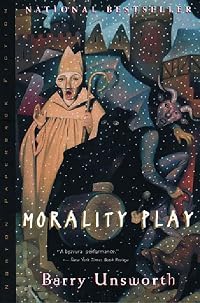
Morality Play
by Barry Unsworth
On This Page
Description
In 14th Century England, a troupe of touring actors arrives in a town where a deaf-and-mute girl awaits execution for murder. They research the crime and perform a play that is closer to the truth than anyone imagined. When the local lord summons them to his castle for a private performance, they know they are in trouble. By the author of Pascali's Island.Tags
Recommendations









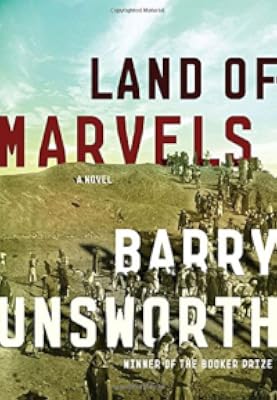
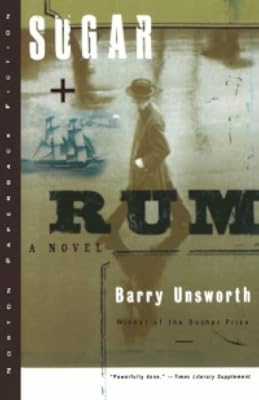
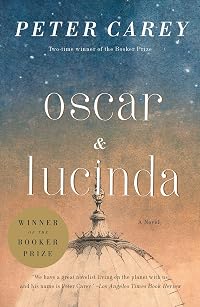
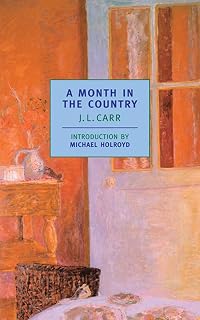
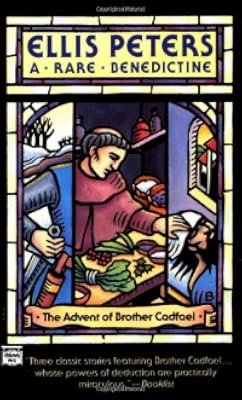
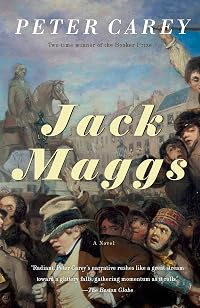

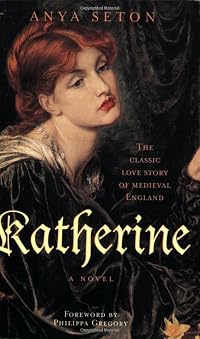
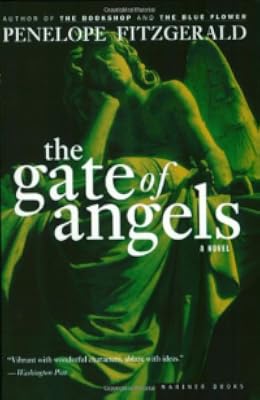
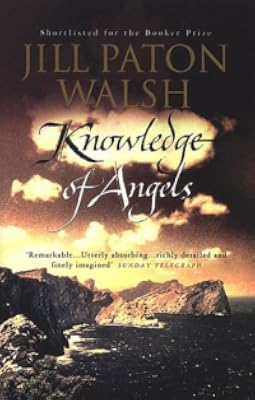
Member Recommendations


pitjrw Muses on memory and the role of art specifically drama set respectively in the alien past and the horrific near future.
Member Reviews
I haven’t read Unsworth in so many years that I had forgotten the sheer pleasure of his talent. Although it may not qualify as great literature, the writing here is impressive and Unsworth offers the willing reader more than a little food for thought in the course of providing a wonderfully engrossing murder mystery. The story takes place in 14th-century England and tells of a renegade priest who joins a traveling group of dramatic players. Unexpectedly short of money, they decide to prolong their stay in a town where the murder of a 12-year-old has just taken place and seems to have been “closed” unusually quickly. The players decide to create a new production based on the murder in the hope that local interest will create great show more attendance (and thus, great revenue). As they “research” the murder in order to make the play accurate, they discover far more than they expect. Many of the characters are stock figures but it is Unsworth’s achievement to not only create a vivid and riveting story but to do so well enough to force his readers to confront the deeper questions of any morality play. Unsworth uses an intentionally stilted (or mannered) English that is surprisingly successful in evoking the era and he also succeeds in creating a claustrophobic atmosphere that contributes greatly to both his story and the questions he poses. For those who are interested, he also teaches a great deal about the secrets and symbols of medieval theater and, in the process, submerges the reader in the small world of his characters. Definitely recommended and I will return to Unsworth sooner than I had anticipated for more such pleasure. show less
Set in the 14th century Unsworth's novel stands or falls by the authors ability to transport the reader back into those turbulent years. It stood very tall for me especially as the story is not based on recorded historical events and its subject matter is not the upper echelons of society. The story is told in the first person by an apprentice cleric who has absconded from his monastery and falls in with a small band of travelling players who are faced with the problems of burying one of their number who had just died and of earning enough money to keep themselves alive. The troupe including Nicholas the cleric stumble upon a small town, which is reeling from the news that another young boy has been murdered. The players find lodging in show more an inn and put on a performance of their usual repertoire in the inn yard, but barely make enough money to cover their costs. Martin the leader of the troupe then has the idea of making a play based on the recent murder of the young boy and sends the players out amongst the local people to gather information. The performance the next day packs out the yard but the players enquiries have led them deep into a mystery that is in some important peoples best interest to keep hidden. The players are skilful enough to improvise when they run out of story line but their playing uncovers facts that puts them all in danger for their lives.
An enticing murder mystery develops that Unsworth never allows to become more than believable with his inspired depiction of a few days in the life of a travelling group of players, who push their luck just a bit too far. Martin is the charismatic leader of a group who all leap off the pages in well drawn character studies, but it is Unsworth's ability to get inside the mind of Nicholas and tell the story from a seemingly authentic fourteenth century viewpoint that makes this book so interesting. I don't think he puts a foot wrong; nothing jarred with me in a sustained piece of story telling. This is an example of the young Nicholas trying to make sense out of the troupe's willingness to follow Martin on his dangerous path:
"They were in some fear perhaps, but it was not fear of offending God, it was fear of the freedom that Martin was holding out, the licence to play anything in the world. Such licence brings power........Yes, he offered us the world, he played Lucifer to us in the cramped space of the barn. But the closer prize he did not need to offer, it was already there in our minds: the people would flock to see the murder played. And they would pay. In the end it was our destitution that won the day for him. That and the habit of mind of players, who think of their parts and how best to do them, and listen to the words of the master-player, but do not often think of the meaning as a whole. Had these done so, they would have seen what I, more accustomed to conclusions, saw and trembled at: if we make our own meanings, God will oblige us to answer our own questions, He will leave us in the void without the comfort of His Word."
Unsworth raises some interesting themes in this short passage, themes that would have troubled any thinking person in the fourteenth century, who needed to come to terms with the fear of not following the Word of God as interpreted by religious leaders, however Unsworth is content to raise these issues and does not explore them to such an extent that they will get in the way of the central subject matter of his book which is the murder mystery. It cannot be considered as great literature, but it is certainly very good literature. What Unsworth has written is a superb historical work of fiction; dripping with period detail that explores the thoughts and actions of a group of travelling players, who push their envelope further than is advisable in the society in which they struggle to live. There are plenty of insights into the world of nascent dramatics and a world view that makes this reader appreciate the comforts and freedom of the 21st century. But what of the murder mystery at the heart of the novel? Is it a good one? It is well worked with no loose ends and thoroughly in keeping with its period, there are some surprises, but most lovers of such stories will have got to the denouement well before the author. I found it satisfying enough, although at the end of the day it lacked some excitement as the danger to the characters was resolved off stage with their story being recounted second hand, nevertheless a four star read show less
An enticing murder mystery develops that Unsworth never allows to become more than believable with his inspired depiction of a few days in the life of a travelling group of players, who push their luck just a bit too far. Martin is the charismatic leader of a group who all leap off the pages in well drawn character studies, but it is Unsworth's ability to get inside the mind of Nicholas and tell the story from a seemingly authentic fourteenth century viewpoint that makes this book so interesting. I don't think he puts a foot wrong; nothing jarred with me in a sustained piece of story telling. This is an example of the young Nicholas trying to make sense out of the troupe's willingness to follow Martin on his dangerous path:
"They were in some fear perhaps, but it was not fear of offending God, it was fear of the freedom that Martin was holding out, the licence to play anything in the world. Such licence brings power........Yes, he offered us the world, he played Lucifer to us in the cramped space of the barn. But the closer prize he did not need to offer, it was already there in our minds: the people would flock to see the murder played. And they would pay. In the end it was our destitution that won the day for him. That and the habit of mind of players, who think of their parts and how best to do them, and listen to the words of the master-player, but do not often think of the meaning as a whole. Had these done so, they would have seen what I, more accustomed to conclusions, saw and trembled at: if we make our own meanings, God will oblige us to answer our own questions, He will leave us in the void without the comfort of His Word."
Unsworth raises some interesting themes in this short passage, themes that would have troubled any thinking person in the fourteenth century, who needed to come to terms with the fear of not following the Word of God as interpreted by religious leaders, however Unsworth is content to raise these issues and does not explore them to such an extent that they will get in the way of the central subject matter of his book which is the murder mystery. It cannot be considered as great literature, but it is certainly very good literature. What Unsworth has written is a superb historical work of fiction; dripping with period detail that explores the thoughts and actions of a group of travelling players, who push their envelope further than is advisable in the society in which they struggle to live. There are plenty of insights into the world of nascent dramatics and a world view that makes this reader appreciate the comforts and freedom of the 21st century. But what of the murder mystery at the heart of the novel? Is it a good one? It is well worked with no loose ends and thoroughly in keeping with its period, there are some surprises, but most lovers of such stories will have got to the denouement well before the author. I found it satisfying enough, although at the end of the day it lacked some excitement as the danger to the characters was resolved off stage with their story being recounted second hand, nevertheless a four star read show less
Barry Unsworth’s Morality Play proves to be equal parts Ellis Peters’ Brother Cadfael and learned explication of medieval life. Please don’t let that put you off! This brief, thoroughly entertaining novel won the Booker Prize, and you’ll see why almost immediately.
Wayward priest Nicholas Barber ran away from his diocese during the springtime. Having run afoul of a cuckolded husband, at Christmas time he has fled afield and crosses paths with a traveling acting troupe just at the moment when one of their number has suddenly died. Nicholas eagerly takes refuge with them, while the players reluctantly consent, as they are in need of another actor. In route to a gig, they stop on the way to make a little extra coinage entertaining show more at a village controlled by one Lord Richard de Guise.
That the decision will prove an unwise one Nicholas announces from the very first page. A 12-year-old peasant boy has been murdered, and a local woman charged with the crime. Hollywood today can’t resist a brutal murder, nor could these medieval players, who adapt the story into a play of their own — a very novel move in Northern England at the time. However, the more they delve into the brutal killing, the less the authorities’ version of what happened holds together.
Like The Name of the Rose before it, Morality Play brings the Middle Ages — and its scourges of war, plague, corruption, and grinding poverty — to life under the guise of a whodunnit. Enjoy the heart-stopping suspense and the shocking ending, and, as a side benefit, get an unvarnished glimpse into the plight of the common man in 14th century Northern England. Highly, highly recommended. show less
Wayward priest Nicholas Barber ran away from his diocese during the springtime. Having run afoul of a cuckolded husband, at Christmas time he has fled afield and crosses paths with a traveling acting troupe just at the moment when one of their number has suddenly died. Nicholas eagerly takes refuge with them, while the players reluctantly consent, as they are in need of another actor. In route to a gig, they stop on the way to make a little extra coinage entertaining show more at a village controlled by one Lord Richard de Guise.
That the decision will prove an unwise one Nicholas announces from the very first page. A 12-year-old peasant boy has been murdered, and a local woman charged with the crime. Hollywood today can’t resist a brutal murder, nor could these medieval players, who adapt the story into a play of their own — a very novel move in Northern England at the time. However, the more they delve into the brutal killing, the less the authorities’ version of what happened holds together.
Like The Name of the Rose before it, Morality Play brings the Middle Ages — and its scourges of war, plague, corruption, and grinding poverty — to life under the guise of a whodunnit. Enjoy the heart-stopping suspense and the shocking ending, and, as a side benefit, get an unvarnished glimpse into the plight of the common man in 14th century Northern England. Highly, highly recommended. show less
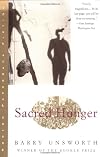
I absolutely loved 'Sacred Hunger.' and have been meaning to read another of Unsworth's novels for far too long. This is a short novel about a troupe of medieval players who arrive at town on the day after a murder of a small boy. Desperate for money to survive they decide to enact the murder; essentially like 'reality TV.' Through their research into their roles and their chemistry while acting they stumble onto dangerous conclusions.
This is actually a clever presentation of a mystery. I figured out the 'whodunnit' relatively early on but still enjoyed the unfolding. I thought the writing was excellent. His prose is engaging yet literary and the period detail feels authentic. Why then am I only giving a mediocre rating? I am not so show more sure myself. This is one of those novels that is empirically quite good but has some je ne sais quois missing. It took me a relatively long time to read a 200 page book. I never felt compelled to keep reading despite the mystery except maybe the last ~30 pages or so -- and perhaps that was just to finally finish up.
So mixed feelings here. Quite good; I remain a fan of Unsworth. Perhaps I was expecting too much following my read of 'Sacred Hunger.' show less
This is actually a clever presentation of a mystery. I figured out the 'whodunnit' relatively early on but still enjoyed the unfolding. I thought the writing was excellent. His prose is engaging yet literary and the period detail feels authentic. Why then am I only giving a mediocre rating? I am not so show more sure myself. This is one of those novels that is empirically quite good but has some je ne sais quois missing. It took me a relatively long time to read a 200 page book. I never felt compelled to keep reading despite the mystery except maybe the last ~30 pages or so -- and perhaps that was just to finally finish up.
So mixed feelings here. Quite good; I remain a fan of Unsworth. Perhaps I was expecting too much following my read of 'Sacred Hunger.' show less
On a cold December day during the second half of the fourteenth century, Nicholas Barber steals upon a group of traveling players who stand away from a dying man, one of their number. Fascinated by the players’ wordless empathy, Nicholas watches too long, and they spot him and demand that he come forward. It’s a dangerous time in England, where the plague rides, and suspicion and fear influence every interaction, not least with vagabonds.
But Nicholas is a vagabond himself, a priest who has left his diocese without permission. He has abandoned his good cloak in a house where he was committing adultery, and knows his way with a pair of dice in his hand. And when the actors move on toward Durham, where they are to perform Nativity show more plays for the lord’s court, Nicholas accompanies them.
He could have said that they’d just lost a man they need to replace. But Nicholas is also burning a bridge. The bishop of Lincoln, his patron, might take him back if he turned around right then and honestly repented his lapses. But appearing on stage violates the law. And though that scares him, Nicholas can’t resist — something about playing a part, belonging to the small, tightly knit troupe, has touched him.
However, the next village they happen on has recently witnessed a murder; a young boy has been killed, and a deaf-mute young woman sentenced to hang for it. Martin, the leader of the troupe, convinces the others to perform a play based on the killing, as it has been recounted in rumor and disputation around the village. To do so risks severe punishment, for, on stage as in life, truth comes only from God, and the players, already at society’s margin, will overstep if they pretend to interpret their world — and a profane event, no less. Nicholas, understanding the religious proscription intuitively, is appalled. But the show, as always, must go on.
What a premise, as elegant as you could want. And what a title, literally evoking the medieval mystery play while figuratively showing the changeable nature of moral choices. Further, what the medieval mind called a mystery had to do with Scripture and God’s actions, ever inscrutable. But here we have that framework and an actual mystery alongside, which the performance of the play helps to solve.
Morality Play has so much to say about the role that subsumes the player, not just the other way around, involving so many aspects of private, political, and social life, that I’m in awe. Success here hinges on the characters, and you’d have to look hard and long before you found a more finely drawn ensemble, literally and figuratively.
Besides Nicholas, whose desires outstrip his common sense (which makes him human), you have Martin, teacher, leader, and group conscience; Straw, the outwardly fragile, gifted mime; Stephen, the brooding drunk with a commanding presence; and others, each sustained in-depth without more than a line or two of backstory. Together, they create an amazing performance.
Then there’s Unsworth’s prose, simple, highly physical, conveying the time and place from the inside out. Among other things, the medieval theater comes to life in full panoply, as with a performance of the play of Adam, in which Nicholas changes roles between the Devil’s Fool and a normal one.
Morality Play is a work of genius, a mirror on human nature in the fourteenth century and now. show less
But Nicholas is a vagabond himself, a priest who has left his diocese without permission. He has abandoned his good cloak in a house where he was committing adultery, and knows his way with a pair of dice in his hand. And when the actors move on toward Durham, where they are to perform Nativity show more plays for the lord’s court, Nicholas accompanies them.
He could have said that they’d just lost a man they need to replace. But Nicholas is also burning a bridge. The bishop of Lincoln, his patron, might take him back if he turned around right then and honestly repented his lapses. But appearing on stage violates the law. And though that scares him, Nicholas can’t resist — something about playing a part, belonging to the small, tightly knit troupe, has touched him.
However, the next village they happen on has recently witnessed a murder; a young boy has been killed, and a deaf-mute young woman sentenced to hang for it. Martin, the leader of the troupe, convinces the others to perform a play based on the killing, as it has been recounted in rumor and disputation around the village. To do so risks severe punishment, for, on stage as in life, truth comes only from God, and the players, already at society’s margin, will overstep if they pretend to interpret their world — and a profane event, no less. Nicholas, understanding the religious proscription intuitively, is appalled. But the show, as always, must go on.
What a premise, as elegant as you could want. And what a title, literally evoking the medieval mystery play while figuratively showing the changeable nature of moral choices. Further, what the medieval mind called a mystery had to do with Scripture and God’s actions, ever inscrutable. But here we have that framework and an actual mystery alongside, which the performance of the play helps to solve.
Morality Play has so much to say about the role that subsumes the player, not just the other way around, involving so many aspects of private, political, and social life, that I’m in awe. Success here hinges on the characters, and you’d have to look hard and long before you found a more finely drawn ensemble, literally and figuratively.
Besides Nicholas, whose desires outstrip his common sense (which makes him human), you have Martin, teacher, leader, and group conscience; Straw, the outwardly fragile, gifted mime; Stephen, the brooding drunk with a commanding presence; and others, each sustained in-depth without more than a line or two of backstory. Together, they create an amazing performance.
Then there’s Unsworth’s prose, simple, highly physical, conveying the time and place from the inside out. Among other things, the medieval theater comes to life in full panoply, as with a performance of the play of Adam, in which Nicholas changes roles between the Devil’s Fool and a normal one.
Morality Play is a work of genius, a mirror on human nature in the fourteenth century and now. show less
A good read, and a good length. The author does an excellent job of getting into the medieval mind of his protagonist, a 23 year old priest on the lam from his life in a cathedral that joins a troupe of players. A lot of the period detail, and the way the hero sees and interprets the world, feels just right for the period. Very evocative. Added to this milieu is a very interesting murder mystery story that unfolds as the company tries to play it and hold off starvation. Of particular interest is the description of the playing of the play: the rote hand gestures used by actors, known by both players and audience; the gathering of the 'clues' to the death of the boy; the description of the class warfare that is an undercurrent throughout show more the book and really seems to capture the hopelessness of a medieval serf. There is a whiff of Canterbury Tale about the book - its positioning of each trade, role, and office being described in relation to all the others. The closing, which places us all in some kind of play as players in roles, is particularly cogent. show less
"It was a death that began it all and another death that led us on."
In 2004, I watched a beautiful film starring Willem Dafoe and Vincent Cassel, among others, titled "The Reckoning". Since then, I was trying to find the book that inspired the movie. It wasn't until 2015 that my search finally ended and two years later, I can say that Unsworth created a very memorable and darkly beautiful novel.
Nickolas is a young priest that has broken his vows of chastity. Running away from his diocese, he comes across a company of traveling players who carry a macabre burden. They decide to stay in the nearest village and perform a play out of their usual repertoire which includes Biblical stories. However, a crime that has caused quite an upheaval show more in the community becomes the inspiration for a new play. And this is when the implications begin.
"....no one fears players...."
The book is a treasure for those of us interested in the tradition of Morality plays or Mysteries, as they are also called. Through pantomime and verse and with complex -for the time-special effects, the actors used to perform religious themes that would be well- known to the audience, peasants and nobles alike. Depicting local incidents and contemporary events was unheard of and would remain so for quite some time. Here, Martin, the leader of the company, decides to break the rule and perform the murder of a young boy. To do so, the company must investigate the disappearence and murder of young Thomas.
Nickolas and Martin are the main characters. In many ways, they're very similar. They are clever and brave but their morality is dubious. They understand one has to depart from the righteous path in order to eat and to defend those in need during harsh times. The rest of the company are people with interesting background stories, like Stephen and Margaret, but the book is too short and there is very little character development.
The writing is beautiful and powerful. The marvelous, haunting wintry atmosphere is very important to the feeling of the story and I could feel as if I was walking in the medieval market as the snow was falling silently upon the grey tower and the huts. There are many issues addressed in the novel. The Plague carries victims in its passing, but death doesn't come from illness exclusively. Humans are the worst, most ruthless murderers. Poverty makes people obey and bend the knee to every Lord that oppresses them in every level without question. Nickolas' thoughts and his interactions with Martin and the King's Justice provide much food thought on psychological and social issues. The freedom of choice, the notion of duty, the hypocrisy and violence. The crime and the punishment.
As I said, the only negative element is the small length of the novel. I wanted to see and understand more of the characters. I wanted to see a rounded closure to the stories of the players, to the fortune of the village and the justice performed. Apart from that, this is an excellent book that I can't place in one genre. Mystery, thriller, Historical Fiction, psychological study and the list goes on. It is fast - paced, memorable and full of vivid images. However, on my opinion, this is a rare case of the film being more completed and well-rounded than the book. The two complement each other in a perfect way. show less
In 2004, I watched a beautiful film starring Willem Dafoe and Vincent Cassel, among others, titled "The Reckoning". Since then, I was trying to find the book that inspired the movie. It wasn't until 2015 that my search finally ended and two years later, I can say that Unsworth created a very memorable and darkly beautiful novel.
Nickolas is a young priest that has broken his vows of chastity. Running away from his diocese, he comes across a company of traveling players who carry a macabre burden. They decide to stay in the nearest village and perform a play out of their usual repertoire which includes Biblical stories. However, a crime that has caused quite an upheaval show more in the community becomes the inspiration for a new play. And this is when the implications begin.
"....no one fears players...."
The book is a treasure for those of us interested in the tradition of Morality plays or Mysteries, as they are also called. Through pantomime and verse and with complex -for the time-special effects, the actors used to perform religious themes that would be well- known to the audience, peasants and nobles alike. Depicting local incidents and contemporary events was unheard of and would remain so for quite some time. Here, Martin, the leader of the company, decides to break the rule and perform the murder of a young boy. To do so, the company must investigate the disappearence and murder of young Thomas.
Nickolas and Martin are the main characters. In many ways, they're very similar. They are clever and brave but their morality is dubious. They understand one has to depart from the righteous path in order to eat and to defend those in need during harsh times. The rest of the company are people with interesting background stories, like Stephen and Margaret, but the book is too short and there is very little character development.
The writing is beautiful and powerful. The marvelous, haunting wintry atmosphere is very important to the feeling of the story and I could feel as if I was walking in the medieval market as the snow was falling silently upon the grey tower and the huts. There are many issues addressed in the novel. The Plague carries victims in its passing, but death doesn't come from illness exclusively. Humans are the worst, most ruthless murderers. Poverty makes people obey and bend the knee to every Lord that oppresses them in every level without question. Nickolas' thoughts and his interactions with Martin and the King's Justice provide much food thought on psychological and social issues. The freedom of choice, the notion of duty, the hypocrisy and violence. The crime and the punishment.
As I said, the only negative element is the small length of the novel. I wanted to see and understand more of the characters. I wanted to see a rounded closure to the stories of the players, to the fortune of the village and the justice performed. Apart from that, this is an excellent book that I can't place in one genre. Mystery, thriller, Historical Fiction, psychological study and the list goes on. It is fast - paced, memorable and full of vivid images. However, on my opinion, this is a rare case of the film being more completed and well-rounded than the book. The two complement each other in a perfect way. show less
Members
- Recently Added By
Lists

Recommend the 20 best books you've read in the last five years
2,168 works; 609 members

Booker Prize
491 works; 62 members

Historical Fiction
889 works; 91 members
Booker Prize Shortlist: Titles Read
103 works; 10 members

Man Booker Prize Longlist 1995
5 works; 2 members

the play's the thing... (novels themed around the theatre + acting)
34 works; 5 members

Books Read in 2018
4,360 works; 110 members

Best Mysteries With a Historical Setting
292 works; 160 members
Author Information

20+ Works 6,837 Members
Barry Unsworth was born in Wingate, England on August 10, 1930. He received an undergraduate degree in English from the University of Manchester in 1951. He started out writing short stories, but soon switched to novels. His first novel, The Partnership, was published in 1966. He wrote 17 novels during his lifetime including Stone Virgin, Losing show more Nelson, The Songs of the Kings, Land of Marvels, and The Quality of Mercy. Sacred Hunger won a Booker Prize in 1992. Morality Play and Pascali's Island were both made into feature films. He died from lung cancer on June 5, 2012 at the age of 81. (Bowker Author Biography) show less
Awards and Honors
Work Relationships
Has the adaptation
Common Knowledge
- Original publication date
- 1995-09-07
- People/Characters
- Nicholas Barber; Martin Bell; Jane; Margaret Cornwall; Stephen; The King's Justice (show all 12); Straw; Tobias; Springer; John Lambert; Simon Damian; Lord de Guise
- Important places
- England, UK (as England)
- Related movies
- The Reckoning (2003 | IMDb)
- First words
- It was a death that began it all and another death that led us on.
- Quotations
- The player is always trapped in his own play but he must never allow the spectators to suspect this, they must always think that he is free. Thus the great art of the player is not in showing but concealing.
- Last words
- (Click to show. Warning: May contain spoilers.)And I wondered whether Martin would continue to love her, now that she was no longer chained.
Classifications
Statistics
- Members
- 1,432
- Popularity
- 16,559
- Reviews
- 45
- Rating
- (3.86)
- Languages
- 10 — Danish, Dutch, English, French, German, Italian, Russian, Spanish, Swedish, Portuguese (Portugal)
- Media
- Paper, Audiobook, Ebook
- ISBNs
- 35
- ASINs
- 11