Love in a Fallen City
by Eileen Chang
On This Page
Description
Masterful short works about passion, family, and human relationships by one of the greatest writers of 20th century China. A New York Review Books Original "[A] giant of modern Chinese literature" -The New York Times "With language as sharp as a knife edge, Eileen Chang cut open a huge divide in Chinese culture, between the classical patriarchy and our troubled modernity. She was one of the very few able truly to connect that divide, just as her heroines often disappeared inside it. show more She is the fallen angel of Chinese literature, and now, with these excellent new translations, English readers can discover why she is so revered by Chinese readers everywhere." -Ang Lee Eileen Chang is one of the great writers of twentieth-century China, where she enjoys a passionate following both on the mainland and in Taiwan. At the heart of Chang's achievement is her short fiction--tales of love, longing, and the shifting and endlessly treacherous shoals of family life. Written when Chang was still in her twenties, these extraordinary stories combine an unsettled, probing, utterly contemporary sensibility, keenly alert to sexual politics and psychological ambiguity, with an intense lyricism that echoes the classics of Chinese literature. Love in a Fallen City, the first collection in English of this dazzling body of work, introduces American readers to the stark and glamorous vision of a modern master. show lessTags
Recommendations




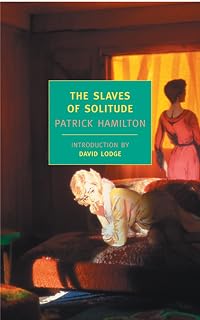
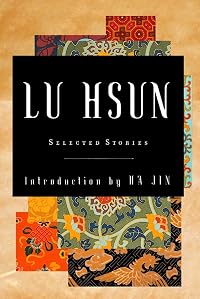
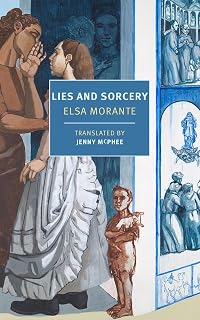
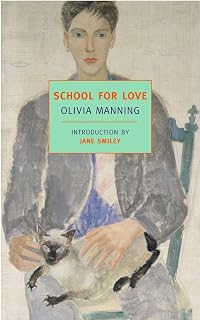

Member Recommendations
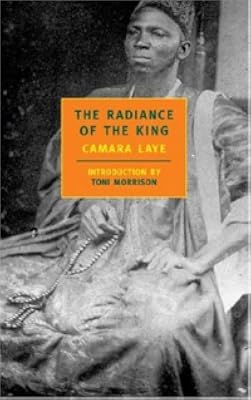
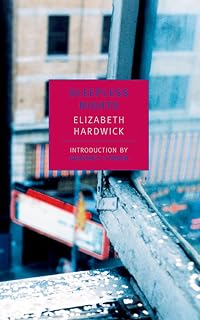
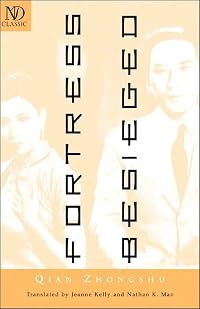
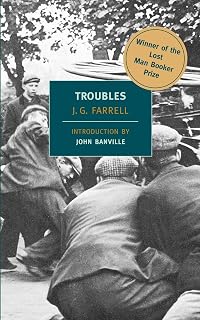
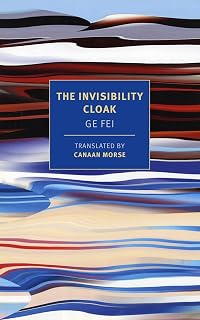
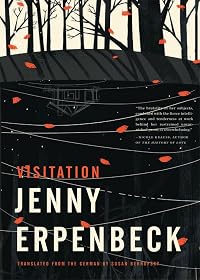
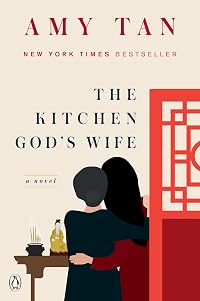
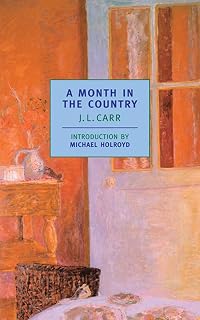
electronicmemory Fiction set in the first half of the 20th Century under the shadow of WWII, with characters tormented by things both done and undone.
Member Reviews
Although Chang carried on writing long after her move to the US, it's these cynical, pessimistic love stories from the thirties and early forties that she's best known for. The combination of the narrator's unromantic view of human nature with languid tropical backgrounds in the prosperous suburbs of Shanghai and Hong Kong makes you think of Somerset Maugham, but Chang complicates that mix further by bringing in her own experience of growing up in an upper-class Chinese family torn between extreme conservatism and the fashion for adopting Western styles of behaviour, dress and ethics. Each of the stories in this collection takes characters exposed to these forces in different combinations and ratios, and we get to see young people show more making a mess of their lives (and others) irrespective of whether it's in pursuit of money, love, pleasure, or career. Beautifully done, and there's always a strong sense that the European cocktail-cabinet culture is jut as doomed as the lifestyle of the wealthy families where the mother-in-law squelches the least sign of independence from any of her sons' wives. But you also get the feeling that Chang would be pretty good at squelching upstarts herself! show less
4.5/5
A bitter triumph both here and across the sea, for as an expatriate Chang was unjustly ignored, the only alternative to a home country banning. You'll find very little of such unsavory politickings here, an authorial choice that let her works alone before the government shifted and her wealthy background combined with lack of polemical interests chased her from Shanghai to Hong Kong and finally to LA to die alone in an apartment within my lifetime. It's a flavor of acrid living that she captured on paper even in her youthful twenties, as these stories are happiness of the trained sort, gilded robes and bound feet reminiscent of ruffled skirts and excised ribs in the land of Christians and their Boxer Rebellion. True, Shanghai is not Paris or London, Berlin or New York, but you don't need white people to play out the conflicts of modern life on a theme of hope and decadence, luxurious backdrops galore to the young choking on the old, women flying too far to forget the taste when time comes for men to clip their wings.
There's beauty, though, unfamiliar enough for me to spend a moment unraveling the colors and densities, landscapes heated to a different symphony of flora and fauna, living spaces enclosed within collections of wood and stone whose recognition comes only through many a visit to the houses of my friends, here in the Bay Area where the high school classes are 18% 'Caucasian' and the vernacular of ABC (American Born Chinese), banana (yellow on the out, white on the in), and egg (you get the picture) were the norm on campus grounds. This mix and meld of upbringing made me wish once to follow said friends on one of their summer retreats to kith and kin, a wish revitalized by what I knew within these pages and the far more that I didn't. I know my poor head for languages too well to ever hope to grasp the five thousand plus characters of the Chinese language, but the excursion would provide sorely needed grounding of contextual reality for my abstract intake, if nothing else. That, and reading The Story of the Stone, whose pervasive influence apparent even in this literature of the 20th century has shoved it forward a few hundred in the shelves.
In China, as elsewhere, the constraints imposed by the traditional moral code were originally constructed for the benefit of women: they made beautiful women even harder to obtain, so their value rose, and ugly women were spared the prospect of never-ending humiliation. Women nowadays don't have this kind of protective buffer, especially not mixed-blood girls, whose status is entirely undefined.I love Pearl S. Buck, I really do, but the way her written legacy interfered with that of Eileen Chang's is a tragedy. Readers introduced through the Nobel Prize Winner to China would expect exacting honor, high drama, sultry romance, any other conjunction of the profligating misnomer known as the 'East'; even more absurd a concept when said show more readers are US bound and must look to the west for their fill of fiction. They would not have been satisfied with these short and biting works, bred on an entirely different culture with strains more akin to Fitzgerald and O'Connor than anything the historical fiction trends of the States could conjure up. And so we left yet another author to their own devices, till when dead and gone we could sift through and lift up their works in as fitting a posthumous manner as we please.
A bitter triumph both here and across the sea, for as an expatriate Chang was unjustly ignored, the only alternative to a home country banning. You'll find very little of such unsavory politickings here, an authorial choice that let her works alone before the government shifted and her wealthy background combined with lack of polemical interests chased her from Shanghai to Hong Kong and finally to LA to die alone in an apartment within my lifetime. It's a flavor of acrid living that she captured on paper even in her youthful twenties, as these stories are happiness of the trained sort, gilded robes and bound feet reminiscent of ruffled skirts and excised ribs in the land of Christians and their Boxer Rebellion. True, Shanghai is not Paris or London, Berlin or New York, but you don't need white people to play out the conflicts of modern life on a theme of hope and decadence, luxurious backdrops galore to the young choking on the old, women flying too far to forget the taste when time comes for men to clip their wings.
There's beauty, though, unfamiliar enough for me to spend a moment unraveling the colors and densities, landscapes heated to a different symphony of flora and fauna, living spaces enclosed within collections of wood and stone whose recognition comes only through many a visit to the houses of my friends, here in the Bay Area where the high school classes are 18% 'Caucasian' and the vernacular of ABC (American Born Chinese), banana (yellow on the out, white on the in), and egg (you get the picture) were the norm on campus grounds. This mix and meld of upbringing made me wish once to follow said friends on one of their summer retreats to kith and kin, a wish revitalized by what I knew within these pages and the far more that I didn't. I know my poor head for languages too well to ever hope to grasp the five thousand plus characters of the Chinese language, but the excursion would provide sorely needed grounding of contextual reality for my abstract intake, if nothing else. That, and reading The Story of the Stone, whose pervasive influence apparent even in this literature of the 20th century has shoved it forward a few hundred in the shelves.
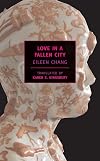
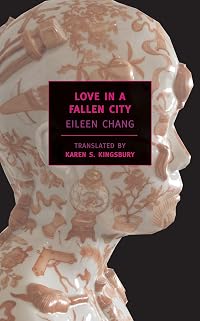
The white Liang mansion was melting viscously into the white mist, leaving only the greenish gleam of the lamplight shining through square after square of the green windowpanes, like ice cubes in peppermint schnapps. When the fog thickened, the ice cubes dissolved, and the lights went out.Keep an eye on that NYRB cover, Ah Xian's China, China: Bust 34 in profile. It conveys the book better than I ever could. show less
More emphasis on “fallen” than on “love”-- which is exactly what I like to read about! I loved getting a glimpse into the lives of the richly-depicted but utterly miserable characters in each of these stories. Chang’s settings are lush and evocative and she masterfully unravels devastating stories with a lethal poker face. Need to read more!
I put this book on my Paperbackswap wishlist ages ago (Probably from an ad in the New York Review of Books). I received it just before my train trip to Virginia, and it seemed like a good travel book, so I brought it along and ended up reading the whole thing on the outbound train. I was right -- it was a good travel book. A collection of short stories taking place in pre-WWII China & Hong Kong, it seemed a backward trip in time, as they were arranged with the most modern storyline first, each following story seeming to progress more into traditional families and characters, though I would guess all took place within a decade or two of each other in time. Although occasionally the narrators were male, the sum effect was a grim picture show more of the few options open to women in the social roles at the time. One notable exception was the story of a male college student, trapped between the contradictions of his high social class, his shame at his parents' opium addiction, and the abuse suffered at the hands of his father. But even this misery was the result of his mother's entrapment in a loveless marriage, and his tumultuous feelings had disastrous consequences for a female classmate, so perhaps it was the exception that proves the rule. Masterfully written and stereotype-defying, it would be a worthy read for any lover of literature. show less
Something very odd about the title story. Make that 2 somethings. First, here we have the couple in the Repulse Bay Hotel during the Japanese invasion ... and never have I read a flatter description of an invasion or battle scene. Many readers might not even get that that there was any fighting or death--it's that flat. Who else was staying at the hotel? What kind of conversations did they have? And what does the couple see walking home in the aftermath? I take it tha this was because the story was published in 1942-1944 in Shanghai and she had to carefully avoid censorship. But why does translator and biographer Karen Kingsbury not address this in her intro?
Second something: I love these details about proper female behavior: what's show more permissible/borderline/condemning for this class of woman? She's divorced but still living in a very traditional family, much more so than Chang or the characters in some of the other stories. So, I don't understand how she gets herself in such a compromising position with F during the initial stay in the hotel with her relatives. (And what were their motives?)
Second, since she hasn't had sex with F and she appears to have F hooked, why does she give in to him when she could probably hold out for marriage. And the very next day he announces he's off for an extended stay in England?! She isn't alarmed or surprised, as long as she's got a house and enough to live on.
I also don't know if I believe the free-ranging Indian female character with the daring wardrobe. Perhaps Chang is engaging in her own brand of Eastern exoticism? show less
Second something: I love these details about proper female behavior: what's show more permissible/borderline/condemning for this class of woman? She's divorced but still living in a very traditional family, much more so than Chang or the characters in some of the other stories. So, I don't understand how she gets herself in such a compromising position with F during the initial stay in the hotel with her relatives. (And what were their motives?)
Second, since she hasn't had sex with F and she appears to have F hooked, why does she give in to him when she could probably hold out for marriage. And the very next day he announces he's off for an extended stay in England?! She isn't alarmed or surprised, as long as she's got a house and enough to live on.
I also don't know if I believe the free-ranging Indian female character with the daring wardrobe. Perhaps Chang is engaging in her own brand of Eastern exoticism? show less
I read Love in a Fallen City and the Golden Cangue for class and loved both of them. I read the rest later and enjoyed them as well. I preferred the stories that focused on women, as the male perspectives were often much more unpleasant, which I guess makes sense. Aloeswood Incense, Love in a Fallen City, and The Golden Cangue were definitely my favorites. All three were wonderful. I also enjoyed the story Sealed Off, although it was quite short. The other two, Jasmine Tea and Red Rose, White Rose weren't necessarily bad but both had protagonists that were rude, unpleasant, and unkind to women. That's not to say the stories were bad or that the characters were poorly written. I think the way Eileen Chang writes about people is very show more believable, but that doesn't make the perspectives of unlikable characters any more pleasant to read. Overall though, as a collection I think all the stories were good and the collection is cohesive. All the stories and all the relationships within them are sad in some way. The way in which Eileen Chang writes love and despair and heartbreak is really profound. All of her stories feel tangibly real and there's something beautiful about them. I also think that my experience reading two of them in class was really beneficial because I didn't know much about this period in Chinese history at the time and although that knowledge isn't necessary to understand these stories (they really feel timeless), I think it was helpful context. show less
If I had to class this story collection somewhere, it’d be domestic fiction. The setting for several of these stories is a traditional family house in early 20thC Shanghai (and sometimes Hong Kong), shared by brothers and their wives, with assorted children, servants and slaves. The top couple is either the Patriarch and Matriarch or the eldest brother and his wife, and they rule over a strict downward hierarchy. Deviations from that setting are presented as just that: deviations from the norm.
The foreground of these stories tends to be the inner family life and how the various couples and generations jostle under the same roof, depicted almost as political factions vying for influence. Most of the focus lies on the women in the show more household -- the wives, adopted daughters, the slaves.
In the background there’s always several tensions: between the old Chinese ways and the new Western-style ways, between the fast-changing morals of the city and the stolid countryside, between societal duties and a longing (articulated or otherwise) for more female self-determination.
Domestic fiction usually isn’t my cup of tea, and while the social machinations held my interest, they didn’t grip me: the perspective was a tad too impersonal. Believe me, these are good stories; I’m glad I read them. But I don’t think I’ll be reading it again. show less
The foreground of these stories tends to be the inner family life and how the various couples and generations jostle under the same roof, depicted almost as political factions vying for influence. Most of the focus lies on the women in the show more household -- the wives, adopted daughters, the slaves.
In the background there’s always several tensions: between the old Chinese ways and the new Western-style ways, between the fast-changing morals of the city and the stolid countryside, between societal duties and a longing (articulated or otherwise) for more female self-determination.
Domestic fiction usually isn’t my cup of tea, and while the social machinations held my interest, they didn’t grip me: the perspective was a tad too impersonal. Believe me, these are good stories; I’m glad I read them. But I don’t think I’ll be reading it again. show less
Members
- Recently Added By
Published Reviews
ThingScore 100
Chang’s dramas are at heart practical ones, and they stand in an attitude caught between realism and abstraction. ... Or maybe this is just the product of writing inside an overtly determinist political history in which things must therefore seem to happen at the wrong time.
added by paradoxosalpha
Money and the scramble to get it are at the center of many of our best novels, and this is nowhere truer than in the work of Jane Austen. The financial security that Austen's heroines are always chasing is so inextricably entangled with courtship, love and marriage that one can lose sight of the pound notes (not to mention the plantation slavery) behind the lilies, lace and wedding veils.
This show more is never the case with the world Eileen Chang presents in the tales that constitute "Love in a Fallen City." Think of her as Jane Austen with the gloves off. show less
This show more is never the case with the world Eileen Chang presents in the tales that constitute "Love in a Fallen City." Think of her as Jane Austen with the gloves off. show less
added by dcozy
Lists

This is the Canon: Decolonize Your Bookshelf in 50 Books
51 works; 5 members

Literary Witches
86 works; 4 members

The China Project Book List
100 works; 2 members
Author Information

81+ Works 2,231 Members
Some Editions
Awards and Honors
Series
Belongs to Publisher Series
Work Relationships
Is a concordance to
Has as a concordance
Common Knowledge
- Canonical title
- Love in a Fallen City
- Original title
- 傾城之戀
- Original publication date
- 1943
- People/Characters
- Bai Liusu; Fan Liuyuan
- Important places
- Shanghai, China; Hong Kong
- Quotations
- From Love in a Fallen City:
Don't worry in another few years you'll be old, and anyway youth isn't worth much here. They've got youth everywhere- children born one after another, with their bright new eyes, their tend... (show all)er new mouths, their quick new wits. Time grinds on, year after year, and the eyes grow dull, the minds grow dull, and then another round of children is born.
From Love in a Fallen City:
No matter how amazing a woman is, she won't be respected by her own sex unless she's loved by a member of the opposite one. Women are petty this way.
From Love in a Fallen City:
Not until the ship had finally reached the shore did she have a chance to go up on deck and gaze out at the sea. It was a fiery afternoon, and the most striking part of the view was the pa-... (show all) rade of giant billboards along the dock, their reds, oranges, and pinks mirrored in the lush green water. Below the surface of the water, bars and blots of clashing color plunged in murderous confusion. Liusu found herself thinking that in a city of such hyperboles, even a sprained ankle would hurt more than it did in other places.
From Love in a fallen city: It was a dark scene, like an ancient Persian carpet covered with woven figures of many people-old lords, princesses, schol- ars, beautics. Draped over a bamboo pole, the carpet was being beaten, du... (show all)st flying in the wind. Blow after blow, it was beaten till the people had nowhere to hide, nowhere to go.
From Love in a fallen city:
Those legendary beauties who felled cities and kingdoms were probably all like that.
From Red Rose, White Rose:
On the floor, clusters of fallen hair swirled about like ghostly figures. It was everywhere. She was everywhere, tugging and pulling at him. - Last words
- (Click to show. Warning: May contain spoilers.)From Love in a Fallen City: I'm not the worm in your innards, I can't read your mind
(Click to show. Warning: May contain spoilers.)From Love in a Fallen City: But day after day she remained a gentleman; it was like facing a great enemy who stood perfectly still. - Blurbers
- Lee, Ang; Eugenides, Jeffrey
- Original language
- Chinese
Classifications
- Genres
- General Fiction, Fiction and Literature
- DDC/MDS
- 895.1348 — Literature & rhetoric Literatures of other languages Literatures of East and Southeast Asia Chinese Chinese fiction Song, Yuan, Ming, Qing dynasties 960–1912 Qing dynasty 1644–1912
- LCC
- PL2837 .E35 .Q5613 — Language and Literature Languages and literatures of Eastern Asia, Africa, Oceania Languages of Eastern Asia, Africa, Oceania Chinese language and literature Chinese literature Individual authors and works
- BISAC
Statistics
- Members
- 806
- Popularity
- 34,448
- Reviews
- 18
- Rating
- (3.75)
- Languages
- 6 — Catalan, Chinese, English, French, Italian, Spanish
- Media
- Paper, Ebook
- ISBNs
- 21
- ASINs
- 5