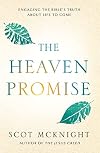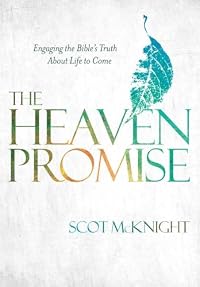
The Heaven Promise: Engaging the Bible's Truth About Life to Come
by Scot McKnight
On This Page
Description
For far too long, we've talked about heaven as if it were a dream or someplace that only exists in fairytales. We want to believe it's real, but with such an expanse of contradictory information, it's difficult to know what to believe. To add even more confusion, we are left to sift through the tales of individuals who have crossed over and returned. With so many competing narratives and accounts based on what many think are beyond-death experiences, wouldn't it be nice to have a straight show more forward examination of what the Bible has to say about heaven? Best-selling author and New Testament scholar Scot McKnight thought so too, which is why he wrote The Heaven Promise. McKnight, who has penned more than 50 books, including The Jesus Creed, has had a fascination with heaven since he was a child. As a professor of New Testament at Northern Seminary, McKnight is no stranger to academic engagement and scholarly discourse. However; as an ordained deacon, McKnight is well accustomed with the concerns of the everyday thinker. The Heaven Promise represents the perfect blend of thoughtful research coupled with an easily digestible presentation. "My hope," McKnight shares, "is that people will be hopeful about heaven." The Heaven Promise offers an infusion of hope alongside a healthy anticipation of eternity. After all, heaven isn't just a dream; it's a promise. Heaven. Eternity. The Afterlife. You mention any of these concepts, and people of all ages and from all walks of life are certain to have opinions. Maybe that's why there are so many books and movies that feature heaven-and-back experiences. But how can we know if those accounts are accurate? How can we know for sure what heaven will be like? Well, according to New Testament scholar and popular author Scot McKnight, all we need to do is to turn to Scripture to answer our questions. Separating fact from fiction, McKnight helps the reader examine the witness of God's Word in order to discover what awaits us on the other side of the grave. Using the Bible, McKnight answers the most-frequently-asked questions regarding heaven, including: 1.What about Near-Death Experiences? 2.What about Rewards in Heaven? 3.Who Will Be Allowed in Heaven? 4.Is God Fair? 5.Will There Be Families in Heaven? 6.What about Children Who Die? 7.What about Cremation? 8.What about Purgatory? 9.Will There be Pets in Heaven? 10.Why Believe in Heaven? Heaven isn't the construction of a fairytale or some mythical narrative. It's very real; it's very good; and it's very much the fulfillment of God's promise to us. show lessTags
Recommendations

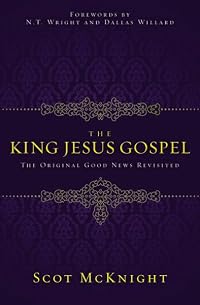
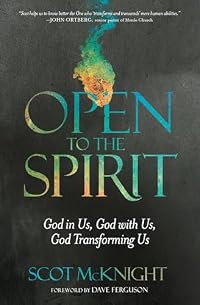
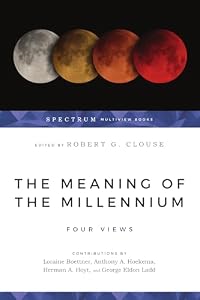
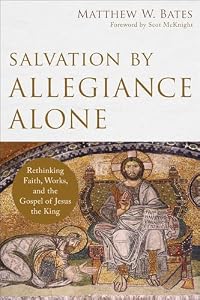













Member Reviews
Christians believe in Heaven. It is our final destination at the end of life, our After-After-Life, our great hope for eternity. Nevertheless we don't all believe the same things about it. Popular images of heaven depict a whole lot of harp playing up there on those billowy white clouds.Our images of heaven and the after life are formed from pop-culture--movies, books, comics--and medieval art and literature. In contrast, Scot McKnight wrote The Heaven Promise to give us a picture of our Christian final hope, drawn primarily from the pages of the Bible.
It was perhaps only a matter of time before McKnight tackled the topic of heaven. Several years ago, this New Testament scholar and popular blogger and author, took on Reformed show more evangelicalism for reducing the gospel 'to going to heaven when you die' (See The King Jesus Gospel). However McKnight never repudiated heaven; his problem was with the ways the gospel (and heaven) were relegated to the afterlife.
McKnight divides The Heaven Promise into four sections. Part one is essentially an introduction to the question of heaven, our assumptions about the afterlife and where we got them. Part two looks deeper on what the Bible says about heaven: that it is promised to us by God, that this promise is sealed by Jesus' death, resurrection and ascension, that a bodily resurrection awaits those who share in Christ's resurrection, and that heaven begins wherever the reign of God is. Part three unfolds six promises about heaven:
These six promises will have implications for what heaven will be like and for how we live our lives now.
Part four was the part of the book I read first. It is kind of a FAQ section. McKnight tackles ten questions people have about heaven. He answers questions about near death/out of body experiences, heavenly rewards, 'who get's in,' God's fairness, family in heaven?, children who die, cremation, purgatory and pets. In his final question "Why Believe in Heaven?" he gives a personal account of his belief in heaven.
I found this to be a well-written account of heaven grounded in biblical theology. McKnight has a gift for presenting complicated but important theological ideas in language that ordinary readers understand. In a few places, McKnight challenged my reading of particular passages and what that tells about heaven (i.e. he gives a fresh interpretation of Jesus' confrontation of the Sadducees).
McKnight doesn't simply rehash Bible verses about heaven. He talks about the implications of what our vision of heaven should have for our day-to-day life. For example, his chapter on the eternal beloved community (chapter 13) expounds on how the Bible's last book describes the end of the exploitation and injustice of Babylon. McKnight knows we aren't there yet. We live in a world with food deserts and unjust incarcerations (McKnight gives examples of each). He suggest that our heavenly vision of Justice and Shalom should cause us to seek to live out heaven now. For McKnight heaven isn't just 'pie in the sky when you die' but a vision we live towards.
This is a popular level book, so not exhaustive. You may not agree with Mcknight on every point. But if you want a book that gets you excited about heaven and presses into the implications for life, this one is great! I give it four stars.
Note: I received this book from Waterbrook Multnomah and the Blogging for Books Program in exchange for my honest review. show less
It was perhaps only a matter of time before McKnight tackled the topic of heaven. Several years ago, this New Testament scholar and popular blogger and author, took on Reformed show more evangelicalism for reducing the gospel 'to going to heaven when you die' (See The King Jesus Gospel). However McKnight never repudiated heaven; his problem was with the ways the gospel (and heaven) were relegated to the afterlife.
McKnight divides The Heaven Promise into four sections. Part one is essentially an introduction to the question of heaven, our assumptions about the afterlife and where we got them. Part two looks deeper on what the Bible says about heaven: that it is promised to us by God, that this promise is sealed by Jesus' death, resurrection and ascension, that a bodily resurrection awaits those who share in Christ's resurrection, and that heaven begins wherever the reign of God is. Part three unfolds six promises about heaven:
- God will be God (present in all his glory, majesty and power).
- Jesus will be Jesus (central to everything as a reflection of the God of heaven).
- Heaven will be a utopia of pleasures
- Heaven will be eternal life
- Heaven will be a global fellowship
- Heaven will be the eternal beloved community
These six promises will have implications for what heaven will be like and for how we live our lives now.
Part four was the part of the book I read first. It is kind of a FAQ section. McKnight tackles ten questions people have about heaven. He answers questions about near death/out of body experiences, heavenly rewards, 'who get's in,' God's fairness, family in heaven?, children who die, cremation, purgatory and pets. In his final question "Why Believe in Heaven?" he gives a personal account of his belief in heaven.
I found this to be a well-written account of heaven grounded in biblical theology. McKnight has a gift for presenting complicated but important theological ideas in language that ordinary readers understand. In a few places, McKnight challenged my reading of particular passages and what that tells about heaven (i.e. he gives a fresh interpretation of Jesus' confrontation of the Sadducees).
McKnight doesn't simply rehash Bible verses about heaven. He talks about the implications of what our vision of heaven should have for our day-to-day life. For example, his chapter on the eternal beloved community (chapter 13) expounds on how the Bible's last book describes the end of the exploitation and injustice of Babylon. McKnight knows we aren't there yet. We live in a world with food deserts and unjust incarcerations (McKnight gives examples of each). He suggest that our heavenly vision of Justice and Shalom should cause us to seek to live out heaven now. For McKnight heaven isn't just 'pie in the sky when you die' but a vision we live towards.
This is a popular level book, so not exhaustive. You may not agree with Mcknight on every point. But if you want a book that gets you excited about heaven and presses into the implications for life, this one is great! I give it four stars.
Note: I received this book from Waterbrook Multnomah and the Blogging for Books Program in exchange for my honest review. show less
This is a strange book. It is hard to figure out what the author is trying to accomplish. Is this an extended tract presenting the gospel to the unsaved? Kind of. Is this an introduction to heaven for a new believer? Kind of. Is this an informal discussion about heaven between a teacher and his students? In a few places. In the end, almost none of these purposes is fully satisfied, and the reader feels that very little was accomplished. McKnight is trying to create a foundation of agreement concerning heaven based upon the authority of the Bible, the fidelity of God's promise, the pattern of the Resurrection, the identity of heaven, and the ultimate centrality of God in Heaven. These are all well and good, but they are either so obvious show more or so brief, they really don't do a lot in explaining heaven. Through out the book, the author does offer some more concrete thoughts about heaven itself, but here disappointment continues. In this book, heaven is an evangelical left, hipster utopia where all the right injustices are corrected, all the right authors are cited, and all the right examples are praised. Heaven will be the ultimate fulfillment of every trendy evangelical desire. While McKnight is right in his advocacy of the justice of heaven, it is both overdone and unnecessary. No one doubts that the final state will be perfect and just. Our questions are all elsewhere. This book does very little to address them.
In summary, this book is not particularly helpful. It says very little that is not already widely known. It is selective in evidence and occasionally appeals to very weak evidence. The style is unremittingly trendy. There are better works on the topic. show less
In summary, this book is not particularly helpful. It says very little that is not already widely known. It is selective in evidence and occasionally appeals to very weak evidence. The style is unremittingly trendy. There are better works on the topic. show less
Ratings
Members
- Recently Added By
Author Information

107+ Works 10,925 Members
Scot McKnight is Professor of New Testament at Northern Seminary in Lisle, Illinois. He is the author of more than eighty books, including the award-winning The Jesus Creed as well as The King Jesus Gospel. A Fellowship of Differents, One Life, The Blue Parakeet, and Kingdom Conspiracy. He maintains an active blog at show more www.christianitytoday.com/scot-mcknight. He and his wife, Kristen, live in the northwest suburbs of Chicago, where they enjoy long walks, gardening, and cooking. show less
Classifications
Statistics
- Members
- 96
- Popularity
- 334,024
- Reviews
- 2
- Rating
- (3.00)
- Languages
- English
- Media
- Paper, Audiobook, Ebook
- ISBNs
- 5
- ASINs
- 1