
Joshua Ryan Butler
Author of The Skeletons in God's Closet: The Mercy of Hell, the Surprise of Judgment, the Hope of Holy War
About the Author
Joshua Ryan Butler serves as pastor of local and global outreach at Imago Dei Community, a church in the heart of Portland, Oregon. He oversees the church's city ministries in areas like foster care, human trafficking, and homelessness; and develops international partnerships in areas like clean show more water, HIV-support, and church planting. Butler is also a worship leader who enjoys writing music for the life of the church. show less
Image credit: Joshua Ryan Butler
Works by Joshua Ryan Butler
The Skeletons in God's Closet: The Mercy of Hell, the Surprise of Judgment, the Hope of Holy War (2014) 155 copies, 3 reviews
The Pursuing God: A Reckless, Irrational, Obsessed Love That's Dying to Bring Us Home (2016) 44 copies
Beautiful Union: How God's Vision for Sex Points Us to the Good, Unlocks the True, and (Sort of) Explains Everything (2023) 15 copies, 1 review
The Party Crasher: How Jesus Disrupts Politics as Usual and Redeems Our Partisan Divide (2024) 14 copies, 1 review
Tagged
Common Knowledge
- Short biography
- Joshua Ryan Butler serves as pastor of local and global outreach at Imago Dei Community, a church in the heart of Portland, Oregon, where he enjoys helping people who wrestle with some of the tough topics of the Christian faith. Joshua oversees the church's city ministries in areas like foster care, human trafficking and homelessness and develops international partnerships in areas like clean water, HIV-support and church planting. Joshua is also a worship leader who enjoys writing music for the life of the church.
Members
Reviews
The Party Crasher: How Jesus Disrupts Politics as Usual and Redeems Our Partisan Divide by Joshua Ryan Butler
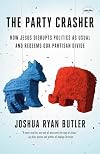
Transformative Yet Still A Touch Myopic. In centering this book around a grid that combines the traditional left/ right spectrum with "Modernity" and "Post-Modernity" as its up and down, Butler does an interesting and even transformative job of showing Americans that no matter what they think about politics and the church... they likely have some form of idolatry at play. The weakness here is the exact framing - in limiting himself to just the traditional left vs right and modern vs show more post-modern, Butler does in fact speak to a large swath of the majority. However, as Jason Blakley's Lost In Ideology - which will release almost a full month *after* this particular book hits bookshelves - shows, there is actually quite a bit more nuance and flux within the "traditional" ideologies than many - including, clearly, Butler here - think. So one can't really fault Butler for not having read a book at the time of writing this one that won't even be published until *after* this book itself is. ;) But the point remains, for those of us able to read both books close together, as I have been even months before either releases to the public. (Yes, making these Advance Reader Copies.) Furthermore, this framing also largely excludes more minority political views that don't abide by the usual L/R spectrum nor the up/ down system Butler uses here.
Overall though, this is yet another of those books that, particularly going into a Presidential election year with all of the hand-wringing, arguments, and outright vitriol that includes in the modern era of American politics (and every era, according to other works I reviewed a few years ago such as James Morone's Republic Of Wrath), every single member of every single American Church - no matter the individual's politics or the church's faith traditions - *needs* to read. Short at just 220 or so pages - over 22% of that being bibliography and discussion questions - this is written in a fairly conversational style such that one could easily envision Butler speaking this entire book into existence over the course of probably a couple of months or so of sermons. The included discussion questions, both at the end of each chapter and at the end of the book, foster a great deal of introspection and, in the case of groups, discussion, and could genuinely go quite a way to at least moderating the vitriol of this and hopefully future campaigns.
Ultimately truly a remarkable work, one that sadly will likely be review bombed by haters of Butler's (also excellent, fwiw) prior work (and indeed already has a one star on Goodreads from a known review bomber who could not possibly have read this book, yet which Goodreads refuses to remove for several weeks now prior to the writing of this review). But read it for yourself, and make your own conclusions. Very much recommended. show less
Overall though, this is yet another of those books that, particularly going into a Presidential election year with all of the hand-wringing, arguments, and outright vitriol that includes in the modern era of American politics (and every era, according to other works I reviewed a few years ago such as James Morone's Republic Of Wrath), every single member of every single American Church - no matter the individual's politics or the church's faith traditions - *needs* to read. Short at just 220 or so pages - over 22% of that being bibliography and discussion questions - this is written in a fairly conversational style such that one could easily envision Butler speaking this entire book into existence over the course of probably a couple of months or so of sermons. The included discussion questions, both at the end of each chapter and at the end of the book, foster a great deal of introspection and, in the case of groups, discussion, and could genuinely go quite a way to at least moderating the vitriol of this and hopefully future campaigns.
Ultimately truly a remarkable work, one that sadly will likely be review bombed by haters of Butler's (also excellent, fwiw) prior work (and indeed already has a one star on Goodreads from a known review bomber who could not possibly have read this book, yet which Goodreads refuses to remove for several weeks now prior to the writing of this review). But read it for yourself, and make your own conclusions. Very much recommended. show less
Beautiful Union: How God's Vision for Sex Points Us to the Good, Unlocks the True, and (Sort of) Explains Everything by Joshua Ryan Butler
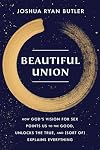
Proposing A New View Of Sexual Ethics. This book is remarkably well written and remarkably well balanced, one that no matter your views on any sex or gender related topic, at some point here you're most likely going to fall into the classic preacher joke of "Woah, woah, woah, preacher! You're stepping on my toes!" "I apologize, my [brother/ sister] in Christ. I was aiming for your heart." (and/ or, in this case, the brain as well) :D In other words, no matter your views on these topics show more coming into this book, there are more than likely going to be things you're wholeheartedly agreeing with... and others that are likely going to make you want to throw the book out of the nearest window. For those who have routinely been condemned by existing Christian ethics, know that there is no condemnation here - indeed, Butler spends a fair amount of time examining exactly what Paul was doing in Romans, one of the oft-cited condemnation passages, and explains how it doesn't really directly apply to sexual issues, but to *all* issues. And yet, at the very same time, Butler does not shy away from the idea that homosexuality is a perversion of God's perfect design and intention, and explains a new view of exactly why he still holds to this position. Ignoring Frank Viola's Parable Of Marvin Snurdley, Butler does a truly remarkable and seemingly thorough job of looking at all issues surrounding sex and gender and shows that traditional views are the closest to being correct... though not always the closest in actual reasoning or in explaining *why* they are correct, which is something he seeks to change here. Oh, and those who have read Ted Dekker's Circle Series are likely to notice some similar language. Indeed, while it is unknown to me if Butler had ever read this particular (somewhat famous in Christian circles) series, Butler here truly elevates and grounds some of the concepts Dekker explores particularly early in that series.
The single star deduction is for prooftexting, which while not *as* prevalent here and while Butler *mostly* explains the full contexts of the passages he spends extended time with (such as the creation account in Genesis and the aforementioned passage of Romans, among a few others), he *does* still engage in citing Biblical verses out of context at times in "support" of some point or another, and I am on a one-man-war to eradicate this practice everywhere I see it. In book reviews, my only weapon is the single star deduction, and thus I apply it in all cases where I notice the problem.
Ultimately this is a book that will prove highly controversial, and yet it is also a book that truly everyone, particularly those who consider themselves "thinkers" or "educated" or "learned" or some such, will need to at least read and consider. Very much recommended. show less
The single star deduction is for prooftexting, which while not *as* prevalent here and while Butler *mostly* explains the full contexts of the passages he spends extended time with (such as the creation account in Genesis and the aforementioned passage of Romans, among a few others), he *does* still engage in citing Biblical verses out of context at times in "support" of some point or another, and I am on a one-man-war to eradicate this practice everywhere I see it. In book reviews, my only weapon is the single star deduction, and thus I apply it in all cases where I notice the problem.
Ultimately this is a book that will prove highly controversial, and yet it is also a book that truly everyone, particularly those who consider themselves "thinkers" or "educated" or "learned" or some such, will need to at least read and consider. Very much recommended. show less
The Skeletons in God's Closet: The Mercy of Hell, the Surprise of Judgment, the Hope of Holy War by Joshua Ryan Butler
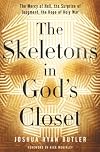
A special thank you to Thomas Nelson--W Publishing and NetGalley for an ARC in exchange for an honest review. (nice cover)
The Skeletons in God’s Closet, The Mercy of Hell, the Surprise of Judgment, the Hope of Holy War is an insightful and thought-provoking book, packed with tough questions, fresh ideas with profound and enlightening perspectives to age old thinking about heaven, earth, and hell, written by talented, Joshua Ryan Butler.
Wow, this is one powerful and eye-opening book; one show more you cannot rush through or skip around. Since this is an ARC, I definitely want to purchase a copy for reference, to refer to often, as I found myself bookmarking something on almost every page. There is so much here to grasp, with extensive research and references to scriptures, with profound meaning. Set aside some time. The closet is heavy. Opening the door is intimidating. Our culture is asking questions, and many of our answers are within the pages of this well-written book.
God seems to want to keep the closet door open. God keeps flinging it wide open and inviting us to look inside as much as we may keep trying to shut it. We think God has some skeletons in the closet. At least, that’s what many of us fear. God’s skeletons are those deep, dark doctrines we’d rather avoid. Hell. Judgement. Holy war. Those parts of God’s story that, if we really took a close look at, we’re afraid would radically change the way we feel about Him.
In the meantime, our faith grow lukewarm and stale as we go through the motions of church services and verbal assent, while our hearts stay distant and unengaged. Regardless, God’s closet door doesn’t seem to stay shut.
The tough topics explored in THE SKELTONS IN GOD’S CLOSET are powerfully and profoundly relevant to life in our contemporary culture. These are not just pieces of the Christian faith we can learn to live with; they are profound plotlines in the story of the whole we literally cannot live without.
GOD IS GOOD! This is the central message and driving theme of the book. Not just sometimes good, but extravagantly, mercifully, gloriously, better than we can ask or imagine good. All the time!
As Butler points out, not only does God NOT have skeletons, God himself is good in his very bones; not just in what he does, but in who he is, not only in his actions but in the architecture of his character, the beauty of his being, the depths of his divine affection for the world.
Heaven and earth are the setting, the context, the stage, in which the ensuring drama of human history is about to unfold. It is not absent from the world, waiting to make its entrance only at the end of history. Heaven is a part of God’s creation here and now.
Heaven and earth-not heaven and hell-are counterparts, created with and for each other, and bound together in inseparable relationship. Hell is not part of God’s creation. Hell does not show up until later. Sin, death, and hell, when they do enter the story, are presented not as good things, created by God, but rather as invasive intruders into God’s good world.
GOD Is on a mission to get the hell out of earth! This is where the author breaks down the each story and meanings are remarkably different.
In the first story, the problematic one, this phrase means that God is on a mission to abandon the earth, to “get the hell out of Dodge,” and take a bunch of us with him. In the construal, Jesus and his followers are on a mission to escape the world, to make a break for our heavenly home and leave this mess behind. Unfortunately, Christianity has at times-especially in recent times-framed things this way and in doing so, horribly distorted the gospel story. The phrase also can be taken a second way.
In the second story, told-the biblical one, it can be taken to mean that God cares deeply for his world, that the Creator loves his creation, that our heavenly Father has dramatic compassion for the humanity he has brought up from the dust. In the second story, it means that God is grieved by the sin, death, and power of hell that afflicts the world, and he is sacrificially involved in the removal of all that destroys and alienates his world from himself.
A different take when God’s agenda is to get the hell out of earth (meaning reconciling Heaven and earth). What do they need to be reconciled from? From the divisive and destructive powers that have caused the problem in the first place.
In the gospel story, heaven and earth are currently torn by sin. Our world is being ravaged by the destructive power of hell. God is not the one who unleashes hell’s destruction, we are. In the Biblical story, we are the author’s of hell’s fury. God does not create the power of hell; we do. God does not rape kids and murder his neighbors; we do. God is not the one with skeletons in his closet; we are.
The Game Changer: So what happened between the Old and new Testaments to change all this? What was the catalyst that moved hell’s location from underground to outside the city? What was the game changer that shifted our fate from an unconscious death to being raised in life?
The answer: the resurrection of Christ. All will be raised!
Jesus resurrection is like that: it shifts our fate from unconscious death to risen life. Death can no longer hold him. And Death can no longer hold us. Though Him all will be raised. This is not a skeleton in God’s closet; this is God’s good response to our skeletons in the ground. Jesus is victorious over the grave.
God does not ask us, “Are you good enough to get into my kingdom?” He asks us instead, “Will you let me heal you?” this is the radical message at the center of the gospel of grace; not our works but his grace, not our behavior but his mercy. He wants to heal us. The question is whether we will let him, whether we will receive his healing.
God is good. Gloriously good. It is God’s goodness that gives rise to reconciliation; as hope for the fragmentation we have inflicted upon his world. And it is his goodness that gives rise to restoration; as hope amid the destruction we have unleashed in his glorious world. Resurrection. Reconciliation. Restoration. He is coming for His world.
Highly recommend to anyone of any religion or culture, wanting to learn more!
Judith D. Collins Must Read Books show less
The Skeletons in God’s Closet, The Mercy of Hell, the Surprise of Judgment, the Hope of Holy War is an insightful and thought-provoking book, packed with tough questions, fresh ideas with profound and enlightening perspectives to age old thinking about heaven, earth, and hell, written by talented, Joshua Ryan Butler.
Wow, this is one powerful and eye-opening book; one show more you cannot rush through or skip around. Since this is an ARC, I definitely want to purchase a copy for reference, to refer to often, as I found myself bookmarking something on almost every page. There is so much here to grasp, with extensive research and references to scriptures, with profound meaning. Set aside some time. The closet is heavy. Opening the door is intimidating. Our culture is asking questions, and many of our answers are within the pages of this well-written book.
God seems to want to keep the closet door open. God keeps flinging it wide open and inviting us to look inside as much as we may keep trying to shut it. We think God has some skeletons in the closet. At least, that’s what many of us fear. God’s skeletons are those deep, dark doctrines we’d rather avoid. Hell. Judgement. Holy war. Those parts of God’s story that, if we really took a close look at, we’re afraid would radically change the way we feel about Him.
In the meantime, our faith grow lukewarm and stale as we go through the motions of church services and verbal assent, while our hearts stay distant and unengaged. Regardless, God’s closet door doesn’t seem to stay shut.
The tough topics explored in THE SKELTONS IN GOD’S CLOSET are powerfully and profoundly relevant to life in our contemporary culture. These are not just pieces of the Christian faith we can learn to live with; they are profound plotlines in the story of the whole we literally cannot live without.
GOD IS GOOD! This is the central message and driving theme of the book. Not just sometimes good, but extravagantly, mercifully, gloriously, better than we can ask or imagine good. All the time!
As Butler points out, not only does God NOT have skeletons, God himself is good in his very bones; not just in what he does, but in who he is, not only in his actions but in the architecture of his character, the beauty of his being, the depths of his divine affection for the world.
Heaven’s primary counterpart in the gospel story is not hell; it is earth. Heaven and earth are threaded throughout the Biblical drama of creation, rebellion, and redemption.
* Heaven and earth are created by God
* Heaven and earth are torn by sin
* Heaven and earth are destined for reconciliation
Heaven and earth are the setting, the context, the stage, in which the ensuring drama of human history is about to unfold. It is not absent from the world, waiting to make its entrance only at the end of history. Heaven is a part of God’s creation here and now.
Heaven and earth-not heaven and hell-are counterparts, created with and for each other, and bound together in inseparable relationship. Hell is not part of God’s creation. Hell does not show up until later. Sin, death, and hell, when they do enter the story, are presented not as good things, created by God, but rather as invasive intruders into God’s good world.
GOD Is on a mission to get the hell out of earth! This is where the author breaks down the each story and meanings are remarkably different.
In the first story, the problematic one, this phrase means that God is on a mission to abandon the earth, to “get the hell out of Dodge,” and take a bunch of us with him. In the construal, Jesus and his followers are on a mission to escape the world, to make a break for our heavenly home and leave this mess behind. Unfortunately, Christianity has at times-especially in recent times-framed things this way and in doing so, horribly distorted the gospel story. The phrase also can be taken a second way.
In the second story, told-the biblical one, it can be taken to mean that God cares deeply for his world, that the Creator loves his creation, that our heavenly Father has dramatic compassion for the humanity he has brought up from the dust. In the second story, it means that God is grieved by the sin, death, and power of hell that afflicts the world, and he is sacrificially involved in the removal of all that destroys and alienates his world from himself.
A different take when God’s agenda is to get the hell out of earth (meaning reconciling Heaven and earth). What do they need to be reconciled from? From the divisive and destructive powers that have caused the problem in the first place.
In the gospel story, heaven and earth are currently torn by sin. Our world is being ravaged by the destructive power of hell. God is not the one who unleashes hell’s destruction, we are. In the Biblical story, we are the author’s of hell’s fury. God does not create the power of hell; we do. God does not rape kids and murder his neighbors; we do. God is not the one with skeletons in his closet; we are.
The Game Changer: So what happened between the Old and new Testaments to change all this? What was the catalyst that moved hell’s location from underground to outside the city? What was the game changer that shifted our fate from an unconscious death to being raised in life?
The answer: the resurrection of Christ. All will be raised!
Jesus resurrection is like that: it shifts our fate from unconscious death to risen life. Death can no longer hold him. And Death can no longer hold us. Though Him all will be raised. This is not a skeleton in God’s closet; this is God’s good response to our skeletons in the ground. Jesus is victorious over the grave.
God does not ask us, “Are you good enough to get into my kingdom?” He asks us instead, “Will you let me heal you?” this is the radical message at the center of the gospel of grace; not our works but his grace, not our behavior but his mercy. He wants to heal us. The question is whether we will let him, whether we will receive his healing.
God is good. Gloriously good. It is God’s goodness that gives rise to reconciliation; as hope for the fragmentation we have inflicted upon his world. And it is his goodness that gives rise to restoration; as hope amid the destruction we have unleashed in his glorious world. Resurrection. Reconciliation. Restoration. He is coming for His world.
Highly recommend to anyone of any religion or culture, wanting to learn more!
Judith D. Collins Must Read Books show less
The Skeletons in God's Closet: The Mercy of Hell, the Surprise of Judgment, the Hope of Holy War by Joshua Ryan Butler
Overall premise was not bad, it was quite good actually. The book is really intended for people that buy into the "caricatures" of Biblical themes (i.e. Satan as a red guy with a tail and pitchfork), but was, at times, a bit frustrating to read for someone who does not buy into them.
I'm convinced the author is Arminian, but with flashes of Reformed thoughts. Occasionally there were things that I found out of line with orthodoxy, but with much grace most could be "explained away".
Very good show more writer, easy to read. show less
I'm convinced the author is Arminian, but with flashes of Reformed thoughts. Occasionally there were things that I found out of line with orthodoxy, but with much grace most could be "explained away".
Very good show more writer, easy to read. show less
You May Also Like


Statistics
- Works
- 5
- Members
- 237
- Popularity
- #95,613
- Rating
- 3.8
- Reviews
- 5
- ISBNs
- 12