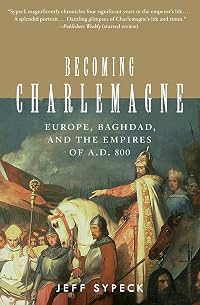
Becoming Charlemagne: Europe, Baghdad, and the Empires of A.D. 800
by Jeff Sypeck
On This Page
Description
In the year 800, Pope Leo III placed the crown of imperial Rome on a Germanic king named Karl. Thus, the man later hailed as Charlemagne claimed his empire and forever shaped the destiny of Europe. Transporting readers far beyond Europe to the glittering palaces of Constantinople and the streets of medieval Baghdad, this far-ranging book shows how the Frankish king and his wise counselors built an empire not only through warfare but also by careful diplomacy. With consummate political skill, show more Charlemagne partnered with a scandal-ridden pope, fended off a ruthless Byzantine empress, nurtured Jewish communities in his empire, and fostered ties with a famous Muslim caliph. For 1,200 years, the deeds of Charlemagne captured the imagination of his descendants, inspiring kings and crusaders, the conquests of Napoleon and Hitler, and the optimistic architects of the European Union.--From publisher description. show lessTags
Recommendations












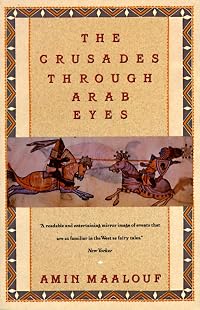
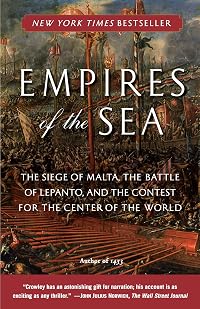


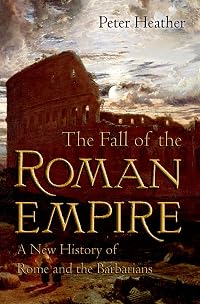
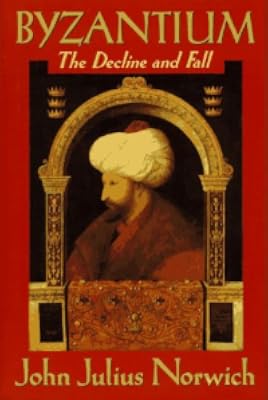







Member Reviews
A massmarket history which is written in horribly overblown and overdramatised prose, to bulk out a shortage of data. The subject should be fascinating and I wanted to read this but found it unreadable. Though a drinking game might be made out of the plethora of adjectives. So far the merchants have been..(cackling) the jews (wistful) the romans (haughty) the princesses (amorous; these are Charlemagne's daughters, the hussies) and the franks (brutish) I would like some nouns to be with adjectives left off.
Becoming Charlemagne mostly concerns the Frankish King Karl who ruled a considerable part of Europe and who was crowned Emperor in Rome by Pope Leo on Christmas morning in 800 A.D. This is not so much a biography as a snapshot of Karl and his kingdom in the years just before and after this momentous event. Also, we have similar snapshots of the other two major empires of the time and how they interacted. There is also some discussion about the way legends grew up around him so that he was remembered as Charles the Great or Charlemagne, especially in contrast to his not so great heirs.
There were a lot of interesting stories in Sypeck's narrative along with many quotes from sources contemporary to Karl. Many of the characters were ones show more unfamiliar to me and I particularly liked the story of Isaac's diplomatic mission to Baghdad and his return with an elephant in tow. A nice introduction for those who know little about this period in history. show less
There were a lot of interesting stories in Sypeck's narrative along with many quotes from sources contemporary to Karl. Many of the characters were ones show more unfamiliar to me and I particularly liked the story of Isaac's diplomatic mission to Baghdad and his return with an elephant in tow. A nice introduction for those who know little about this period in history. show less
This short history is more a summary of Charlemagne's life and an outline of the state of Europe, Byzantium and the Muslim world around the year 800 AD than it is an exploration of the process by which Karl, king of the Franks, became the legendary Charlemagne. It is, however, a great read, with interesting details and stories that made the people and places in the book seem very real.
This is a popular account of the years around 800 when Charlemagne was crowned emperor. It cuts between scenes with Charlemagne, scenes with the Empress Irene of Byzantium, and scenes with the Caliph Harun al-Rashid in Bagdad. There is a focus on the embassy of Isaac the Jew from Charlemagne to Harun and Isaac's return with the gift of an elephant. I had known of the episode but I had not realized the poor elephant managed to survive close to a decade in Germany.
This book describes in very cursory fashion the rise of Charlemagne. Although the author tried very hard to couch this story in an exciting, non-academic, way, his efforts failed for me. The story is set against the background of Catholic Rome, Byzantine Constantinople and Abbasid Baghdad, but these tantalizing settings wind up as backdrops rather than critical parts of the tale.
Describes the rise of Charlemagne, his relations with the Abbasid Empire based in Baghdad and the Byzantine in Constantinople. Written in non-academic style, more as historical novel stylistically, at a quite general level. Some interesting points but more analysis would have made it more interesting. It's a quick read though.
Ratings
Members
- Recently Added By
Lists

Books Read in 2015
3,299 works; 129 members
Author Information

4 Works 292 Members
Common Knowledge
- Original publication date
- 2006
- People/Characters
- Charlemagne; Pope Leo; Irene, Empress of Byzantium; Harun al-Rachid; Alcuin; Isaac
- Important places
- Aachen, North Rhine-Westphalia, Germany; Rome, Italy; Constantinople, Byzantine Empire; Baghdad, Iraq
- Important events
- Coronation of Charlemagne (800-12-25)
- First words
- A foreigner had come to their city, so the Romans were curious.
- Last words
- (Click to show. Warning: May contain spoilers.)"They disintegrated into dust."
Classifications
- Genres
- History, Nonfiction, General Nonfiction, Biography & Memoir, Religion & Spirituality
- DDC/MDS
- 944.0142092 — History & geography History of Europe France and Monaco France Early history -987 751-987
- LCC
- DC73 .S94 — History of Europe, Asia, Africa and Oceania France – Andorra – Monaco History of France History By period Early and medieval to 1515 476-1328. Merovingians. Carlovingians. Capetians
- BISAC
Statistics
- Members
- 274
- Popularity
- 117,361
- Reviews
- 6
- Rating
- (3.25)
- Languages
- English
- Media
- Paper, Audiobook, Ebook
- ISBNs
- 6
- ASINs
- 2