
The Structure of Scientific Revolutions
by Thomas S. Kuhn
On This Page
Description
First published in 1962, Thomas Kuhn's The Structure of Scientific Revolutions "reshaped our understanding of the scientific enterprise and human inquiry in general." In it, he challenged long-standing assumptions about scientific progress, arguing that transformative ideas don't arise from the gradual process of experimentation and data accumulation, but instead occur outside of "normal science." Though Kuhn was writing when physics ruled the sciences, his ideas on how scientific show more revolutions bring order to the anomalies that amass over time in research experiments are still instructive in today's biotech age (Science). This new edition of Kuhn's essential work includes an insightful introduction by Ian Hacking, which clarifies terms popularized by Kuhn, including "paradigm" and "incommensurability," and applies Kuhn's ideas to the science of today. Usefully keyed to the separate sections of the book, Hacking's introduction provides important background information as well as a contemporary context. This newly designed edition also includes an expanded and updated index. show lessTags
Recommendations


















Member Recommendations

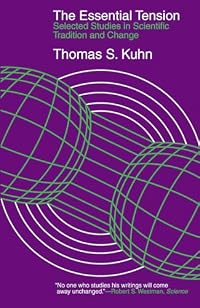
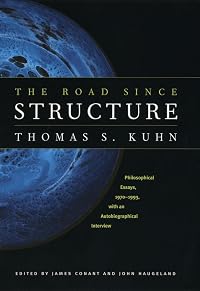
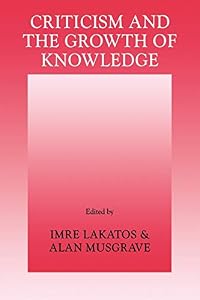
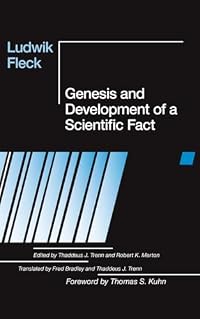
thcson Toulmin gives a good critique of Kuhn and discusses the history of scientific concepts from an evolutionary point of view. He utilizes the history of science in much the same way.

Thruston The nature of the scientific process set out in Kuhn's masterly account, is one of the central themes in Miller's entertaining history of medicine and the way humans perceive themselves.
11
Member Reviews
This is a book that I've wanted to read ever since college. I was reading it when I started medical school, but studies soon overtook me. It's a history of science. Rather, it's a philosophical theory on how science progresses through history. From Newton and chemistry to Darwin and quantum mechanics, it tells the story of how science moves forward.
This progress is, as Kuhn tells it, not entirely linear. Often scientists will disagree about "paradigm shifts" among scientific theories. Often, the older generation does not embrace a new paradigm (or exemplar) entirely. Only a new generation will bring a new theory into dominance while the holdouts disappear to the wayside. Sometimes, famous scientists are the holdouts (as was seen, say, show more with the discovery of oxygen).
Scientific paradigms are groups of practices, people, and ways of thinking about the world. Paradigms are not right and wrong (true to Kuhn's linguistic form, in which field he taught at MIT). Paradigms are instead expressive.
Paradigms are established often by young people new to the field who reorganize it in light of other learning. These revolutions only rarely succeed, but when they do, textbooks are changed. Thus, the next generation embraces the new paradigm. Unlike other fields of knowledge, textbooks take central place in this story.
From there, normal science (non-paradigm-shifting science) rules. In normal science, people work on solving "puzzles" within existing paradigms. When a new paradigm comes about, these puzzles shift to address new issues. Originally, a "crisis" occurs in the scientific community as to whether to embrace the new ways of thinking. When the positives of the new situation outweigh the old paradigm, a shift occurs, and work continues in the new paradigm.
As such Aristotle need not be viewed as ignorant or unhelpful vis-a-vis Isaac Newton - or Newton, vis-a-vis Albert Einstein. They are just different paradigms that express their findings differently. Many might complain that this takes truth out of science in favor of a sophisticated relativity, and it does. Nonetheless, it redeems the past and the history of science. By studying history (one of my favorite past times), we grow in our creative knowledge. I like this, and I like the way Kuhn thinks.
Kuhn reminds me of how Christians think about conversion. There is a "crisis" (cf. Karl Barth) and a conversion to a new paradigm. This has occurred over and over again in theological history. Why not see this essentially human practice in science, too? show less
This progress is, as Kuhn tells it, not entirely linear. Often scientists will disagree about "paradigm shifts" among scientific theories. Often, the older generation does not embrace a new paradigm (or exemplar) entirely. Only a new generation will bring a new theory into dominance while the holdouts disappear to the wayside. Sometimes, famous scientists are the holdouts (as was seen, say, show more with the discovery of oxygen).
Scientific paradigms are groups of practices, people, and ways of thinking about the world. Paradigms are not right and wrong (true to Kuhn's linguistic form, in which field he taught at MIT). Paradigms are instead expressive.
Paradigms are established often by young people new to the field who reorganize it in light of other learning. These revolutions only rarely succeed, but when they do, textbooks are changed. Thus, the next generation embraces the new paradigm. Unlike other fields of knowledge, textbooks take central place in this story.
From there, normal science (non-paradigm-shifting science) rules. In normal science, people work on solving "puzzles" within existing paradigms. When a new paradigm comes about, these puzzles shift to address new issues. Originally, a "crisis" occurs in the scientific community as to whether to embrace the new ways of thinking. When the positives of the new situation outweigh the old paradigm, a shift occurs, and work continues in the new paradigm.
As such Aristotle need not be viewed as ignorant or unhelpful vis-a-vis Isaac Newton - or Newton, vis-a-vis Albert Einstein. They are just different paradigms that express their findings differently. Many might complain that this takes truth out of science in favor of a sophisticated relativity, and it does. Nonetheless, it redeems the past and the history of science. By studying history (one of my favorite past times), we grow in our creative knowledge. I like this, and I like the way Kuhn thinks.
Kuhn reminds me of how Christians think about conversion. There is a "crisis" (cf. Karl Barth) and a conversion to a new paradigm. This has occurred over and over again in theological history. Why not see this essentially human practice in science, too? show less
I first heard the term "paradigm shift" and was detailed on the concept of the scientific revolution my freshman year of high school in "World Cultures" class. The idea has since lurked in my mind-- much as it has in culture, I think. But it took twelve years and a philosophy of science seminar to get around to reading it.
Kuhn's work is immediately incredible. Though it's probably not always right, it's not always right in the way that most big ideas are, because it's so big that there can't not be tons of little exceptions to what he says and how he says it. His model of science, as a series of paradigms that shift but don't necessarily become more truthful, just more useful, is immediately persuasive. I especially liked what show more he said about the action of "normal science," the science that happens between paradigms. Despite the fact that scientists know that major theories are overturned throughout history and will be overturned again, they all proceed as though science has been settled and do these small tiny experiments.
I also liked his concept of "paradigm vision" (I don't think he calls it this exactly, but I do), that scientists see the world through the lens of their paradigms, and indeed, often find it impossible to bridge the gap between paradigms because it affects the language they uses. I thought of the Pluto-is-a-planet thing when reading this section; some people cannot believe that Pluto is not a planet because they see the world in such a way that the word "planet" means something that includes Pluto. How could they possibly accept that it is not a planet?
Of course, Kuhn's ideas are more applicable to physics than other sciences, and rejecting the sciences they don't fit as "immature" is probably not the right solution, but that doesn't stop it from being interesting. I am kinda disgruntled that Kuhn added an afterword in 1969 to deal with criticisms that had been lobbed at it, instead of actually integrating the criticisms into the main text. But on the other hand, I'm glad that his response to that criticism can be safely contained in one chapter because the criticisms are all such nitpicky philosophy of science bullshit. show less
Kuhn's work is immediately incredible. Though it's probably not always right, it's not always right in the way that most big ideas are, because it's so big that there can't not be tons of little exceptions to what he says and how he says it. His model of science, as a series of paradigms that shift but don't necessarily become more truthful, just more useful, is immediately persuasive. I especially liked what show more he said about the action of "normal science," the science that happens between paradigms. Despite the fact that scientists know that major theories are overturned throughout history and will be overturned again, they all proceed as though science has been settled and do these small tiny experiments.
I also liked his concept of "paradigm vision" (I don't think he calls it this exactly, but I do), that scientists see the world through the lens of their paradigms, and indeed, often find it impossible to bridge the gap between paradigms because it affects the language they uses. I thought of the Pluto-is-a-planet thing when reading this section; some people cannot believe that Pluto is not a planet because they see the world in such a way that the word "planet" means something that includes Pluto. How could they possibly accept that it is not a planet?
Of course, Kuhn's ideas are more applicable to physics than other sciences, and rejecting the sciences they don't fit as "immature" is probably not the right solution, but that doesn't stop it from being interesting. I am kinda disgruntled that Kuhn added an afterword in 1969 to deal with criticisms that had been lobbed at it, instead of actually integrating the criticisms into the main text. But on the other hand, I'm glad that his response to that criticism can be safely contained in one chapter because the criticisms are all such nitpicky philosophy of science bullshit. show less
While I found ‘The Structure of Scientific Revolutions’ thoughtful and interesting, it wasn't as transformative as I expected. My mum recommended it to me as a mind-changing book, yet I felt similarly to the author in his 1969 postscript: ‘To the extent that the book portrays scientific development as a succession of tradition-bound periods punctuated by non-cumulative breaks, its theses are undoubtedly of wide applicability. But they should be, for they are borrowed from other fields. Historians of literature, of music, of the arts, of political development, and of many other human activities have long described their subjects in the same way’.
Thus I found Kuhn’s analysis of science’s non-linear progression to be a cogent show more application of familiar concepts to a new disciplinary context. The writing is very careful and precise, making it rather ponderous to read while also aiding understanding. For the non-scientist, I felt the most important point was that textbooks and popular science books elide and simplify the nature of scientific discovery. While this is by no means malicious, it gives a somewhat misleading impression of cumulative linear progress. Kuhn explores a number of ways and draws on many examples (including the question of when oxygen was discovered) to argue that this is not actually how things work. To wit, ‘The scientists of earlier ages are implicitly represented as having worked upon the same set of fixed problems and in accordance with the same set of fixed canons that the most recent revolution in scientific theory and method has made seem scientific’.
What particularly impressed me about the book was Kuhn’s use of the word ‘paradigm’ in a genuinely meaningful manner. Rarely has there been a more misused word, in the social science and policy worlds at least. I keep a tally of how many times it is used in meetings and documents, with more than three instances a definite indicator of that bullshit's afoot. Here, however, the term is discussed and defined clearly:
I found Kuhn’s thesis a convincing and helpful structure for understanding how science has happened over centuries. It brings up many thought-provoking questions, such as how language mediates observations:
Another fascinating question is how the revolutionary shift from one paradigm to another occurs:
A third and very fundamental question that Kuhn raises without dwelling on is whether science needs a final goal. This he links neatly with one of the most controversial aspects of Darwin’s theory of evolution: that it has no end in mind, no higher plan. As the book puts it, ‘The Origin of the Species recognised no goal set by God or nature.’ Progress, argues Kuhn, does not require such a goal to be articulated. The question is nonetheless a fascinating one, as it raises the issue of more specific goals in specific scientific fields and whether they add up to a consistent pattern. Writing in the 1960s, it’s a little surprising that Kuhn never mentions the prosaic military goals of science during the Cold War. Today, research across the disciplines has been infected with the need for outputs to be monetised somehow, or to have semi-plausible commercial potential. Although these goals may be imposed upon scientific institutions from outside, over the decades they must have been internalised to some extent. From a more idealistic perspective, some might state the goal of science as ‘to make the world a better place by increasing our understanding of it’. That is tantamount to inviting a bunch of social scientists (like me) into your lab to argue for hours about what is meant by better, for whom, when, how, etc, etc, etc.
The interdisciplinary nature of ‘The Structure of Scientific Revolutions’ has ensured that it remains relevant and thought-provoking fifty years after first publication. It certainly isn’t a fast read and I had to go over quite a few sentences twice to be clear about what Kuhn was saying. Nonetheless, there is a lot to consider packed into a small space. show less
Thus I found Kuhn’s analysis of science’s non-linear progression to be a cogent show more application of familiar concepts to a new disciplinary context. The writing is very careful and precise, making it rather ponderous to read while also aiding understanding. For the non-scientist, I felt the most important point was that textbooks and popular science books elide and simplify the nature of scientific discovery. While this is by no means malicious, it gives a somewhat misleading impression of cumulative linear progress. Kuhn explores a number of ways and draws on many examples (including the question of when oxygen was discovered) to argue that this is not actually how things work. To wit, ‘The scientists of earlier ages are implicitly represented as having worked upon the same set of fixed problems and in accordance with the same set of fixed canons that the most recent revolution in scientific theory and method has made seem scientific’.
What particularly impressed me about the book was Kuhn’s use of the word ‘paradigm’ in a genuinely meaningful manner. Rarely has there been a more misused word, in the social science and policy worlds at least. I keep a tally of how many times it is used in meetings and documents, with more than three instances a definite indicator of that bullshit's afoot. Here, however, the term is discussed and defined clearly:
Our most recent examples show that paradigms provide scientists not only with a map but also with some of the directions essential for map-making. In learning a paradigm the scientist acquires theory, methods, and standards together, usually in an inextricable mixture. Therefore, when paradigms change, there are usually significant shifts in the criteria determining the legitimacy both of problems and proposed solutions.
I found Kuhn’s thesis a convincing and helpful structure for understanding how science has happened over centuries. It brings up many thought-provoking questions, such as how language mediates observations:
No current attempt to achieve that end has yet come close to a generally applicable language of pure precepts. And those attempts that come closest share one characteristic that strongly reinforces several of this essay’s main theses. From the start they presuppose a paradigm, taken either from a current scientific theory or from some fraction of everyday discourse, and they then try to eliminate from it all non-logical and non-perceptual terms. […] But their result is a language that – like those employed in the sciences – embodies a host of expectations about nature and fails to function the moment these expectations are violated. […] No language thus restricted to reporting a world fully known in advance can produce mere neutral and objective reports on ‘the given’.
Another fascinating question is how the revolutionary shift from one paradigm to another occurs:
Max Planck, surveying his own career in his Scientific Autobiography, sadly remarked that ‘a new scientific truth does not triumph by convincing its opponents and making them see the light, but rather because its opponents eventually die, and a new generation grows up that is familiar with it’.
These facts and others like them are too commonly known to need further emphasis. But they do need re-evaluation. […] The transfer of allegiance from paradigm to paradigm is a conversion experience that cannot be forced. Lifelong resistance, particularly from those whose productive careers have committed them to an older tradition of normal science, is not a violation of scientific standards but an index to the nature of scientific research itself.
A third and very fundamental question that Kuhn raises without dwelling on is whether science needs a final goal. This he links neatly with one of the most controversial aspects of Darwin’s theory of evolution: that it has no end in mind, no higher plan. As the book puts it, ‘The Origin of the Species recognised no goal set by God or nature.’ Progress, argues Kuhn, does not require such a goal to be articulated. The question is nonetheless a fascinating one, as it raises the issue of more specific goals in specific scientific fields and whether they add up to a consistent pattern. Writing in the 1960s, it’s a little surprising that Kuhn never mentions the prosaic military goals of science during the Cold War. Today, research across the disciplines has been infected with the need for outputs to be monetised somehow, or to have semi-plausible commercial potential. Although these goals may be imposed upon scientific institutions from outside, over the decades they must have been internalised to some extent. From a more idealistic perspective, some might state the goal of science as ‘to make the world a better place by increasing our understanding of it’. That is tantamount to inviting a bunch of social scientists (like me) into your lab to argue for hours about what is meant by better, for whom, when, how, etc, etc, etc.
The interdisciplinary nature of ‘The Structure of Scientific Revolutions’ has ensured that it remains relevant and thought-provoking fifty years after first publication. It certainly isn’t a fast read and I had to go over quite a few sentences twice to be clear about what Kuhn was saying. Nonetheless, there is a lot to consider packed into a small space. show less
The Structure of Scientific Revolutions is undoubtedly one of the most important and controversial books on philosophy of science ever written. In it, Thomas Kuhn dismissed various traditional views of scientific progress: science did not proceed by the accumulation of facts, from which we derive general observations and laws (as Francis Bacon thought); it did not seek to confirm theories through empirical evidence (as the logical positivists argued); and nor did it progress by the falsification of hypotheses (as Karl Popper proposed). Inductive reasoning, empirical evidence and falsification all play a role - Kuhn was not denying that - but, for Kuhn, all such approaches ignored the role played in science by key innovations or show more 'paradigms' (as he christened them). So, Newton's Principia was not just a huge step forward in physics, it was a new 'paradigm' or theoretical approach that marked a different way of seeing things, a new framework for the interpretation of 'facts'. By applying the Newtonian paradigm, subsequent scientists were enabled to understand, predict and account for the behaviour of the physical world in a way that they could not have done previously. However, a new paradigm also introduced its own terms (or put a new slant on old ones), and advanced a new method and principles. More than simply adding to old knowledge, therefore, the Newtonian paradigm represented a revolution.
Having defined paradigm in this way - as those methods and principles embodied in an exemplary text or thinker - Kuhn shows how scientific 'progress' is not a matter of steady logical advancement, but takes place through a 'paradigm shift' between old and new theories which are, ultimately, 'incommensurable'. The terms 'mass' or 'motion' would mean different things as they were used by Galileo, Newton or Einstein, and so the respective theories cannot be cashed out in terms of each other - they involve different commitments and assumptions, different theoretical entities and forces. Because of this, the movement from one paradigm to another bears some resemblance to religious conversion. One simply abandons ship when the old theory becomes unworkable and accepts something new. The old geocentric astronomy of Ptolemy was superseded by the heliocentrism of Copernicus and Galileo because of the increasing number of anomalies thrown up by new astronomical observations, which Copernicanism was better able to accommodate. But this was not the whole picture. It is true that, rather than abandon their theory, Ptolemaic astronomers persisted in simply tinkering with their system to make it fit new data, and that Copernicanism would eventually provide a simpler, more coherent system. But, initially at least, Copernicanism did not provide a problem-free alternative - and the same was true of Newtonian physics, Einsteinian relativity, and Darwinian evolution. The jump from one paradigm to another is often made when it is far from certain that the new paradigm is 'right'. Commitment to a paradigm is therefore at least partly an expression of faith or an assertion of value.
In this manner, Kuhn presents scientific progress as a less than rational process, not one of logical inevitability. However, we might think of this shift in commitment to a paradigm as motivated by a hunch or a guess - we change theories through good scientific instinct that the old way is unworkable and a new one might bear more fruit. But the influence of 'irrationality' is also a central feature of Kuhn's view of day-to-day scientific activity - what he termed 'normal science'. In applying a paradigm, scientists aren't concerned with upsetting the apple-cart, but rather to extend the shared insights as far as possible. As such, anomalies are often discounted, ignored, or accommodated by minor adjustments and exceptions - much as the Ptolemaic astronomers did. Here, Kuhn disagrees with Popper: scientific hypotheses aren't always advanced to be falsified, but are frequently maintained or tweaked in the face of potential falsification. But this is necessary for science: we can't have revolution everyday, for there would be no progress; we must give the new paradigm a chance.
In light of these views, Kuhn has been accused of characterising science as irrational, and of promoting a form of relativism - that each paradigm, being incommensurable with others, is no more 'true' or 'false' than its predecessors. However, Kuhn denied this, and we may see him rather as trying to give a more historically and sociologically accurate picture of scientific progress and of what science actually is (rather than the rose-tinted, rational ideal). This is certainly true, and his always well-informed observations regarding scientific practice give greater plausibility to his arguments. However, it's also fair to say that, even if Kuhn himself is not relativist or anti-rational, his arguments certainly provide ammunition for those who are.
All in all, Structure is a great book. It is not always engaging or fascinating - Kuhn's style is accessible but somewhat precise and unlively (compared, for instance, to that of Paul Feyerabend). It is, however, a hugely important work, and - given the tendency of more radical thinkers to misrepresent Kuhn's views - one worth reading first hand.
This 50th anniversary edition includes an excellent introduction by Ian Hacking (who does write engagingly) and also Kuhn's 1969 postscript where he responds to his critics.
Gareth Southwell is a philosopher, writer and illustrator. show less
Having defined paradigm in this way - as those methods and principles embodied in an exemplary text or thinker - Kuhn shows how scientific 'progress' is not a matter of steady logical advancement, but takes place through a 'paradigm shift' between old and new theories which are, ultimately, 'incommensurable'. The terms 'mass' or 'motion' would mean different things as they were used by Galileo, Newton or Einstein, and so the respective theories cannot be cashed out in terms of each other - they involve different commitments and assumptions, different theoretical entities and forces. Because of this, the movement from one paradigm to another bears some resemblance to religious conversion. One simply abandons ship when the old theory becomes unworkable and accepts something new. The old geocentric astronomy of Ptolemy was superseded by the heliocentrism of Copernicus and Galileo because of the increasing number of anomalies thrown up by new astronomical observations, which Copernicanism was better able to accommodate. But this was not the whole picture. It is true that, rather than abandon their theory, Ptolemaic astronomers persisted in simply tinkering with their system to make it fit new data, and that Copernicanism would eventually provide a simpler, more coherent system. But, initially at least, Copernicanism did not provide a problem-free alternative - and the same was true of Newtonian physics, Einsteinian relativity, and Darwinian evolution. The jump from one paradigm to another is often made when it is far from certain that the new paradigm is 'right'. Commitment to a paradigm is therefore at least partly an expression of faith or an assertion of value.
In this manner, Kuhn presents scientific progress as a less than rational process, not one of logical inevitability. However, we might think of this shift in commitment to a paradigm as motivated by a hunch or a guess - we change theories through good scientific instinct that the old way is unworkable and a new one might bear more fruit. But the influence of 'irrationality' is also a central feature of Kuhn's view of day-to-day scientific activity - what he termed 'normal science'. In applying a paradigm, scientists aren't concerned with upsetting the apple-cart, but rather to extend the shared insights as far as possible. As such, anomalies are often discounted, ignored, or accommodated by minor adjustments and exceptions - much as the Ptolemaic astronomers did. Here, Kuhn disagrees with Popper: scientific hypotheses aren't always advanced to be falsified, but are frequently maintained or tweaked in the face of potential falsification. But this is necessary for science: we can't have revolution everyday, for there would be no progress; we must give the new paradigm a chance.
In light of these views, Kuhn has been accused of characterising science as irrational, and of promoting a form of relativism - that each paradigm, being incommensurable with others, is no more 'true' or 'false' than its predecessors. However, Kuhn denied this, and we may see him rather as trying to give a more historically and sociologically accurate picture of scientific progress and of what science actually is (rather than the rose-tinted, rational ideal). This is certainly true, and his always well-informed observations regarding scientific practice give greater plausibility to his arguments. However, it's also fair to say that, even if Kuhn himself is not relativist or anti-rational, his arguments certainly provide ammunition for those who are.
All in all, Structure is a great book. It is not always engaging or fascinating - Kuhn's style is accessible but somewhat precise and unlively (compared, for instance, to that of Paul Feyerabend). It is, however, a hugely important work, and - given the tendency of more radical thinkers to misrepresent Kuhn's views - one worth reading first hand.
This 50th anniversary edition includes an excellent introduction by Ian Hacking (who does write engagingly) and also Kuhn's 1969 postscript where he responds to his critics.
Gareth Southwell is a philosopher, writer and illustrator. show less
Rated: C+
Amazing analysis of the historical progression of science in general as well as within specific fields of science. Challenging to fully understand. Good that I had physics, chemistry and engineering course work so that I could recall some of the names and breakthroughs the author mentioned. Much of what he describes from a scientific perspective, in part, I found applicable to describing how other human endeavors progress (e.g., Values; bias of the establishment; stimulus-sensations-perception-interpretation).
Amazing analysis of the historical progression of science in general as well as within specific fields of science. Challenging to fully understand. Good that I had physics, chemistry and engineering course work so that I could recall some of the names and breakthroughs the author mentioned. Much of what he describes from a scientific perspective, in part, I found applicable to describing how other human endeavors progress (e.g., Values; bias of the establishment; stimulus-sensations-perception-interpretation).
Insofar as I can evaluate this in any kind of “official” capacity, it’s not as a scientist, nor even as a philosopher, but as an intellectual historian, or to be more accurately shallow and with the correct focus on the linguistic, a dilettante of ways of seeing and speaking nature. A fake historian, then; but certainly not as someone who can engage deeply with the procedural choices that paradigm changes and revolutionary situations imply, nor with the same interest in the practical implications for usable knowledge and method; nor as someone who really engages deeply with the epistemological model Kuhn presents. Some of the small things (which in the context of this book are still large things) he says strike me as true: that show more science doesn’t develop toward anything, but unpredictably away from its beginnings; that normal science solves puzzles with predictable endpoints, and that any anomalous, charismatic discovery is in a way a crisis; that Newton is a special case of Einstein, since our differing definitions of some concept like “mass” do not alter the workings of being, merely our perspective on them; that incommensurability isn’t some cod-postmodernism or extreme, nihilistic relativity, but simply a matter of different languages that need translation—albeit that they can only ever carve out a certain common ground between them. This is only a very limited purview on what Kuhn is saying; but it’s what I’ve got, and it makes me respect the hell out of him for understanding that we’re always just saying the same thing in different and more (or less!) fruitful ways, not overturning the picture of being—and that that makes the idea of scientific revolutions both undeniable and not scary at all, something that both positivists and relativists seem perennially and shockingly unable to get down with. Still relevant, Kuhny, even if subsequent developments have made it very hard to write about “paradigm shifts” with a straight face. show less
A convincing and readable account of how science works in practice, challenging the previously dominant view of the gradual, consistent, stepwise accumulation of knowledge. Throughout Kuhn uses examples of famous scientific breakthroughs to illustrate and justify his main points – many of these quite interesting in their own right, and spanning between electricity, chemistry, atoms, light, gravity, genetics and more.
Not directly incompatible with either the earlier work of Popper, or the later work of Feyerabend, Kuhn proposes that Science alternates through two phases – the relatively stable “normal science” phase of problem solving and tying up loose ends within a paradigm (measuring stuff to validate theoretical predictions show more etc.), and the “crisis” phase where the paradigm (or worldview) has to be replaced due to an accumulating body of phenomena that don’t fit in with the predictions of the current theoretical framework. During the latter, competing schools obtain evidence to support alternative candidate worldviews (theories), with the one producing the best evidence, and most explanatory theory winning out after a period of chaos. Then a period of normal science ensues, then another revolution. Whether this goes on forever, or whether we eventually reach a fully satisfactory explanation of all observed phenomena is not discussed at length.
A revolution and paradigm shift in one field, for example understanding of electricity, might or might not particularly affect science in another field, with some minor revolutions being quite self-contained within a specialism, and others affecting many other adjacent disciplines. What sets out a revolution, or paradigm shift, from a development in normal science, is the entire change in underlying theoretical framework (or paradigm) relating to a set of phenomena. So, the transition from gravity being explained by Newtonian equations to Einsteinian equations (relativity) would count, whereas the application of Einstein’s equations to predict the existence of black holes, or that the universe began as a singularity (with or without any evidence to support these predictions), would not count as a paradigm shift, as these are entirely compatible with the existing framework of Relativity. Unfortunately the term “Paradigm shift” has entered common usage with little care for what it actually means.
Kuhn also discusses the consequences of revolutions and presents his ideas on incommensurability – how words and scientific concepts no longer mean the same things after a paradigm shift, how we see the world in a different way. How the meaning of the old terms cannot be directly translated into something that can be fully understood within the framework of the new worldview. This has certain consequences, especially during the time of transition when scientists operating within competing frameworks struggle to find a common language, and end up talking at cross purposes.
A classic deserving to be on the reading list for anyone interested in the philosophy or history of science, or science in general. show less
Not directly incompatible with either the earlier work of Popper, or the later work of Feyerabend, Kuhn proposes that Science alternates through two phases – the relatively stable “normal science” phase of problem solving and tying up loose ends within a paradigm (measuring stuff to validate theoretical predictions show more etc.), and the “crisis” phase where the paradigm (or worldview) has to be replaced due to an accumulating body of phenomena that don’t fit in with the predictions of the current theoretical framework. During the latter, competing schools obtain evidence to support alternative candidate worldviews (theories), with the one producing the best evidence, and most explanatory theory winning out after a period of chaos. Then a period of normal science ensues, then another revolution. Whether this goes on forever, or whether we eventually reach a fully satisfactory explanation of all observed phenomena is not discussed at length.
A revolution and paradigm shift in one field, for example understanding of electricity, might or might not particularly affect science in another field, with some minor revolutions being quite self-contained within a specialism, and others affecting many other adjacent disciplines. What sets out a revolution, or paradigm shift, from a development in normal science, is the entire change in underlying theoretical framework (or paradigm) relating to a set of phenomena. So, the transition from gravity being explained by Newtonian equations to Einsteinian equations (relativity) would count, whereas the application of Einstein’s equations to predict the existence of black holes, or that the universe began as a singularity (with or without any evidence to support these predictions), would not count as a paradigm shift, as these are entirely compatible with the existing framework of Relativity. Unfortunately the term “Paradigm shift” has entered common usage with little care for what it actually means.
Kuhn also discusses the consequences of revolutions and presents his ideas on incommensurability – how words and scientific concepts no longer mean the same things after a paradigm shift, how we see the world in a different way. How the meaning of the old terms cannot be directly translated into something that can be fully understood within the framework of the new worldview. This has certain consequences, especially during the time of transition when scientists operating within competing frameworks struggle to find a common language, and end up talking at cross purposes.
A classic deserving to be on the reading list for anyone interested in the philosophy or history of science, or science in general. show less
Members
- Recently Added By
Published Reviews
ThingScore 100
The lasting value of Kuhn’s thesis in The Structure of Scientific Revolutions is that it reminds us that any science, however apparently purified of the taint of philosophical speculation, is nevertheless embedded in a philosophical framework — and that the great success of physics and biology is due not to their actual independence from philosophy but rather to physicists’ and show more biologists’ dismissal of it. Those who are inclined to take this dismissal as meaning that philosophy is dead altogether, or has been replaced by science, will do well to recognize the force by which Kuhn’s thesis opposes this stance: History has repeatedly demonstrated that periods of progress in normal science — when philosophy seems to be moot — may be long and steady, but they lead to a time when non-scientific, philosophical questions again become paramount. ...
Kuhn deserves the respect of the rigorous criticism that has come his way. It is fitting that his provocative thesis has faced blistering scrutiny — and remarkable that it has survived to instruct and vex us five decades later. show less
Kuhn deserves the respect of the rigorous criticism that has come his way. It is fitting that his provocative thesis has faced blistering scrutiny — and remarkable that it has survived to instruct and vex us five decades later. show less
added by tim.taylor
Lists

Books That Changed Me
156 works; 47 members

r/AskHistorians' Recommended Books
1,068 works; 17 members

25 Greatest Science Books of All Time
33 works; 6 members

Modern Library 100 Best Nonfiction Books
100 works; 8 members

Non-Fiction Worth Reading
1,015 works; 261 members

Bret Victor's Five-Star List
46 works; 5 members

Ten books that most shaped your view of history
91 works; 12 members

Falling for Science
56 works; 3 members

Filosofía - Clásicos
217 works; 1 member

2024-2025 Ezra Klein Guest Recommendations
213 works; 5 members

The Venus Project Recommended Books - Contemporary sources
53 works; 2 members

Books in the Bibliography of The Mind in the Cave by David Lewis-Williams
257 works; 1 member

.
194 works; 2 members

Mustich's 1000 Books to Read Before You Die: A Life Changing List
1,001 works; 18 members

GREAT 1960s BOOKS
37 works; 1 member

.
396 works; 1 member

New Lifetime Reading Plan by Fadiman and Major
225 works; 5 members

Mind Expanding Books by hackerkid
581 works; 8 members

Biblioteca de não ficção
41 works; 1 member

Greatest Books, allegedly
484 works; 9 members

Shaykh Hamza's Book Recommendations
439 works; 3 members

Books Read in College
80 works; 5 members

KIB Non-Fiction Book Cloud
41 works; 1 member

Blue Pyramid 1,276 Best Books of All Time
1,248 works; 32 members

I Can't Finish This Book
189 works; 22 members

Unread books
1,063 works; 87 members
Author Information

36+ Works 10,780 Members
Thomas S. Kuhn's work is best described as a normative historiography of science. He was educated at Harvard University, where in 1949 he completed a doctorate in physics. As a student, he was impressed by the differences between scientific method, as conventionally taught, and the way science actually works. Before moving to the Massachusetts show more Institute of Technology in 1979, he taught at Harvard University, the University of California at Berkeley, and Princeton University. Kuhn's most celebrated contribution to the philosophy of science is his controversial idea of paradigms and paradigm shifts. A paradigm is understood as a widely shared theoretical framework within which scientific research is conducted. According to Kuhn, science normally develops more or less smoothly within such a paradigm until an accumulation of difficulties reduces its effectiveness. The paradigm finally breaks down in a crisis, which is followed by the formation of a radically new paradigm in a so-called scientific revolution. The new paradigm is accepted, even though it might neither resolve all of the accumulated difficulties nor explain the data better than the older paradigm that it replaces. We find examples of paradigm shifts in the work of Copernicus, Galileo, Isaac Newton, Charles Darwin, and others. Since its original publication in 1962, The Structure of Scientific Revolutions undoubtedly has been the single most influential book in the philosophy of science. (Bowker Author Biography) show less
Some Editions
Awards and Honors
Notable Lists
Series
Belongs to Publisher Series
Ciència i acció (1)
Work Relationships
Is abridged in
Has as a reference guide/companion
Common Knowledge
- Canonical title
- The Structure of Scientific Revolutions
- Original title
- The Structure of Scientific Revolutions
- Original publication date
- 1962
- People/Characters
- Alfred Thompson Eade; Thomas S. Kuhn
- First words
- History, if viewed as a repository for more than anecdote or chronology, could produce a decisive transformation in the image of science by which we are now possessed.
- Last words
- (Click to show. Warning: May contain spoilers.)Since this view is also compatible with close observation of scientific life, there are strong arguments for employing it in attempts to solve the host of problems that still remain.
- Original language
- English
Classifications
Statistics
- Members
- 9,046
- Popularity
- 1,174
- Reviews
- 96
- Rating
- (3.99)
- Languages
- 23 — Catalan, Chinese, Czech, Dutch, English, Estonian, Finnish, French, German, Hebrew, Hungarian, Italian, Norwegian (Bokmål), Norwegian, Farsi/Persian, Polish, Romanian, Russian, Croatian, Spanish, Swedish, Turkish, Portuguese (Brazil)
- Media
- Paper, Audiobook, Ebook
- ISBNs
- 78
- UPCs
- 1
- ASINs
- 50