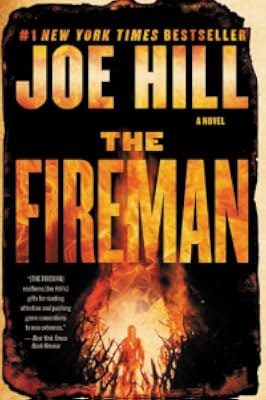
The Fireman
by Joe Hill 
On This Page
Description
From the award-winning, New York Times bestselling author of NOS4A2 and Heart-Shaped Box comes a chilling novel about a worldwide pandemic of spontaneous combustion that threatens to reduce civilization to ashes and a band of improbable heroes who battle to save it, led by one powerful and enigmatic man known as the Fireman. The fireman is coming. Stay cool. No one knows exactly when it began or where it originated. A terrifying new plague is spreading like wildfire across the country, show more striking cities one by one: Boston, Detroit, Seattle. The doctors call it Draco Incendia Trychophyton. To everyone else it's Dragonscale, a highly contagious, deadly spore that marks its hosts with beautiful black and gold marks across their bodies-before causing them to burst into flames. Millions are infected; blazes erupt everywhere. There is no antidote. No one is safe. Harper Grayson, a compassionate, dedicated nurse as pragmatic as Mary Poppins, treated hundreds of infected patients before her hospital burned to the ground. Now she's discovered the telltale gold-flecked marks on her skin. When the outbreak first began, she and her husband, Jakob, had made a pact: they would take matters into their own hands if they became infected. To Jakob's dismay, Harper wants to live-at least until the fetus she is carrying comes to term. At the hospital, she witnessed infected mothers give birth to healthy babies and believes hers will be fine too. . . if she can live long enough to deliver the child. Convinced that his do-gooding wife has made him sick, Jakob becomes unhinged, and eventually abandons her as their placid New England community collapses in terror. The chaos gives rise to ruthless Cremation Squads-armed, self-appointed posses roaming the streets and woods to exterminate those who they believe carry the spore. But Harper isn't as alone as she fears: a mysterious and compelling stranger she briefly met at the hospital, a man in a dirty yellow fire fighter's jacket, carrying a hooked iron bar, straddles the abyss between insanity and death. Known as The Fireman, he strolls the ruins of New Hampshire, a madman afflicted with Dragonscale who has learned to control the fire within himself, using it as a shield to protect the hunted . . . and as a weapon to avenge the wronged. In the desperate season to come, as the world burns out of control, Harper must learn the Fireman's secrets before her life-and that of her unborn child-goes up in smoke. show lessTags
Recommendations



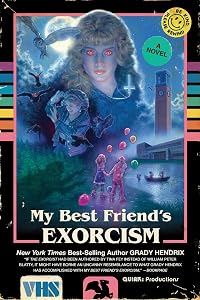
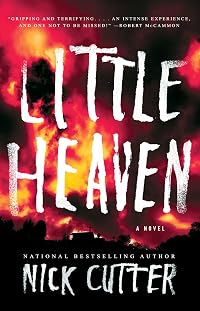
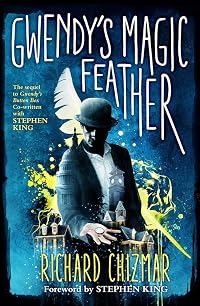
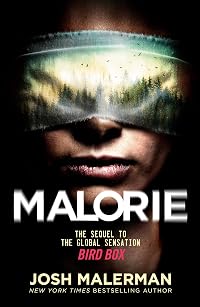
Member Recommendations

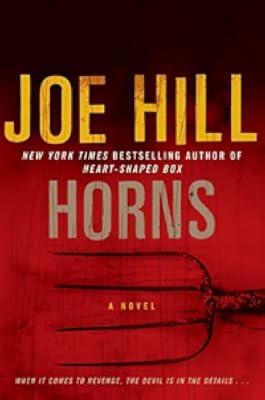
aethercowboy Both books cover the subject of the aftermath of a terrible widespread disease.
Shelby_Kuzma Both books deal with a female character attempting to protect herself and her children in the wake of a widespread, apocalyptic event.
jmiserak Plague, apocalyptic scenario in a city setting, found family
Member Reviews
Funny story: I was perusing my TBR shelves, looking for something to distract me from the current state of the world, when I came across this one. "Hmm," I said to myself, "I don't really remember what this is supposed to be about, but Joe Hill writes horror fantasy stuff, right? Sounds like the kind of absorbing escapism I could use right now." So I open it up, and start reading... about a nurse desperately trying to treat patients in an overwhelmed hospital during a global pandemic. Well, so much for escapism. Although it's nice to think that, however bad COVID-19 might be, at least it doesn't cause people to spontaneously combust like the weird fungal infection in the novel. Even if the way the fictional infection sets most of the US show more on actual fire works almost too well as a metaphor.
Anyway. We do fairly quickly leave resemblances to the real world behind as we follow a group of people in a secret refugee camp for the infected as they hide out from gangs of vigilantes out to kill them and learn how to live with and understand the weird-ass fire fungus they're carrying. Unfortunately, we also quickly get bogged down in a story that drags horribly -- seriously this did not remotely need to be 750 pages -- with a cast of characters none of whom ever really came alive for me at all and whose emotional moments, more often than not, felt unearned and kind of cheesy. Which is too bad, as the basic idea is interesting. Interesting in a way that requires a lot of suspension of disbelief, mind you, but that's something I was entirely willing to do. If only the effort had paid off.
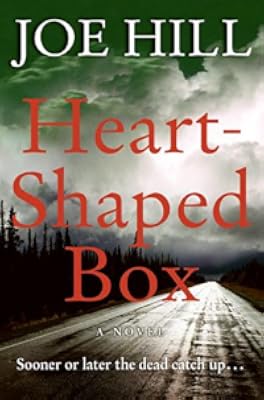
It occurs to me that Joe Hill may be one of those writers I keep thinking I like more than I actually do. His short story collection [20th Century Ghosts] was really good, as was his comics series [Locke & Key]. I also remember enjoying his first novel, [Heart-Shaped Box]. But, thinking back on it, every novel of his I've read since then has left me feeling some degree of disappointment. So maybe my reaction to this one should have surprised me less.
Rating: 2.5/5. I keep wanting to rate it higher, telling myself that it was mostly readable, it was an interesting idea, it wasn't that bad. But, honestly, when my primary feeling on finally turning the last page of a novel is relief that it's finally over and I can go on with my life now, I don't think a higher rating is justified. show less
Anyway. We do fairly quickly leave resemblances to the real world behind as we follow a group of people in a secret refugee camp for the infected as they hide out from gangs of vigilantes out to kill them and learn how to live with and understand the weird-ass fire fungus they're carrying. Unfortunately, we also quickly get bogged down in a story that drags horribly -- seriously this did not remotely need to be 750 pages -- with a cast of characters none of whom ever really came alive for me at all and whose emotional moments, more often than not, felt unearned and kind of cheesy. Which is too bad, as the basic idea is interesting. Interesting in a way that requires a lot of suspension of disbelief, mind you, but that's something I was entirely willing to do. If only the effort had paid off.
It occurs to me that Joe Hill may be one of those writers I keep thinking I like more than I actually do. His short story collection [20th Century Ghosts] was really good, as was his comics series [Locke & Key]. I also remember enjoying his first novel, [Heart-Shaped Box]. But, thinking back on it, every novel of his I've read since then has left me feeling some degree of disappointment. So maybe my reaction to this one should have surprised me less.
Rating: 2.5/5. I keep wanting to rate it higher, telling myself that it was mostly readable, it was an interesting idea, it wasn't that bad. But, honestly, when my primary feeling on finally turning the last page of a novel is relief that it's finally over and I can go on with my life now, I don't think a higher rating is justified. show less
the-fireman
I picked this up because I enjoyed "NOS 4R2" and because it was recommended on Char's Horror Corner.
I finished it a couple of days ago but I had to take a pause for breath before I could think about a review. First I had to get used to the idea that there wasn't any more to listen to. This audiobook is twenty two hours long (more than twice the average for the novels I listen to) and manages to be both intense and unhurried. After days of listening to Kate Mulgrew reading it, it had become part of my life. And now it's over.
But not forgotten. Joe Hill doesn't seem to write forgettable books.
"The Fireman" is astonishingly good. The idea is original: a spoor parasite that marks its human host with tattoo-like patterns across show more their bodies and which, after a while, leads them to combust spontaneously, causing a huge number of deaths, massive property damage and the spreading of the parasite.
Yet this remarkable vehicle to the apocalypse is not the dominant aspect of the book. It is a catalyst for looking more closely at people: how they behave under stress, how they treat those who are weak and pose a threat, what they allow themselves to do when the rule of law falls, what they make themselves do in the name of the greater good, how groups abdicate personal responsibility and how symbols of hope can be co-opted to become mechanisms of repression.
This is not a fun book. Things are bad at the start and they get progressively worse. Joe Hill made me live through that spiral into desperate, undignified, almost intolerable, survival almost one day at a time, through the eyes of Harper Willows, who starts the book as a Mary Poppins obsessed school-nurse who wants nothing more than to bring a spoonful of sugar to unhappy children and ends the book as... well, I guess you're twenty-two hours away from knowing that.
There are horrible things in this book but what Joe Hill excels at is not the horror itself but the tension and growing sense of foreboding before something happens. I had to MAKE myself listen to the final chapters, not because I didn't want to read them but because the thought of returning to that extended tension was off-putting.
What makes the book work so well is Joe Hill's ability to depict the corrupt, the depraved and the deranged so realistically and so subtly: for example, Harper's husband, Jacob, is a classic narcissist who slowly becomes a homicidal monster. From almost the first thing that Jacob said to Harper, I knew something was off. There were no flashing neon-lights or spooky music, just the small but important warnings in language, attitude and action that showed me a man who was charming but not at all nice.
The nice people in the book are sometimes a little too nice and too lovable but, in the gloom and despair of this book, I found I needed people I could cheer for.
The only thing that occasionally threw me out of the story was the repeated use of a clumsy way of generating foreboding. A number of chapters or scenes and with the equivalent of:
"Harper looked at the bolted doors and asked herself how they could leave through them and survive. In fact those doors would never be opened again"
In a novel which shows such superb control over pace and which creates such high levels of tension, it was as if some child with a neon marker had scribbled sentences into the galleys that unfortunately found their way into the book.
Despite that, this book is an exceptional read and Kate Mulgrew reads it exceptionally well. show less
I picked this up because I enjoyed "NOS 4R2" and because it was recommended on Char's Horror Corner.
I finished it a couple of days ago but I had to take a pause for breath before I could think about a review. First I had to get used to the idea that there wasn't any more to listen to. This audiobook is twenty two hours long (more than twice the average for the novels I listen to) and manages to be both intense and unhurried. After days of listening to Kate Mulgrew reading it, it had become part of my life. And now it's over.
But not forgotten. Joe Hill doesn't seem to write forgettable books.
"The Fireman" is astonishingly good. The idea is original: a spoor parasite that marks its human host with tattoo-like patterns across show more their bodies and which, after a while, leads them to combust spontaneously, causing a huge number of deaths, massive property damage and the spreading of the parasite.
Yet this remarkable vehicle to the apocalypse is not the dominant aspect of the book. It is a catalyst for looking more closely at people: how they behave under stress, how they treat those who are weak and pose a threat, what they allow themselves to do when the rule of law falls, what they make themselves do in the name of the greater good, how groups abdicate personal responsibility and how symbols of hope can be co-opted to become mechanisms of repression.
This is not a fun book. Things are bad at the start and they get progressively worse. Joe Hill made me live through that spiral into desperate, undignified, almost intolerable, survival almost one day at a time, through the eyes of Harper Willows, who starts the book as a Mary Poppins obsessed school-nurse who wants nothing more than to bring a spoonful of sugar to unhappy children and ends the book as... well, I guess you're twenty-two hours away from knowing that.
There are horrible things in this book but what Joe Hill excels at is not the horror itself but the tension and growing sense of foreboding before something happens. I had to MAKE myself listen to the final chapters, not because I didn't want to read them but because the thought of returning to that extended tension was off-putting.
What makes the book work so well is Joe Hill's ability to depict the corrupt, the depraved and the deranged so realistically and so subtly: for example, Harper's husband, Jacob, is a classic narcissist who slowly becomes a homicidal monster. From almost the first thing that Jacob said to Harper, I knew something was off. There were no flashing neon-lights or spooky music, just the small but important warnings in language, attitude and action that showed me a man who was charming but not at all nice.
The nice people in the book are sometimes a little too nice and too lovable but, in the gloom and despair of this book, I found I needed people I could cheer for.
The only thing that occasionally threw me out of the story was the repeated use of a clumsy way of generating foreboding. A number of chapters or scenes and with the equivalent of:
"Harper looked at the bolted doors and asked herself how they could leave through them and survive. In fact those doors would never be opened again"
In a novel which shows such superb control over pace and which creates such high levels of tension, it was as if some child with a neon marker had scribbled sentences into the galleys that unfortunately found their way into the book.
Despite that, this book is an exceptional read and Kate Mulgrew reads it exceptionally well. show less
Amazing book. I think this could be his best yet.
I think the thing I appreciate most about Joe Hill's characters is that it is rarely the monsters who are monstrous. The so-called normal humans, by far, are the most monstrous--for me that rings true. The characters in general in Hill's books often find themselves in awful situations, yet not (sadly) unimaginable ones. Our world is too extreme for even this horror to be outside of the realm of current experience. But despite all that horror, the protagonist characters in these books are beautiful people--people I wish I knew in real life, though I am certainly glad enough to know them in fiction.
Maybe I'm getting old and cynical, but I don't cry often at books these days. I cried at show more this one--because of how human and kind and vulnerable the so-called monsters are. And how human and vulnerable the so-called normal humans are. We're all a mess, and this book captured that state so very well.
Thank you, Joe. show less
I think the thing I appreciate most about Joe Hill's characters is that it is rarely the monsters who are monstrous. The so-called normal humans, by far, are the most monstrous--for me that rings true. The characters in general in Hill's books often find themselves in awful situations, yet not (sadly) unimaginable ones. Our world is too extreme for even this horror to be outside of the realm of current experience. But despite all that horror, the protagonist characters in these books are beautiful people--people I wish I knew in real life, though I am certainly glad enough to know them in fiction.
Maybe I'm getting old and cynical, but I don't cry often at books these days. I cried at show more this one--because of how human and kind and vulnerable the so-called monsters are. And how human and vulnerable the so-called normal humans are. We're all a mess, and this book captured that state so very well.
Thank you, Joe. show less
Like a cross between King's Firestarter and The Stand but amped up for the post-millenial generation, this tale of a world smoking in ruins as a pathogen that results in its victims suffering spontaneous combustion rages across the globe. Harper Grayson catches it - but she's also discovers she is pregnant, and is determined to survive long enough to bring her probably uninfected baby into the world. Social order is breaking down, however, and the authorities are dealing ruthlessly with the infected. Saved by a mysterious infected Fireman with the ability to wield the flames, she joins a hidden community of infecteds who have learned to survive with their disease. However, a society of the infected is as likely to break down as a show more society of the uninfected in such intolerable circumstances. Nowhere is safe, and her due date is drawing closer.
Hill is a terrific writer, has a bountiful and wicked imagination and isn't afraid to update horror myths of the seventies and eighties for the modern world, remaking them anew and ultimately creating something highly original of his own. This is a fantastic, thrilling, even amazing read, even at its most horrifying, and it gets pretty horrifying. show less
Hill is a terrific writer, has a bountiful and wicked imagination and isn't afraid to update horror myths of the seventies and eighties for the modern world, remaking them anew and ultimately creating something highly original of his own. This is a fantastic, thrilling, even amazing read, even at its most horrifying, and it gets pretty horrifying. show less
Disappointing. A big book that felt suffocatingly claustrophobic. Interesting premise, without doubt, but ultimately plodding; it needed to be at least a third shorter. Even the 'genetic' use of cultural markers used so successfully elsewhere to anchor the story in the everyday were overused -- buckets instead of deft brush strokes.
Joe Hill strikes again!
(Full disclosure: I received a free electronic ARC for review through Edelweiss. Trigger warning for racist/sexist language, violence, and sexual assault.)
It was them making the light. They were all of them tattooed with loops and whorls of Dragonscale, which glowed like fluorescent paint under a black light, hallucinatory hues of cherry wine and blowtorch blue. When they opened their mouths to sing, Harper glimpsed light painting the insides of their throats, as if each of them were a kettle filled with embers. [...]
Harper felt she had never seen anything so frightening or beautiful.
###
“You know what the kids say.”
“I have no idea what the kids say. What do they say?”
“She came back from the eighties to show more save mankind. Martha Quinn is our only hope.”
###
The hens are clucking. Harper thought it would be a toss-up, which term for women she hated more: bitch or hen. A hen was something you kept in a cage, and her sole worth was in her eggs. A bitch, at least, had teeth.
###
The year is 2018-ish (if Martha Quinn's approximate age is a reliable guidepost), and the world is on fire. A fungus called Draco incendia trychophyton - Dragonscale in lay terms, 'scale for short - is making the rounds, leaving ashes and chaos in its wake. Once it finds a host, the spore spreads and propagates, infiltrating its victim's blood, tissue, and organs - including the brain, with which it forms an intimate bond. The first sign of infection is the strangely beautiful markings it leaves on its host's skin - dark tattoos that shimmer with flecks of gold.
The 'scale runs hotter than the human body, and sufferers live in constant fear of going up in flames:
In the hospital, the infected were divided into two groups: “symptomatic normals” and “smolderers.” Smolderers smoked on and off, always ready to ignite. Smoke curled from their hair, from their nostrils, and their eyes streamed with water. The stripes on their bodies got so hot they could melt latex gloves. They left char marks on their hospital johnnies, on their beds. They were dangerous, too. Understandably, perhaps, the smolderers were always wavering on the edge of hysteria. [...]
The rest of the patients were marked with ’scale, but were otherwise physically and emotionally normal, right until the moment they incinerated themselves.
Dragonscale is particularly attuned to the presence of the stress hormone cortisol. Extreme fear or anxiety creates a hostile environment for the 'scale - causing it to set its home ablaze and take to the winds in search of more serene pastures.
Her days as a school nurse behind her (thanks apocalypse!), Harper Willowes is volunteering as a nurse at Portsmouth Hospital when the building goes up in flames. It started in the cafeteria, when one smolderer went up, thus setting off a chain reaction of fear and smoke and fire. With nothing left to do, she returns home, to her husband Jakob and an unfulfilling marriage that she dare not abandon since it's all she has left to cling to. Within a few months, Harper discovers that she's pregnant. Just one week later, she spots the first ribbon of Dragonscale kissing her leg.
Jakob leaves home with the promise to return in two months. If he's sick too, they'll carry out that suicide pact they (read: he) agreed upon during the first days of the outbreak. If not, he'll be there for Harper while she kills herself.
Only Harper doesn't want to die - at least, not until she has safely delivered her baby. With the help of a mysterious, aloof Brit known as the Fireman, Harper finds her way to Camp Wyndham, a sanctuary for a hundred-odd infected refugees. Led by the kindly "Father" Tom Storey, the group has managed to evade the Quarantine Patrols and Cremation Crews for months. Even more impressive, they've found a way to "make friends" with Dragonscale - by singing to it. If it reacts negatively to fear, oxytocin is downright euphoric for host and spore alike. Yet there's a dangerous undercurrent this "cure" - and the cult-like following cultivated by Carol Storey among her "flock."
Oh, and Martha Quinn has her own island! Timber Wolf Island, rechristened Free Wolf Island, off the coast of Maine. They have clean beds and a pizza parlor and yes, she takes requests. All the infected are welcome - as long as they can find their own way through a hostile landscape. Or at least that's the rumor.
This is my third Joe Hill book, after NOS4A2 and Horns, and he's quickly becoming one of my all-time favorite authors, not far behind Margaret Atwood and Octavia Butler. The Fireman is everything I've come to expect from Hill: smart, witty, and scary AF; with nuanced characters and a compelling, twisty-turny plot; and a welcome dose of social (justice) commentary - not to mention some really fun and unexpected pop culture references. (I mean, Martha Quinn? Did anyone see that coming?)
The Fireman most reminds me of Horns, for reasons both obvious and not. If you've already read Horns, the similar imagery - fire, flames, the devil - will jump right out at you. But the structure of each novel evokes the other, with multiple acts and stories that seem to go on and on - in the best way possible, of course. Whereas in Horns Hill reimagines the Bible, casting Lucifer as a misunderstood, (somewhat) unfairly vilified anti-hero (in the way I'd hoped Supernatural would), here he sets his gaze on cults: the danger of groupthink, mass hysteria and mob mentality, the anonymity of performing violence en masse. The potential for a community to do harm as well as good. Some of the most frightening and compelling scenes take place at Camp Wyndham, after it's gone to hell.
Initially, the synopsis made me more than a little nervous. There's a nasty little trend in pop culture - and our society as a whole - of treating the lives of pregnant women as more valuable and worthy of protection (and policing) than their non-pregnant counterparts. As though a woman's worth rests in her womb, and those carrying "precious cargo" (I'm with Harper: vom!) must be treated like invalids. Most recently, I rolled my eyes at this trope on The Walking Dead: when Glenn was missing and Maggie decided against going after him, on account of he wouldn't want anything to happen to their baby. I guess she's just expendable and/or an infant herself then? Yuck.
So given Harper's determination to live long enough to deliver her baby - which, (and I can't believe I'm saying this, because the man is awful; THE WORST) in Jakob's defense, is just an unthinking, unfeeling clump of cells when she contracts the 'scale - yeah, I was worried where the story might go. But if his previous novels are reliable indicators, Hill's a pretty solid feminist ally, and I had faith that he'd do right by Harper and all the women rooting for her. And I was not disappointed!
Harper makes for a really interesting, engaging hero - stubborn and steadfast, but not without her flaws. We see her grow from an extension of Jakob into her own person; the no-nonsense go-getter that, up until the 'scale, she compartmentalized into Nurse Willowes. I especially loved her contentious relationship with Ben Patchett, the prim and stodgy former cop who takes a shining to her. Imagining Harper's Julie Andrews-esque character throwing the f-bomb with abandon just to get a rise out of him - never mind the why - will always bring a smile to my face.
Nick and Allie, John, Renée, Tom, Don - it was a pleasure to get to know them all. Even the more insidious characters are as fascinating as they are repulsive (Jakob in particular. Fedora aside, the guy's pretty much an MRA horcrux.) The only person I couldn't quite get a handle on was Carol, though I suspect that's less to do with Hill's writing than the vast chasm that separates us.
There's so much to love here, I couldn't possibly touch upon it all. (I suspect I'll be plucking new things from my subconscious for weeks to come.)
But here are a few of my favorite things. (Julie Andrews FTW!)
* Hill's many, varied depictions of female relationships, whether supportive or poisonous. I love how the old girlfriend is cool with the new.
* The many Easter Eggs: the steps to a treehouse that no longer exists outside of Harper's home; when Nick calls the processing center Christmasland instead of the North Pole; the fake ballgame starring, among others, Tom Gordon.
* The tiny acts of kindness that help to offset (ever so slightly) all the awfulness in this world.
* All the pop culture references: Harry Potter, which probably comes in second only to Mary Poppins; J.K. Rowling, a sort of Oskar Schindler for the 'scale set, whose death is celebrated by Christian fundamentalists; Maggie Atwood, the fishing trawler that carries the survivors on the final leg of their trip (though given how that went, I'm not sure whether this should be considered a compliment so much as a homage); and of course the inestimable Martha Quinn, '80s pop star and Dragonscale maven.
* Hill's myriad digs at mainstream media, from "news" reporters grossly exaggerating the number of dead in a massacre of holdouts, to CNN's initial coverage of the epidemic: "FOX said the Dragon had been set loose by ISIS, using spores that had been invented by the Russians in the 1980s. MSNBC said sources indicated the ’scale might’ve been created by engineers at Halliburton and stolen by culty Christian types fixated on the Book of Revelation. CNN reported both sides."
The only part I didn't love was the ending, which is marginally less hopeful than expected. Which is to say that I expected bleakness, but c'mon! The story's already got such a crazy high body count that it seems especially unfair to drag this last casualty some four hundred miles only to kill zher. But we all know how much authors love to off their MCs - and besides, I guess the ending does have a final grim poetry to it. In any case, I wasn't upset enough to dock the book so much as a half a star; it's just so fack'n great overall.
I'd say that it's unputdownable, but at 608 pages (768? why are Goodreads and Amazon giving me such wildly different counts?), you're going to have to extricate yourself some time. It will hurt, and the last and final time will hit you right in the feels, like a flaming hatchet to the heart.
http://www.easyvegan.info/2016/05/16/the-fireman-by-joe-hill/ show less
(Full disclosure: I received a free electronic ARC for review through Edelweiss. Trigger warning for racist/sexist language, violence, and sexual assault.)
It was them making the light. They were all of them tattooed with loops and whorls of Dragonscale, which glowed like fluorescent paint under a black light, hallucinatory hues of cherry wine and blowtorch blue. When they opened their mouths to sing, Harper glimpsed light painting the insides of their throats, as if each of them were a kettle filled with embers. [...]
Harper felt she had never seen anything so frightening or beautiful.
###
“You know what the kids say.”
“I have no idea what the kids say. What do they say?”
“She came back from the eighties to show more save mankind. Martha Quinn is our only hope.”
###
The hens are clucking. Harper thought it would be a toss-up, which term for women she hated more: bitch or hen. A hen was something you kept in a cage, and her sole worth was in her eggs. A bitch, at least, had teeth.
###
The year is 2018-ish (if Martha Quinn's approximate age is a reliable guidepost), and the world is on fire. A fungus called Draco incendia trychophyton - Dragonscale in lay terms, 'scale for short - is making the rounds, leaving ashes and chaos in its wake. Once it finds a host, the spore spreads and propagates, infiltrating its victim's blood, tissue, and organs - including the brain, with which it forms an intimate bond. The first sign of infection is the strangely beautiful markings it leaves on its host's skin - dark tattoos that shimmer with flecks of gold.
The 'scale runs hotter than the human body, and sufferers live in constant fear of going up in flames:
In the hospital, the infected were divided into two groups: “symptomatic normals” and “smolderers.” Smolderers smoked on and off, always ready to ignite. Smoke curled from their hair, from their nostrils, and their eyes streamed with water. The stripes on their bodies got so hot they could melt latex gloves. They left char marks on their hospital johnnies, on their beds. They were dangerous, too. Understandably, perhaps, the smolderers were always wavering on the edge of hysteria. [...]
The rest of the patients were marked with ’scale, but were otherwise physically and emotionally normal, right until the moment they incinerated themselves.
Dragonscale is particularly attuned to the presence of the stress hormone cortisol. Extreme fear or anxiety creates a hostile environment for the 'scale - causing it to set its home ablaze and take to the winds in search of more serene pastures.
Her days as a school nurse behind her (thanks apocalypse!), Harper Willowes is volunteering as a nurse at Portsmouth Hospital when the building goes up in flames. It started in the cafeteria, when one smolderer went up, thus setting off a chain reaction of fear and smoke and fire. With nothing left to do, she returns home, to her husband Jakob and an unfulfilling marriage that she dare not abandon since it's all she has left to cling to. Within a few months, Harper discovers that she's pregnant. Just one week later, she spots the first ribbon of Dragonscale kissing her leg.
Jakob leaves home with the promise to return in two months. If he's sick too, they'll carry out that suicide pact they (read: he) agreed upon during the first days of the outbreak. If not, he'll be there for Harper while she kills herself.
Only Harper doesn't want to die - at least, not until she has safely delivered her baby. With the help of a mysterious, aloof Brit known as the Fireman, Harper finds her way to Camp Wyndham, a sanctuary for a hundred-odd infected refugees. Led by the kindly "Father" Tom Storey, the group has managed to evade the Quarantine Patrols and Cremation Crews for months. Even more impressive, they've found a way to "make friends" with Dragonscale - by singing to it. If it reacts negatively to fear, oxytocin is downright euphoric for host and spore alike. Yet there's a dangerous undercurrent this "cure" - and the cult-like following cultivated by Carol Storey among her "flock."
Oh, and Martha Quinn has her own island! Timber Wolf Island, rechristened Free Wolf Island, off the coast of Maine. They have clean beds and a pizza parlor and yes, she takes requests. All the infected are welcome - as long as they can find their own way through a hostile landscape. Or at least that's the rumor.
This is my third Joe Hill book, after NOS4A2 and Horns, and he's quickly becoming one of my all-time favorite authors, not far behind Margaret Atwood and Octavia Butler. The Fireman is everything I've come to expect from Hill: smart, witty, and scary AF; with nuanced characters and a compelling, twisty-turny plot; and a welcome dose of social (justice) commentary - not to mention some really fun and unexpected pop culture references. (I mean, Martha Quinn? Did anyone see that coming?)
The Fireman most reminds me of Horns, for reasons both obvious and not. If you've already read Horns, the similar imagery - fire, flames, the devil - will jump right out at you. But the structure of each novel evokes the other, with multiple acts and stories that seem to go on and on - in the best way possible, of course. Whereas in Horns Hill reimagines the Bible, casting Lucifer as a misunderstood, (somewhat) unfairly vilified anti-hero (in the way I'd hoped Supernatural would), here he sets his gaze on cults: the danger of groupthink, mass hysteria and mob mentality, the anonymity of performing violence en masse. The potential for a community to do harm as well as good. Some of the most frightening and compelling scenes take place at Camp Wyndham, after it's gone to hell.
Initially, the synopsis made me more than a little nervous. There's a nasty little trend in pop culture - and our society as a whole - of treating the lives of pregnant women as more valuable and worthy of protection (and policing) than their non-pregnant counterparts. As though a woman's worth rests in her womb, and those carrying "precious cargo" (I'm with Harper: vom!) must be treated like invalids. Most recently, I rolled my eyes at this trope on The Walking Dead: when Glenn was missing and Maggie decided against going after him, on account of he wouldn't want anything to happen to their baby. I guess she's just expendable and/or an infant herself then? Yuck.
So given Harper's determination to live long enough to deliver her baby - which, (and I can't believe I'm saying this, because the man is awful; THE WORST) in Jakob's defense, is just an unthinking, unfeeling clump of cells when she contracts the 'scale - yeah, I was worried where the story might go. But if his previous novels are reliable indicators, Hill's a pretty solid feminist ally, and I had faith that he'd do right by Harper and all the women rooting for her. And I was not disappointed!
Harper makes for a really interesting, engaging hero - stubborn and steadfast, but not without her flaws. We see her grow from an extension of Jakob into her own person; the no-nonsense go-getter that, up until the 'scale, she compartmentalized into Nurse Willowes. I especially loved her contentious relationship with Ben Patchett, the prim and stodgy former cop who takes a shining to her. Imagining Harper's Julie Andrews-esque character throwing the f-bomb with abandon just to get a rise out of him - never mind the why - will always bring a smile to my face.
Nick and Allie, John, Renée, Tom, Don - it was a pleasure to get to know them all. Even the more insidious characters are as fascinating as they are repulsive (Jakob in particular. Fedora aside, the guy's pretty much an MRA horcrux.) The only person I couldn't quite get a handle on was Carol, though I suspect that's less to do with Hill's writing than the vast chasm that separates us.
There's so much to love here, I couldn't possibly touch upon it all. (I suspect I'll be plucking new things from my subconscious for weeks to come.)
But here are a few of my favorite things. (Julie Andrews FTW!)
* Hill's many, varied depictions of female relationships, whether supportive or poisonous. I love how the old girlfriend is cool with the new.
* The many Easter Eggs: the steps to a treehouse that no longer exists outside of Harper's home; when Nick calls the processing center Christmasland instead of the North Pole; the fake ballgame starring, among others, Tom Gordon.
* The tiny acts of kindness that help to offset (ever so slightly) all the awfulness in this world.
* All the pop culture references: Harry Potter, which probably comes in second only to Mary Poppins; J.K. Rowling, a sort of Oskar Schindler for the 'scale set, whose death is celebrated by Christian fundamentalists; Maggie Atwood, the fishing trawler that carries the survivors on the final leg of their trip (though given how that went, I'm not sure whether this should be considered a compliment so much as a homage); and of course the inestimable Martha Quinn, '80s pop star and Dragonscale maven.
* Hill's myriad digs at mainstream media, from "news" reporters grossly exaggerating the number of dead in a massacre of holdouts, to CNN's initial coverage of the epidemic: "FOX said the Dragon had been set loose by ISIS, using spores that had been invented by the Russians in the 1980s. MSNBC said sources indicated the ’scale might’ve been created by engineers at Halliburton and stolen by culty Christian types fixated on the Book of Revelation. CNN reported both sides."
The only part I didn't love was the ending, which is marginally less hopeful than expected. Which is to say that I expected bleakness, but c'mon! The story's already got such a crazy high body count that it seems especially unfair to drag this last casualty some four hundred miles only to kill zher. But we all know how much authors love to off their MCs - and besides, I guess the ending does have a final grim poetry to it. In any case, I wasn't upset enough to dock the book so much as a half a star; it's just so fack'n great overall.
I'd say that it's unputdownable, but at 608 pages (768? why are Goodreads and Amazon giving me such wildly different counts?), you're going to have to extricate yourself some time. It will hurt, and the last and final time will hit you right in the feels, like a flaming hatchet to the heart.
http://www.easyvegan.info/2016/05/16/the-fireman-by-joe-hill/ show less
The world is facing a pandemic like nothing that has ever been seen before. Called Dragonscale, because of the beautiful patterns it creates on the skin, it eventually causes people to spontaneously combust. As more and more medical personnel die, school nurse Harper Grayson nee Willowes volunteers at the local hospital despite her husband’s objections and before it burns to the ground. Among the patients she treats is a young deaf boy who is brought in by a firefighter, John Rookwood. She not only becomes infected but she discovers she’s pregnant and, despite the danger, she is determined to carry the baby to term. Her husband, however, is furious and chases her out of the house. She is rescued by the firefighter she met at the show more hospital. He takes her to Camp Wyndham where there is a group of people who are all infected but have learned to control it through activities like singing. But the disease isn’t the only thing threatening the infected. As the disease burns a swath across the country, vigilantes begin to hunt down and kill them and her husband has joined one of these groups.
The Fireman by author Joe Hill is a very long novel but it didn’t seem like it. I was completely absorbed in the story from page one and it never lost my attention despite its length. This is the first book I have read by Hill and, admittedly, because of his pedigree, I was expecting a horror story. However, this is definitely more dystopian than horror. He does, however, share his father’s talent for creating portraits of real people, flawed in ways we can relate to, who are dealing with horrific events. But, having said that, Hill has clearly got his own stories to tell and, if this is any indication, he does it exceedingly well. His world is one we can all recognize. There is an abundance of cultural references which were both fun to spot and disturbing given the context – Harper eg is a huge fan of Disney’s Mary Poppins and tries, even under the worst possible conditions to remain upbeat and optimistic just as the song (which I have now got stuck in my head) suggests and I can’t imagine anything more endearing… or creepy. But she is more than just a one-dimensional caricature; she is also stubborn, smart, and determined and refuses to back down when she knows she’s right which makes her a very appealing character.
But, despite Harper’s optimism and the singing used by the group to control the disease, Hill gives an exceedingly bleak portrayal of how people behave in a crisis. Readers should be warned that there is some extreme violence here and the violence doesn’t just come from the vigilantes – the bad guys may seem to have few redeeming qualities but, at times, it seems like there is little to separate the ways they deal with the victims from the ways that many of the infected use to protect themselves.
That aside, this is one addicting story. It was genius bringing it out in time for the summer because, once started, putting it down will take more strength of will than I was able to display.
With thanks to Edelweiss and William Morris Publishing for the opportunity to read this novel in exchange for an honest review show less
The Fireman by author Joe Hill is a very long novel but it didn’t seem like it. I was completely absorbed in the story from page one and it never lost my attention despite its length. This is the first book I have read by Hill and, admittedly, because of his pedigree, I was expecting a horror story. However, this is definitely more dystopian than horror. He does, however, share his father’s talent for creating portraits of real people, flawed in ways we can relate to, who are dealing with horrific events. But, having said that, Hill has clearly got his own stories to tell and, if this is any indication, he does it exceedingly well. His world is one we can all recognize. There is an abundance of cultural references which were both fun to spot and disturbing given the context – Harper eg is a huge fan of Disney’s Mary Poppins and tries, even under the worst possible conditions to remain upbeat and optimistic just as the song (which I have now got stuck in my head) suggests and I can’t imagine anything more endearing… or creepy. But she is more than just a one-dimensional caricature; she is also stubborn, smart, and determined and refuses to back down when she knows she’s right which makes her a very appealing character.
But, despite Harper’s optimism and the singing used by the group to control the disease, Hill gives an exceedingly bleak portrayal of how people behave in a crisis. Readers should be warned that there is some extreme violence here and the violence doesn’t just come from the vigilantes – the bad guys may seem to have few redeeming qualities but, at times, it seems like there is little to separate the ways they deal with the victims from the ways that many of the infected use to protect themselves.
That aside, this is one addicting story. It was genius bringing it out in time for the summer because, once started, putting it down will take more strength of will than I was able to display.
With thanks to Edelweiss and William Morris Publishing for the opportunity to read this novel in exchange for an honest review show less
Members
- Recently Added By
Lists

ALA The Reading List
490 works; 28 members

2017 Hugo Eligible Novels
145 works; 14 members

Dystopian and Apocalyptic Literature
350 works; 74 members

Must-Read Maine
146 works; 91 members

2016 Science Fiction and Fantasy Books I'm Looking Forward To.
54 works; 6 members

KayStJ's to-read list
1,616 works; 11 members

Books Read in 2016
4,666 works; 199 members

Pop Sugar Reading Challenge
7 works; 1 member
Fiction on Fire
22 works; 2 members

Books Read in 2020
4,379 works; 124 members

Viral Outbreaks and Pandemics
82 works; 8 members

Biggest Disappointments
606 works; 164 members

Books Read in 2023
5,547 works; 145 members

Books We Couldn't Put Down
443 works; 197 members
Author Information

229+ Works 43,849 Members
Joe Hill is the shortened name for Joseph Hillstrom King. He was born in Maine in 1972 and is the son of Tabitha and Stephen King. He used this shortened form of his name in order to succeed as a writer on his own merits, not because of his famous father. In 2007 he publicly confirmed his identity. His first book, 20th Century Ghost, received the show more the Bram Stoker award for Best Fiction Collection, and his Best New Horror book won him a second Bram Stoker award, this time for Best Short Story. He is also a past recipient of the Ray Bradbury Fellowship. Joe Hill's other books include Heart-Shaped Box, Road Rage (collaboration), Thumbprint, Throttle (collaboration), Horns, and NOS4A2. Joe Hill's novel The Fireman made the New York Times Bestseller list in 2016. (Bowker Author Biography) show less
Joe Hill is a LibraryThing Author, an author who lists their personal library on LibraryThing.
Some Editions
Awards and Honors
Awards
Series
Belongs to Publisher Series
Karanlık Kitaplık (10)
Work Relationships
Contains
Common Knowledge
- Canonical title
- The Fireman
- Original publication date
- 2016-05-17
- People/Characters
- Harper Frances Willowes; John Rookwood; Jakob Grayson; Tom Storey; Carol Storey; Sarah Storey (show all 39); Allie Storey; Nick Storey; Renée Gilmonton; Don Lewiston; Ben Patchett; Michael Lindqvist; Jamie Close; Nelson Heinrich; Norma Heald; Gilbert Cline; Mark “The Mazz” Mazzuchelli; Chuck Cargill; Mindy Skilling; Harold Cross; Emily Waterman; Gail Neighbors; Gillian Neighbors; Janet Cursory; Ogden Leavitt; Robert McLee; Chris McLee; Marlboro Man; Marty; Connor Willowes; Lindy Willowes; Connor Willowes, Jr.; Martha Quinn; Albert Holmes; Nurse Lean; Peter; Bethann; Charity; Raymond Bly
- Important places
- Camp Wyndham; Machias, Maine, USA; New Hampshire, USA
- Epigraph
- Outside the street's on fire
in a real death waltz...
--"Jungleland," Bruce Springsteen
Though I spends me time in the ashes and smoke
In this 'ole wide world there's no 'appier bloke.
--"Chim Chim Cher-ee," Robert and Richard Sherman
It was a pleasure to burn.
--Fahrenheit 451, Ray Bradbury - Dedication
- For Ethan John King, who burns bright. Your Dad loves you.
- First words
- Harper Grayson had seen lots of people burn on TV, everyone had, but the first person she saw burn for real was in the playground behind the school.
- Quotations
- Humanity is a germ that thrives on the very edge of catastrophe.
The people in charge can always justify doing terrible things in the name of the greater good.
But we need kindness like we need to eat. It satisfies something in us we can’t do without.
There’s something horribly unfair about dying in the middle of a good story, before you have a chance to see how it all comes out. Of course, I suppose everyone always dies in the middle of a good story, in a sense. Your ow... (show all)n story. Or the story of your children. Or your grandchildren. Death is a raw deal for narrative junkies.
FOX said the Dragon had been set loose by ISIS, using spores that had been invented by the Russians in the 1980s. MSNBC said sources indicated the ’scale might’ve been created by engineers at Halliburton and stolen by cul... (show all)ty Christian types fixated on the Book of Revelation. CNN reported both sides. - Last words
- (Click to show. Warning: May contain spoilers.)He says get ready to have some fun, little girl, because it's a big bright morning, and this is where the story begins.
- Original language
- English US
- Canonical DDC/MDS
- 813.6
- Canonical LCC
- PS3608.I4342
Classifications
Statistics
- Members
- 2,965
- Popularity
- 6,032
- Reviews
- 169
- Rating
- (3.82)
- Languages
- 9 — Czech, English, French, German, Hungarian, Polish, Portuguese, Spanish, Turkish
- Media
- Paper, Audiobook, Ebook
- ISBNs
- 41
- UPCs
- 1
- ASINs
- 11