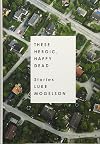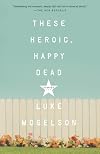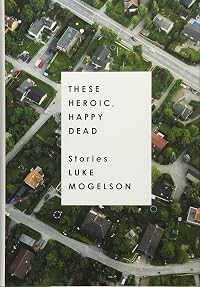
These Heroic, Happy Dead: Stories
by Luke Mogelson
On This Page
Description
With his harrowing debut, Luke Mogelson provides an unsentimental, unflinching glimpse into the lives of those forever changed by war. Subtle links between these ten powerful stories magnify the consequences of combat for both soldiers and civilians, as the violence experienced abroad echoes through their lives in America. Troubled veterans first introduced as criminals in "To the Lake" and "Visitors" are shown later in "New Guidance" and "Kids," during the deployments that show more shaped their futures. A seemingly minor soldier in "New Guidance" becomes the protagonist of "A Human Cry," where his alienation from society leads to a shocking confrontation. The fate of a hapless Gulf War veteran who reenlists in "Sea Bass" is revealed in "Peacetime," the story of a New York City medic's struggle with his inurement to calamity . A shady contractor job gone wrong in "A Beautiful Country" is a news item for a reporter in "Total Solar," as he navigates the surreal world of occupied Kabul. Shifting in time and narrative perspective--from the home front to active combat, between experienced leaders, flawed infantrymen, a mother, a child, an Afghan-American translator, and a foreign correspondent--these stories offer a multifaceted examination of the unexpected costs of war. Here is an evocative, deep work that charts the legacy of an unprecedented conflict, and the burdens of those it touched. Written with remarkable empathy and elegance, These Heroic, Happy Dead heralds the arrival of an extraordinary new talent. show lessTags
Recommendations





Member Reviews
Mogelson's These Happy, Heroic Dead collects 10 short (and interwoven) stories about the way war damages men and how that damage manifests. The characters that populate these stories are drunks, thieves, drug addicts, and worse. They've driven their families away. They're incapable of maintaining meaningful connections with others. They are sympathetic despite these circumstances. Mogelson's writing is spare and beautiful, and the stories do not pull any punches.
That said, the book would have been stronger had Mogelson not focused so narrowly on either men or how they don't recover - the war story genre was flooded with narratives like these long before Mogelson set pen to paper. A story focusing on a female veteran or one who has made show more peace with what s/he experienced - both of which also exist in the post-war experience - would not have gone amiss. Indeed, the collection's strongest story by far is the gut-wrenching "Visitors," which uses a mother's visits to her incarcerated veteran son to examine war's aftereffects.
That said, this is a well-written collection that, while limited in its scope, examines the denizens of that scope very well. show less
That said, the book would have been stronger had Mogelson not focused so narrowly on either men or how they don't recover - the war story genre was flooded with narratives like these long before Mogelson set pen to paper. A story focusing on a female veteran or one who has made show more peace with what s/he experienced - both of which also exist in the post-war experience - would not have gone amiss. Indeed, the collection's strongest story by far is the gut-wrenching "Visitors," which uses a mother's visits to her incarcerated veteran son to examine war's aftereffects.
That said, this is a well-written collection that, while limited in its scope, examines the denizens of that scope very well. show less
 This review was written for LibraryThing Early Reviewers.
The ten short stories in Luke Mogelson’s collection These Heroic, Happy Dead focus on Americans affected by the U.S. military involvements in Afghanistan and Iraq, as soldiers, veterans, a child of a veteran, the mother of a veteran, a civilian translator for the military, a journalist, and a military contractor.
The soldiers and veterans in These Heroic, Happy Dead enlist less as proud patriots and more as refugees from civilian life.
In “Sea Bass,” the story revolves around Kyle, a boy whose father, separated from Kyle’s mother, has failed at civilian life: the father steals his and his former wife’s dog, neglects him, and then lets him run away to his death. Kyle witnesses his father as a liar, a drunk, a fired employee, show more and a thief. Facing total failure as a civilian, the father happily re-enlists after 9/11 and Kyle talks about his father’s re-enlistment: “It was December, a few weeks after he’s re-enlisted. I’d had a feeling he was going to do it. He was living up there in the orchard country, but to no purpose. He was unemployed; he’d defaulted on his mortgage; my mother had forbidden future visits. On the phone he often sounded drunk. That changed after the attack. The attack revitalized my father. As soon as it looked like there would be a war, war was all he talked about.”
In “Kids,” Feldman, a former math teacher, finds himself isolated and bullied by his unit in Afghanistan. When his young commanding officer tries to commiserate with him, Feldman “laughed and said, ‘Beats teaching!. . . Beats my empty condo!”
In “The Port is Near,” the aimless veteran serving as a deckhand speaks of his return to San Francisco after completing his service: “I met Sal shortly after I returned from San Francisco. I say return. I’m not from there. I’d only lived there briefly, with a girl who was, before they attacked us and I volunteered. (I say they attacked us and I volunteered. The one didn’t cause the other.)”
War is a dreary slog for the characters in these stories. The officer in “Kids” reflects that “ours was a lackluster war.” In “Total Solar,” a journalist in Afghanistan says “I pretended to take notes. My notepad, in those days, was two thirds to three quarters pretend notes. Many of the pages featured detailed sketches of me killing myself by various means. . . One especially tedious interview—with a mullah, probably. . . had yielded a kind of comic strip of me leaping from a skyscraper, shooting myself midair, and landing in front of a bus.”
Regardless of their motives and their experiences, almost all of these soldiers and veterans come home emotionally spent.
In “Vistors,” Jeanne, the mother of a veteran jailed in the Idaho State Correctional Institution for voluntary manslaughter of a friend in a drunken argument, reflects that “she had come to realize that in some respects it was better to have a convict than a soldier for a son. At least in Kuna [the Correctional Institution] he was safe; at least from there Jeanne could be relatively sure he would eventually come home.”
In These Heroic, Happy Dead, Mogelson gives us ten unrelentingly dreary, sad, and often tragic short stories portraying life and after-life in the volunteer army in our two most recent wars. These aren’t happy stories of proud soldiers and veterans, but they are important stories for us to read, consider, and remember. show less
The soldiers and veterans in These Heroic, Happy Dead enlist less as proud patriots and more as refugees from civilian life.
In “Sea Bass,” the story revolves around Kyle, a boy whose father, separated from Kyle’s mother, has failed at civilian life: the father steals his and his former wife’s dog, neglects him, and then lets him run away to his death. Kyle witnesses his father as a liar, a drunk, a fired employee, show more and a thief. Facing total failure as a civilian, the father happily re-enlists after 9/11 and Kyle talks about his father’s re-enlistment: “It was December, a few weeks after he’s re-enlisted. I’d had a feeling he was going to do it. He was living up there in the orchard country, but to no purpose. He was unemployed; he’d defaulted on his mortgage; my mother had forbidden future visits. On the phone he often sounded drunk. That changed after the attack. The attack revitalized my father. As soon as it looked like there would be a war, war was all he talked about.”
In “Kids,” Feldman, a former math teacher, finds himself isolated and bullied by his unit in Afghanistan. When his young commanding officer tries to commiserate with him, Feldman “laughed and said, ‘Beats teaching!. . . Beats my empty condo!”
In “The Port is Near,” the aimless veteran serving as a deckhand speaks of his return to San Francisco after completing his service: “I met Sal shortly after I returned from San Francisco. I say return. I’m not from there. I’d only lived there briefly, with a girl who was, before they attacked us and I volunteered. (I say they attacked us and I volunteered. The one didn’t cause the other.)”
War is a dreary slog for the characters in these stories. The officer in “Kids” reflects that “ours was a lackluster war.” In “Total Solar,” a journalist in Afghanistan says “I pretended to take notes. My notepad, in those days, was two thirds to three quarters pretend notes. Many of the pages featured detailed sketches of me killing myself by various means. . . One especially tedious interview—with a mullah, probably. . . had yielded a kind of comic strip of me leaping from a skyscraper, shooting myself midair, and landing in front of a bus.”
Regardless of their motives and their experiences, almost all of these soldiers and veterans come home emotionally spent.
In “Vistors,” Jeanne, the mother of a veteran jailed in the Idaho State Correctional Institution for voluntary manslaughter of a friend in a drunken argument, reflects that “she had come to realize that in some respects it was better to have a convict than a soldier for a son. At least in Kuna [the Correctional Institution] he was safe; at least from there Jeanne could be relatively sure he would eventually come home.”
In These Heroic, Happy Dead, Mogelson gives us ten unrelentingly dreary, sad, and often tragic short stories portraying life and after-life in the volunteer army in our two most recent wars. These aren’t happy stories of proud soldiers and veterans, but they are important stories for us to read, consider, and remember. show less
This review was written for LibraryThing Early Reviewers.This is Luke Mogelson's first book, but it's one of those rare "holy-crap-who-is-this-guy-and-how'd-he-learn-to-write-like-this?" kinda books. An Army veteran and a journalist by trade, Mogelson's stories have been appearing piecemeal in various magazines. In this collection, THESE HEROIC, HAPPY DEAD, they are artfully arranged and blended carefully together, connected, often by only gossamer-thin threads. But the overall theme is unmistakable: war and it's devastating consequences.
The first story, "To the Lake," gives us McPherson, a scarred and damaged veteran whose post-war life is in a shambles - alcoholic and angry, driving drunk in a Vermont blizzard, in a county jail he meets a fellow vet, legless and violent, who bails him out. show more With narratives that jump back and forth in time, both these characters reappear later, McPherson in "Kids" and "The Port Is Near" (which also features an embittered Korean War vet); and Boyle in "New Guidance." The latter story also only peripherally mentions another soldier, "a recovering crank addict from Georgia, Alabama, somewhere, and he suffered from such horrific meth mouth ... This soldier - I forget his name - was famous in the unit. He'd enlisted for the dental plan, so that he could get a set of teeth."
That soldier takes center stage and gets a name, Tom Mayeaux, in "A Human Cry," another story of violence pursuing its perpetrators home from the war. And if "A Beautiful Country" leaves you wondering what exactly happened to Healy, the unarmed mercenary being pursued through the desert by Taliban, keep reading. "Total Solar" doesn't name him, but you'll recognize him. And then there's Feldman, a clumsy ex-high-school math teacher, an outsider, older than the norm, who'd enlisted to escape teaching and a failed marriage. In "Visitors" you will meet Jeanne Dupree, a single mother, who drives eight hours every Wednesday to Idaho's Kuna prison, where she visits her veteran son, Rob, who had killed a boyhood friend in a bar fight.
But enough. These stories - ALL of them - are stories that MATTER, dammit! They DESERVE to be read. They NEED to be read, particularly in days like these, when politicians (most of whom have never served in the military) so casually throw out threats of force, and brag of America's military being the strongest, best-trained, and best-equipped in the world. Which may be true, but our forces - that valiant ONE percent - have been used and used and re-used, with little thought given to the horrific long-lasting effects of these repeated redeployments. Mogelson's stories - like those in Phil Klay's REDEPLOYMENT, Siobhan Fallon's YOU KNOW WHEN THE MEN ARE GONE, or Katey Schultz's FLASHES OF WAR - will force you to stop and think, to consider the human costs of continuous war. Luke Mogelson. Remember that name. This guy is a MAJOR new talent. I urge you to read these stories. They are so important! My highest recommendation.
- Tim Bazzett, author of the Cold War memoir, SOLDIER BOY: AT PLAY IN THE ASA show less
The first story, "To the Lake," gives us McPherson, a scarred and damaged veteran whose post-war life is in a shambles - alcoholic and angry, driving drunk in a Vermont blizzard, in a county jail he meets a fellow vet, legless and violent, who bails him out. show more With narratives that jump back and forth in time, both these characters reappear later, McPherson in "Kids" and "The Port Is Near" (which also features an embittered Korean War vet); and Boyle in "New Guidance." The latter story also only peripherally mentions another soldier, "a recovering crank addict from Georgia, Alabama, somewhere, and he suffered from such horrific meth mouth ... This soldier - I forget his name - was famous in the unit. He'd enlisted for the dental plan, so that he could get a set of teeth."
That soldier takes center stage and gets a name, Tom Mayeaux, in "A Human Cry," another story of violence pursuing its perpetrators home from the war. And if "A Beautiful Country" leaves you wondering what exactly happened to Healy, the unarmed mercenary being pursued through the desert by Taliban, keep reading. "Total Solar" doesn't name him, but you'll recognize him. And then there's Feldman, a clumsy ex-high-school math teacher, an outsider, older than the norm, who'd enlisted to escape teaching and a failed marriage. In "Visitors" you will meet Jeanne Dupree, a single mother, who drives eight hours every Wednesday to Idaho's Kuna prison, where she visits her veteran son, Rob, who had killed a boyhood friend in a bar fight.
But enough. These stories - ALL of them - are stories that MATTER, dammit! They DESERVE to be read. They NEED to be read, particularly in days like these, when politicians (most of whom have never served in the military) so casually throw out threats of force, and brag of America's military being the strongest, best-trained, and best-equipped in the world. Which may be true, but our forces - that valiant ONE percent - have been used and used and re-used, with little thought given to the horrific long-lasting effects of these repeated redeployments. Mogelson's stories - like those in Phil Klay's REDEPLOYMENT, Siobhan Fallon's YOU KNOW WHEN THE MEN ARE GONE, or Katey Schultz's FLASHES OF WAR - will force you to stop and think, to consider the human costs of continuous war. Luke Mogelson. Remember that name. This guy is a MAJOR new talent. I urge you to read these stories. They are so important! My highest recommendation.
- Tim Bazzett, author of the Cold War memoir, SOLDIER BOY: AT PLAY IN THE ASA show less
This review was written for LibraryThing Early Reviewers.These stories--of heroes who'd prefer not to be heroes, of returned heroes who never learned how to be heroic or survive after war, and of men and women and children who don't know quite how their lives turned into what they are--are easy to slip into. Too easy, because they are also so real, and so hard, and so brilliantly depicted in this brief collection. If anything, they are too real.
Mogelson's writing is sometimes abrupt--in one story in particular, it really threw me off--but his style on the whole fits his territories of war and struggle. From piece to piece, the characters fight to remain human, sometimes succeeding and sometimes failing. In some cases, they watch those around them win or lose this same fight, and in some show more cases, this territory is the hardest to witness as a reader.
I think this is one of those rare short story collections which will be hard to forget, and where the stories both work separately and together to explore particular ideas without becoming repetitive or boring--which, simply, never happens in this book. And yet, it's a difficult one to recommend--it's full of what is so much easier to ignore than is to face, and full of difficulty. And, what's hardest of all, Mogelson's smart writing makes even the hardest of his characters easy to understand, easy to relate to... and that can be a bit terrifying. show less
Mogelson's writing is sometimes abrupt--in one story in particular, it really threw me off--but his style on the whole fits his territories of war and struggle. From piece to piece, the characters fight to remain human, sometimes succeeding and sometimes failing. In some cases, they watch those around them win or lose this same fight, and in some show more cases, this territory is the hardest to witness as a reader.
I think this is one of those rare short story collections which will be hard to forget, and where the stories both work separately and together to explore particular ideas without becoming repetitive or boring--which, simply, never happens in this book. And yet, it's a difficult one to recommend--it's full of what is so much easier to ignore than is to face, and full of difficulty. And, what's hardest of all, Mogelson's smart writing makes even the hardest of his characters easy to understand, easy to relate to... and that can be a bit terrifying. show less
This review was written for LibraryThing Early Reviewers.3.5 stars* A short book of ten post-9/11 short stories, each of which is an empathetic portrait of a complex, flawed individual. Luke Mogelson writes from experience. He served as a medic in the 69th Infantry, New York Army National Guard from 2007 to 2010 and then spent the next three years living in Afghanistan as a journalist. He tells each character's story journalistically, with no judgment. The stories come from a range of experiences: combat soldiers at home and abroad, an Afghan-American interpreter, a medic in the New York National Guard, a private contractor, a foreign correspondent, and family members of veterans. Six of the four stories are set in the USA, after deployments. The stories serve as a counterpoint to the show more romanticization of war and as a reality check about the lives of many soldiers after the fanfare of returning home.
…why talk of beauty what could be more beaut-
iful than these heroic happy dead
who rushed like loons to the roaring slaughter
they did not stop to think they died instead…
-- e.e. cummings, "next to of course god america i"
Many of the stories are loosely threaded together, sharing common characters. Each story stands on its own, but it is a richer work if you can catch the links. We are left with an ominous open-ending in A Beautiful Country, but there is a quick update on Healy's fate in Total Solar. Ben McPherson and Lee Boyle from To the Lake both get a little bit of a back story in Kids and New Guidance, respectively. A soldier briefly mentioned in New Guidance as a man who joined the army for dental work reappears as the main character in Human Cry. I read one story every day or two over a couple weeks, but to catch all the connections I would recommend reading it in one or two sittings. I missed at least one character update when I did not catch that the fate of Jim (the father) from Sea Bass is mentioned in Peacetime. The book is 192 pages so a quick read is definitely doable. (ALSO: There is a mosque incident mentioned in both To the Lake and The Port is Near, but I couldn't see any clues that it was McPherson in both stories or remember a story that referenced this incident. It may be just a coincidence, but let me know if you know the connection!)
The source of my naked-in-a-dream embarrassment was never the nakedness. It was the fact that I alone had managed to get myself into such a situation, while everyone else on the submarine or whatever had managed to avoid it. What did it say about me, the sort of person I was? (Total Solar)
My favorite story was Kids. The stories of an Afghan boy bringing undetonated explosives to the base for unknown, possibly friendly, reasons and a soldier having trouble fitting into the unit intersect in a dramatic way. Mogelson really made me care for the characters through their interactions. The featured characters grappled with trying to find answers when there aren't any and trying to make sense of senseless things. I also enjoyed:
• Total Solar - A journalist is apathetically interviewing a subject, when he suddenly gets caught up in the hazy fog of war.
• Sea Bass - An 11-year-old boy and his veteran father trying to relate to each other during summer visitation.
• Visitors - A mother visiting her son at the prison he was sentenced to after committing a violent crime shortly after returning home from combat duty.
(As the lieutenant is telling a depressed soldier the more "comforting" version of events) Just as I'd told Feldman one story, another was telling itself. I mean the story in which the kid was exactly who we'd wanted him to be; the story in which he helped us…This story was as plausible as mine, mine as plausible as this one, and who could say how many other variations there might be, or which of them, precisely, Feldman was contemplating then.
It didn't matter. He had the rest of his shitty life to attend to all of them. The rest of his shitty life: and still he'd get no closer to knowing. (Kids, the whole passage is my favorite in the book, but it is a little too long to reproduce here)
This book is more accessible than [book:Redeployment|18114068], because I did not need to keep referring to a glossary of acronyms to read it! I did have difficulty maintaining interest in some of the stories because the writing was so journalistic and the stories were so short (about twenty pages each). As a whole, these short stories are snapshots of life and not beginning-middle-end stories. I did have to laugh about my "no-ending" complaint when I got to this passage in Kids:
"That's the end of the story?" I said.
He shrugged. "I got out after that tour and started working for Raytheon."
"Jesus, Murray," I said. "You're telling me you don't know what happened? You don't know if Walsh ever figured out what the kid said?"
Murray looked at me and grinned. What he was saying without saying was: "You dumb son of a bitch, of course he never figured it out."
This book is mostly about men who were broken by the war and men who were broken before it even began. One of the main themes of These Heroic, Happy Dead is isolation. The men in this book have become part of a closed network and have trouble transitioning back into civilian life or relating to their loved ones. Many of them returned to the military after a disappointing stint back home. It's depressing in an "it is what it is" type way. I was struck by the immediacy of this work in the acknowledgments, where Mogelson thanked those "who still live in a country that is too perilous for me to be able to name them here."; a salient reminder that while the war has faded from the news, it is not over. If you liked [book:Redeployment|18114068], you might like this one. If you were turned off by [book:Redeployment|18114068] because of the sexual content or acronyms but like the general idea of it, you might want to give this book a try instead.
Ours was a war that offered few opportunities, aside from getting killed or wounded, to distinguish yourself. There were no hills to charge, peninsulas to hold, bridges to seize. There was only the patrol: a year's worth of mine-littered walks ending where they started.(Kids)
*I received this Advanced Reader's Edition through LibraryThing's Early Reviewer program. These Heroic, Happy Dead will be released in April 2016. show less
…why talk of beauty what could be more beaut-
iful than these heroic happy dead
who rushed like loons to the roaring slaughter
they did not stop to think they died instead…
-- e.e. cummings, "next to of course god america i"
Many of the stories are loosely threaded together, sharing common characters. Each story stands on its own, but it is a richer work if you can catch the links. We are left with an ominous open-ending in A Beautiful Country, but there is a quick update on Healy's fate in Total Solar. Ben McPherson and Lee Boyle from To the Lake both get a little bit of a back story in Kids and New Guidance, respectively. A soldier briefly mentioned in New Guidance as a man who joined the army for dental work reappears as the main character in Human Cry. I read one story every day or two over a couple weeks, but to catch all the connections I would recommend reading it in one or two sittings. I missed at least one character update when I did not catch that the fate of Jim (the father) from Sea Bass is mentioned in Peacetime. The book is 192 pages so a quick read is definitely doable. (ALSO: There is a mosque incident mentioned in both To the Lake and The Port is Near, but I couldn't see any clues that it was McPherson in both stories or remember a story that referenced this incident. It may be just a coincidence, but let me know if you know the connection!)
The source of my naked-in-a-dream embarrassment was never the nakedness. It was the fact that I alone had managed to get myself into such a situation, while everyone else on the submarine or whatever had managed to avoid it. What did it say about me, the sort of person I was? (Total Solar)
My favorite story was Kids. The stories of an Afghan boy bringing undetonated explosives to the base for unknown, possibly friendly, reasons and a soldier having trouble fitting into the unit intersect in a dramatic way. Mogelson really made me care for the characters through their interactions. The featured characters grappled with trying to find answers when there aren't any and trying to make sense of senseless things. I also enjoyed:
• Total Solar - A journalist is apathetically interviewing a subject, when he suddenly gets caught up in the hazy fog of war.
• Sea Bass - An 11-year-old boy and his veteran father trying to relate to each other during summer visitation.
• Visitors - A mother visiting her son at the prison he was sentenced to after committing a violent crime shortly after returning home from combat duty.
(As the lieutenant is telling a depressed soldier the more "comforting" version of events) Just as I'd told Feldman one story, another was telling itself. I mean the story in which the kid was exactly who we'd wanted him to be; the story in which he helped us…This story was as plausible as mine, mine as plausible as this one, and who could say how many other variations there might be, or which of them, precisely, Feldman was contemplating then.
It didn't matter. He had the rest of his shitty life to attend to all of them. The rest of his shitty life: and still he'd get no closer to knowing. (Kids, the whole passage is my favorite in the book, but it is a little too long to reproduce here)
This book is more accessible than [book:Redeployment|18114068], because I did not need to keep referring to a glossary of acronyms to read it! I did have difficulty maintaining interest in some of the stories because the writing was so journalistic and the stories were so short (about twenty pages each). As a whole, these short stories are snapshots of life and not beginning-middle-end stories. I did have to laugh about my "no-ending" complaint when I got to this passage in Kids:
"That's the end of the story?" I said.
He shrugged. "I got out after that tour and started working for Raytheon."
"Jesus, Murray," I said. "You're telling me you don't know what happened? You don't know if Walsh ever figured out what the kid said?"
Murray looked at me and grinned. What he was saying without saying was: "You dumb son of a bitch, of course he never figured it out."
This book is mostly about men who were broken by the war and men who were broken before it even began. One of the main themes of These Heroic, Happy Dead is isolation. The men in this book have become part of a closed network and have trouble transitioning back into civilian life or relating to their loved ones. Many of them returned to the military after a disappointing stint back home. It's depressing in an "it is what it is" type way. I was struck by the immediacy of this work in the acknowledgments, where Mogelson thanked those "who still live in a country that is too perilous for me to be able to name them here."; a salient reminder that while the war has faded from the news, it is not over. If you liked [book:Redeployment|18114068], you might like this one. If you were turned off by [book:Redeployment|18114068] because of the sexual content or acronyms but like the general idea of it, you might want to give this book a try instead.
Ours was a war that offered few opportunities, aside from getting killed or wounded, to distinguish yourself. There were no hills to charge, peninsulas to hold, bridges to seize. There was only the patrol: a year's worth of mine-littered walks ending where they started.(Kids)
*I received this Advanced Reader's Edition through LibraryThing's Early Reviewer program. These Heroic, Happy Dead will be released in April 2016. show less
This review was written for LibraryThing Early Reviewers.Luke Mogelson went to Afghanistan on your behalf. In return, he has written you some stories. They are a scattered miscellany of tales, from here and there, now, and then. Flashbacks and afterwords.
More importantly for our selfish purposes, he can write.
"Without waiting to be invited, the woman squeezed into the both across from Jeanne, scooting toward the window with labored, seal-like thrusts of the torso."
"In the den, Leo DeMint sat on the sofa and a big girl Mayeaux didn't recognize sat beside him, one fish-netted hock draped on his knee, little flesh diamonds pushing through the webbing like a string-tied ham."
"Diaz, in his uniform, with his limp, almost always met a woman. The limp was gold. As the woman watched Diaz hobble back show more to us with drinks, sloshing gin and tonic on the floor, I'd say, "Fucking Iraq." She'd seldom ask me to elaborate. If she did, I wouldn't tell her how, as a squad leader, Diaz contracted a bacterial infection while masturbating in a Port-a-John; how the infection spread up his urethra, into his testicles; how that made him lurch, causing a herniated disk, which resulted in sciatica. Instead, I'd say, 'We lost a lot of good men over there.' Which happened to be true." show less
More importantly for our selfish purposes, he can write.
"Without waiting to be invited, the woman squeezed into the both across from Jeanne, scooting toward the window with labored, seal-like thrusts of the torso."
"In the den, Leo DeMint sat on the sofa and a big girl Mayeaux didn't recognize sat beside him, one fish-netted hock draped on his knee, little flesh diamonds pushing through the webbing like a string-tied ham."
"Diaz, in his uniform, with his limp, almost always met a woman. The limp was gold. As the woman watched Diaz hobble back show more to us with drinks, sloshing gin and tonic on the floor, I'd say, "Fucking Iraq." She'd seldom ask me to elaborate. If she did, I wouldn't tell her how, as a squad leader, Diaz contracted a bacterial infection while masturbating in a Port-a-John; how the infection spread up his urethra, into his testicles; how that made him lurch, causing a herniated disk, which resulted in sciatica. Instead, I'd say, 'We lost a lot of good men over there.' Which happened to be true." show less
This review was written for LibraryThing Early Reviewers.These Heroic, Happy Dead, a collection of short stories by Luke Mogelson, could very easily come from the veterans I meet each day as they struggle to overcome addiction. Their stories, like those told by Mogelson, share the tangible pungent haunting of past battles, as well as painful tattoos, etched on the soul by seeing comrades brutally destroyed. Their stories not only lack a happy ending, they often have no ending at all. Likewise, the stories in These Heroic, Happy Dead often have no distinct end, and Mogelson’s use of this ambiguity is quite powerful.
This review was written for LibraryThing Early Reviewers.Members
- Recently Added By
Lists

Kirkus Starred Fiction Reviews of Books Published in 2016
63 works; 3 members
Author Information
4+ Works 248 Members
Classifications
Statistics
- Members
- 161
- Popularity
- 203,533
- Reviews
- 88
- Rating
- (4.00)
- Languages
- English
- Media
- Paper, Audiobook, Ebook
- ISBNs
- 5
- ASINs
- 2