On This Page
Description
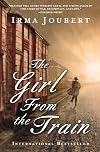
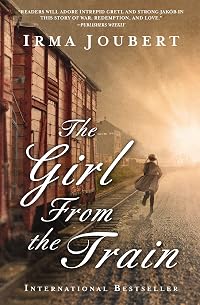
Six-year-old Gretl Schmidt is on a train bound for Aushwitz. Jakób Kowalski is planting a bomb on the tracks. As World War II draws to a close, Jakób fights with the Polish resistance against the crushing forces of Germany and Russia. They intend to destroy a German troop transport, but Gretl's unscheduled train reaches the bomb first. Gretl is the only survivor. Though spared from the concentration camp, the orphaned German Jew finds herself lost in a country hostile to her people. When show more Jakób discovers her, guilt and fatherly compassion prompt him to take her in. For three years, the young man and little girl form a bond over the secrets they must hide from his Catholic family. But she can't stay with him forever. Jakób sends Gretl to South Africa, where German war orphans are promised bright futures with adoptive Protestant families-so long as Gretl's Jewish roots, Catholic education, and connections to communist Poland are never discovered. Separated by continents, politics, religion, language, and years, Jakób and Gretl will likely never see each other again. But the events they have both survived and their belief that the human spirit can triumph over the ravages of war have formed a bond of love that no circumstances can overcome. show lessTags
Recommendations



















Member Recommendations

guurtjesboekenkast Het vervolg op Het meisje uit de trein wat eigenlijk de voorgeschiedenis is van Gretls Zuid-Afrikaanse adoptie-ouders. Het is een liefdesverhaal dat ontroert en bemoedigt.
guurtjesboekenkast Beide boeken gaan over de geschiedenis en de ontwikkeling van Zuid-Afrika
guurtjesboekenkast Dit boek gaat ook over de tijd van de Holocaust


guurtjesboekenkast Het vervolg op Het spoor van de liefde van Irma Joubert
Member Reviews
It is funny that the best book of 2015, is the last book that I completed this year. Irma Joubert’s novel, The Girl from The Train (not to be confused with any of the other girl/train books), is the only one of her books to be translated into English from her native Afrikaans. I am hoping that it will not be the last because this book has it all — a beautiful writing style, characters that capture the heart and descriptions that put the reader in the midst of the story. From war torn Poland to the wilds of the South African bushvelt, Joubert takes the reader on a tour through the emotional aftermath of trauma and the hope of new life. Along the way, the characters struggle to retain their identity in their quest to survive.
I show more didn’t make a lot of notes as I read The Girl from The Train. I was too immersed in the story to pull myself away. I also found myself bleary eyed from extensive reading periods. You will find it hard to put down. I often find that the books that affect me the most are the hardest to review. Words fail me. Let me just say that this book is a must read and perfect for book discussion groups. It also gets a Very Highly Recommended designation from me, something that only a handful of books merit.
So, did you get some book money for Christmas? Then make sure you include The Girl from The Train in your purchases.
Very Highly Recommended.
Audience: adults.
Great for Book Clubs.
(Thanks to Thomas Nelson for a review copy. All opinions expressed are mine alone.) show less
I show more didn’t make a lot of notes as I read The Girl from The Train. I was too immersed in the story to pull myself away. I also found myself bleary eyed from extensive reading periods. You will find it hard to put down. I often find that the books that affect me the most are the hardest to review. Words fail me. Let me just say that this book is a must read and perfect for book discussion groups. It also gets a Very Highly Recommended designation from me, something that only a handful of books merit.
So, did you get some book money for Christmas? Then make sure you include The Girl from The Train in your purchases.
Very Highly Recommended.
Audience: adults.
Great for Book Clubs.
(Thanks to Thomas Nelson for a review copy. All opinions expressed are mine alone.) show less
I haven’t come across a work as character driven as this in a long time. Everything is centralized about who these people are, how they’re impacted by the events presented, and how their character is changed in the end. I found myself impressed by the amount of work the author put into her characterization. It takes a special talent to write a POV of a girl, from age 7 to 2, and to make them sound different, yet with the same inner voice.
The book spans from 1944 to 1956 so covers a fair amount of time and events in a variety of locales, from snow covered Poland to the hot veldt of South Africa. Throughout, Joubert covers a vast amount of issues and topics: prejudice, blending of cultures, wartime atrocities, guilt, betrayal, and show more finding out who you truly are. The author does a fantastic job in balancing all these elements to create an overall narrative that is both engaging and introspective at the same time.
I really enjoyed some of the history explored as well. The author does a great job in getting the details right in the harsh settings of occupied Poland, both Nazi and Soviet. The world of secrecy, betrayal, and societal fear makes the reader sweat bullets right along with Jacob. Seeing the glimmers of democracy that were trying to emerge gave me hope and made me sad at their futility, historically speaking.
The 1940’s and 50’s in South Africa was also unexplored territory for me. It was intriguing to see the melting pot that was this country, very similar to America at the same timeframe. Yet, there were also the old prejudices against anything that was different or foreign. I was fascinated to see how Gretl was affected by this different world; I traveled the journey right along with her.
I’ve never read this author before and have got to say that this was a worthy introduction. She’s a fantastic character author, giving the people who inhabit her book such a depth of life not often seen in fiction. She also excels in the setting and themes departments. Highly, highly recommended author, and I’ll be checking out her other books as well.
Note: Book received for free from publisher via NetGalley in exchange for an honest review. show less
The book spans from 1944 to 1956 so covers a fair amount of time and events in a variety of locales, from snow covered Poland to the hot veldt of South Africa. Throughout, Joubert covers a vast amount of issues and topics: prejudice, blending of cultures, wartime atrocities, guilt, betrayal, and show more finding out who you truly are. The author does a fantastic job in balancing all these elements to create an overall narrative that is both engaging and introspective at the same time.
I really enjoyed some of the history explored as well. The author does a great job in getting the details right in the harsh settings of occupied Poland, both Nazi and Soviet. The world of secrecy, betrayal, and societal fear makes the reader sweat bullets right along with Jacob. Seeing the glimmers of democracy that were trying to emerge gave me hope and made me sad at their futility, historically speaking.
The 1940’s and 50’s in South Africa was also unexplored territory for me. It was intriguing to see the melting pot that was this country, very similar to America at the same timeframe. Yet, there were also the old prejudices against anything that was different or foreign. I was fascinated to see how Gretl was affected by this different world; I traveled the journey right along with her.
I’ve never read this author before and have got to say that this was a worthy introduction. She’s a fantastic character author, giving the people who inhabit her book such a depth of life not often seen in fiction. She also excels in the setting and themes departments. Highly, highly recommended author, and I’ll be checking out her other books as well.
Note: Book received for free from publisher via NetGalley in exchange for an honest review. show less
I just finished the novel The Girl from the Train by Irma Joubert. It is 1944 in Southern Poland and Gretl Schmidt (six years old) is on a train with her Grandmother, Mother, and sister, Elza (fourteen) bound for a concentration camp. Elza and Gretl are told to jump from the train to save themselves. The girls jump off just in time because this train is blown up shortly down the line. Jakob Kowalski is fifteen years old and a member of the Home Army (resistance). His group planted bombs on the bridge to blow up a German troop train. The train with the Jews was no scheduled to come through the area.
Jakob rescues Elza and Gretl. Unfortunately, Elza becomes ill and does not make it. Jakob takes Gretl home to his family farm where she will show more live for the next four years. The two become very close during this time. A time comes when his family no longer wants Gretl on the farm. Jakob takes her to Germany to get Gretl into a program that is relocating German Protestant orphans to South Africa. They only want Aryan children (Gretl easily passes and it helps that her father was an SS Officer who died in 1941—and she has proof). Gretl learns to hide her past in order to get a new future.
Gretl never forgets Jakob and hopes to see him again. When Jakob is forced to flee Poland and gets an opportunity to work in South Africa, he jumps at it in the hopes of seeing Gretl again. Will Gretl and Jakob be able to reconnect? The Girl from the Train is told from the perspective of Gretl and Jakob. We get to see Gretl grow up and embrace her new life in South Africa. We learn how Jakob survived the war and how the communists changed Poland. I did find The Girl from the Train to be a long winded book. I did not think it would ever end. The Girl from the Train is basically one long historical romance novel. I think that the World War II theme has just been very overdone this year. The writing is good, but I found it difficult to get into the story (to connect with Gretl). I give The Girl from the Train 3 out of 5 stars.
I received a complimentary copy of The Girl from the Train from NetGalley in exchange for an honest review. show less
Jakob rescues Elza and Gretl. Unfortunately, Elza becomes ill and does not make it. Jakob takes Gretl home to his family farm where she will show more live for the next four years. The two become very close during this time. A time comes when his family no longer wants Gretl on the farm. Jakob takes her to Germany to get Gretl into a program that is relocating German Protestant orphans to South Africa. They only want Aryan children (Gretl easily passes and it helps that her father was an SS Officer who died in 1941—and she has proof). Gretl learns to hide her past in order to get a new future.
Gretl never forgets Jakob and hopes to see him again. When Jakob is forced to flee Poland and gets an opportunity to work in South Africa, he jumps at it in the hopes of seeing Gretl again. Will Gretl and Jakob be able to reconnect? The Girl from the Train is told from the perspective of Gretl and Jakob. We get to see Gretl grow up and embrace her new life in South Africa. We learn how Jakob survived the war and how the communists changed Poland. I did find The Girl from the Train to be a long winded book. I did not think it would ever end. The Girl from the Train is basically one long historical romance novel. I think that the World War II theme has just been very overdone this year. The writing is good, but I found it difficult to get into the story (to connect with Gretl). I give The Girl from the Train 3 out of 5 stars.
I received a complimentary copy of The Girl from the Train from NetGalley in exchange for an honest review. show less
The Girl From the Train is an incredibly beautiful book. In many ways it touched me very similarly to Anthony Doerr’s All the Light We Cannot See. It drew me in, made me smile and cheer, made me cry, made me angry. Through the story of Jakob and Gretz’s life I experienced just about every emotion. Gretz is so strong, so resolute. Jakob is a hero. A very young man who carries many burdens and who is required to make hard choices. He chooses well.
The Girl From the Train is a book that sent me out seeking information. I learned much as I was drawn into Gretz's story. The seeking and the learning was such an integral part of the story for me. Intwined as it were in the life of Gretz who was always learning, always adapting.
The Girl From show more the Train is a book about overcoming. It is a strong story of heartache and joy. War and peace.
Gretz and Jakob were forced into dealing with the very harsh realities of life during a war. I must point out another harsh reality. There are children right here in the United States living the traumatized life of an unwanted and abused child. I am an adoptive mother of four beautiful, amazing, overcoming foster children who suffered great pain and trauma just as Gretz did. I have a number of friends who have also adopted children from foster care or overseas who also struggle to cope with their abuse. These children have overcome so much and are absolutely incredible yet as Gretz, they will carry their trauma and the effects of it throughout their lives.
I wonder... Is there much of a difference between a child traumatized by war and the loss of loved ones as opposed to a child whose loved ones express hatred towards them and cause them physical and emotional harm? Neither child will ever forget. For the war child the atrocities of invasion and death linger. For the child of abuse there is a very real betrayal by those who should love them most. These children will blame themselves for their parents sins believing they deserved it for something they did. The hurt is different. Both are tragic.
The Girl From the Train was translated from Afrikaans for which I am grateful. I can see why it drew the publisher and it deserves the time that was spent in translation. There are no awkward translation issues. If you didn’t know that it was translated you would never guess. I highly recommend that you pick up a copy. The Girl From the Train is a book that you truly should read for yourself.
I received a review copy in exchange for my honest and unbiased review. My thanks to the author and publisher.
For all of my reviews visit my blog at http://www.blessedandbewildered.com show less
The Girl From the Train is a book that sent me out seeking information. I learned much as I was drawn into Gretz's story. The seeking and the learning was such an integral part of the story for me. Intwined as it were in the life of Gretz who was always learning, always adapting.
The Girl From show more the Train is a book about overcoming. It is a strong story of heartache and joy. War and peace.
Gretz and Jakob were forced into dealing with the very harsh realities of life during a war. I must point out another harsh reality. There are children right here in the United States living the traumatized life of an unwanted and abused child. I am an adoptive mother of four beautiful, amazing, overcoming foster children who suffered great pain and trauma just as Gretz did. I have a number of friends who have also adopted children from foster care or overseas who also struggle to cope with their abuse. These children have overcome so much and are absolutely incredible yet as Gretz, they will carry their trauma and the effects of it throughout their lives.
I wonder... Is there much of a difference between a child traumatized by war and the loss of loved ones as opposed to a child whose loved ones express hatred towards them and cause them physical and emotional harm? Neither child will ever forget. For the war child the atrocities of invasion and death linger. For the child of abuse there is a very real betrayal by those who should love them most. These children will blame themselves for their parents sins believing they deserved it for something they did. The hurt is different. Both are tragic.
The Girl From the Train was translated from Afrikaans for which I am grateful. I can see why it drew the publisher and it deserves the time that was spent in translation. There are no awkward translation issues. If you didn’t know that it was translated you would never guess. I highly recommend that you pick up a copy. The Girl From the Train is a book that you truly should read for yourself.
I received a review copy in exchange for my honest and unbiased review. My thanks to the author and publisher.
For all of my reviews visit my blog at http://www.blessedandbewildered.com show less
Six-year-old Gretl Schmidt is on a train bound for Auschwitz, when she manages to escape out a small window, leaving her mother and grandmother trapped on board. Meanwhile, Jakób Kowalski, a member of the Polish resistance is planting a bomb on the tracks to blow up what he's been told is a German troop transport. When Jakób discovers her, his guilt at what he really destroyed compels him to take her in and hide her with his Catholic family. He reminds Gretl she can never tell anyone she is Jewish or German. As the war draws to a close, Jakób knows she can't stay in Poland any longer. He takes her to a German orphanage where she is sent to South Africa, where German war orphans are promised bright futures with adoptive Protestant show more families. That is as long as Gretl’s Jewish roots, Catholic education, and connections to communist Poland are never discovered.
What I found the most interesting about this book was that it is was something a little different from many WW II stories. Because it was set primarily in Poland and South Africa I was able to learn a lot more about those areas, especially South Africa after the war ended. The author is South African herself, the book was originally written in Afrikaans, and you can tell how much real history has been interjected into the story.
While not my favorite historical fiction of this time period, I did find it was a fascinating look at the brutalities of war from the perspective of young German girl, whose father had been a member of the SS. There was an underlying theme of romance that I wasn't a huge fan of, but I was impressed with the enduring strength the characters showed throughout the book. show less
What I found the most interesting about this book was that it is was something a little different from many WW II stories. Because it was set primarily in Poland and South Africa I was able to learn a lot more about those areas, especially South Africa after the war ended. The author is South African herself, the book was originally written in Afrikaans, and you can tell how much real history has been interjected into the story.
While not my favorite historical fiction of this time period, I did find it was a fascinating look at the brutalities of war from the perspective of young German girl, whose father had been a member of the SS. There was an underlying theme of romance that I wasn't a huge fan of, but I was impressed with the enduring strength the characters showed throughout the book. show less
I requested this book from the publisher via NetGalley because its subject matter sounded interesting. It offered a different perspective of World War II, that of a child; she is the daughter of an SS soldier but she also has a Jewish grandmother. It was a bestseller in its original language, Afrikaans, and its Dutch translation. I had high hopes, but I was disappointed.
Gretl Schmidt is six when she escapes from a train headed for Auschwitz. She is rescued by Jakób Kowalski, a 21-year-old member of the Polish resistance. She is sheltered by his family for several years, but after the war, Jakób takes her to Germany so, as a German orphan, she can be taken to South Africa for adoption. There she becomes the adopted daughter of a show more wealthy Afrikaans family.
The novel is narrated from both Gretl and Jakób’s points of view so we see their views of events that they share and also what happens to them when their lives diverge. Fifteen is a recurring number: the novel covers 15 years (Gretl from age 6 to 21), and 15 years is the age difference between Jakób and Gretl.
There is no doubt that the author did considerable research. Unfortunately, sometimes the book readsmore like a Polish history lesson. Jakób and his brother repeatedly argue about whether Poland should join forces with Russia in order to fight the Germans. And there are sentences like, “University students organized a revolution against Stalinism. Workers demanded that the dethroned Gomulka, a politician with ties to the old Polish Worker’s Party, be reinstated as first secretary of the Politburo . . . ” Since my heritage is Polish, I am interested in Polish history, but sometimes it seemed that the book read more like non-fiction with plot being a secondary concern.
The one historical element about which I knew nothing is the fate of German orphans. This book details the adoption of German orphans with pure Aryan bloodlines by Afrikaners who had been supporters of Nazi Germany. The attitudes of the Afrikaners are clearly expressed: “’The Roman Catholic Church is the Catholic Threat against which we have to protect our faith. Anything that comes from Poland is Communist and part of the Red Danger, against which we must protect our country. And the Jews are non-Aryans, against whom we must protect our blood.’” And Gretl’s adoptive father also expresses his view of the Holocaust in clear terms: “’I agree with the people who believe that the so-called Holocaust never took place, that it was just a ploy by the Communists to vilify the Germans. . . . I don’t believe it for a moment. . . . that such a highly civilized, proud nation could descend to such depths.’”
Characterization is problematic. Gretl and Jakób are likeable because they have so many admirable qualities: both are strong and determined and loyal. The difficulty is that they seem to have no negative traits so they seem too good to be true. Sometimes characters do not behave consistently; Gretl’s adoptive father, for example, insists on a pure Aryan child and sees Jews as a threat, yet he married a woman whose grandmother was Jewish? Drobner, Jakób’s boss at one time, is “a hard-bitten Communist” and “a staunch Communist” yet he warns Jakób that he is being followed by the secret police: “’Take care. You don’t want the Party to find anything against you.’”
Gretl’s religious views are ever changing. She goes to Mass with Jakób: “And she knew God was waiting inside [the cathedral]. Much more than in the sweltering bushveld church, where the sun beat mercilessly through the uncovered windows and the organ wailed out the glory of God.” Then shortly afterwards, she says, “”I don’t feel ill at ease in the Catholic Church, because it’s so familiar to me. But I was confirmed in the Protestant church and that’s where I belong.’” Yet, earlier, it is stated that “She had been confirmed in the Catholic Church . . . “!? She has forgotten her Catholic confirmation? Her religious persuasion changes as often as her name: Magrieta, Gretl, Gretz, Griet, Grietjie.
The novel is a translation so perhaps that explains the static sentence structure: “She was relieved to hear the pickup. Her father had come to fetch her before dark. She went to meet him. He opened the door from the inside. She got in.” Dialogue seems unnatural: “’Your hair is long,’ he said. “Here, I brought you something.’” Exposition is also strange: “She found the standard five sums easy, because Jakób had already taught her most of the work. She had nearly forgotten what Jakób looked like. The only subject she found really hard was English.” Sometimes things are mentioned for no apparent reason; for instance, there’s a statement that “Horst Bremer’s football – big Horst, not the little one – landed in the cake” yet there has never been mention of two Horsts.
There is romance, but it didn’t ring true for me. The age difference is not necessarily a problem, but considering Jakób and Gretl’s initial relationship, the romance just doesn’t seem appropriate. Certainly, the happy ending will appeal to many readers, but it seems like plot manipulation to me.
Many readers will find this a heartwarming story about how love can conquer all: “their belief that the human spirit can triumph over the ravages of war have formed a bond of love that no circumstances can overcome.” Perhaps I am in the minority, but its many weaknesses make this a book I cannot rate highly.
Note: I received an ARC of this book from the publisher via NetGalley.
Please check out my reader's blog (http://schatjesshelves.blogspot.ca/) and follow me on Twitter (@DCYakabuski). show less
Gretl Schmidt is six when she escapes from a train headed for Auschwitz. She is rescued by Jakób Kowalski, a 21-year-old member of the Polish resistance. She is sheltered by his family for several years, but after the war, Jakób takes her to Germany so, as a German orphan, she can be taken to South Africa for adoption. There she becomes the adopted daughter of a show more wealthy Afrikaans family.
The novel is narrated from both Gretl and Jakób’s points of view so we see their views of events that they share and also what happens to them when their lives diverge. Fifteen is a recurring number: the novel covers 15 years (Gretl from age 6 to 21), and 15 years is the age difference between Jakób and Gretl.
There is no doubt that the author did considerable research. Unfortunately, sometimes the book readsmore like a Polish history lesson. Jakób and his brother repeatedly argue about whether Poland should join forces with Russia in order to fight the Germans. And there are sentences like, “University students organized a revolution against Stalinism. Workers demanded that the dethroned Gomulka, a politician with ties to the old Polish Worker’s Party, be reinstated as first secretary of the Politburo . . . ” Since my heritage is Polish, I am interested in Polish history, but sometimes it seemed that the book read more like non-fiction with plot being a secondary concern.
The one historical element about which I knew nothing is the fate of German orphans. This book details the adoption of German orphans with pure Aryan bloodlines by Afrikaners who had been supporters of Nazi Germany. The attitudes of the Afrikaners are clearly expressed: “’The Roman Catholic Church is the Catholic Threat against which we have to protect our faith. Anything that comes from Poland is Communist and part of the Red Danger, against which we must protect our country. And the Jews are non-Aryans, against whom we must protect our blood.’” And Gretl’s adoptive father also expresses his view of the Holocaust in clear terms: “’I agree with the people who believe that the so-called Holocaust never took place, that it was just a ploy by the Communists to vilify the Germans. . . . I don’t believe it for a moment. . . . that such a highly civilized, proud nation could descend to such depths.’”
Characterization is problematic. Gretl and Jakób are likeable because they have so many admirable qualities: both are strong and determined and loyal. The difficulty is that they seem to have no negative traits so they seem too good to be true. Sometimes characters do not behave consistently; Gretl’s adoptive father, for example, insists on a pure Aryan child and sees Jews as a threat, yet he married a woman whose grandmother was Jewish? Drobner, Jakób’s boss at one time, is “a hard-bitten Communist” and “a staunch Communist” yet he warns Jakób that he is being followed by the secret police: “’Take care. You don’t want the Party to find anything against you.’”
Gretl’s religious views are ever changing. She goes to Mass with Jakób: “And she knew God was waiting inside [the cathedral]. Much more than in the sweltering bushveld church, where the sun beat mercilessly through the uncovered windows and the organ wailed out the glory of God.” Then shortly afterwards, she says, “”I don’t feel ill at ease in the Catholic Church, because it’s so familiar to me. But I was confirmed in the Protestant church and that’s where I belong.’” Yet, earlier, it is stated that “She had been confirmed in the Catholic Church . . . “!? She has forgotten her Catholic confirmation? Her religious persuasion changes as often as her name: Magrieta, Gretl, Gretz, Griet, Grietjie.
The novel is a translation so perhaps that explains the static sentence structure: “She was relieved to hear the pickup. Her father had come to fetch her before dark. She went to meet him. He opened the door from the inside. She got in.” Dialogue seems unnatural: “’Your hair is long,’ he said. “Here, I brought you something.’” Exposition is also strange: “She found the standard five sums easy, because Jakób had already taught her most of the work. She had nearly forgotten what Jakób looked like. The only subject she found really hard was English.” Sometimes things are mentioned for no apparent reason; for instance, there’s a statement that “Horst Bremer’s football – big Horst, not the little one – landed in the cake” yet there has never been mention of two Horsts.
There is romance, but it didn’t ring true for me. The age difference is not necessarily a problem, but considering Jakób and Gretl’s initial relationship, the romance just doesn’t seem appropriate. Certainly, the happy ending will appeal to many readers, but it seems like plot manipulation to me.
Many readers will find this a heartwarming story about how love can conquer all: “their belief that the human spirit can triumph over the ravages of war have formed a bond of love that no circumstances can overcome.” Perhaps I am in the minority, but its many weaknesses make this a book I cannot rate highly.
Note: I received an ARC of this book from the publisher via NetGalley.
Please check out my reader's blog (http://schatjesshelves.blogspot.ca/) and follow me on Twitter (@DCYakabuski). show less
Jakób Kowalski is planting a bomb on the train tracks shortly before the train passes by, his only problem is that it was the wrong train. Fighting with the Polish resistance against Germany and Russia, their intent was to destroy a German troop transport, not destroy a train going to Auschwitz. On that train was six-year-old Gretl Schmidt. Although she is spared from the concentration camp, she is now an orphaned German Jew who finds herself lost in a country hostile to her people. Jakób's guilt and compassion allow Gretl to stay with him for three years and the pair form a strong bond. But Jakób believes Gretl will have better opportunities in South Africa where German war orphans are promised bright futures with adoptive show more Protestant families - so long as her Jewish roots, Catholic education and connections to communist Poland are never discovered.
Poor Gretl. She had been through a lot but she was determined and headstrong and I couldn't help but root for her to have some happiness. As time went on I began to get bored. I felt like I was reading forever and getting nowhere. I was sick of reading about the minutiae of her everyday life - what colour ribbons she was wearing in her hair, what she was eating, what language she had to speak that day or what religious beliefs she had to believe in that day. We had to be told every. little. thing. I skipped the second half of the book and went straight to the epilogue, which held no surprises for me. A very tedious read.
Thank you to Netgalley and Thomas Nelson for a copy of this book. show less
Poor Gretl. She had been through a lot but she was determined and headstrong and I couldn't help but root for her to have some happiness. As time went on I began to get bored. I felt like I was reading forever and getting nowhere. I was sick of reading about the minutiae of her everyday life - what colour ribbons she was wearing in her hair, what she was eating, what language she had to speak that day or what religious beliefs she had to believe in that day. We had to be told every. little. thing. I skipped the second half of the book and went straight to the epilogue, which held no surprises for me. A very tedious read.
Thank you to Netgalley and Thomas Nelson for a copy of this book. show less
Members
- Recently Added By
Published Reviews
ThingScore 100
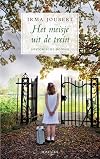
Een klein Joods meisje, dat ternauwernood aan Auschwitz ontkomt, en de jonge Pool Jakób, die zich over de kleine Gretl ontfermt. De roman ”Het meisje uit de trein” begint zomaar ergens in 1944.
Maar vanaf de eerste bladzijde kruipen de hoofdpersonen in je huid. Je voelt de pijn en de totale verlatenheid van Gretl, haar wanhoop na de nachtmerries, haar grenzeloze verering voor Jakób. Je show more verbaast je over de tederheid van Jakób en zijn zelfopofferende liefde, wanneer hij Gretl naar Zuid-Afrika stuurt om geadopteerd te worden. Je verlangt met hen naar een hereniging, naar verzoening en herstel voor traumatisch diepe wonden. En door middel van bezielende en levende woorden ontvouwt zich beider toekomst in het zuiderland.
Dit boek is haar debuutroman in Nederland. Op een bewonderenswaardige manier weet ze de gevoelens en de gedachten van haar hoofdpersonen als kind onder woorden te brengen. Ze vlecht de levens van Jakób en Gretl onlosmakelijk ineen, maar laat de afloop onvoorspelbaar.
De vertaling van Dorienke de Vries verdient alle lof. Op een vloeiende manier zijn de sfeer en de beelden achter de woorden overgezet naar het Nederlands. Het resultaat is een historische roman die met kop en schouders boven de hedendaagse christelijke romans uitsteekt. show less
Maar vanaf de eerste bladzijde kruipen de hoofdpersonen in je huid. Je voelt de pijn en de totale verlatenheid van Gretl, haar wanhoop na de nachtmerries, haar grenzeloze verering voor Jakób. Je show more verbaast je over de tederheid van Jakób en zijn zelfopofferende liefde, wanneer hij Gretl naar Zuid-Afrika stuurt om geadopteerd te worden. Je verlangt met hen naar een hereniging, naar verzoening en herstel voor traumatisch diepe wonden. En door middel van bezielende en levende woorden ontvouwt zich beider toekomst in het zuiderland.
Dit boek is haar debuutroman in Nederland. Op een bewonderenswaardige manier weet ze de gevoelens en de gedachten van haar hoofdpersonen als kind onder woorden te brengen. Ze vlecht de levens van Jakób en Gretl onlosmakelijk ineen, maar laat de afloop onvoorspelbaar.
De vertaling van Dorienke de Vries verdient alle lof. Op een vloeiende manier zijn de sfeer en de beelden achter de woorden overgezet naar het Nederlands. Het resultaat is een historische roman die met kop en schouders boven de hedendaagse christelijke romans uitsteekt. show less
added by private library
Verhaal van een meisje dat zich in de grote, vijandige wereld staande moet houden. Niemand mag iets weten
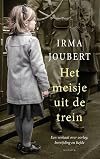
Het getto in Warschau. Daar komt ze vandaan, het kleintje in de Poolse greppel. Een Duits meisje, met voor een kwart Joods bloed. Het is april 1944 en ze is uit een rijdende veewagon gesprongen. Spoorwegen en stations zal ze blijven haten, het meisje uit de trein.
In de roman Het meisje uit show more de trein vertelt de Zuid-Afrikaanse auteur en historica Irma Joubert het verhaal van Gretl Schmidt. Oma laat haar kleindochter, zes-en-half jaar oud, uit de trein springen die op weg is naar Auschwitz. Zij en Gretls moeder zullen dat ook doen en haar komen halen, haar zusje Elza heeft de sprong al genomen. Maar mama en oma komen niet. De jonge Poolse verzetsstrijder Jakób Kowalski wel. Hij vindt de meisjes en neemt ze mee. Vier jaar lang is Gretz, zoals ze nu heet, lid van het rooms-katholieke gezin in het dorpje Czestochowa. Op den duur kan ze daar echter niet blijven. Als Jakób een krantenartikel leest over een adoptieprogramma dat Duitse – raszuivere, Arische – oorlogsweesjes een nieuwe toekomst belooft in Zuid-Afrika, lijkt hem dat voor Gretz dé oplossing. Ze ziet er met haar blonde krullen en blauwe ogen immers niet Joods uit. Bovendien is ze de dochter van een SS-officier. Zo komt ze uiteindelijk terecht bij Bernard en Kate, een Afrikaner echtpaar uit Transvaal dat zo heel graag een mooi, blond dochtertje wil hebben, en wordt ze Grietjie Neethling. Maar ook daar, in het warme Bosveld, blijven afschuwelijke dromen haar achtervolgen.
Heel fijnzinnig tekent Joubert het karakter van het kleine meisje dat in de grote, vaak vijandige en angstwekkende wereld leert zich staande te houden door zich aan te passen en haar mond te houden. In Polen, in Duitsland en ook in Zuid- Afrika. ‘Een van de mannen die kwam kijken of hij het Duitse weeskind wel wilde hebben, zei tegen een andere man: “Als ze me maar kunnen verzekeren dat het geen Pools, Joods of Russisch kind is. Ik moet geen vreemd gebroed op mijn erf.’’ Ze kon het niet helemaal verstaan, maar ze weet het weer vast en zeker: niemand mag erachter komen dat ze vier jaar lang in Polen heeft gewoond, niemand mag iets weten van haar Joodse bloed, niemand mag weten dat ze Russisch spreekt. En ze moet er goed aan denken dat ze geen kruisje slaat als ze gaan bidden, want dat is zonde.’
Irma Joubert heeft een prachtig boek geschreven. Ik heb er intens van genoten en wens het veel lezers toe. show less
Het getto in Warschau. Daar komt ze vandaan, het kleintje in de Poolse greppel. Een Duits meisje, met voor een kwart Joods bloed. Het is april 1944 en ze is uit een rijdende veewagon gesprongen. Spoorwegen en stations zal ze blijven haten, het meisje uit de trein.
In de roman Het meisje uit show more de trein vertelt de Zuid-Afrikaanse auteur en historica Irma Joubert het verhaal van Gretl Schmidt. Oma laat haar kleindochter, zes-en-half jaar oud, uit de trein springen die op weg is naar Auschwitz. Zij en Gretls moeder zullen dat ook doen en haar komen halen, haar zusje Elza heeft de sprong al genomen. Maar mama en oma komen niet. De jonge Poolse verzetsstrijder Jakób Kowalski wel. Hij vindt de meisjes en neemt ze mee. Vier jaar lang is Gretz, zoals ze nu heet, lid van het rooms-katholieke gezin in het dorpje Czestochowa. Op den duur kan ze daar echter niet blijven. Als Jakób een krantenartikel leest over een adoptieprogramma dat Duitse – raszuivere, Arische – oorlogsweesjes een nieuwe toekomst belooft in Zuid-Afrika, lijkt hem dat voor Gretz dé oplossing. Ze ziet er met haar blonde krullen en blauwe ogen immers niet Joods uit. Bovendien is ze de dochter van een SS-officier. Zo komt ze uiteindelijk terecht bij Bernard en Kate, een Afrikaner echtpaar uit Transvaal dat zo heel graag een mooi, blond dochtertje wil hebben, en wordt ze Grietjie Neethling. Maar ook daar, in het warme Bosveld, blijven afschuwelijke dromen haar achtervolgen.
Heel fijnzinnig tekent Joubert het karakter van het kleine meisje dat in de grote, vaak vijandige en angstwekkende wereld leert zich staande te houden door zich aan te passen en haar mond te houden. In Polen, in Duitsland en ook in Zuid- Afrika. ‘Een van de mannen die kwam kijken of hij het Duitse weeskind wel wilde hebben, zei tegen een andere man: “Als ze me maar kunnen verzekeren dat het geen Pools, Joods of Russisch kind is. Ik moet geen vreemd gebroed op mijn erf.’’ Ze kon het niet helemaal verstaan, maar ze weet het weer vast en zeker: niemand mag erachter komen dat ze vier jaar lang in Polen heeft gewoond, niemand mag iets weten van haar Joodse bloed, niemand mag weten dat ze Russisch spreekt. En ze moet er goed aan denken dat ze geen kruisje slaat als ze gaan bidden, want dat is zonde.’
Irma Joubert heeft een prachtig boek geschreven. Ik heb er intens van genoten en wens het veel lezers toe. show less
added by private library
Author Information

18 Works 942 Members
Some Editions
Awards and Honors
Awards
Series

Common Knowledge
- Canonical title
- The Girl from the Train
- Original title
- Tussen stasies
- Original publication date
- 2007
- People/Characters
- Gretl Schmidt, alias; Gretz Kowalski, alias; Grietjie Neethling; Jakób Kowalski; Bernard Neethling; Kate Woodroffe (show all 20); Stanislaw Kowalski; Professor Sobiescki; Captain Ryzard; Sister Zofia; Haneczka; Monicka; Turek; Aunt Anastarja; Uncle Jansz; Anya; Starika; Korbus Neethling; Karin; Francois
- Important places
- Czestochowa, Poland; Johannesburg, South Africa
- Important events
- Holocaust
- Dedication
- Voor Jan-Jan
To my son Jan-Jan - First words
- 'Los!', zegt oma.
Southern Poland, April 1944 ------
"Let go!" her grandmother said. - Quotations
- "You know Grietjie, Life is like a silver coin. You can spend it any way you wish, but you can only spend it once."
- Last words
- (Click to show. Warning: May contain spoilers.)She took a deep breath and said, "Our long, long journey".
Classifications
- Genres
- Fiction and Literature, Historical Fiction, Christian Fiction
- DDC/MDS
- 839.3636 — Literature & rhetoric German & related literatures Other Germanic literatures Netherlandish literatures Afrikaans Afrikaans fiction 2000–
- LCC
- PT6592.2 .O795 .V4713 — Language and Literature German, Dutch and Scandinavian literatures Afrikaans literature Individual authors or works
- BISAC
Statistics
- Members
- 547
- Popularity
- 54,257
- Reviews
- 30
- Rating
- (3.89)
- Languages
- Afrikaans, Dutch, English, German
- Media
- Paper, Audiobook, Ebook
- ISBNs
- 24
- ASINs
- 6