On This Page
Description
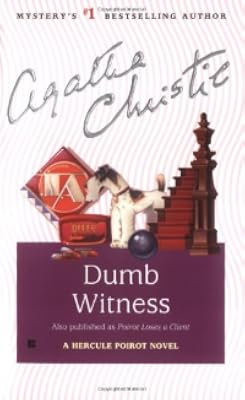
In Agatha Christie's Dumb Witness, Hercule Poirot investigates the very suspicious death of an elderly spinster who, fearing the very worst, had written to the great detective prior to her demise.Everyone blamed Emily Arundell's accident on a rubber ball left on the stairs by her frisky terrier. But the more she thought about her fall, the more convinced she became that one of her relatives was trying to kill her....
On April 17th she wrote her suspicions in a letter to Hercule Poirot. show more Mysteriously, he didn't receive the letter until June 28th...by which time Emily was already dead....
. show less
Tags
Recommendations






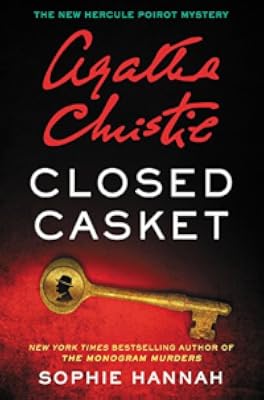
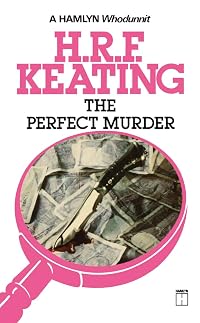

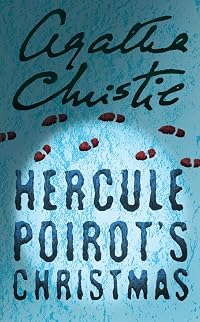


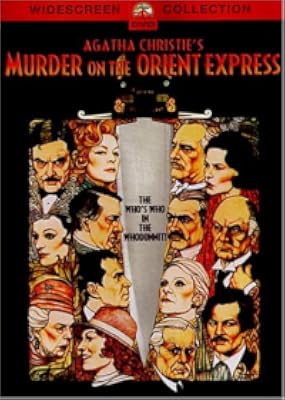


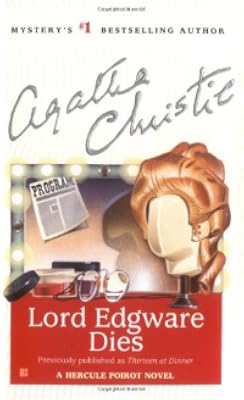
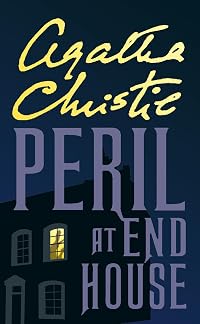
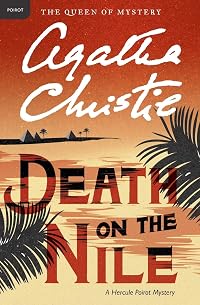
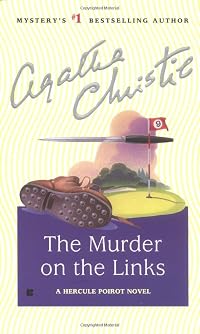

Member Recommendations

Porua How Does Your Garden Grow? is a short story written by Agatha Christie. Its plotline is nearly identical with that of Dumb Witness. Anyone who has enjoyed Dumb Witness may want to check this short story out.
20
Member Reviews
I really enjoyed this one! I found the characters more interesting, the overall story more intriguing (starting with the client already being dead), and enjoyed Poirot more than I have in his other books. I really liked him lying, always going somewhere new to talk to someone else, and especially enjoyed his relationship with Hastings, who I loved as the narrator, as I found Poirot more fun with an established friend to play off of.
This isn't the smartest Christie mystery for a few reasons, but I was entertained the entire time and got through it quickly. I enjoyed the cute dog stuff, I didn't guess where things were going, and I was satisfied with the endings for all the characters, including the detectives.
I look forward to reading show more more books featuring Hastings! show less
This isn't the smartest Christie mystery for a few reasons, but I was entertained the entire time and got through it quickly. I enjoyed the cute dog stuff, I didn't guess where things were going, and I was satisfied with the endings for all the characters, including the detectives.
I look forward to reading show more more books featuring Hastings! show less
In this Poirot novel, Christie laid emphasis on the transition occurring in 1930's England.. A strong-willed, elderly Victorian, Emily Arundel, is suspicious of what her relatives may be up to. She’s all too aware that they want her money. That said, she is of the opinion that such suspicions should remain within the confines of the closed family circle. Even if the younger generation are foolish and prone to scandalous behavior, that need not be the talk of the village. Emily reaches out to Poirot quietly, but dies before he receives the correspondence that invites him to investigate. Technically, he has no client, but Poirot distrusts the situation and surreptitiously seeks to learn more about the situation in Market Basing. show more Christie makes clear that much of the Victorian mindset (whether good or bad) is passing away, The murder is not what's important here; what is important is the transition that the dying, the passing, represents.
The role of Bob, Miss Arundel’s fox terrier, is to ensure that only the right people gain admittance to the closed social family circle.
While reading, note the descriptions of Littlegreen House and the layout of its rooms. Christie rarely gave this much physical detail about a particular setting and that she does so here is indicative of her theme. The way in which a Victorian household viewed the functions of space was giving way to new attitudes about what was convenient, necessary, and affordable.
Published under the title of [Dumb Witness] in the UK and under the title of [Poirot Loses A Client] in the US. show less
The role of Bob, Miss Arundel’s fox terrier, is to ensure that only the right people gain admittance to the closed social family circle.
While reading, note the descriptions of Littlegreen House and the layout of its rooms. Christie rarely gave this much physical detail about a particular setting and that she does so here is indicative of her theme. The way in which a Victorian household viewed the functions of space was giving way to new attitudes about what was convenient, necessary, and affordable.
Published under the title of [Dumb Witness] in the UK and under the title of [Poirot Loses A Client] in the US. show less
Poirot receives a two-month-old letter in the post. In her correspondence Emily Arundell tells Poirot of her uneasiness because she suspects that her recent fall down the stairs was not an accident at all but a deliberate attempt by someone in her family to kill her. Intrigued, Poirot and Hastings make their way to Market Basing, only to discover that Miss Arundell has been dead for nearly two months. Poirot smells a rat and begins to investigate.
A highly enjoyable and cleverly plotted whodunnit that manages to keep the perpetrator's identity concealed almost until the very end, and the ending, despite Poirot's legendary unveiling of the killer in the company of everyone assembled, is quite unusual. Agatha Christie never lets us forget show more that we're dealing with humans and their complicated emotions and to that end uses Poirot as the mouthpiece for those who can no longer speak for themselves to arrive at the truth. The only thing that grated a little was Hastings putting words into the mouth of Bob the dog, but luckily those instances are rare. show less
A highly enjoyable and cleverly plotted whodunnit that manages to keep the perpetrator's identity concealed almost until the very end, and the ending, despite Poirot's legendary unveiling of the killer in the company of everyone assembled, is quite unusual. Agatha Christie never lets us forget show more that we're dealing with humans and their complicated emotions and to that end uses Poirot as the mouthpiece for those who can no longer speak for themselves to arrive at the truth. The only thing that grated a little was Hastings putting words into the mouth of Bob the dog, but luckily those instances are rare. show less
It must be challenging to think up so many titles for so many novels. That's the only explanation I can think of for the choice of title for this one as it only barely relates to the story at all. I like the dog, but Hastings kind of gets on my nerves in this one. Poirot seems a little snippy this time, so maybe Hastings is annoying him, too. The whole novel feels a little haphazard, like Christie was feeling weary also. Or I might be projecting.
A rich elderly woman suspects someone in her family is trying to kill her to get their inheritance a bit early. She writes to Hercule Poirot but due to the letter being mislaid it isn't delivered until a couple of months later — when Miss Emily Arundell has already died and left her considerable fortune to someone outside of the family. Though investigating a possible attempted murder seems moot to that doofus Hastings, given that the target has died of apparently natural causes in the meantime, Poirot persists. He learns that all of the family members (nieces, nephew and assorted spouses) are desperate for money, giving them all a capital (no pun intended) motive. But did any of them actually initiate a fatal action?
The "dumb show more witness" of the title is Bob, Miss Emily's intrepid wire terrier. He doesn't exactly solve the mystery but his actions and inactions are key to unraveling the case. I don't know much about Christie's personal life but I'm going to wager she was a dog lover, judging by the affectionate way she portrays Bob, even going so far as to give him actual dialogue. It's utterly charming and I'm glad Poirot was able to clear him of any wrongdoing in the case.
The more Poirot books I read the more I dislike the Hastings character. I realize he's there to provide a handy vehicle for Poirot to explain the clues and solution to the reader, but good grief no one can be that stupid and still be able to tie his shoes. Unlike Watson, who has his own charm separate from Sherlock Holmes, this sidekick has no redeeming characteristics that I can discern. I far prefer the Poirot cases where he is absent in Argentina or wherever, but even he can't keep this one from being a winner. show less
The "dumb show more witness" of the title is Bob, Miss Emily's intrepid wire terrier. He doesn't exactly solve the mystery but his actions and inactions are key to unraveling the case. I don't know much about Christie's personal life but I'm going to wager she was a dog lover, judging by the affectionate way she portrays Bob, even going so far as to give him actual dialogue. It's utterly charming and I'm glad Poirot was able to clear him of any wrongdoing in the case.
The more Poirot books I read the more I dislike the Hastings character. I realize he's there to provide a handy vehicle for Poirot to explain the clues and solution to the reader, but good grief no one can be that stupid and still be able to tie his shoes. Unlike Watson, who has his own charm separate from Sherlock Holmes, this sidekick has no redeeming characteristics that I can discern. I far prefer the Poirot cases where he is absent in Argentina or wherever, but even he can't keep this one from being a winner. show less
One of the focal points of this novel is the unreliable narrator. The assumption is that if the dog, Bob, could tell his story, he would be able to narrate what actually happened. But in fact Bob does not see all.
The principal narration is through the eyes of Captain Hastings, and the reader has come to expect that he often gets things wrong. But there are other points of view expressed including Poirot's. Under Hastings' influence we either dismiss or accept these other points of view, but which is the right one?
This is also a classic Poirot. Various red herrings are laid, and various scenarios and alibis tested, accepted or rejected. And then of course there is the final denouement. But Poirot has already meted out his own peculiar show more form of justice.
I thought there were at least a couple of unsatisfactory plot elements: I couldn't imagine anyone hammering a tack into wood in the middle of the night and expecting to go undetected, and I thought the murderer changed character too much. Unexpectedly Poirot becomes the owner of Bob the dog.
I originally reviewed this novel in 2011 and gave it the same rating. I have re-read it to participate in this month's Crime Fiction of the Year Challenge for 1937 at Past Offences. show less
The principal narration is through the eyes of Captain Hastings, and the reader has come to expect that he often gets things wrong. But there are other points of view expressed including Poirot's. Under Hastings' influence we either dismiss or accept these other points of view, but which is the right one?
This is also a classic Poirot. Various red herrings are laid, and various scenarios and alibis tested, accepted or rejected. And then of course there is the final denouement. But Poirot has already meted out his own peculiar show more form of justice.
I thought there were at least a couple of unsatisfactory plot elements: I couldn't imagine anyone hammering a tack into wood in the middle of the night and expecting to go undetected, and I thought the murderer changed character too much. Unexpectedly Poirot becomes the owner of Bob the dog.
I originally reviewed this novel in 2011 and gave it the same rating. I have re-read it to participate in this month's Crime Fiction of the Year Challenge for 1937 at Past Offences. show less
If you are anything like me, you know that while the term 'cozy mystery' is pretty accurate and conjures up images of quilts and warm firesides and tea kettles and so on, they should really consider using the term 'comfort mystery' instead. This week I have had the second half of 50 skin - well, let's call them decorations - removed from my neck and chest area, AND have had a colonoscopy, and in the waiting rooms prior to both these procedures I felt no fear, because I had my Kindle. And a very pleasant comfort mystery. I did not feel cozy in the least but I certainly felt comforted.
In short, Agatha (via Poirot in this case, and a slightly less dense than usual Hastings) does it again.
In short, Agatha (via Poirot in this case, and a slightly less dense than usual Hastings) does it again.
Members
- Recently Added By
Lists

Read the book and saw the movie
1,170 works; 195 members

British Mystery
469 works; 14 members

Crime and Mysteries to Read
746 works; 31 members

Agatha Christie Poirot
43 works; 2 members

Books About Murder
313 works; 7 members

Detective Stories
343 works; 5 members

Best Dog Stories
109 works; 13 members

Books Read in 2013
1,630 works; 51 members

BingoDOG - Animals in Adult Fiction
78 works; 20 members

Books Read in 2016
4,666 works; 199 members

1930s
262 works; 5 members

Books Read in 2023
5,547 works; 145 members

TBR
77 works; 1 member

Agatha Christie Chronology
93 works; 1 member
Author Information

2,147+ Works 439,852 Members
One of the most successful and beloved writer of mystery stories, Agatha Mary Clarissa Christie was born in 1890 in Torquay, County Devon, England. She wrote her first novel, The Mysterious Affair at Styles, in 1920, launching a literary career that spanned decades. In her lifetime, she authored 79 crime novels and a short story collection, 19 show more plays, and six novels written under the name of Mary Westmacott. Her books have sold over a billion copies in the English language with another billion in 44 foreign languages. Some of her most famous titles include Murder on the Orient Express, Mystery of the Blue Train, And Then There Were None, 13 at Dinner and The Sittaford Mystery. Noted for clever and surprising twists of plot, many of Christie's mysteries feature two unconventional fictional detectives named Hercule Poirot and Miss Jane Marple. Poirot, in particular, plays the hero of many of her works, including the classic, The Murder of Roger Ackroyd (1926), and Curtain (1975), one of her last works in which the famed detective dies. Over the years, her travels took her to the Middle East where she met noted English archaeologist Sir Max Mallowan. They married in 1930. Christie accompanied Mallowan on annual expeditions to Iraq and Syria, which served as material for Murder in Mesopotamia (1930), Death on the Nile (1937), and Appointment with Death (1938). Christie's credits also include the plays, The Mousetrap and Witness for the Prosecution (1953; film 1957). Christie received the New York Drama Critics' Circle Award for 1954-1955 for Witness. She was also named Dame Commander of the Order of the British Empire in 1971. Christie died in 1976. (Bowker Author Biography) show less
Some Editions
Series

Belongs to Publisher Series
I classici del giallo [Mondadori] (1147, 557, 236)
Selecciones de Biblioteca Oro (libro 142)
Öölane (5)
SaPo (6)
Scherz Krimi (689)
Weltbild SammlerEditionen (48049)
Fontana (250)
The Albatross Crime Club (No. 428)
Colecção Vampiro (205)
Work Relationships
Is contained in
Agatha Christie Crime Collection: And Then There Were None, Dumb Witness, The Mysterious Affair at Styles by Agatha Christie
A Poirot Quintet: The Murder of Roger Ackroyd; The Mystery of the Blue Train; Dumb Witness; After the Funeral; Death on the Nile by Agatha Christie
Death on the Nile; Dumb Witness; Appointment with Death; Murder for Christmas; Murder is Easy by Agatha Christie
Three Puzzles for Poirot: Third girl + Poirot Loses a Client + Funerals Are Fatal by Agatha Christie
Has the adaptation
Is an expanded version of
Common Knowledge
- Canonical title
- Dumb Witness
- Original title
- Dumb Witness
- Alternate titles
- Poirot Loses a Client
- Original publication date
- 1937-07-05
- People/Characters
- Hercule Poirot; Emily Arundell; Captain Arthur Hastings; Charles Arundell; Theresa Arundell; Bella Tanios (show all 16); Dr Jacob Tanios; Dr Rex Donaldson; Dr Grainger; Ellen; Miss Wilhelmina "Minnie" Lawson; Isabel Tripp; Julia Tripp; Mr Purvis; Nurse Carruthers; Miss Peabody
- Important places
- Market Basing, Berkshire, England, UK; London, England, UK
- Related movies
- Dumb Witness (1996 | IMDb)
- Dedication
- TO DEAR PETER
Most faithful of friends
and dearest of companions,
a dog in a thousand - First words
- Miss Arundell died on May 1st.
- Last words
- (Click to show. Warning: May contain spoilers.)"Woof," said Bob in energetic assent.
- Original language
- English UK
Classifications
Statistics
- Members
- 4,053
- Popularity
- 3,828
- Reviews
- 89
- Rating
- (3.72)
- Languages
- 26 — Catalan, Chinese, Czech, Danish, Dutch, English, Estonian, Finnish, French, German, Greek, Hungarian, Indonesian, Italian, Japanese, Latvian, Norwegian (Bokmål), Norwegian, Polish, Portuguese, Croatian, Slovak, Spanish, Swedish, Thai, Turkish
- Media
- Paper, Audiobook, Ebook
- ISBNs
- 135
- UPCs
- 1
- ASINs
- 92