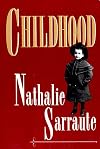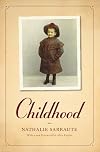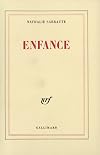
Childhood
by Nathalie Sarraute
On This Page
Description
As one of the leading proponents of the "nouveau roman," Nathalie Sarraute is often remembered for her novels, including "The Golden Fruits," which earned her the Prix international de litterature in 1964. But her carefully crafted and evocative memoir "Childhood" may in fact be Sarraute s most accessible and emotionally open work. Written when the author was eighty-three years old, but dealing with only the first twelve years of her life, "Childhood" is constructed as a dialogue between show more Sarraute and her memory. Sarraute gently interrogates her interlocutor in search of her own intentions, more precise accuracy, and indeed, the truth. Her relationships with her mother in Russia and her stepmother in Paris are especially heartbreaking: long-gone actions are prodded and poked at by Sarraute until they yield some semblance of fact, imbuing these maternalistic interactions with new, deeper meaning. Each vignette is bristling with detail and shows the power of memory through prose by turns funny, sad, and poetic. Capturing the ambience of Paris and Russia in the earliest part of the twentieth century, while never giving up the lyrical style of Sarraute s novels, this book has much to offer both memoir enthusiasts and fiction lovers. " show lessTags
Recommendations




























Member Reviews
With lucid, engaging fragments, spoken in a dialogue with herself, she envelops us in the 'soft, whitish, cloudy layers' of childhood, of her childhood, a childhood spent as a pawn moved back and forth across the European chessboard by two strong-willed and distracted parents. The telling is more or less chronological, with her understanding of what her parents are doing to her growing clearer as she ages. At age eight she realizes there would never be any other home for her than the one she inhabits in Paris with her distant father and her cold, indifferent stepmother Vera. When her mother agrees to take her back at one point, on the condition that she not be responsible for the child's transport, her father forces her to choose where show more she will live.
How she loves her father, feels this connection with him, yet he is not really there, so absorbed as he is in his work. He does not show physical affection toward her. And sometimes, sometimes, when she shows her vulnerability, her need for his comfort, he shames her with his 'insulting contempt', his expectations of how she should act overpowering his ability to fulfill the role of a comforting parent.
Her stepmother's mother is the one adult figure who gives her what she needs, all the time, without reservation. But she is only there for a year. The familiar sequence of serial abandonment continues.
She feels the power of words. Vera's devastating phrase 'Because it isn't done', that 'brick wall which she drags me up against'. And then the feeling she has of being trapped in a word, when a woman says it is a 'tragedy' that she has no mother, and how she believes it, that she has no mother, feels this word 'tragedy' stretch around her...
And then, everything in me revolts, rises up, with all my strength I reject it, I smash it, I tear off this yoke, this carapace. I won't stay in this thing which that woman has imprisoned me... she doesn't know anything, she can't understand.
—Was that the first time you had been trapped like that, in a word?
—I don't remember it happening to me before. But how many times since, have I not escaped, terrified, out of words which pounce on you and hold you captive.
Yet there is also the nature of ideas and discovering she has the power to control them...
[I]deas have now become discreet, they merely pass through me, they obey me, I am the one who decides to hold them back, to make them stay as long as is necessary, when I happen to feel like examining them before I dismiss them. None of them can make me feel ashamed, none of them can affect me. Oh, how good I feel. That will never happen to me again. Never...
After two years she meets her mother again, feels her indifference toward her: 'There was no way of reaching her', with her 'calm coldness'. Her mother does not know how to treat her, thinks that at age 11 she is no longer a child, that she can talk to her as an adult.
She falls into a novel, becomes completely immersed.
Her mother returns again, they have a good time together, but the war is starting and her mother must return to Russia. Her mother can't hide the excitement she is feeling at the thought of returning, despite that it also means she is leaving her daughter again. The child's feelings spring forward and back, from despair to joy and again to despair.
She confronts her stepmother, wants her to admit to the feelings of hatred she emanates toward her. 'How can anyone hate a child?' asks Vera. She deconstructs this question, and wonders what it will mean to her when she is no longer a child.
I press my back, my arms outstretched, as hard as I can against the moss-covered earth so that all its saps can penetrate me, so that they will spread throughout my body, I look at the sky as I have never before looked at it... I melt into it, I have no limits, no end.
Vacation is ending and she will be entering a new school, a new life, a sweeping away of the wispy cloudy layers...
—Don't worry, I've finished, I won't take you any farther...
—Why now, all of a sudden, when you haven't been afraid to come this far?
—I don't really know... I don't feel like it any more... I'd like to go somewhere else... show less
The imagery in this book caught my attention from the very beginning. Who can't picture themselves as a child, holding a pair of gleaming scissors in their hands? I felt myself cutting open the chair with the author, spilling forth the memories which form the heart of this book.
Read it in french, but if you can't, by all means find a translation.
Read it in french, but if you can't, by all means find a translation.
The author's autobiographical essay about her early years from two perspectives. One shows the narration, the other one questions the methodology. To a certain extend two books in one - pas un nouveau roman, mais une nouvelle forme biographique.
500 great books by women a great idea your thoughts as a child which are all about yourself of course
Dans ce récit de l’enfance, Nathalie Sarraute sélectionne des instants et des émotions. Elle renouvelle le genre de l'autobiographique en s'inventant un double critique. Ce double l'interroge sur son travail de remémoration et l'aide ainsi à préciser sa pensée et à mener à bien son projet. à terme
extrait
extrait
Dec 27, 2013French
Certains passages sont de véritables tabeaux ou scènes de théatre vivantes.
Mar 25, 2008French
Ratings
Members
- Recently Added By
Lists

Childhood: Books for or about children in different cultures around the wor
345 works; 18 members

500 Great Books by Women
507 works; 60 members

Les 50 meilleurs livres de langue française de 1900 à aujourd’hui
69 works; 2 members
Author Information

Nathalie Sarraute has been an eloquent spokesperson and theorist of the new novel, as well as one of its most talented practitioners. In her essay on the art of fiction, The on The Age of Suspicion (1956), she condemned the techniques used in the novel of the past and took a stand beside Robbe-Grillet as a leader of the avant-garde. The novel, she show more feels, must express "that element of indetermination, of opacity, and mystery that one's own actions always have for the one who lives them." Her works have now become known to an international public. Her ability to render fleeting awareness and the psychological states underlying articulate speech has won both praise and disdain. Janet Flanner has called Sarraute "the only one among the New Novel experimenters who appears finally to have struck her own style---intense, observational, and personal." Of her novels, The Golden Fruits (1963)---about the Paris literary fortunes of an imaginary novel of the same name---is "the most barren of extraneous decor, the most accomplished from the standpoint of her esthetic aims" (SRSR). Tropisms (1939), her earliest (very brief) book, contains "all the raw material I have continued to develop in my later works." Her "tropisms," she says, are instinctive "sensations," or even "movements," "produced in us by the presence of others, or by objects from the outside world. [They hide] beneath the most commonplace conversations and the most everyday gestures." She regards her novels as composed of a series of tropisms of varying intensity. Sarraute died at the age of 99 in Paris, France. 020 show less
Some Editions
Awards and Honors
Series
Belongs to Publisher Series
Work Relationships
Has as a student's study guide
Common Knowledge
- Canonical title
- Childhood
- Original title
- Enfance
- Original publication date
- 1983-04-13 (1e édition originale française, Blanche, Gallimard) (1e édition originale française, Blanche, Gallimard); 1995-09-14 (Réédition française avec un dossier réalisé par Marie-France Savéan, Folioplus, Gallimard) (Réédition française avec un dossier réalisé par Marie-France Savéan, Folioplus, Gallimard); 2004-09-23 (Réédition française avec Dossier réalisé par Fanny Gayon. Lecture d'image par Isabelle Varloteaux, Folioplus classiques, Gallimard) (Réédition française avec Dossier réalisé par Fanny Gayon. Lecture d'image par Isabelle Varloteaux, Folioplus classiques, Gallimard); 2019-07-19 (Réédition française, Folio, Gallimard) (Réédition française, Folio, Gallimard)
- People/Characters
- Nathalie Sarraute
- Epigraph*
- /
- Dedication*
- /
- First words
- —Then you really are going to do that? "Evoke your childhood memories"...
- Last words
- (Click to show. Warning: May contain spoilers.)I couldn't go on making the effort to conjure up a few moments, a few movements, that I fell are still intact, still strong enough to emerge from the protective cover they are preserved under, from those soft, whitish, cloudy layers which dissipate, which disappear with childhood.
- Original language*
- Français
*Some information comes from Common Knowledge in other languages. Click "Edit" for more information.
Classifications
Statistics
- Members
- 542
- Popularity
- 54,941
- Reviews
- 6
- Rating
- (3.59)
- Languages
- 13 — Czech, Danish, Dutch, English, Finnish, French, German, Italian, Norwegian (Bokmål), Norwegian, Portuguese, Spanish, Swedish
- Media
- Paper, Ebook
- ISBNs
- 33
- ASINs
- 8